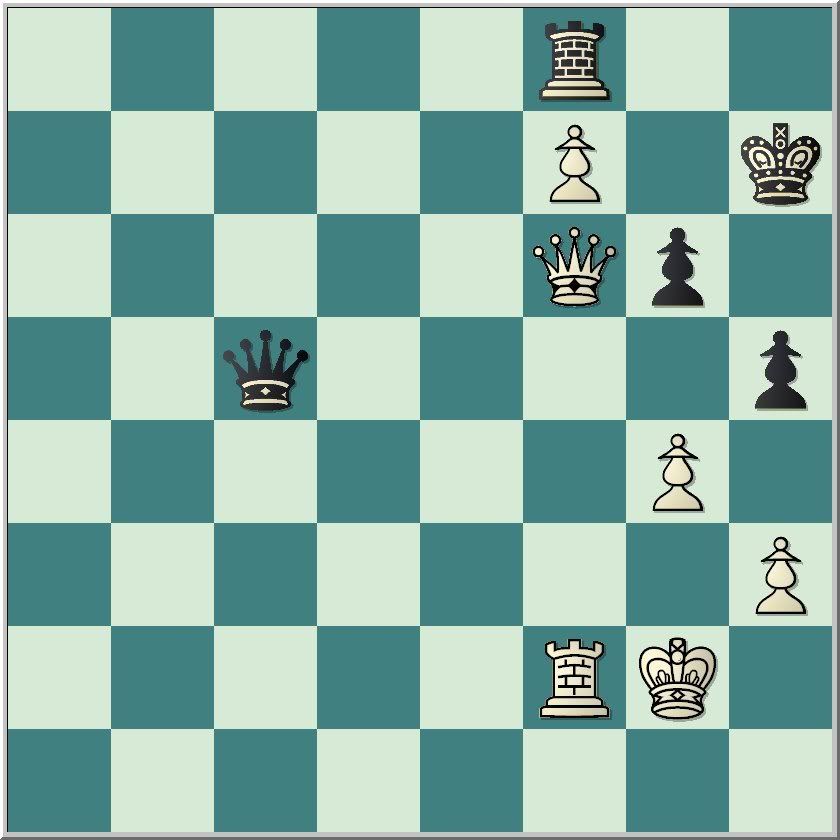
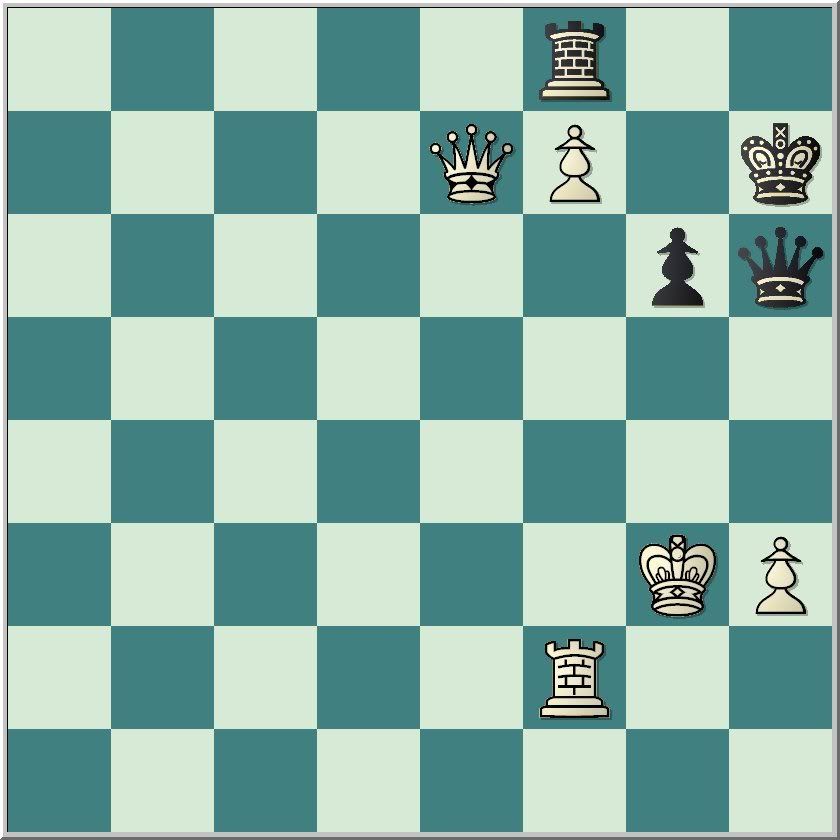
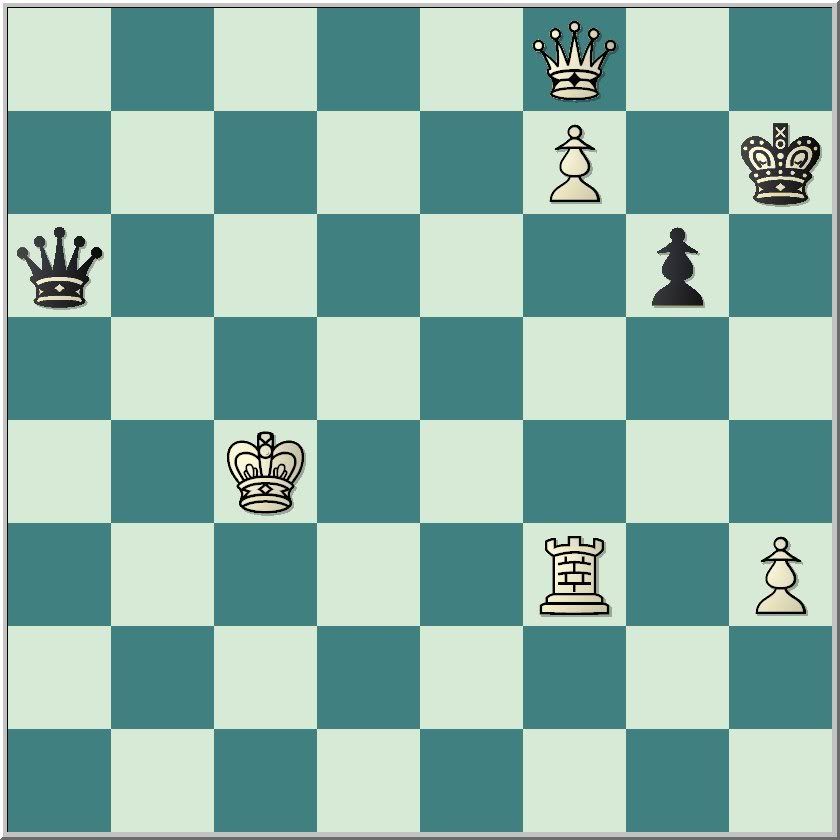
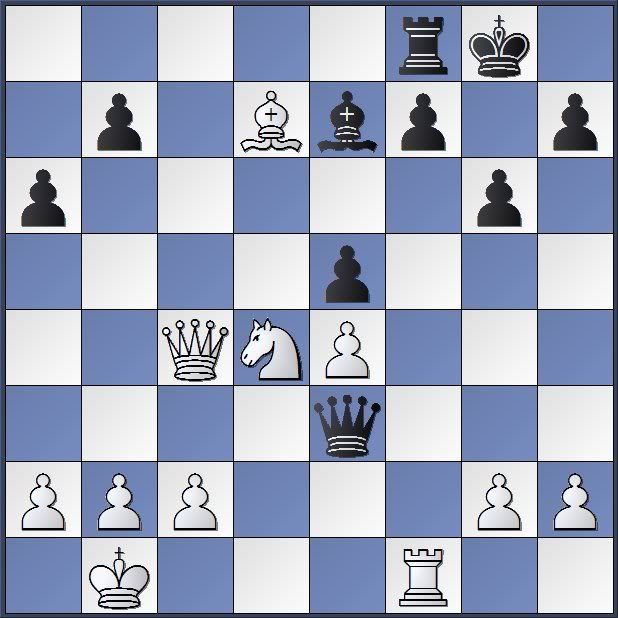
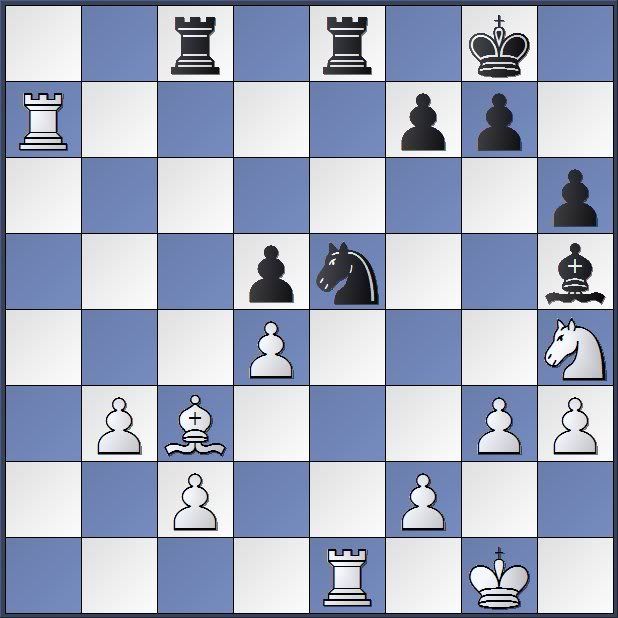
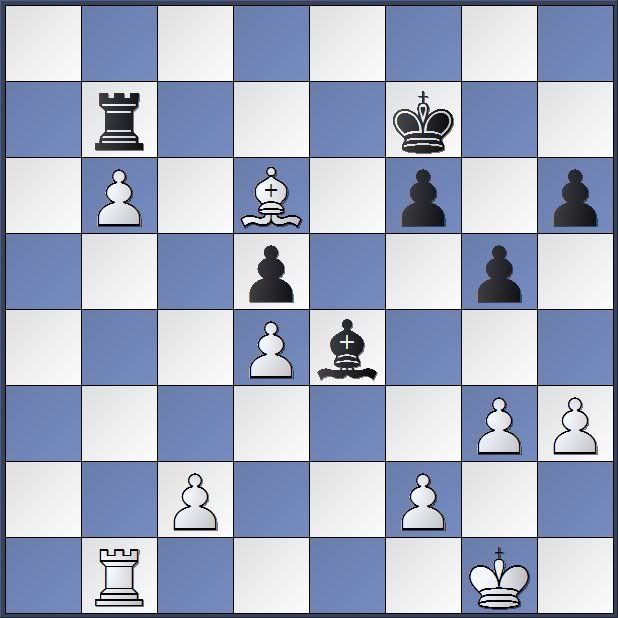
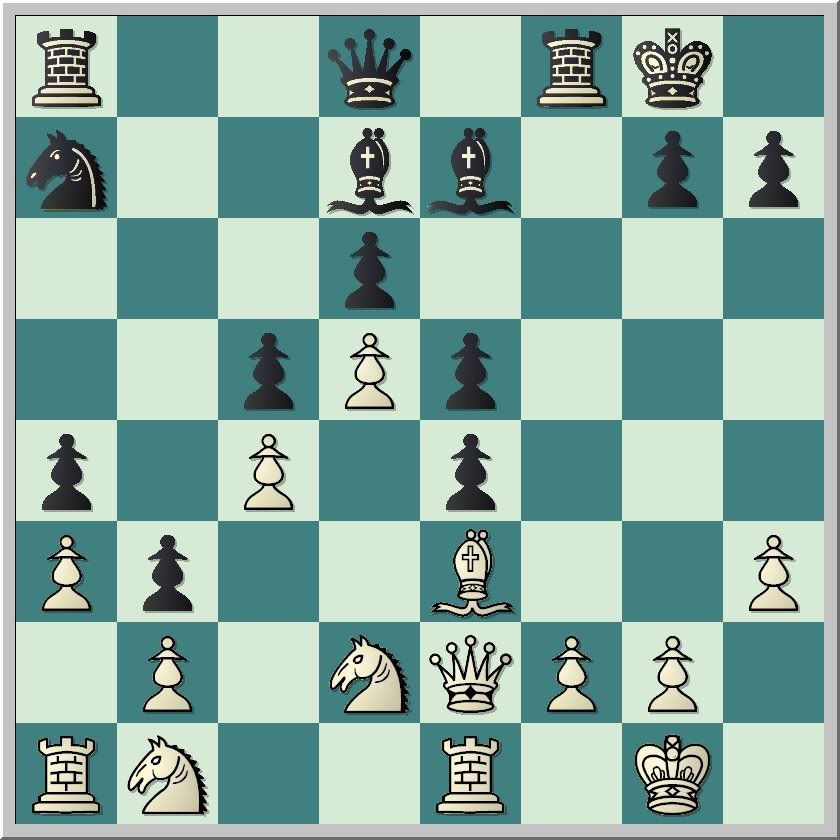
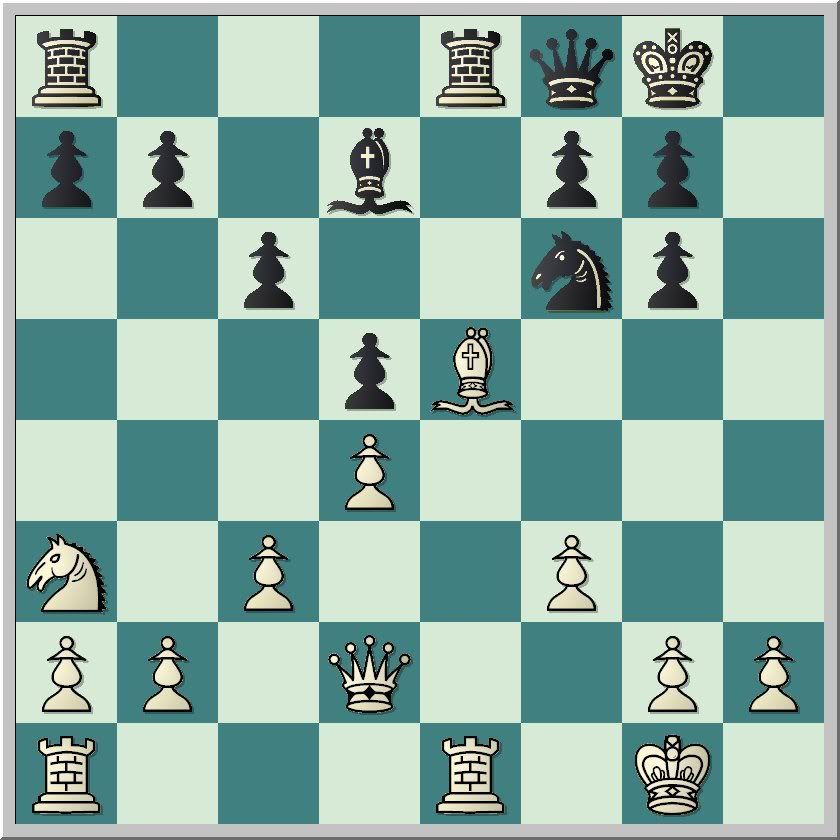
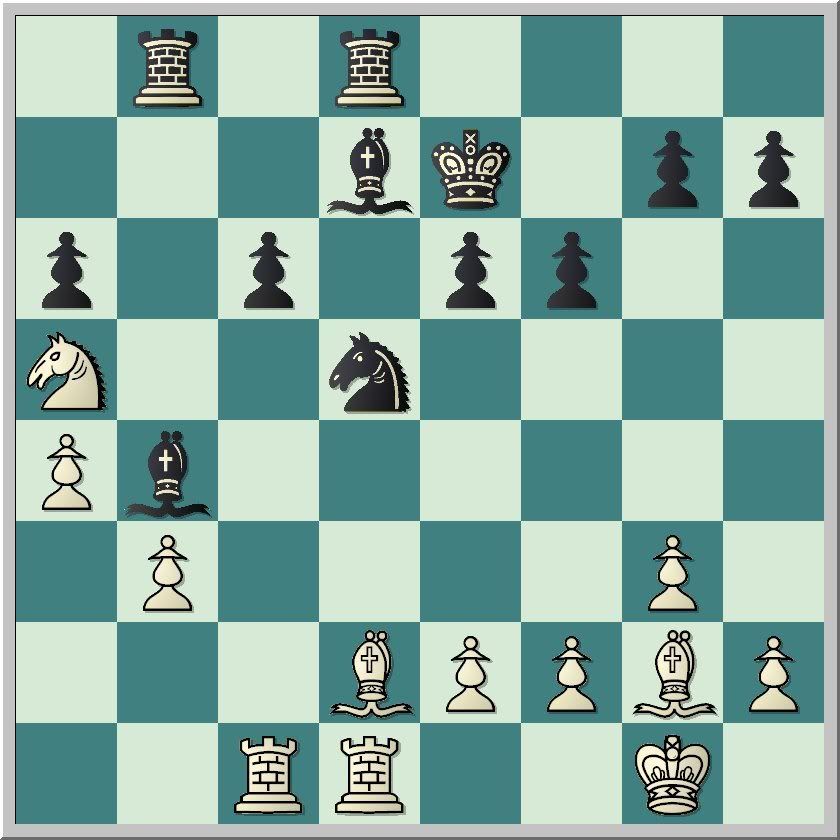
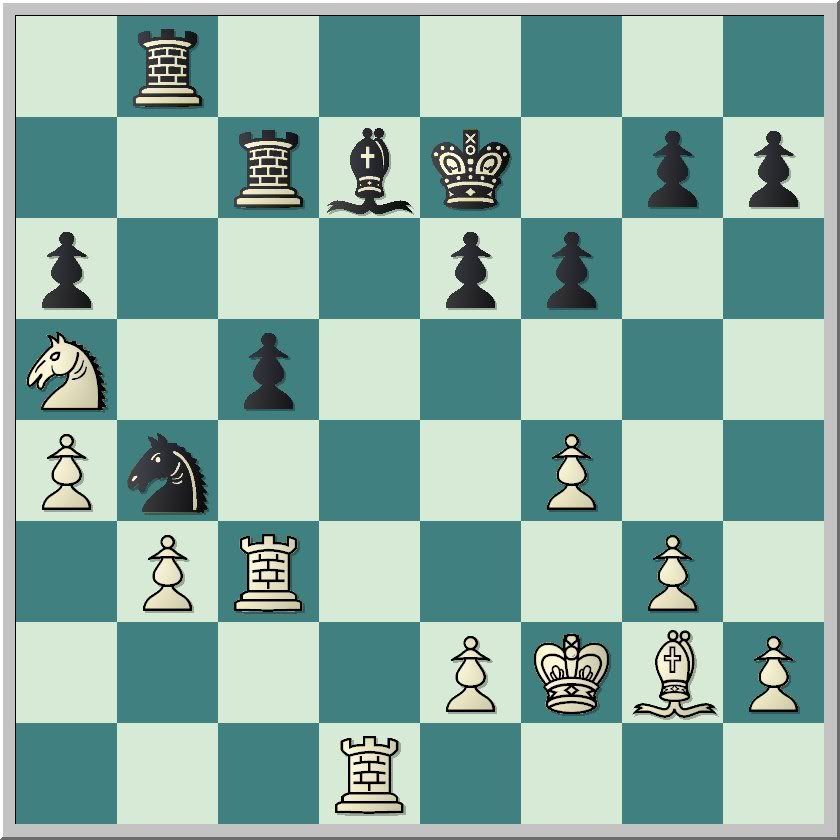
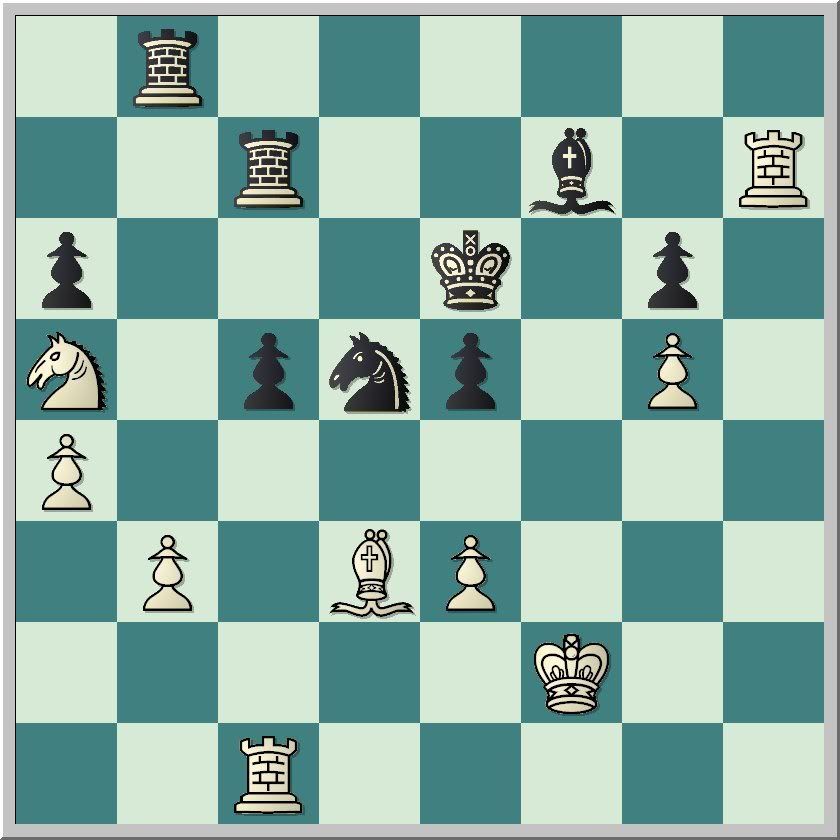
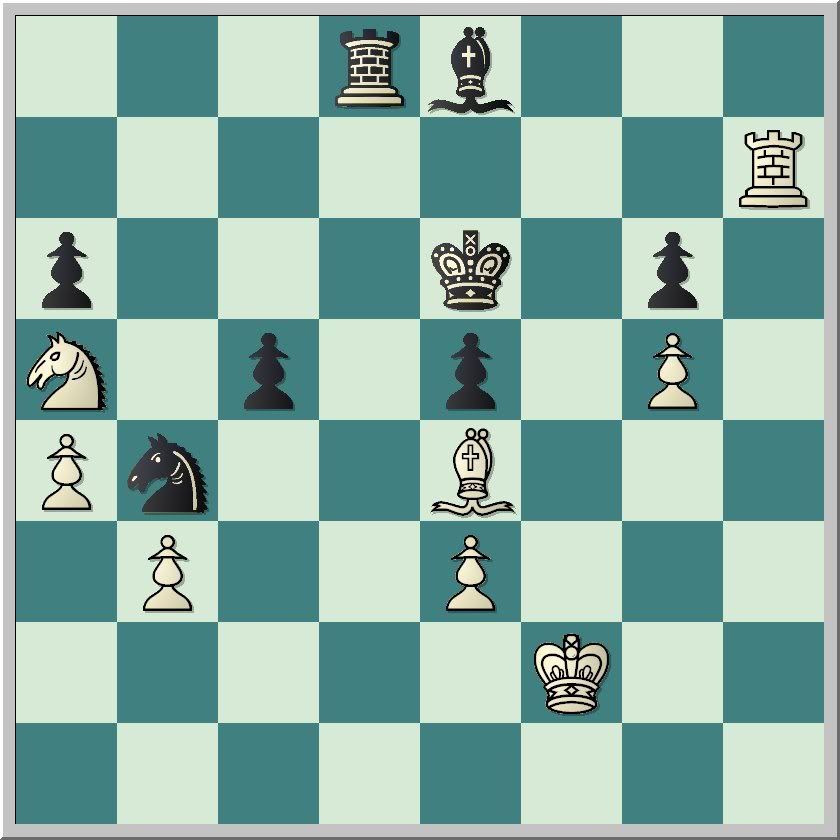
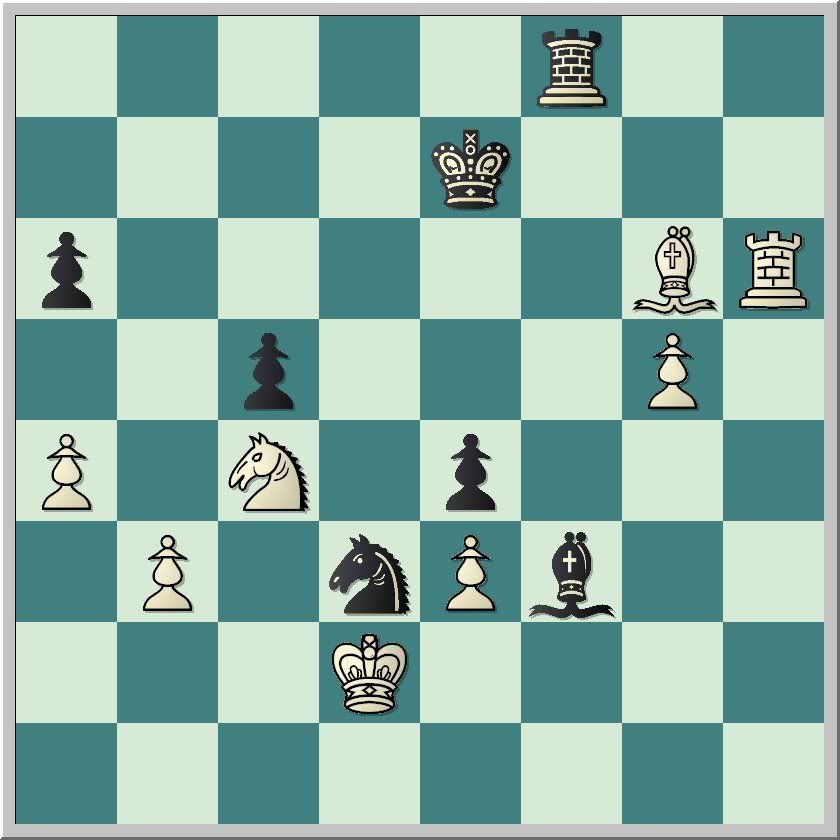
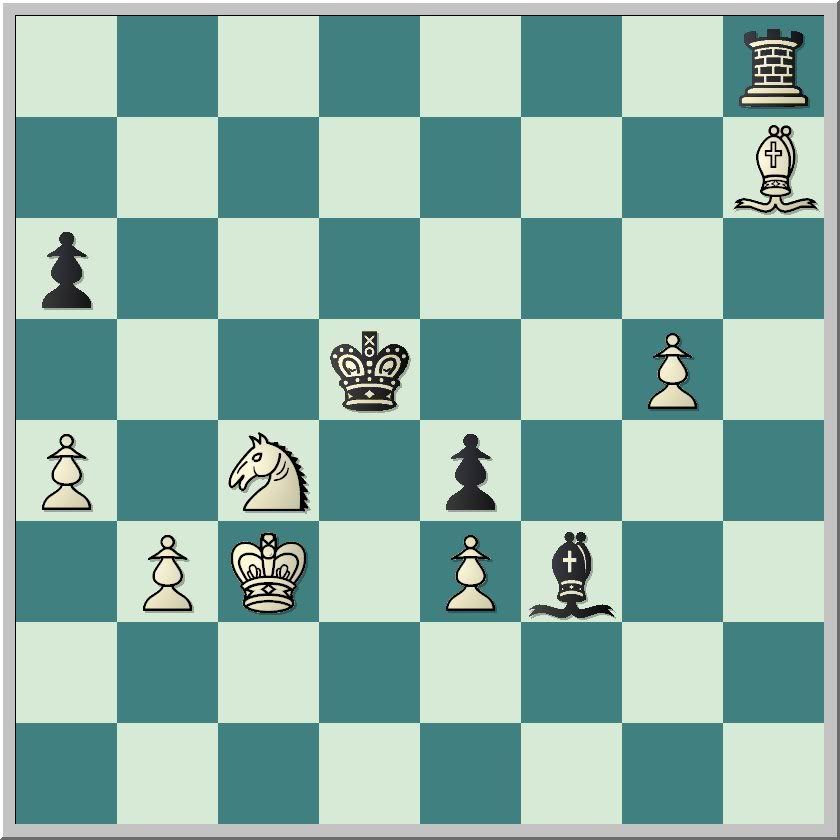
In the Corus Chess 2009 tournament, six players are tied for first in the Grandmaster A Group.
Standings after Twelve Rounds
1. Aronian, Dominguez, Radjabov, Movsesian, Karjakin, Carlsen 7.0
7. Kamsky 6
8. Ivanchuk, Smeets, van Wely 5.5
11. Adams, Wang, Stellwagen 5
14. Morozevich 4.5
Tomorrow, the games start an hour earlier--12:30pm CET.
The match-ups to watch:
Levon Aronian has Black against Jan Smeets
Leinier Dominguez has White against Sergei Karjakin
Teymour Radjabov has White against Daniel Stellwagen
Sergei Movsesian has Black against Gata Kamsky
Magnus Carlsen has Black against Wang Yue
Who wants it bad enough to take the risks necessary to win?
Corus C Group
Tournament leader Wesley So defeated Tiger Hillarp Persson, his closest pursuer. A draw tomorrow makes him the winner, and secures his invitation to next year's B Group.
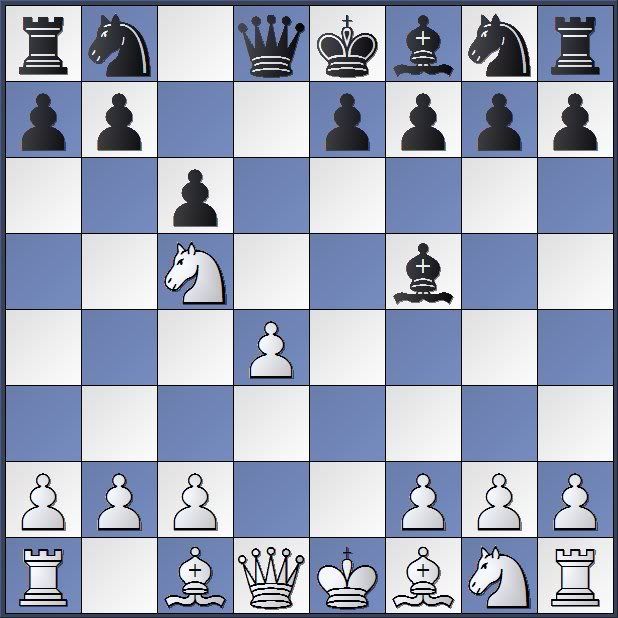
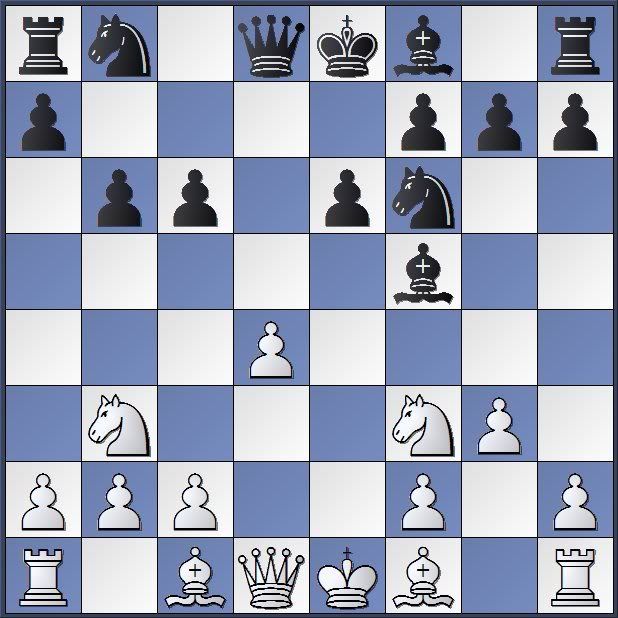
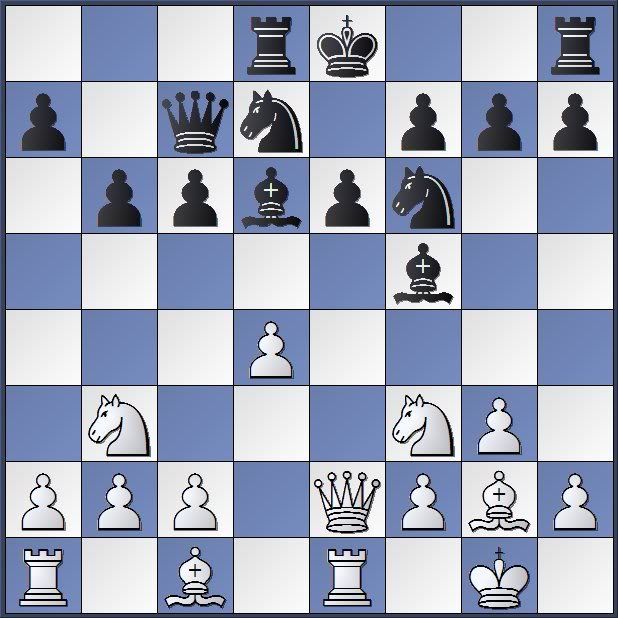
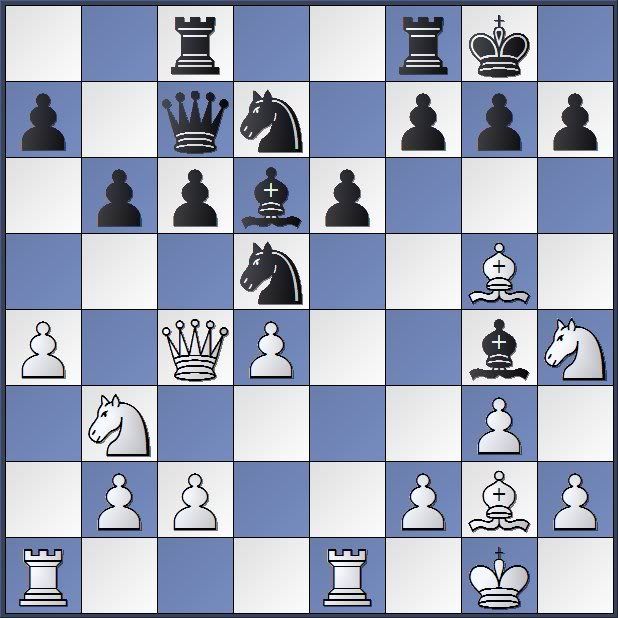
Hillarp Persson - So [D11]
Corus Chess (12), Wijk aan Zee 2009
1.d4 d5 2.c4 c6 3.Nf3 Nf6 4.e3 a6 5.Bd3 Bg4 6.Qb3 Bxf3 7.gxf3 Qc7 8.Nc3 e6 9.a4 Nbd7 10.cxd5 cxd5 11.a5 Nb8 12.Bd2 Nc6 13.Ke2 Bd6 14.Na4 0–0 15.Qb6 Qe7 16.Nc5 Rab8 17.f4 Bc7 18.Qb3 Bxf4 19.Qc3 e5 20.Nb3 Rfc8 21.dxe5 Bxe5 22.Qc5 Nd4+ 23.Qxd4 Bxd4 24.Nxd4 Ne4 25.Rag1 g6 26.Bxe4 dxe4 27.h4 Rc4 28.Bc3 Rxc3 29.bxc3 Qc7 30.Kf1 Qxa5 31.h5 Qa1+ 32.Kg2 Qxc3 33.hxg6 fxg6 34.Rh4 Re8 35.Rb1 b5 36.Rhh1 Qc5 37.Rbc1 Qg5+ 38.Kf1 Rf8 39.Rh2 Qxe3 0–1
The newest Grandmaster, Anish Giri, also won today.
Giri - Leon Hoyos [A41]
Corus Chess (12), Wijk aan Zee 2009
1.d4 d6 2.Nf3 Bg4 3.g3 Bxf3 4.exf3 g6 5.c4 Nd7 6.Bg2 Bg7 7.0–0 c6 8.Nc3 Nb6 9.d5 Rc8 10.Qd3 Nf6 11.Be3 cxd5 12.cxd5 Nfd7 13.Bd4 Bxd4 14.Qxd4 0–0 15.Rfe1 Nf6 16.Re2 Rc4 17.Qd3 a6 18.Rae1 Rc7 19.f4 Nc4 20.b3 Na3 21.Bh3 Rc5 22.Ne4 Nxe4 23.Rxe4 Rc7 24.f5 Nb5 25.fxg6 hxg6 26.a4 Na7 27.Qd4 b5 28.Rh4 f6 29.Qe3 g5 30.Qe4 f5 31.Qe6+ Kg7 32.Qh6+ Kf7 33.Bxf5 1–0
With eight points, Giri is the only player capable of catching So. If he wins tomorrow (Black against Dronavalli Harika) and So loses (White against David Howell), the two will tie for first. I think we can expect some quick draws in the C Group.
Corus B Group
Nigel Short is still playing. Before today's games, he had half a point lead over Rustam Kasimdzhanov and Fabiano Caruana. Kasimdzhanov won and Caruana drew. Short and Kasimdzhanov both have Black tomorrow. If their opponents are ambitious, the conclusion could be very much in the air.
10:22am PST; 7:22pm CET
Nigel Short - Zahar Efimenko was drawn. Short and Kasimdzhanov are tied with 8.
31 January 2009
Six Lead Corus!
Posted by
James Stripes
at
9:12 AM
0
comments
Labels: chess news, Wijk aan Zee
Wijk aan Zee: Round Twelve
The penultimate round is in progress at Wijk aan Zee, Netherlands. Nearly half of the players in the Grandmaster A Group can be confident that with two good games, he will finish in first. In this fourteen player all play all tournament, 8.5 points is good enough for first place most years. Four players remain capable of reaching that mark. Some years, 8 points are good enough, and six players are within reach of that score.
For the chess fan, it is hard to select the key game to watch.
Alexander Morozevich will finish near last place. He has two wins, four draws, and five losses. Today he has Black against one of the leaders, Levon Aronian. The opening was a Grunfeld. Aronian castled long, and his monarch looks a wee bit less secure than Moro's.
Against Jan Smeets, Magnus Carlsen played 1.c4, but this English rapidly transposed into a Caro-Kann.
The event's top seed, Vassily Ivanchuk, has been inconsistent in this event and will need a strong performance in the last two rounds to finish in the upper half. He is struggling for advantage against Leinier Dominguez, who played a Sicilian Defense. Dominguez is one of the current leaders, and has recently joined the exclusive group of players rated above 2700. His rating graph shows a steady rise: he crossed over 2600 on the April 2002 rating list, and over 2700, July 2008.
Sergei Karjakin - Michael Adams are playing from a closed Ruy Lopez.
Two of the four leaders are playing each other. Sergei Movsesian opted for a Bb5 line against Teymour Radjabov's Sicilian.
It is 6:30 am on the Pacific Coast of North America. That's 3:30pm on the North Sea Coast where these games started two hours ago.
Loek van Wely and Gata Kamsky played to an early draw. Perhaps Kamsky is starting to think more about his games next month. Meanwhile five other games are demanding my attention. I need to make some choices while I extract some nectar from the almighty coffee bean.
The Youngest Grandmaster
My attention has been directed towards the drama of the Corus A Group, but in the C Group Anish Giri completed his final Grandmaster norm. At fourteen and a half, he is now the youngest grandmaster in the world and currently in third place in the C Group, one game behind Wesley So. Watching Giri attempt to break down Leon Hoyos's Modern Defense could easily draw my attention away from the battles in the A Group. Giri came into this event rated 2469, fifteen points lower than the 2004 C Group winner who was about the same age then, Magnus Carlsen.
Giri - Leon Hoyos [A41]
Corus Chess (12), Wijk aan Zee 2009
1.d4 d6 2.Nf3 Bg4 3.g3 Bxf3 4.exf3 g6 5.c4 Nd7 6.Bg2 Bg7 7.0–0 c6 8.Nc3 Nb6 9.d5 Rc8 10.Qd3 Nf6 11.Be3 cxd5 12.cxd5 Nfd7 13.Bd4 Bxd4 14.Qxd4 0–0
7:21am PST; 4:21pm CET
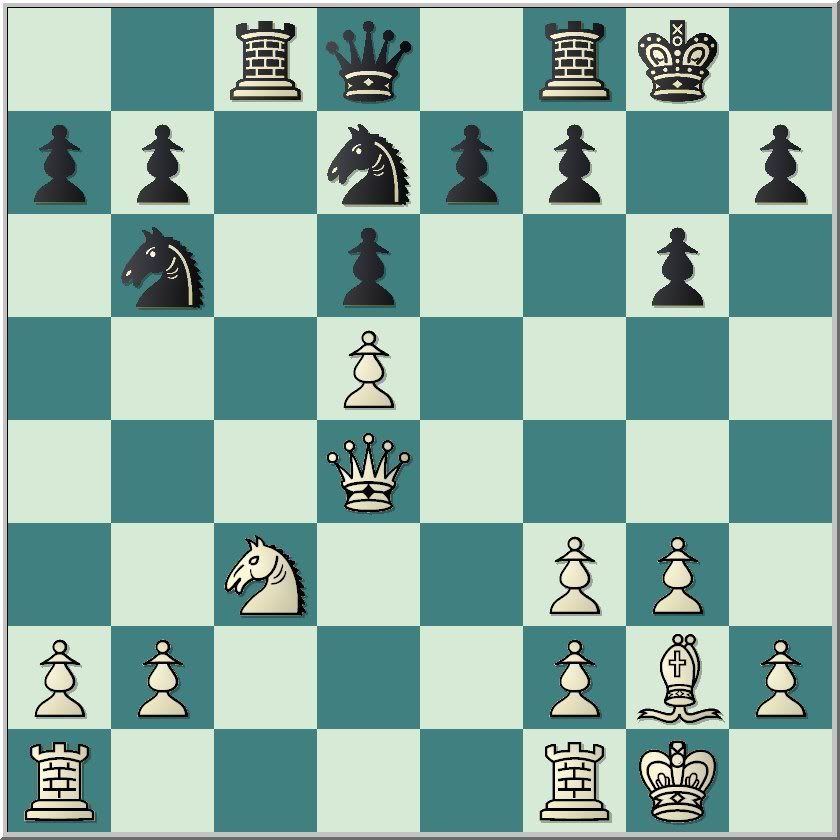
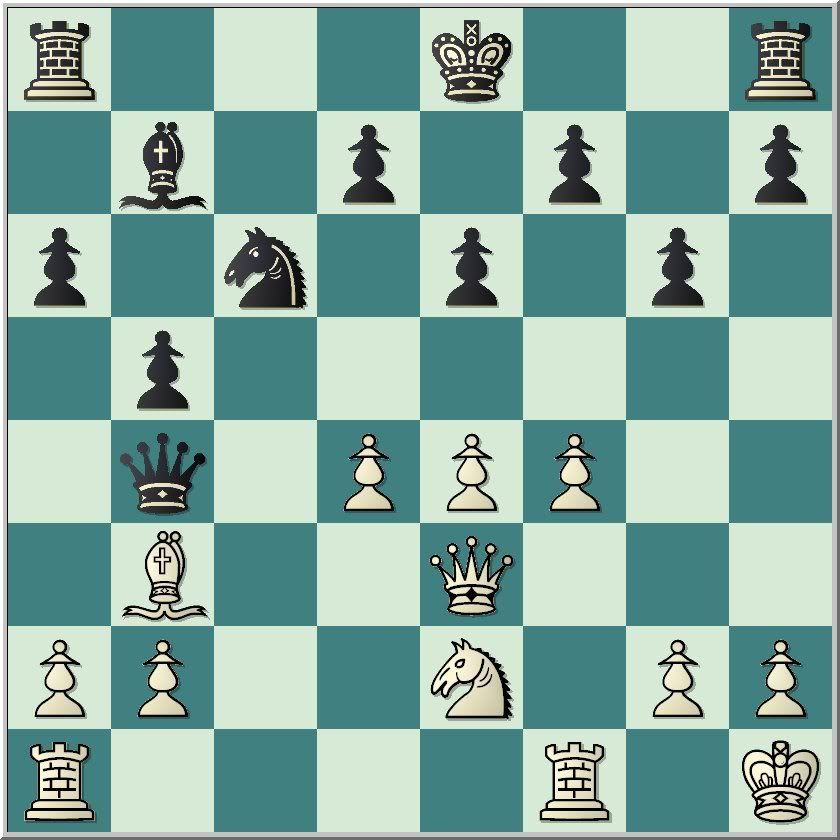
Aronian - Morozevich [D98]
Corus Chess (12), Wijk aan Zee 2009
1.d4 Nf6 2.c4 g6 3.Nc3 d5 4.Nf3 Bg7 5.Qb3 dxc4 6.Qxc4 0–0 7.e4 Bg4 8.Be3 Nfd7 9.0–0–0 a6 10.h3 Bxf3 11.gxf3 b5 12.Qb3 c5 13.dxc5 e6 14.f4 Qe7 15.Rd6 Rc8 16.e5 Nxc5 17.Bxc5 Rxc5 18.Kb1 Rc8 19.h4
19...Qb7
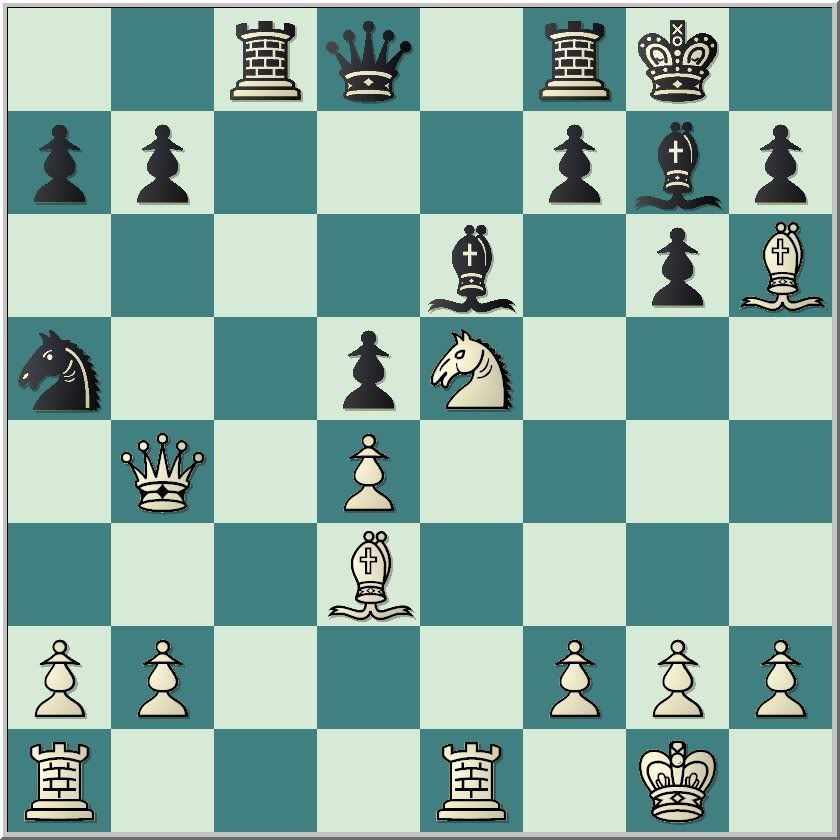
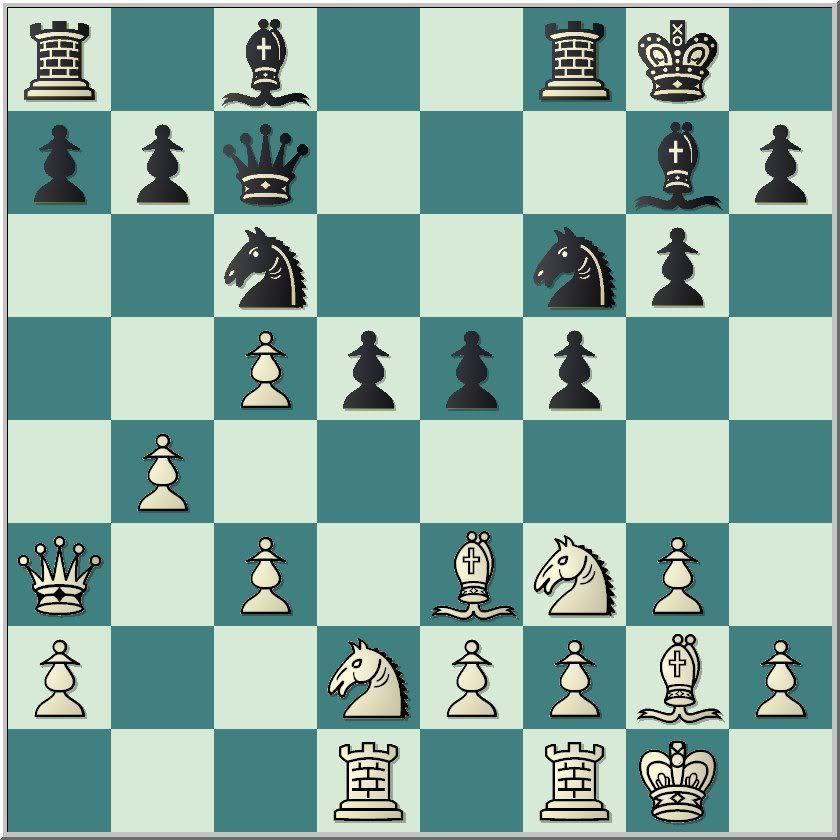
Carlsen - Smeets [B10]
Corus Chess (12), Wijk aan Zee 2009
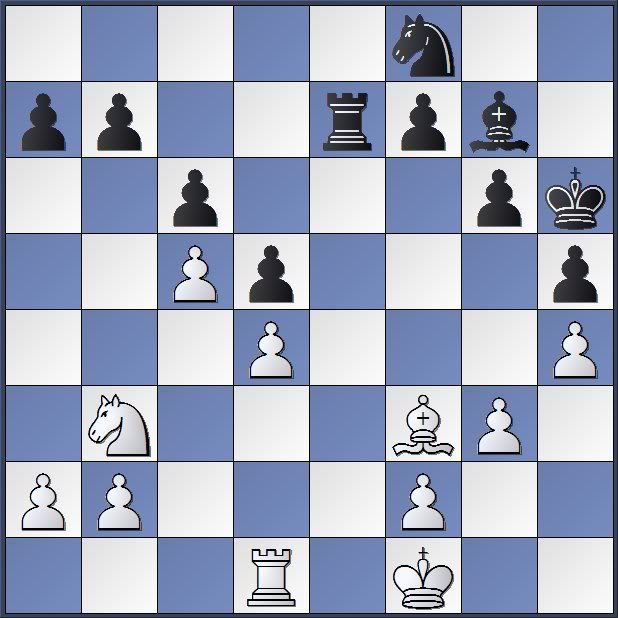
1.c4 c6 2.e4 d5 3.exd5 cxd5 4.cxd5 Nf6 5.Nc3 Nxd5 6.Nf3 Nc6 7.Bb5 e6 8.0–0 Be7 9.d4 0–0 10.Re1 Bd7 11.Bd3 Rc8 12.Nxd5 exd5 13.Ne5 Bf6 14.Bf4 g6 15.Qb3 Na5 16.Qb4 Be6 17.Bh6 Bg7
18.Bxg7 Kxg7 19.h4 Re8
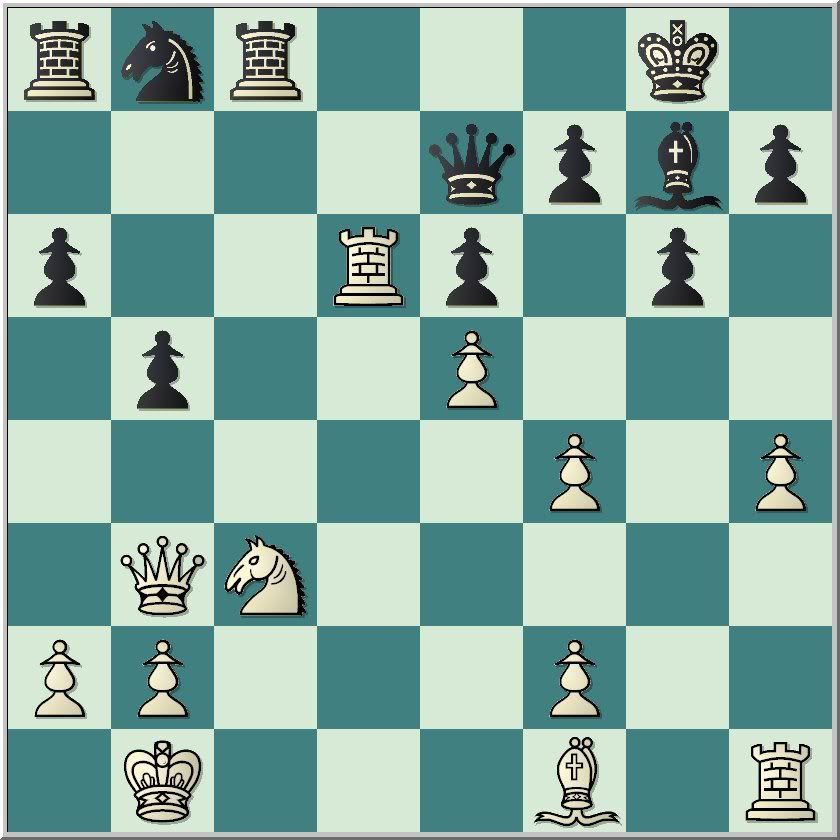
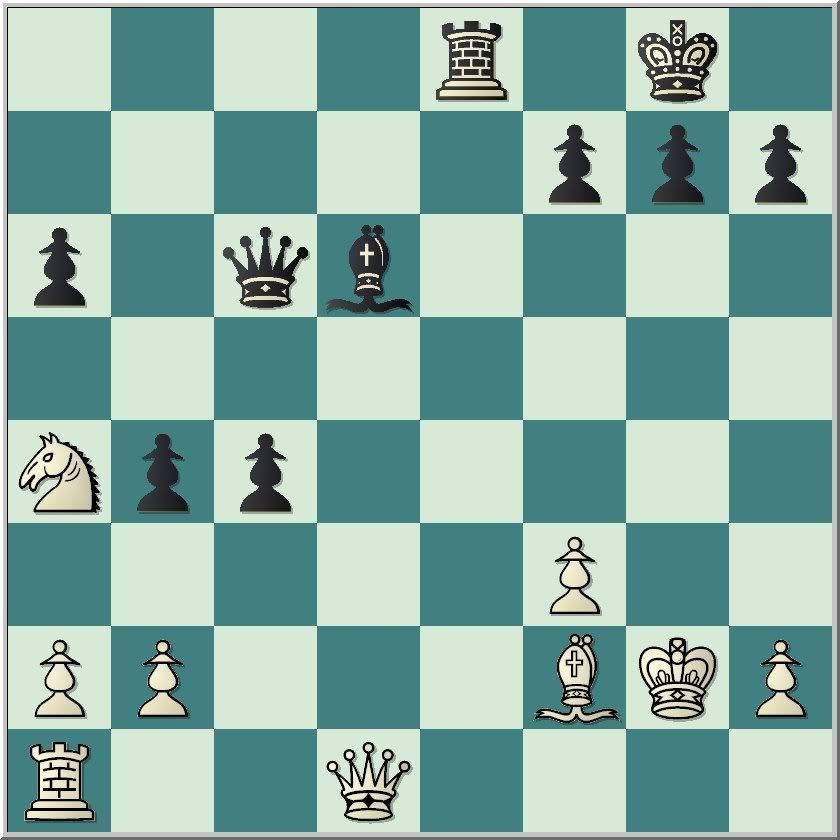
Movsesian - Radjabov [B30]
Corus Chess (12), Wijk aan Zee 2009
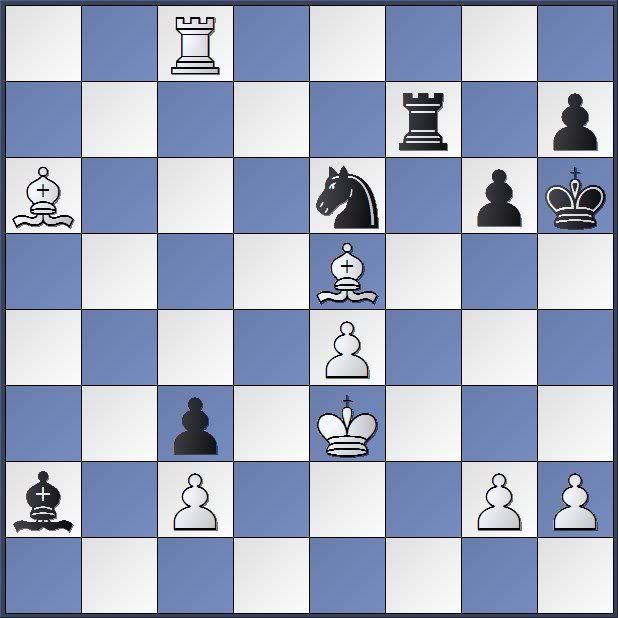
1.e4 c5 2.Nf3 Nc6 3.Bb5 e6 4.0–0 Nge7 5.Nc3 Nd4 6.Nxd4 cxd4 7.Ne2 a6 8.Ba4 Nc6 9.d3 b5 10.Bb3 Bc5 11.f4 Qh4 12.Bd2 Bb7 13.Kh1 Qe7 14.Qe1 g6 15.c3 dxc3 16.Bxc3 Bb4 17.d4 Bxc3 18.Qxc3 Qb4 19.Qe3
19...Na5 20.d5 O-O
Things seem slow this morning (afternoon). I don't know if all the players are on a long think, or if there are broadcast transmission problems. But all these games seem to be moving slow, or not moving at all right now. The clocks on the Playchess server are never fully reliable for these broadcasts, but they usually give up some clues regarding the official game clocks. Today, they seem non-functional. Perhaps the servers are having bandwidth issues.
Perhaps the broadcast issue was local? The Playchess server seemed frozen, but my web browser was slow, and an expected email was delayed. I'll rant about the near monopoly of my ISP another day.
In the A Group, Carlsen beat Smeets and Karjakin prevailed over Adams. Aronian - Morozevich is still in progress, and the otehr games were drawn.
If Aronian - Morozevich ends as a draw:
Standings after Twelve Rounds (Projected)
1. Aronian, Dominguez, Radjabov, Movsesian, Karjakin, Carlsen 7.0
7. Kamsky 6
8. Ivanchuk, Smeets, van Wely 5.5
11. Adams, Wang, Stellwagen 5
14. Morozevich 4.5
Aronian - Morozevich Update
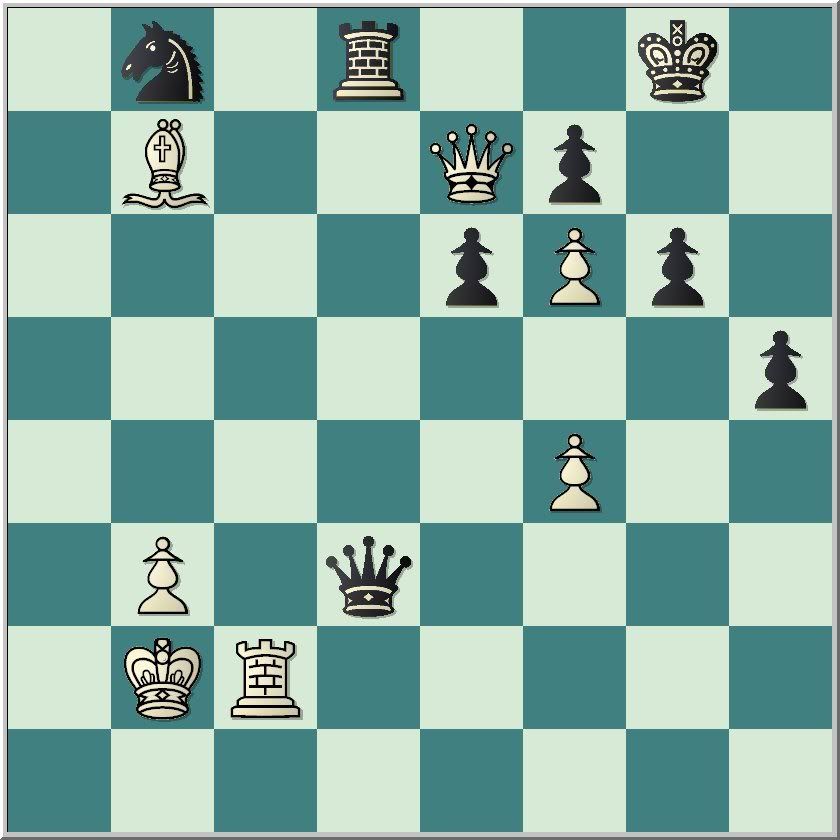
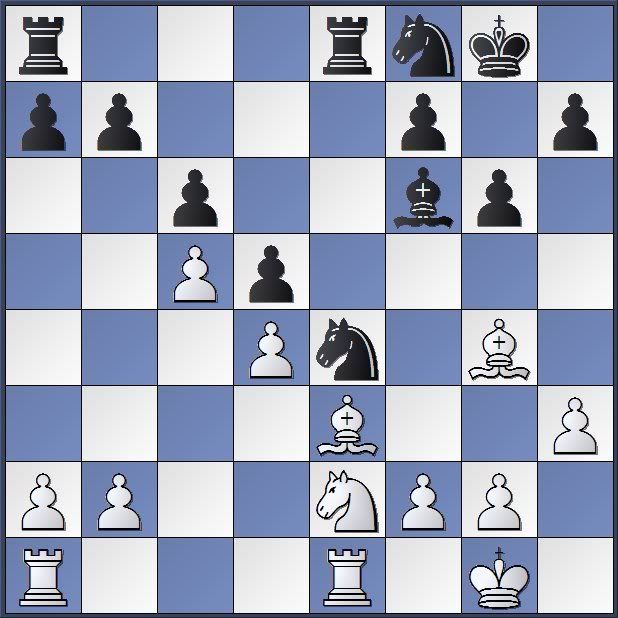
20.Rg1 Qf3 21.Bg2 Qxf2 22.Qd1 Ra7 23.Ne4 Qxh4 24.Qd4 Rac7 25.Nf6+ Bxf6 26.exf6 Rf8 27.b3 Qh5 28.Rd1 Qf5+ 29.Ka1 h5 30.Rd8 Rc8 31.Rd6 a5 32.Bb7 Rce8 33.Re1 b4 34.Kb2 Qh3 35.Re5 a4 36.Qxb4 axb3 37.axb3 Rd8 38.Rxd8 Rxd8 39.Re2 Qf5 40.Qe7 Qd3 41.Rc2
41...Qd4+ 42.Ka2 h4
That pawn must be stopped, and the stopping may relieve Black of any pressure on his king. But, the position is complex, and there is a lot at stake. Aronian can hope to go into the last round with a 1/2 point lead. Morozevich can lift himself from sole possession of last place.
43.Rc7 Qd2+ 44.Ka3 1/2-1/2
The White king's own security appears to be decisive. This draw creates some anticipation for tomorrow's battles.
Posted by
James Stripes
at
5:59 AM
2
comments
Labels: Aronian, chess news, Dominguez, Morozevich, Wijk aan Zee
30 January 2009
Wijk aan Zee: Round Eleven
Three rounds remain in the Corus Chess 2009 tournament. In the Grandmaster A Group, five of today's seven games could have an impact on who emerges as the champion on Sunday. Levon Aronian leads and Sergei Karjakin follows him by half a point. Another half a point behind him are four players: Magnus Carlsen, Leinier Dominguez, Teymour Radjabov, and Sergei Movsesian.
There are plenty of interesting and vital battles in the Grandmaster B Group, and the GM C group, too. Nigel Short leads the B Group with five players half a point behind. In C, Tiger Hillarp Persson is half a point ahead of Wesley So.
This tournament is a potluck prepared by the greatest chefs. Every choice excludes many other exceptional possibilities. I'm a terrible sports fan because I prefer to watch only the best winners. It is hard to divert my attention from Dominguez - Aronian because Aronian is in first. A win by Dominguez cdould produce a new leader from one of the other games and put both opf these players in second. Kamsky - Karjakin is my second choice because the player of Black is in second and Kamsky is hungry. Still, I will be unable to ignore three other games: Wang - Radjabov, van Wely - Movsesian, and Morozevich - Carlsen. The players with the best chances to finish at the top mostly seem to be playing Black today.
6:32am PST, 3:30pm CET
I was up late last night because I drank a bunch of coffee at chess club where I played another French against Michael Cambareri, a high school senior that has not played much recently. In 2005, he ran over the top of my MacCutcheon, so last night I opted for the Winawer. He got in an early Nd6+ and I was struggling in an almost equal position that was tiring. Our game lasted two hours and my position collapsed on move twenty. More on that game another day. Suffice it to say, I'm bleary eyed for my virtual visit to the Netherlands this morning where the games have been underway for two hours.
Dominguez - Aronian [C88]
Corus Chess (11), Wijk aan Zee 2009
1.e4 e5 2.Nf3 Nc6 3.Bb5 a6 4.Ba4 Nf6 5.0–0 Be7 6.Re1 b5 7.Bb3 0–0 8.d4 Nxd4 9.Nxd4 exd4 10.e5 Ne8 11.c3 dxc3 12.Nxc3 d6 13.Bd5 Rb8 14.Be3 Be6 15.Ba7 Bxd5 16.Bxb8 Bb7 17.Ba7 Qa8 18.exd6 Bxd6 19.Bd4 b4 20.Na4 Bxg2 21.Rxe8 Qxe8 22.Kxg2 c5 23.Be3 Qc6+ 24.f3 Re8 25.Bf2 c4
So many pieces are gone already, but queens on an open board is always beyond my search horizon, and easy for my software to mis-evaluate as well. Grandmasters are different. They understand nuances of the game that give them insight into positions such as this, and can answer the critical question: who stands better?
Kamsky - Karjakin [D02]
Corus Chess (11), Wijk aan Zee 2009
1.d4 d5 2.Nf3 Nf6 3.c3 c5 4.dxc5 g6 5.g3 Bg7 6.Bg2 0–0 7.0–0 Nc6 8.Qb3 Qa5 9.Qa3 Qc7 10.Bg5 Ne4 11.Be3 e5 12.Nbd2 f5 13.Rad1 Nf6 14.b4
This position looks a little more like those I'm struggling with every other month in some correspondence game or other. Kamsky's queen side pawn majority might give him something to play for in the endgame, but for now he struggles to create weaknesses in Karjakin's position. If he oversteps, the dynamism of Black's forces will become all too clear.
7:00am PST; 4:00pm CET
Dominguez - Aronian Update
26.Nb6 c3 27.bxc3 bxc3 28.Qd5 Qc7 29.Nc4
Black to move
Fritz 9 is convinced that Aronian must play Bf8; Hiarcs 12 prefers Bxh2. Both see the knight for two pawns as having White slightly more than one pawn to the good. I don't think that Aronian is in any serious danger. He has some pressure, and his additional pawns assure that he will always have threats. On the other hand, the material imbalance may warrant the claim that White stands better.
Morozevich - Carlsen Update
Chess Fans' Favorite
These players like to avoid draws, yet their game seems headed that way.
Morozevich - Carlsen [E37]
Corus Chess (11), Wijk aan Zee 2009
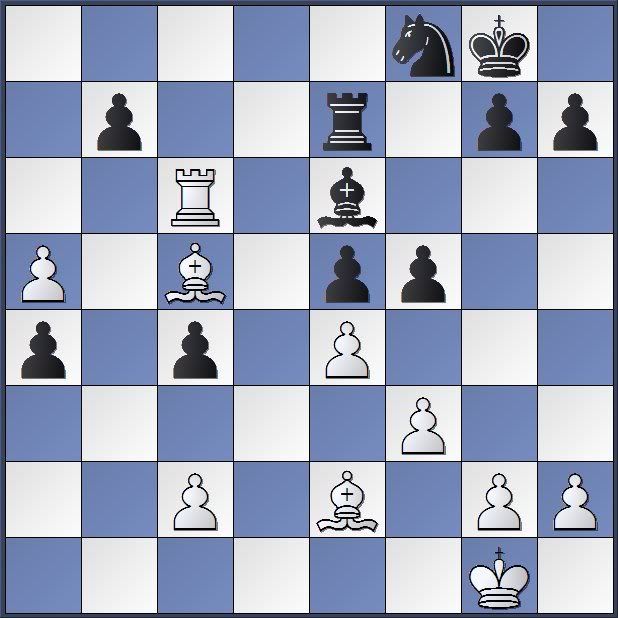
1.d4 Nf6 2.c4 e6 3.Nc3 Bb4 4.Qc2 d5 5.a3 Bxc3+ 6.Qxc3 Ne4 7.Qc2 c5 8.dxc5 Nc6 9.cxd5 exd5 10.e3 Bf5 11.Bd3 0–0 12.Nf3 Qa5+ 13.Nd2 Nxd2 14.Bxd2 Bxd3 15.Qxd3 Qxc5 16.Rc1 Qb6 17.0–0 Rad8 18.f4 Rfe8 19.b4 h6 20.h3 a6 21.Rc5 a5 22.Rfc1 axb4 23.axb4 Re4 24.Kh2 Rc4 25.R1xc4 dxc4 26.Qe2 Nxb4 27.Rxc4 Nd3 28.Rd4
Black to move
It's hard to imagine that the rooks will remain on the board another move. That will leave us with a queen and minor piece each and a few pawns. After Moro stops the b-pawn, Carlsen should be happy with another draw, even if his opponent languishes in last place.
28...Rxd4 29.exd4 Qxd4 30.Qe8+ Kh7 31.Qxf7 Qe4
7:43am PST; 4:43pm CET
Dominguez - Aronian Update
29...Bb4 30.Rc1 Re2
I think that move was an error. Aronian is low on time, and may have cracked. A loss will keep this event wide open for many contenders.
31.Rxc3 h6 32.Re3 Rxa2 33.Re8+ Kh7 34.Ne3 Rxf2+ 35.Kxf2 Bc3 36.Kg2 1-0
Morozevich - Carlsen Update
32.f5 Qe5+ 33.Kh1 Nf2+ 34.Kg1 Ne4 35.Bf4 Qd4+ 36.Kh2 Nf6 37.Bxh6 Qe5+ 38.Kh1 Qe1+ 39.Kh2 Ng4+ 40.hxg4 Qh4+ 41.Kg1 Qe1+ 1/2-1/2
8:31am PST; 5:31pm CET
Kamsky won!
8:40am PST; 5:40pm CET
Two games are still in progress. Both Movsesian and Radjabov apear to have a significant advantage. If they both win, four players will lead with 6 1/2: Aronian, Bominguez, Movsesian, and Radjabov. Karjakin and Carlsen are right behind with 6.
Eight points, or even seven and a half, might be enough to share first this year. And eight of the fourteen players still have a shot at 7.5. Six could finish with 8.
Movsesian won!
8:55am PST; 5:55pm CET
Standings after Eleven Rounds (Projected)
1. Aronian, Dominguez, Radjabov, Movsesian 6.5
5. Karjakin, Carlsen 6
7. Kamsky, Smeets 5.5
9. Ivanchuk, Adams, van Wely, 5
12. Wang, Stellwagen 4.5
14. Morozevich 4
Wang Yue - Teymour Radjabov is still in progress, but Radjabov appears to be winning.
9:40am PST; 6:40pm CET
Radjabov won. My projected standings above are now official. Nigel Short is solidly in first place in the B Group.
Posted by
James Stripes
at
6:07 AM
2
comments
Labels: chess news, Wijk aan Zee
29 January 2009
Tournament Directors: Beware
And the king said, "Bring me a sword." So a sword was brought before the king. And the king said, "Divide the living child in two, and give half to the one, and half to the other."
I Kings 3: 24-25
The game between Teymour Radjabov and Jan Smeets yesterday had a remarkable finish. With both players in time trouble, and with Radjabov finally securing an advantage after a complex and difficult game, Radjabov knocked Smeets' bishop askew after moving his rook. He pressed his clock; Smeets immediately pressed the clock and asked Radjabov to correct the piece on his time.
The official report on the Corus Chess 2009 site states:
The game’s climax happened when as he was making his 39th move, and with only seconds on the clock for both players, Radja knocked over a piece, and pressed the clock without fixing it. Smeets restarted his opponent’s clock without making a move., Teimour then overstepped the time limit. Just before the arbiters were about to award a time win for the Dutchman (a decision that would have been sure to prompt an appeal), and upon the initiative of the arbiters, the players decided to meet half way and the game was declared a draw.Further discussion of the incident should start at ChessVibes and Mark Crowther's The Week in Chess Report.
"Report of Round 10"
Chess Vibes has a video of the incident and the subsequent press conference.
Posted by
James Stripes
at
9:28 AM
4
comments
Labels: Arbitration, chess news, Radjabov, Smeets, Wijk aan Zee
28 January 2009
Aronian, Carlsen Win! Aronian Alone in First
Corus Chess 2009, Wijk aan Zee
Co-leader Levon Aronian showed Michael Adams, and the world, how rook endgames can be won. This victory put him alone in first place going into the last rest day because the other leaders drew or lost. Sergei Karjakin drew Loek van Wely. Co-leader Leinier Dominguez lost to Magnus Carlsen, ending the young player's winless streak. In 2008 Carlsen and Aronian shared first with eight points each. That finale remains one of several possibilities with three rounds remaining.
Standings after Ten Rounds
1. Aronian 6.5
2. Karjakin 6
3. Carlsen, Dominguez, Radjabov, Movsesian 5.5
7. van Wely, Smeets 5
9. Ivanchuk, Kamsky, Adams, Wang 4.5
13. Stellwagen 4
14.Morozevich 3.5
I'm studying the endgame in Aronian - Adams, and expect to post again this evening.
Posted by
James Stripes
at
11:56 AM
2
comments
Labels: Aronian, Carlsen, Catalan, chess news, Wijk aan Zee
Wijk aan Zee: Round Ten
Five players contend for tournament victory in the Corus A Group in Wijk aan Zee. With four rounds to go, Levon Aronian, Sergei Karjakin, and Leinier Dominguez share the lead. Half a point behind them are Sergei Movsesian and Teymour Radjabov. There are no easy games in a tournament of this stature; the players at the bottom of the rankings are some of the world's best that are having a poor event. The top seed, Vassily Ivanchuk is tied in tenth with Gata Kamsky--who is playing a match with Veselin Topalov next month to select the World Championship challenger--and Wang Yue, who went most of 2008 without a loss.
Aronian's penultimate game in this event (Saturday) will be against Alexander Morozevich who is currently in last place, but capable of beating anyone. Today Aronian played a Catalan against Michael Adams. Things looked tense early on when the Armenian castled long. Now they are in a rook endgame in which Aronian has better pawn structure and some semblance of an initiative. As we know, however, "rook endgames are drawn," and these two players usually draw in their battles.
Sergei Karjakin is hammering away at Loek van Wely's Najdorf. The game featured the customary opposite wing castling and storms of pawns to frighten both monarchs. A win for White could give the youngest Grandmaster in history a temporary lead in this event. Van Wely is among those tied for sixth, which is far better than his performance here in recent years. Indeed, he and Jan Smeets are showing that Dutch players do not always finish at the bottom at Corus in the post-Jan Timman years. Perhaps Timman's harsh words for his countrymen last fall has given them some motivation to prove him wrong.
Magnus Carlsen shared first with Aronian last year, but neither can win nor lose this year, it seems. He has White today against the third of the current event leaders: the Cuban player Dominguez. Dominguez played a Grunfeld and now has a bishop pair against a knight and bishop with the heavy pieces still on the board. But, the queenside pawns for both players have been liquidated, and that might favor the young Norwegian's horse. With so many pieces remaining, however, tactical considerations come first. Either player can create threats that the other must parry.
I don't know what to say about Radjabov's game against Smeets. It appears to have come from some sort of offbeat English. Smeet's pieces seem a bit hemmed in around his king, and the players are at move fifteen nearly three hours into the game. The clock may prove decisive if they don't decide on one of those accursed grandmaster draws.
Wang Yue played a Petroff (Russian Defense) against former leader Movsesian, and the game was drawn in 22 moves.
Movsesian - Wang Yue [D20]
Corus Chess (10), Wijk aan Zee 2009
1.e4 e5 2.Nf3 Nf6 3.Nxe5 d6 4.Nf3 Nxe4 5.c4 c6 6.Nc3 Nf6 7.d4 Be7 8.h3 d5 9.Bd3 0–0 10.0–0 dxc4 11.Bxc4 Nbd7 12.Re1 Nb6 13.Bb3 Nfd5 14.Bc2 Bf6 15.a3 Be6 16.Ne5 g6 17.Ne4 Bg7 18.Bg5 Qc7 19.Bh4 Rae8 20.Nc5 Nd7 21.Bg3 Bxe5 22.Bxe5 ½–½
I may be able to update this post with the results during lunch four hours from now. As unemployment in the world grows to levels not seen in decades, and that some fear might reach proportions last seen in the 1930s, I am not yet unemployed. Today is a full day of work that keeps me away from my computer. Life could be much worse: I'm teaching chess in classrooms today. The older youth in one school will be battling it out on their chess ladder, and a few might challenge me for a lesson. In another school, I'll be teaching first graders how bishops and rooks move. Then, there's the after school club where my scholastic chess activities began when my son (a few months younger than the Carlsen boy) was a third grader there.
Posted by
James Stripes
at
6:52 AM
2
comments
Labels: chess news, Wijk aan Zee
27 January 2009
Wijk aan Zee: Round Nine
In the Corus Chess Tournament, Grandmaster A Group in Wijk aan Zee, Netherlands, Sergei Movsesian leads after eight rounds. He is the fifth seed, and the tenth highest on the FIDE rating list. His recent move into the top ten results from rapid improvement in his performance. He won the Corus B Group in 2008, earning entry into this year's A Group. At the time he was number 42 on the FIDE rating list. In January 2007, he was number 74. His rating crossed 2700 for the first time in July 2008.
Current Standings
1. Sergei Movsesian 5
2. Levon Aronian, Sergei Karjakin, Leinier Dominguez, Teymour Radjabov 4 ½
6. Magnus Carlsen, Loek van Wely, Gata Kamsky, Michael Adams, Jan Smeets 4
11. Daniel Stellwagen, Vassily Ivanchuk, Wang Yue 3 ½
14. Alexander Morozevich 2 ½
I'm following several games as they unfold today: Karjakin - Movsesian and Kamsky - Aronian are both between players still in contention. Dominguez - Stillwagen and Morozevich - Radjabov both pit a potential leader against a player near the bottom of the standings. With five rounds to play, no player is completely out of the running, but it is unlikely that tail-ender Morozevich will win five straight. Even if he does, 7 ½ might be good enough for third place, but not first.
Magnus Carlsen, Levon Aronian, and Leinier Dominguez have yet to lose a game in this event. Carlsen and Daniel Stellwagen are the only players without a win.
Dominguez had a supported passed pawn already by move nine against Stellwagen. But, that's a frequent concession Black makes in the French Winawer.
Dominguez - Stellwagen [C18]
Corus Chess (9), Wijk aan Zee 2009
1.e4 e6 2.d4 d5 3.Nc3 Bb4 4.e5 c5 5.a3 Bxc3+ 6.bxc3 Ne7 7.Qg4 Qc7 8.Qxg7 Rg8 9.Qxh7 cxd4 10.Ne2 Nbc6 11.f4 Bd7 12.Qd3 dxc3 13.Rb1 0–0–0 14.Nxc3 Na5 15.h3 Kb8 16.g4 Rc8 17.Nb5 Bxb5 18.Rxb5
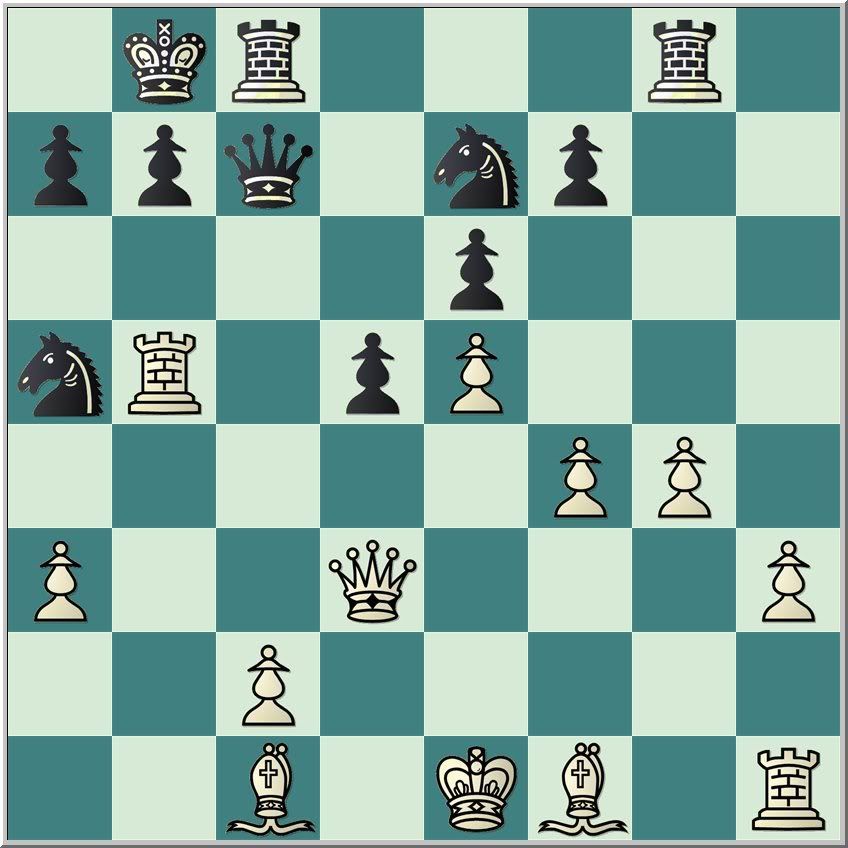
Aronian's king moved thrice in the first eighteen moves against Kamsky, but that's not terribly unusual in the Berlin Defense in the Spanish Opening (or Ruy Lopez).
Kamsky - Aronian [C67]
Corus Chess (9), Wijk aan Zee 2009
1.e4 e5 2.Nf3 Nc6 3.Bb5 Nf6 4.0–0 Nxe4 5.d4 Nd6 6.Bxc6 dxc6 7.dxe5 Nf5 8.Qxd8+ Kxd8 9.Nc3 h6 10.b3 a5 11.a4 Be6 12.Ne2 Bd5 13.Rd1 Kc8 14.Ne1 g5 15.Bb2 Bg7 16.Nd3 b6 17.f3 Kb7 18.Kf2 Be6 19.g4 
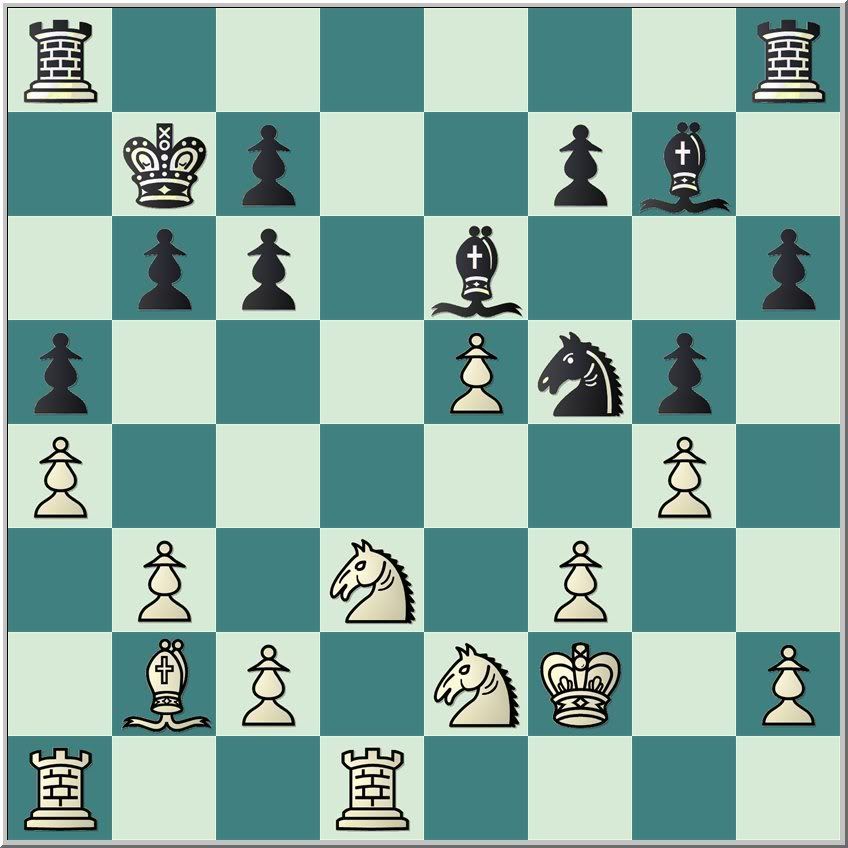
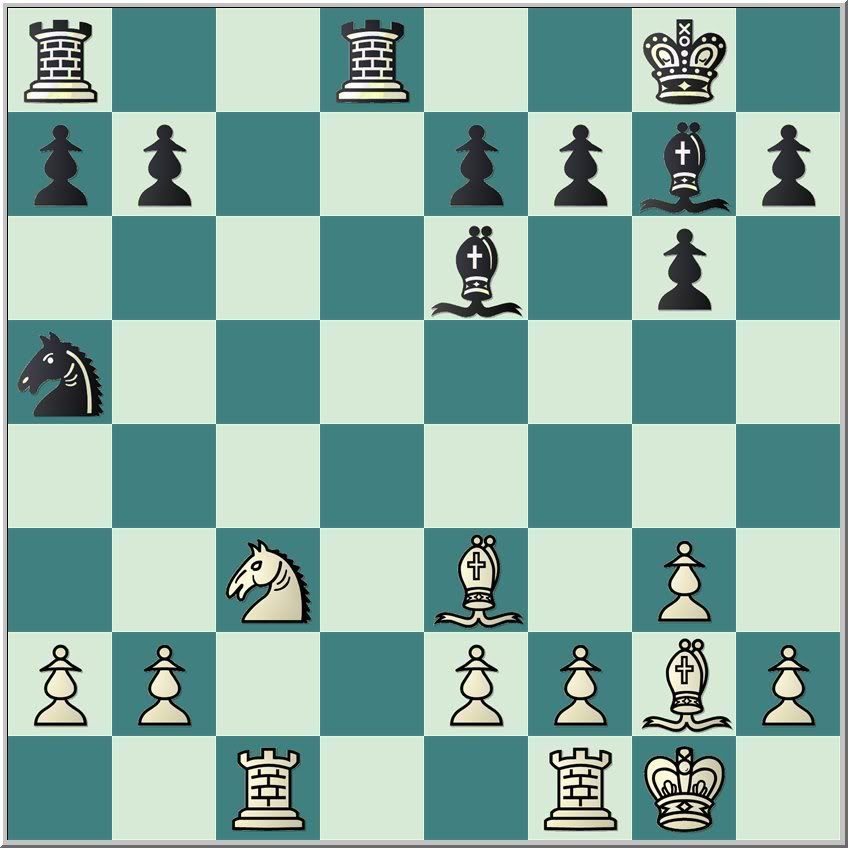
Radjabov's Grunfeld has produced symmetrical pawns and clerics against Morozevich, and perhaps transposed into an English; Moro's only draw so far in the event was in the game against Michael Adams.
Morozevich - Radjabov [D73]
Corus Chess (9), Wijk aan Zee 2009
1.d4 Nf6 2.c4 g6 3.Nf3 Bg7 4.g3 c5 5.Bg2 cxd4 6.Nxd4 0–0 7.0–0 d5 8.cxd5 Nxd5 9.Nb5 Be6 10.N1c3 Nxc3 11.Nxc3 Nc6 12.Qa4 Qb6N 13.Qa3 Rfd8 14.Be3 Qa5 15.Qxa5 Nxa5 16.Rac1
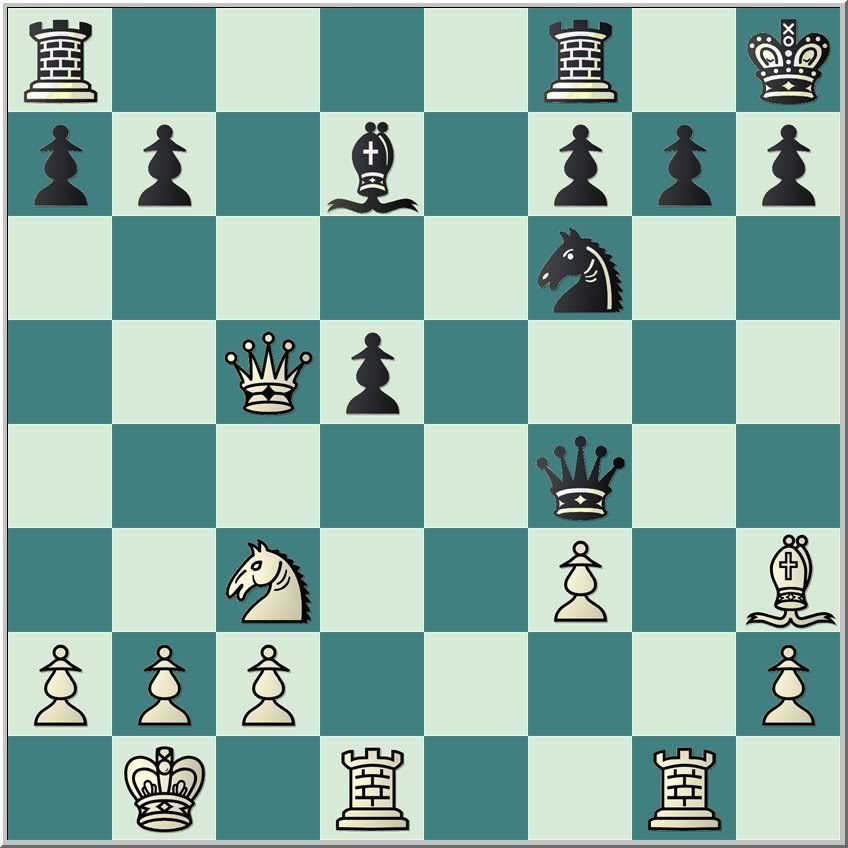
Movsesian struggles to maintain his lead against Karjakin with a Sicilian Scheveningen.
Karjakin - Movsesian [B80]
Corus Chess (9), Wijk aan Zee 2009
1.e4 c5 2.Nf3 d6 3.d4 cxd4 4.Nxd4 Nf6 5.Nc3 e6 6.Be3 Nc6 7.f3 Be7 8.Qd2 0–0 9.g4 d5 10.g5 Nxd4 11.Qxd4 Nh5 12.0–0–0 Bxg5 13.Kb1 Kh8 14.Bxg5 Qxg5 15.Rg1 Qf4 16.Qc5 Bd7 17.exd5 Nf6 18.Bh3 exd5
Ready for Bets?
5:54am PST; 2:54pm CET
Of these four games, Dominguez - Stillwagen appears to offer the best prospects of a decisive result, but I would not put any money on it.
Morozevich - Radjabov Update
16...Rac8 17.Bxa7 Rd2 18.b4 Bxc3 19.bxa5 Bxa5 20.Bxb7 Rxc1 21.Rxc1 Rd7 22.Rb1 Bxa2 23.Rb2 Bc3 24.Rxa2 ½-½
There's no symmetry and a bit more fight in the Grunfeld I have going against a fellow blogger on one of those turn-based sites. That is not to say there is nothing we patzers cannot learn from this short grandmaster draw. Nor am I as convinced as many commentators that draconian measures are warranted to prevent top players from desisting from conflict in positions they deem not worth fighting about.
Let me put it another way: Radjabov played aggressively as Black, pieces came off rapidly. After 24 moves, these grandmasters, who are so good they can play me and thirty others of my strength simultaneously and win most if not all, reached a position that I can hold eight out of ten times against a computer that can beat them. The position may not be a "dead draw", but only an egregious blunder of the sort grandmasters do not make (well, usually not) can offer either player a slim chance of victory.
Kamsky - Aronian Update
19...Ne7 20.Ng3 Rhd8 21.h3 c5 22.f4 c4 23.bxc4 Bxc4 24.f5 Nc6 25.e6
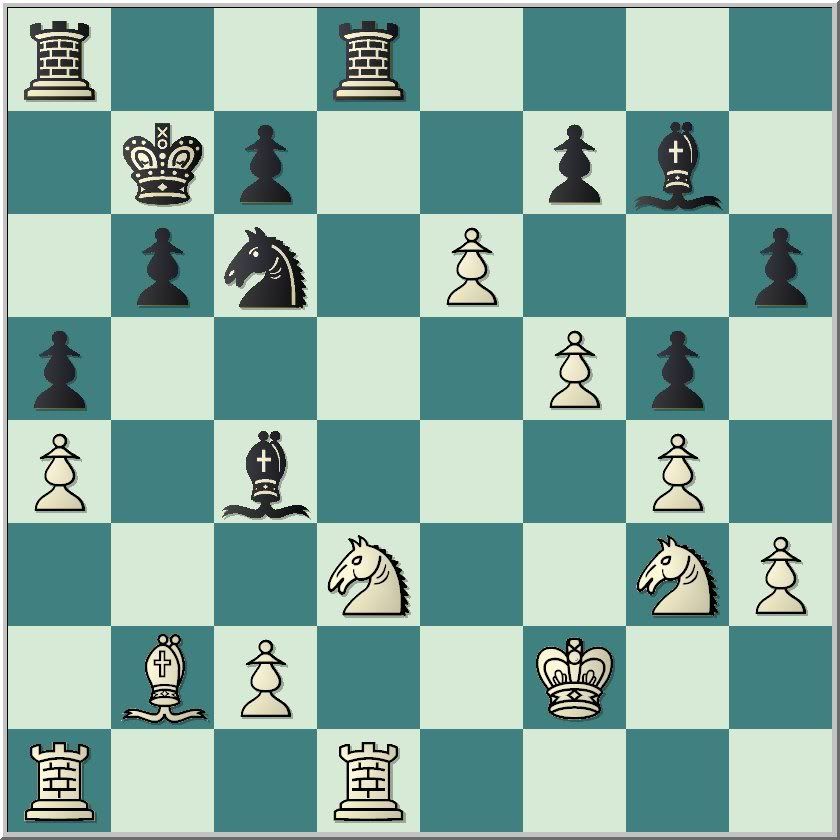
25...Bf8 26.exf7 Bxf7 27.Ne4 Bc4 28.Bf6 Re8 29.Kf3 Ka7 30.Ndf2 Ba6 31.h4?! gxh4 32.Bxh4
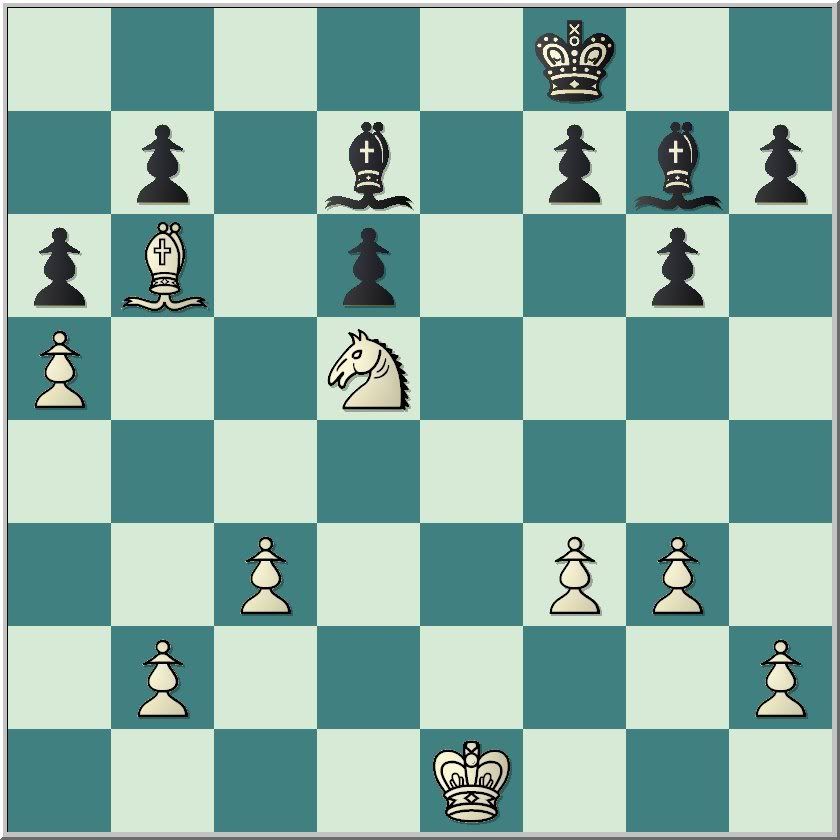
Carlsen remains undefeated in this year's Corus tournament
Adams - Carlsen [B70]
Corus Chess (9), Wijk aan Zee 2009
1.e4 c5 2.Nf3 d6 3.d4 cxd4 4.Nxd4 Nf6 5.Nc3 g6 6.Bc4 Bg7 7.0–0 0–0 8.Re1 Bg4 9.f3 Bd7 10.Be3 Nc6 11.a4 Ne5 12.Bf1 Rc8 13.a5 a6 14.Nd5 Nxd5 15.exd5 Nc4 16.Bxc4 Rxc4 17.c3 Re8 18.Nc2 Ra4 19.Bb6 Rxa1 20.Qxa1 Qc8 21.Ne3 e5 22.dxe6 Rxe6 23.Qd1 Qe8 24.Kf2 Qe7 25.g3 Qg5 26.Qd5 Qxd5 27.Nxd5 Rxe1 28.Kxe1 Kf8 ½–½
7:30am PST; 4:30pm CET
Karjakin - Movsesian Update
19.Bxd7 Nxd7 20.Qxd5 Nf6 21.Qxb7 Qxh2 22.Ne4 Nxe4 23.Qxe4 Rad8 24.a4 Qc7 25.Rxd8 Rxd8 26.Rg5 g6 27.Rb5 Rd1+ 28.Ka2 Rd7 29.c4 Kg7 30.c5 a6 31.c6
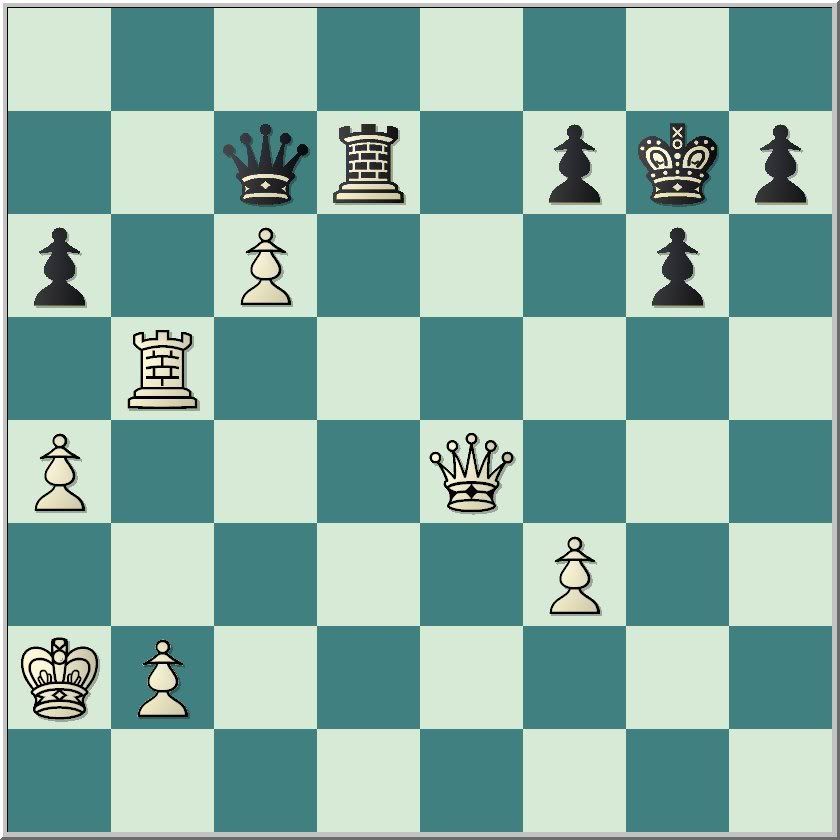
31... axb5 32.cxd7 Qxd7 33.Qe5+ Kf8 34.axb5 h5 35.Kb3 Kg8 36.b6 h4 37.Qc7 Qd1+ 38.Kb4 Qe1+ 39.Kb5 Qe2+ 40.Ka5 Qd2+
They continue to slug it out in a queen and pawn endgame with plenty of passed pawns. This could be one of those games when the players are happy that many chess sets come with four queens. No upside-down rooks will be needed here.
White to move
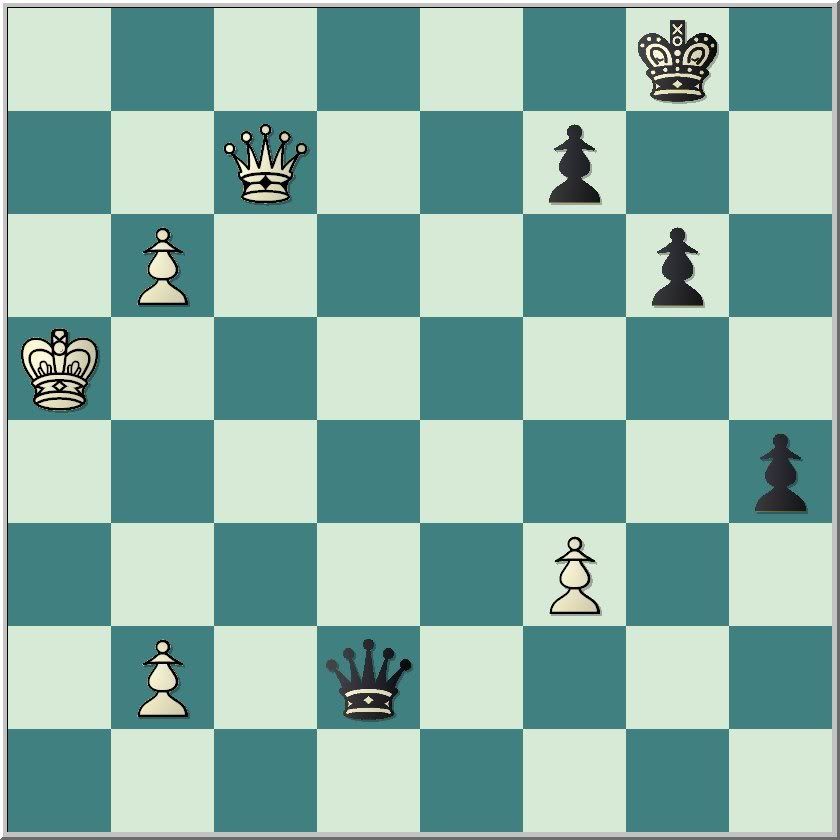
8:15am PST; 5:15pm CET
8:27am Prediction
At the end of this round, three players will be tied for first: Movsesian, Aronian, and Dominguez with 5 ½ each.
Kamsky - Aronian Update
32...Bb7 33.Kf4 Nb4 34.c4
34...Na6 35.Nc3 Bc6 36.Nfe4 Nc5 37.Nf6 Re7 38.Nh5 Rf7 39.Nb5+ Kb7 40.Ra2 Re8 41.Nf6 Ree7 42.Nd4
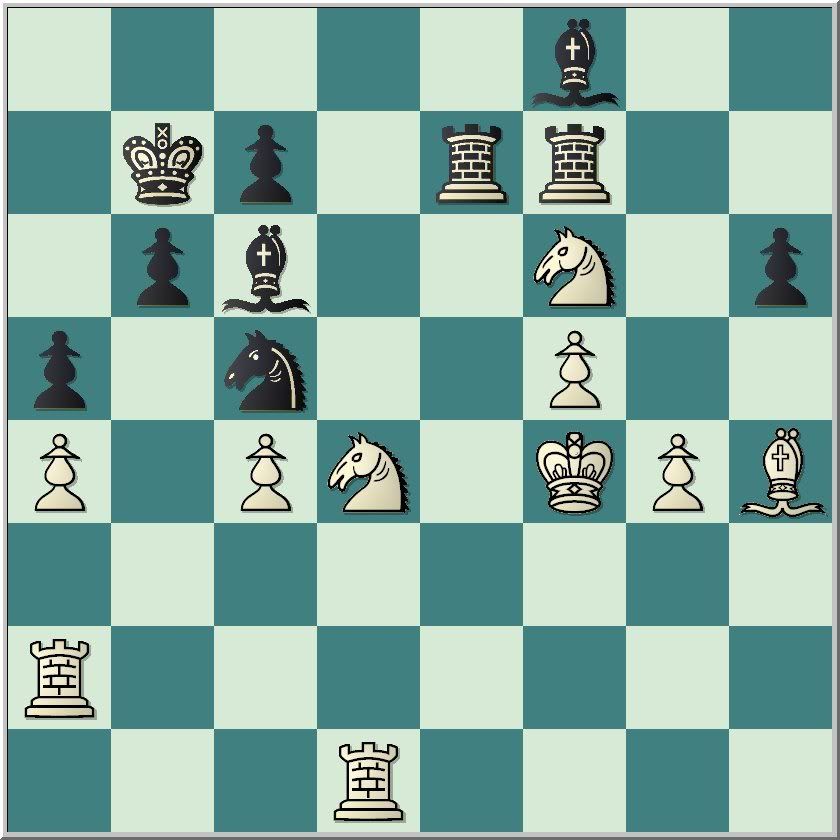
Black (Aronian) has better pawn structure and a bishop pair: two advantages in the late middlegame. He still has much work to press the advantage, but a win puts him in a share of the lead. Moreover, a win with Black always confers certain psychological advantages, especially going into the late rounds.
42...Bxa4 43.Rxa4 Bg7
The bishop pair is gone, but now Black has an outside passed pawn. Aronian exchanged one advantage for another. Hiarcs 12 has -0.98.
44.Nh5 Re4+ 45.Kf3 Bxd4 46.Ra3 Rxf5+ 47.gxf5 Rxh4 48.Ng3 a4
"Wheee! The rabbit's free, all the way to the other side!!" Fritz
49.Ra2 Be5 50.Rd5
Black to move
How to Excite a Patzer
I'm watching Kamsky - Aronian, considering the implications of White's last move. I see the line 50...Bxg3 51.Kxg3 R move and 52.Kxc5 and I think a draw becomes likely. Then, I decide that Aronian must play 50...Bd6 to maintain the tension and the advantage. And he does!
50...Bd6 51.Rxd6 cxd6 52.f6
Hiarcs 12 has -2.03
The players have been at the boards for nearly five hours. I've been watching a bit over four: spectating has not prevented my playing taxi driver for my son to school, my wife to work, and finding a few moments for some of my work, much of which is done from home in front of a computer.
52...Ne6 53.Rxa4 Rf4+ 54.Ke3 Rxf6 55.Ra1 Ng5 56.Ne2 Rf3+ 57.Kd4 Kc6
Aronian removes Kamsky's most significant threat for counterplay, but the evaluation of Hiarcs 12 drops to -1.55.
9:38am PST; 6:38pm CET
A bit over an hour ago, I predicted that three players would be tied in first at the end of play today. These three are still playing. My analysis engines still see an advantage for Dominguez and Aronian, and equality for Movsesian: the results needed to mark my prediction prescient.
Okay, Hiarcs 12 actually sees 0.98 in favor of Karjakin, but the engine is not to be believed in queen endgames, or at least, an alleged one pawn advantage in such endgames really is equality. Both Dominguez and Aronian, however, have an advantage the engine evaluates at 1.80. Dominguez is ahead a pawn in a rook and pawn endgame (often drawish), but the pawns are all connected and his king is closer.
Dominguez - Stellwagen Update
18...a6 19.Rb1 Nc4 20.Qc3 d4 21.Qxd4 Rgd8 22.Qxc4 Qa5+ 23.Qb4 Qd5 24.Be3 Qf3 25.Qxb7+ Qxb7 26.Rxb7+ Kxb7 27.Bd3 Nd5 28.Bd2 Nc3 29.Kf2 Rd4 30.Ke3 Ra4 31.Bxc3 Rxc3 32.h4 Raxa3 33.Kd4 Rc8 34.h5 Ra4+ 35.Ke3 a5 36.h6 Rb4 37.g5 a4 38.h7 Rh8 39.Ra1 Kb6 40.c3 Rb3 41.Rxa4 Rxc3 42.Kd2 Rxd3+ 43.Kxd3 Rxh7 44.Ra8 Kb7
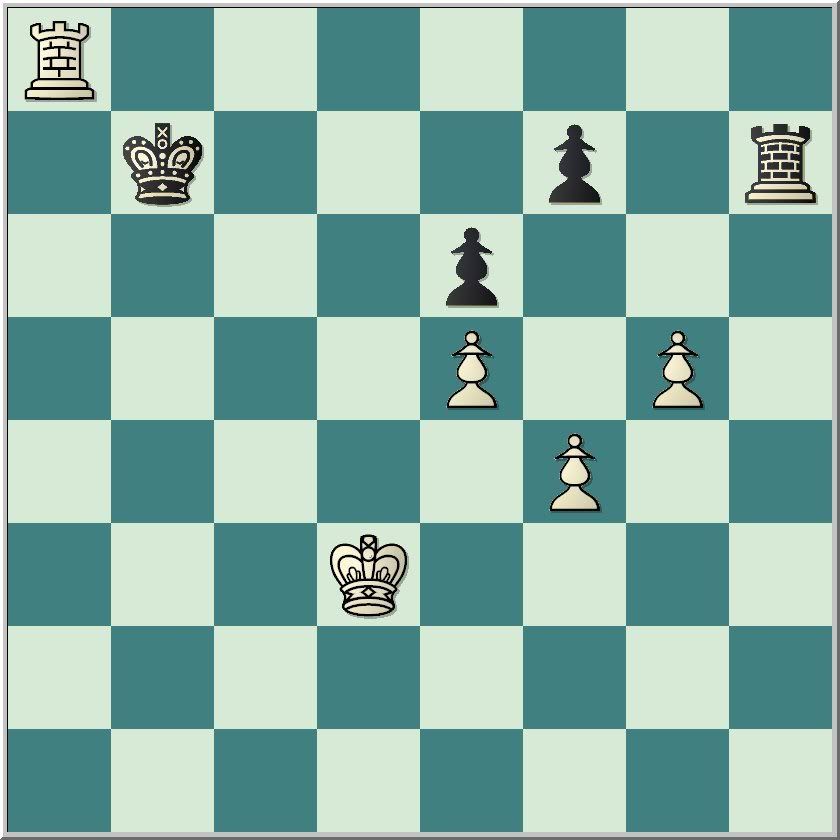
45.Ra1 Rh3 46.Ke2 Rc3 47.Rh1 Kc8 48.Rh7 Rc7 49.g6 fxg6 50.Rxc7 Kxc7 51.Kf3 1-0
Hiarcs 12 says checkmate in twenty.
Kamsky - Aronian Update
58.Ra8 Rf8 59.Ra7 Ne6+ 60.Ke3 Rf5 61.Rh7
Hiarcs 12: -2.02
I Was Wrong: Nostradamus Can Keep His Job
Karjakin - Movsesian Update
41.b4 Qa2+ 42.Kb5 Qe2+ 43.Qc4 Qe8+ 44.Qc6 Qe2+ 45.Kc5 Qf2+ 46.Kd6 Qg3+ 47.Kd7 h3 48.b7 h2 49.Qc8+
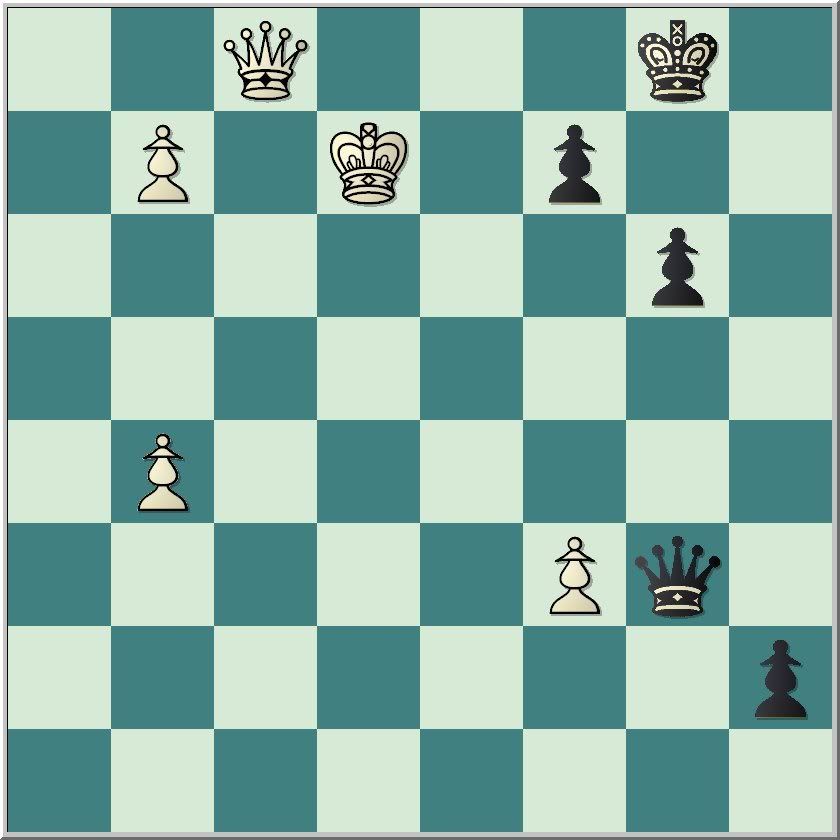
49...Kg7 50.b8Q Qxb8 51.Qxb8 h1Q 52.Qe5+ Kg8 53.Qd5 Qh3+ 54.Kc7 Qh2+ 55.Kb7 Qh5 56.Kc6 Qh3 57.Kb7 Qh5 58.Qc6 Kg7 59.b5 Qe5 60.b6 g5 61.Kc8 Qf5+ 62.Kd8 Qa5 63.Qd6 Qa8+ 64.Kc7 Qxf3 65.b7 Qc3+ 66.Kd7 Qh3+ 67.Kd8 Qh8+ 68.Kc7 1-0
Movsesian could not hold the position.
Movsesian drops from the lead; Karjakin joins Dominguez, and Aronian might yet be among them by day's end. The Corus Chess 2009 Grandmaster A Group is wide open. Nearly half of the players still have a reasonable chance to win.
Back to Kamsky - Aronian
61...Re5+ 62.Kd2 h5 63.Rh6 Kc5 64.Kd3 Kb4 65.Ng3
Hiarcs 12: -2.24
10:25am PST; 7:25pm CET
65...Nf4+ 66.Kd4 Rc5 67.Rxd6 Rxc4+ 68.Ke3 b5 69.Rd1
Hiarcs 12: -2.45
69...Ng2+ 70.Kf3 Nh4+ 71.Ke2 Rc2+ 72.Kf1 Ng2 73.Rb1+ Kc4 74.Nf5 b4 75.Kg1 Kc5 76.Ra1 b3 77.Ra5+ Kb4 78.Ra7 Nf4
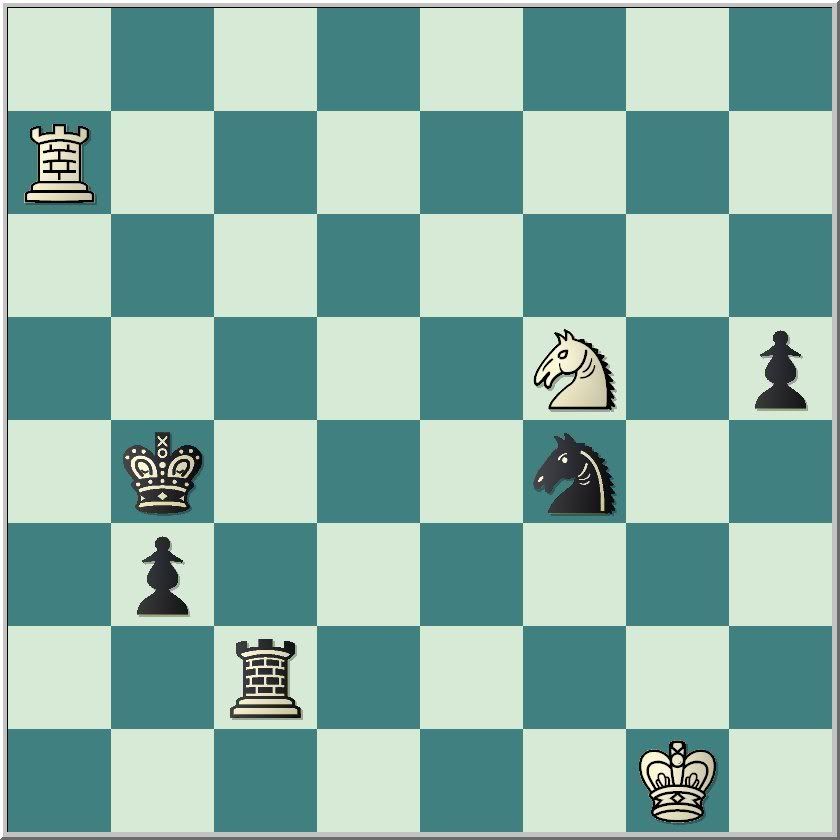
They've been playing six and one half hours.
79.Rb7+ Kc3 80.Ne3 Rc1+ 0-1
Bravo Aronian!
Current Standings
1. Levon Aronian, Sergei Karjakin, Leinier Dominguez 5 ½
4. Sergei Movsesian, Teymour Radjabov 5
6. Magnus Carlsen, Loek van Wely, Michael Adams, Jan Smeets 4 ½
10. Gata Kamsky, Vassily Ivanchuk, Wang Yue 4
13. Daniel Stellwagen 3 ½
14. Alexander Morozevich 3
Posted by
James Stripes
at
5:05 AM
7
comments
Labels: Aronian, Carlsen, chess news, Dominguez, Kamsky, Karjakin, Morozevich, Movsesian, Radjabov, Stellwagen, Wijk aan Zee
25 January 2009
Wijk aan Zee: Round Eight
Sergei Movsesian from Slovakia is one of the new stars in international chess. He is currently tied for first with Ukrainian Sergei Karjakin, the youngest grandmaster in history, after his victory over Vassily Ivanchuk yesterday. Today, Karjakin has Black against Ivanchuk; Movsesian has White against Jan Smeets, who also lost yesterday.
Mig Greengard explains in "Movsesian the Real Deal in Wijk aan Zee" how his faint praise of Movsesian was taken as criticism. He won the B group last year, and then shot up to number 10 on the rating list. Greengard asks, "has anyone else entered the top 10 for the first time after turning 30? In the last decade?"
Smeets is playing the Russian Defense. It has the reputation for being drawish, which makes it a sensible choice against a player that is hot.
Movsesian - Smeets [C42]
Corus Chess (8), Wijk aan Zee 2009
1.e4 e5 2.Nf3 Nf6 3.Nxe5 d6 4.Nf3 Nxe4 5.c4 Nc6 6.d3 Nf6 7.d4 Bg4 8.Be2 d5 9.c5 Be7 10.0–0 0–0 11.Be3 Ne4 12.Nc3 Bf6 Novelty
White to move
13.h3 Bh5 14.Qa4 Re8
Karjakin is playing a Sicilian Najdorf, a good choice for a player wanting to win with Black.
Ivanchuk - Karjakin [B92]
Corus Chess (8), Wijk aan Zee 2009
1.e4 c5 2.Nf3 d6 3.Nc3 Nf6 4.d4 cxd4 5.Nxd4 a6 6.Be2 e5 7.Nb3 Be7 8.0–0 0–0 9.Be3 Be6 10.Qd2 Nbd7 11.a4 Qc7 12.Rfd1 Rac8 13.a5 Nc5 14.Nxc5 dxc5 15.Qe1 Rfd8 16.Rxd8+ Rxd8 17.f3 c4 18.Na4 Nd7 19.Qc3 Novelty
Black to move
19...f6 20.b3 Rc8 21.b4 Qc6 22.Qa3 f5
6:34am PDT, 3:34pm CET
If the Playchess game clocks are any where close to accurate, Karjakin's 22...f5 came after a long think, and Ivanchuk has lots of time.
Movsesian is ahead on the clock, and answered Smeet's 14...Re8 quickly.
Movsesian - Smeets
15.Rfe1 Qd7 16.Ne5 Nxe5 17.Qxd7 Nxd7 18.Bxh5 c6 19.Bg4 Nf8 20.Ne2 g6
White to move
21.g3 Re7 22.h4 Rae8
Perhaps Ivanchuk will manage his time today.
Ivanchuk - Karjakin
23.b5 axb5 24.Qxe7 bxa4 25.Rd1 Nf8
They are blitzing these moves
26.Rd6 Re8 27.Rxc6 Rxe7 28.Bc5
Ivanchuk appears to have compensation for the pawn, but no significant advantage. He does remain ahead on the clock with a dozen moves to go to make the time control.
Black to move
28...Rd7 29.Rb6 fxe4
7:35am PST; 4:35 CET
Ivanchuk seems determined to put Movsesian in the lead for the rest day. Of course, Movsesian must do some work of his own.
Movsesian - Smeets
23.Rad1 Bg7 24.Kg2 h5 25.Bf3 Kh7 26.Nc1 Nf6 27.Nb3 Ng8 28.Kf1 Nh6 29.Bxh6 Kxh6 30.Rxe7 Rxe7
Where the theory runs deeper, as in the Spanish and several lines of the Sicilian, the players get closer to the first time control before they need to think. Movsesian - Smeets departed early, and we may be in for a blitz demonstration.
According to the Playchess clocks, Movsesian has eight minutes to fifteen for Smeets. Fritz 9 thinks that Smeets has a slight advantage.
White to move
31.Rd3 Ne6 32.Bg2 1/2-1/2
Ivanchuk - Karjakin
30.fxe4 c3
Ivanchuk may have the advantage here, but he's now slightly behind on the clocks. The players will need to fire off a move per minute to reach the control.
31.Kf2 Ba2 32.a6 bxa6 33.Rb8 Rf7+ 34.Ke3 g6 35.Bd6 Rf6 36.Rd8 a3 37.Bxa3 Kg7 38.Bd6 Rf7 39.Bxe5 Kh6 40.Bxa6 Ne6 41.Rc8 1-0
Ivanchuk made the time control, scored his second win, and thrust Movsesian into the lead. Levon Aronian is still playing with a bishop and two pawns against Loek van Wely's rook. If the bishop can escort a pawn past the danger, he can catch catch Movsesian today.
Aronian - van Wely
after 42.Ke1
Black to move
42...Rc7 43.Bd8 Rxc5 44.e7 Rc1+ 45.Kf2 Rc2+ 46.Kf3 Re2 47.Bxa5
I think the game will end as a draw. Black's king is better positioned. The rook and king will stop the queenside pawns, ending Aronian's threat to join Movsesian in the lead. Loek van Wely's rook is not enough to make any progress, however. The bishop can hold White's position.
47...Rxe7 48.Bxb4 Re4 49.Bc3 Rxa4 50.Kg4 1/2-1/2
More than three hours ago, when I started this post, I typed the name Sergei Movsesian. He is now in sole lead in Corus for the next forty-eight hours, at least. Nostradamus was never that specific! But, neither did he get help from Mig Greengard.
Posted by
James Stripes
at
5:59 AM
1 comments
Labels: chess news, Ivanchuk, Karjakin, Movsesian, Smeets, Wijk aan Zee
24 January 2009
Poetry!
I found this video thanks to a link from SonofPearl on Chess.com.
Update to Chesstiger's question in the comments below:
The video was produced by Krzymowski Chess TV Production. In the list on their website, the video embedded here is Swedish Chess. That doesn't answer the name of the tournaments, but it tells you who knows.
Posted by
James Stripes
at
12:59 PM
3
comments
Labels: chess news, culture, publications, scholastic chess
Sleeping In: Wijk aan Zee, Round Seven
Chess players, I'm told, are night owls. They play chess until the wee hours of the morning, then sleep until noon. Grandmaster chess tournaments usually begin in the late afternoon. The Corus Chess event in Wijk aan Zee, Netherlands, starts early compared to some. Play begins at 1:30pm CET.
That's 4:30am PST. To watch the games live, as I've been doing, means rising early or missing the beginning. I slept in this morning. By the time I logged in to Playchess after 8:00am PST, several games were finished. The remaining games are endgame battles.
Vassily Ivanchuk lost again, this time to Sergei Movsesian. Micahel Adams - Teymour Radjabov was drawn, as was Sergei Karjakin - Levon Aronian, Leinier Dominguez - Wang Yue, and Loek van Wely - Magnus Carlsen.
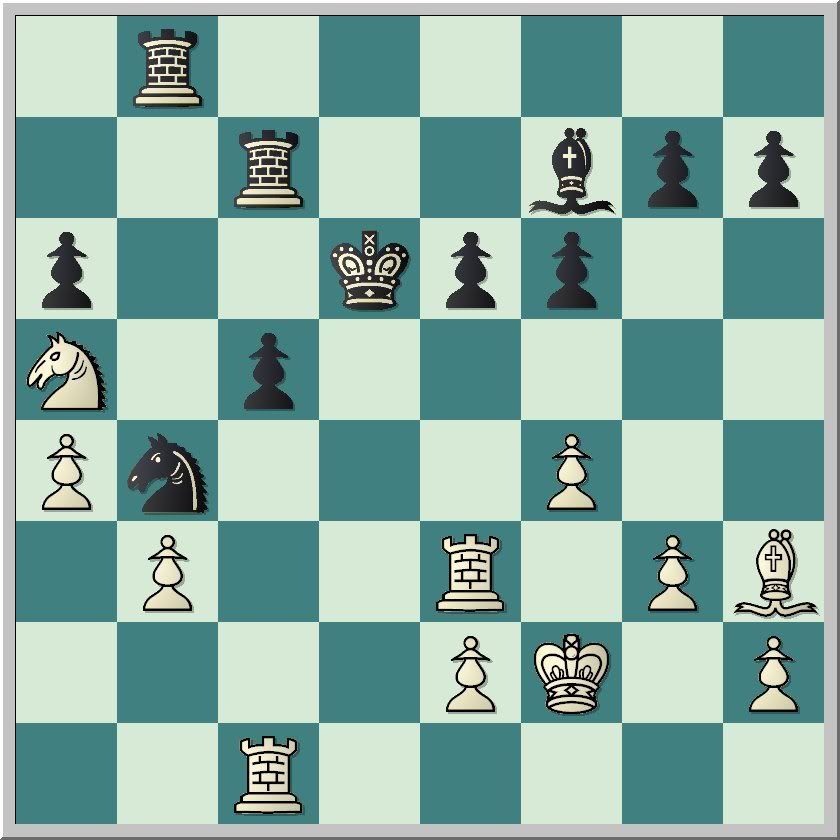
But Gata Kamsky has a pig, Jan Smeets has a knight and bishop to hold a one pawn deficit against a pair of clerics, and in the GM B group Nigel Short has a knight and slightly better pawns to Rustam Kasimdzhanov's bishop and pawns.
Kamsky - Stellwagen, after 46.Kh2
Black to move
46...Qc7+ 47.Kg2 Qc5
Morozevich - Smeets, after 45.Bg4
Black to move
45...Nc4 46.Bc3 Nd6 47.Bf3 Bf2 48.Bd2 Nc4 49.Bxd5 1-0
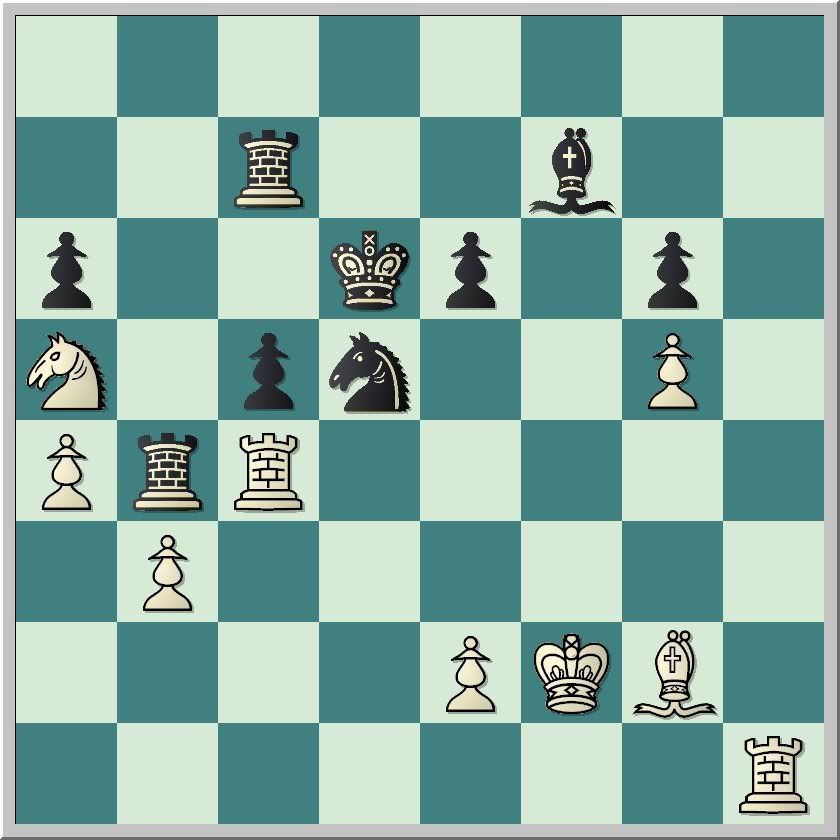
Short - Kasimdzhanov, after 42.Ng3
Black to move
42...Kg6 43.Ke4 Bd6 44.Nf5 Bc5 45.Nh4+
So, I have two endgames to make sense of while they are in progress and my morning caffeine begins to do its work.
Short - Kasimdzhanov, after 45.Nh4
Black to move
My engine tells me that White has a decisive advantage, but I don't see how Short's forces will be able to break through and make any further progress. It is much easier for a bishop to put a knight in zugzwang than the other way around.
45...Kg7 46.Nf3 f6
Wait! That's a pawn move. Was it forced? Does it improve Black's defensive resources?
It's time for me to make a second pot of coffee.
47.Nd2 Bb6
White to move
48.Kf5 Kf7
Black has weaknesses at f6 and a5, but the knight cannot attack both at once. Perhaps the pawn on c6 is the key top the position?
Meanwhile, Gata Kamsky has won Daniel Stellwagen's rook.
Kamsky - Stellwagen, after 47...Qc5
White to move
48.Rf4 Qd5+ 49.Kh2 Qd2+ 50.Rf2 Qd5 51.gxh5 Qxh5 52.Qe7 Qh6 53.Kg3
Black to move
53...Qc1
This looks like an an error.
54.Qxf8 Qe3+ 55.Kg2 Qe4+
Stellwagen's plan is simple: keep the White king in check. Does it work?
56.Rf3 Qe2+ 57.Kg3 Qe5+ 58.Kf2 Qb2+ 59.Ke3 Qe5+ 60.Kd3 Qd5+ 61.Kc2 Qa2+ 62.Kc3 Qa1+ 63.Kc4 Qa6+
While my attention was diverted towards Kamsky's king playing Odysseus, Short - Kasimdzhanov ended:
49.Nb3 Kg7 50.c4 1-0
The c-pawn is the target. Black cannot hold.
Kamsky - Stellwagen, after 63...Qa6+
White to move
64.Kc3 Qa1+
Where will Kamsky's wandering king find security so that his superior army can get on with the victory?
65.Kb3 Qb1+ 66.Ka4 Qe4 67.Qb4 Qa6+
Hiarcs 12 says the game is a draw. Have they repeated the position? Did Stellwagen's intuition tell him something that remains out of reach of silicon computational possibilities: the White king will find no safety after the rook falls?
They have not repeated the position, but perhaps they will.
68.Kb5 Qb7+ 69.Ka5 Qa7+ 70.Kb5 Qb7+ 71.Kc4 Qe4+ 1/2-1/2
When I started watching this battle two hours ago, my kibitzer had Kamsky ahead by morethan two pawns. Hiarcs 12 is the latest commercial version for PCs of the best engine behind Rybka. As all engines do, it measures positional considerations in pawns. After Stellwagen moved his queen to c1, giving up the rook, the evaluation shot up to more than eight pawns--almost a queen. Yet, Kamsky's wandering king found no security from the dark lady.
Today's lesson:
Do not believe the engines.
Posted by
James Stripes
at
8:28 AM
0
comments
Labels: chess news, endgame, Wijk aan Zee
23 January 2009
Corus 2009: Follow the Leaders
In the Corus Grandmaster A Group in Wijk aan Zee, Sergey Karjakin is half a point ahead of four others after five rounds. Round six in is progress, and he has Black against Magnus Carlsen. Former FIDE World Champion Rustam Kasimdzhanov leads GM Group B, also with 3.5 of 5. Today, he has White against Fabiano Caruana. Six players are half a point behind. Swedish Grandmaster Tiger Hillarp leads the C Group with 4.0 and is playing White against Abhijeet Gupta. Wesley So has 3.5 and is alone in second in the C Group.
Round six is not yet the mid-point, so much can still happen. Indeed, no player is theoretically unable to win his or her section. But some are playing better than others, and starting with two or three losses in five games leaves minimal hope.
Among those close behind Karjakin in the A Group, Jan Smeets and Leinier Dominguez took their game one move longer than the game they followed for twenty-one moves.
Smeets - Dominguez [B92]
Corus Chess (6), Wijk aan Zee 2009
1.e4 c5 2.Nf3 d6 3.d4 cxd4 4.Nxd4 Nf6 5.Nc3 a6 6.Be2 e5 7.Nb3 Be7 8.Bg5 Be6 9.Bxf6 Bxf6 10.Qd3 Nc6 11.0–0–0 Qb6 12.Qxd6 Be7 13.Nd5 Bxd5 14.Qxd5 Rd8 15.Qc4 Rxd1+ 16.Rxd1 Qxf2 17.Rf1 Qe3+ 18.Kb1 0–0 19.Bg4 g6 20.Bd7 Nd4 21.Nxd4
Black to move
21...exd4N
21...Qxd4 22.Qxd4 ½–½ Stellwagen,D-L'Ami,E, Hilversum 2008
22.Qd3 Kg7 23.a3 ½–½
Levon Aronian may have a slight edge in his game, not least because he is twenty minutes ahead on the clock against Vassily Ivanchuk. At least Ivanchuk now has the notoriously stupid drug testing fiasco behind him and can concentrate on the games.
Teymour Radjabov's 5.Nc5 against Gata Kamsky's Caro-Kann is a rare move, but my Master Trends opening book shows a 56% score and higher resulting Elo performance than the vastly more popular 5.Ng3. He appears to have built a slight edge from there, so I'll return to that game shortly.
Karjakin is struggling to hold on to his lead as Carlsen is pressing an advantage. Perhaps, today, he'll show us the winning ways that thrust him to the top five in 2008. He is a future world champion, IMHO. While flapping my jaws at chess club last night, I predicted by age 25 he'll reach that rare summit. A win today will add some confidence to such speculation.
Kasimdzhanov seems to be making some progress against Carauna's Slav.
Beat the Devil
Someone nicknamed the Caro-Kann "the Devil's Opening," perhaps because Garry Kasparov could get nowhere against it in his World Chess Championship matches against Anatoly Karpov. A few years ago, Chess Base News presented an annotated game allegedly played between God and the Devil. God opted for the Panov-Botvinnik Attack, but Radjabov today went for an obscure line in the classical.
Of course, for an American, Kamsky is not the Devil, even if he plays the Evil One's opening. Kamsky is America's hope for greatness in chess on the world stage, and the world's hope for taking down Veselin Topalov in their upcoming match to select a challenger to Anand for the next World Championship.
Radjabov - Kamsky [B18]
Corus Chess (6), Wijk aan Zee 2009
1.e4 c6 2.d4 d5 3.Nc3 dxe4 4.Nxe4 Bf5 5.Nc5
Black to move
5...b6 6.Nb3 e6 7.Nf3 Nf6 8.g3
Black to move
8...a5 led to quick victory for White in Kasimdzhanov - Al Modiahki, Doha 2006
8...Nbd7 9.Bg2 Qc7 10.0–0 Rd8 11.Qe2 Bd6 12.Re1 The novelty.
Black to move
12...0–0 13.Nh4 Bg4 14.Qc4 Nd5 15.Bg5 Rc8 16.a4
Black to move
16...b5 17.Qd3 N7b6 18.Nc5 h6 19.Bd2 Nc4 20.axb5 cxb5 21.h3 Bh5 22.Bxd5 exd5 23.Bc3 Rfe8 24.b3 Ne5 25.Qxb5 Bxc5 26.Qxc5 Qd7 27.Qxa7 Qxa7 28.Rxa7
The rook needs some lipstick!
Black to move
29...Nf3+ 29.Nxf3 Bxf3 30.Rxe8+ Rxe8 31.b4
... and the live feed appears to have failed.
When the feed is restored, the game is over.
31...Bd1 32.Ra2 Rc8 33.b5 Rb8 34.Rb2 f6 35.Ba5 Be2 36.b6 Rb7 37.Rb1 Kf7 38.Bd2 g5 39.Bc1 Bf3 40.Ba3 Be4 41.Bd6 1-0
The players have made the time control, and White's passed pawn is well protected by the bishop. Hence White's active rook will rule the board while Black's must try to hold back the b-pawn. Kamsky resigned.
Aronian - Ivanchuk drew in 56 moves.
Kasimdzhanov - Caruana drew in 62 moves.
Carlsen - Karjakin continues with two rooks each, and White's two pawns to Black's one. If Carlsen pulls off a win here, it will be one for the endgame books.
10:02am PST
I don't see that Carlsen has any advantage after 73 moves, but the kid is a lot better than me, and Karjakin is running out of time.
10:07am PST
Karjakin's clock on the Playchess server showed two minutes, then zero, and now fifteen, all to Carlsen's thirty or more. These are not the official clocks.
10:12am PST
A pair of pawns came off the board, and rooks soon will. The players agreed to a draw after 79 moves.
Posted by
James Stripes
at
7:07 AM
0
comments
Labels: Caro-Kann, chess news, Kamsky, opening, Radjabov, Wijk aan Zee
22 January 2009
Wijk aan Zee: Round Five
Chess is a spectator sport. It may not have the draw of baseball or soccer or even golf, but thousands of enthusiasts around the globe are watching the games in Wijk aan Zee as they are played. Wijk aan Zee has hosted a strong tournament annually since 1938, missing only 1945 during the Second World War. The tournament was created and sponsored by the Hoogovens Steelworks from its inception until the Corus Group was created through a merger with British Steel. Corus has continued as the lead sponsor.
Television was made for American football. The game's frequent breaks in the action is perfect for Ford and Budweiser commercials, and TV cameras give the best view of the action.
The internet was made for chess. The official Corus Chess 2009 site incorporates a Java viewer for following the games live. The games are also broadcast through the Playchess server and many other chess playing sites.
I only need decide which game or games to follow. There are three grandmaster groups with fourteen players each. That's twenty-one games between players who are mostly among the top one hundred in the world. In the Corus A Group, half of the world's top ten are competing. Today the top two seeds are playing each other: Vassily Ivanchuk (number 3 on the FIDE rating list) and Magnus Carlsen (number 4).
Certainly their game, a closed Spanish, bears watching. But what else?
Jan Smeets opted for the Russian Defense (aka Petroff) against Michael Adams. In the B Group, Nigel Short is facing Krishnan Sasikiran's Sicilian. Italian Fabiano Caruana is also playing a Sicilian against Ukranian Zahar Efimenko in the B group. Back in the A group, the queens came off early in Sergei Movsesian's Slav Defense against Levon Aronian. The American Gata Kamsky, a former Soviet junior champion that moved to the United States in 1989, is playing White against Wang Yue's Russian Defense. Teymour Radjabov opted for the King's Indian Defense against Loek van Wely. More Sicilians are being played in Sergei Karjakin - Daniel Stellwagen and Leinier Dominguez - Alexander Morozevich in A, and in Alexander Motylev - Francisco Vallejo Pons in the B Group.
It's a day for king's pawn openings.
While I try to watch more than I can process, Ivanchuk - Carlsen ends in a draw.
Final position; White to move
The Decision
I've selected two games to follow more closely.
Kamsky - Wang Yue [C42]
Corus Chess (5), Wijk aan Zee 2009
1.e4 e5 2.Nf3 Nf6 3.Nxe5 d6 4.Nc4 Nxe4 5.d4 d5 6.Ne3 Nc6 7.c3 Nf6 8.Bd3 Bd6 9.Nf5 0–0 10.0–0 Ne7 11.Nxd6 Qxd6 12.Qc2 Re8 13.Na3 c6 14.Bg5 Ng6 15.Rfe1 Bd7 16.f3 Nh5 17.Bxg6 hxg6 18.Qd2 Nf6 19.Bf4 Qf8 20.Be5
20...Nh7 21.Nc2 f6 22.Bg3 Qf7 23.Nb4 g5 24.a4 Bf5 1/2-1/2
Aronian - Movsesian [D15]
Corus Chess (5), Wijk aan Zee 2009
1.d4 d5 2.c4 c6 3.Nf3 Nf6 4.Nc3 a6 5.a4 e6 6.g3 dxc4 7.Bg2 c5 8.dxc5 Qxd1+ 9.Nxd1 Nc6 10.Ne3 Bxc5 11.Nxc4 Ke7 12.0–0 Nd5 13.Rd1 f6 14.Nfd2 Rd8 15.Nb3 Ba7 16.Nca5 Rb8 17.Nxc6+ bxc6 18.Na5 Bd7 19.b3 Bc5 20.Bd2 Bb4 21.Rac1
21...Rdc8 22.Bxb4+ Nxb4 23.f4
Hiarcs 12 sees an advantage of nearly one pawn for Aronian. White's bishop has a bit more scope, his king appears further from danger, and Black has two isolated pawns. But the backwards b-pawn gives Black some play, too.
23...c5 24.Kf2 Rc7 25.Rc3
Okay, White can double rooks on the c-file to put some pressure on the isolated pawn. When Black also doubles his rooks in defense, the White knight might move a5-c4-b6. Is that enough for advantage? Does White have a better plan?
25...Be8
White will not get a bishop against a knight, which was part of my fantasy scenario.
26.Rdc1 Kd6
The king is a fighting piece. At least he can take care of himself, and a vulnerable farmer. I think that Hiarcs 12 is too optimistic for White. The advantage has dropped from 0.86 to 0.63 according to the silicon beast, but I think Movsesian is secure and the game may be drawn soon.
27.Re3 Bf7 28.Bh3
Perhaps the Black king will get overworked defending peons.
Black to move
Sometimes the live feed creates gaps in coverage, although these are less frequent than they were a few years ago. This game stalled for a bit, and now Playchess has it up-to-date again.
28...Ke7 29.Re4 g6 30.Rec4 Kd6 31.Bg2 Nd5 32.h4 Nb4 33.g4
It does appear that Aronian is finding the way towards progress. The White pieces have more mobility and play is taking place all over the board as pawns move forward. Will it be enough for victory?
33...h6 34.g5 hxg5 35.hxg5 fxg5 36.fxg5 Nd5 37.Rh1 Rb4
White to move
Clocks are nearing zero.
38.Rh8 Ke7 39.Be4 e5 40.Rh7 Kd6
The players have made the time control and get another hour on the clocks. Aronian appears to have a substantial positional advantage due to weaknesses in Black's pawn structure and more mobile White pieces. He must build the pressure until Movsesian realizes there is no point in continuing.
Black is almost in zugzwang.
41.e3
Increasing the mobility of the bishop.
41...Ke6
Black can shuffle the king back and forth while White seeks new targets. White has a decisive advantage.
42.Bd3 Rb8 43.Rc1
Black to move
The bishop's targets: a6 and d5.
43...Be8 44.Rch1 Rxh7 45.Rxh7 Nb4
Does Black have a fortress?
46.Be4 Rd8
White to move
47.Nc4
Improve your weakest piece.
47...Bc6
Movsesian wants to trade minor pieces perhaps, because, "In rook endings the weaker side generally has some chances of a draw right up to the very end" (Tarrasch). See "Okay, Not So Easy."
48.Bxg6 Rf8+
Perhaps Black sees a chance for a bunch of checks that can force a repetition. All Black's pieces look to be coming active and aim at the White king.
49.Ke2 Bf3+ 50.Ke1 e4 51.Rh6 Nd3+ 52.Kd2 Ke7
White to move
53.Kc3 Rd8 54.Rh7+ Ke6 55.Rc7 Rh8
The players are nearing the second time control.
56.Bh7 Nb4 57.Rxc5
Knights are better than bishops.
57...Nd5 58.Rxd5 Kxd5 1-0
Pawns are better than rooks!
A nice lesson from Aronian. 1.d4 is "best by test". Not only did Aronian win this slow grind, but van Wely's Bayonet Attack brought victory against Radjabov's KID.
Posted by
James Stripes
at
5:33 AM
8
comments
Labels: Aronian, chess news, Movsesian, Wijk aan Zee
20 January 2009
Blunders
White just played 26.Qxa5??
I replied 26...Qxa5.
Eight moves later, I offered a draw which my opponent considered for several days before accepting.
Posted by
James Stripes
at
10:10 AM
2
comments
Labels: Solve This, tactics, tragicomedies
Inauguration Day
I'm not following Corus Chess 2009 today due to the Inauguration of President Barack Obama. I'll look at the games this evening, and may post something then. Thursday morning I'll be back to following the games in Wijk aan Zee that afternoon.
Posted by
James Stripes
at
8:13 AM
1 comments
Labels: chess news
19 January 2009
Pawn Storms: Ivanchuk - Radjabov
Wijk aan Zee: Corus Chess 2009, Round 3
Vassily Ivanchuk is storming Teymour Radjabov's King's Indian Defense with every available pawn.
Ivanchuk,V-Radjabov,T
Corus Chess (3), Wijk aan Zee 2009
1.d4 Nf6 2.c4 g6 3.Nc3 Bg7 4.e4 d6 5.Be2 O-O 6.Nf3 e5 7.O-O Nc6 8.d5 Ne7 9.b4
Black to move
This position is common enough to lead chapter four in Joe Gallagher, Starting Out: The King's Indian (2002), where he writes:
Over the last six or seven years the Bayonet Attack has been one of White's main success stories in the King's Indian.I'm not certain that in the six years since Gallagher made that statement it has continued as White's most successful line, but we see that the top rated competitor at Wijk aan Zee thinks it is good enough. It appears as the most popular move in my database of master level games since 2003.
Gallagher, Starting Out: KID, 61
9...Ne8 10.a4 f5 11.a5 Nf6 12.Bg5
Black to move

This move appears to be the novelty. 12.Nd2, a6, and exf5 appear in the ChessBase online database. 12.Nd2 was played in the only high level game among these four: Miroshnichenko-Nataf, Kapuskasing 2004. White won.
12...Nh5 13.exf5 gxf5 14.Qd2 Nf6 15.c5 Bd7 16.b5
Black to move

16...Be8 17.c6 b6 18.Nh4 Bf7 19.Bd3 Bg6 20.f3 Qe8 21.Kh1 Kh8 22.Bc2
I started following three other games, but this one has absorbed my interest (and my weak typing skills creates certain limitations for multi-tasking). Two of the other games were drawn, and Kamsky defeated Morozevich.
Carlsen - Movsesian [D11]
Corus Chess (3), Wijk aan Zee 2009
1.d4 d5 2.c4 c6 3.Nf3 Nf6 4.e3 Bg4 5.Qb3 Qb6 6.Nc3 e6 7.Nh4 Bh5 8.h3 Nbd7 9.g4 Bg6 10.g5 Ng8 11.Nxg6 hxg6 12.Qc2 Ne7 13.Bd2 Nf5 14.cxd5 cxd5 15.Nb5 Bd6 16.Qa4 a6 17.Rc1 Ke7 18.Nxd6 Nxd6 19.Bd3 Rhc8 20.Ke2 e5 21.Qb4 e4 22.Bc2 Qxb4 23.Bxb4 a5 24.Bxd6+ Kxd6 25.f3 exf3+ 26.Kxf3 Nf8 27.Bd3 Ne6 28.h4 Rxc1 29.Rxc1 Rh8 30.Kg4 Re8 31.Bb5 Rg8 32.Rc3 f5+ 33.Kg3 Rf8 34.Bd3 f4+ 35.exf4 Nxf4 36.Kg4 Nxd3 37.Rxd3 Rf2 38.Rb3 Kc6 39.Rc3+ Kd6 ½–½
Aronian - Stellwagen [B13]
Corus Chess (3), Wijk aan Zee 2009
1.c4 c6 2.e4 d5 3.exd5 cxd5 4.d4 Nf6 5.Nc3 Nc6 6.Bg5 dxc4 7.Bxc4 h6 8.Bh4 Qxd4 9.Qxd4 Nxd4 10.0–0–0 e5 11.Nf3 Nxf3 12.Bxf6 gxf6 13.Bb5+ Ke7 14.Nd5+ Kd8 15.gxf3 Bd6 16.Rd2 Be6 17.Rhd1 Bc5 18.Nb6+ Ke7 19.Nxa8 Rxa8 20.Bd7 Bxa2 21.Bg4 Bd4 22.f4 ½–½
Kamsky - Morozevich [C78]
Corus Chess (3), Wijk aan Zee 2009
1.e4 e5 2.Nf3 Nc6 3.Bb5 a6 4.Ba4 Nf6 5.0–0 b5 6.Bb3 Bc5 7.c3 d6 8.a4 Rb8 9.axb5 axb5 10.d3 0–0 11.h3 Ne7 12.Na3 Ng6 13.Nc2 h6 14.Re1 Bb6 15.Ne3 c6 16.Nh2 Kh8 17.Nhg4 Nxg4 18.hxg4 Qh4 19.d4 exd4 20.cxd4 Qf6 21.Nf5 Kg8 22.Be3 Bxf5 23.gxf5 Ne7 24.Bc2 Rfd8 25.b4 c5 26.bxc5 dxc5 27.Qg4 Rxd4 28.Bxd4 Qxd4 29.Qg3 Nc6 30.e5 c4 31.Rad1 Qb2 32.f6 g5 33.Re2 Qb4 34.Qh3 1–0
7:42am PST
Back to Ivanchuk - Radjabov
22...Qf7
White to move

23.g4 Nfg8 24.Ra4
In the other games in the Corus A group, the two Dutchmen, Van Wely - Smeets, drew in thirty moves. Adams - Dominguez, and Karjakin - Wang Yue are still in progress. My kibitzer, Fritz 9, thinks Karjakin might be gaining a slight edge, but is more confident that Adams has winning chances. It also likes Ivanchuk's position in our main game.
24...Rae8 25.axb6 axb6 26.Ra7 Rc8 27.Nxg6+ Qxg6 28.Rg1
Black to move

It is 8:04am PST, and I really should get some breakfast. I also need to decide whether I'll blog to the end of the game, or go downtown and join the Martin Luther King, Jr. Day parade. My son is meeting a bunch of his school friends for the parade, and asked me yesterday if I was going, too.
28...Qf7 29.Rg3 e4 30.Ne2 Nf6 31.Nf4
8:21am PST. Breakfast is ready.
31...exf3 32.gxf3 Nfxd5 33.Rxf3 Nxf4 24.Qxf4 Bf6
White to move

35.Bb3 Qh5 36.Bxf6+ Rxf6 37.Be6
Black to move

37...Rcf8 38.Rxc7??
Ivanchuk's game from the early moves has been leading to this point, but 38.Rg3 must be played first. Time pressure provoked an error again, as it did in round 1. Bad day for Chucky.
Black to move

38... Rxe6 39.fxe6 Rxf4 40.Rxf4 Qd5+ 41.Kg1 Qg5+ 0-1
Time for me to go to a parade.
Posted by
James Stripes
at
6:41 AM
4
comments
Labels: chess news, Ivanchuk, King's Indian Defense, Radjabov, Wijk aan Zee
18 January 2009
Wijk aan Zee 2009: Round Two
The Corus Chess tournament in Wijk aan Zee, Netherlands began yesterday. There were some games that caught my interest when I was able to spend ten minutes looking through the first 15-20 moves before leaving the house to run a scholastic tournament with 110 players. More on those games later.
At this moment (6:17am PST), the players in Grandmaster A group are more than an hour into their games. I've started watching four.
Leinier Dominguez Perez in playing the advance against Gata Kamsky's Caro-Kann. I'd loke to follow Kamsky's games closely becuase his match against Veselin Topalov is coming up later this year. He's the underdog in the match, but many Americans are pulling for him.
Magnus Carlsen is always a player to watch because he is almost certainly a future World Chess Champion. Today he has the Black side of a Berlin Wall--the famous defense that helped Kramnik defeat Kasparov in 2000--against Daniel Stellwagen.
After playing White against the Grunfeld yesterday, Loek van Wely is playing it as Black against Alexandar Morozevich. As van Wely is the local player, and has been near the bottom many of the past few years, he's one to watch. To win the event, players need to try for a win against the "weaker" players.
Wang Yue has White against Vassily Ivanchuk, who suffered an unfortunate lapse yesterday agaisnt Jan Smeets. Yue proved in 2008 that he could be hard to beat, running through more than eighty games without a loss.
7:36am PST
As it turns out, I'm not following the games as closely as I'd like due to other chess commitments. The Local Organizing Committee for the 2009 Washington State Elementary Chess Championship is meeting at my house in a couple of hours, and I still need to do some preparation I didn't get to on Friday.
Kamsky drew his game. Lots of pieces still on the board, but not a clear way for either player to make any progress.
White to move
How would you proceed, if you were Dominguez Perez or Kamsky? Is there something to play for here?
7:49am PST
Stellwagen-Carlsen drawn. They reached a rook and pawn endgame after some fireworks. White's three scattered pawns and Black's two connected pawns lack prospects of promotion with a rook each.
Black to move
Ivanchuk showed that Yue can be beat, and he did it with Black. The final position:
White to move
Posted by
James Stripes
at
6:14 AM
1 comments
Labels: Carlsen, chess news, Kamsky, Wijk aan Zee
15 January 2009
Blitz Addiction
My resolution to limit blitz in 2009 does not apply to OTB (over the board) games, or does it? I expressed it as "reduce online blitz," so the "letter of the law" permits endless play in schools, cafes, and clubs. These opportunities do not exist in my city. Nonetheless, tonight's chess club meeting features a G/10 tournament—it is blitz, but slow compared to the 3 0 stuff I play online, or the 5 0 events we sometimes do. The organizer of tonight's quick rated event told me it would be a round robin for up to twelve players. If more than twelve register, the event will be broken into smaller sections. I could have as many as eleven games.
While taking a break from work, I went online to play a couple of blitz games in preparation for tonight's event. I lost the first, badly. The second was worse. After three losses in a row, I knew I was in trouble.
That's how the addiction works: losses mean more play. The game plays second fiddle to the struggle for rating, for pride, for something. Whatever it is, I tried to capture it a few years ago in a paragraph intended to be the start of a piece of short fiction.
His heart dropped after the screen displayed the words “white checkmated”. After all, he was up a rook, had better position, and was rated much higher than his opponent. Nevertheless, his king was hemmed in by his own rooks in such a way that his opponent’s only remaining pieces—a bishop and a queen—were able to deliver checkmate. In his desperation, following this heartbreaking loss, he continued playing game after game, seeking redemption.I never wrote more of this story—too revealing.
In the fourth game, I tried to run my opponent out of time in a dead drawn rook and pawn endgame. I lost on time in a dead lost position instead. I won game five and was challenged to a rematch. Easy rating points I thought, and accepted. The game was tougher, but I won it too. Thankfully, I was able to stop there.
The New Year's Resolution lasted two weeks.
Joseph Henry Blackburne on Addiction and Chess
Edward Winter's exceptional Chess Notes column on 7 January, "Chess and Alcohol," carried an image of an 1895 republication of an interview with Joseph Henry Blackburne. The article was published first in the Daily Chronicle and then in Chess Player's Chronicle; Winter reproduces it.
The reporter asked Blackburne whether chess is "the intellectual pastime that some people declare," whether it has a place in schools, and whether perhaps it might even serve as a substitute for geometry. Although the question seems a bit over the top, Blackburne's answer serves a cautionary footnote to the efforts of many (including me) that push chess into the school curriculum. The reporter might have asked whether it could supplement or precede the study of Euclid (original works in geometry), rather than replace such study. Would Blackburne's answer have differed? We cannot know. But the truth of his remarks ring true in any case, at least they do when we consider the widespread ailment known as an online blitz addiction.
Blackburne said, in part:
Decidedly not. I know a lot of people who hold the view that Chess is an excellent means of training the mind in logic and shrewd calculation, prevision, and caution. But I don't find these qualities reflected in the lives of Chess Players. They are just as fallible, and as foolish if you like, as other folk who don't know a Rook from a Pawn. But even if it were a form of mental discipline—which I take leave to doubt—I should still object to it on the ground of its fatal fascination. Chess is a kind of mental alcohol. It inebriates the man who plays it constantly. He lives in a chess atmosphere, and his dreams are of gambits and end games. I have known many an able man ruined by Chess. The game has charmed him, and as a consequence he has given up everything to the charmer. No; unless a man has supreme self-control it is better that he should not learn to play Chess.It has been years since I've read Alexander Cockburn, Idle Passion: Chess and the Dance of Death (1974), a book written in the wake of the Fischer boom in the United States. As I recall, however, Cockburn's argument against chess seems almost a book length meditation on this brief statement by Blackburne.
Chess is intoxicating, blitz especially so.
Posted by
James Stripes
at
2:44 PM
5
comments
Labels: blitz, history, literature, online play, Winter (Edward)
14 January 2009
French Miniature
A Kind of Blitz
I'm doing well keeping my blitz addiction in check: six games so far in 2009. On the other hand, in so-called correspondence chess on sites like ChessWorld, Chess.com (a sponsor of the Washington State Elementary Chess Championship), Red Hot Pawn, and others, there is a kind of blitz that players will fall into. Players with too many games must move quickly when they first look at each game board. Players with fewer games should take their time, but often move quickly in any case. The temptation to move quickly can be magnified when you know that your opponent is also online--many moves might be exchanged over the course of an hour or two.
I can be sitting at my desk writing the Great American novel, a post for Patriots and Peoples, or lesson plans for chess or history classes. Email notification lets me know when an opponent has moved. I can remain logged in to a site and check every few minutes, especially when a move is imminent. Conditional moves accelerate the process.
All these factors contribute to a correspondence game finishing in a few days, instead of the years that had been the norm with postcards, or the months that are the norm today. I am one draw--my last remaining game--from winning the first round of an event that began last week. This French miniature was my penultimate game in that event.
Stripes,J - Lennon, J [C01]
Correspondence Tournament, 13.01.2009
1.e4 e6 2.d4 d5 3.exd5 exd5 4.Bd3 Bd6 5.c3 Nc6 6.Nf3 Bg4 7.O-O Nge7
We've jostled the move order a bit, but this line is from John Watson, Play the French, 3rd edition (2003). Watson's idea for Black is to create asymmetry so there is play in the position. That way, the better player can win. The Exchange need not be drawish, even if White intends it so.
White to move
8.h3 Bh5 9.Re1 Qd7=
White to move
10.Nbd2 is most common, and probably best.
10.Qe2 O-O-O 11.Be3?! f6 12.Nbd2 g5 13.Bb5 g4
White to move
14.Nh4= was necessary
14.hxg4? Qxg4+/- 15.Nh2??
Black to move
15...Bxh2+ 16.Kh1 Qh4 17.Qd3??
Now checkmate is forced, but White was lost anyway.
17...Bg3+ 18.Kg1 Qh2+ 19.Kf1 Qh1# 0-1
My opponent fell into a sort of correspondence blitz. Speed kills, they say. Speed produced errors, and he lost.
Posted by
James Stripes
at
6:41 AM
2
comments
Labels: annotated games, French Defense, opening, tactics
13 January 2009
Minor Piece Domination
Black's knight has no squares, so White will enter a king and pawn endgame two pawns ahead--an easy technical win.
Black to move +-
This position came about after an inaccuracy from this position.
White to move +-
5.f3 appears best, but I played 5.Nc6 forcing Black's bishop off the board. The bishop's domination of the knight came about as Black gained back some of the material. 5...Bxc6 6.Bxc6 Nc4 7.Bc1 b3 8.Kf1 b2 9.Bxb2 Nxb2 10.Ke2 Ke7 11.Bb5
The process started from Reinfeld's WCSAC #0669
White to move +-
1.Qxb4!
This move is reminiscent of the key in Robert Pearson's "A Nice Tactic (Redux)," although not nearly as rich. Even so, it occurred to me in a matter of seconds partly because I'd been looking at Pearson's blog the day prior.
1...axb4 2.Rxa8+ Qe8 3.Rxe8+ Bxe8 4.Bxd5+ Kf8 and we reach the position at the top.
Resolutions Update
I publicized three chess oriented New Year's resolutions.
1. Reduce blitz
I've played four blitz games in 2009; all yesterday. I won a lost game on time, lost a won game against the same opponent due to inaccuracies when hurrying. I won two other games against a weak opponent on another site--almost a waste of time.
2. Intensify endgame training
I wrote on my Facebook page on January 4 that I was building a database of pawn endgames. I did some endgame training each day of 2009 up to then, but none since.
3. Demand consistency in Tactics Training Plus
I've done half of my planned regimen.
Why have I failed? Most of my chess time has been devoted to two activities: my correspondence game load, and the forums at some of these sites. The chess has been productive, but the political discussions have been almost stupid. Better management of idle time will lead to better results in my personal goals.
I did complete nine turn-based games, which reduced my load by seven. I accepted a rematch from one opponent, and accepted a challenge from one of this blog's readers. In these nine completed games, I won seven. The other two were drawn: one draw was a comeback from a technically lost position. In the other, I failed to hang on to an extra pawn, and started to think that I was slightly worse in the queen and pawn endgame. We repeated the position and I claimed the draw.
Saturday is the first round of the Corus Tournament at Wijk aan Zee. I likely will do some live blogging of selected games, but not on opening day as I am running a scholastic tournament. This live blogging will detract from my training regimen, but will have other benefits.
Posted by
James Stripes
at
9:56 AM
5
comments
Labels: computer vs. human, endgame, imbalances, Reinfeld
10 January 2009
Pressing the Advantage
After my disastrous round 2 draw, and the lucky results of my opening experiment in round 3, I had a comfortable game in round 4 of the Christmas Chaos tournament. I had the Black side of a French Advance that went horribly wrong for White beginning with a far too common error that gave Black a free pawn on move six. If you ever play 1.e4, please look at this position (and do not ever fall into it).
Black to move -+
After the game, I asked my opponent to promise he'll never so easily succumb to this tactic again. He is one of the promising junior players in the area, and had played in a few scholastic tournaments, but recently starting coming to the Spokane Chess Club and playing in USCF events.
Even though I gained a theoretically decisive advantage easily from the opening, the game still had plenty of play. Along the way I found many good moves, and often the best. In the quest for chess truth, more of these good moves must give way to the best. This transformation is an energy efficient vehicle on the road to chess improvement.
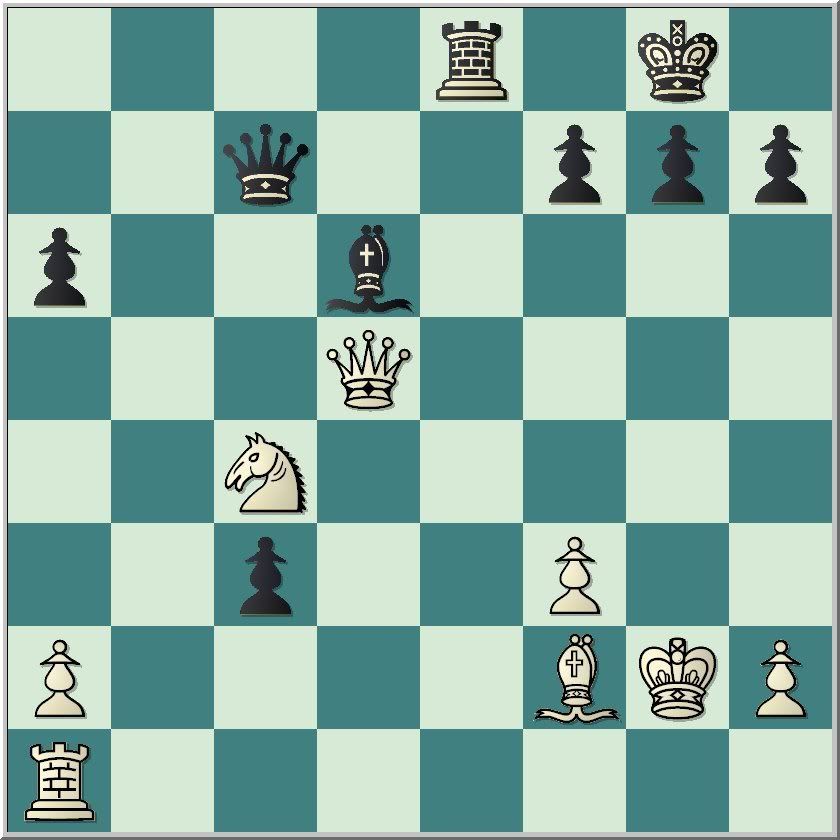
After 19.Rf1, we reached this position.
Black to move -+
Two moves present themselves:
19...Bxf1
19...Bxb5
Which is best? Why?
Is it best to win the exchange, or might Black be better off keeping the bishop while snatching an undefended pawn?
Posted by
James Stripes
at
9:28 AM
4
comments
Labels: French Defense, Solve This, Spokane, tactics
09 January 2009
Anti-French Lunacy
Do you know your problem? You love chess too much.My opponents never know who will show up. I am a seeker of chess truth looking for the best moves, adhere to solid principles in all my games, and will generally choose the most dynamic line. I play against pieces. At other times, I play offbeat, substandard moves motivated by my perception of the psychology of my opponent. I aim, first and foremost, to remove my adversary from his or her comfort zone. In this way I've lost many games that I should have won because I'm making errors; if I simply made the best moves I could find, my opponent would collapse. I've also had some success. Knowing an opponent attempted to play the Torre Attack against almost everything, I played a strange second move: 1.d4 Nf6 2.Nf3 h6!? My opponent had no idea how to proceed.
Curt Collyer
Chess is a game. I try to have fun with it. I'll play the Fried Fox opening just for kicks, or to intimidate a weaker opponent. I'll play the Polish for the same reason. Even so, I play it recalling that Tony Miles won with Black against Anatoly Karpov because he was responding to intimidation--what can you play against someone that know all the lines in all the books? Intimidation can work either way, and the response might prove intimidating as well, hence the popularity of books like Joe Gallagher, Beating the Anti-Sicilians (1994), which I turned to years ago to confront the accursed Grand Prix Attack.
This feeling of intimidation leads many players to seek out obscure lines. Sicilian players are known to be booked up because the lines are so deep, so complex, and so richly analyzed that they have no choice. In order to meet 1.e4 with 1...c5, a player needs immense preparation. Playing 1...c5 more or less affirms that one is prepared, so it strikes fear into the hearts of 1.e4 players, who in anticipation expend the time they have for preparation looking for ways to take Sicilian players "out of book."
Players of the French Defense are not so booked up, and yet the French, too, inspires fear among 1.e4 players. Instead of playing the best moves 1.e4 e6 2.d4 d5 3.Nc3, White adopts an anti-French system. 3.Nc3 offers the best prospects of maintaining White's initiate, but it invites the complex lines of the Winawer
Among the most common anti-French systems, at least among my internet opponents, is the Exchange variation: 1.e4 e6 2. d4 d5 3.exd5. Black gets no problems and has equality on move three. The Advance variation (1.e4 e6 2.d4 d5 3.e5) is more principled, although it trades White's dynamic advatage--initiative--for a static one--space. The Advance says to Black, "okay, you won't let me attack f7, so you'll have to fight for f6." Then there's the Tarrasch: 1.e4 e6 2.d4 d5 3.Nd2. It is hard to know what to say about this violation of opening principles in which White forces himself to move one piece twice in the early stages of the game. Even so, in practice, the Tarrasch seems to get results.
I'll admit that these lines--Exchange, Advance, Tarrasch--are considered main lines, not really anti-French systems. They offer White fewer prospects than 3.Nc3, but also require less opening knowledge. At least it seems so until the White player runs into a few booked up French players that have their own well developed systems--sometimes even a little offbeat--against each of them. In Spokane, as they say in Seattle, you've got to know how to play against the French, because everyone in Spokane plays the French.
Most of the time I don't need to worry about playing against the French.
I tend to prefer queen's pawn openings in important games.Last night in round three of the Christmas Chaos G/45 tournament, I had White against Ron Weyland. He plays the French, and for reasons unknown to me, when I sat down to the ticking clock, I felt like playing 1.e4, so the game began.
"Playing with Databases"
Stripes,J (1722) - Weyland,R (1456) [C00]
Christmas Chaos Spokane (3), 08.01.2009
1.e4 e6 2.c4
Black to move

What is this nonsense? 2.c4?
The seeker of truth was not in the room. Instead, the man that moved the White pieces was the one that "loves chess too much." That's what NM Curt Collyer said to me when I was paying him for lessons and wanted to look at a bizarre response to some line of the French in which Black gives up a knight for two pawns, gaining only an easily blockaded passed pawn. For the material, Black gains no initiative, no increase in piece mobility, no vulnerabilities in the White fortress. Black gives up material for no compensation. It might be fun to try in a blitz game against a weak opponent, but it's mostly lunacy. Collyer, by the way, gave me some good materials to employ against the Tarrasch, and his line has brought good results. As he is from Spokane, and has become our strongest home grown player, he is an expert on the French.
Earlier this week, I was following a conversation in the forums of one of those correspondence sites that I've been writing about. Someone had inquired about the anti-French line 2.c4. I thought it was a bizarre idea, although I've faced it many times from the Black side, scoring close to 70% against it. After some comments, however, one of the strongest players on the site, Korch, noted that the resulting position occurs in the repertoire of Latvian Grandmaster Normunds Miezis, but from the English: 1.c4 e6 2.e4. So, I looked at some of Miezis's games, of which there are quite a few; he scores well.
After spending this time looking through Grandmaster games in a particular opening, it made a little bit of sense to give it a try over the board.
2... d5 3.exd5 exd5
My opponent met the lunacy with sensible principled moves: the same ones I've used against it.
4.Nf3
Another slightly odd move. I thought, perhaps Ron will try 4...d4, and I'll end up with a game resembling some lines in the Reti. That way I can abandon this opening experiment and get on with winning the game in the usual way. He would have none of this plan.
4.d4 is the normal move.
4...Nf6 5.d4 Bb4+ 6.Nc3 Qe7+
Black is already equal.
7.Be2 0–0 8.0–0
Black to move

I can find reference games up to this point, but not by strong players. Still, it seems that Black has a reasonable plan: create an isolated d-pawn for White, trade off the minor pieces, win that isolated pawn and go into the endgame with a clear advantage.
My opponent had another idea: create a battery on the e-file to see if he can do something about that bishop.
8...Re8 9.Ne5
9.Re1 is better.
9...Be6 10.Qb3 c6?!
Black needs to mobilize his queenside. 10...Nc6 frees the rook and contests more of the center.
White to move

11.Bg5 Bxc3 12.bxc3 h6 13.Bh4 g5 14.Bg3 Ne4 15.cxd5 cxd5
White to move

16.Rab1?
White had been building a slight advantage due to Black's inaccuracy on move 10, but this error brings Black back into the game.
16...Nd6??
16...Nd2=
17.f4+- f6 18.Nd3 Bf5 19.Rfe1 Qe3+??
Now, it is over.
White to move

20.Bf2 Qxe2 21.Rxe2 Rxe2 22.Qxd5+ Be6 23.Qxd6 Nd7 24.d5 Bf5 25.Rxb7 Rd2 26.Ne1 Nf8 27.Qe7 1–0
White won an easy game. This ease stemmed not from his opening choice, but from Black's egregious errors. Nevertheless, White's offbeat anti-French may not be quite as bad as it first seems. It can be a nice change of pace if you love the game of chess. When you need to win, however, there are better choices.
Posted by
James Stripes
at
9:04 AM
2
comments
Labels: annotated games, French Defense, Miezis, opening, Spokane
08 January 2009
Playing with Databases
In correspondence chess, players use books and databases to aid them in the opening, and sometimes in the ending as well. Tablebases, on the other hand, are generally forbidden when engines are not allowed. It's a rare game that reaches a position that can be entered successfully in the Shredder Endgame Database. Moreover, the consensus of most turn-based site arbiters appears to be that doing so is tantamount to engine use.
Computers have "solved chess" when six or fewer pieces remain, and they are hard at work on the seven piece, which might be completed in the next few years. Eight and nine piece solutions are years away, and solving the game from the opening move remains a theoretical pipe dream. Three and four piece tablebases have been included with Fritz software for quite some time, and I believe the five piece are part of the package now. My old notebook computer that I bought in 2001 lacks the five piece because its 20 GB hard drive cannot provide the slightly more than 7 GB of free space that is required. In contrast, 30 MB are sufficient storage space for all three and four piece endings.
Each piece dramatically increases the space needed. The six piece tablebases exceed the capacity of most home computers, as they require an estimated 1.2 terabytes of storage space (see David Kirkby's discussion at ChessDB). When computers finally manage to work out the seven piece endings, how much space will be needed to store the data?
Now, consider the beginning of the game when there are thirty-two pieces on the board. After one move--White and Black--there are four hundred possible positions that can be reached. White can lose by checkmate on the second move eight ways, and can deliver checkmate on the third via 347 unique sequences. By the end of the fourth move (eight plies), there are 84,998,978,956 possible move sequences. Let's round the number to eighty-five billion.
Billions. Millions, and the Right Move
Of these eighty-five billion possible moves, the vast majority must be rejected immediately. The beginning player might need to look at quite a few--that's why chess seems so difficult to those first learning the game. This process is much quicker once the principles of center control and mobilization become second nature. Even so, the largest databases of previously played games top out under five million: Mega Database 2009 exceeds four million. How can a practical player reduce this mass of data to something useful?
There are many strategies for using databases to aid one's play. I do not always use the same methods, nor do I care to reveal all my secrets to potential opponents. Nevertheless, in the interests of eliciting some discussion, I'll explain how I approached one particular game that I played several months ago. This game was part of a team challenge, and I had a history with my opponent. We had played six games prior to the two we played in 2008, and I was down by two. I wanted to even the score.
Stripes - Adversary [C30]
Team challenge, 26.07.2008
1.e4!?
I tend to prefer queen's pawn openings in important games.
1...e5 2.f4 Bc5
We're already off the beaten paths. I seem to recall that I started using an opening book at this point. I've created several specialized opening books. I call one of these Master Trends. To create it, I first searched my largest database for games played in the past five years in which both players were rated 2200 or higher. These games were then saved into a new database. I found and deleted draws that were twenty moves or less. Then I created a new opening book in ChessBase. The database Master Trends was imported into the opening book, and while the computer did its work, I read a good novel--processing this data takes some time even with a fast computer.
In ChessBase or Fritz I can now open a book window and select the book I've named MT. Three moves present themselves:
3.Nf3
3.Nc3
3.Qh5
3.Qh5 was played once. I can look at that game by searching the source database--Master Trends--for the resulting position, and I might have done so. But, the other two moves deserve and received more attention. With 3.Nc3, White scored 54% over twelve games, achieving a performance rating of 2411. 3.Nf3 is more common, but White's 49% scoring percentage over eighty games is less impressive, as is the 2336 performance. Nevertheless, it was my first candidate, so I opt to play it realizing I may be in for a tough game.
3.Nf3 d6
My opponent follows a well trodden path, and now my opening book shows me six moves that were played. Two account for the overwhelming majority.
4.Nc3
4.c3
The odd looking 4.c3 scores higher. I spent a few hours looking at some of those games and liked what I saw.
4.c3 Nf6 5.Qc2!?
5.d4 was played in a dozen games in my selective database, but I chose an obscure line played once in the past five years, and once in the 1970s. My opponent and I are now following Golovankov,V (2314)-Zacurdajev,D (2249), St Petersburg 2005, which was won by White.
Black to move
5...Nc6 6.b4 Bb6 7.a4 a6
White to move
8.Bb2N
Even though White won, I was not fully satisfied with the line of play adopted. I wanted to push d2-d4, and that required preparation, so I introduced the novelty. My reference game continued 8.Be2 0–0 9.fxe5 dxe5 10.Na3 Ng4 11.h3 Nh6 12.d3 Be6 13.Ng5 Bd7 14.g4 f6 15.Nf3 Be6 16.Nc4 Ba7 17.Ne3 Nf7 18.Kf2 Kh8 19.Kg2 g6 20.h4 Qd7 21.g5 f5 22.b5 Ne7 23.c4 f4 24.Qb2 fxe3 25.Nxe5 Rg8 1–0
8...Ng4
Postgame analysis with an engine shows that 8...exf4 appears to be winning for Black. The novelty is not worthy of repeating should I ever find myself in this position again.
9.d4 0–0 10.Bc4?
Better was 10.b5 axb5 11.axb5 Rxa1 12.Bxa1 with a slight advantage for Black
10...exd4–+ 11.Nxd4 Ne3
11...d5!? is winning 12.Bxd5 Bxd4 13.cxd4 Nxb4–+
12.Qe2 Nxc4 13.Qxc4 Nxd4 14.cxd4 Qf6 15.0–0
The game is starting to shift back my way a little.
Black to move
15...c5
A better alternative: 15...d5 16.exd5 Re8 17.Nd2 with a slight advantage for Black
16.e5 dxe5 17.fxe5± Qg5 18.bxc5 Bc7
White to move
19.Nc3
Finally!
19.Na3 Bd7±
19.Ra3!
19...Bh3 20.Qe2+- Rad8 21.Ne4 Qg6 22.Ng3 Bg4± 23.Qe4 Qg5 24.Qf4 Qg6 25.Nf5+- Be2?? 26.Ne7+ 1–0
My opening choice and system led to failure, but it worked out okay in the end. I also won with Black, so this adversary and I now stand at four wins each.
A Bit of Deceit
I've described my process based on a selective database and opening book called Master Trends. I created those several years ago, and have tinkered with the process of creation a bit since. I'm currently using Master Trends III, although MT II was the latest when this game was in its early stages.
It may also be worth noting that my engine is able to use these opening books in the engine room at Playchess, where Hiarcs 10 running on my P-III Notebook has scored a few upset draws and wins against Rybka running on a 64-bit box. That experience tells me that the opening book is a quality product!
Posted by
James Stripes
at
7:02 AM
3
comments
Labels: annotated games, databases, endgame, King's Gambit, online play, opening, tablebases
06 January 2009
Metablogging
What is metablogging? It is blogging about bloggers. That's the central purpose of a chess carnival. Jack Le Moine's "Chess Blog Carnival" does just that. He lists a variety of chess blogs in eleven categories. It's worth a look if you follow the links to a new blog and start reading there, too.
Posted by
James Stripes
at
3:11 PM
2
comments
Labels: chess news
Zippity Zing!!
After noting yesterday the substantive increase in my game load, it already has dropped by one game. Even though my opponent and I had three days per move, we managed to complete this miniature in substantially less than twenty-four hours. As miniatures do, it offers a little mind candy in elementary tactics.
Stripes - E Class Player [C41]
2009 Club Championship, 06.01.2009
1.e4 e5 2.Nf3 d6 3.Bc4 h6
This prophylactic move is not terribly unreasonable, but wastes a tempo.
4.Nc3 Nf6 5.0–0 Nc6
5...Be7 6.d3 Bg4 7.Nd5 0–0 8.Nxe7+ Qxe7 9.c3 c5 10.h3 Bh5 11.Qe2 Nh7 12.Qe3 Kh8 13.d4 Nd7 14.Nh2 Ndf6 15.dxc5 dxc5 16.Bd5 Rad8 17.c4 Ng5 18.f3 Ne6 19.Qc3 Nd4 20.Re1 Hrafnkelsson,G-Brandt,J, Copenhagen 2007 ½–½
White to move
6.d4
6.d3 Be7 7.h3 transposes to a more common line
6...Bg4 7.Bb5
One key to beating up on weaker players: create opportunities for tactics. Objectively better is 7.dxe5 dxe5 8.Bb5 Qxd1 9.Rxd1 Bxf3 (9...Bb4) 10.gxf3 and White has a slight advantage.
7...exd4
Black wins a pawn
8.Nd5?!N
White offers another
8.Bxc6+ bxc6 9.Qxd4 Bxf3 10.gxf3 Be7 11.Be3 Qd7 12.Kg2 0–0 13.Rad1 c5 14.Qd2 c6 15.Bxh6 gxh6 16.Qxh6 Ng4 17.Qh5 Ne5 18.Kh1 Rfb8 19.Rg1+ Ng6 20.Na4 Kf8 21.Nxc5 Qc8 22.Nd3 Rb5 23.Qh6+ Ke8 24.Nf4 Kd7 25.Nxg6 fxg6 26.Rxg6 Qf8 27.Qh3+ Kc7 Ciezkowsky,J-Vansichen,J, Lommel 2000 ½–½
Black to move
8...Nxe4??
Black should have assumed that White meant for him to take the pawn, and looked for why it was offered so freely.
9.Qd3?
Fails to exploit Black's decisive error. Winning is 9.Qe1 Bxf3 10.gxf3 Qh4 11.Qxe4+ Qxe4 12.fxe4 0–0–0 13.Bd2+-
9...Bxf3??
Necessary was 9...Nc5 10.Re1+ Kd7! I overlooked this key defense 11.Qxd4 Bxf3 12.gxf3 a6 13.Qg4+ Ne6 and White has a slight advantage.
I expected 9...f5 10.Nxd4 when Black will lose material.
10.Qxf3 Nf6??
Better, but still losing, was 10...Nc5 11.Re1+ Ne6 12.Nb4 White's overwhelming force against c6 will devastate Black's position.
White to move
11.Nxf6+
More accurate would have been 11.Bxc6+ bxc6 12.Nxf6+ gxf6 13.Qxc6+ Qd7 14.Qxa8++-
11...gxf6
11...Qxf6 12.Bxc6+ Kd8+-
12.Re1+
Second best, but good enough
12...Kd7??
The final blunder.
12...Be7 13.Qxf6 Rg8 14.Qxh6+-
12...Qe7 13.Bxc6+ Kd8 14.Rxe7 Bxe7 15.Bxb7+-
13.Qf5# 1–0
Posted by
James Stripes
at
9:10 AM
1 comments
Labels: annotated games, correspondence, Italian Opening, online play
05 January 2009
Game Load: Turn-Based Chess
Correspondence players, as well as those engaged in what some are calling turn-based chess, play many games at once. At sites such as Chess World, Red Hot Pawn (aka Chess at Work), and Chess.com, some folks have hundreds of games going at once. Others limit themselves to a small number. At most of these sites, you can join and play for free, but becoming a paying member unlocks additional site features, including more generous limits, or none at all, on the number of games going at once.
Quality play calls for fewer games, but much of the fun comes from tournaments and team play, and these often increase the game load dramatically.
Last week I was down to a dozen games on four such sites--two paid memberships, two free. I entered two club tournaments. One event needed one more player, and was wholly composed of players rated lower than me. They had been waiting some time--several weeks I believe--for one last player so they could begin, and I opted to take the risk to help them out. It's a risk because I won't gain much in the way of experience or rating beating all of them, but a little bit of slop on my part (or running up against an engine user) could hurt me. The other club tournament had been planned months ago, and finally started today. I'm number two in my group, but most of the others are near the rating I had a year ago, and where I had been for two years up to that point. I lose to those two hundred points below me often enough to know that all these games are serious, and most of my opponents are within one hundred on the rating scale. It has prospects of being a difficult and competitive tournament. The winners of the section advance to play the top finishers from the other section, so success means more games, and tougher too.
Both of these tournaments are double round robins with all games played at once. Thus, I have ten new opponents and twenty new games. In the past, I've carried as many as seventy-five games at once in this form of online play, but have learned through experience that thirty is a heavy load, and with more than that, I might as well play blitz. Too many games cause fast, and too often unsound, moves. Throughout 2008, when my skills and ratings improved notably, I maintained a load that varied from six to twenty correspondence games.
I try to play at a minimum of three days per move, which was the standard rate of play when I played via postcard. One of my games that is currently dragging on (I have a decisive advantage) is ten days per move. My opponent moves once every nine and one-half days. Perhaps he's using what called the "dead man's defense"--playing slow enough that there's a chance the opponent will pass away before delivering the coup de grace. Some games can be really slow. Most often, however, they last a couple of months in contrast to one to two years for postal chess.
In postal chess the clock starts running the day you receive the postcard. In turn-based, it starts running the instant your opponent submits his or her move. Postal chess typically requires one move per week for each player, while turn-based is often more than twice as fast--and the "mail" arrives Saturday night, Sunday morning, or any other time. There is no rest. Someone is always moving on these sites, except in the rare instances that the site goes down for ten minutes or three hours for some new coding uploads.
Getting Help
Engines are forbidden at most turn-based sites, and in most other forms of correspondence chess with a few exceptions. Several years ago, the International Correspondence Chess Federation abandoned all efforts to prevent engine use. In contrast, the International E-mail Chess Club still bans engine use. FICGS, the Free Internet Correspondence Games Server, permits engine use and is a good place to go for players interested in trying to use their engines to beat another's engines. Many strong correspondence players long have maintained that engines are not yet better than humans when players have three or more days per move. Indeed, engines playing alone without significant human guidance probably never achieve impressive ratings on FICGS.
One of the pleasures of turn-based and correspondence chess is the assumption that players will be using their books and databases, even when engines are not allowed. A player can buy the latest monograph on an opening, or create a deeply annotated electronic "book," then enter a thematic tournament in that opening. I learned some new lines and generally became much more comfortable playing both sides of the closed Spanish as a result of such an event four years ago. I did the same with the Reti, and I've played in thematic tournaments in openings with which I'm relatively uncomfortable or even almost wholly unfamiliar. It's a good way to get practical experience while learning a new opening.
Still, there are those that eschew books and databases on these sites. Questions whether they are legal is one of the standard noob inquiries in the forums of all these sites. A few purists and dogmatists understand that such help is allowed, but prefer not to use them and seek opponents with similar convictions. They are in the minority. Most players realize that any sort of game load whatsoever under such conditions would preclude the study of most chess books. For example, a week never goes by that I'm not looking at some grandmaster's game in the Queen's Gambit, French Defense, or Catalan, and I nearly always have games going in these openings. I cannot pledge to play only openings that I'm not studying. Giving up book study is completely out of the question. I play to improve.
Those that often face me in OTB chess know that I play a lot of different openings. A broad repertoire is a natural consequence of two activities: correspondence chess, and many years nurturing a blitz addiction. One of these helps me strengthen my preparation; the other assures only that there's nothing I haven't seen.
Inquiries
So, gentle reader, I ask you:
Do you play at these sites?
What size game load do you maintain?
How do you manage your time?
Posted by
James Stripes
at
4:25 PM
8
comments
Labels: correspondence, online play
03 January 2009
Blitz
It was not my New Year's Resolution to give up blitz, but merely to limit it. Nevertheless, I have yet to play my first blitz game of 2009. On the other hand, I have played several rapid game online, including this instructive melee at game/16.
Opponent (1737) - Stripes (1659) [C10]
Online Chess, 01.01.2009
1.e4 e6 2.d4 d5 3.Nd2 dxe4 4.Nxe4 Nd7 5.Nf3 Ngf6
White to move
6.Nxf6+ Nxf6 7.Bg5 Be7 8.Bd3 b6 9.0–0 Bb7 10.Re1 0–0 11.c3 c5 12.dxc5 Bxc5 13.Qe2
Black to move
13...Bxf3 14.Qxf3 Qd5 15.Qxd5 Nxd5 16.Rad1 h6 17.Bh4 a5 18.Be4 g5 19.Bg3 Rad8 20.Rd2 Nf6 21.Bd3 Kg7 22.Red1 Nh5 23.Bc7 Rd7 24.Be2 Rxd2 25.Rxd2 Nf6 26.Be5
Black to move
26...Be7 27.Rd7 Re8 28.Bh5 Kf8 0–1
Posted by
James Stripes
at
9:53 AM
6
comments
Labels: French Defense, online play
01 January 2009
Take Backs
In casual play with friends, it seems sometimes that every game is a training game. My opponent will hang a knight and I'll say, "you don't want to do that, try something else instead." Of course, I get as many take backs as I give.
Playing against the computer in the privacy of my office, no one knows how often this happens, but it does. Indeed, the coaching feature of Fritz offers many take backs after certain inaccuracies.
I spent forty minutes on this morning's "Tactics Training Plus," getting a good start on resolution #3. Problem 364 from Reinfeld, 1001 Winning Chess Sacrifices and Combinations required less than five minutes to elicit a resignation from the Silicon Beast, so I moved on to Problem 365. The tactic was easy to spot.
White to move
1.Rh8+ Kxh8 2.e6+ Qg7 3.Bxg7+ Kxg7 and that's where Reinfeld's solution ends. He notes that Black has only two pieces for the queen.
I then continued:
4.Qxd5 Nh7 5.Qd7+ Kh6
White to move
I won with 6.e4 Ng5 7.exf5 gxf5 8Rxf5 Rc1+ 9.Kg2 Ne4 10.Rf6+! Nxf6 Qd2+ and Fritz 9 gave up.
But that sequence was after a take back.
I first tried 6.Qxa7 Bb5
White to move
From here, I erred more. After a couple of tries, I went back to the position after 5...Kh6 and played 6.e4.
After winning that I returned to this position, which is still winning as long as White avoids Black's checkmate threats. I played several lines. In the end I reached a drawn rook vs. bishop endgame and called it a day.
The play of rook vs. bishop with pawns still on the board is worthy of further study and practice in its own right. From the next diagram position, for example, White seems to be winning. But, how does a human win this against the computer?
White to move
Developing the skill to win such positions against any level of competition is a benefit of computer training with take backs. Today, I failed to win from this position, so I will try again.
Posted by
James Stripes
at
10:17 AM
2
comments
Labels: computer vs. human, Reinfeld, resources for improvement, tactics