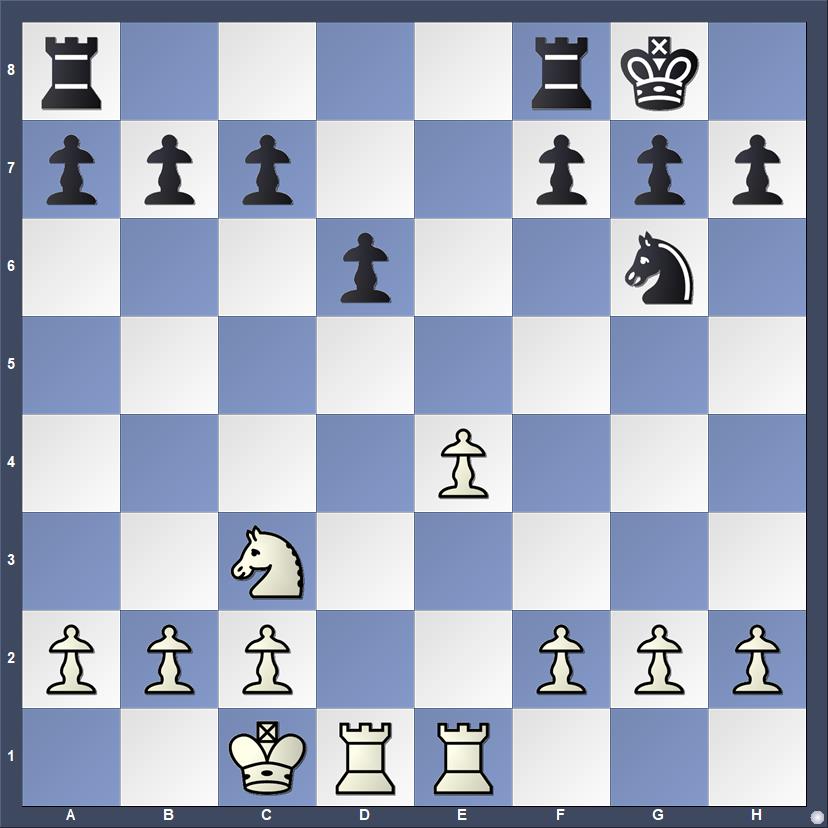
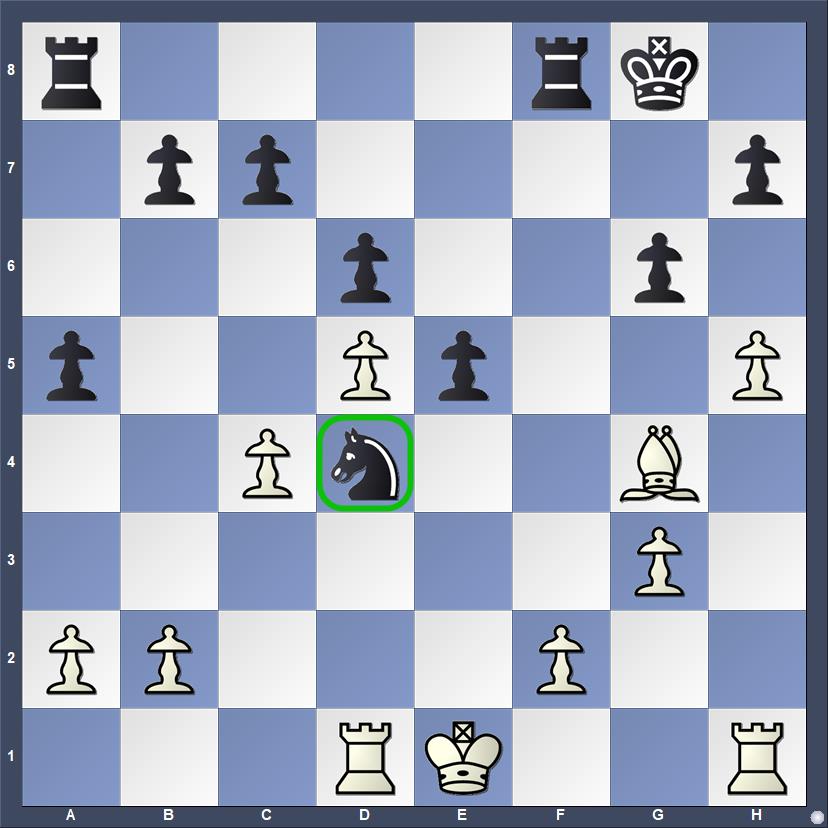
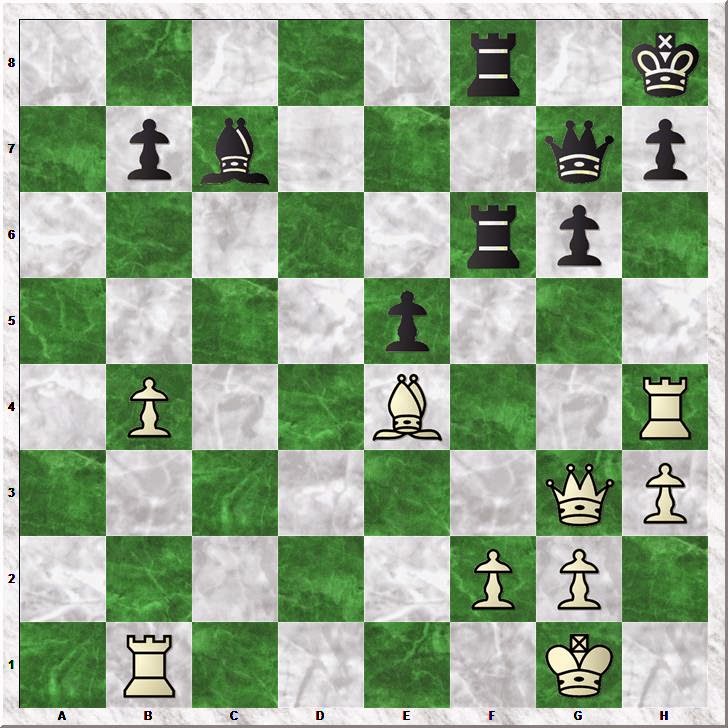
Showing posts with label Nimzovich (Aron). Show all posts

09 March 2025

300 Most Important Chess Positions

A Book Review

If you follow Chess Skills, then you know that I've been working through Thomas Engqvist, 300 Most Important Chess Positions (2018) at a pace far more accelerated than recommended by the author. When I announced this 60 day effort in December, I noted, “failure may be expected”. I worked through the last four positions this morning, the 74th day.

I heartily recommend this book. Studying five positions per week, as the author suggests, improves retention, and likely long-term benefits from study. Having raced through the book, I will be reviewing and deepening my study of many positions in the book over the coming months.

Engqvist’s 300 positions are selected from classical games, recent master practice, and compositions. Engqvist also includes some of his own most instructive losses. He is guided by a library of chess books, many years of playing, and experience coaching. The core idea of deep study of a limited number of positions developed from the way he was coached by Robert Danielsson while a young player. He studied positions from Ludek Pachman’s books on the middlegame and endgame.

Alekhine builds his gun
In the introduction, Engqvist makes a case for careful, disciplined study and focus on a limited number of positions per week. This contrasts markedly with Jeremy Silman's recollection that as a young chess player, he went through "200 to 500 games a day, every day" ("Studying Master Games and Berkmaster's First Over-the-Board Tournament Battle"). Silman claims that he absorbed tactical patterns and positional concepts in this manner. Engqvist advocates reflection and review with intent to "understand, grasp and assimilate the most important idea(s)" (9). He asserts that studying too many positions at once lead you to forget what you have learned. At the core of this learning process, he writes, is "to gain a deeper appreciation of the inner qualities of the pieces, their movements and their actual value in any specific position" (emphasis in original, 9).

By way of illustration, he offers this composition by Paul Rudolf von Bilguer from 1843.

White to move
This position appears in the introduction and as number 281 in the text. Both Ludek Pachman and André Chéron advocate 1.Qe6 and consider the position a draw, but tablebases show that it is a win. There is much to attempt to absorb in the tablebase moves that Engqvist annotates (274-276), but he notes that sometimes the queen works best when it does no more than a rook can do (9). 1.Qc7! is the only winning move. The queen's demotion explains the first move, but subsequent moves draw on the full mobility of the queen, leading Engqvist to marvel at "how the attacker uses the queen over practically the whole board" (276).

The positions that he chooses are interesting, challenging, instructive, and practical. Most of them were tested with chess players who subscribed to an email course where they were presented five positions per week. Rarely is a single move or short sequence the solution that one must find while examining the position. Only a few offer long computer solutions as in the Bilguer study. A considerable number of positions feature equal or near equal positions from games where strong moves and persistent maneuvers eventually provoked error.

Many of the positions are suitable for training with a study partner. Engqvist recommends playing both sides with another person, or against the computer. Teaching the position to someone else improves retention he notes, and in my experience also depth of understanding. My young students often vex me with moves that were not anticipated in master commentary or computer analysis. The positions in this book are excellent resources for coaches. The day that I acquired this book in February 2019, I took it to a lesson with my top student. We looked at six endgames and then the first position in the book (see "A New Book and a Morphy Game"). The next few weeks, this student and I will be playing some of the rook and queen endings.

Emphasis is on positional concepts, rather than tactical operations. The author notes that this emphasis distinguishes his book from Lev Alburt, Chess Training Pocket Book: 300 Most Important Positions and Ideas (1997), which emphasizes tactics. Alburt also limits the number of endgames. He states that becoming a "strong player" requires knowledge of 12 key pawn endings, not hundreds (9). These 12 are in his Pocket Book. Alburt's book is the second one that I list in "Ten Books to Achieve 1800+".

Some positions in 300 Most Important Chess Positions are surprising, such as White’s second move in the English Opening, Sicilian Reversed.

White to move

But this position is placed alongside others (both English Opening and Sicilian Defense) with references to several games played by top players. There is plenty of study material in these games. I might also note that Engqvist’s opening choices reflected in the positions chosen offer more variety than those in another collection of 300 positions that I’ve spent time working through: Rashid Ziyatdinov, GM-RAM: Essential Grandmaster Knowledge (2000). Ziyatdinov’s positions stem from games where 1.e4 is the overwhelming choice.

An instructive sequence of positions that I found highly motivating began with Bologan,V.--Frolov,A., Moscow 1991, a Sicilian Defense, then in a variation continued with Anand,V.--Illescas Cordoba,M., Linares 1992 and reference to Karpov,A.--Kasparov,G., Moscow 1985.  It continued with Bologan--Frolov for two more positions, then Marin,M.--Korneev,O., Capo d'Orso 2008 takes us through moves 2-4 through three positions in the English Opening, Sicilian Reversed.

The first position in the book is slightly less surprising, but with two book moves played by Adolf Anderssen and Paul Morphy, as well as many other players before and since, Engqvist’s preference for Morphy’s choice provokes reflection.

White to move
9.Nc3 and 9.d5 both get played by masters today. Adolf Anderssen favored 9.d5 and won many games from this position. Paul Morphy showed, Engqvist suggests, that 9.Nc3 is a better developing move.

As I consider Morphy’s 9.Nc3 in the Evans Gambit or Mihai Marin’s view that after 1.c4 e5, 2.g3 is the most precise, I am reminded of my tendency to blitz out opening moves by rote and only begin thinking after an inaccuracy. Engqvist’s positions from very early in the game should help me to develop better habits. Thinking should begin before the first move, even if positions at move 10 are well-studied.

There are positions in this book that I have used with students for many years and there are positions that are wholly new to me. There are many positions with several pages of analysis and variations. There are positions that should be drawn, but one player was able to present sufficient difficulties to provoke error.

Ziyatdinov advocates memorizing the 56 games from which he draws the middlegame positions; Engqvist is more selective in games that he suggests the student commit to memory. Schulten -- Morphy, New York 1857, a King's Gambit that Morphy won in 21 moves, appears in both and I'm close to having it in my long-term memory. I have not yet started the effort to memorize Karpov,A.--Unzicker,W., Nice 1974, which is another suggestion of Engqvist's.
One position that I studied in early January led me to improve my move order in a position that I frequently reach while playing against the Caro-Kann.

Several endgame positions that I played against Stockfish before or after reading Engqvist's notes drove me to dig into some of the volumes in Yuri Averbakh's eight-volume series.

Engqvist's analysis is fresh, lucid, and thought-provoking. Many of his memorable phrases guide me when they should--appropriate moments during play. For example, "Nimzowitsch tried to make his opponent tired and careless by doing nothing" (230). In Duras -- Nimzowitsch, San Sebastian 1912, more than twenty moves of rooks and kings were played in a completely equal endgame. Only when Duras erred did Nimzowitsch move a pawn.

I reflected on this lesson while playing online a completely drawn ending of bishop and knight versus bishop, and then nine moves prior to a draw by the 50-move rule, my opponent allowed a small combination that allowed me to win his bishop. That game, then, became my first opportunity to checkmate with bishop and knight that did not result from a deliberate underpromotion. Because of Engqvist's choice of positions, I had recently practiced that checkmate, too (see "Recognizing Known Positions").

300 Most Important Chess Positions was on my shelf nearly six years, serving as occasional study material and reference for finding positions suitable for some of my students. Now that I've been through every position, I will use it more actively.

I have a to do list that developed as I was going through the book. The list includes studying Jose Capablanca's analysis of a couple of his games in My Chess Career (1920), the only Capablanca authored book that I did not wholly read in 2021. Engqvist brought to my attention a game that Richard Reti analyzes in Master of the Chessboard (1930), which I intend to study. Some of Engqvist's analysis draws from Victor Bologan, Victor Bologan: Selected Games 1985-2004 (2007), and I added it to my library. The long rook endgames and queen endings are games worth reviewing periodically until I absorb their lessons.

Another task presented to me after racing through this book is that Engqvist has also published 300 Most Important Tactical Chess Positions (2020), 300 Most Important Chess Exercises (2022), and Chess Lessons from a Champion Coach (2023). Any or all of these books would be worth my time. Perhaps I'll continue to ignore Engqvist's advice on pacing, and race through his tactics book in the near future.

20 February 2025

Playing Drawn Endgames

Do you play out a position that is technically drawn? Twelve years ago, here on Chess Skills, I inquired about an endgame that I was watching live. Levon Aronian made Fabiano Caruana play 36 moves in a dead drawn rook and bishop vs. rook ending. Some research showed that Aronian had won such endings in previous games. When time is short and one side faces no dangers, it makes sense to press and force the opponent to prove their skills in maintaining equality.

Thomas Engqvist makes this point in 300 Most Important Chess Positions (2018) with several examples. First is Duras,O. -- Nimzowitsch,A., San Sebastian 1912.

Black to move
Engqvist writes:
Nimzowitsch tried to make his opponent tired and careless by doing nothing. As a matter of fact there is nothing Black can do. By playing in this "innocent" manner Nimzowitsch managed to fool his opponent. (230-231)
After 24 moves of seemingly pointless shuffling, the players reached this position.

Black to move
Duras erred with 57.Rg5. Nimzowitsch seized the moment with 57...f5 and Duras resigned ten moves later.

Engqvist adds Flohr,S. -- Vidmar,M., Nottingham 1936, where he notes, "In practice it's not easy to defend these kinds of endings and even famous masters and grandmasters make mistakes that eventually lead to a loss" (238). Vidmar resigned 16 moves after his critical error.

Then, in Chigorin,M. -- Tarrasch,S., Budapest 1896, Tarrasch offered a draw in this position.

White to move
"Chigorin correctly declined since White cannot lose anyway", Engqvist observes (240).

After 30.Kf4 Kf8 31.f3 Kg8 32.Ra7 Kf8 33.g4 hxg4 34.fxg4

Black to move
34...Ra1??

34...Kg8 was necessary. Engines need considerable search depth to perceive the error here, but Chigorin appeared to understand the moment.

35.Kf5 Rf1+ 36.Kg6 Rf4 37.g5 fxg5 38.hxg5

In this position, I recognized that White will be able to reach a Lucena position, although that took another ten moves.

My own insistence on playing on when there is the sliver of a chance of eventual victory developed as a consequence of reading Jacob Aagaard, Excelling at Technical Chess (2004) almost twenty years ago. Yesterday, I faced an opponent in online play who pressed when he had a slight edge in a technically drawn ending. I erred. He missed his chance. And then, he took the game almost to stalemate, even offering me opportunities to fall apart in an elementary pawn ending.

White to move

Stripes,J. -- Johnson,F. [A04]
Live Chess Chess.com, 19.02.2025

28.Ra1!= Rxa1 29.Rxa1 Ra8 30.Ke3?!

An inaccuracy

30.Ra6 Rb8 31.Rxa7 Rxb3 32.Rxe7 Rc3 33.Re8+ Kg7 34.Rd8 Rxc4 35.Rxd6=

30...Kf8 31.Ra6 c5

31...Rb8 32.Ra3 a5 33.Kf4 would be more difficult for White.

White to move

32.d5?

32.dxc5 dxc5 33.Kd3=

32...Ke8

32...f5 should win.

33.Kd3 Kd7 34.Kc3

34.g4 is White's best chance. It seems that both of us missed the strength of f7-f5.

34...e6?

34...f5!

I have survived my first error and the game is again drawn with best play.

35.e4 f5 36.dxe6+ Kxe6 37.exf5+ gxf5

White to move

38.Kd3??

38.b4= cxb4+ 39.Kxb4 Rb8+ 40.Kc3 Rg8! 41.c5! Rxg3+ 42.Kd2 Ke5 43.cxd6 Rg7 44.Ke3 Rd7 45.Kf3
38.h5!=

38...h5-+ 39.Ke3 Ke5 40.Ra5

Black to move

40... a6??

Spoils the win.

40...Rb8-+ 41.Ra3 a5
40...Rg8-+

41.b4!=

The rest of the game was played well by both sides and a draw was the appropriate result. I never had winning chances, but there were opportunities for me to go wrong, so my opponent pressed.

41...Rc8 42.bxc5 Rxc5 43.Rxa6 Rxc4 44.Ra5+ d5

White to move

45.Ra8 Rc3+ 46.Kf2 d4 47.Re8+ Kd5 48.Rf8 Ke4

White to move

49.Re8+ Kd5 50.Rf8 Ke5 51.Re8+ Kf6 52.Rh8 Kg6 53.Rg8+ Kf7 54.Rg5 Kf6 55.Rxh5 Rc2+ 56.Kf3 d3 57.Rh6+ Ke5 58.Rh8 d2 59.Rd8 Rc3+

White to move

60.Ke2 Rxg3 61.Rxd2


61.Kxd2 f4 62.Re8+ Kf5 63.Ke2=

61...Rg2+ 62.Ke1 Rxd2 63.Kxd2

And now, in a drawn pawn ending, my opponent goes to remove my pawn, and then makes me show that I know where to place my king.

63...Kf4 64.Ke2 Kg4 65.h5 Kxh5 66.Kf3 Kg5 67.Kg3 f4+ 68.Kf3 Kf5 69.Kf2 Ke5 70.Kf3 Kf5 71.Kf2 Ke4 72.Ke2 f3+ 73.Kf2 Kf4 74.Kf1 Ke3 75.Ke1 Ke4 76.Kf2 Kf4 77.Kf1 Kg4 78.Kf2 Kf4 Game drawn by repetition ½-½

Having lost all four prior encounters against Atlanta coach and chess expert Frank Johnson, I'm very happy with the draw. My work on rook endings with Engqvist's book and Jesus de la Villa, 100 Endgames You Must Know, 4th. ed. (2015) made a difference in navigating difficulties, but did not prevent all errors.


26 February 2024

Study Material

What might I gain from some focused study of the works of Aron Nimzowitsch? I’ve had My System and Chess Praxis in the old English descriptive versions since the 1990s and have dipped into them often enough to have a grasp of his central concepts. Of course, prophylaxis, blockade, pawn chains, the isolated queen pawn, and other ideas that he articulated before anyone else are found in many books today. One cannot read chess books and fail to encounter the work of Nimzowitsch.

John Watson, Secrets of Modern Chess Strategy has been in my possession close to twenty years and I’ve read chunks. In fact, it was much on my mind during yesterday’s round four game, as was Neil McDonald, Break the Rules! Both Watson and McDonald present a Caro-Kann line in which White begins the game with eight pawn moves. Concrete calculation trumps general principles, Watson notes. In my game yesterday, prior to 17…Qb6, I had made 11 pawn moves and 5 knight moves. Also, I had trapped my opponent’s bishop.
Last summer, I purchased both the original edition of Raymond Keene, Aron Nimzowitsch: A Reappraisal and the somewhat newer algebraic edition. I’ve read only the first chapter. Yesterday, at the chess tournament, the new translation of Nimzowitsch’s classics was added to my book collection thanks to the generosity of IM John Donaldson attending and playing in our local tournament. He has been doing so for a quarter century and has made a habit of bringing books that he sells at bargain prices.
Perhaps the new book will end up on the shelf gathering dust. Perhaps I will make some time to study it. 

12 December 2023

Learning from Books

Frequently, I repeat stories of how chess skill first became something possessed in small measure and hoped to develop further. At the heart of the story are several books for which the authors and titles have been forgotten and one that I can identify. That one is Irving Chernev, The 1000 Best Short Games of Chess (1955). Playing through some of the games in this book in 1975 transformed my play. The book came back into my possession in 2012, now usually serving as a source of lessons for young students.

Over the past year (since September 2022), I have been working through this book deliberately and systematically, going through every game. Some games hold my interest a few minutes. Others sustain it an hour or more. Most days, I go through two or three games, often posting a position from one of the games on this blog’s Facebook page. I expect to go through the last ten games this week.

Last Tuesday, I posted a position from a blitz game that I won in seven moves. The winning idea was identical to that in Gibaud — Lazard, Paris 1924, the first game in Chernev’s classic. It was the second time I had employed this idea in online play.

Black to move

Two weeks ago, Mattison — Nimzowitsch, Carlsbad 1929 (game 933 in Chernev) made such an impression on me that I pulled from my bookcase a book purchased last summer and started to read it. I bought Raymond Keene, Aron Nimzowitsch: A Reappraisal (1974) because it had been often recommended by IM John Donaldson, among others, and had not yet appeared on my shelf. In fact, I bought two copies: the original and Batsford’s algebraic edition (1999). 

Saturday morning, I played one game online before heading to a youth chess tournament for which I served as the tournament director. While the children played, I showed my game to FM Jim Maki, who runs the analysis table at our youth events. Keene’s book guided some of the decisions I made during the game.

White to move
In the endless battle between bishops and knights, this position struck me as one that favored knights. Also, I was cognizant of Keene’s words.
…superlative demonstration of good knight against bad bishop, … The bishops, locked behind the pawns, are never given a chance. (7)
And thirty pages later, these foci in Nimzowitsch’s play are made more explicit, Keene making the point that he had a clear preference for the knight over the bishop.
Ideally the rounded chess master should not harbour an idiosyncratic affection for one or other of the two minor pieces. However, Nimzowitsch did, and it is quite obvious from his games that he had a penchant for closed positions where he could exploit to the utmost the blockading potential of the knight.
Keene then presents a fantasy position that Nimzowitsch presents in Die Blockade, which “gives away his preference for the knight” (37).

Of course, there are other reasons learned from other books that might have led me to exchange bishop for knight. Many chess writers have emphasized the concept of time, for instance. I particularly recall studying this idea in Lasker’s Manual of Chess and Dan Heisman, Elements of Positional Evaluation. But, Keene’s work on Nimzowitsch was actively in my thoughts while playing.

Later in this same game, as I retreated a knight to maintain control of the central square it occupied, I recalled words of R. N. Cole, Dynamic Chess in reference to the play of William Steinitz. But these words were on my mind because Keene quotes them in discussion of the influences on Nimzowitsch. 

White to move
31.Nef3, which I played, is consistent with these ideas Keene credits to Steinitz and Nimzowitsch. Nonetheless, the engine on chessdotcom prefers that I would have transferred my rook to the b-file, and now sees an opportunity for Black to bring the nearly worthless light-squared bishop back into a position where it has some value.

I was concerned that allowing Bxe5 would place a potentially vulnerable pawn on a strong point best utilized and controlled by my knights.


24 June 2022

Outpost

The concept of an outpost square in chess varies somewhat in chess literature. Aron Nimzowitsch often gets credit for introducing the  concept in My System (1925).* For Nimzowitsch, outposts are connected to play on open files. He presents the following position.

White to move
The key move, Nimzowitsch writes, is Nd5, "and the knight here placed we call the outpost; by which we mean a piece, usually a knight, established in an open file in enemy territory, and protected (of course by a pawn)" (32). This move provokes black to drive the knight back with c6, a move which weakens the d-pawn.

A contrasting definition of outpost is given by David Hooper and Kenneth Whyld in The Oxford Companion to Chess (1992). In their definition, an outpost is a square, "guarded by a pawn but cannot be attacked by an enemy pawn, especially such a square on an open file" (285). That the square cannot be assailed by an enemy pawn is central to Peter Romanovsky's description of the "eternal knight". In Chess Middlegame Planning, trans. Jimmy Adams (1990), Romanovsky suggests conditions when a piece might be placed permanently on a weak point in the opponent's position:
And so the potential weakness of a square arises as a result of the impossibility of attacking it with pawns. However, such a square should only be considered a real weakness when an enemy piece, which it will not be possible to drive away or eliminate by an exchange, threatens to take up a position. (37)
Such a position was reached in a game presented by Romanovsky, Izmailov -- Kasparian, Moscow 1931. After 25...Nd4, Black's knight is unassailable.

White to move
The knight does not sit on an open file, as Nimzowitsch's definition would lead us to expect. Romanovsky does not employ the term outpost, but highlights the concept through "weak squares" and the "eternal knight".

Hooper and Whyld also refer readers to their entry on the concept of "hole", "a square on a player's third rank or beyond that cannot be guarded by a pawn" (175). The concept, they state originates from the writing of Wilhelm Steinitz. He writes in The Modern Chess Instructor (1889) that he first used the term in The International Chess Magazine (November 1886). In Steinitz, we find the concept of an outpost square, albeit without the term later used by Nimzowitsch:
...not alone the weakness on one single pawn but also that of one single square into which any hostile man can be planted with commanding effect, will cause great trouble, and often the loss of the game, and that by proper management of the pawns such points of vantage need not be opened for the opponent. (xxxix)
Steinitz gives the opening moves 1.e4 e5 2.c4 as creating permanent weaknesses for White on d3 and d4, even anticipating Nimzowitsch's focus on open files: "A hole or a weak square are still more troublesome when the opponent is enabled to open the file on which they are situated for his queens and rooks" (xxxix).

The Lesson

Several of my students this past week were presented a lesson concerning outposts that I extracted from Michael Stean, Simple Chess (1978). Stean offers a nuanced definition: "a square at the forefront of your position which you can readily support and from where you can control or contest squares in the heart of the enemy camp," mentioning both a supporting pawn and that the opponent cannot attack the position with pawns (13). He offers five illustrative games with informative annotations. I selected one position from each game, presented the position to my students, and we played from there. Then we looked at the game as played.

In Stean's first illustrative game, Tal -- Bronstein, Tbilisi 1959, Black contested White's efforts to establish a knight on d5. When the knight went there anyway, it provoked a series of exchanges that led to a superior endgame for Tal. The second game, Benko -- Najdorf, Los Angeles 1963, offers a well-placed forward knight on f5 and an open h-file for White's heavy pieces.

White to move
Benko opened a line for the queen to join the rooks on the h-file with 24.f4! Najdorf resigned a couple of moves later. A couple of my students tried 24.Rh7, and one was able to beat me in a queen and pawn ending after quite a few moves.

Stean's selection shows a range of tactical opportunities that were facilitated through battles focused on outposts and concludes with Unzicker -- Fischer, Varna 1962 where Fischer successfully prevented Unzicker's efforts to deploy a knight to a d5 outpost.


*I am using the 1947 David McKay edition, translated by Philip Hereford and revised by Fred Reinfeld.

01 June 2020

Surprising

My students and I are going through some of the gems in Irving Chernev, The 1000 Best Short Games of Chess (1955). The finish of this game between Aron Nimzovich and a player whose identity is not preserved by Chernev proved delightful.

White to move

01 August 2017

Lesson One

Where do you begin when teaching chess to a beginner? Certainly, the first steps should be the board and how the pieces move, as Daniel Rensch offers in "Everything You Need to Know 1: Start Playing Chess" on Chess.com. Or, perhaps there is a flaw in this approach. Momir Radovic claims the approach that starts with the moves is flawed, quoting Aron Nimzovich, "How I Became a Grandmaster" (1929).*
Let's start from the beginning -- from the very first lesson. "Moves were shown" to me -- was that the right thing to do? Well, of course, my dear reader would say, it's impossible to play chess without it. But the thing is, the reader makes a mistake: this method is utterly wrong.
Nimzovich, trans. by Alexey Spectra
"Utterly wrong" in this translation is presented as "fundamentally flawed" by Radovic (see "How We Fail Big Time in Teaching Chess"). Nimzovich asserts that one should begin with the board, specifically mentioning the border between the players and the center; then with the rook and the concept of ranks and files. Radovic suggests contacts, which appear to be embodied in Nimzovich's lesson with a White rook on e1 and a Black pawn on e6. Yuri Averbakh. Chess Tactics for Advanced Players (1972) develops a theory of contacts that I imagine must be part of what informs Radovic's approach.

Through work as a guest teacher in elementary classrooms for more than a decade, I taught more than one thousand children to play chess. I developed a curriculum that could be covered in four visits. I always started with the board--ranks, files, diagonals, and the names of squares. Each visit would then introduce the moves of one or two pieces. Sometimes, I started with pawns and then students played pawn wars. Sometimes, I started with the rook and the king and the concept of check. Sometimes I started with the queen and king and the concept of checkmate. None of these methods were perfect, but children did learn to play.
Rensch's First Checkmate

Rensch starts his video with the board's alternating colors, then ranks, files, diagonals, and names of squares. Then he teaches the moves, beginning with the rook. Fifteen minutes into the video, he introduces check and checkmate. His first checkmate is with a queen. The second is with two bishops. Then, he shows a stalemate with the two bishops. Finally, en passant and castling are introduced.

The Nimzovich/Radovic approach deserves further exploration, but the links to his site do not seem to be working for me this morning. Also, his articles on his blog and on Chess.com generally offer teasers only. He suggests the problems that provoked development of his system, but one needs to hire him as a coach to get the details. Or, do a bit of research and find the links, such as his article, "Introduction to the Contacts Method," The Chess Journalist (Fall 2011).

Nearly two centuries ago, William Lewis (1787-1870) presented a "scientific" approach to learning chess. His book, Elements of the Game of Chess (1822), begins with rules and moves and then proceeds to checkmates with queen and king against king. His assertions of the pitfalls of teaching chess the wrong way remind me of my own childhood.
The great objection to the works hitherto published, as far as regards the mere learner, is that they commence too soon with all the pieces, and the reader is expected to manoeuvre all, before he understands the use of one or two; the powers of the pieces are imperfectly taught, and the numerous combinations and difficulties which so early present themselves to the reader, confuse and fatigue him, and he begins to fear that very considerable time must elapse before he can be come, with great study and patience, even a moderate player.
Lewis, Elements, viii.
Lewis observes that a young beginner wants to use all of the pieces, but urges restraint. He asserts that a person who wants to reach a level where he or she can compete with first rank players should defer using all of the pieces until after working through the combinations with few pieces that he offers in Elements of the Game of Chess.

My younger sister taught me the moves after learning them from a neighbor. I was eight years old. A short time later, my uncle corrected some errors, or so he tells me. My memory extends to my sister's instruction, but not my uncle's. In any case, I played chess for several years before I had the faintest idea of strategy and tactics. These, and the beginnings of skill, developed when I discovered chess books shortly before or just after my fifteenth birthday (see "My First Chess Book"). As I learned to read chess notation and began playing through miniatures, my skill rose rapidly.

Lewis advocates using few pieces in many combinations. One almost gets the sense from careful study of his approach that Nimzovich and Radovic are merely refining lessons in a forgotten book. He does not begin with the rook, however. The queen is a terribly difficult piece with which to begin. Even so, Lewis's first checkmates are exemplary for teaching how a queen and king can coordinate their efforts. In particular, his "second situation" offers two solutions (28).

White to move

First, he presents checkmate in five. Then notes, "This method is very simple, but the other is more masterly and shorter; replace the pieces and play." We see that White's king does not move and Black is checkmated on the fourth move.

Step by step, Lewis walks his reader through simple checkmates when the Black king is already confined on the edge. Then, we reach the "fifth situation" (30).

White to move

It is checkmate in five moves. When a young player starts with such a checkmate, he or she is already well ahead of the one who played 58...Qc4+ in this next position.

Black to move

After six moves, White resigned in disgust, embarrassed to lose to a player who cannot execute a simple checkmate in three.


*This work in Russian has not been generally available in English, but Alexey Spectra, known on Chess.com as Spektrowski offers a translation on that site (link embedded).

21 July 2015

Counting Tempi

During a lesson with one of my top students last week, he observed that a particular candidate move lost a tempo. I opined that tempi did not seem as vital in this variation of the Pirc Defense as in certain open positions. The conversation brought to my recollection something that I had read in John Watson's Secrets of Modern Chess Strategy (1998) more than a dozen years ago.

Later in the week, I pulled Modern Chess Strategy off the shelf to revisit the half-remembered passage. Watson's book drove me back into Aron Nimzowitsch, My System (1930). After spending idle moments of three days rereading Modern Chess Strategy and My System, I started digging through other books on the shelf. William Steinitz. The Modern Chess Instructor (1889) did not offer anything to my inquiry, although he mentions a move "losing time" as early as 1873 in The Field.* Seigbert Tarrasch, The Game of Chess (1935) was published after My System, even though it seems to precede Nimzowitsch theoretically.

In order to illustrate his point concerning tempi, Nimzowitsch presents a curious position that has arisen in very few games. Watson carries the position further through logical moves as a critique of Nimzowitsch.

1.e4 e5 2.d4 exd4 3.c3 Nf6

Black's third move does not appear in the Encyclopedia of Chess Openings (ECO). My database does have three instances of this position prior to publication of My System. All three games were played in 1839 by William Davies Evans, inventor of the Evans Gambit. Evans had White against three different opponents, the best known of which was Pierre Charles Fournier de Saint-Amant. One of these games reached this position by transposition (1.e4 e5 2.c3 Nf6 3.d4 exd4).

Concerning this unusual 3...Nf6, Nimzowitsch states, "Black lets what will happen, and this is what every beginner should do in order to gain experience of the consequences of an advance in the center" (12).

4.e5 Ne4


White to move

"The knight can maintain himself here, for Bd3 will be answered by a developing move of full value, namely d5" (Nimzowitsch, 12-13). Nimzowitsch suggests that after 5.Bd3, Nc5 would be an error because the continuation 6.cxd4 Nxd3+ 7.Qxd3 "would yield an advantage of four tempi to White" (13). The resulting position appears once in my database--a seventeen move draw, perhaps one of those notorious arranged draws that plays out an obscure line from a book for a few moves.

Watson states concerning this advantage of tempi in Nimzowitsch's line:
Four tempi or not, 7...d5! leaves Black with two bishops and a healthy share of the centre (and it is White's 'good' bishop which has just been devoured). Most players would be quite content here as Black. (14)
After 4.e5, Captain Evans faced 4...Ne4 against George Perigal, 4...Qe7 against Saint-Amant, and 4...Nd5 against F.L. Slous.

Watson describes as "egregious", Nimzowitsch's assessment after 1.e4 e5 2.d4 exd4 3.c3 Nf6 4.e5 Nd5.

White to move

Nimzowitsch offers the continuation: 5.Qxd4 c6 6.Bc4 Nb6 7.Nf3. He states, "White has here six tempi as against two or one and a half, for the knight is not better placed at b6 than at f6, and the pawn at c6 is not really a whole tempo, since no move of a central pawn is here in question" (13).

Black to move

Watson asks, what has become of those valuable tempi after the logical 7...Nxc4 8.Qxc4 d5? Again, Black has the two bishops and is about to catch up in the number of minor pieces developed. He asserts that White is struggling for equality (15).


Tarrasch

For his part, Siegbert Tarrasch claims that counting tempi originated with Semion Alapin and him.
It is a very good thing, from time to time at least, to balance an account of the tempi visible on the board. This tempi reckoning originated with Alapin and myself. To be sure Alapin, as indeed is quite correct, included in his reckoning such moves as a4/a5, whilst I include only the developing moves and ignore the others--a system which, in my opinion based on my experience, gives results of greater practical value.
The Game of Chess, 228-229
Tarrasch offers a diagram to illustrate.


From his discussion of earlier positions, we learn that center pawns that have cleared out of the way of the pieces can be counted even if they have been captured. In this position, however, he does not count the pawns because both players have advanced both center pawns, making matters equal.

He explains further that a queen that has moved off the back rank counts as one tempo, regardless of how many times it has moved or where it stands. A rook is counted only if it has some space to move. Both of White's rooks have squares in front of them, and so count. Black's rook on g8 has moved, but is blocked and so does not count. Tarrasch does not count the rook on a8 because it has not moved, although perhaps he might consider it developed if the a-pawn were advancing against some target. Knights are more valuable when further advanced. The knight on c3 is one tempo. A knight on the fourth or fifth rank would count as two tempi, and Tarrasch counts three tempi for the knight on e6. Each bishop counts as one tempo when developed no matter how many moves were required to reach its present post.

Tarrasch thus finds that in this diagram, White has nine tempi to Black's five.

Most useful in Tarrasch's discussion, however, is the relationship of Time to Force and Space. "By good play tempi once gained are never lost," he asserts, "but rather are ultimately transformed into a gain in Space or Force" (231).

He is worth quoting at length.
These three factors of Force, Space and Time work together at every move. The whole art of the Opening consists in bringing into action pieces which are first shut in, in freeing pieces by a very few pawn moves, and in getting them to favourable positions and that as quickly as possible. Each tempo must be fully utilised for development, and one must advance one's game. (231)
Although Tarrasch is considered the dogmatist among classical chess theorists, I see the beginnings of modern dynamic chess in his discussion of the balancing of tempi with material and board control.


*See Sid Pickard, The Collected Works of William Steinitz (2003), CD for Steinitz's magazine annotations.

18 July 2015

The Pride of the Family

This position arose in a game between Aron Nimzowitsch and Semion Alapin. When the game took place and where has not been established (see "Nimzowitsch v Alapin" by Edward Winter [updated 1 January 2014]). Suggested dates have ranged from 1911 to 1914.


White to move

Nimzowitsch played the best move from this position and won a nice miniature.

01 February 2015

Flexibility

One of the hallmarks of modern opening play is to aim for maximum flexibility. That is, you want to use the move order that will achieve a position where you have excellent choices of how to proceed.
Edmar Mednis*
My study game this week is the second match game between Paul Morphy and Alexander Meek at the First American Chess Congress, 1857.** Friday morning, I played Rashid Ziyatdinov's Position 152 (GM-RAM: Essential Grandmaster Knowledge) against Rybka 4 and managed to win. Today, I am mulling over the initial moves in the game.

Morphy,Paul -- Meek,Alexander Beaufort [C01]
USA–01.Kongress New York (2.2), 16.10.1857

1.e4 e6 2.d4 g6 3.Bd3 Bg7 4.Be3

Up to this point, the moves are identical to those in the fifth match game between Adolf Anderssen and Howard Staunton at the London International Chess Tournament, 1851 (see Anderssen -- Staunton 1851).

4...Ne7

Is Meek's play superior to Staunton's?

5.Ne2 b6 6.Nd2 Bb7

White to move

This position offers aesthetic appeal and also anticipates the twentieth century struggles of the hypermoderns. White occupies the center, while Black seeks to contest the center from a distance.

Morphy violated the not yet formulated rule that knights should be deployed before bishops, and also posted his knights on slightly less active squares than the more usual c3 and f3. In doing so, however, his f- and c-pawns remain unimpeded.

François-André Danican Philidor considered it an error to block the f-pawn, but few chess players have agreed with him on this point. Philidor was concerned about reducing the flexibility of the pawns. In the diagram position, Morphy's f- and c-pawns are prepared to advance one square to support the center, or to advance two squares to claim more space on the chessboard.

White's bishops are also more flexible than Black's. Dan Heisman employs the term "two-way bishops" in Elements of Positional Evaluation (2010), quoting Aron Nimzovich. Nimzovich offers an example of defending pieces with "slight elasticity (capacity for maneuvering) ... in the case of a sudden attack on another wing, they will not be able to equal the attacking pieces in rapidity of motion" (My System [1947], 147).

Each of Black's bishops occupies a long diagonal and strikes towards the center. White's bishops on the other hand, occupy the center and are able to strike in either direction. As this game developed and the center closed, Black's light-squared bishop was locked out of the action. In Morphy's game against Meek, this bishop took no part in the battle. In my game against Rybka (beginning at move 19 in Morphy's game), this bishop became Black's last piece, defending a hopeless position against a knight and two pawns.

White's knights impede the mobility of the queen and are themselves less mobile on the second rank than the third. On the other hand, both knights are poised to maneuver to either wing.


*"What Price Flexibility?" Inside Chess (13 November 1995), 14; as quoted in Dan Heisman, Elements of Positional Evaluation: How the Pieces Get Their Power, 4th. ed. (Milford, CT: Russell Enterprises, 2010), loc. 869 (Kindle edition).

**I describe my this aspect of my current study plan in "To Know a Position."

30 June 2014

Three Fighting Draws

McDonnell -- De La Bourdonnais 1834

The chess games of Alexander McDonnell (1798-1835) offer abundant instruction in tactics. McDonnell, born in Belfast, Ireland, is considered to have been the strongest chess player in Great  Britain during the early 1830s. He is most often remembered, however, for his matches with Louis-Charles Mahé de La Bourdonnais (1795-1840). McDonnell lost more than half of their 85 games played during six matches. He was thus the runner-up in the first unofficial world chess championship. He also won 27 of those games, however.

For the past several days, I have working through McDonnell's games during my morning coffee. My intention is to go through all of his available games (ChessBase has 110; chessgames.com has 105). Most of his play was at odds, as was customary in his day, so the selection of available games in databases is small. There are 35 games in addition to the match games against Bourdonnais. Two of these are short losses to Captain William Davies Evans, including what is probably the oldest recorded instance of the Evans Gambit. Most of the rest are games played during simuls.

After going through these 35 games neither as fast as Jeremy Silman claims was his habit as a young player, nor slow enough to understand every nuance, I reached the La Bourdonnais match games this morning. They appeared to play by a rule that would remain common for the next several decades: draws do not count and must be replayed. Hence, La Bourdonnais had White through the first four games. Each draw led to another game with the same colors.

Although all drawn, the first three games were battles from the first moves to the finish.

De Labourdonnais,Louis Charles Mahe -- McDonnell,Alexander [C21]
London m1 London (1), 1834

1.e4 e5 2.d4 exd4 3.Nf3 c5 4.Bc4 Nc6 5.c3 Qf6 6.0–0 d6 7.cxd4 cxd4 8.Ng5 Nh6 9.f4 Be7 10.e5 Qg6 11.exd6 Qxd6 12.Na3 0–0 13.Bd3 Bf5 14.Nc4 Qg6 15.Nf3 Bxd3 16.Nce5 Bc2 17.Nxg6 Bxd1

White to move

18.Nxe7+

18.Nxf8? loses material. 18...Bxf3. After the text, White remains down only the sacrificed pawn and retains a slight initiative.

18...Nxe7 19.Rxd1 Nhf5 20.g4 Ne3 21.Bxe3 dxe3 22.Rd7 Rfe8 23.Re1 Ng6 24.f5 Nf4 25.Rd4 Nh3+ 26.Kg2 Nf2 27.Rc4 Rad8 28.h3 h6 29.Re2 b5 30.Rd4 Rxd4 31.Nxd4 a6

La Bourdonnais's aggressive play has led to exchanges and an ending where Black retains the advantage of one pawn, albeit one that will fall.

White to move

32.Kf3 Nxh3 33.Rxe3 Ng5+ 34.Kf4 Rxe3 35.Kxe3

And now it is a knight ending with pawns on both sides. Such knight endings are often sought by players substantially stronger than their opponents because they offer better prospects of victory than rook endings.

35...g6 36.fxg6 fxg6 37.Nc6 Ne6 38.Ke4 Kf7 39.Ke5 h5 40.gxh5 gxh5

White to move

McDonnell has the advantage, but La Bourdonnais has the draw well in hand. As long as he holds, he gets another game with the White pieces.

41.Kf5 Nc7 42.b3 Ke8 43.a4 bxa4 44.bxa4 Nd5 45.Kg5 Ne7 46.Nb8 a5 47.Na6 Ng6 48.Kxh5 Nf4+ 49.Kg5 Ne6+ 50.Kf5 Kd7 51.Ke5 Nd8 ½–½

De Labourdonnais,Louis Charles Mahe -- McDonnell,Alexander [C44]
London m1 London (2), 1834

1.e4 e5 2.Nf3 Nc6 3.d4 exd4

Switching the move order of the first game has led to the Scotch Gambit, an opening occasionally employed as a surprise weapon in our day.

4.Bc4 Qf6 5.c3 d3 6.Qxd3

This time, White recovers the pawn quickly.

6...d6 7.0–0 Qg6 8.Bf4 Be7 9.Nbd2 h5 10.Rfe1 Bh3

McDonnell, too, shows some aggression.

White to move

11.Nh4 Bxh4 12.Qxh3 Bf6 13.e5 dxe5 14.Bxe5 Bxe5 15.f4 Nge7 16.fxe5

This time, it is White who has a vulnerable e-pawn that is far advanced.

16...Qg4 17.Qxg4 hxg4 18.Nb3 Ng6 19.e6 f5 20.Rad1 Nge5 21.Bd3 Rh5 22.Bc2

Black to move

22...Ke7 23.Nd4 Kf6 24.Rf1 Ne7 25.b4 Rah8 26.Ne2 Rxh2

McDonnell wins a pawn.

27.Ng3 g6 28.Bb3 Kg5 29.Rde1 Nd3 30.Re3 Nf4 31.Rf2 R2h7 32.Rd2 Nh5 33.Nxh5 Rxh5 34.Kf2 f4 35.Re5+ Nf5 36.e7 Re8 37.Rd7

Black to move

La Bourdonnais is positioned to win back a pawn, but McDonnell finds the way to another ending with a one pawn advantage.

37...Rh7 38.Rxc7 Rhxe7 39.Rcxe7 Rxe7 40.Rxe7 Nxe7

White to move

The players reach a minor piece ending where the bishop must contend with a knight that fights alongside a superior number of pawns.

41.a4 Kf5 42.a5 Ke5 43.Bd1 g3+ 44.Kf3 Nd5 45.Bc2 g5 46.b5 Nxc3 47.b6 axb6 48.axb6 Nb5 49.Kg4 Nd6 50.Bd3 Ne4 51.Be2 Kd5 52.Bf3 Ke5 53.Be2 Kf6 54.Bf3 Nf2+ 55.Kh5 g4 56.Bxg4 Ke7 57.Bc8 Kd6 58.Bxb7 Kc5 ½–½

The Frenchman survives again.

De Labourdonnais,Louis Charles Mahe -- McDonnell,Alexander [C44]
London m1 London (3), 1834

1.e4 e5 2.Nf3 Nc6 3.d4 exd4 4.Bc4 Qf6 5.0–0 d6 6.c3 d3 7.Qxd3 Qg6 8.Bf4 Be7 9.Nbd2 Nh6

McDonnell deviates from the previous game.

White to move

10.Rae1 0–0 11.Nd4 Ne5 12.Bxe5 dxe5 13.N4f3 Bd6 14.h3 Kh8

Preparing to thrust the f-pawn forward.

15.Nh4 Qh5 16.Qg3 f5 17.Nxf5 Nxf5 18.exf5 Bxf5 19.Ne4 Bxe4 20.Rxe4 Rf6 21.Rh4 Qf5 22.Qe3 Qd7

White to move

The tension builds in the match as the players keep their queens on the board longer than the first two games.

23.Bd3 g6 24.Be4

La Bourdonnais sets the stage for Aron Nimzovich to articulate the concept of blockade.

24...Raf8 25.Qg3

The g-pawn is threatened.

25...Qg7 26.b4 a5 27.a3 axb4 28.axb4 c5 29.Rb1 cxb4 30.cxb4 Bc7 31.Kh1

Black to move

31...Rb6

31...Rxf2? 32.Bxg6

32.b5 Bd8 33.Rg4 g5 34.Bf3 h5 35.Re4 g4 36.hxg4 hxg4 37.Qxg4 Rh6+ 38.Kg1 Qh7

White to move

39.g3 Rg8 40.Qc8 Bb6 41.Qc3 Rxg3+

Exploiting the pinned f-pawn, and the continuation of tactical actions aimed at the rook on b1.

42.Kf1 Bd4 43.Qc8+ Rg8 44.Qc4 Rh1+ 45.Ke2 Rxb1

Black wins the rook

46.Rxd4

White takes a bishop in exchange.

46...Rb2+

46...exd4 appears to lead to a draw by repetition due to perpetual checks by White's queen.*

47.Rd2 Rxd2+ 48.Kxd2 Rd8+ 49.Ke2 Qh6 50.Qc3 Qg7 51.Be4 Kg8 52.Qb3+ Kf8 53.Qf3+

Black to move

Again, perpetual check appears to be a resource for White.

53...Qf7 54.Bxb7 Qxf3+ 55.Kxf3 ½–½

After three games without gaining a clear advantage with White, the Frenchman will find his way to victory in game 4 (see "McDonnell Blunders").

*It is my intention to go through these games and write my own comments without reference to engine analysis. I will check my analysis after completing a pass through all games.

16 October 2012

Lesson of the Week

Last week's lesson was too difficult for most of the youth in my clubs. This week's lesson might be easier. At the Ostende tournament in 1907 (same event, different year as last week's lesson), Rubinstein defeated Aron Nimzovich from the Black side of the board.

Black to move

We need to keep asking our routine questions.

Who is better?
What are the plans for both sides?

When the mind is trained to spot tactics, some positions do not require these questions. It is not always necessary to consider a position deeply when tactics are present. However, young players are too impulsive and must train to slow down. Standing by the demo board in a room full of elementary students, I have fielded many strings of suggestions that seem like random guesses.


Learning to Spot Tactics

I have been working on a new series of worksheets for my young players. Each worksheet consist of six problems on one page. The problems are simple one-move problems with few pieces on the board. Last week, I spent a short time with a player who has just learned the moves. Together, we went through the first test in Bruce Pandolfini, Beginning Chess (1993). This book has three hundred one-move problems, each with ten or fewer pieces on the board. The young student needed some prompting through the first few problems, and then he began to spot tactics. He solved the last three problems in the first test quickly and on his own.

It would be useful to get this book into the hands of each and every young chess player before he or she plays in a tournament. That is not likely. Even if possible, many students will not work through three hundred problems without additional rewards. Getting groups of players to work through six problems in one sitting is much easier. If I make it a game with prizes, perhaps the necessary habit of tactics training will take root.

Repetition of simple ideas and of common patterns is the heart of chess training. Here are my first six problems. White moves first in each.