Showing posts with label Polgar (Laszlo). Show all posts

14 March 2022

Jazz

...no two notes the same and no one note off the chord, the more they relax in the excitement of it the more a natural genius in preselection becomes evident and the more indeed the melodic line becomes rigorously pure.
Otis Ferguson, "The Spirit of Jazz" The New Republic (December 1936)
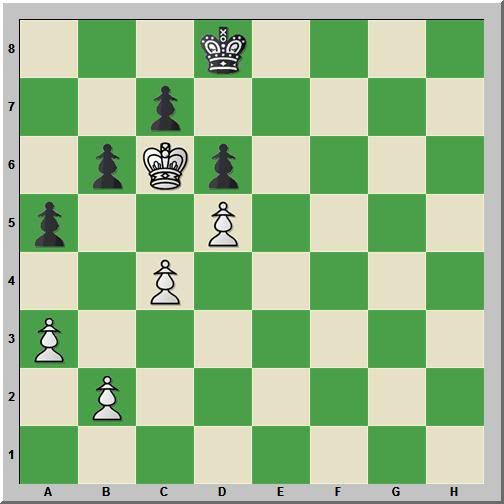
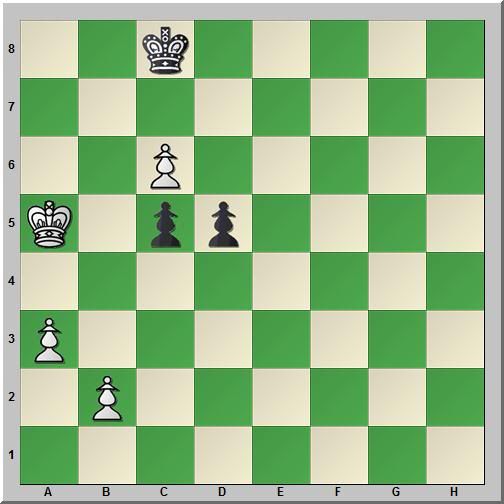
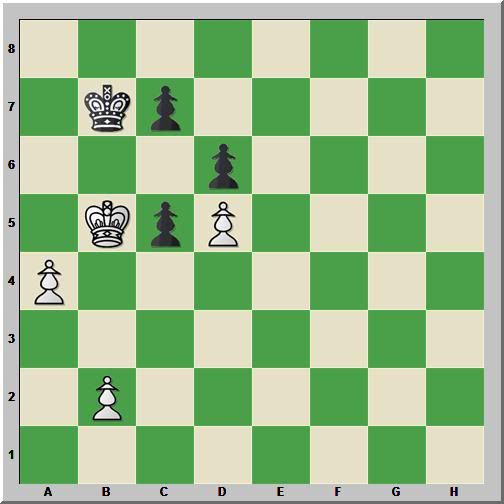
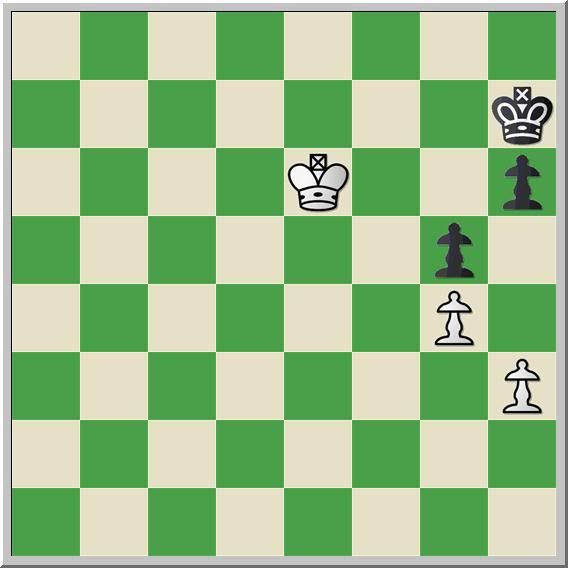
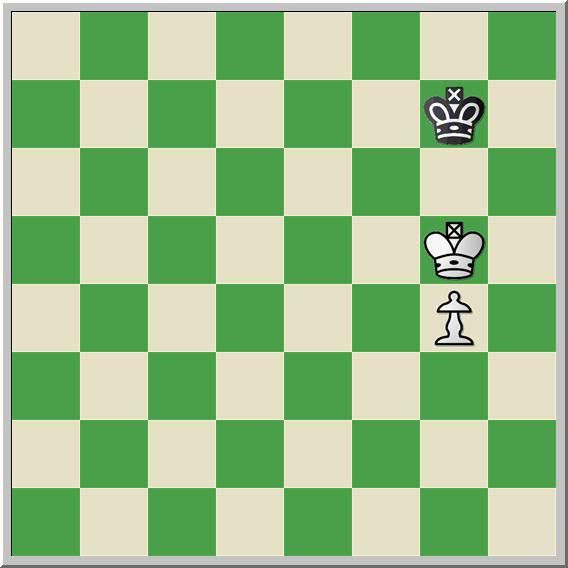
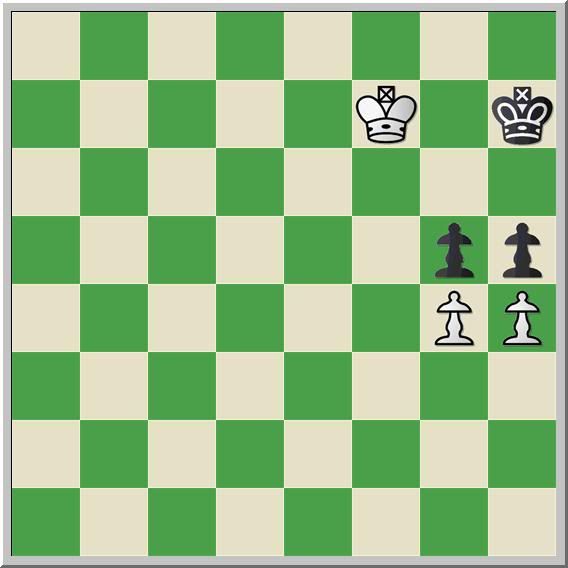
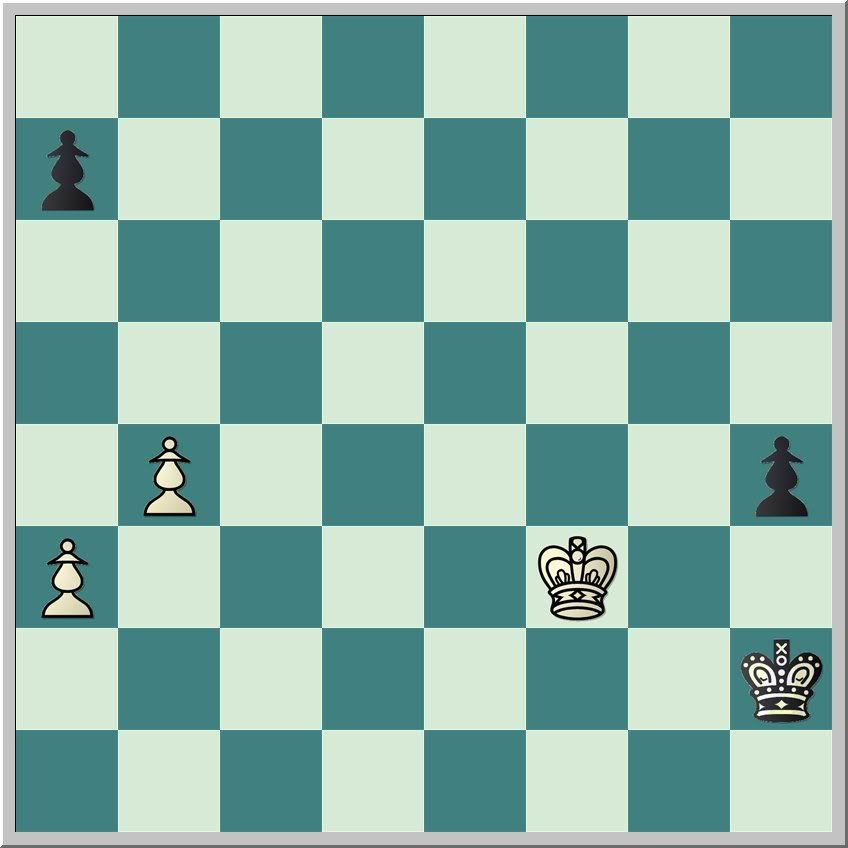
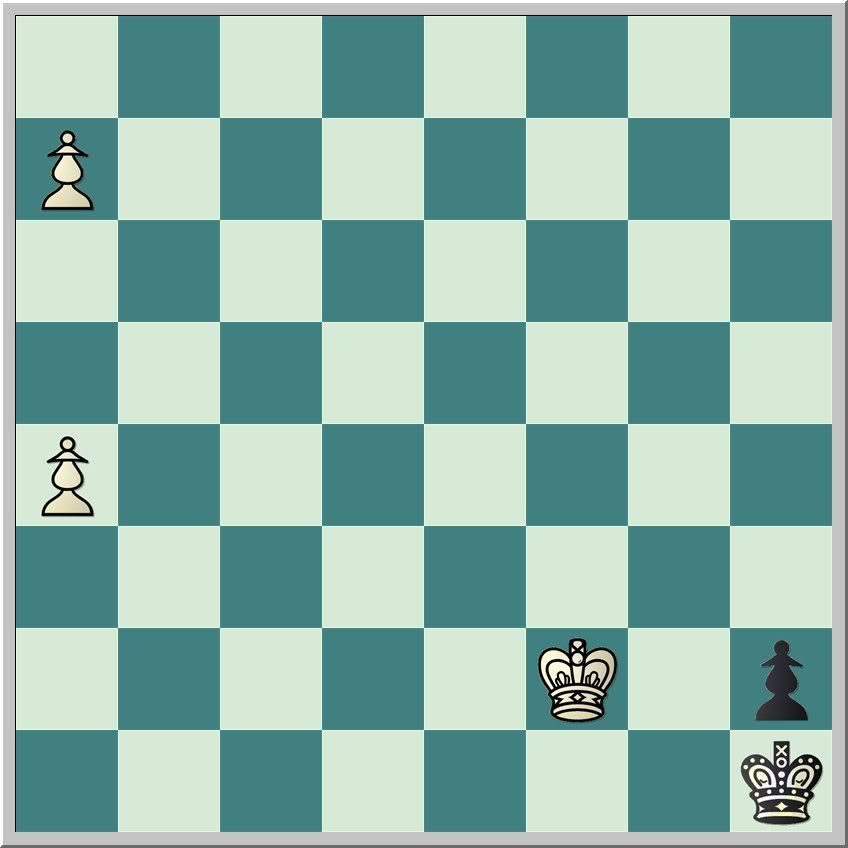
It seems that I spent twenty minutes staring at the first of these problems before I gave up and peeked at the answer. The second took longer than I am willing to admit, but I found the correct first move only to miss the second and left it unsolved until I looked in the back of the book. But then, I solved quickly the last two and began to appreciate the music of the whole set.

These are exercises 1606-1609 in Chess: 5334 Problems, Combinations, and Games by László Polgár (325-326). See "The Polgar Brick: eBook Edition" for a review. They were composed in 1968 by Attila Benedek and can also be found in the composer's book Chess Problems, trans. David Durham (2007).

White to move. Mate in two.


01 May 2017

The Polgar Brick: eBook Edition

A Review

Chess: 5334 Problems, Combinations, and Games by László Polgár contains 306 checkmate in one, 3412 checkmate in two, 744 checkmate in three, and then 600 miniature studies. These miniatures (game of 25 moves or less) are sorted into six groups. Each group contains 100 games that featured a sacrifice on one of a pair of squares--f3.f6, g3/g6, h3/h6, f2/f7, g2/g7, and h2/h7. I described one of the ways that I found this section useful in "Building Upon Morphy". Following the miniatures section are 144 simple endgames and then 128 combinations from the Polgár sisters, Susan, Sophia, and Judit. Susan and Judit are Grand Masters, and Judit was in the FIDE top ten a few years ago. Sophia, who was more interested in art than chess, is an International Master.

The book was first published by Könemann in 1994 under the title Chess in 5333+1 Positions. The "+1" in the original title reflects the distinctiveness of the final position, an artistic checkmate in two composition by Sophia. In 2006, Black Dog & Leventhal brought out a new edition that is approximately half the size--same thickness, but 6 x 9 inches instead of the large 8 x 12 format. I have the Könemann paperback edition, which I bought for $25 in 1998. The smaller edition is still a large book, although considerably lighter than the original. At some point, this book acquired the nickname "Polgár Brick" in several social media forums. Both editions are 1104 pages.

The Black Dog & Leventhal edition added an introduction by Bruce Pandolfini, while eliminating front matter in languages other than English. The Könemann edition has the table of contents, Polgár's forward, and other material in ten languages.

It is a useful book for self-study and useful to chess teachers, but it is awkward to carry in a backpack. Last week, I bought the Kindle eBook edition for $2.99 and now have the book on my iPhone and iPad. Hence, I always have it with me unless I am swimming.

Fifteen years ago, I spent 20-30 minutes per day with this large book during my morning coffee. I would solve each exercise looking at the diagram and write down my answer on a piece of paper. Then, I would check the answers in the back of the book and record the percentage that I got correct. When this percentage was below 90, I would rework the problems a few days later. Over the course of a few months, I solved the first 1596 problems. Since then, the book has mostly sat on a bookshelf alongside other neglected books. Occasionally, I would pull it off the shelf when looking for some instructive checkmate exercises for students or to work through some of the book's miniatures.

Even strong players capable of solving difficult tactics problems could benefit from working through the checkmate in one exercises. The first 156 contain a minimum number of pieces. Beginning with number 157, the board is crowded with pieces. How many can you solve as fast as you turn the page? I found that I could solve the first 156 instantly, but then slowed down. Some took a few seconds; others were as easy as those with few pieces. Solving these exercises quickly and repeatedly should improve board vision and pattern recognition.

Some of the ckeckmate in two exercises are challenging, depending on your skill level. But, they are intended by Polgár to require only a few minutes and to build the reader's confidence. Naturally, the checkmate in three are more challenging, but still not horrendously difficult.

In the print edition, there are six problems per page. The eBook presents one per page. In the solutions, the composer is indicated if is was not Polgár. For the checkmate in one (naturally) and the checkmate in two, only one move is given. The solutions to the checkmate in three are carried out to checkmate. In the eBook, the problem number is a hyperlink to the solution and the number above the solution links back to the problem.

Only a few of the first 4462 positions are from real games. The 600 miniatures, of course, are all real games, as are 127 of the 128 from the Polgár sisters.

The eBook edition extends the usefulness of this book. It is certainly much easier to carry, as noted above. There are a few formatting issues, but these serve only as distractions and do not mar the book's usefulness. Some of the solutions seem to be in a larger font, for example. In the bibliography at the end of the book, the Russian language sources listed are in a smaller font than the other texts.

Now that I have the eBook, I expect to make much more extensive use of the miniatures section. Last fall, I carried the mammoth book to a chess lesson with a student so that we could look at a few of the miniatures together. Then, it sat on the floor of my car for most of the winter. No longer. The book need not leave my house, and I will always have it during chess lessons. I rarely do not have my iPad and never leave my home without my phone.

Print Edition First Miniature
In the book, the miniatures contain the early moved of the game, then a diagram with the critical position. Underneath the diagram is the conclusion of the game. This is the same structure that one finds in the Encyclopedia of Chess Miniatures (2015). Ideally, the student would look at the diagram and solve the position without looking at the continuation below. This exercise is most easily accomplished by covering the moves below with a scrap of paper.


eBook Edition First Miniature
In the eBook edition, the initial moves and diagram are on one page, and the game's conclusion is on the next page. That structure makes it more useful as a training tool than the print edition and the cost is slightly more than 10% of the publisher's list price.

If you do not have this book, it might be time to download the free Kindle app and enter the world of chess eBooks. There are many exceptional chess books in this format. Few are as good of a bargain as the Polgár brick. Do be careful, however, there are chess eBooks that are complete rubbish. Some are even written by people who do not know how to play chess (see "Kindle Chess Books").


28 December 2016

Carlsen's Queen Sacrifice

I practice tactics with the computer and so on, in order to keep learning.
Magnus Carlsen*

A few weeks ago, the director of Inland Chess Academy inquired whether the classes for this year's Holiday Chess Camp could be based upon the recent World Championship Match won by Magnus Carlsen over Sergey Karjakin. I embraced the idea, offering two classes on imbalances from games of the championship, a class on the Berlin variation of the Spanish, and one called "Carlsen's Queen Sacrifice."

A Chess.com video inspired me. Sam Copeland's "Magnus Carlsen's World Championship Winning Move" speculated where Carlsen might have seen a sacrifice similar to the one that he played in the final tie-break game to end the match. Copeland identified and walked his viewers through several similar combinations, and then offered the challenge to find more examples. They are easy to find, but Copeland's examples have more elements in common with Carlsen's winning combination than those that I selected for my class.

For my students, I created a worksheet with six positions. My instructions on the worksheet read:

Each of the positions below might appear in a set of chess problems on a computer, in a book, or as part of a worksheet. Train with these to play like Magnus. White to move in 1-4; Black to move in 5-6.

1. White to move
From Fischer -- Kelley, Houston 1964.

2. White to move
From Spassky -- Ciric, Amsterdam 1970

3. White to move
From Hesse -- N.N., Bethlehem 1803

4. White to move
From Fairhurst -- Menchik, Margate 1935

5. Black to move
From Neumann -- Anderssen, Breslau 1864

6. Black to move
From Schulten -- Kieseritzky, Paris 1844

At the start of the class, I had the position below on the demo board. The students tried to find the best moves for both sides, and we ended up following the moves actually played in the game. In this case, the thematic sacrifice did not work and White had a better move.

White to move

The game is Arnous de Riviere -- Morphy, Paris 1858.

The purpose of the class was to suggest in agreement with Sam Copeland that Carlsen was able to play his sacrifice quickly due, in part, to pattern recognition. Seeing the pattern is one thing. Calculation is necessary as well, which was the point of the Morphy game. Practicing calculation skills was a primary focus through this class.

In my concluding remarks, I mentioned several resources for practicing tactics, including Laszlo Polgar, Chess Training in 5334 Positions (1994). This book contains a selection of 600 miniatures in the back of the book organized by sacrifices on six pair of squares, f2/f7, g2/g7, etc. Sacrifices on h3/h6 are one of the six.


*Colin McGourty, "Carlsen and Aronian: A Tandem Interview" Chess24 (27 June 2014), https://chess24.com/en/read/news/carlsen-and-aronian-a-tandem-interview.

25 March 2015

Building upon Morphy

Ten games won by Paul Morphy are the source for nineteen middlegame positions in GM-RAM: Essential Grandmaster Knowledge (2000) by Rashid Ziyatdinov. These games have provided a core for my chess study the past ten weeks. Today, I am moving on to Anderssen -- Steinitz, London 1862, game 16 in GM-RAM. See "Game of the Week" and "To Know a Position" for detailed discussion of my training program with this book.

I am not finished with Morphy. Two more of his games crop up in Ziyatdinov's list as games 22 and 23. Morphy's eighteen games from the First American Chess Congress have become part of my teaching curriculum for youth players receiving individual instruction. Three of these are among the selections in GM-RAM. I have a yearning, but not yet a firm commitment, to work through all of the available Morphy games along with the annotations in Philip Sergeant, Morphy's Games of Chess; Macon Shibut, Paul Morphy and the Evolution of Chess Theory; and Valeri Beim, Paul Morphy: A Modern Perspective.

Studying Saint Amant -- Morphy, Paris 1858 this past week drove me to my bookcase where an old text had been accumulating dust.

White to move

From this position, Saint Amant played 17.Kh2, and the game continued 17...Rad8 18.Rad1, resulting in position 165 in GM-RAM. It is at this point that Philip Sergeant offers, "White's feeble play, which is not what one would have expected from St. Amant, gives Morphy an opportunity for a neat combination" (Morphy's Games of Chess, 150).

I spent some time exploring 17.Rad1 as an alternative for White. Three Black replies seemed worth examining.

a) 17...Bxh3 as in the game, fails. 18.gxh3 Nxh3 19.Kg2 Nf4+ 20.Kg1 Qg5 21.Qg3 and Black's attack has been parried. Materially, three pawns for the piece may give Black some endgame chances, but with all the major pieces on the board, White is better. Black could eliminate the queens with 21...Qxg3, but the rooks remain and White's pieces are more active.

b) 17...Nxh3 seems promising. 18.gxh3 Bxh3 19.Rfe1 Bg4+ 20.Kg2 Bxd1 21.Rxd1 and Black has a material advantage, while White's king remains vulnerable to attack.

c) 17...Rad8 seems best. After 18.Nb3, Black can sacrifice the knight on h3. 18...Nxh3 19.Rxd8

Black to move

19...Nf4+ is better than 19...Rxd8 because of 20.gxh3.

After mulling through these possibilities, it occurred to me that additional work would be useful on h3/h6 sacrifices. I remembered that Laszlo Polgar, Chess Training in 5334 Positions (1994) has a section in the back of the book devoted to such sacrifices. Pulling it off the shelf, I discovered that positions 4663-4762 are h3/h6 combinations. Polgar presents entire games with a diagram in each case immediately prior to a sacrifice on h3 or h6. There is plenty of study material there to occupy my time.

03 January 2015

Training Regimen

I am spending a little time each day working through Rashid Ziyatdinov, and Peter Dyson, GM-RAM: Essential Grandmaster Knowledge (2000).

One way that I am working through this book is to devote time to one of the 59 games each week. In late 2014, I went through a three of these games in some detail (see "Training with Anderssen," and "Anderssen -- Staunton 1851"). Understanding these 59 games lead to mastery of 120 middlegame positions (see "To Know a Position"). This week I am working through the Evergreen Game, which I have been through several times in the past. Several books on my shelf have detailed annotations of this classic game, including Graham Burgess, John Nunn, and John Emms, The World's Greatest Chess Games (1998). I am studying these annotations.

External works are essential to proper reading of Ziyatdinov's text. He explains:
This book presents the key positions which must be known to achieve chess mastery. It does not undertake an explanation of them. There are other authors who have adequately explained the positions presented here. A list of references is included. (13)
Studying the 133 endgame positions is another way that I am working through Ziyatdinov's text. Several years ago, I wrote a note in my copy of the text concerning diagram 16: "1-175 Dvoretsky presents more difficulties--kings on g5 and g7. White pawn on g4" (29).

GM-RAM Diagram 16
Yesterday, I set out to find what Yuri Averbakh had to say regarding this position. Ziyatdinov lists Averbakh's Comprehensive Chess Endings. I have access to the Chess Digest edition, so started going through "Two Pawns v. One" in Yuri Averbakh and Ilya Maizelis, Pawn Endings, trans. Mary Lasher (1974).

I did not get far enough to discover whether this position is in this text. Instead, I worked through several somewhat more elementary positions. First, I played them rapidly against Rybka 4 to test my instincts. Then, I read what Averbakh had to say about each one.

The first presented no difficulties.

Averbakh Pawn 145
Stripes,James -- Rybka 4 x64
Blitz 5m Spokane, 02.01.2015

1.g4+ Kxg4 2.Kg6 c5 3.h4 Kxh4 4.Kf5 Kh5 5.Ke5 c4 6.Kd4 c3 7.Kxc3 ½–½

The second one required a second attempt because I did not calculate. My instincts were close, but wrong. Alas, there is no partial credit in chess games. A wrong answer can be fatal.

Averbakh Pawn 146
Stripes,James -- Rybka 4 x64
Blitz 5m Spokane, 02.01.2015

1.Kg7 e5 2.g4+

My first effort: 2.Kf6?? e4 3.Kf5 e3 4.g4+ Kxh4 5.g5 e2 6.g6 e1Q-+.

2...Kxg4 3.Kg6 e4 4.h5 e3 5.h6 e2 6.h7 e1Q 7.h8Q Qe4+ 8.Kg7 Qd4+ 9.Kg8 Qd8+ 10.Kg7 Qd7+ 11.Kg8 Qd8+ 12.Kg7 Qd7+ 13.Kg8 Qd5+ 14.Kg7 Qd4+ 15.Kg8 Qd5+ 16.Kg7 Qd3 17.Kg8 Qd8+ ½–½

The third position employs the same idea.

Averbakh Pawn 147
Stripes,James -- Rybka 4 x64
Blitz 5m Spokane, 02.01.2015

1.Ke7 b5 2.Ke6 

2.d5?? Kxd5

Pawn race produces a queen ending
2...Kf3!

Rybka played the least obvious of three drawing moves.

I expected 2...b4 3.d5 b3 4.d6 b2 5.d7 b1Q 6.d8Q Qa2+.

3.d5 b4 4.d6 b3 5.d7 b2 6.d8Q b1Q 7.Qf6+ Ke2 8.e4 Qxe4+ 9.Qe5 Kd3 10.Qxe4+ Kxe4 ½–½

After these three, I went back to the previous page in Averbakh's text. The first position is a simple matter of triangulation if White is on move. He offers solutions with both White and Black to move. I played these out against Rybka.

Averbakh Pawn 143
After two pages of Averbakh's Pawn Endings, I pulled another book off the shelf, Lazlo Polgar, Chess Endgames (1999) and glanced through the "Elementary Positions" section looking for similar positions. I played these against the box.

One diagram appears twice--with Black to move first, and then with White to move several pages later.

Two in Polgar


13 December 2011

Improving Tactics: Training Resources

For most players, improvement in chess skill will be slow to non-existent if their only chess activity is playing. Tactics training, on the other hand, leads to rapid chess improvement. Resources for tactics training include books, magazines, databases and other software, websites, and more.

At the present time, in any given week, I use the Tactics Trainer at Chess.com (more than 32 hours since joining the site), the problems in the Shredder iPad app, my pawn endgame flash cards, or one of several books.

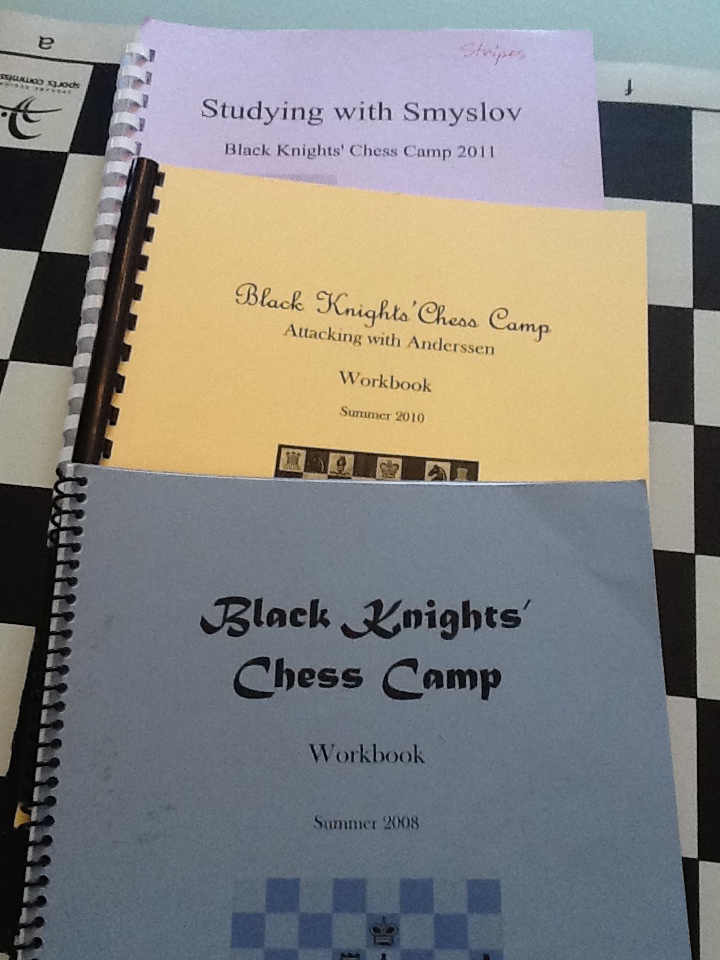
Ten years ago, I spent 15-30 minutes nearly every morning for several months working through problems in Laszlo Polgar, Chess Training in 5334 Positions (1994), which is pictured at the bottom of a stack in the image. Polgar's book, which may have been assembled by his daughter Susan, consists mostly of checkmate problems. This collection draws from an extensive library of composed problems, and a smaller collection of positions from actual play. The effectiveness of the training stems from repetition of patterns. Problems 1-306 are checkmate in one; 307-3718 are mate in two; 3719-4462 are mate in three. I completed a bit more than the first 1500 problems.

The book also contains 600 miniature games, a bit more than 100 simple endgames, and more than 100 combinations from the Polgar sisters' games. Occasionally, this book shows up on sale tables for $10, which strikes me as an opportunity calling for action.


Art of the Checkmate

While Polgar's Chess teaches checkmate patterns through compositions and miniatures, Georges Renaud and Victor Kahn, The Art of the Checkmate (1953) employs real games. The organization of this classic text, and the quality of instruction it offers, are vastly superior to Murray Chandler, How to Beat Your Dad at Chess (1998). However, Chandler's book uses algebraic notation, while Renaud and Kahn is available only in descriptive. Other books with guides to basic checkmate patterns include Fred Reinfeld, How to Force Checkmate (1947); V. Vukovic, The Art of Attack in Chess (1965); and Jonathan Tisdall, Improve Your Chess Now (1997). My effort to extend the work naming, classifying, and organizing basic patterns by the authors of several of these texts resulted in a self-published pamphlet that I use in teaching, "Checklist of Checkmates: With Exercises" (2007). My pamphlet (pictured above) identifies 34 basic patterns sorted into six groups to aid learning, and offers 139 problems all from actual play. My study of The Art of the Checkmate, and the other books, followed by extensive database research to find examples in play, has done wonders for the development of my skill.


Basic Tactical Motifs

My library contains several terrific workbooks designed especially for youth who are beginning to intermediate players. These workbooks vary in method and content, but all stress basic tactical motifs--discovery, pins, skewers, removing the guard, etc.--through repetition. John A. Bain, Chess Tactics For Students (1993) uses fill-in-blank worksheets with clear diagrams. Chapter one offers 30 problems involving pins. Subsequent chapters are "Back Rank Combinations," "Knight Forks," "Other Forks/Double Attacks," and ten more chapters. After completing this workbook, young players might advance to Al Woolum, The Chess Tactics Workbook, 4th edition (2000); Todd Bardwick, Chess Workbook for Children (2006); or Dean Ippolito, Chess Tactics for Scholastic Players (2006). Each of these other three offer problems more challenging than Bain's, but also include very simple problems in the beginning. Those sensitive to patronizing language towards women and girls may find the prose in Bardwick's text distracting, but it offers good quality instruction otherwise.

For my annual chess camp, I create workbooks with problems that teach and reinforce tactical motifs. In 2008 and 2009, I used the same workbook. In 2009, I sought tactical problems and strategic lessons exclusively from the games of Adolf Anderssen. See "Learning from Errors: Adolf Anderssen" for a sample strategic lesson from this workbook. In 2011, my tactical problems all came from the games of Vasily Smyslov, and emphasized advanced endgames a bit more. For several years I have been contemplating doing more with Gioachino Greco, but doubt there is enough there for all of what I usually put into a workbook.

While my chess students and their parents gain access to an abundance of free and inexpensive resources that I churn out as teaching materials, the research process improves my skills, too. When I am not solving problems, I am looking for problems to put in front of beginning players. Sometimes, these are more challenging than expected, as last week's lesson on pins proved to have been.


Tactics for Advanced Players

Prior to the explosion of youth chess, a standard beginning text was Fred Reinfeld, 1001 Winning Chess Sacrifices and Combinations (1955). It is organized by theme with dozens of problems in each chapter. Generations of masters have started with this book. Reinfeld wrote a few other 1001 texts, but this one seems most widely available. In "Where the Rubber Meet the Road," I detailed my training method with this text and a chess playing engine. Beyond finding Reinfeld's idea, I labor to convert the advantage gained through the tactic. I have not employed this training method in 2011, but expect to return  to such training for part of 2012.

Lev Alburt, Chess Training Pocket Book (1997) contains 300 positions, four to a page. The solutions are on the facing page, making self-discipline a necessary feature of using the text for training. These well-chosen 300 positions, most from practical play, include common tactical motifs, positional concepts, and endgame fundamentals. Over the course of several years, I went through the entire book both randomly and in sequence at least twice, and have also used the book as a reference when compiling lessons for others. This book spent several years on my bedside table. The book indexes the problems by themes and by players. Alburt, Chess Training Pocket Book II (2008) offers 320 new positions in the same format. This book will be a central component of my training in the near future. With such collections, I think it is best to go through all the problems, and then several months or a year later, go through them again.

Most club players should be able to solve the problems in Alburt's books in no more than a few minutes each, and errors will be easily corrected. A few times through these books should leave the student with a core knowledge of important positions. For more challenging tactical exercises, I turn to John Nunn's Chess Puzzle Book (1999) and Paata Gaprindashvili, Imagination in Chess: How to Think Creatively and Avoid Foolish Mistakes (2004). Both of these texts offer fresh positions. That is, the positions in these texts will not be found in Reinfeld. Some of those in Alburt's texts are in Reinfeld, as well as in dozens of other training texts. Alburt's books lay the foundation that helped me reach USCF Class A, and to secure my position there. As I struggle to move up to Expert Class, and possibly master, Nunn's and Gaprindashvili's texts offer resources of value. Imagination in Chess also offers suggestions for effective thought processes. Gaprindashvili's logical process may be considered an improvement over the famed analysis tree in Alexander Kotov's Think Like a Grandmaster (1971). Readers may differ in their assessments of these modes of systematic thinking.

Two other challenging texts offer exceptional insight into the nature of chess tactics, and plenty of training material. These are not collections of problems so much as treatises on the the middlegame. Yuri Averbakh, Chess Tactics for Advanced Players (1992) seeks to build a theoretical base for comprehension of chess tactics. Mark Dvoretsky, Secrets of Chess Tactics (1992) takes a more practical approach, but also contains much of theoretical value. The positions analyzed in both texts can be quite challenging, even for masters.


12 October 2011

Practicing Breakthrough and Hitting Walls

Because I am teaching the concept of breakthrough in pawn endgames to young chess players this week, I also am honing my own skills. Chess Endgames (1999) by Laszlo Polgar contains 4560 positions. The bulk of the book consists of 169 themed sections, each containing 24 problems. Yesterday, I started working through the two dozen classified as "breakthrough". The second led to my post "Breakthrough". The fifth problem created some frustration: I could not find a solution.

I study the diagram in a book, and when I believe that I have the correct ideas worked out, I set up the position and play against an engine.

White to move


The theme offers a clue, and so 1.c5.

Houdini 1.5 replied 1...bxc5. 1...dxc5 is obviously no good in the light of 2.d6 cxd6 3.Kxd6+-. (Correction noted: see comments below.)

2.Kb5 Kc8! 3.Kxa5 c6 4.dxc6 d5!!

White to move


White cannot win from here. After perhaps half an hour or trying different lines, including some that lose for White, I checked the answer in the back of Polgar's book. He gives 2...Kd7 for Black. My engines--Houdini 1.5, Hiarcs 12, Rybka 4--concur that White is winning after 2...Kd7. They all find 2...Kc8 to equalize, however.

The key variation given in the solution is instructive:


2...Kd7 3.a4! Kc8 (if 3...c6+ 4.dxc6+ Kc7 5.b3! losing a tempo) 4.Kxa5 Kb7 5.Kb5 and the solution carried it out to move 13, but the plan is simple. The a-pawn will advance to deflect the Black king from defense of c7. Once that pawn falls, the White king mops up the entire Black army.

Black to move


Here 5...c6+ fails. 6.dxc6+ Kc7 7.a5 c4 8.Kxc4 Kxc6 9.b4+-.

In the original problem, Black can play the game of tempos too. That strikes me as the beauty of 2...Kc8! Instead of the logical seizure of the opposition with 2...Kd7, Black makes a move that leaves both Kb7 and Kd7 as possibilities. If White tries 3.Kc6, Black has adequate space for maneuver to keep the rearward c-pawn secure.

I ran Rybka in Monte Carlo mode for four hours. Then, I ran infinite analysis for another four. This morning, I let Hiarcs 12 work for nearly two hours. I am convinced that there is no win here.
Books usually have errors. This one frustrated me yesterday. Even so, failure is instructive.

11 October 2011

Breakthrough

Chess Endgames (1999) by Laszlo Polgar offers this position, attributed to Teed 1885, as problem number 2936.

White to move


The first move is easy.

1.Kf7

But White has a problem to solve when Black replies, 1...h5!

2.Kf6 leads to a draw. 2...hxg4 3.hxg4 Kh6 4.Kf5 Kh7 5.Kxg5 Kg7

White to move


This position would be a win if it were Black's move, but it is White's.

White must find the breakthrough idea.

2.h4!

Black to move


Play might proceed, as it did when I played against Houdini 1.5.

2...Kh6 3.Kf6 gxh4 4.g5+ Kh7 5.Kf7 h3 6.g6+ Kh6 7.g7

17 December 2008

Beware Stalemate

When I was preparing for the Spokane City Championship last summer, John Julian told me to figure out what my opponent needed to do to beat me, and take that away. It was good advice, but not so easy to apply when there is so much else to think about.

Corresponding to that idea is the recognition of the opponent's drawing resources when a win is imminent. Such is the case in this simple looking king and pawn exercise from Laszlo Polgar, Chess Endgames.

White to move +-


Among Black's resources is the sacrifice of the a-pawn with the hope of reaching this fantasy position.

Black to move =

05 December 2008

Endgame Calculation

White to move +-
Rinck 1922


Of course the king cannot catch the pawn. This one is too easy.

1.a4 Kb3 2.a5 Kc3 3.a6??

Black to move =


3...Kd2

Something went wrong. Both players will promote and reach a drawn queen endgame.

White needed to play 3.Kg1


Drawing Resource

Black's defensive strategy in Henri Rinck's 1922 composition employs the idea from a study by Richard Reti from the previous year.

White to move =
Reti 1921


The White king can catch the Black pawn because of the strange geometry of the chess board. The shortest distance is not a straight line. The king's route h8-g7-f6-e5 combines the threat of supporting the c-pawn with the chase of Black's h-pawn. Either both players queen, or both pawns fall.

Rinck's 1922 study, which appears as #53 in Laszlo Polgar, Chess Endgames (1999), is not as simple as it looks. The first move is easy: the pawn must run. But from the diagram position, the solver must calculate the point at which the king must move to stop Black's drawing threats. Move three is critical. If Black tries 2...Kc3, White must play 3.Kg1. If Black tries 2...Kc4, White must play 3.a6.

After 1.a4 Kb3 2.a5 Kc4 3.a6 Kd3 4.a7 f2! Black also promotes and more calculation is needed.


If Black promotes to a queen, White wins the queen with a skewer. This line is the one given in Polgar's solution. Hiarcs 12 promoted with check: the pawn became a knight. Its tablebases revealed that queen promotion led to checkmate in eleven, while underpromotion to the knight was checkmate in eighteen.

After the underpromotion, White still has some work. A human under time pressure can easily falter and permit a devastating fork, Black's final drawing resource.

02 December 2008

Ladislav Prokeš

Continuing through the Elementary positions in Laszlo Polgar, Chess Endgames, I came to number 50, attributed to Prokes, 1937. White to move +- The direct effort of pushing the a-pawn leads to this theoretical draw: White to move = The other logical try begins 1.Kf5 h3 2.Kg4 Kg2 3.a6 h2 4.a7 h1Q White to move +- Black queens first, but White gets the first check. After some maneuvering, Black will be in zugzwang. The queen finally can move, but every move results either in the loss of the queen with mate to follow, or to immediate checkmate. Black to move +- The Composer According to Harold van der Heijden, Ladislav Prokeš (1884-1966) is the fourth most prolific composer of chess endgames ("My Computerised Collection," EG 130 [October 1988], 413). He published over one thousand studies through the course of his life.
If there is a single composer whose work is likely to make studies really popular, that composer is Prokes. His positions have few pieces, and the pieces are naturally placed. The solution is short. Profound and lengthy analysis is not needed. The position leads the solver to think that a direct game-approach is sufficient, so that when this proves not to be so the solver will have learned something, and he will have been pleasantly surprised. This means that what he learns he is likely to retain, and from a typical Prokes study he can learn not only the tactical trick or tricks that are the composer's idea but also the simple ground rules of theory that dictate the course of moves. A.J. Roycroft, "Ladislav Prokes: The Player's Composer," EG 7 (January 1967), 157-158.
The Prokes maneuver, described well at Wikipedia with a link to a more detailed article at Tim Krabbe's excellent site, is worth knowing about. Also worth knowing is this elementary position that appears as Polgar #14 in Chess Endgames without attribution to Prokes. It is attributed to him in Irving Chernev, Practical Chess Endgames (1961), 15. White to play +- Chernev is succinct: "White wins this ending by getting the opposition, and maintaining it" (15).

30 November 2008

Elementary Positions

The heaviest endgame book on my shelf is Laszlo Polgar's seemingly rare Chess Endgames (1999). In the United States, Amazon.com lists one copy available from a vendor for $574.53, but Amazon.de lists seven used copies starting at 15.00 EUR and three new from 23.90 EUR. The text is out of print, and appears more readily available in Europe than in the United States. Fortunately, I bought my copy eight or nine years ago for something close to the list price of $29 plus shipping.

It is a daunting book that I use mostly for reference. On the other hand, from time to time I resolve to work through in a short period of time the first 318 problems--called "elementary positions".

This resolution always leads to failure because these elementary positions include quite a few that present difficulties. Consider number 42 for instance:

White to move +-


White has a decisive advantage, but how?


The Composer

This position is attributed to Crum, 1913, probably John Crum--Polgar's source gives no more than last name and date. Irving Chernev's Practical Chess Endings (1961) also has this problem (61), as well as another by Crum from 1913. Polgar has at least one more Crum composition, number 443, dated 1921.

White to move +-


A Google search for chess and Crum turns up in Google Books a J. Crum who was a "First-Class amateur" that lost game number 2659 published in the British Chess Magazine (October 1905). There is also a reference in Edward Winter's Chess Notes 4744 to a Mr. Crum who offered a suggested improvement in a game lost to Joseph Henry Blackburne, who won blindfolded. Crum was also the contact for entries to a problem composition contest sponsored by Chess Player's Chronicle, and open to all the world according to the announcement in the Westminster Papers 1 November 1878 (150).

The website Chess Scotland offers more information: John Crum was the first Scottish Champion, winning the title in 1884, and was a noted endgame composer. Tim Harding's Chess Cafe column The Kibitzer mentions the role of Crum in a postal match between the Glasgow and Copenhagen chess clubs that took place in 1879-1880 and was reported more fully in the Danish magazine Nordisk Skaktidende than in a Scottish publication where he had found part of the game.