Showing posts with label Korchnoi (Victor). Show all posts

20 August 2023

The Appeal of Informant

A question was raised in social media: does anyone still use Informant? As the question was in response to me, having claimed that Informant is the chess periodical that I read more than any other, I took the question as a personal challenge. I like the books, but now am more likely to read them on my computer screen while jotting notes in the print edition.

In the early days of Chess Informant, it was a vital source of games for readers. It no longer serves that purpose. We can watch them as they are played and have several ways to access them after they finish. What, then, is the appeal of Informant today?


My first Informant was number 64. I acquired it as I was getting into correspondence chess after a brief effort two decades earlier. One of the games in that issue gave substance to the concept of flexibility.* That game helped my planning and positional judgement in a correspondence game that I won (see the game at "Playing by the Book"). Of course, there are many ways to get access to games that will help one play correspondence chess. That Informant did this for me may have been no more than coincidence. It was what I was using for study. Is there anything inherent in the publication that makes it more useful than other resources for such a purpose?

More recently in another correspondence game I had Black in the French Defense and was facing a frightening appearing pawn storm. We were still in book, so I did a search of my database containing all games published in Informant for the position before me. There were more than one hundred games. Over the course of the weekend, I played through all of these games on my computer screen. Our game diverged from the databases a couple of moves later, and yet ten moves later I was developing plans based on a game I had seen that weekend. My memory of the game had errors—I incorrectly remembered had been played by Viktor Kortschnoj. Even so, I went on to win. Of course, a search of ChessBase Mega that controlled by rating would have given me most of these games and more, along with the same benefits.

Less is More


Chess Informant's
system of signs and language-less annotations contribute both to its appeal and limit its usefulness to many players. Chess players looking to improve often crave annotations expressed in words more than variations. These are vital for explaining concepts that must be absorbed in order to play well. However, words can distract as well.

When I was trying to improve as a C-Class player in the late-1990s and early 2000s, I became aware that my interior dialogue while playing tournament chess reflected a great deal of confusion. I did not lack ideas. Rather, I spent much of my thinking time on ideas that were unproductive. I examined lines that a master would immediately reject, but that seemed good to me. Learning the Informant system of signs and investing time reading through annotated games in that periodical helped me to quiet this internal dialogue. Chess analysis in Informant offers less, not more. Only critical lines at important moments are offered. The ideas that can be expressed through the system of signs are few, but they are important. If an idea cannot be expressed through these symbols, perhaps it should be discarded. Through the first decade of this century, my rating rose over 400 points. I was in my 40s. Informant was not the only tool that facilitated my rise, of course, but it was important. Several memorable successes are tied to Informant.

Informant today offers less in another way that maintains its appeal to me. It contains only quality games and analysis. Each Monday, Mark Crowther releases another issue of The Week in Chess with recent games from important tournaments. The last issue of 2022, number 1468, contained 7201 games. Number 1469, the first of 2023, set a record for quantity with 10,627 games. TWIC is a terrific resource and I keep my database of all TWIC more or less up-to-date. I don't know who, if anyone, succeeds in going through all of these games. Some selection is necessary. 

Informant culls a small sample from this mass of data, but every game merits attention. Usually the annotations are light, but some of the lines go deep. For a substantial number of games in each issue, several other recent games or game fragments are embedded in the annotations.

Aesthetics


Chess Informants are attractive books. Through something more than the first 100 issues, little changed on the cover except the colors. The design was spare, economical, and highlighted the global nature of chess culture. The "new Informants", however, each have a unique cover design. Sometimes these are colorful and whimsical. Sometimes the connection to chess is not explicit, such as the Spaghetti Western influenced cover of Informant 128 (see "Determination"). Sometimes, there is a puzzle quality to the cover. I won a copy of Chess Informant Paramount (a software package with Informants 1-123 and indices) by correctly identifying the image and context of the cover of Informant 125--the issue title was "Enigma" and the image was of part of the hardware used by the Bletchley Park codebreakers who cracked Nazi Germany's Enigma code. The most recent, CI 156 Mesmerized, has an image of the sky and clouds with shades of blue, orange, and white. It provokes the imagination.


*The notion of flexibility as an important strategic principle entered my thinking more soundly when I read Dan Heisman, Elements of Positional Evaluation, rev. ed. (1999) several years later, but the foundation was built by productive study of Informant 64.


27 December 2018

A Snubbed Handshake

Game of the Week

After languishing on my shelves for a decade or longer, Chess: The Art of Logical Thinking (2005) by Neil McDonald came off for some serious study. Marginalia on many pages reveals that I have previously worked through the first several games, but have not worked through the whole. I spent half a morning last week creating a database with all thirty games and then racing through all of them for a first look. The next step was to work through the first game carefully before reading what McDonald has to say about it.

The plan is to study each game, then read McDonald's comments. I followed this process with the games in Irving Chernev, Logical Chess: Move by Move (1957). McDonald follows Chernev's classic by commenting on every move.

The first game in McDonald's book is the game that began with Victor Kortschnoj* holding out his hand before the game, only to be snubbed by Anatoly Karpov who said he he would no longer shake hands because of Kortschnoj's behavior. The behavior in question concerned his complaint about the seating in the audience of Dr. Vladimir Zukhar, a parapsychologist who was part of Karpov's team. Kortschnoi wanted Zukhar further back from the stage where the match took place. This game was the eighth in the championship and the first that was not drawn. Karpov went on to win the match, reaching his sixth win in game 32. Kortschnoj won five games.

McDonald does not discuss this historical background, despite his comment in the Introduction:
[P]sychological factors should be considered. ... When there is no obvious right or wrong, the character of the player has a major impact on the decision taken. This can be for both good and bad as the games of even the greatest players are frequently won and lost by impulsive or inspired decisions.
McDonald, Chess: The Art of Logical Thinking (5-6)
Karpov,Anatoly (2725) -- Kortschnoj,Viktor (2665) [C80]
World Championship 29th Baguio City (8), 03.08.1978

1.e4 e5 2.Nf3 Nc6 3.Bb5 a6

What are the merits of the Morphy variation? McDonald does not ponder this question, nor offer much help towards an answer. He does dress the move 3...a6 with an exclamation mark.

4.Ba4 Nf6 5.0–0 Nxe4

Black temporarily wins a pawn. The exchange of center pawns shifts the focus towards active piece play. Playing through this game, I game to realize that my understanding of the Open Spanish is somewhat underdeveloped. It's not something I've played as Black, nor often faced as White.

5...Be7 6.Re1 b5 7.Bb3

6.d4 b5

6...exd4 seems dubious 7.Re1 f5 8.Nxd4 Be7 9.Nxf5 d5

7.Bb3 d5

7...Na5? invites tactics

a) 8.Bd5 c6 9.Bxe4

b) 8.Bxf7+!? Kxf7 9.Nxe5+ Kg8

b1) 9...Ke6 10.Qg4+ Ke7 11.Qxe4;

b2) 9...Ke8 10.Qh5+ g6 11.Nxg6 hxg6 (11...Nf6 12.Re1+ Be7) 12.Qxg6+ Ke7 13.Bg5+ Nxg5 14.Qxg5+ Kf7 15.Qxd8; 10.Qf3 Qf6 (10...Nf6 11.Qxa8; 10...Qe8 11.Qxe4) 11.Qxe4 Bb7 12.Qd3)

8.dxe5

This pawn will not be easily removed by Black and controls some key dark squares.

8...Be6

White to move

There are things that I don't like about Black's position: the backwards c-pawn, placement of the bishop in the pawn chain, and White's pawn striking at f6 and d6. But, Kortschnoj understood these consequences of his fifth move. This position has been played many thousands of times by top players with many Black wins. White's overall score is strong, but Kortschnoj's wins with Black include such opponents as Tal and Petrosian, and even Karpov later in this match.

My database contains 97 games with this position and Kortschnoj as one of the players, nearly always as Black. The overall score is 50% with 24 wins for each side and the rest draws.

My assessment of this position was skewed by lack of familiarity with the Open Spanish compounded by the tendency to annotate by result. Because Kortschnoj lost, I was looking for defects very early in the game. However, this position is an interesting tableau in the Spanish.

9.Nbd2 Nc5

9...Nxd2 Seems plausible and has been attempted by strong players, but with a score exceeding 75% for White. 10.Bxd2 Be7 (10...Bc5)

10.c3

Is White already slightly better? Black's light-squared bishop is part of a pawn chain, while White's e-pawn puts a clamp on the dark squares. Meanwhile, Black's king remains in the middle of the board. This position has appeared well over 1800 times in the annals of chess with a 58% score for White, but with over 400 Black wins.

Black to move

10...g6?!

This move was criticized by Raymond Keene and others. Keene's criticism appears in a book that I bought about forty years ago, when it was new: Raymond Keene, The World Chess Championship: Korchnoi vs. Karpov (1978), which claims to be the "inside story of the match". Keene was part of Kortschnoj's team. However, another book suggests that Keene was too much focused on journalistic dispatches to England to be an effective team player. Persona Non Grata (Thinkers' Press, 1981) lists as authors Viktor Kortchnoi with Lenny Cavallaro. However, Kortschnoj is consistently referred to in the third person in this book, suggesting that Cavallaro may have had the leading hand as author.

Persona Non Grata offers an account of the snub.
The 8th game. Viktor arrived at the table; Karpov did not get up. Kortchnoi sat down and held out his hand. Karpov replied that from that moment he had no intention of giving him his hand. ... The shot hit home. Kortchnoi played a poor tenth move (among others); Karpov conducted his attack quite well. (39-40)
What were the alternatives? Four moves have been played more often that Kortschnoj's.

a) 10...Nxb3 is fourth most popular 11.Nxb3 Be7
b) 10...Bg4 is third in popularity and Black has done well
c) 10...d4, the second was popular move was played by Kortschnoj later in this match, and three times in the 1981 match.
d) 10...Be7 strikes me as simple. It is the most popular move. There is no rush to castle as the king might find safety on the queenside or be needed for an endgame.
e) 10...Nd3 ihas been played less often than 10...g6, but still appears in more than two dozen games. 11.Qe2 is the usual continuation 11...Nf4 12.Qe3 g5 13.Rd1.

11.Qe2

Kortschnoi repeated his 10...g6 twice in later years, leading to

a) 11.Re1 Nd3 12.Re3 Nxc1 13.Rxc1 Bh6 14.Rd3 0–0 15.Qe2 Ne7 16.Rd1 c5 17.Bc2 Bf5 18.Nf1 Bxd3 19.Bxd3 Qc8 and White won in 87 moves, Fedorchuk,S (2564) -- Kortschnoj,V (2634) Warsaw 2002.
b) 11.Bc2 Bg7 12.Re1 Nd7 13.Nd4 Nxd4 14.cxd4 and drawn in 28 moves, Almasi,Z (2676) -- Kortschnoj,V (2632) Budapest 2003.

11...Bg7 12.Nd4!

Kortschnoj believed this pawn sacrifice was not in Karpov's character, or so Keene claimed.

Black to move

12...Nxe5

12...Nxd4 13.cxd4 Nb7 (After 13...Nxb3 14.Nxb3 0–0 McDonald points out a simple winning plan--moving all the heavy pieces to the c-file to hammer away at the backwards c-pawn.)
12...Qd7 is favored by McDonald and was played by Mihai Marin in 2007: 13.f4 0–0 and Black won in 45 moves, Thesing,M (2393) -- Marin,M (2551) Predeal 2007.

13.f4

I thought that Black was already in deep trouble at this point, but in 2012 Sarunas Sulskis went on from here to win with Black.

13...Nc4

13...Ned3 was Sulskis's choice. 14.f5 (14.Bc2 Nxc1 15.Raxc1 0–0) 14...gxf5 15.Nxf5 Rg8 16.Bc2 Sulskis seems to have taken the weaknesses of Kortschnoj's position and turned them into strengths. 16...Qg5 17.Nxg7+ Rxg7 18.Nf3 Nxc1 19.Raxc1 (19.Nxg5 Nxe2+ 20.Kh1 Rxg5–+) 19...Qg4 There is not much left of White's attack. 20.g3 Ne4 21.Qg2 Qh5 22.Rfe1 0–0–0 and Black went on to win in 71 moves, Azarov,S (2667) -- Sulskis,S (2595) Jurmala LAT 2012.

14.f5 gxf5 15.Nxf5

Black to move

Black has won even from this position, but there was a rating gap over over 400 Elo favoring the second player.

15...Rg8±

I think that Karpov has the upper hand at this point in the game.

15...Bf8 16.Nf3 Ne4 17.N3d4 c5 18.Nxe6 fxe6 19.Qh5+ Kd7 20.Bxc4 bxc4 21.Ne3 Nd6 22.Ng4 Bg7 23.Bg5 Qe8 24.Qh3 h5 25.Nf6+ Bxf6 26.Bxf6 Rf8 27.Rad1 Kc6 A secure king! 28.Rde1 Ne4 29.Be5 Qg6 30.b3 Rf5 31.Rxf5 Qxf5 32.Qxf5 exf5 33.bxc4 dxc4 34.Rf1 Rf8 35.Rf4 Kd5 36.Bg7 Rf7 37.Bh8 Ke6 The bishop is trapped 0–1 De Coverly,R (1992) -- Sarakauskas,G (2415) Bournemouth ENG 2015.

16.Nxc4 dxc4

16...Nxb3 17.axb3 bxc4 18.bxc4 Black's king will suffer.

17.Bc2 Nd3 18.Bh6 Bf8

18...Bxh6 was more stubborn 19.Nxh6 Rg7 (19...Rg6 20.Nxf7) 20.Nf5 Rg6 (20...Rg8 21.Rad1) 21.Rad1

White to move

19.Rad1+–

Black's king is stuck in the middle. All White's pieces are in the attack, while Black's pieces are mostly tied down or watching helplessly.

19...Qd5

19...Bc5+ 20.Kh1 Qd5 21.Bxd3 cxd3 22.Rxd3 Qc6 23.Ng7+ Rxg7 (23...Ke7 24.Bg5+ Kf8 25.Nxe6+ and checkmate is coming soon) 24.Bxg7 Bd6+-

20.Bxd3

White's decisive final attack brings pressure along the three central files d-f. McDonald emphasizes the absence of Black's queen's rook from the battle. This decisive blow had to happen now, or Black would castle queenside and have exceptional counterplay. In such a case, Black's wrecked kingside pawn structure becomes rather an open line against White's monarch.

20...cxd3 21.Rxd3 Qc6 22.Bxf8 Qb6+

This move gains a necessary tempo, but is not enough to save the game barring a blunder from Karpov.

22...Kxf8 23.Nd4 Qb6 24.Qxe6 Kg7 25.Qxb6 cxb6+-

23.Kh1 Kxf8

McDonald points out 23...Rxf8 24.Qf3 Rd8 25.Ng7+ Ke7 26.Qf6#

24.Qf3 Re8 25.Nh6

Wasn't f7 the target when White played 1.e4?

Black to move

25...Rg7

a) 25...Ke7 26.Nxg8+ Rxg8 27.Qf6+ Ke8 28.Rd8#
b) 25...Kg7 26.Qf6+ Kf8 27.Nxf7 Qc6 (27...Qb7 28.Nd8+ Bf7 29.Qxf7#) 28.Ne5+ Bf7 29.Qxf7#
c) 25...Rg6 26.Qxf7+ Bxf7 27.Rxf7#

26.Rd7

All four of White's pieces aim at f7. This move seems obvious in retrospect, but perhaps is not immediately obvious. McDonald gives it a double exclam, calling it "The star move" (17).

26...Rb8

26...Bxd7 27.Qxf7+ Rxf7 28.Rxf7#

27.Nxf7 Bxd7

a) 27...Ke8 28.Ne5 Rg8 (28...Rxd7 29.Qf8#) 29.Qf6 Qd6
     a1) 29...Bxd7 30.Qf7+ Kd8 31.Qxd7#
     a2) 29...Qc5 30.Qxe6+ Qe7 31.Qxe7#
30.Rxd6 cxd6 31.Qxe6+ Kd8 32.Qd7#

b) 27...Bxf7 28.Rxf7+ Kg8 29.Rf8+ Rxf8 30.Qxf8#

28.Nd8+

Black resigned.

28...Bf5 is the only defense against checkmate 29.Qxf5+ Ke7 30.Qf8+ Kd7.

1–0

McDonald's annotations are light, focusing on the essential position elements in the game with a few tactical variations.

*Spelling note: I favor the spelling of Viktor Kortschnoj that is used in Chess Base for this post, but where the name in quotes or front matter of books, I retain the spelling employed in those books.

04 November 2016

Useful Knowledge

How do chess players develop their skill?

There is no doubt that strengthening tactics--pattern recognition and calculation--is essential. Learning openings and endgames helps also.

Studying classic games is both enjoyable and productive. Paul Morphy's games help teach the fundamental principles of development in the opening--mobilization of forces, time, vulnerability, coordination of forces. His games also offer an abundance of tactical positions where pattern recognition and calculation skills can be honed through proper training.

Reading Bobby Fischer, My 60 Memorable Games may drill into the reader's memory his famous line, "tactics flow from a positionally superior game," and also may set into the memory the knight sacrifice on h7 to rip open the pawn shield in front of Black's king that was the context of that remark. Another sacrificial attack that should be familiar to most chess players was played in Rotlewi -- Rubinstein 1907. It appears in many books on tactics. I have seen the critical position during tactics training both on Chess Tempo and while using Chess.com's Tactics Trainer. The patterns in this game inspired Vishy Anand in his brilliant miniature against Levon Aronian at the 2013 Tata Steel Chess Tournament.

As a devotee of the French Defense, I have spent many hours looking for ways to secure an advantage, or at least a playable game with imbalances, against the Exchange variation. Years ago on this blog, I declared my contempt for the Exchange variation, calling it "cowardly" (see "French Perfume"). Even so, I have lost a handful of games over-the-board against the Exchange French and have lost far more than a few in online play. Still, I have found some success in online play, especially blitz, drawing inspiration from Victor Korchnoi's fine miniature against Stefano Tatai.

Tatai,Stefano (2455) -- Kortschnoj,Viktor (2665) [C01]
Beersheba (6), 1978

1.e4 e6 2.d4 d5 3.exd5 exd5 4.Bd3 c5 5.Nf3 Nc6 6.Qe2+ Be7 7.dxc5 Nf6 8.h3 0–0 9.0–0 Bxc5 10.c3 Re8 11.Qc2 Qd6

White to move

12.Nbd2 Qg3 13.Bf5 Re2 14.Nd4 Nxd4 0–1

Whan I have the Black side of the Exchange French, having my queen and two minor pieces arranged on c5, c6, and d6 as in the diagram above fills me with confidence, especially when White voluntarily weakens the g3 square with h2-h3 (see "Find the Blow").

Last night in the first round of the Turkey Quads at the Spokane Chess Club, this game was brought back into my memory.

There was a bit of irony.

I had White and played the Exchange variation via an anti-French line with 2.c4. Careful analysis of the game after it concluded, revealed that my attention to tactical opportunities for my opponent wavered. Indeed, as one might expect from the French Exchange, White was worse until a tactical error by Black. At this point, the lessons from Tatai -- Korchnoi served me well.

Stripes,James (1750) -- Griffin,David (1606) [C01]
Turkey Quads Spokane (1), 03.11.2016

1.e4 e6 2.c4 d5 3.exd5 exd5 4.d4 c6

4...Nf6 5.Nc3 Be7, or 5...Bb4 is the usual manner of meeting this line with equality for Black.

5.Nf3

5.Nc3 Bb4 6.Nf3 is a more accurate move order, in my opinion.

5...Nf6 6.Be2

6.Nc3 is more flexible, as the bishop might go to d3 or even c4 in one move.

a) 6...Be7 7.Bd3 0–0 8.h3 dxc4 9.Bxc4 Nbd7 10.0–0
b) 6...Bd6 7.Bd3 0–0 8.0–0 dxc4 9.Bxc4 Bg4 10.h3 Bh5

6...Be7

6...Bb4+ 7.Nc3 Ne4 8.Bd2 Bxc3 9.bxc3 0–0 10.0–0 Be6 and White won in 40 moves, Vegh,E (2302)--Gonda,L (2524), Zalakaros 2013.

7.Nc3 0–0 8.0–0 dxc4

Black seizes the opportunity to give White an isolated queen pawn.

9.Bxc4 Bg4 10.Qd3?!

Black to move 

10.Re1 is better, as it protects against Bxf3 and Qxd4 because Black must first protect e7.

With the move that I played, the queen can become vulnerable on this square.

Even so, I enjoyed the irony of the resemblance of my central pieces and d-pawn to Black's in Tatai -- Korchnoi 1978, but there are several aspects of the position that differ. This move was made after four minutes thought and was the first time that I moved in more than half a minute.

10...Bxf3 11.gxf3N

Here I thought for five minutes. Facing a choice between ruined pawns or being a pawn down, I opted for ruined pawns in hopes that I could find use for the g-file.

The alternative appears in a game between two players just over 2000 Elo: 11.Qxf3 Qxd4 12.Qe2 Re8 13.Bg5 Qg4 14.Qxg4 Nxg4 15.Rfe1 Kf8 and drawn after 54 moves Janiszyn,E (2007)--Chmielinska,A (2065), Zakopane 2001.

11...Nbd7 12.Kh1?

I am thinking about my long-term tactical hopes, but have not considered the tactical resources offered to my opponent.

12.a3 was something that I judged too slow because I was oblivious to Black's tactical opportunity. However, it removes Black's tactical opportunity.

Black to move

12...Re8

12...b5! alerts White to the errors of his plan, although neither player seems aware 13.Bb3 Nc5 14.Qd1 Nxb3 15.axb3 and White's pawns can hardly be worse.

12...Nb6 was a move that I thought I was prepared to meet 13.Bb3 Nfd5 14.Rg1 Re8 15.Bh6 Bf8.

13.Be3

I played a waiting move. I wanted to play Rg1, but thought that it might matter whether Black plays Bf8 or Nf8

13...Nf8

13...b5 remains possible 14.Bb3 Nc5 15.Qf5 Nxb3 16.axb3 and Black has good prospects to win.

14.Rad1

I was pleased with myself with this move because it prepares d4-d5, something that I wanted Black to think about.

14...Qc7 15.Rg1= Ng6?

15...b5 16.Bb3

15...Rad8 would seem to be the point of Qc7, but it permits a forcing line that might give White a slight edge. 16.Bh6 Ng6 17.Rxg6 hxg6 18.Qxg6 Bf8 19.Bxg7 Bxg7 20.Rg1 Nh5 21.Qxh5 Qf4.

White to move

16.Rxg6!

I had been hoping for this opportunity when I played 10.Qd3 and 11gxf3.

Now that it was here, I tried to see to the end before playing this move, spending twelve minutes analyzing. The remaining annotations and all the moves of the game follow my calculations during those twelve minutes, except where noted.

I considered 16.Bh6 gxh6 17.Rxg6+ hxg6 18.Qxg6+ Kh8 19.Qxh6+ and I have had similar positions with colors reversed and found little success.

16...hxg6 17.Qxg6 Bf8

17...Rf8 18.Bh6 Ne8 and things were blurry in my imagination, but it felt comfortable. 18...Nh5 19.Rg1 was my plan ( I did not foresee 19.Bxg7! Nxg7 20.Rg1+-).

17...Bd6 18.Rg1.

18.Rg1 Rxe3

I expected 18...Nd5 19.Nxd5 cxd5 20.Bxd5 and I thought White's game was comfortable as Black's problems remain.

19.fxe3 Rd8?

A bad move in a difficult position.

a) 19...Nd5 seemed necessary to me, when 20.Nxd5 seems to offer a clear advantage (I did not consider 20.Qh5), and then 20...cxd5 (20...fxg6 21.Nxc7+ is clearly better for White) 21.Bxd5 when I still have threats and have recovered the sacrificed material with interest. In addition, my sorry pawns are substantially improved.

b) 19...Ne8 was also possible when I planned 20.Ne4 with the idea Ng5 and Qh7#.

c) 19...b5 20.Bb3 Qe7 (20...Nd5 is similar to lines above 21.Nxd5 Qd6 22.Nf6+ Qxf6 23.Qxf6 b4 24.Bxf7+ Kh8 25.Qh4#).

20.Qxf6 1–0

David resigned. He is the tournament director of this event, which includes sixteen players in four quads. We are in Quad B.


04 February 2016

A Dubious Line

A French Miniature

Blitz may serve as training for testing ideas that arise in the course of study. As noted yesterday, I have been going through all of the French Defense, Steinitz variation games ever published in Chess Informant. One line that caught my eye leads to an imbalance of three pawns for a knight. In a blitz game this afternoon. I gave it a go.

Unfortunately, my opponent missed the critical line. Instead of taking my knight and letting me have three pawns, he gave me a one pawn advantage. My pieces came to life and created concrete tactical problems for my opponent. I won a miniature instead of gaining the experience sought.

Internet Opponent (1805) -- Stripes,J (1799) [C11]
Online Blitz, 04.02.2016

1.e4 e6 2.d4 d5 3.Nc3 Nf6 4.e5 Nfd7 5.f4 c5 6.Nf3 Nc6 7.Be3 Qb6?!

When I played this move over-the-board several years ago, I usually was made to suffer.

8.Na4 Qa5+ 9.c3 cxd4 10.b4

My opponent used 23 seconds on this move. That is a lot in a three minute blitz game.

10...Nxb4

White to move

Recently, I have looked at more than two dozen games in Chess Informant with this line. White scores better than average, but the positions are interesting and double-edged, so I thought I would try it in a blitz game. My move took nine seconds, but had been a plan in the back of my head when I played 7...Qb6.

11.Bxd4?N

Immediately. my opponent failed to find the correct reply.

11.cxb4 Bxb4+ 12.Bd2 Bxd2+ 13.Nxd2 b5 14.Nb2 Nc5 15.Bd3 0–0 16.0–0 Qb6 17.Rf3 Bb7 18.Kh1 f5 19.Nb3! Nxb3 20.axb3 Rac8 21.Qe2 a6 22.Rg1 Rc3 23.g4! fxg4 24.Rxg4 Rc1+ 25.Kg2 Bc8 1–0 Kortschnoj,V -- Gurgenidze,B, USSR 1967, Informant 4/224.

11.Nxd4 Nc6 and Black has the edge.

11...b5

11...Nc6–+ is better. My move is the second choice of Stockfish 7. The rest of my moves match the computer's first choice--evidence that the lines are forcing and replete with elementary tactics.

12.Nb2 

12.cxb4 Bxb4+ 13.Kf2 Black has a better game.

12...Nc6–+ 13.Qb3

13.Rc1 Ba3 (13...Qxa2 14.Nd3)

13...Nxd4! 

13...Ba6 is Stockfish's top choice for the first half minute of analysis. My choice moves to the top when it reaches a search depth of 22 ply.

14.Nxd4 a6

I considered 14...Ba6.

15.Nc6 Qc7 16.Nb4

16.Nd4 seems a little better.

16...Nc5 17.Qc2 Ne4 

White to move

18.Nd1

18.Rc1 After the game, in the effort to understand how matters collapsed for my opponent, I thought that Rc1 might hold. Then I found the nasty pin.

18.Rc1 is the engine's top choice. 18...Qxc3+ 19.Qxc3 Nxc3 20.N2d3 (20.Rxc3 is far worse 20...Bxb4–+ and this pin is too much for White.) 20...Ne4–+ White has nothing for the two pawns; Black has no problems.

18.a3 is worth considering.

18...Bxb4 White resigns 0–1

My opponent's novelty did not lose immediately, but it made his position vastly more difficult.

29 September 2015

Strategic Nuances

This position, which I came to via Karpov -- Timman, European Junior Championship, Groningen 1967-1968, has appeared on the board at least 119 times.

Black to move

Jan Timman played 5...Ba5.

Anatoly Karpov wrote:
The bishop is badly placed at a5, and the whole of White's subsequent play is built on exploiting this circumstance. I consider that Black should have taken the knight, and then played Nc6...d6...and e5.
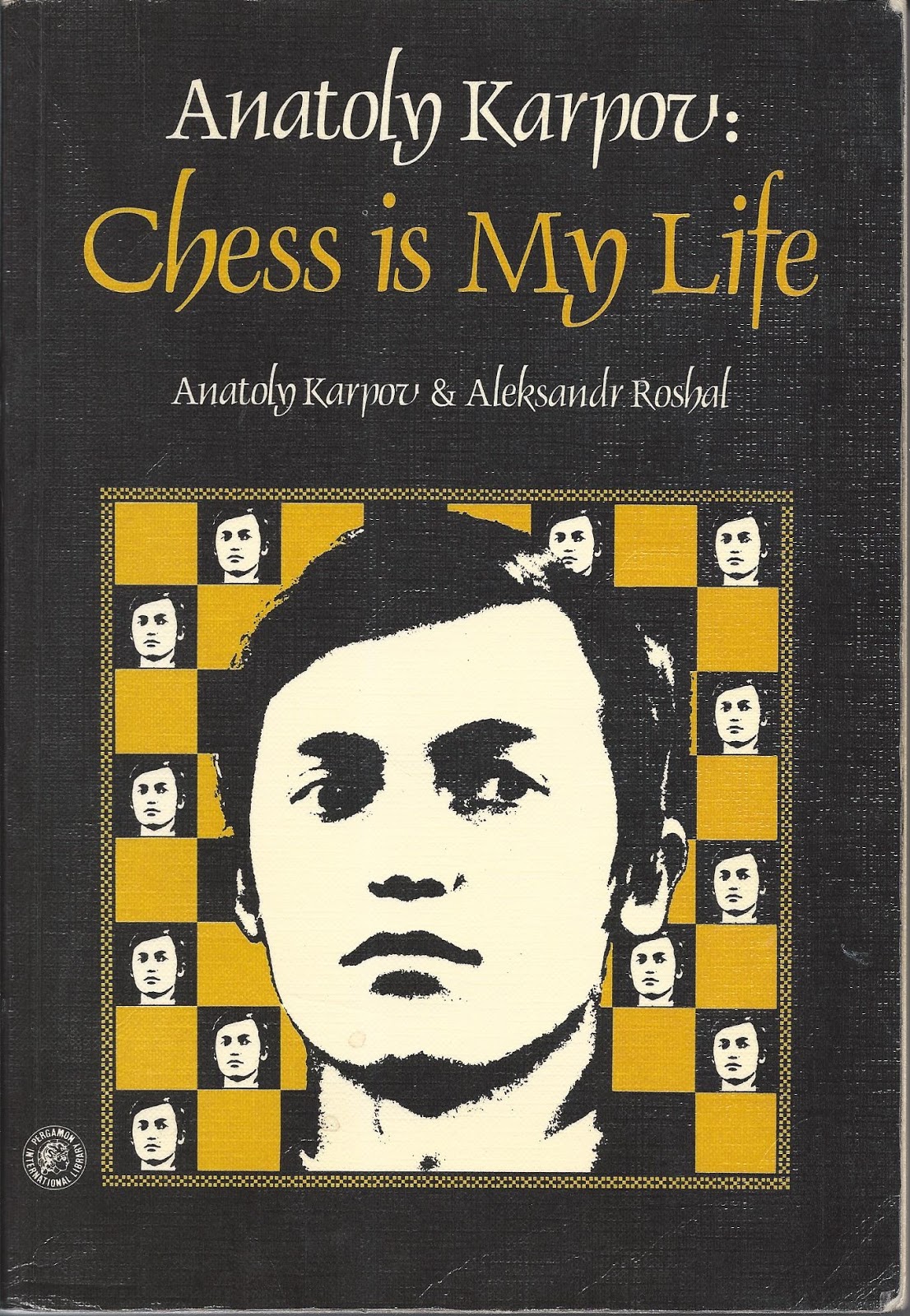
Anatoly Karpov: Chess is My Life (1980), 28.
Karpov won this game and the championship. He had the Black side of this position against Victor Korchnoi in 1993 and played 5...Bxc3.

Timman's move has been more popular, having been played at least 86 times to 32 for 5...Bxc3. However, White's score against 5...Ba5 has been 67%, while White has scored 56% after 5...Bxc3.

Why is a5 such a poor spot for the bishop?

Karpov elucidates two resulting vulnerabilities in the ensuing comments. One, the presence of the bishop on a5 prevents Black from playing b6, and hence the c5 pawn is difficult to defend. Two, he offers some unplayed lines in which White either wins a piece through tactics, or White's central pawns become mobile at the cost of a pawn.

In the game itself, White's pieces became more active. Under the pressure of an inferior position, Timman blundered away a pawn.

23 July 2014

Find the Blow

There is a nice miniature won by Viktor Kortchnoi that I sometimes attempt to imitate with rare success.

Tatai,Stefano (2455) - Kortschnoj,Viktor (2665) [C01]
Beersheba, 1978

1.e4 e6 2.d4 d5 3.exd5 exd5 4.Bd3 c5 5.Nf3 Nc6 6.Qe2+ Be7 7.dxc5 Nf6 8.h3 0–0 9.0–0 Bxc5 10.c3 Re8 11.Qc2 Qd6 12.Nbd2 Qg3 13.Bf5 Re2 14.Nd4 Nxd4 0–1

The pin of f2 and the advance of White's h-pawn allows the queen to occupy g3. In a recent online blitz game, I found myself in a nice position, but could not find the knockout blow.

Black to move

12 March 2014

Mating Net

This position arises in the annotations to Nunn -- Korchnoi, Luzerne 1985 (Chess Informant 40/360). In the game itself, Nunn refused Korchnoi's offer of a bishop on a4. This position is one of several that might have arisen if he had taken the bishop.

Black to move

Korchnoi offers the interesting line leading to checkmate: 30...Rxd3 31. Rxd3 Nb6+ 32.Ka5 Nc4+ 33.Ka4 b5#.

In the game itself, Nunn resigned after Black's move 34.

23 December 2012

Soviet Chess Politics

Karpov Korchnoi Candidates Final 1974

While testing the CBase Chess iPad app, I went through the second match game from the 1974 Candidates Final. This match selected the challenger to Bobby Fischer, effectively becoming the World Championship match. Anatoly Karpov won the second match game, and it was judged as the best game of Chess Informant 18. It was the first of Karpov's fourteen Golden Games.* To test the CBase app, I copied the PGN file containing these games from the Best of Chess Informant: Anatoly Karpov CD.

To my pleasant surprise, I found that I was able to memorize the game after less than fifteen minutes of study (see "Memorizing Chess Games"). Memorizing was not my intent, but came naturally as a consequence of efforts to understand the struggle. After learning the moves that were played, and exploring Mikhail Botvinnik's annotations for Informant 18/433, I pored through other texts in my library looking for further commentary. This commentary reawakened my interest in the internal chess politics of the Soviet Union.

Most of the Candidates for the 1973-1975 series were Soviet players, and the non-Soviets--Henrique Mecking, Lajos Portisch, and Robert Byrne--were eliminated in the first round. Fischer's challenger would represent the Soviet Union. In Chess is My Life (1977), Victor Korchnoi explains why Karpov was preferred by the Soviet ideological state apparatus.
Karpov had been chosen as the favourite, and it was clear why. He was born in Zlatoust, in the Urals, in the center of Russia. One hundred percent Russian, he compared favourably with me, Russian by passport, but Jewish in appearance. He was a typical representative of the working class, the rulers of the country according to the Soviet Constitution, whereas I had spent my life in the cultural centre of Leningrad, and was contrasted to him as a representative of the Intelligentsia.
Chess is My Life, 104.
The first critical position in the game came after Korchnoi's eighteenth move.

White to move

Karpov's team had prepared a novelty because, as he explains, "It was established that the 'theoretical' continuation [19. Rd5] does not gain White any real advantage" (Anatoly Karpov and Aleksandr Roshal, Anatoly Karpov: Chess is My Life [1980], 173). Karpov sets the scene.
Up till this point both players had been moving almost instantly. And here I played a move prepared beforehand, which caused Korchnoi to spend a long time deep in thought. ... The innovation [19. Rd3!], overprotecting the knight at [c3], at the same time in a number of variations frees the knight at [e2] for the attack. (173-174)
Korchnoi's response after the long think was an error, 19...R4c5. Karpov mentions the alternatives. Korchnoi's move had not been analyzed deeply, he claims, and so he found the refutation over the board.
When during our preparations for the match we analysed [19. Rd3], we came to the conclusion that the best reply to it was [19...R8c5]. It is highly probable that, after 36 minutes' thought during the game, Korchnoi also came to the conclusion that it was essential to secure himself against the constantly threatening pawn thrusts--[e5 and g5]. I nevertheless consider that Black's best practical chance was the retreat [19...Qd8], as suggested by Botvinnik. Now, after thinking for 18 minutes in search of a refutation of [19...R4c5], I found a fine forcing combination. (174)
Korchnoi acknowledges the quality of Karpov's play in the game, but asserts the champion's success is a bit overrated.
I ran up against a painstakingly analysed, prepared variation from which, by a direct attack, Karpov won. It was clear that the whole game, from beginning to end, was analysis. This was Karpov's best achievement in the match, but I found it strange that the Informator jury should judge it to be the best game of the year. After all, there was no fight, no creativity. (108)
Korchnoi's Chess is My Life explains how difficult it was for him to find strong players who were able to assist him in preparation and as seconds in the match. There were political consequences, he asserts, for those who might consent to work with him. Their travel could be restricted. They might suffer a reduction in their allowance from the State. The whole Soviet chess apparatus worked together to choose the appropriate challenger to Bobby Fischer. According to Korchnoi, they also orchestrated Karpov's first Informant Golden Game.


*I mentioned this game in "Best of the Best: Chess Informant Reader's Contest." In the contest to select the ten best Golden Games from the first one hundred volumes of Chess Infomant, I put this game seventh. It was eighth in the average of all readers. Marginalia in my copy of David Levy, Karpov's Collected Games: All 530 Available Encounters (1975) reveals my study of this game in the mid-1990s when I was returning to active chess study following more than a decade of occasional play. In addition, as I spent a fair amount of time studying the 1978 World Championship Match games after buying Raymond Keene's controversial book of the match in 1979, the chances are good that I also looked at the prior notable encounters of the adversaries as well.

26 November 2012

Instant Gratification

Benefits of Study

Studying master games brings long-term benefits to chess players who are ambitious to improve their play. Occasionally, study also brings instant gratification. Yesterday, I had a moment of the latter. After spending the better part of my study time the past week studying Karpov -- Korchnoi, m2 (1974), I was able to apply a lesson from this game in my own online blitz play. In the end, however, I blundered, giving away the game. My opponent failed to seize the win, answering my blunder with one of his own.

Game losing blunders are in the nature of blitz. Study, however, facilitates reaching a decisive advantage after eighteen moves played in under one minute.


Stripes (1748) - Internet Opponent (1694)
Live Chess Chess.com, 25.11.2012

1.e4 c5 2.Nf3 d6 3.d4 cxd4 4.Nxd4 Nf6 5.Nc3 g6 6.Be3 Bg7 7.f3 0–0 8.Bc4 Nc6 9.Qd2 Bd7 10.0–0–0 Rc8 11.Bb3 Ne5 12.h4

Via a different move order, we have reached the same position as in my reference game.

Black to move

12...h5 Black prevents White's thematic pawn sacrifice and action along the h-file.

13.Bg5 Nc4 14.Bxc4 Rxc4 15.Nde2 a5N

15...Qa5 16.Kb1 Rfc8 17.Bxf6 exf6 18.Nd5 Qd8 19.c3 b5 20.Ne3 Bh6 21.Qxd6 Bxe3 22.Qxd7 Qa5 23.Rd5 a6 24.Rhd1 R4c7 25.Qd6 Rc6 26.Qe7 Bc5 27.Rd8+ Kg7 28.Qe8 Rxd8 29.Rxd8 Qxd8 30.Qxd8 Bf2 31.g3 b4 32.Qd5 Rc5 33.Qd3 a5 34.c4 g5 35.Nd4 Re5 36.Nf5+ Kg6 37.Qd8 Rxf5 38.exf5+ 1–0 Suder,R (2222)-Dukaczewski,P (2336)/Poznan 2007/EXT 2011

White to move

Here I spotted a tactic that I remembered from Mikhail Botvinnik's annotations in Chess Informant 18/433. The position differs from Karpov -- Korchnoi, but the vulnerability of the bishop on e7 is the same.

16.e5! dxe5?

16...Nh7 17.exd6 Nxg5 18.dxe7 Qxe7 19.Qxd7 Qe3+ 20.Qd2 Qxd2+ 21.Rxd2 Ne6±

17.Bxf6 Bxf6 18.Qxd7+- Qb6 19.Nd5

19.Ne4 would be better

Black to move

19...Qc5

19...Qf2 20.Nec3

20.Nxf6+ exf6 21.c3

I should have played 21.Nc3

21...b5 

21...Qf2 22.Qd3 does not lead to advantage for Black, but is better than in the game.

22.Qd5 Qe3+ 23.Qd2 Qc5 24.Ng3 b4 25.Ne4 bxc3

White to move

26.bxc3 Qa3+ 27.Kb1

27.Qb2 is better

27...Rb8+ 28.Ka1 f5 29.Nf6+ Kg7 30.Nd5 Rd8 31.Rb1

31.Qe2

31...Rc5

White to move

32.Rb3??

32.c4+- was the only move

32...Qa4 33.Nb6 Qxa2+??

33...Qxb3–+

34.Qxa2 1–0

23 November 2012

A Fingerprint

While studying Mikhail Botvinnik's annotations to the second match game of the 1974 Karpov -- Korchnoi Candidates Final, I took an interest in annotations regarding a position that did not occur in the game. After Karpov's 16.Nde2, the position in the diagram below was reached.

Black to move

This position might serve as a fingerprint for the game, although the position after 19.Rd3 is more specific to this particular struggle, as it was Karpov's novelty (according to Informant 18--the move appears in two other games in 1974).

In the diagram position, Black faces a difficult choice. 16.Nde2 was first played in 1973, but had been analyzed following the fourth match game of Geller -- Korchnoi Candidates Quarter Final, 1971 where 16.Bh6 had been played. Korchnoi himself was the first to mention the move in Informant, suggesting it in annotations to Trofimov -- Nesis 1972 (15/407). It was relatively new when Korchnoi faced it over the board. Informant 17/461 presents the move as a novelty (the volume covering the first half of 1974) even though it had been played in a correspondence game the previous year.

Korchnoi played 16...Qa5, which is now given in the Encyclopedia of Chess Openings as dubious with Karpov -- Korchnoi 1974 as the first of several reference games in the notes. The mainline (ECO B 78, line 13) is 16...Re8, which had been played twice by James Edward Tarjan in a tournament in Torremolinos, Spain. Perhaps Korchnoi was familiar with these games, both of which Tarjan lost, when he opted for 16...Qa5.


Debate in the Annotations

After 16...Re8, the annotations in Chess Informant become interesting.

In Martin Gonzalez -- Tarjan 1974, Black played the critical line after 17.e5. Botvinnik omits this line from his annotations to Karpov -- Korchnoi (Informant 18/433). Botvinnik gives 17.e5 dxe5 18.g5+/- as a note to the game. Enver Bukic annotated Martin Gonzalez -- Tarjan for Informant. There 17.e5 was met by 17...Ng4, which later became the critical line. In a note, Bukic gives 17...dxe5 18.g5+-. Thus, Botvinnik's annotation downgrades White's advantage in the position from decisive to substantial.

Neither Bukic nor Botvinnik comment on the merits of 17.e5. However, another game played by Tarjan appears in the next issue of Informant, this time a Black win. Dragoljub Minić annotated Informant 19/403, and gave the move 17.e5 an interesting (Tarjan's opponent, Planinic, played 17.Bh6) with the line 17.e5!? Nxg4 18.fxg4 Bxg4 19.exd6 evaluated as unclear.

Two years later, Milan Matulović followed Planinic's idea of playing e5 one move later against Tarjan, who seems to have a knack for getting into theoretical battles in this line of the Yugoslav Attack against the Sicilian Dragon. That game with Matulović's comments proceeded from the diagram position: 16...Re8!? 17.Bh6 Bh8 18.e5! Nxg4 (only move--18...dxe5 19.g5+-) 19.fxg4 Bxg4 20.exd6 (Informant 21/389). Matulović played an improvement suggested by Minic at move 24.

Tibor Florian carries the debate further in annotations to Bernei -- Schneider 1976 (Informant 22/482). Bernei played 17.e5, which Florian assesses as an error. In the notes, he presents Matulović's line, 17.Bh6 Bh8 18.e5! Also in Informant 22, Henrique Mecking presents a line following from 17.e5, but with no evaluation. Mecking's annotations appear in Tan -- Mecking 1976 (Informant 22/486), where 17.Bd4 was played.

Mecking presents without comment both Matulović's line (17.Bh6 Bh8 18.e5 Nxg4 19.fxg4 Bxg4 20.exd6 Qxd6 21.Qxd6 exd6 22.Rxd6 Bg7 23.Bxg7 Kxg7) and 17.e5 Nxg4 18.fxg4 Bxg4 19.exd6 Qxd6 20.Qe1 Qa6. Neither line is referenced, but the latter is from Martin Gonzalez -- Tarjan 1974. Is Mecking's lack of evaluation marks itself a comment concerning a lack of clarity concerning the merits of both lines?

Commenting on Beliavsky -- Filguth 1976 (Informant 23/439), Minic repeats his evaluation 17.e5!? That game continued as Matulović -- Tarjan until move 26. The debate in Informant concerning 17.e5 seems to have ended there, but ECO presents 17.Bh6 as the main line and gives several reference games following 17.e5?! in notes.

Other later moves also exhibit similar changes in evaluation from one issue to another. These games, and the debate concerning the merits of variations following 16...Re8 contribute to an understanding of what did not take place in Karpov -- Korchnoi 1974, second match game. This game, won by Karpov, was one of five decisive games in the twenty-four game match that chose the World Championship challenger to Bobby Fischer, and thus chose the new World Champion the year following the match.