Showing posts with label Lewis (William). Show all posts

17 November 2022

Greco on 2...Qf6

Gioachino Greco's explorations of an inaccuracy common among beginners deserve attention. This post does that, as promised in "How Bad is 2...Qf6?" Greco's games with 2...Qf6 all begin: 1.e4 e5 2.Nf3 Qf6 3.Bc4 Qg6 4.O-O Qxe4 5.Bxf7

Black to move
Greco's explorations of this queen foray appear in the Paris (1625) and Orléans (n.d.) manuscripts. Peter J. Monté notes in The Classical Era of Modern Chess (2014) that Orléans was likely copied from the Paris MS (339), although some errors were corrected. Part II of this book, "Openings and Games of the Classical Era of Modern Chess" (439-530), has been an indispensable resource.

I have contended that Greco's games are poorly known, even by those who think they have studied all of them. Most players access these games through ChessBase or websites such as chessgames.com (currently 90 games). The latter has more Greco games, but both offer shorter versions of what is available in such old books as "Professor Hoffmann" [Angelo Lewis], The Games of Greco (1900), and William Lewis, Gioachino Greco on the Game of Chess (1819). These shorter versions miss the best of Greco's analysis.

A couple of years before the earliest version of what eventually became ChessBase Mega, David Levy and Kevin O'Connell made an effort to record all known games up to 1866 in Oxford Encyclopedia of Chess Games, Volume 1 1485-1866 (1981). They offer 77 Greco games, many annotated. These are extracted from Hoffmann's text. As with Lewis before him, Hoffmann buried the best analysis in the variations, which sometimes are much longer than the main game. Levy and O'Connell continue this practice.

The games in ChessBase come close to representing these abbreviated "main games" sans the variations. If the longest variation of each game were the main game instead, what most chess players know of Greco would be substantially enriched. Here I offer improved versions with notes. The notes show other lines that appear in Greco's manuscripts and in Hoffmann.

Greco,Gioachino [C40]
Paris, 1625

1.e4 e5 2.Nf3 Qf6 3.Bc4 Qg6

ChessBase Mega 2020 has four games with this move. Three are Greco's. The other was a fighting draw played in Germany in 2010. No rating is given for the player of Black, while White's is slightly over 2000.

4.0-0 Qxe4 5.Bxf7+

All of Greco's games reach this point. The analysis continues with lines that follow all three of Black's legal moves.

5...Kd8

5...Kxf7 6.Ng5+ Ke8 7.Nxe4 matches a game in CB Mega 2020 and also appears in the Paris MS.

White to move
6.Nxe5 Nf6

6...Qxe5 7.Re1 Qf6 8.Re8# Orléans. Game XXI, var. A in Hoffmann. This line ends with the same checkmate that can be found in one of the Greco selections in CB Mega 2020.

7.Re1 Qf5 8.Bg6

Black to move
8...Qe6

8...hxg6 9.Nf7# Game XXI, var. B in Hoffmann; Paris and Orléans MSS.

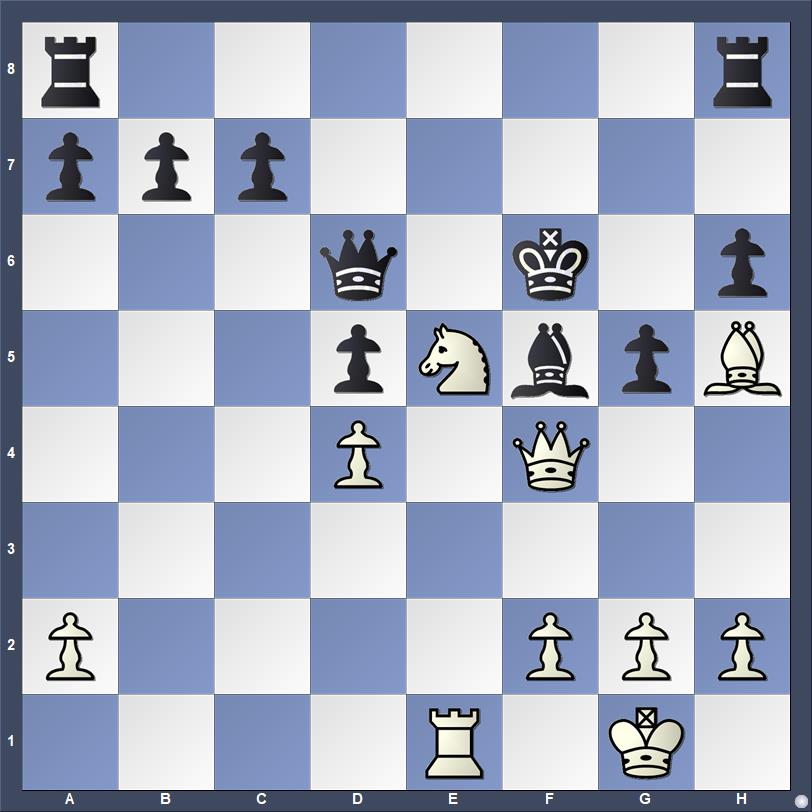
9.Nf7+ Ke8 10.Nxh8+ hxg6 11.Rxe6+ dxe6 12.Nxg6 1-0

Black to move
This game and its variations appear in Paris MS (1625) XXXIII; Orléans MS XXII. The game is XXI, var. C in Hoffmann.

Greco,Gioachino [C40]
Paris, 1625 

1.e4 e5 2.Nf3 Qf6 3.Bc4 Qg6 4.0-0 Qxe4 5.Bxf7+ Ke7

White to move
Greco considers every legal move for Black after the bishop check.

6.Re1 Qf4 7.Rxe5+

Black to move
Here, also, Greco considers every legal move for Black.

7...Kxf7

7...Kd8 Paris MS (1625) XXXIV. 8.Re8# This game appears in ChessBase Mega 2020.
7...Kf6 8.d4 Qg4 9.Bh5 Paris MS XXXIV.
7...Kd6 8.Rd5+ Kc6 9.Nd4+ Paris MS (9.Ne5+ Orléans MS)

8.d4 Qf6 9.Ng5+ Kg6 10.Qd3+

Black to move
10...Kh5

10...Kh6 11.Nf7# is given as the main line in Levy and O'Connell. Hoffmann, game XXII.

An essential aspect of Greco's technique in dealing with the horrid positions for which he is well-known is to seek to improve the losing side's defenses. When only the shortest versions of these games are known, this technique is hidden. 

11.Nf7+

11.g4+ is not attested by Monte, but is found in CB Mega 2020.
11.Nf3+ Kg4 (11...g5 12.Rxg5+) 12.h3# Orléans MS.

11...Kg4

11...g5 12.Rxg5+ Game XXII, var. B in Hoffmann.

White to move
12.h3+

Hoffmann writes, "Greco gives this move as mate, but this is obviously a slip, Black still having one square available" (65). Monte notes this error in Paris XXXIII (477).

12.Qg3# Monte notes that Greco overlooks this mate.

12...Kh4 13.Qg3# 1-0

This game appears in the Paris MS (1625) XXXIII. Also as Game XXII, var. A in Hoffmann.

Greco,Gioachino [C40]
Orléans, 1625

1.e4 e5 2.Nf3 Qf6 3.Bc4 Qg6 4.0-0 Qxe4 5.Bxf7+ Ke7

5...Kxf7 6.Ng5+ Ke8 7.Nxe4 is found in CB Mega 2020

6.Re1

Black to move
6...Qf4 7.Rxe5+ Kd6

7...Kf6 8.d4 Qg4 9.Bh5 Game XXIII, var. A in Hoffmann.
7...Kd8 8.Re8# Paris MS (1625) XXXIV; Orléans MS. Game XXIII in Hoffmann. This version is in CB Mega 2020.

8.Rd5+ Ke7 9.Qe1+ Kxf7 10.d4 Qf6

White to move
11.Ng5+ Kg6 12.Qe8+

Paris MS has an error here, corrected in Orléans.

12...Kh6 13.Nf7+ Kg6

White to move
14.Nxh8# 1-0

This game appears in the Orléans MS. Also Game XXIII, var. B in Hoffmann.

My view is that Greco's attacking technique against the best defense he found for Black is quite instructive. Of course, 2...Qf6 is a bad move, and 3...Qg6 is worse. Nonetheless, the simple refutations offered in the sample of these games in ChessBase Mega and on database websites have unjustifiably tarnished Greco's reputation. Much more of value exists in his model games than is generally believed.

14 January 2022

A Lesson in Pins

In my after school chess club at Saint George's School yesterday, I presented the game below to the students to highlight some basic principles for using pins effectively.

The player with the White pieces was William Lewis (1787-1870), a prolific chess author best remembered as one of those who hid inside the infamous fake chess playing machine called "The Turk".* Lewis was a student of Jacob Henry Sarratt, England's best player. I am drawn to Lewis because his Gioachino Greco on the Game of Chess (1819) offers more of Greco's model games than can be found in databases (see "Gioachino Greco on the Game of Chess"). Some of the positions in his other instructional books also are a regular part of my teaching.

Lewis,William -- Keen,Eric [C56]
London Casual Games London, 1817

1.e4 e5 2.Nf3 Nc6 3.Bc4 Bc5 4.c3 d6

4...Nf6 is the most popular move today, but 4...d6 is solid.

5.0-0 Nf6 6.d4

6.d3 seems better.

6...exd4 7.cxd4 Bb6 8.h3

Black to move
8...Nxe4

8...0-0 has led to better results for Black in current master play.

9.Re1

The first pin. We use the term pin when two pieces are attacked along a file, diagonal, or rank such that the one in front cannot move (absolute pin) or by moving exposes a piece of greater value to capture (relative pin).

9...d5?

A mistake.

9...0-0 is best 10.Rxe4 d5 restores the material balance 11.Bxd5 Qxd5 and White has a slight advantage.

10.Bxd5

10.Bg5 is also strong

10...Qxd5 11.Nc3

Piling on the pinned knight wins back the material and maintains substantial pressure on Black's position.

11...Qd8

White to move
12.Rxe4+!+-

12.Nxe4 0-0 leaves White with only a slight advantage (12...Nxd4?? 13.Bg5! [13.Nf6+ Kf8 14.Re8+ Qxe8 15.Nxe8 Kxe8 16.Nxd4] 13...Nxf3+ 14.Qxf3 Qd4 15.Nd6+).

12...Ne7

Moving another piece into a pin makes Black's troubles worse.

12...Kf8 and Black cannot castle. This move is Black's best choice. In either case, White already has a technical win.

13.Qe2

Here, castling would lose the knight.

13...Be6 14.Bg5

Pinning the knight again

14...Qd6 15.Bxe7

Black to move
15...Kxe7

Now the bishop is pinned.

15...Qxe7 16.d5 0-0-0 17.dxe6+-

16.d5 Rhd8 17.Ng5

Piling on. The manner with which Lewis increases the pressure on Black's pinned pieces is instructive. 17.dxe6 is just as good.

17...c6 18.Nxe6

Threatens discovered check

18...fxe6


18...Rd7 19.Nc7+ Kd8 20.Nxa8

19.Rxe6+

Fork

Black to move
19...Qxe6

19...Kf8 20.Rxd6 Rxd6 21.Re1

20.Qxe6+ Kf8 21.d6 Re8 22.Qf5+

22.Qc4 is stronger. Whites material superiority and less vulnerable king makes the advantage overwhelming in any case.

22...Kg8 23.Ne4

White has a checkmate idea that Black does not find a way to stop.

Black to move
23...Rf8

23...h6 offers more stubborn, albeit helpless defense.

24.Qe6+ Kh8

White to move
25.Ng5

25.d7 is simple, but Lewis wants to execute a picturesque checkmate.

25...Bxf2+

Black strikes back to win a pawn and check the king, but there is no follow up as Black's lacks sufficient force for a counterattack.

26.Kh2 Rae8 

Moves into the checkmate that Lewis hoped for in bringing up his knight.

White to move
27.Nf7+ Kg8

27...Rxf7 28.Qxe8+ Rf8 29.Qxf8#

 28.Nh6+ Kh8 29.Qg8+ Rxg8 30.Nf7# 1-0

*See Tom Standage, The Turk: The Life and Times of the Famous Eighteenth-Century Chess-Playing Machine (2002).

24 October 2021

Greco Attack Before Greco

The first game with the Greco Attack in David Levy and Kevin O'Connell, Oxford Encyclopedia of Chess Games, Volume 1 1485-1866 (1981) is the first game therein credited to Gioachino Greco (1). Levy and O'Connell annotate this game according to variations presented in their source: Professor Hoffmann, Games of Greco (1900). Nearly the same game, but deviating with Black's move 18, appears in ChessBase Mega 2020 as games 47 and 99, the latter offering variations and a different date.

Eight of the seventeen games that precede the first of Greco's in the Oxford Encyclopedia feature the Italian Opening.

Greco,G - G-1 OECG [C54]
Europe, 1600

1.e4 e5 2.Nf3 Nc6 3.Bc4 Bc5 4.c3 Nf6

4...Qe7 is credited to Lopez in OECG, and also played by Boi, Polerio (four games), Lorenzo (against Polerio), and an unnamed player against Busnardo.

5.d4 exd4 6.cxd4 Bb4+ 7.Nc3 Nxe4 8.0-0 Nxc3 9.bxc3 Bxc3 10.Qb3

ChessBase Mega 2020 offers: "Greco invented free play with the pieces. Free pieces will win: free diagonals for the bishops, free files for the rooks!!" But, in fact, as will be shown below, all of these moves precede Greco.

Black to move
10...Bxa1

10...Bxd4 is Greco no. 2 in OECG; Also Game 2 in Hoffmann; third and fourth variations to game 1 in William Lewis, Gioachino Greco on the Game of Chess (1819).

11.Bxf7+ Kf8 12.Bg5

Black to move
12...Ne7

12...Nxd4 13.Qa3+ Kxf7 14.Bxd8 Rxd8 15.Rxa1 Nc2 16.Qb3+ Kf8 17.Qxc2+- Game 1, var. B in Hoffmann. Also second variation in Lewis. Absent as a Greco game from ChessBase Mega 2020.

13.Ne5 Bxd4

13...d5 14.Qf3 Bf5 15.Be6 g6 16.Bh6+ Ke8 17.Bf7# Game 1, var. A in Hoffmann. Also first variation in Lewis. Absent as a Greco game from ChessBase Mega 2020.

14.Bg6 d5 15.Qf3+ Bf5 16.Bxf5 Bxe5 17.Be6+ Bf6 18.Bxf6

Black to move
18...gxf6

18...Ke8 19.Bxg7 Is given as the conclusion in two Greco games in ChessBase Mega (both identical but one analyzed).

19.Qxf6+ Ke8 20.Qf7#

This is Game 1 in Professor Hoffmann, ed. Games of Greco (1900). Also Game 1 in Lewis, Gioachino Greco on the Game of Chess (1819). 

Peter J. Monté, The Classical Era of Modern Chess (McFarland 2014) lists eight Greco manuscripts containing this entire game, and another ending with 17.Be6+. He also notes that it appears as Gambett VI in Francis Beale's 1656 compilation of Greco's games (463). Monté does not mention the conclusion given in ChessBase Mega 2020.

Reading Monté last night and this morning, I returned to a book he mentioned and that I had downloaded from GoogleBooks several years ago: J.A. Leon, Forty-Six Games of Chess: by Giulio Cesare Polerio, rpt. from British Chess Magazine (1894). The BCM article appeared in August 1894 and was reprinted in Leeds by Whitehead & Miller. Following 24 King's Gambits, Leon offers the game that Monté notes, "presents the first Greco Attack" (224).

Polerio,Giulio Cesare [C54]
Rome, c. 1581

1.e4 e5 2.Nf3 Nc6 3.Bc4 Bc5 4.c3 Nf6 5.d4 exd4 6.cxd4 Bb4+ 7.Nc3 Nxe4 8.0-0 Nxc3 9.bxc3 Bxc3 10.Qb3 Bxa1 11.Bxf7+ Kf8 12.Bg5 Ne7

White to move
13.Re1

Leon's Polerio manuscript ends here with the note that White wins the queen and thus the game.

Monté lists two other lines from the Doazan manuscript, which has not been definitively dated, but precedes Greco.

Three alternatives to 13.Re1 appear in seventeenth century manuscripts.

1) 13.Rc1 Credited to Don Antonio in the Doazan MS (463). It is the only game attributed to Don Antonio, whom Monté believes was Don Antonio Mancino (270).

2) 13.Rxa1 Last move in Greco's Lorraine MS (1621)

13...h6 14.Bh5 d5 15.Bxe7+ Kxe7

White to move

16.Re1+ Kf6 17.Qe3 Qd6 18.Ne5 Bf5 19.Qf4 g5

White to move
20.Qf3 1-0

Contrary to the claim in the ChessBase database, Polerio should be the one credited with inventing "free play with the pieces". He likely originated the Greco Attack.


3) Greco improved Polerio's line with 13.Ne5.

Black to move
Greco's Innovation: 13.Ne5!

Polerio, as Greco, is poorly known by today's chess players (see "The Unknown Greco"). Much of what players learn from Greco was derived by him from the work of Polerio.

22 October 2021

The Unknown Greco

ChessBase Mega 2020 contains 82 games credited to Gioacchino Greco, most dated 1620 (which seems an arbitrary date). At the time of this writing, Chessgames.com has 90 games credited to the famous Calabrese. In "Gioachino Greco on the Game of Chess" (2013), I wrote about the abundance of Greco's variations that can be found in William Lewis's 1819 text of that name. The better known and more accessible (the notation is standard English descriptive) 1900 text by Angelo Lewis, writing under the penname Professor Hoffmann, also has variations that are absent from databases.

Peter J. Monté, The Classical Era of Modern Chess (McFarland 2014), which I described in "Monumental Scholarship" (2020), offers far more detail from Greco's manuscripts, and also permits the diligent reader to separate Greco's contributions from lines he learned from others. In Part I of the book, Monté describes manuscripts and history from Lucena to Greco, concluding with a discussion of the development of castling and the pawn's leap. Part II. Openings and Games of the Classical Era of Modern Chess is a thoroughly documented move tree (439-530). The so-called Greco Attack is documented across four pages (462-465).

The Greco Attack begins with the moves 1.e4 e5 2.Nf3 Nc6 (In some of Greco's manuscripts 2.Bc4 Bc5 is played, and the knights deployed on the following move) 3.Bc4 Bc5 4.c3 Nf6 5.d4 exd4 6.cxd4 Bb4+ 7.Nc3.

Black to move

Play continues:

7...Nxe4 8.O-O Nxc3

8...Bxc3 is the mainline today, and offers a very good reason not to play the Greco Attack.

9.bxc3 Bxb3

9...d5 or 9...Be7 have been recommended.

10.Qb3

A fine miniature that I learned from Leonard Barden and Wolfgang Heidenfeld, Modern Chess Miniatures (1960) continued with 10.Ba3. See Corte -- Bolbochán 1946 (2016).

10...Bxa1

Greco also has games that continue with 10...Bxd4.

11.Bxf7+ Kf8  12.Bg5

Black to move

In the ChessBase database, Greco's games all continue with 12...Ne7. Chessgames.com, however, has one game that continues with the line I present below.

12...Nxd4

This move was played against me in a rapid game on Chess.com on Sunday, and I had faced it at least four times prior.

13.Qa3

13.Qb4+? is a blunder that appears in the ChessBase database in ten games played 1996-2016.

13...Kxf7 14.Bxd8

Black to move

In 1619, Greco had access to a manuscript known today as Boncampagno -3, which contains the following variations (Monté, 277, 463). This manuscript is among those classified as the Polerio Complex. Monté dates it between 1594 and 1619. Authorship is uncertain.

A.
14...Rxd8 15.Ng5+ Kf6 (or Kg6) 16.Rxa1 Kxg5 17.Qe7+

B.
14...Nxf3 15.Qxf3+ Bf6 16.Bxc7

Black to move

Greco's original contribution to this line begins from this position and appears in two manuscripts from his sojourn in England, the Mountstephen manuscript (1623) and the Grenoble manuscript, which is undated, but believed to precede Mountstephen.

16...Re8 Qh5+ Kf8 18.Bd6+

Mountstephen ends here.

Black to move

18...Be7 19.Re1 h6 20.Rxe7 Rxe7 21.Qe5 and Qxe7 follows.

Not everything credited to Greco was his own work, and yet much of his work remains unknown to most chess enthusiasts.

06 October 2021

Elementary

This position was presented by William Lewis in Elements of Chess (1819) for teaching chess to beginners. I have shown it to hundreds of young students, including those in their first few days with the game and others who think they have advanced beyond the beginner's stage.

White to move

Nearly all young students play the queen forward one square and work to drive Black's king towards the eighth rank. Lewis suggests that White should seek to checkmate on the side of the board that Black's king is nearest, stating that Qe2+ or Qb3+ (both have been suggested by many students when I have shown this position) "would have played ill" because it forces the king towards the center, "as far removed from the side of the board as he was at the beginning" (30).

Something that should be second nature does not even enter the imagination of many players who think they know elementary checkmates.

This position is Lewis's "fifth situation". His second is instructive, too.

White to move

The tendency of beginners and many others who think they have advanced beyond that stage is to move the king. Mate is thereby delivered on the fifth move. He points out that checkmate in four moves is "more masterly and shorter" (28). Drive the king towards your own.

30 August 2020

Howard Staunton

On the Origin of Good Moves Reading Log*

In The Chess-Player's Handbook (1847), Howard Staunton asserts, "in chess, as in modern warfare, one of the most important strategems is the art of gaining time upon the enemy" (48-49). This assertion could well be considered central to the foundation of the articulation of positional chess, but Staunton does not get such credit.

Time served as a "factor" in Siegbert Tarrasch's articulation of what many have taken to be a continuation of William Steinitz's modern theory. He stated, "Force, Space and Time work together at every move" (The Game of Chess [1935], 231). Later, pawn structure was added to Tarrasch's formulation, and these became the essence of "development" (see "Principle of Development: Early History"). These were the factors that I learned in my youth, and then found anew as I was returning to chess after about a decade of minimal play, and read some of Yasser Seirawan's exceptional "Winning" series published by Microsoft Press in the 1990s. I recall Wesley So telling Seirawan during one of the Wijk aan Zee broadcasts that these texts gave him his foundation.

Time remains vital to Dan Heisman's nearly iconoclastic Elements of Positional Evaluation, rev. ed. (1999), where he lists mobility, flexibility, vulnerability, center control, piece coordination, time, and speed. Heisman considers notions of space, pawn structure, and development as "pseudo-elements". In Heisman's brief synopsis of the history of positional theory, he claims that after Andre Danican Philidor, the next contribution to theory was the play of Paul Morphy, skipping over Staunton.

Who mentions time prior to Staunton? Research might reveal that it was Giaochino Greco, although I cannot point to a passage in his manuscripts where this is the case. I do vaguely recall the concept articulated in some annotations by William Lewis, and Staunton was certainly familiar with the works of Lewis. Following this assertion concerning time, Staunton suggests the relevance of the art of warfare for chess with reference to Traité de Grand Tactique (1805) by Antoine-Henri Jomini, who served under Napoleon as well as other leadership capacities elsewhere in Europe. Staunton's lessons from Jomini, the art of war:

...consisted in the proper application of three combinations--first, the art of disposing the lines of operation in the most advantageous manner; secondly, in a skillful concentration of the forces with the greatest possible rapidity upon the most important point of the enemy's line of operations; and thirdly, that of combining the simultaneous employment of this accumulated force upon the position in which it is directed. (49)
Staunton implies that the application of these principles of war to the game of chess ought to be self-explanatory. Perhaps this failure of elaboration is what excludes him from narratives of the development of chess theory. But, if so, why does Steinitz get so much credit? The Modern Chess Instructor (1889) is even more paltry in its elaboration of principles of positional play.

Willy Hendriks, On the Origin of Good Moves (2020) does not elevate Staunton's reputation as a theorist in his short chapter, which concentrates on the second match between Staunton and Pierre de Saint-Amant (76-88). He does, however, claim that Staunton's contribution to the development of chess skill among those who followed him were manifested in three ways. The first is the role of newspaper columns.

In the quiz that begins the chapter, Hendriks presents this position and an intriguing question.

White to move

His question is derived from a challenge that Staunton offered to his opponent in a battle of analysis in chess periodicals, Le Palamède edited by Saint-Amant and Chess Player’s Chronicle by Staunton. Would you be willing to take the Black side in a series of six games? How much would you be willing to bet on the outcome?

Saint-Amant asserted that Black has an attack and a clearly superior position. Staunton disagreed. Staunton did lose the game, but Hendriks suggests that his loss was due to a subsequent tactical adventure that led no where.

Edward Winter wrote about the controversy in "Staunton v. Saint-Amant", Chess Notes 5709 (10 August 2008). This article forms the source for annotations to this game in ChessBase Mega2020. Hendriks develops his narrative of the word wars through the work of Nick Pope at Chess Archaeology. The emergence of chess columns in newspapers, and then specialized chess magazines, in the first half of the nineteenth century, Hendriks asserts, began to improve the level of chess skill. Staunton's Chess Player's Chronicle is prominent among them, as was Le Palamède. Staunton's second contribution is found in his books. Then, in 1851, Staunton organized the first international chess tournament.

Hendriks core argument in the chapter disputes an assertion of Harry Golombek that the quality of play in the Staunton -- Saint-Amant matches was "much superior" to the McDonnell -- De Labourdonnais matches (77). Hendriks shows that there was an abundance of errors in the latter, as there had been the previous decade when the top French player met the top British player.

Hendriks' exercises at the start of the chapter and his analysis of the games from which they were derived sent me into the databases to play through with some rapidity all 27 games from the two matches. To be honest, I found that exercise to be a chore. Aside from a few interesting endgames, the play of neither gentleman inspired me. On the Origin of Good Moves extracts the most interesting moments. My criticism of the chapter is that Hendriks only vaguely references the fact that the match he focused on was the second between the two men. His assertions that Staunton was clearly the superior player should not overlook Saint-Amant's victory in the much shorter first match.

11 July 2020

On the Origin: Reading Journal

Some books are to be tasted, others to be swallowed, and some few to be chewed and digested; that is, some books are to be read only in parts; others to be read, but not curiously; and some few to be read wholly, and with diligence and attention.
Francis Bacon, "Of Studies" (1625)
Willy Hendriks, On the Origin of Good Moves (2020) arrived yesterday. I spent an hour last night and a bit more than an hour this morning leafing through the whole book, reading a few pages here and there. Then I reread the chapter on Greco. I had read the Kindle sample in June after Brian Karen asked me about this book in reference to my post on the Chess Book Collectors's Facebook page concerning Peter J. Monté, The Classical Era of Modern Chess (2014). Do look at "Monumental Scholarship: Notes Toward a Book Review" for my initial assessment of Monté's text. Hendriks' book looked interesting, so I preordered the paperback. It shipped Tuesday on the date listed by Amazon as the publication date.

Although I use almost every one of my nearly 400 chess books principally as reference works and rarely read one all the way through, On the Origin of Good Moves may join the small rank of exceptions. In order to encourage myself to keep at it, this post begins a reading journal on my progress.

Hendriks has an ambitious agenda to challenge the common notion that William Steinitz initiated the modern notions of positional play. This myth, he argues, is the work of Emanuel Lasker. He states that he wanted to write a whodunnit, but self-deprecates his writing abilities and so identifies the culprit immediately (10). Even so, Hendriks's take concerning the development of chess history is about the details more than the plot.

He also begins by noting the recapitulation theory of chess development offered by Max Euwe, Garry Kasparov, and others. I summarized this view in my 2013 workbook for students in my summer chess camp, "Dragon Chess Camp 2013: Learning from the First Chess Masters":
No one is born a chess master. Euwe suggests that an individual player's growth from beginner to master follows the pattern of chess history. First players learn to play like Greco. Then, as Philidor, they discover the importance of pawns and begin to think positionally. Individual growth moves through attacking play in the style of Adolph Anderssen and Paul Morphy to learning to accumulate small advantages in the manner of Wilhelm Steinitz. (26)
I went on from there, but this excerpt serves to illustrate that I have found Euwe's concept compelling at least pedagogically. Hendriks correctly links the recapitulation theory to Ernst Haeckel: "ontogeny recapitulates phylogeny" (9, 411). The structure of On the Origin of Good Moves--a title clearly derived from Charles Darwin, On the Origin of Species by Means of Natural Selection, or the Preservation of Favoured Races in the Struggle for Life (1859)--follows the pattern evident in Euwe, The Development of Chess Style (1968), but in a manner that interrogates with skepticism the central claims that have been advanced by many chess writers along the way.

Journal: "Footnotes to Greco"
The safest general characterization of the European philosophical tradition is that it consists of a series of footnotes to Plato.
Alfred North Whitehead (1979)
Hendriks notes that Greco has not received the same honor given to Plato that all of chess theory is a series of footnotes to his original work, although a few months ago I wrote, partly in jest, in a chess forum, "Greco is the originator; all others are imitators." I have taken the work of Greco seriously for some time, found Euwe's annotations of two Greco games useful and inspiring, have played at least three games online that almost wholly follow one of Greco's masterpieces (see "Near Perfect"), and have been convinced since at least 2013 that the best parts of Greco remain unknown to most chess players.

As I had read Hendriks' chapters on Greco several weeks ago, it should not be surprising that I scored 100% on the two quizzes from Greco's games this morning. I missed the second one, however, in June because I chose Greco's move and Hendriks was looking for the improvement. When I took that quiz in June, the game from which exercise 2 was extracted had been part of my lesson with my chess students the previous week. However, I was using a version of the game that was not in any databases, but can be found in Francis Beale's 1656 text. Chessgames.com has it now because I submitted it after researching the game score in Monté. In June, I finished a project of entering all 94 of Beale's selections from Greco into a database.

Black to move

This position appears in five games in ChessBase Mega 2020. Four are Greco's games. 10...Kd7 appears in two Greco games in the database, 10...Kd8 appears in one, and as Hendriks notes, 10...Kf8 appears in one of Greco's games in the database (19-20). The position after 10...Kf8 is Hendriks second exercise. In this one, and one in the second set, Greco's move is not the best move.

The version of the game given by Hendriks ended with checkmate in 14 moves. The version of the game in Beale, however, continues with much more stubborn defense. Monté's research reveals that the better game appears in several of the London manuscripts created in 1623 by Greco. The better version also appears in William Lewis, Gioachino Greco on the Game of Chess (1819).

All this is to say that Hendriks' historical questions differ from mine. While I can spend many hours tracking down minutiae through original sources, or secondary works that are grounded is such sources, Hendriks builds his assessment of Greco on readily available databases. What do Greco's games offer the aspiring chess player? More than he usually gets credit for, Hendriks argues.

Despite approaching work on Greco from a somewhat different perspective regarding the nature of historical research, I am encouraged by the assessment in On the Origin of Good Moves: "Greco's legacy is really impressive" (23). I agree.

There are two chapters and two quizzes on Greco in Hendriks's book. This position is number 8--the second exercise for chapter 2: "The Nimzowitsch of the 17th Century" (27-38).

Black to move

This position is from Greco's longest game, and one of the few that Hendriks thinks might represent actual play. His annotations on this game are brief but highlight the critical point: Philidor's reputation for discovering the importance of the pawns is but a footnote to Greco.


30 November 2019

Queen versus Knight

Winning with queen versus knight is an elementary skill, but it is easy to falter with the wrong plan. This morning, I struggled briefly with a position that resulted from misplaying a bishop and pawn versus knight ending that I found in Rashid Ziyatdinov, GM-RAM: Essential Grandmaster Knowledge (2000).

White to move

1.Be5

Obvious first move--trap the knight.

1...Ke7 2.Kc5 Kd7 3.Kb5 Ke7 4.Kc6 Kf7

White to move

5.d6 Ke6 6.d7

6.Bd4 would have simplified matters. 6...Nf4 7.d7 Ke7 8.Bc5 and attempting to occupy the promotion square leads to a quick checkmate.

6...Kxe5 7.d8Q Nf4

White to move

I reached this position thinking it would be easier than it was. It became clear that I could use some work on elementary skills.

Elements of the Game of Chess

After several efforts, then engine checking, followed by further practice, I began to see some patterns. I then remembered an old textbook that had some exericises, William Lewis, Elements of the Game of Chess (1822). In "Lesson One" (August 2017), I discussed the merits of Lewis's approach to elementary checkmates with the queen. Queen vs. knight is the next chapter in his book.

Lewis's first position is instructive, and his solution is very close to what chess engines reveal today.

White to move

Lewis
Queen vs. Knight, 1822

1.Qd4+ Ke6 2.Ke4

Black to move 

2...Ng6

Lewis gives the variation 2...Nc6 3.Qd5+.
The engine shows that 2...Nf7 holds out one move longer.

3.Qb6+

Lewis's technique takes one move longer than the engine's top two choices.

3...Kf7 4.Kf5 Ne7+ 5.Kg5 Nd5 6.Qd6 Ne7 7.Qf6+ Ke8 8.Qe6 Kd8 9.Kf6 Nc8

White to move

10.Qc6 Na7

10...Ne7 11.Qd6+

11.Qb6+ 1-0

Lewis treats his readers to two more positions. In both cases, White has a knight-winning fork on the second move.

White to move

My students will be seeing these positions this coming week.

01 August 2017

Lesson One

Where do you begin when teaching chess to a beginner? Certainly, the first steps should be the board and how the pieces move, as Daniel Rensch offers in "Everything You Need to Know 1: Start Playing Chess" on Chess.com. Or, perhaps there is a flaw in this approach. Momir Radovic claims the approach that starts with the moves is flawed, quoting Aron Nimzovich, "How I Became a Grandmaster" (1929).*
Let's start from the beginning -- from the very first lesson. "Moves were shown" to me -- was that the right thing to do? Well, of course, my dear reader would say, it's impossible to play chess without it. But the thing is, the reader makes a mistake: this method is utterly wrong.
Nimzovich, trans. by Alexey Spectra
"Utterly wrong" in this translation is presented as "fundamentally flawed" by Radovic (see "How We Fail Big Time in Teaching Chess"). Nimzovich asserts that one should begin with the board, specifically mentioning the border between the players and the center; then with the rook and the concept of ranks and files. Radovic suggests contacts, which appear to be embodied in Nimzovich's lesson with a White rook on e1 and a Black pawn on e6. Yuri Averbakh. Chess Tactics for Advanced Players (1972) develops a theory of contacts that I imagine must be part of what informs Radovic's approach.

Through work as a guest teacher in elementary classrooms for more than a decade, I taught more than one thousand children to play chess. I developed a curriculum that could be covered in four visits. I always started with the board--ranks, files, diagonals, and the names of squares. Each visit would then introduce the moves of one or two pieces. Sometimes, I started with pawns and then students played pawn wars. Sometimes, I started with the rook and the king and the concept of check. Sometimes I started with the queen and king and the concept of checkmate. None of these methods were perfect, but children did learn to play.
Rensch's First Checkmate

Rensch starts his video with the board's alternating colors, then ranks, files, diagonals, and names of squares. Then he teaches the moves, beginning with the rook. Fifteen minutes into the video, he introduces check and checkmate. His first checkmate is with a queen. The second is with two bishops. Then, he shows a stalemate with the two bishops. Finally, en passant and castling are introduced.

The Nimzovich/Radovic approach deserves further exploration, but the links to his site do not seem to be working for me this morning. Also, his articles on his blog and on Chess.com generally offer teasers only. He suggests the problems that provoked development of his system, but one needs to hire him as a coach to get the details. Or, do a bit of research and find the links, such as his article, "Introduction to the Contacts Method," The Chess Journalist (Fall 2011).

Nearly two centuries ago, William Lewis (1787-1870) presented a "scientific" approach to learning chess. His book, Elements of the Game of Chess (1822), begins with rules and moves and then proceeds to checkmates with queen and king against king. His assertions of the pitfalls of teaching chess the wrong way remind me of my own childhood.
The great objection to the works hitherto published, as far as regards the mere learner, is that they commence too soon with all the pieces, and the reader is expected to manoeuvre all, before he understands the use of one or two; the powers of the pieces are imperfectly taught, and the numerous combinations and difficulties which so early present themselves to the reader, confuse and fatigue him, and he begins to fear that very considerable time must elapse before he can be come, with great study and patience, even a moderate player.
Lewis, Elements, viii.
Lewis observes that a young beginner wants to use all of the pieces, but urges restraint. He asserts that a person who wants to reach a level where he or she can compete with first rank players should defer using all of the pieces until after working through the combinations with few pieces that he offers in Elements of the Game of Chess.

My younger sister taught me the moves after learning them from a neighbor. I was eight years old. A short time later, my uncle corrected some errors, or so he tells me. My memory extends to my sister's instruction, but not my uncle's. In any case, I played chess for several years before I had the faintest idea of strategy and tactics. These, and the beginnings of skill, developed when I discovered chess books shortly before or just after my fifteenth birthday (see "My First Chess Book"). As I learned to read chess notation and began playing through miniatures, my skill rose rapidly.

Lewis advocates using few pieces in many combinations. One almost gets the sense from careful study of his approach that Nimzovich and Radovic are merely refining lessons in a forgotten book. He does not begin with the rook, however. The queen is a terribly difficult piece with which to begin. Even so, Lewis's first checkmates are exemplary for teaching how a queen and king can coordinate their efforts. In particular, his "second situation" offers two solutions (28).

White to move

First, he presents checkmate in five. Then notes, "This method is very simple, but the other is more masterly and shorter; replace the pieces and play." We see that White's king does not move and Black is checkmated on the fourth move.

Step by step, Lewis walks his reader through simple checkmates when the Black king is already confined on the edge. Then, we reach the "fifth situation" (30).

White to move

It is checkmate in five moves. When a young player starts with such a checkmate, he or she is already well ahead of the one who played 58...Qc4+ in this next position.

Black to move

After six moves, White resigned in disgust, embarrassed to lose to a player who cannot execute a simple checkmate in three.


*This work in Russian has not been generally available in English, but Alexey Spectra, known on Chess.com as Spektrowski offers a translation on that site (link embedded).

30 March 2017

Forcing Checkmate

My students this week solved exercises on two worksheets that I created. The first worksheet was presented to both beginning and advanced groups. The second worksheet was given only to the advanced group. The exercises on the two worksheets, except one, are part of a book that I created, Forcing Checkmate, now available in the Kindle Store.

Forcing Checkmate 1 consists of six positions, all with White to move. The first three are checkmate in one, but I let the students work for a few minutes before I revealed this information. Then two are checkmate in two moves, and the last is checkmate in three. Numbers 2 and 6 are from the same game.

1-1.

1-2.

1-3.

1-4.

1-5.

1-6.


Forcing Checkmate 2 consists of three positions. The first is not in my book, Forcing Checkmate. Although arrow drawn on the diagrams are acceptable for the first worksheet, this worksheet explicitly called for students to write the entire solution in chess notation.

2-1. Checkmate in two

2-2. Checkmate in four

2-3. Checkmate in five

The last one is from William Lewis, Elements of the Game of Chess (London, 1822).