Showing posts with label Aronian. Show all posts

05 July 2024

Smoke and Mirrors

In drawn endings, one could offer a draw. Or, as Levon Aronian showed me in 2013, playing 36 moves in a dead-drawn ending, one can offer your opponent opportunities to err. Such was my guidance in a rapid game this morning.

After 47 moves, I had a slight advantage, but missed my best chance.

White to move
48.Rh6! would have maintained an advantage. For instance, 48...Raxh7 49.Rb5+ Kc7 50.Rxh7+ Rxh7 51.Rxa5+ and the three to one majority with one rook each offers White good prospects of victory.

I played 48.c3 and my advantage slipped away.

Ten moves later, I was certain the game was headed for a draw.

White to move
I played 58.a5+. Later, after my 71.b6, we have reached a technical draw that one finds in all the endgame books.

Black to move
Black played the only move, which is not hard to find, 71...Rh8. I proceeded to shuffle my king about and we reached this position after 79.Ka6.

Black to move
Clocks were running and the game continued with a blunder on each side.

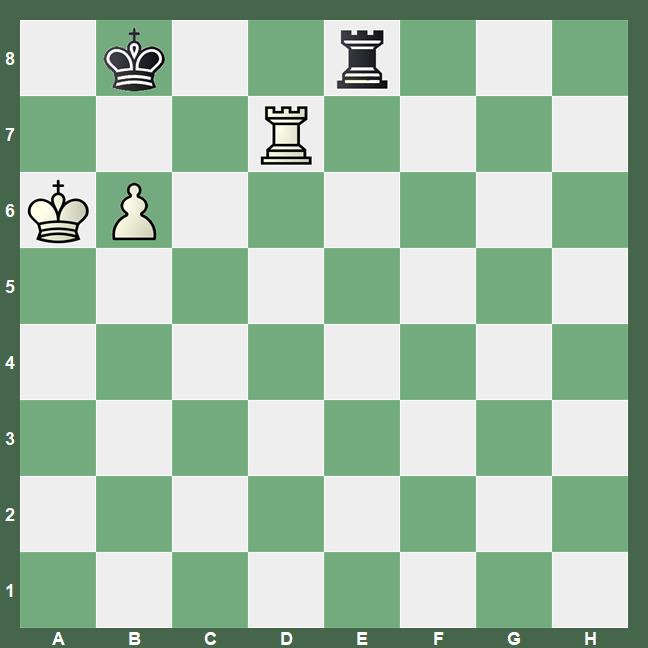
79...Rg6?? (79.Rg8 was required) 80.Rh7?? (instead of 80.Rf8#).

If my opponent erred once, he might do so again.

Black to move
After 90.Rd7
90...Kc8?! 

This move is fine, although it suggests that Black may be experiencing some confusion.

91.Rd4 Re6??

My chance!

White to move
92.Ka7!

There are other winning moves as well.

92...Re7+ 93.Ka8 Re8 94.b7+ Kc7+ 95.Ka7 and Black resigned.


03 August 2016

Beat Carlsen

This position arose in Aronian -- Carlsen, Stavanger 2016. Carlsen has just played 26...Qxe5, an uncharacteristic error. Aronian found the necessary continuation. The game was published as Chess Informant 128/1, the first in the Games section (see "Determination" for more on this issue).

White to move

16 September 2015

Pawns are the Soul

Pawns are the soul of chess.
François-André Danican Philidor
In my post, "Dominquez--Aronian, Tata Steel 2014", I mentioned that Levon Aronian's play in that game offered a modern lesson in the meaning of Philidor's famous dictum. This morning I looked at Aronian -- Ponomariov, Tsaghkadzar 2015, Chess Informant 124/9, and found another illustration. The game as a whole is a good illustration of piece play in the service of creating powerful passed pawns.

Here is one of the final critical positions.

White to move

What would you play?

Aronian sacrificed the exchange to get the a-pawn rolling. Ponomariov resigned ninen moves later.

26 January 2014

Aronian -- Van Wely, Tata Steel 2014

Bitten by the Dutch

When I awoke a little later than usual this morning, Levon Aronian had lost with White to Dutch player Loek Van Wely. Van Wely played the Dutch Defense and the game quickly reached an interesting position where both players seemed to have chances. In time pressure, Aronian missed something and lost.

Levon Aronian won the Tata Steel Grandmaster tournament in Wijk aan Zee with a convincing performance that included wins against Fabiano Caruana, Hikaru Nakamura, and Sergey Karjakin. Today's game did not matter for the final standings. Two games remain to finish as I am writing this post. Both of those games affect second place. Karjakin can finish in second alone with a win, or tie for second with a draw. Harikrishna can tie for second with a win.


Aronian,Levon (2812) -- Van Wely,Loek (2672) [A80]
Tata Steel Chess Wijk aan Zee (11), 26.01.2014

1.d4 f5 2.Nf3 Nf6 3.Bf4 

Aronian spent three minutes on this offbeat move. It is three times as popular as the Raphael Dutch that I played in my only draw against a FIDE Master. 3.g3 and 3.c4 account for the vast majority of games against the Dutch.

3...d6 4.e3 h6 5.h3 

Black to move

Already the players have nearly left previously trodden paths. Three games in the database have reached this position. Aronian has used more than ten minutes; Van Wely has used six.

5...g5 6.Bh2 Bg7 7.Nbd2

ChessBase Online finds two games in this position--both Black wins. The games were played in the 1990s among players of a far lower caliber than these two.

7...0–0 8.c3 Nc6 9.Bd3 Rb8 10.0–0 Qe8 11.Re1 Qh5

White to move

There are two questions that immediately crop up when I see this aggressive queen: Will she slay the White monarch? Can she be trapped?

Both players have used a lot of time. Aronian used 23m33s on his last move. Van Wely used 13m21s on this queen foray. Although I know the final result, and that both players were short on time near the end, I am going through this game unaided looking for critical points.

Analysis by Grandmasters and engine aided analysis almost certainly will differ in identification of the critical points of the game. This blog is a personal and public online journal of my development as a chess player and chess teacher. I am a USCF A Class Player hoping to break into Expert Class. If I continue to improve through my fifties, I may yet be a chess master before the inevitable decline of old age takes its toll. When I started this blog in November 2007, I was a weak B Class player.

Following Aronian's games is personal chess training.

12.Qc2 g4 13.hxg4 Nxg4 

Oh my!

White to move

Two attackers are not usually enough to crash through a defense, but Black's knight and queen will keep some of White's pieces tied down. Meanwhile, the Black king threw his pawn shield forward and stands naked. Unfortunately, there is no clear way for the White pieces to exploit this apparent vulnerability.

14.Bb5 Kh8

Van Wely spent twelve minutes on this move.

15.Qb3

The rook on b8 is a target, as is the knight. Had the king remained on g8, the check would have won the knight. The open diagonal is exploitable, it seems. But, Black's king is likely quite safe on h8.

15...Nd8 16.Bg3 e5 17.dxe5 dxe5

White to move

18.Qb4

The rook on f8 is vulnerable due to pressure on e5. White's knight and bishop that seemed consigned to defense against Black's aggressive queen and knight nonetheless have a role in attack, too. This game is sharp and instructive. There is a bit of chaos on the board, and both players are burning time negotiating the minefield.

18...Ne6

Protecting the rook.

19.Rad1

Seizing the open file. It is tempting to say that White has an edge in development, but piece coordination and vulnerability would seem more important than such abstractions.

19...c5

Black's pawns seem to be doing more than White's. Yesterday, I remarked that Aronian was giving lessons in Philidor's concept of the centrality of pawns. Today, Van Wely seems to be our teacher.

20.Qb3 Nc7 21.Be2 Be6 22.Bc4 Bd7 23.Be2

Black to move

Aronian would probably be happy to repeat the position, winning the tournament without a loss. The Dutch master, however has a nice position and seems in an aggressive mood.

23...f4!

Putting more pressure on White's defenses.

24.exf4 exf4 25.Bh4 Bc6 26.Be7 Rf7 27.Bc4 Nd5 28.Bh4

Black to move

White seemed to be attacking for a few moves.

28...Rf5

If White had a development advantage, it must be gone now. The Black rook on b8 is ready to swing into action. Most of Black's pieces seem to be bearing down on the kingside and there seems no way for the White pieces to get at the Black king.

Knowing the result of this game hinders objectivity, but I do like Black's position.

29.Bd3 Rff8 30.Bb1 Rbe8 31.Rxe8 Rxe8

Both players have a rook on an open file.

White to move

32.Ne4 Nde3

Van Wely finds a simple discovery that exchanges knights, but that also weakens the position of the White king. Black threw his king's pawn shield forward in attack. Now his pieces work to wreck the White king's shield.

33.fxe3 Bxe4 34.Bxe4 Rxe4 35.Qxb7

So often in Aronian wins a pawn when his opponent is under time pressure, then converts the win in the second time control. Here, however, both players are low on time.

35...Qg6

White to move

36.Rd8+

This weakening of the back rank may have been the decisive error.

36...Kh7 37.Qd5 Re6 38.exf4 Bd4+ 0–1

The bishop's interference is reminiscent of Aronian's loss to Anand in last year's Tata Steel Tournament.


25 January 2014

Dominguez -- Aronian, Tata Steel Chess 2014

Levon Aronian leads the 2014 Tata Steel Grandmaster chess tournament by 1.5 with two rounds to play. The event is taking place in Wijk aan Zee, Netherlands, where it has been held since 1938. This year, two rounds were played on the road--round four was played in Amsterdam and round nine was played in Eindhoven.

Rather than try to watch all the ongoing games, I decided to choose one game each round and follow it closely. I tried this idea last year and was happy with the result. At first I thought I might follow a couple of my favorite players, but decided by round three to stick with Aronian through the whole event. It was a good choice. He is near his peak rating on the Live Ratings list because he has been doing well at this event. His current live rating is 2828.4, while his highest ever is 2829.7. Only Magnus Carlsen and Gary Kasparov have had higher live ratings.

I watch the games on the official website with the option to have the engine evaluation turned off. I also leave the expert commentary turned off. During the game, I make my own observations and post them here. My only external resources are reference to the ChessBase Online database, which I access through ChessBase 11 database software. I also use this program to create the diagrams and facilitate accurate game notation.

As I am under 2000 Elo, there are many nuances I may miss. Nonetheless, some readers my be interested in my views on the game as it develops.

Dominguez,Leinier (2754) -- Aronian,Levon (2812) [C84]
Tata Steel Chess Wijk aan Zee (10), 25.01.2014

1.e4 e5 2.Nf3 Nc6 3.Bb5 a6 4.Ba4 Nf6 5.0–0 Be7 6.d3 b5 7.Bb3 0–0 8.Nc3 d6 9.a3

The players were at move 17 when I awoke and started looking at the game. The long think time that Dominguez used for move 18 gave me time to enter the moves in my database and start this post. His ninth move, however, caught my eye as unusual. ChessBase  confirms that it is far less common than 9.a4. It is also a move that Dominguez has played before. In 2013, he had a win against Peter Svidler with this line and a loss to Sergey Karjakin.

Black to move

9...Na5

Reference Game:
Dominguez Perez,Leinier (2723) -- Svidler,Peter (2769) [C77]
Thessaloniki FIDE GP Thessaloniki (4), 25.05.2013
9...Be6 10.Nd5 Nd4 11.Nxd4 exd4 12.Nxf6+ Bxf6 13.Bxe6 fxe6 14.a4 Qd7 15.b3 c5 16.Qg4 Qf7 17.Bd2 c4 18.Bb4 Be7 19.axb5 axb5 20.Rxa8 Rxa8 21.f4 Ra2 22.e5 h5 23.Qh3 d5 24.Bxe7 Qxe7 25.Qxh5 Rxc2 26.Ra1 Qb7 27.Qe8+ Kh7 28.Qh5+ Kg8 29.f5 cxb3 30.Qe8+ Kh7 31.Qh5+ Kg8 32.Qe8+ Kh7 33.Qg6+ Kh8 34.f6 Rc7 35.Rf1 Rf7 36.Rf3 1–0

10.Ba2 Be6 11.Bg5

Reference Game:
Dominguez Perez,Leinier (2754) -- Karjakin,Sergey (2756) [C77]
Beijing Sportaccord rap Beijing (1), 12.12.2013
11.Bxe6 fxe6 12.b4 Nc6 13.Bd2 d5 14.Re1 Qd6 15.h3 Nd7 16.Ne2 a5 17.Rb1 axb4 18.axb4 Rfb8 19.Ng3 d4 20.c3 dxc3 21.Bxc3 Ra4 22.Qb3 Kh8 23.Red1 Nd4 24.Nxd4 exd4 25.Bd2 c5 26.bxc5 Nxc5 27.Bb4 Nxb3 28.Bxd6 Bxd6 29.Rxb3 b4 30.Ne2 e5 31.Rdb1 Rc8 32.Kf1 Rc2 33.f4 Raa2 34.fxe5 Bc5 35.Nc1 Rf2+ 36.Ke1 Rac2 37.Ra1 h5 38.e6 Rxg2 39.Kf1 Be7 40.Ra8+ Kh7 41.Rc8 Rcf2+ 42.Ke1 Bh4 0–1

11...c5 12.b4

12.Bxf6 was played in the three prior games that I located in the database.

12...Nc6 13.Nd5 Bxd5 14.exd5 Nd4

White to move

15.bxc5 Nxf3+ 16.Qxf3 dxc5 17.Rfe1 Nd7 18.Bd2 Bd6 19.a4 f5 20.Bb3 e4 21.dxe4 c4 22.Ba2

Black to move

François-André Danican Philidor wrote that "pawns are the soul of chess" (or the heart, or the life, depending on the translation). Aronian is giving lessons on the meaning of Philidor's statement. Seeing Black's pawns roll in this manner in the Spanish Opening would not have been my prediction for this game.

22...Qh4

I must confess that I was looking at 22...Ne5. But, why not threaten the h-pawn? It worked well yesterday. If Aronian wins today, he wine the tournament outright. A draw today assures him of no worse than a tie for first. Tomorrow, he has White and wins the event with a draw, winning it alone if he does not lose today.

Aronian has an hour more time on the clock than Dominguez. Errors in time pressure have been a pattern for Aronian's opponents in this event.

23.e5

Has Dominguez decided to sacrifice the exchange? A few rounds back, some commentators noted that exchange sacrifices had been played in several games that day, and the material advantage did not prevail.

Maybe he's simply trying to return the pawn.

23...Bxe5 24.g3 Qg4 25.Qxg4 fxg4 26.c3 Bf6

White to move

After a youth tournament in which a team that I coach, which has taken the team prize the past five consecutive tournaments, tied for second behind the other team that I coach, I am back home reviewing the end of the game. I learned during round one of my event that Aronian had won today, because I was able to check the standings on my phone.

27.Bb1 b4 28.Re3 Rad8 29.Bf5 h5 30.Rd1 b3

White to move

Knowing that Aronian won this game makes it harder to be objective in my evaluation. Nonetheless, the reason to favor Black is this position is not difficult. Both players have a passed pawn. Black's pawn is supported by a pawn; White's is farther advanced, but only supported by a rook. White's passed pawn is more vulnerable to becoming surrounded and captured.

31.Bc1 Bg5 32.Be6+ Kh8 33.Re2 Bxc1 34.Rxc1 Nc5 35.a5 Rfe8 36.Kf1 g6 37.Rce1 Kg7

White to move

When Black gets both rooks, knight, and king in position, the bishop will have fewer defenders than attackers and the vulnerability of White's passed pawn will be clear.

38.d6

Consequently, Dominguez pushed the pawn, leading to an exchange of most pieces.

38...Rxe6 39.Rxe6 Nxe6 40.Rxe6 Rd7 41.Re8 Rxd6 42.Ke2 Rd3 0-1

Levon Aronian has won the tournament! No one can catch him. There is still a battle for second place.

23 January 2014

Aronian -- Karjakin, Tata Steel 2014

Battling Karjakin's Queen's Indian

In the 2014 Tata Steel Grandmaster tournament in Wijk aan Zee, Netherlands, Levon Aronian leads after eight rounds with 6.0. Sergey Karjakin is one-half point behind in second. Their battle today is critical to the final standings. Aronian has White.

Aronian,Levon (2812) -- Karjakin,Sergey (2759) [E15]
Tata Steel Wijk aan Zee (9), 23.01.2014

1.d4 Nf6 2.c4 e6 3.Nf3 b6 4.g3 Ba6 5.b3 Bb4+ 6.Bd2 Be7 7.Nc3 0–0 8.Bg2 c6 9.e4 d5 10.exd5 cxd5 11.Ne5

Black to move

11...Bb7 

Reference Game: 11...Nfd7 12.0–0 Nxe5 13.dxe5 Nd7 14.Re1 dxc4 15.Bxa8 Qxa8 16.Bh6 Rd8 17.Qg4 Bf8 18.Rad1 Nc5 19.bxc4 Bb7 20.Rxd8 Qxd8 21.Rd1 Qc7 22.Bf4 Qc6 23.f3 Nd7 24.Ne4 Qa4 25.Rxd7 Bxe4 26.Rd8 Bg6 27.Bg5 Qa3 28.Qd4 h6 29.Qd6 Kh7 30.Qxf8 1–0 Aronian,L (2816) -- Karjakin,S (2778) Sao Paulo 2012

12.0–0 Nc6 13.Bf4 Na5 14.Rc1 Ba3 15.Rb1 Bb4

White to move

16.Ne2

Reference Game: 16.Na4 Ne4 17.a3 Be7 18.cxd5 exd5 19.b4 Nc6 20.Rc1 Rc8 21.Bh3 f5 22.f3 Nd6 23.Qd3 Nxe5 24.dxe5 Rxc1 25.Bxc1 Nc4 26.f4 b5 27.Nc3 Qb6+ 28.Rf2 d4 29.Ne2 Rd8 30.Qxf5 d3 31.Qe6+ Kf8 32.Qf5+ Ke8 33.Qxh7 d2 34.Bxd2 Rxd2 35.e6 Rd1+ 36.Bf1 Qxe6 37.Qh5+ Kf8 38.Nc3 Qc6 0–1 Aronian,L (2813) -- Karjakin,S (2767) Sandnes 2013

16...Nc6 17.Bg5 Be7 18.Nf4 Qd6 19.Bxf6 Bxf6 20.cxd5 exd5

White to move

21.Bxd5 Bxe5 22.dxe5 Qxe5 23.Re1 Qf6 24.Nh5 Qh6 25.Qg4 Qg6 26.Qh3 Rad8

White to move

There are some tactics here. I considered two moves, favoring the one played by Aronian.

27.Nf4

Be4 was the alternative.

27...Qf6

Of course. White can threaten checkmate with 28,Be4, but after 28...g6, White no longer seems to have an attack. How will Aronian increase the pressure?

28.Be4

I was hoping there was something better. But, I did not find it.

28...g6

Maybe if I understood why Karjakin spent more than nine minutes for this move, I would be a decent chess player, too.

29.Nd5 Qg7

Forcing a minor piece exchange is the first candidate move that comes to mind: 30.Ne7+ Nxe7 31.Bxb7. Aronian has an hour to half an hour for Karjakin. Will the clock be a factor over the next eleven moves?

30.Rbc1

This move shows why I follow Aronian's games. While I am looking at a simple tactic that creates an imbalance, but that also reduces the material on the board, he improves his weakest piece. Aronian finds ways to build pressure. Karjakin has faced this pressure before, of course. He became the youngest Grandmaster in history a dozen years ago, and his record stands today.

Among the building threats is an exchange of rook for two minor pieces.

30...Kh8

Most of the tactics that I was considering rely on a check at e7. Karjakin took that away.

White to move

31.Nxb6

Aronian shows there is still a discovery on c6 without the check.

31...axb6 32.Bxc6 Bxc6 33.Rxc6 Rd2 34.Qh4

I sometimes miss these quiet moves.

34...Rxa2

White to move


I was contemplating 35.Rxb6, but did not like 35...Qb2 with a battery on the second rank.

35.Qb4

Revealing the purpose, or one of them, behind the quiet move. Now, Qb2 loses instantly. Aronian should win the b-pawn. He will then have a passed pawn against which Karjakin must defend. Meanwhile, Karjakin will not be able to develop threats against f2.

35...h5 36.Qxb6

The pawn falls. With twenty minutes to go for four moves, Karjakin should easily reach the time control. However, his position is now clearly worse even though the advantage for White is not yet decisive.

36...Ra1 37.Rcc1

Can Aronian get a rook behind his passed pawn and keep it there? Perhaps his plan is to post his queen on c5 in order to usher the pawn to b6.

One possible line: 37...Rxc1 38.Rxc1 Qb2 39.Qe3 with threats of Qc6+ and Qh6+ may be bad for Black. We may see. Qh6+ does not look dangerous, but an exchange of queens on c3 should give White a winning advantage.

37...Rxc1 38.Rxc1 Qb2

My line has been played part-way, and now I notice that 39.Qe3 is not necessary to defend the pawn because Qc5 hits the rook.

White to move

39.Rd1!

So often when I am looking at one move and Aronian plays something else, I instantly realize that his idea offers more flexibility. I go for the obvious direct threat; he builds pressure. He is number two in the world; I am an A Class club player.

39...Kh7 40.Qb5

I was looking at 40.Qb7.

40...Kg7

Both players have made the first time control. I must leave for work soon. Chances are good that this post will be finished many hours after the game ends.

41.Qd3 Rb8 42.Rb1

Black to move

I marvel at how Aronian managed to get his rook behind his passed pawn.

42...Qe5 43.Qd2 h4

How will Aronian address the threat of h4-h3?

44.Qb2

I think the queens are coming off. White's extra pawn should prove decisive. How far will they play it out? On the other hand, 44...Kf6 may give Black a sufficiently active king to hold the position a pawn down.

Karjakin thought for eighteen minutes and chose the line that I thought was best.

44...Qxb2 45.Rxb2 Rb4 46.Kf1

Black to move

I expect Aronian to win this game, but that may simply reveal how little that I understand rook endings.

46...Kf6 47.Ke2 Kf5

I'm off to work and will update this post this evening long after the game has ended.

Shortly after I arrived at work, I was able to check on this game and see that Aronian had won. I went over the whole game with a couple of my chess students.

48.Kd3 g5 49.Kc3 Rb7 50.b4 Kg4 51.b5 Kh3 52.gxh4 gxh4 53.f4 Kg4

White to move

54.b6 f5 55.Kd4 Kxf4 56.Rb3 h3 57.Kd5 Kg4 58.Kc6 Rb8 59.Rg3+ Kh4 60.b7 f4 61.Rg7 1-0

Black to move

It took me a couple of minutes at lunch to see that, indeed, Black is utterly and hopelessly lost and that I could finish it against a computer or Anand or Carlsen. The ending was probably elementary for Aronian, but most of the rest of us can learn from his technique.

Leinier Dominguez, one of three players 1 1/2 points behind Aronian has White against him on Saturday. Dominguez is the strongest Cuban player since Jose R. Capablanca.

21 January 2014

Giri -- Aronian, Tata Steel 2014

Defending Against the Catalan

Levon Aronian leads the Tata Steel Grandmaster tournament in Wijk aan Zee by a full point over Sergey Karjakin and Anish Giri. Giri can catch him with a win today. I have been following Aronian's games throughout this event and blogging them while they are in progress.

If Aronian were playing Vladimir Kramnik, I would be uncertain who I favored as a fan. Otherwise, I choose Aronian. I hope that one of these two becomes Magnus Carlsen's first challenger for the World Championship title and that he beat the young Norwegian. I know that is a long shot, but Aronian's play in this event so far has been impressive. Or, at least his results have been impressive. In the postgame interviews, he credits luck.

Giri has not yet fallen behind on the clock, which may be a first for Aronian's opponents in this year's Tata Steel tournament.

Giri,Anish (2734) -- Aronian,Levon (2812) [E05]
Tata Steel Wijk aan Zee (8), 21.01.2014

1.d4 Nf6 2.c4 e6 3.Nf3 d5 4.g3 Be7 5.Bg2 0–0 6.0–0 dxc4 7.Qc2 a6

White to move
8.a4

I usually play 8.Qxc4, but Giri's move is almost as popular. Aronian played 8.a4 against Karjakin in blitz last month. In the same event, Le Quang played 8.Qxc4 against Aronian. Black won both of those games.

8...Bd7 9.Qxc4 Bc6 10.Bf4 Bd6

Both players have taken a less-well trod path on move ten. Now there are a mere few dozen reference games in the database.

White to move

11.Bg5 Nbd7 12.Nc3 h6 13.Bxf6 Nxf6 14.a5 Qe7 15.Nd2

This move appears to be a novelty.

Black to move

15...Bd5 16.Bxd5 exd5 17.Nxd5 Nxd5 18.Qxd5 Qxe2 19.Ne4 Rab8 20.Rfe1 Qxb2

White to move

This position seems to be a sort that could lend itself to a draw if that is what White is seeking. The rooks harass the queen which slides back and forth along the second rank.

21.Rab1 Qc3 22.Rec1 Qe2 23.Re1

Giri spent fifteen minutes on this move. He intends to apply some pressure.

23...Qc2 24.Nxd6 cxd6 25.Rb6 Rbe8 26.Rf1

Black to move

26...Qe4 27.Qxb7 Qxb7 28.Rxb7 Re4 29.Rd1 Rc8

Perhaps Black is the one who is applying pressure. My initial, superficial assessment is cliche-bound: "rook endings are drawn." However, such endings are not simple and always require concrete analysis.

30.Rb6 Rc2

Aronian gets a pig.

White to move

31.Rd3

Aronian appears to be thinking for a long time. He remains ahead on the clock, but both players have roughly an hour for less than ten moves. The clock is not a significant factor today.

I played out a line in my database record that starts with 31...d5 and had the idea of winning the d-pawn. In my line, White gained a passed a-pawn, but it fell with an exchange of rooks on a7. There is plenty to calculate in this ending. My line was quick and superficial.

31...g5

I was not looking at this move. I do see that Rxd6 can be met with Re6, so the vulnerability Aronian has just created on h6 may not be so important.

32.h3

A lot of moves were made while I drove my wife to work. Most of them were easy to predict. Although I did not anticipate 31...g5, once it was played, I more or less thought that I understood Aronian's plan.

32...h5 Rf3 g4 34.hxg4 hxg4 35.Rxf4 Rxf4 36.gxf4 Ra2 37.Rxa6 Kg7 38.Kg2 Kg6

White to move

39.Rxd6+ Kf5 40.a6 Kxf4 41.Rf6+ Kg5 42.Rb6 Kf4 43.d5

Here, I arrived back home, got the garbage cans set out and started following the game again.

43...Ke5

Seemed the obvious move to me.

44.d6 Ke6 45.Kg3 f5

White to move

I think that Aronian is looking for a draw, but his position is not without threats if Giri becomes careless.

46.d7+ Kxd7

Both players have over an hour on their clocks.

47.Rf6 Ke7 48.Rh6 Kf7 1/2-1/2

Just as I am wondering whether there is anything more than elementary rook ending technique here, the players agreed to a draw. Aronian maintains his one point lead over Giri. He has White against Karjakin on Thursday. I will follow the game until it is time to leave for work.

This game was the only draw today and Karjakin was one of the winners. Aronian's lead has been cut to 1/2 point.

19 January 2014

Gelfand -- Aronian, Tata Steel 2014

In round seven of the Tata Steel Grandmaster tournament in Wijk aan Zee, Levon Aronian has Black against Boris Gelfand. So far, Gelfand has been having a poor tournament, although he seemed to have the advantage for a time yesterday against Anish Giri. Aronian is leading the event a full point ahead of Giri and Sergey Karjakin.

I am following Aronian's games live, but am not getting out of bed early enough in the morning to see them from the beginning. When I awoke this morning after sleeping in past 6:00 am, 25 moves had been played. As has been the pattern in this event, Aronian had a substantial lead on the clock and the position appeared to be one that calls for some subtle maneuvers.

Gelfand,Boris (2777) -- Aronian,Levon (2812) [D39]
Tata Steel Wijk aan Zee (7), 19.01.2014

1.d4 Nf6 2.c4 e6 3.Nf3 d5 4.Nc3 Bb4 5.Bg5 dxc4

Aronian last played this move against Shakhriyar Mamedyarov in 2006.

6.e4

Gelfand's move transposes to a position these two players have contested before.

Reference Game:
Gelfand,Boris (2733) -- Aronian,Levon (2754) [D39]
Nalchik FIDE GP Nalchik (9), 24.04.2009
1.d4 Nf6 2.c4 e6 3.Nf3 d5 4.Nc3 dxc4 5.e4 Bb4 6.Bg5 c5 7.Bxc4 cxd4 8.Nxd4 Bxc3+ 9.bxc3 Qa5 10.Bb5+ Bd7 11.Bxf6 gxf6 12.Bxd7+ Nxd7 13.0–0 a6 14.Rb1 Qc7 15.Qh5 Nc5 16.Rb4 Qe5 17.Qh4 Rd8 18.Nf3 Qxc3 19.e5 Rg8 20.Qxh7 Ke7 21.Rf4 f5 22.Qh4+ Ke8 23.g3 Ne4 24.Rxe4 fxe4 25.Qxe4 Rd5 26.Qf4 Qc2 27.Ng5 Qf5 28.Qxf5 exf5 29.Nh7 Rg6 30.Nf6+ Rxf6 31.exf6 Rd6 32.Re1+ Kf8 33.Re5 Rxf6 ½–½

6...b5 7.a4 c5

Aronian's last two moves have drawn this game into positions rarely seen. Gelfand used nearly two minutes for 7.a4 and nearly eight for the next move.

8.axb5 cxd4

White to move

9.Bxf6

Gelfand spent eighteen minutes on this move.

9...gxf6 10.Qxd4 Nd7

Here Aronian thought for four and one-half minutes, his first move that exceeded the increment. 10...Qxd4 had been played in Glek -- Sveshnikov 1983 and the game was drawn in fifteen moves.

11.Qxc4 Bc5 12.Be2 Bb7 13.0–0 Rc8 14.Qd3 Bb6 15.Na4 Nc5

White to move

16.Qxd8+ Rxd8 17.Nxc5

My initial impulse says to grab the bishop, but then White's doubled b-pawns are going nowhere. Gelfand chooses a dynamic route.

17...Bxc5 18.Rfc1 Bb6 19.Rc4 Ke7 20.Kf1 Rd6 21.e5 Rd5 22.exf6+ Kxf6 23.Rf4+ Ke7 24.Bc4 Rh5

White to move

The moves had been coming fast, but here Gelfand thought for six minutes, followed by another ten for the next two moves. Aronian used nearly twelve minutes for the next three moves.

25.h3 Rc8 26.b3 Bc7 27.Rxa7!? Bxf4 28.Rxb7+ Rc7

White to move

I like Gelfand's play here. The imbalances that he created seem to give Aronian no winning chances. But if Black gets sloppy, the White pawns will become a menace.

29.Rb6 Rd7 30.Ke2 Bd6 31.Ra6 Bb4 32.h4 Rc5 33.Ra8 Bc3 34.g3 h6 35.Bd3 Rcc7

White to move

36.Ra6 Rd6 37.Ra8 Bd4 38.Nxd4 Rxd4 39.Bc4 Rd8 40.Rxd8 Kxd8

The players have made the time control. Gelfand had been playing on the increment for the past few moves.

White to move

41.g4 1/2-1/2

Gelfand was in time pressure, but to my eyes his position was never worse. Indeed, he seemed to be the aggressor for a portion of the game. This game was the first to finish today.

18 January 2014

Aronian -- So, Tata Steel 2014

The Tata Steel Grandmaster tournament in Wijk aan Zee has a history that goes back to the 1930s when it was first organized as a small, local chess tournament for workers at the Hoogoven Steelworks. Players from outside the Netherlands first joined the event in 1946. Alberic O'Kelly de Galway (1911-1980) from Belgium won the main tournament in that year. From 1952, players from eastern European countries have participated, and Vasja Pirc (1907-1980) from Yugoslavia shared first in 1954.

In the 1970s, I bought a book that has all of the games from the 1975 Grandmaster Tournament, won by Lajos Portisch (1937- ). I learned a lot about chess openings, tactics, and strategy from this book. It also made me familiar with the names of some Grandmasters, including Jan Timman, playing again this year in the B group. Playing through the games in the tournament book led me to buy a copy of Svetozar Gligoric's (1923-2012) selected games and play through some of the games in it as well. By the time that I started college in 1979, I had amassed a library of perhaps a dozen chess books, some of which I still have today.

In 2000, I followed the games live on the Internet Chess Club. Since then, I have often devoted a fair portion of my early mornings in January to watching live games on my computer screen. I have used ICC, the Playchess server, and in recent years the official tournament site. Some years I have tried to watch as many as nine games at once, and sometimes switching which nine through the course of the day. The past couple of years, I have tried to focus on one key game each day, trying to understand it as if I were there in the players' seats.

Some years I have followed closely the commentary, even giving Yasser Seirawan (1960- ) advice concerning cough drops as his voice grows weary through the broadcast. For the most part this year, I am ignoring the commentary and avoiding the engine evaluations. I want to assess the games for myself before I look to these other terrific resources.

I usually follow the A group, although I recall looking at the games of a young player who won the C group in 2004--Magnus Carlsen.

This year I am following Levon Aronian's games. He has White against Wesley So today. Aronian is the tournament leader after five rounds. So is one of two players 1/2 point behind. Today's game will prove important for the final standings.

Aronian,Levon (2812) -- So ,Wesley (2719) [A16]
Tata Steel Wijk aan Zee (6), 18.01.2014

1.c4 Nf6 2.Nf3 g6 3.Nc3 d5 4.cxd5 Nxd5 5.e4 Nxc3 6.bxc3 Bg7 7.Be2 c5 8.0–0 Nc6 9.Qa4 Bd7 10.Qa3 Qa5

White to move

11.Rd1 0–0 12.Rb1

This game started from an English Opening, but it resembles a Grunfeld Defense in certain respects. Maybe certain variations of the English often resemble the Grunfeld. I do not know. I have not thought about it before. Learning such patterns may become an important element in my training if I am to rise above my present level. Players below 1800 do not need to study openings beyond elementary opening principles. However, I have been over 1800 for nearly five years. I should know more about openings.

12...b6 13.d4 Qxa3 14.Bxa3 Bg4 15.dxc5 Bxc3 16.Ba6

I awoke at 5:00 am turned on my iPad and opened the website for this tournament, but then decided to close my eyes for more sleep. When I awoke the second time, this was the position on the board.

Black to move

16...Rab8 17.Rdc1 Bxf3 18.gxf3 Bd2 19.Rd1 Bc3 20.Kg2 bxc5 21.Bxc5 Bb4 22.Be3 Bd6

White to move

With my blog post begun, the game more or less up-to-date, and coffee in my cup, I can begin the task of thinking alongside Aronian.

Are doubled f-pawns a weakness? How valuable is the bishop pair against a bishop and a knight with rooks on the board?

Aronian is close to 40 minutes ahead on the clock, which seems to a pattern in his play in this tournament. It is nice to have an opponent in time pressure, as it helps him to make errors. So has just over one minute plus the thirty second increment for each move until the game reaches move 40.

23.Rbc1 Nb4 24.Bc4 Rfc8

I glanced at Black's unprotected a-pawn and quickly realized that 25.Bxa7 Ra8 26.Bd6 allows Black to capture the pawn on a2. If White has prospects of an advantage in this game, there will need to be pawns on both sides of the board.

Aronian appears to be thinking for a long time. I am certain that he has a much better notion than I do concerning how to proceed to apply pressure. He wants to give So a chance to err in a position that is probably equal, although there are imbalances.

Sometimes when it seems that a player goes into an exceptionally long think, there are problems with the broadcast. Later, I discover that many moves have been played. Even so, this position does seem to be one that merits deep analysis.

White to move

Trying to swap one set of rooks is one idea that occurs to this patzer. Pushing the forward f-pawn is another.

It was a problem with the broadcast, or with my home internet. Aronian used less than four minutes to play one of my candidate moves. He used more than five minutes on the next move, and then sixteen on the move after that.

25.f4 Kf8 26.a3 Nc6 27.Ba6 Bxa3

So. perhaps I was wrong about the importance of keeping this pawn.

28.Rc4 Rd8 29.Ra1 Bb2 30.Raa4 Rd6 31.e5 Re6 32.Rc2

Black to move

32...Nd8 33.Bxa7 Ra8 34.Bb5 Bxe5 35.fxe5 Rxe5 36.Be3 1-0

I did not find Aronian's ideas today. His play in this event is impressive. Studying these games may well prove useful in learning how to maneuver bishops for advantage.

Aronian extended his lead today unless Anish Giri manages to keep pace 1/2 point behind. Giri is playing Boris Gelfand, who so far is having a horrible event.