03 February 2011

Blunder of the Day

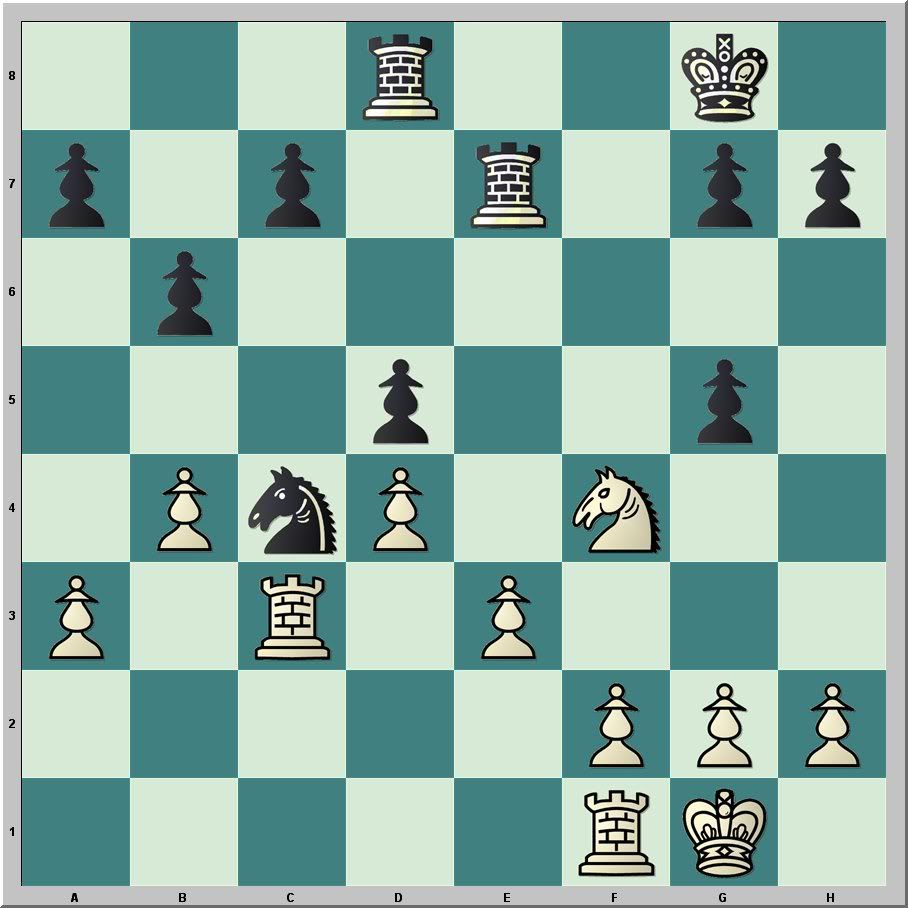
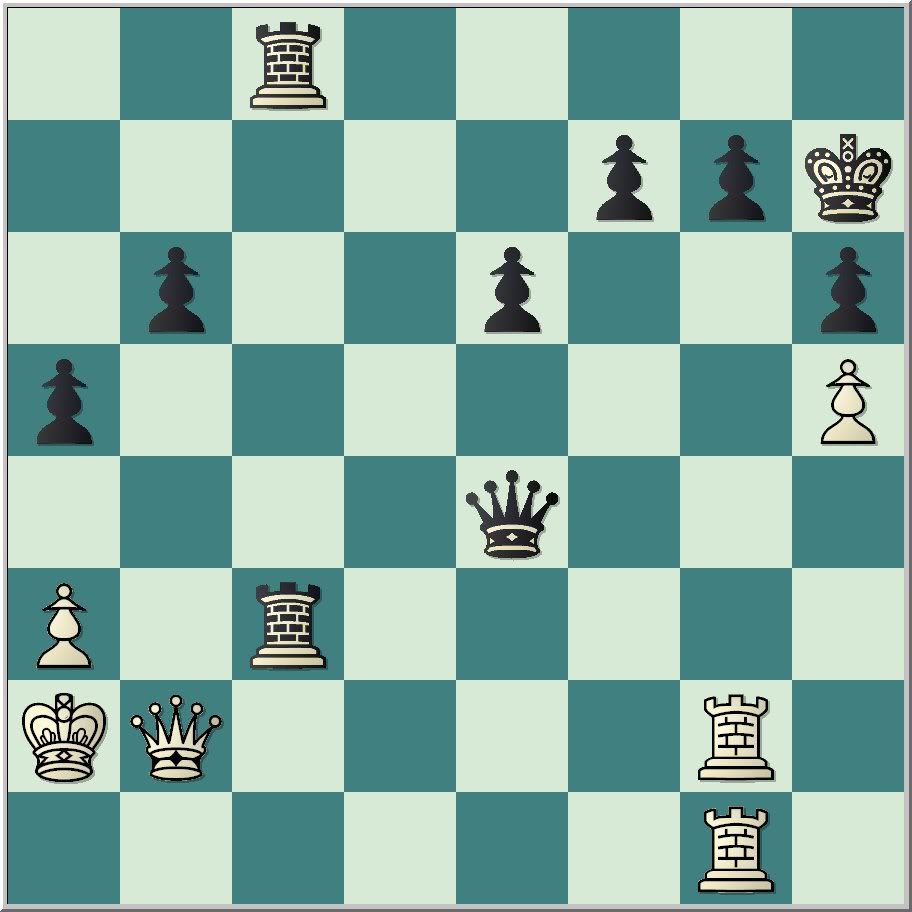
Black to move


Black has no less than one dozen moves that maintain a decisive advantage, including 32...Qc2. Inexplicably, Black played Rc2??

Lucky for me, I was white. My miserable position reflects the abysmal quality of my play since returning to the Internet Chess Club last week. Even so, given such an opportunity, I did not waver.

23 January 2011

Chess on the iPad


A quick search of the App Store for the Apple iPad shows that more than two dozen chess applications are now available. Certainly many of these are or will become available for the Droid Xoom, Galaxy Tab, and similar devices. With so many choices, how does one select the best value?

I have installed close to a dozen chess programs since I purchased my iPad in late August. Three of these continue to draw my attention nearly every day, one is brand new to me today and remains untested, and one received its first use on Thursday. Shredder is exceptional, tChess Pro has features lacking in all the others, and Chess.com continues their leadership in internet chess. DinosaurChess looks promising for young players looking to get started in our game (I may blog a review in the not so distant future). That an app allows my iPad to become a chess clock might prove useful, especially if there were more coffee houses with tables large enough to support a chess set, the iPad, and a couple of cups of java.


Essential Criteria

My major complaint concerning most playing programs for the iPad is that developers usually fail to build a resign feature into the program. After six decades of work among many of the world's leading code writers, we now live in a world where the typical college student taking classes in programming can access the resources to develop new software that plays at master strength. Competent players know when they are beat and gain little from playing on in hopeless positions, but resigning is not an option in any of the free apps that I have tried. Even so Stockfish deserves mention as possibly the best free chess app. The heart of the program is the Stockfish engine, arguably the strongest free chess engine available on any platform. It is nice to have this software available for the iPad. It does not let me quit when the position becomes hopeless, but it does let me go back a few moves and start anew from there.

Shredder lets me resign, which would be necessary every game if not for its ability to play a weaker game. No computer software programmed to play weak successfully mimics human players at 1100, 1500, 1900, or ratings above, below, and in-between. Even so, at the handicapped playing strength I have battled, Shredder strikes me as more realistic than Chessmaster. In addition to offering a reasonably decent silicon adversary, Shredder's one thousand tactical puzzles make it worth having. Speed and accuracy both count in its scoring feature. With each puzzle, the user gets to try moves until the correct answer is found, but time and wrong answers reduce the score. A hint feature will flash the piece to move. At 5.99 Euros (I paid just under $8 USD), it is a bargain.


Needs of the Chess Professional

As a part-time chess teacher with an array of printed teaching materials, I pack around a lot of paper. My shoulder bears the weight of self-published instruction books, often Dvorestsky's Endgame Manual or other essential texts, and often selections of games printed from databases on my computer. When I want to play the mule, I can always carry my notebook computer along with the chess bag that holds photocopies of lessons I give students for homework. The iPad has lightened my load. My self-published texts are supported by a host of iPad reading apps, the iPad Kindle app library makes Dvoretsky's Endgame Manual and several other texts accessible another way, and tChess Pro handles databases.

As a playing program, tChess Pro is a small step, but only a small one, below Shredder. It does permit the necessary resignations, and it can play a reasonable handicapped game. The real value of tChess Pro, however, stems from its control of the market for iPad database software. I know of no competitors. Moreover, if another developer wants to get into this market, he or she will find that the bar is already quite high. With an update that was released last fall, it became possible to upload my own databases. Not only can I drag PGN files into program via iTunes (Apple's back-up and sync system for iPad), but I can open email attachments. It was a wonderful day two weeks ago when I played an instructive game on Chess.com during lunch, emailed the game to myself, and then during the after school chess club was able to reconstruct a critical position from the game and solicit input regarding alternate continuations from the analysis engine. This app is a chess teacher's dream come true. Also worth noting is that my inquiry to developer Tom Kerrigan was answered promptly. I purchased the app for a mere $7.99 USD in early September and wrote asking for the improved database features that as it happened he was then in process of submitting to Apple.


Playing for Fun

Speaking of Chess.com, their iPad app facilitates playing correspondence style games on their site, or "online chess as it called there." It does not rotate as do most other apps, and the menu seems limited. However, it did not take long for me to discover that the Stats link provides access to all other site features. Moreover, and possibly to my detriment, the lack of flash support in iPad's programming no longer hinders playing live chess through the Chess.com app. I do not recommend one minute play as the screen is far less responsive than a mouse, but imagine the possibilities if you share my addictions. The Chess.com app offers ready access to play against their online computer, their tactics trainer (far superior to the popular Chess Tactics Server in my experience), and video lessons. As a commercial site, Chess.com has limited features for non-paying members, but the iPad app is free. The site offers enough possibilities for free to keep the interest of most aficionados, knowing that in time serious players will crave the benefits of paid membership.

19 January 2011

This is a Test

Does Blogger support iFrames?

Here is a game that I completed yesterday on Chess World where I've been playing since late 2004. The site is dedicated to correspondence style chess.

07 January 2011

Keep it Simple

"This is a very simple game. You throw the ball, you catch the ball, you hit the ball. Sometimes you win, sometimes you lose, sometimes it rains."
Bull Durham
Chess is a lot like baseball. You win a pawn through some tactic in the middlegame, then convert this pawn in the endgame.

This morning's blitz game illustrates simple chess.

My opponent has just attacked my knight, forcing me to see the tactic that wins a pawn.


Thirty moves later, I have a two pawn advantage. Converting one of the pawns is a simple matter of giving up one to create a Lucena position with the other.

06 January 2011

French Perfume

There are principled ways to meet the dangerous French Defense, but the cowardly Exchange variation is not among them. This little gem was a three minute blitz game that lasted about a minute between sips of morning coffee.

mellan (1944) - Ziryab (1906)
Live Chess Chess.com, 06.01.2011

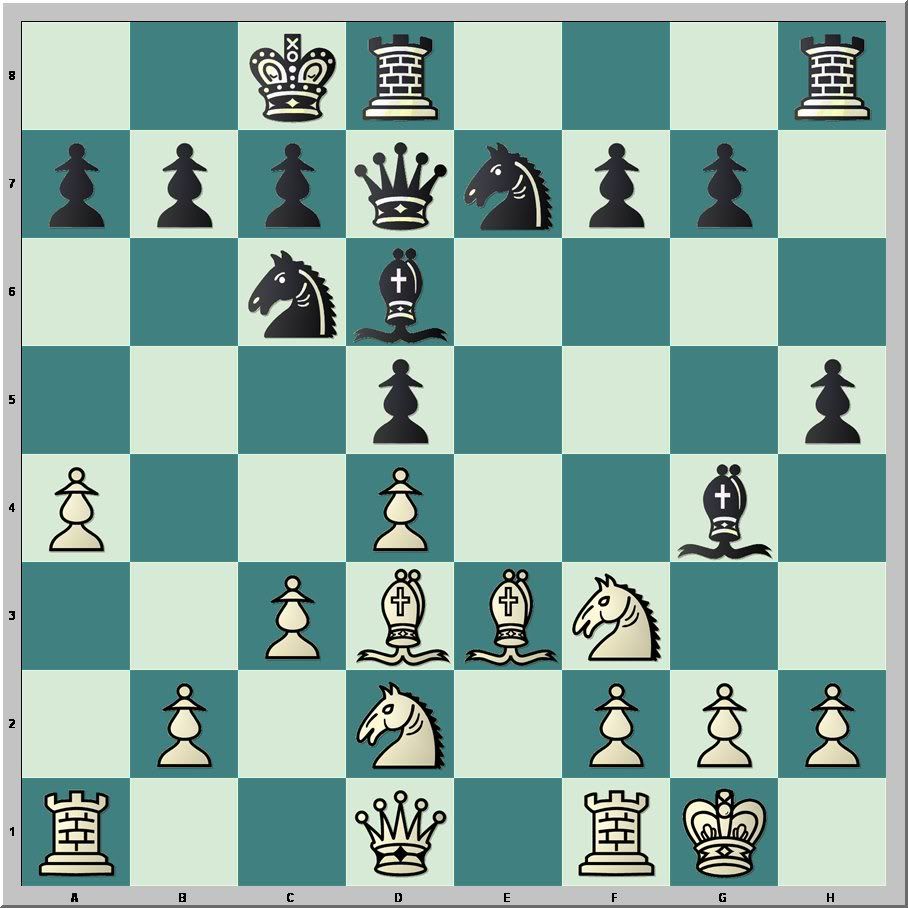
1.e4 e6 2.Nf3 d5 3.exd5 exd5 4.d4 Bd6 5.Bd3 Ne7 6.0–0 Nbc6 7.c3 Bg4 8.Be3 Qd7 9.Nbd2 0–0–0 10.a4

10.b4 Ng6 11.b5 Nce7 12.Qa4 Kb8 13.c4 dxc4 14.Bxc4 Nf5 15.Ng5 Qe7 16.Nde4 h6 17.Nxd6 Nxd6 18.Nf3 Bxf3 19.gxf3 Qf6 20.Be2 Nf4 21.Bxf4 Qxf4 22.Rac1 Nf5 23.Rc4 Rd5 24.Rfc1 Rxd4 Nyland,T (2156)-Roos,J (2250), Budapest HUN 2009 0–1

10...h5!N


10...Rde8 was played on the Free Internet Chess Server (FICS) in 2000 in a game that found its way into my database via means unknown.

11.h3?!

11.Re1=

11...f6 12.Qc2

12.c4!?

12...g5 13.b4 Bxh3

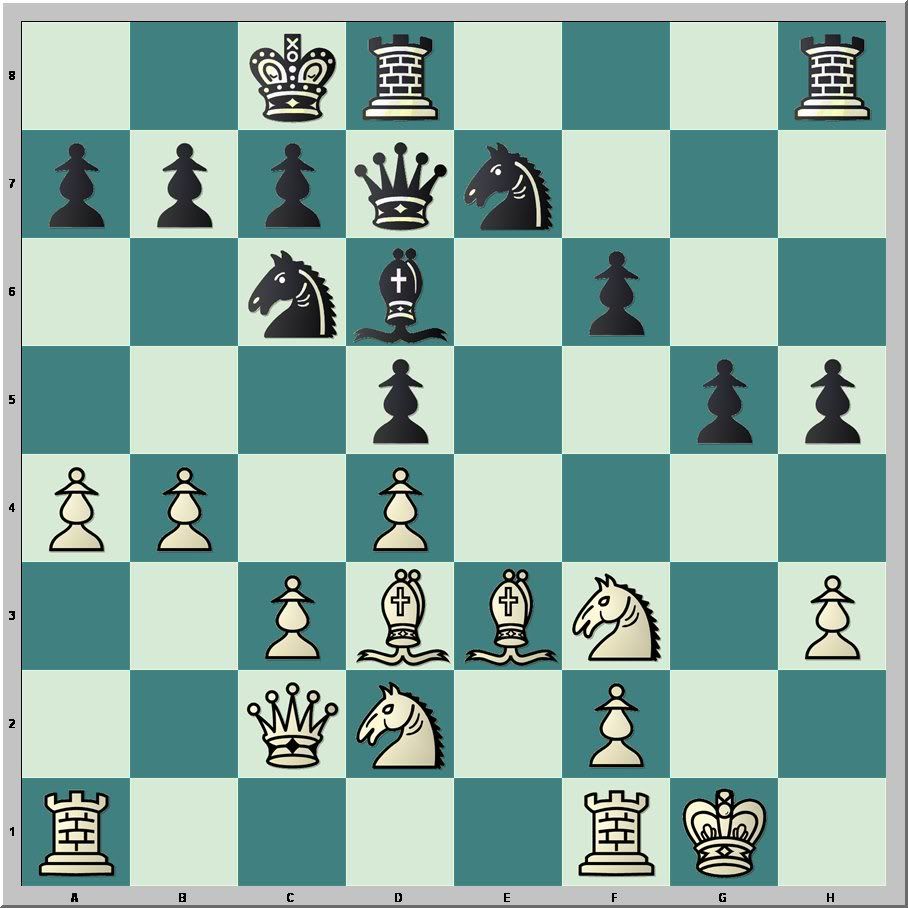
I should have played 13...Bxf3 14.Nxf3 g4 15.Nh4

14.gxh3


14...g4??

and just like that, overdue for the next sip of coffee, I blundered away an easy game

15.b5??

White returns the gift

15...gxf3–+ 16.Nxf3 Rdg8+

16...Qxh3 17.Bf5+ Nxf5 18.Qxf5+ Qxf5 19.Rfd1 Rhg8+ 20.Kf1 Qxf3 21.b6 Rg1+ 22.Kxg1 Qh3 23.Bf4 Bxf4 24.Rd3 Rg8+ 25.Rg3 Rxg3+ 26.fxg3 Be3#

17.Bg5 Qxh3 18.bxc6 Rxg5+ 19.Nxg5 Qh2# 0–1

22 October 2010

Simple Opposition

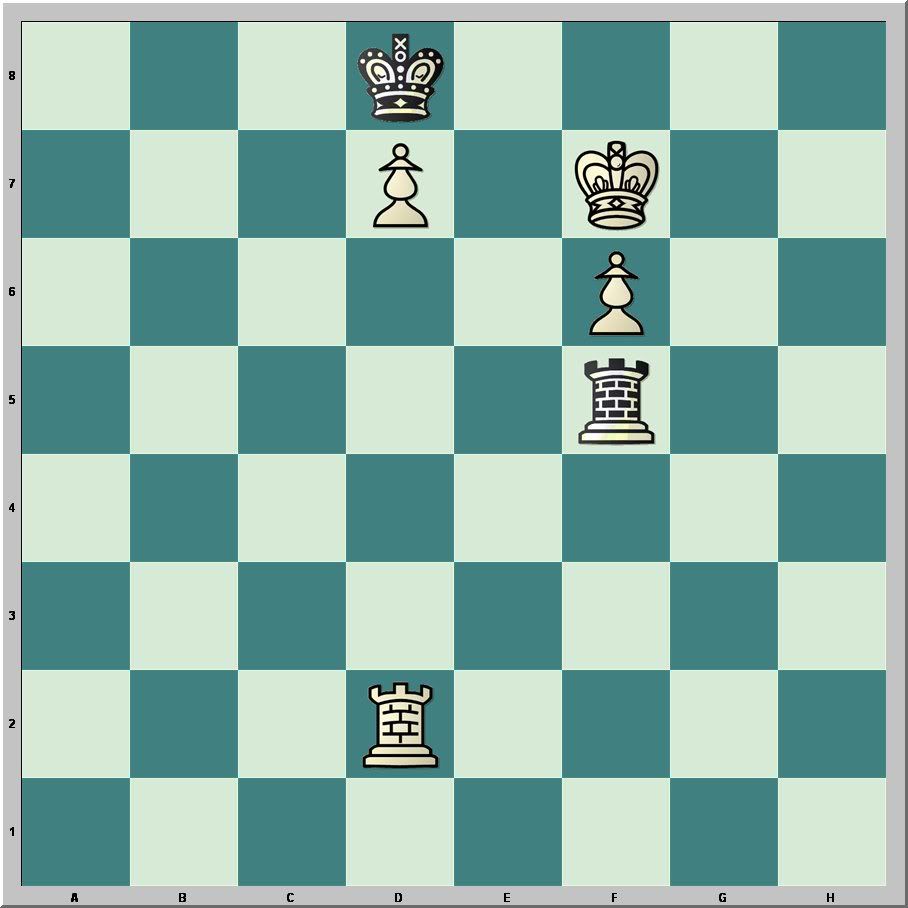
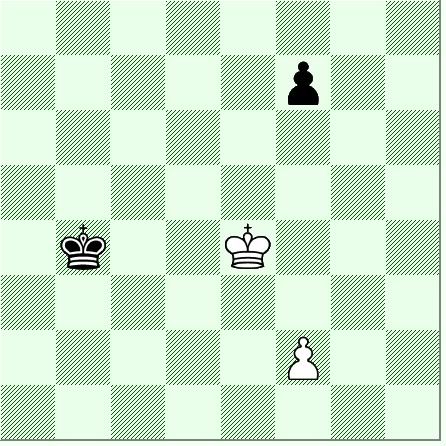
White to move


Skilled players need no more thought to play this position correctly than to speak the basic phonemes in their native language. That's the contention of Rashid Ziyatdinov, whose book I discussed last February in "GM-RAM: Essential Knowledge."

The position arose in Malakhov-Najer, Moscow 2007 and came to my attention via the CD Chess Informant 5-99 Endings Section. Endgames have been part of every issue of Chess Informant since issue 5 in the late 1960s. Most problems are more difficult than this one.

11 October 2010

A Blow to the Back of the Head

In this weekend's Eastern Washington Open, I started well. I won two hard-fought games on Saturday, then took my traditional third round bye. Sunday morning I was paired against the top A Class player on board two. I labored to get an advantage, thought that I had achieved one, but overlooked the power of a check. As things started to turn my opponent's way, I offered a draw. He refused, but did not capture the free pawn, opting to first resolve a back-rank vulnerability. We played a lot of moves in a position that I thought was a dead draw before he returned the offer.

In the final round, I was part of a pack battling for second place and was paired against an ambitious young player with a provisional B Class rating. I chose the Devil's Opening:

Joshi,K (1648) - Stripes,J (1843) [B19]
Eastern Washington Open, Spokane 2010

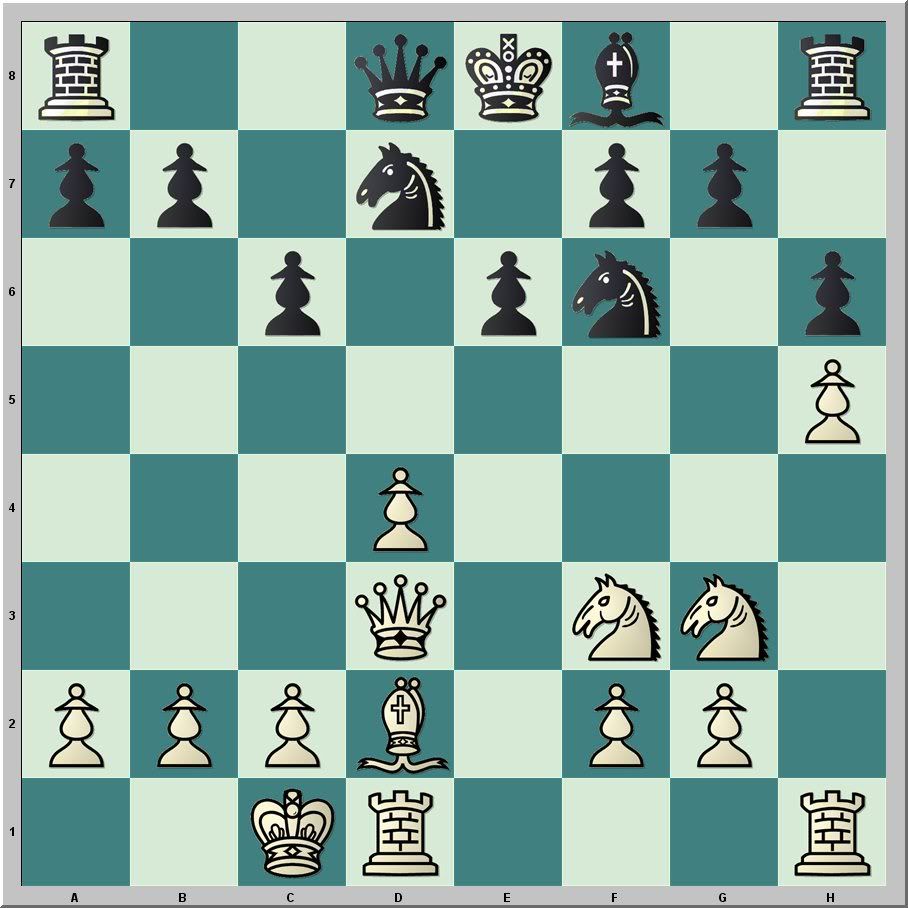
1.e4 c6 2.d4 d5 3.Nc3 dxe4 4.Nxe4 Bf5 5.Ng3 Bg6 6.h4 h6 7.Nf3 Nd7 8.h5 Bh7 9.Bd3 Bxd3 10.Qxd3 e6 11.Bd2 Ngf6 12.0–0–0


We have reached a fairly typical Caro-Kann position in under one minute of play. I took a walk while my clock ticked to decide whether I had the fighting spirit for something novel, or should hunker down and make my upstart opponent prove that White can secure an advantage.

c5?!

Either 12...Qc7 or 12...Be7 is fine.

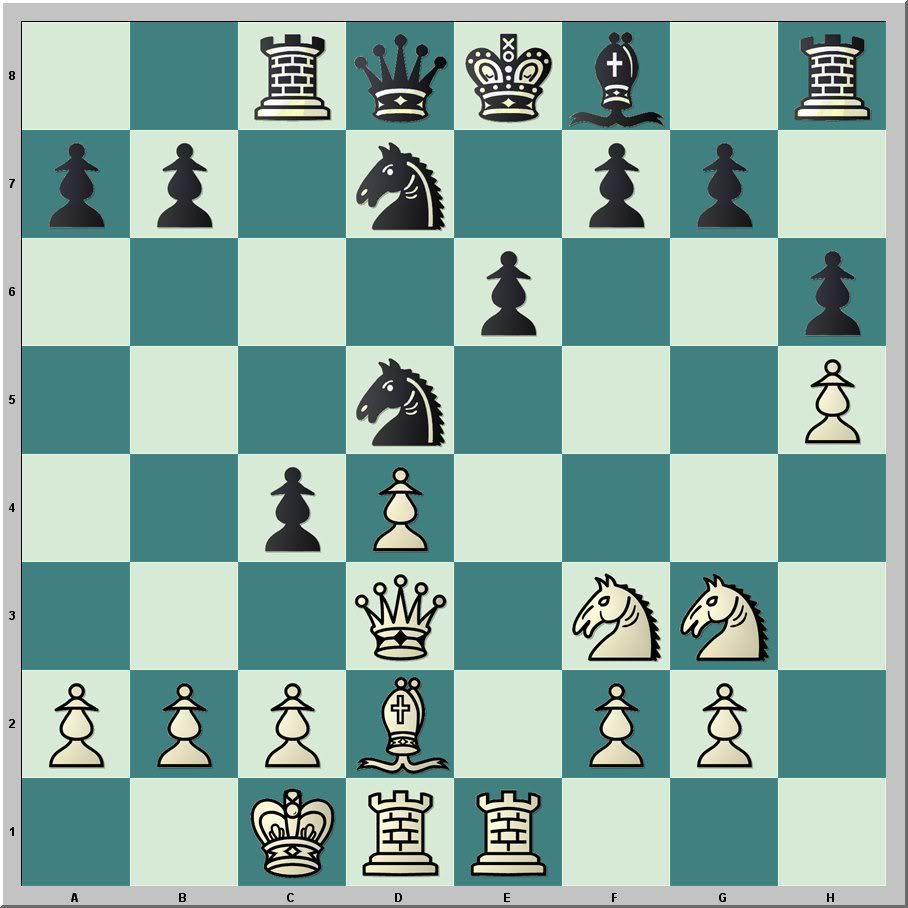
13.Bf4 Nd5 14.Bd2 Rc8 15.Rhe1 c4!?

Again either 15...Qc7 or 15...Be7 is quite reasonable.


Now Kairav went into a long think. There are only two moves worth looking at, I thought, both bad. The queen must move to e4 or e2.

16.Rxe6+!

The blow to the back of the head, which I thought was a desperate gamble. He is lost, so he plays for some cheap checks. I was wrong.

16... fxe6??+-

16...Be7 is the only move 17.Rxe7+ ( 17.Qf5 c3) 17...Nxe7 and White has an advantage.

17.Qg6+ Ke7 18.Nf5+ (I thought this move was impossible) exf5 19.Re1+

I resigned in view of 19... Ne3 20.Rxe3+ Ne5 21.Rxe5+ Kd7 22.Rd5+ Kc7 23.Rxd8 Rxd8+-

1–0

Kairav Joshi will be over 1800 soon. He's also a terrific chess organizer in Coeur d'Alene, Idaho.

11 August 2010

Blindness and Insight

Chess Training Pocket Book II by Lev Alburt and Al Lawrence arrived in the mail yesterday. I've been going through the problems in the first edition off and on for close to ten years and wanted to see how the new edition changed. The second edition is easier to recommend to mothers of the children that I coach because the cover art is not skanky as the first: what does a woman wearing a short dress and standing over a chess master twice her age as he studies an endgame position say to potential readers? Chess skill will get you amorous opportunities!

Just before sleep I started through the problems in the book. The first two were easy for me. The third was familiar because IM John Donaldson has shown it as part of one of his lectures the evening prior to the annual Dave Collyer Memorial Chess Tournament a few years ago.

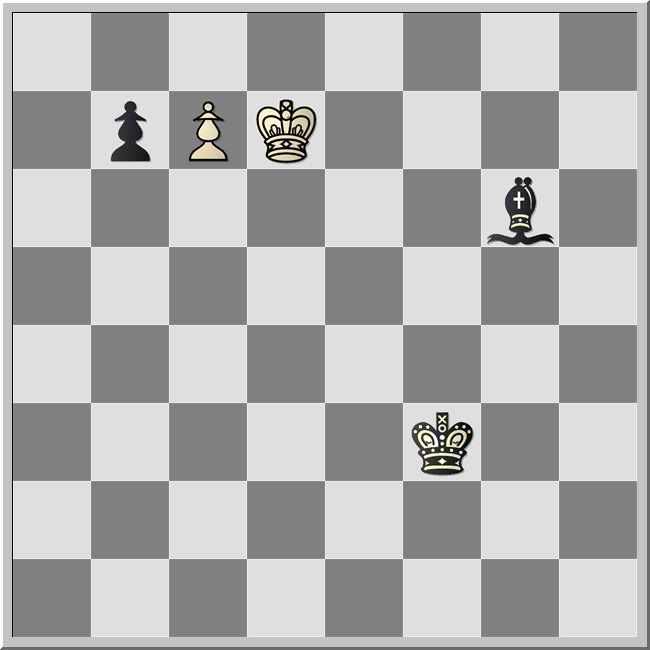
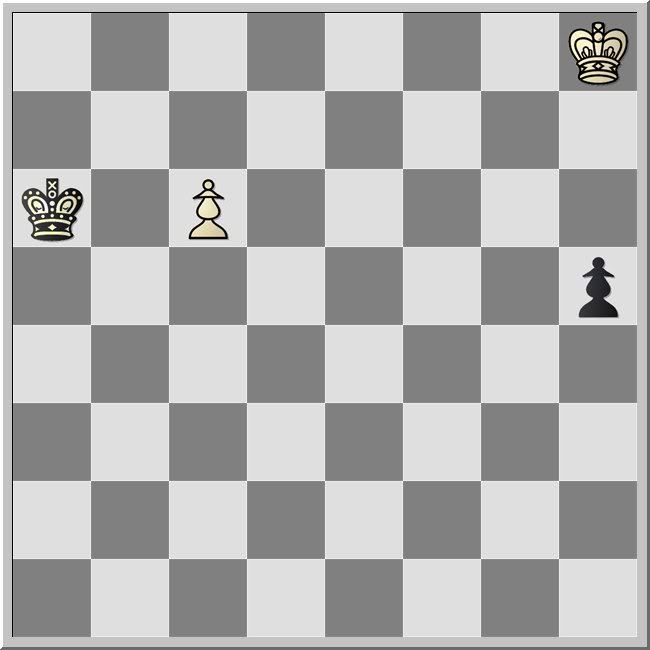
White to move


My familiarity connected it to this classic by Reti:

White to move


White draws by simultaneously chasing the pawn and threatening to assist his own. Either both pawns come off the board or both queen and the game is theoretically drawn. Donaldson presented these two together and talked about a book that he was then reading (I bought it a month later): Andy Soltis, Rethinking the Chess Pieces.

Despite knowing the idea and immediately recognizing the pitfalls, I went to sleep without solving my battle against White's bishop and pawn.

I tried again this morning. After ten minutes, I thought I had figured out the maneuver. I set up the position in my trusty engine and played it out. I failed. I tried again. After the third failure, I cheated and looked at the solution on the facing page.