27 June 2009

Find the Best Move

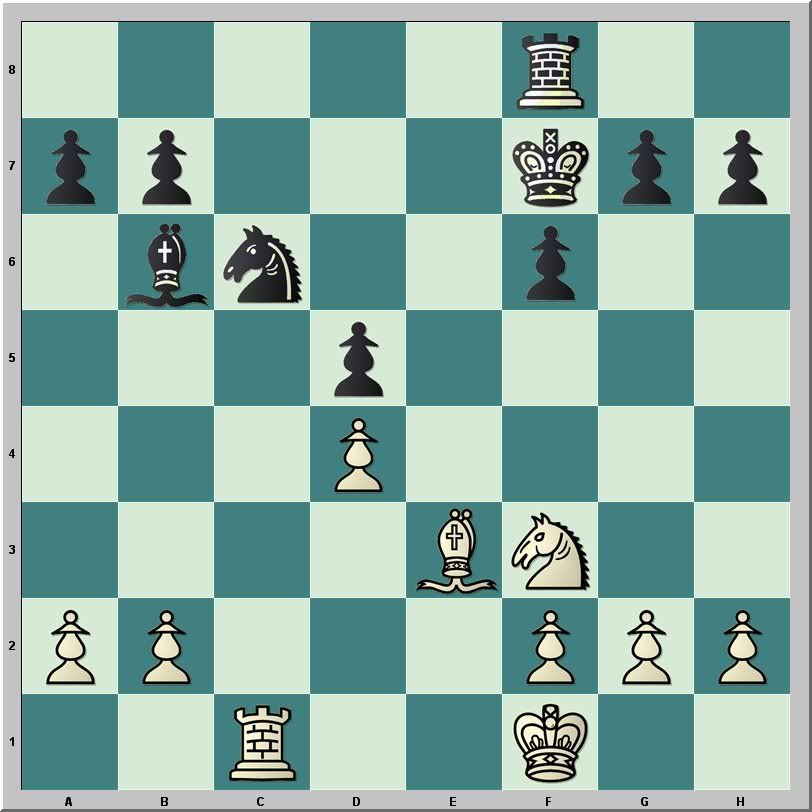
Assess White's chances.

White to move


For those who wish to cheat, the position stems from Leko - Kramnik, Wijk aan Zee, 2008 and was published as Informant 102/219.


Other News

I'm playing in the Spokane City Championship Contenders Tournament today and tomorrow. The winner gets to play a match against FM David Sprenkle, the current City Champion. Last year, I won the contenders tournament and scored 1/2-2 1/2 against Sprenkle.

This year I am the third seed of six. Today, I have White against Adam Attwood, then Black against Ryan Ackerman, then White against top seed John Julian.

14 June 2009

Whither the Truth

The content of a game should be a search for truth, and victory a demonstration of its rightness.
Vasily Smyslov
Back in 1997 in a simul put on by the then strongest local player, a high school student named Nate Fewel, I forced the exchange of rooks to go into a king and pawn endgame. I won this ending against Nate that day, and against Fritz 9 this morning.

Black to move


Against Nate, the game continued 34...Rd2+ 35.Rxd2 cxd2 36.Ke2 Kf8 37.Kxd2 Ke7 38.Kc3 Kd6 39.b4 g5 40.fxg5 hxg5

White to move


Here, Nate played 41.bxa5, and his king became immobile defending against the onslaught of my pawns rolling down the center; my king was free to mop up the queenside.

Fritz 9 played differently: After 34...Rd2+ 35.Rxd2 cxd2 36.Ke2 Kf8, Fritz played 37.b4. After 37...Ke7, we reached this position.

White to move


Fritz played 38.bxa5 and had the same problems as Nate.

After beating Fritz, I tried the position anew, this time against Hiarcs 12, which played 38.b5!.

The engine continued to evaluate the position as winning for Black, but I could not find the way to promote a pawn soon enough to prevent White's equalizing promotion of the b-pawn. I tried using the suggest a move feature with the same results. Black seems to have a clear advantage, but good moves by both sides appear to lead to a drawn queen and pawns versus queen and pawns endgame.

In 1997, postgame analysis with Chessmaster 3000 confirmed that 34...Rd2+ is a winning move. Play against Fritz 9 seems to confirm this judgement; but, a stronger engine introduced doubts. What is the truth?

10 June 2009

Variations

First of all, you have to have a good memory because there are a lot of variations you have to remember. Second, you have to have a lot of imagination; you have to be able to see a lot of variations in advance, maybe ten moves, twenty moves in advance sometimes.
Bobby Fischer, CBC Retrobites (1963)
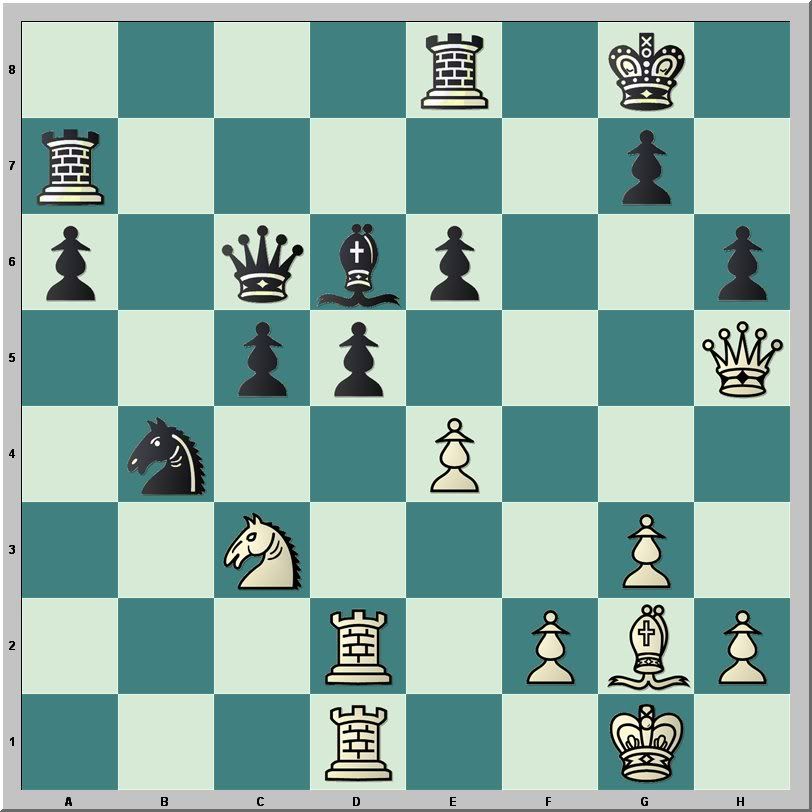
This position did not occur over the board in Moiseenko - Ivanov, Moscow 2008. It did, however, appear in the variations in the annotations in Chess Informant 102 after 12...f6 (12...Qf8 was played in the game).

White to move


What is the critical line that justifies Ivanov's rejection of 12...f6?

31 May 2009

Rating Estimation

It seems that a lot of chess players new to or unacquainted with tournament chess want to know their rating. Others who have played online, but not OTB (over the board) frequently ask how one rating compares to another. There are several ways to estimate one's rating, but all should be treated with skepticism.

The series of ten problems at Chess Maniac might be better than most. I tried it a few days ago and scored 1830, which is reasonably close to my recently gained USCF rating of 1819. Less reliable are the Chessmaster personalities. Vlad, for example, allegedly plays at 1846, but the software does not adjust for processor speed. Few human A class players commit the egregious positional errors in the opening that are Vlad's trademark, nor are they as adept at tactical calculation. When I entered B class, I played a sequence of training games against Vlad, finding him surprisingly easy to outplay positionally.


Rating History

In the early 1990s, I was coming back into chess after more than a decade away. I had played in some team matches in high school, at least one club event at the Spokane Chess Club, and had joined the US Chess Federation and played postal chess. All these activities ended by the time I had been in college one year. Among my circle of acquaintances, the second best player could beat me occasionally. I did not renew my USCF membership and I stopped playing postal.

I bought my first personal computer in 1989, learned that Chessmaster 2100 was available, and that it allegedly played at a master level. Even though I was too busy with graduate school for play--aside from a fanatical obsession with golf during the summer,--I started learning a bit about computer chess. Finding the right level for playing against the box pulled me into efforts to estimate my own level of skill.

Through CM 2100, 3000, 4500, and 5000, I used several features of the program to approximate my skill level, which also increased slightly as I played against successive versions. I also spent some time in the library reading Chess Life, especially Bruce Pandolfini's "Solitaire Chess." In "Solitaire Chess," students guess the moves of a master level game and earn scores for right answers and some alternatives. The total score at the end of each game corresponds to an approximate rating.

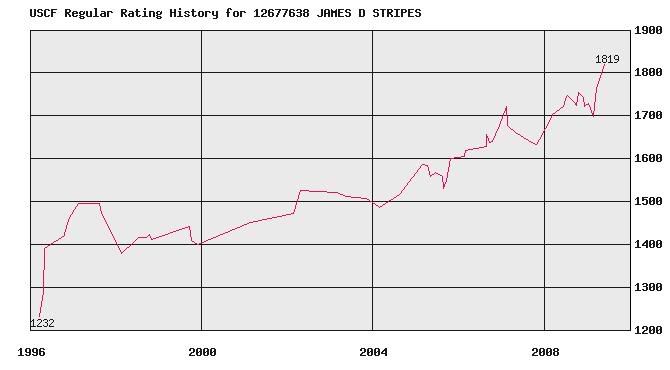
When I returned to the Spokane Chess Club in fall 1995, I told the club's contact person that I thought I might be an A Class player. But, at my first club meeting, I played a series of pick-up games against an E class player with an approximately even score. In March 1996, I entered my first USCF rated tournament, scored 2.0 of 5.0, and earned a provisional rating of 1232.


Competitive Edge

My first published non-provisional rating nine months later was 1425. My estimate based on various exercises turned out to be high by 400 points. But, my initial published rating very nearly could have been much higher. In the 1996 Washington Class Championships, I had Black and move on board one in round four in the position below. A win in this game would have guaranteed me a tie for first, and likely would have given me an initial non-provisional rating over 1500.
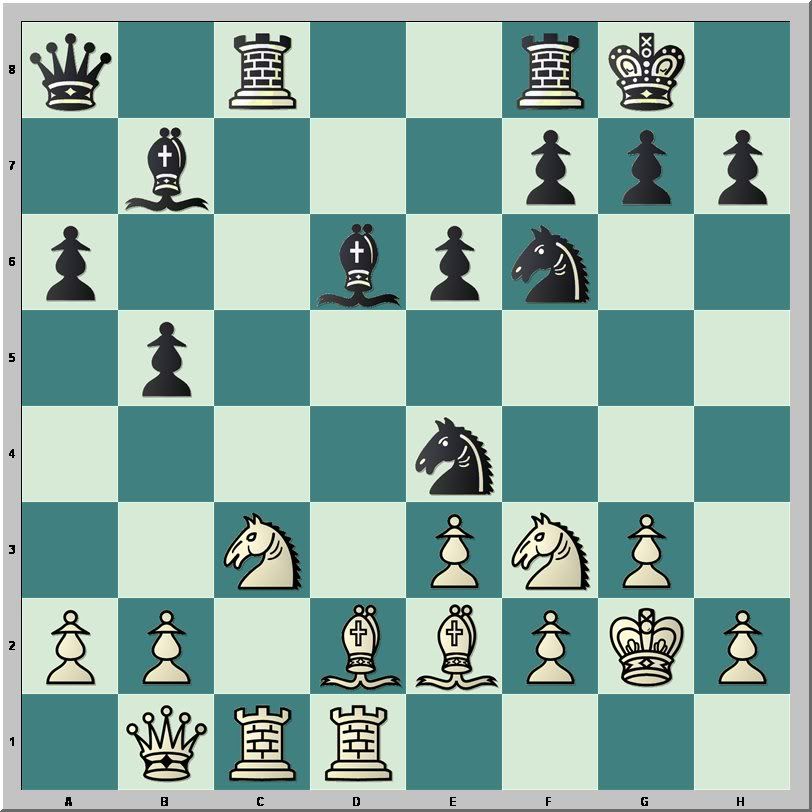


I spent quite a bit of time assessing the consequences of 19...b4 with the idea of driving the white queen completely out of play on a1. I played a better move, 19...Ng5, but not the best move. However, as my opponent improved his position move after move, and his queen became active, I lost my way.

The win slipped away, and I found myself in a drawn king and pawn endgame.

Black to move
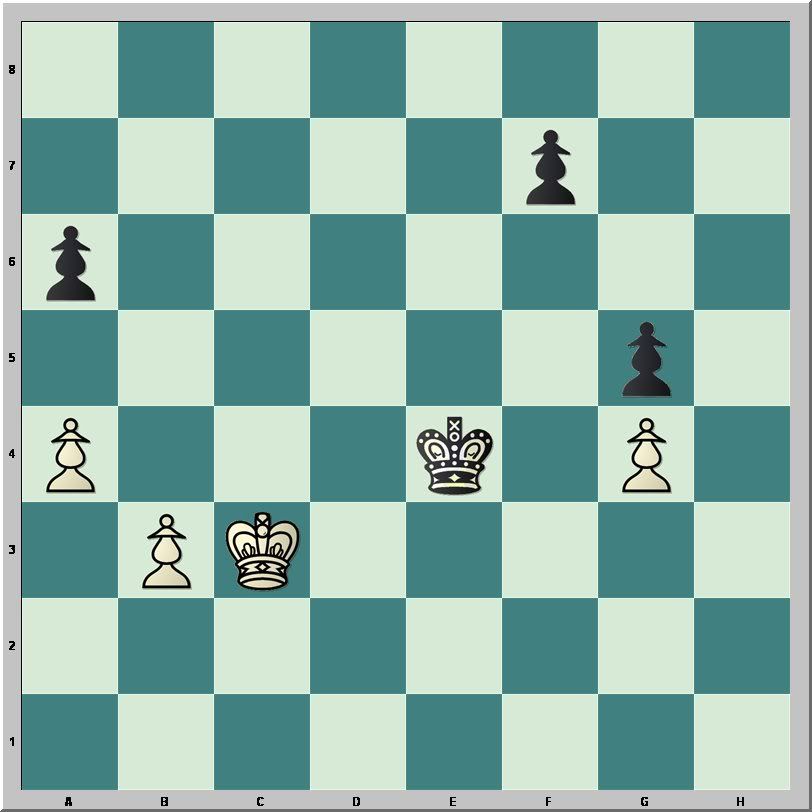

Inexplicably, I played 45...Kf4?? After this loss, I also lost round five and ended the event sharing places 8-15.

I returned from the event and told a close friend that I no longer had the competitive edge that had been my norm in high school cross country. My loss demonstrated that chess skill development included emotional preparation and mental focus if I was to have the success I sought. My friend played chess casually, but well understood competition. He has been a state champion in cross country, and had run for two college teams, including a leading Pac-10 school. Last fall, the high school team he coaches became the first team west of the Mississippi to win the national championship.

My rating bounced around in the 1400s for the next five and one-half years, finally jumping above 1500 in February 2002. It dipped back into the 1400s for most of 2004, and in 2005 started a steady climb up to 1601. Once I reached B class, I did not drop below, and after my performance last weekend, reached A class. To get to A class, I've needed to learn tactics and endgames, and expanded my opening repertoire. But, more important, I've needed to reduce the obvious blunders made in haste, and I've needed to become far more consistent against lower rated players. I've also increased my drawing ratio.

In the USCF rating system, a rating of 1800 creates a floor of 1600. If I never win again, I will never drop below B class. But, I still have ambitions. My current established rating remains a crude underestimate of my capabilities.

27 May 2009

Class A!

My goal was to reach a rating above 1800 by spring 2010. Now I need a new goal. Staying there is one idea. Reaching for 1900 is another.


I finished the Washington Open without a loss. I won two games, one against a class B player and one against a class A. I drew two class A players, and two class B.

My current rating is now 1819.

25 May 2009

Pressure

I managed to avoid loss in yesterday's Washington Open games. After two days and four games, one player in my section has four points. I'm one of four with three. If someone beats the leader, anyone of the rest of us has a shot to share first.

I'm in the Premier section, which is limited to players under 2000. Those under 2000 that are playing in the Open are getting slaughtered as should be expected with several masters in the group and quite a bit of money on the line. The total prize fund for all sections is $8000. First prize in the Open is $1000.

I'm less interested in the $400 top prize in my section, although money is always nice, than in reaching my goal of crossing the line into class A. If the tournament ended now, I should be about 1790 or a tad higher. I'm currently 1764. My results have been:

1668 draw
1744 win
1786 draw
1839 win

The games get tougher today. I must focus on round five, thinking about neither money, round six, nor the rating. I must put all my energy into finding good moves, one at a time.

In yesterday's games, I reached easy equality in a French with most of the pieces coming off the board fast. We reached this position after my 19...Kf7.


I offered a draw, and my opponent thought for seven minutes before accepting. We used twenty-nine minutes between us.

Round four started six and a half hours later, which gave me plenty of time to talk with Tim Tobiason of Toby Chess, the vendor. I hung out in the skittles room, watched other games, and attended the Washington Chess Federation Board meeting. I haven't yet told my wife that I was elected member-at-large to the board. I might get in trouble for that.

In round four, I had White against Michael Hosford. I had lost to him in a long and difficult game in 2006. He played the King's Indian Attack against my French and eventually found a tactic that won material. I played out a lost position during his time trouble until it became clear that he could finish all necessary moves within the time delay.

When I saw him at the Washington State Elementary Chess Championship--he served as a section chief during one round,--I told him that I was looking forward to another crack at him in the Washington Open. As we were sitting down, he said, "you got your wish." But, the wish was for a win, not just to play him. He's a strong, resourceful player and a scholastic coach with Chess4Life. His focus during play is exemplary.

I lost my way in a Catalan. In the effort to mount an attack, I sacrificed a pawn. Then, I overlooked a simple tactic that lost another. Still, I had my plan: get my queen "up in his grille," as Robert Pearson put it in comments to yesterday's post. I burned a lot of time in the early going, becoming as much as thirty minutes behind. He used the time advantage to reach a superior position, but we were both responding to the need to move faster.

We reached this position with Black to move after 29.e4. I had twenty-three minutes left to get to move 40. He had seventeen.


What should he play?


Open Section

When I left at 10:45pm last night, Internation Master John Donaldson was pressing a one pawn advantage against FIDE Master Nick Raptis on board one in the Open section. They had opposite colored bishops, and a rook each. Donaldson's position had more dynamism than my round one game with the same pieces, but more pawns. Even so, it was hard to see a clear plan for the IM and I wanted some sleep.

Round five begins at 9:00am this morning.

24 May 2009

Human Chess

Mistakes were made. Humans are like that.

I'm playing in the Washington Open, Premier section. The first day went okay, starting with a hard-fought draw in which I blew an opening advantage. Then in round two, I won against a player against whom I have three previous losses. He's been playing as a mid-1700s player for many years, while I've recently improved to that level.

Buck,S (1744) - Stripes,J (1764) [A22]
Washington Open Premier, Spokane 23.05.2009

1.c4 Nf6 2.Nc3 e5 3.g3 Bb4 4.Qc2 Nc6 5.e3 0–0 6.Bg2 Re8 7.Nge2


7...Bf8?!

Too clever for my own good.

8.a3 Ne7?!

More undevelopment.

9.0–0 c6 10.d4 Qc7 11.b4 d5


12.cxd5 cxd5 13.Bb2

13.dxe5!

13...Bf5

13...e4!

14.Qd2 e4 15.Rac1 Qd7


Black has a nice position.

16.Nf4 g5 17.Nfe2 Ng6 18.Qc2 Bh3

18...Bg4! 19.f4 exf3 20.Bxf3 Bh3 21.Bh1
(21.Bg2 Bxg2 22.Rxf6 Bh3)
21...Bxf1 22.Rxf1 Bg7

19.Qb3 Rad8

19...Bxg2!

20.Qa4 Qg4


This position is more or less the fantasy I've sought most of the game to this point. But how will I maintain the attack after he moves the f-pawn? At this point, I'm hoping for a quick knockout with a mating combination.

21.f3 exf3 22.Bxf3


22...Qe6!

Beginning a sequence of double attacks--here the rook and pawn.

23.Rf2 Qxe3

Hiarcs 12 likes 23...a6

24.Nd1 Qd2

24...Qd3 looks to be a simple discovery against the knight on e2, but it gets complicated after 25.Qc2 Qa6 26.Ndc3 g4 27.Bg2 Bh6

25.Bc3


Somehow I overlooked this move. I expected 25.Bg2 Bxg2 26.Kxg2 ( 26.Nec3 Qxd4) 26...Rxe2.

25...Qd3 26.Qxa7 Ne4 27.Bxe4 Rxe4 28.Qxb7 Rd7 29.Qc6 Rxe2 30.Rxe2 Qxe2 31.Nf2


31...Qe3??

Aarrgh!

31...Nh4!?
31...Qf3! 32.Nxh3 Qe3+ 33.Kg2 Rd6 34.Re1 Qxe1 35.Bxe1 Rxc6-+

32.Re1 Qf3 33.Nxh3 Rd6 34.Qc8


34...h6

My opponent suggested after the game that 34...Nh4 wins, but after 35.gxh4 gxh4 36.Bd2! White is winning

35.b5 Rf6 36.Bb4 Qd3 37.Bc5

37.Nf2! Qxd4 38.Re2±

37...Qxb5 38.Bxf8 Nxf8 39.Qc5 Qb3


40.a4


Hiarcs 12 initially thinks a drawing line begins with 40.Nf4 gxf4 41.Re8. But this check begins a sequence of king harassment that proves decisive 41...Qd1+!

40...Ne6 41.Qa7 Qc3 42.Qb8+ Kg7 43.Qe5


43...Nxd4! 44.Nxg5 hxg5 45.Qxg5+ Kf8 46.Qe3


46...Qxe1+ wins simply

Technically correct is the mating sequence: 46...Nf3+ 47.Kf1 Nxe1+ 48.Ke2 Nd3 49.Kd1 Nb2+ 50.Ke2 Qc2+ 51.Qd2 Qe4+ 52.Qe3 Qg2+ 53.Ke1 Rf1#

0–1

Today I must try to play better on inadequate sleep.

17 May 2009

Beat the Devil

This position arose in Chess Informant 102/96, Haba - Gyimesi, Deutschland 2008. The game began as a Caro-Kann, hence my title. It placed fourth in the voting for best game of Informant 102.

White to move


Haba uncorked a terrific attack with 23.Bxh6!