03 April 2009

Measuring Improvement

How difficult do you think will be to get over 1800? I know that it's not easy.
Rolling Pawns, "Comment on 'Milestones'"

My present goal is to achieve a standard rating over 1800 by the end of the 2010 Collyer Memorial Tournament.
James Stripes, "USCF Rating History"
I can gain rating points with stellar results against local players, or with reasonably good results in the premier events that draw large numbers from out of town. In Spokane, two premier events remain within the time frame I've outlined: the 2009 Washington Open and the 2010 Collyer Memorial. Other events that will attract a few out of town players include the Eastern Washington Open in September.

As for local events, I'm skipping this year's Taxing Quads because I will not be able to focus effectively for reasons I've outlined.

How difficult? I could go over 1800 with a strong result in the Washington Open. On the other hand, a poor result could increase the difficulty of meeting my goal next February. There is also a chance that I will miss next year's Collyer because the high school team that I coach may finally make the trip to the Washington State High School Team Championship, which happens to be the same weekend.

I put forth a clear plan for improvement in "Resolutions," but have not followed it. Instead of my Tactics Training Plus, I've been working the Tactics Trainer at Chess.com. I have been limiting my online blitz, hardly playing it at all. I've played more than five games in a day half a dozen times, including seven games in a row against one of the computers on World Chess Live until I scored a coveted victory. Most days I do not play online blitz.


Three in a Row

Ratings are a measure, not the objective. I've set my goal of becoming a class A player not because I like numbers above 1800, but because the level of chess skill needed to reach that point is within my capabilities if I improve.

Although I have had setbacks, my play over the past eighteen months or so has seemed a step higher than 2006-2007. I have very few wins against Class A players. After an OTB win against a player floored at 1800 in 1996, my next win against an 1800+ was just over one year ago during the Collyer. In that event, I suffered only one loss: a quick thrashing by expert Steve Merwin. In the 2009 Collyer, I drew Merwin and finished the event without a loss.

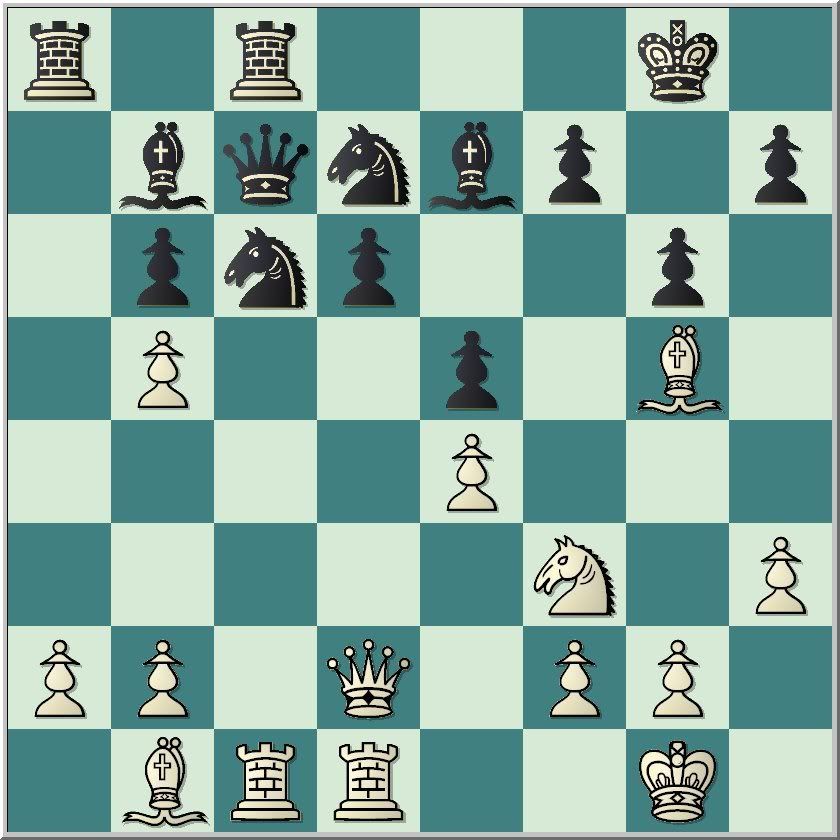
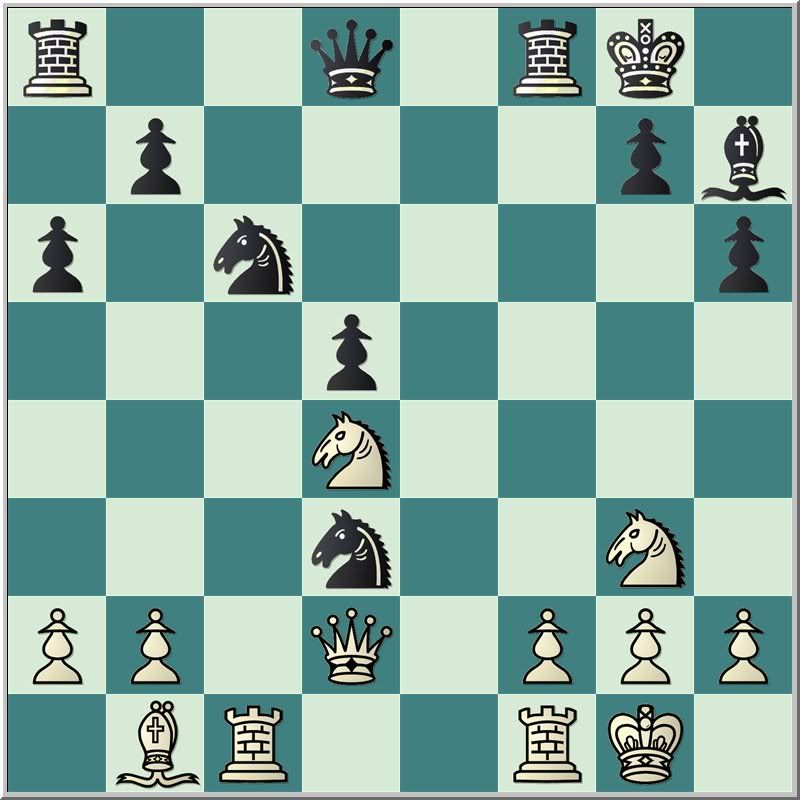
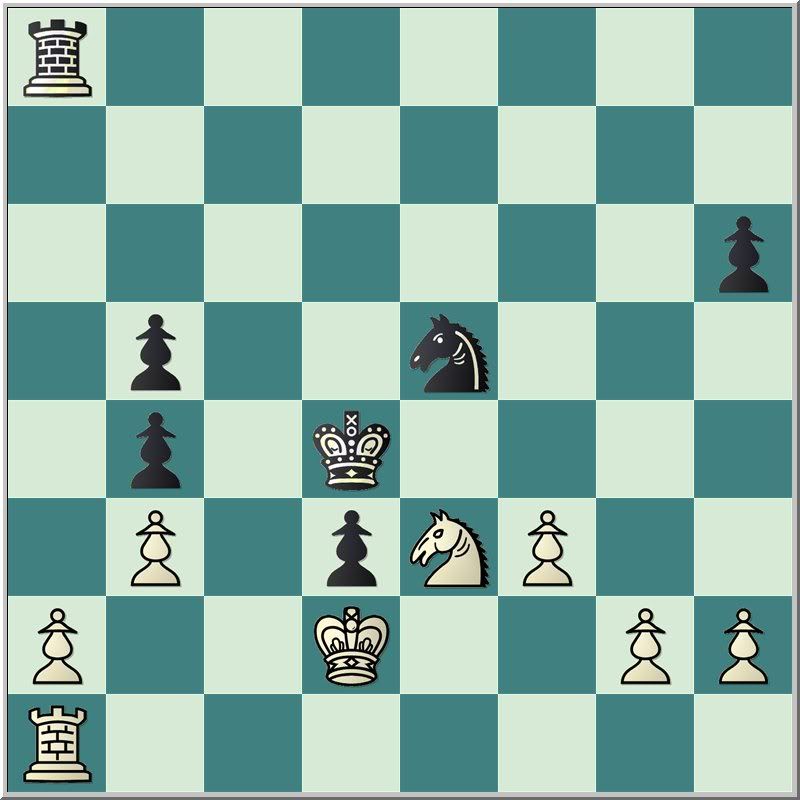
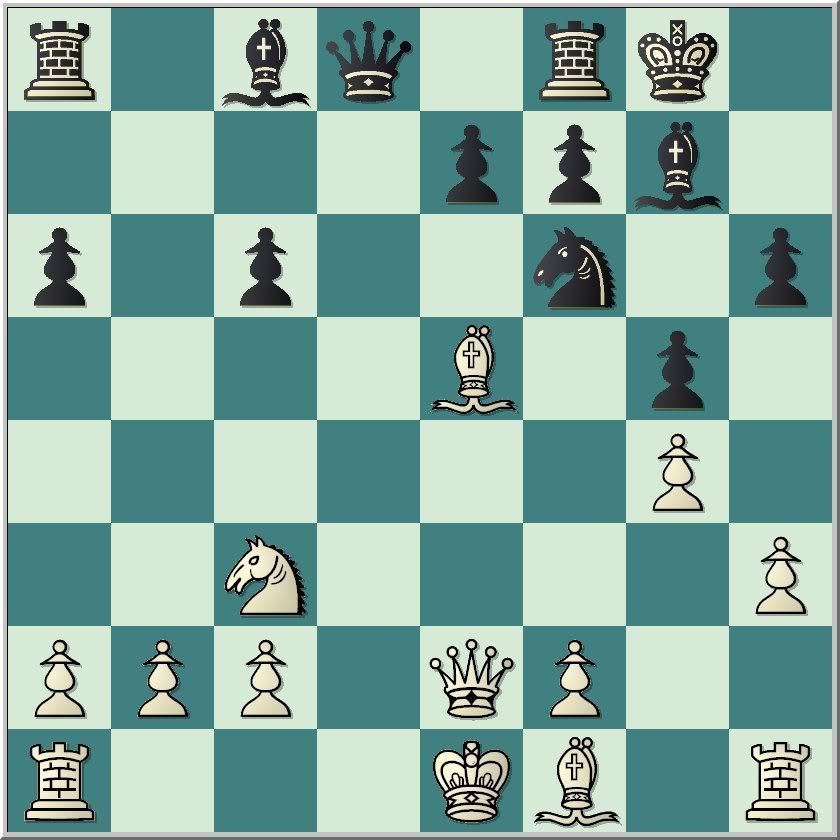
In 2003, I earned a draw against IM John Donaldson after missing a clear win.

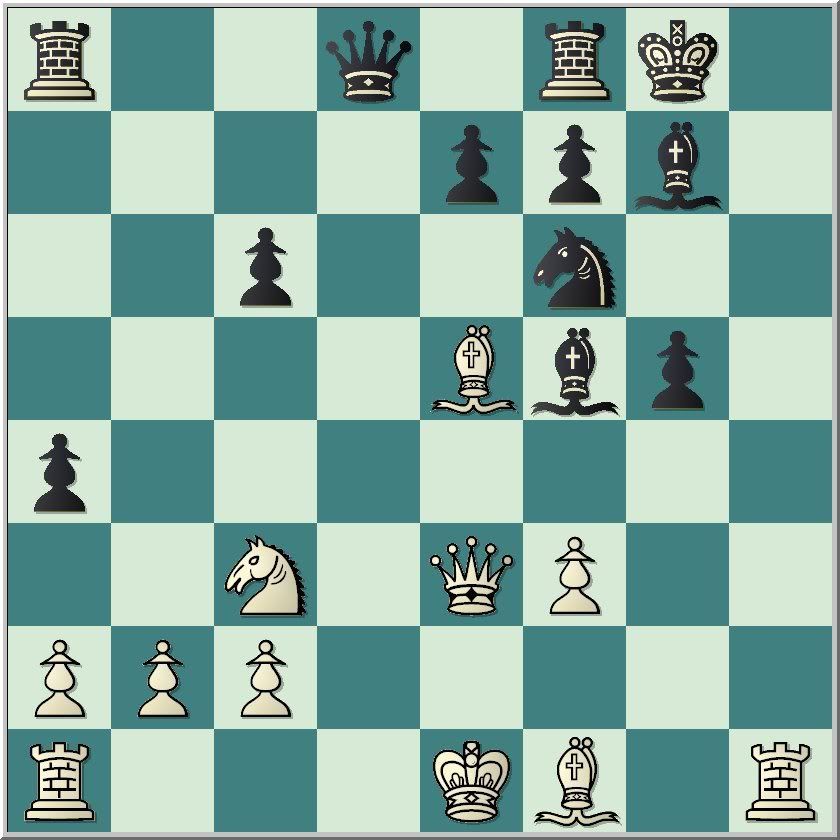
Black to move -+


That was part of a simul in which Donaldson went 26-2-2. I was thrilled to score the draw. When Elston Cloy ran out of time a few moves before he checkmated me in the 2005 Collyer Memorial, I had my first draw with a player over 1800 in rated play. That fall, I earned my second such draw in a game against Pat Herbers. Herbers peaked at 2106 in the early 1990s, but has been below 2000 since 2001. In 2006 I earned my third rated draw against a player over 1800 OTB.

In 2008, I had four. The best came during my match with David Sprenkle for the Spokane City Championship. Sprenkle was 2257 when we played three games, and I played him close in two. I missed that we had repeated the position in my loss in the morning, then earned a draw in the afternoon. Sprenkle's peak rating was over 2400 and he has wins over Jeremy Silman and other players of his ilk.

So far in 2009, I have two draws against players over 1800.

I've also won the last three blitz and rapid events at the Spokane Chess Club. I won March Madness, a dual-rated game/45 played over two Thursdays. The next week, I ran the table on nine others in a club blitz tournament. Then, last night I went five of six to win Lucky 7, a game/10 event that dropped my quick rating three points.

My recent performance demonstrates clear improvement, but getting over 1800 may be difficult.

02 April 2009

Setback: Delusions of Grandeur

In 2008, it seemed that my chess had reached new levels, that I was playing the best chess of my life. The last tournament of the year, Christmas Chaos, however, started poorly. I won my first game, but then missed a clear win in the second (see "Utter Chaos"). Then record breaking snow buried my city, and the tournament was temporarily suspended to resume in January. When it resumed, my victories in rounds three and four gave me first place in the tournament. I presented my round three game against Ron Weyland in "Anti-French Lunacy."

Riding the crest of a wave of success, I was confident going into the Spokane Chess Club's Winter Championship. At the start, I was the top seed.

My first round game was another White against Ron Weyland, a fellow French enthusiast. Rather than playing my normal Queen's pawn openings, I sought to demonstrate my clear superiority by inviting his French. Playing 1.e4 in rapid or blitz chess is one thing; playing such garbage with standard time controls in quite another. A friend called this choice greedy. I was completely outplayed. Through the course of the game, three times I made the decision to maintain tensions and material because I was the stronger player. Each time, his position improved and mine grew worse.

After this disaster, a late registrant joined the event. He was rated higher, so I became number two. As the highest rated zero, I was paired against the newcomer in round two (he was awarded a 1/2 point first round bye). I lost this game too. Later, he had his own setback and we finished in places 5-6 with even scores, while lower rated players won the event.

The event began in mid-January.

Stripes,J (1728) - Weyland,R (1444) [C12]
Winter Club Championship Spokane (1), 22.01.2009

1.e4 e6 2.d4

for 2.c4, see Lunacy.

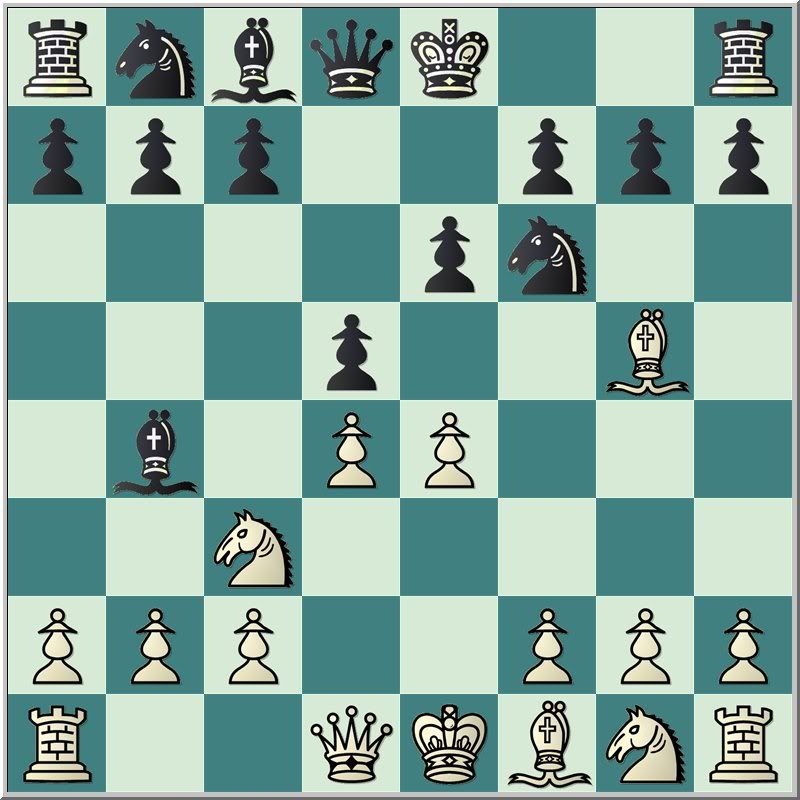
2...d5 3.Nc3 Nf6 4.Bg5 Bb4


The McCutcheon French. I had a few interesting and instructive games on the Black side of this system in 2005, and so decided that I would try something that worked well against me in the 2005 Inland Empire Open.

5.e5 h6 6.Bd2

My other 2005 games continued with 6.exf6 hxg5. I did well as Black until I ran up against 6.Bd2.

6...Nfd7 7.Bd3 c5 8.Nb5

According to the computer, the second best move. More telling than post-game computer analysis: before the game, Ron and I had been talking about this very move in several variations of the French, and agreeing that we were unafraid. What is White planning? Does White intend to relieve Black of the bad French bishop?

8.Qg4 is the choice of silicon

8...Bxd2+ 9.Qxd2 0–0 10.c3 cxd4N

10...Nc6 11.Nf3 f6 12.exf6 Rxf6 13.0–0 a6 14.Na3 e5 15.Nxe5 Ndxe5 16.dxe5 Nxe5 17.Rad1 Nxd3 18.Qxd3 Be6 19.Nc4 Qc7 20.Ne3 Rd8 21.b4 cxb4 22.cxb4 d4 23.Qd2 Rd7 24.Nc2 d3 25.Ne3 Kostro,J-Bednarski,J, Wroclaw 1972 ½–½

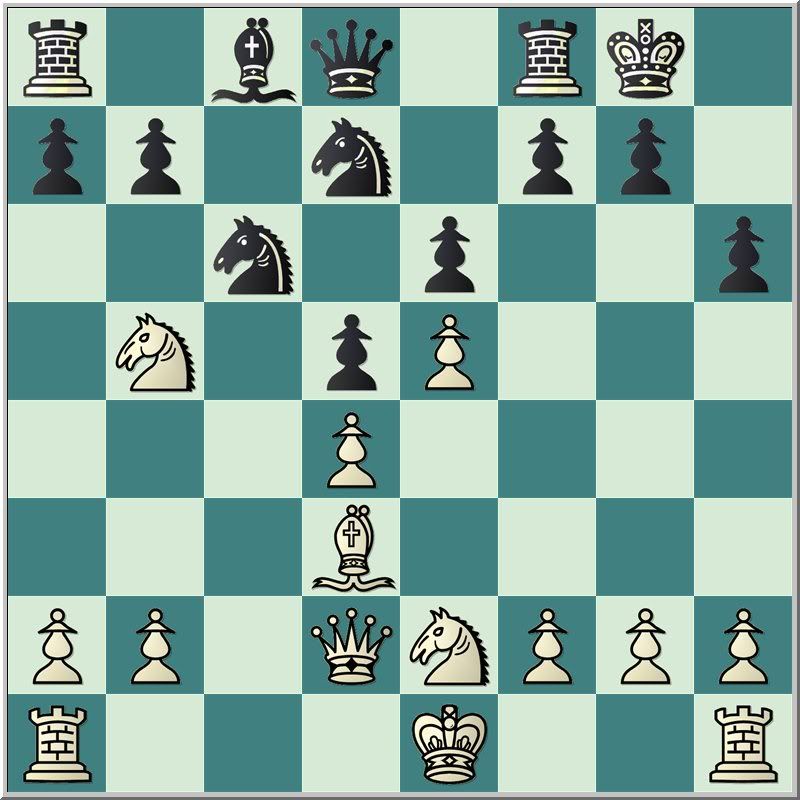
11.cxd4 Nc6 12.Ne2


White's advantage, if any, is marginal. 8.Nb5 now seems to have been silly and senseless

12...f6 13.exf6

I didn't consider 13.Nf4

13...Qxf6 14.0–0

Obvious, but 14.f4 is more dynamic and consistent with the aggressive approach Michael Cambareri employed to beat me in 2005.

14...Qd8 15.Rac1 a6 16.Na3

A knight on the rim ...

16...e5


17.dxe5

17.Bc2 seems to have merit

17...Ndxe5 18.Bb1 Bf5


Trading bishops seems warranted, but thinking that I am the stronger player, I want to keep as much material on the board as possible. The mismatch between my self-assessment and my performance in this game produced a painful loss.

19.Nc2?! Nd3 20.Ng3??

20.Rcd1 Nxb2 21.Ne3 Nc4 22.Nxc4 Bxb1 23.Nb6 Qxb6 24.Qxd5+ Rf7 25.Rxb1 Qd8 26.Rfd1=

20...Bh7?

20...Nxc1 21.Nxf5 Rxf5 22.Rxc1–+

21.Nd4!


I did find a few strong moves in the course of this loss.

21... Nxc1 22.Bxh7+ Kxh7 23.Ne6 Qd6 24.Nxf8+ Rxf8 25.Rxc1=

I lost this game once, but my opponent let me back in the game.


25... Qf4

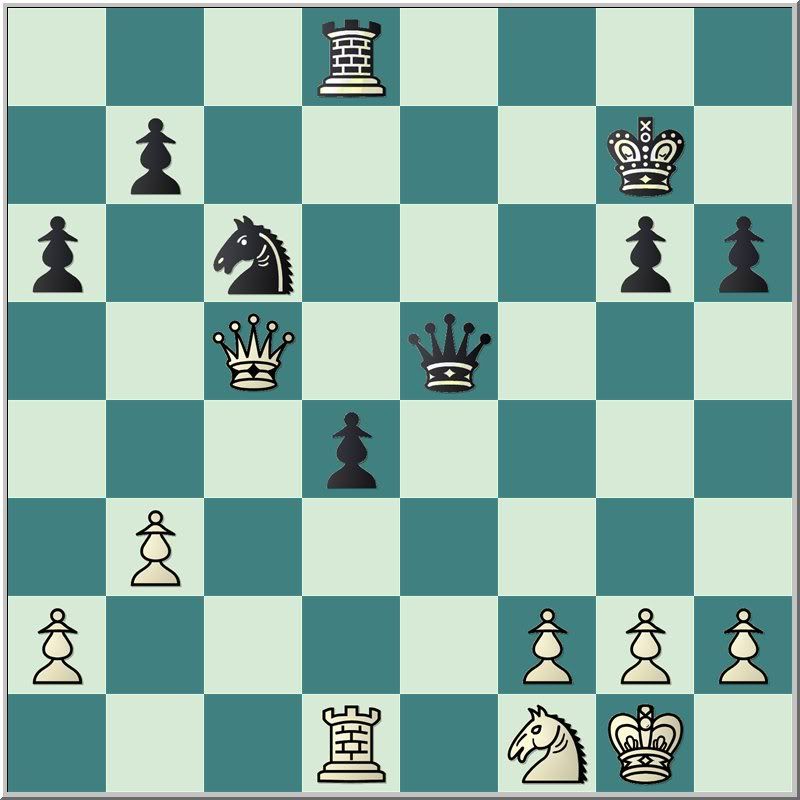
If I trade queens, it will be very difficult to lose, but winning would also seem elusive. I'm the stronger player (I believe), so the material must remain (and consequently my position soon begins to deteriorate).

26.Rd1 Qe5 27.Qc2+ g6 28.Qc5 Rd8 29.b3 Kg7 30.Nf1 d4


31.Qb6?

31.Qc2 is clearly stronger

31...Rd7 32.Ne3 Re7 33.Nf1 Qb5

Once again my opponent lets me back into the game. This time I have no choice.

34.Qxb5 axb5 35.Ng3 Kf6 36.Kf1 Ke5 37.Ne2 g5 38.f3 Rd7 39.Ke1 d3 40.Nc3!? b4


41.Ne4

41.Ne2!

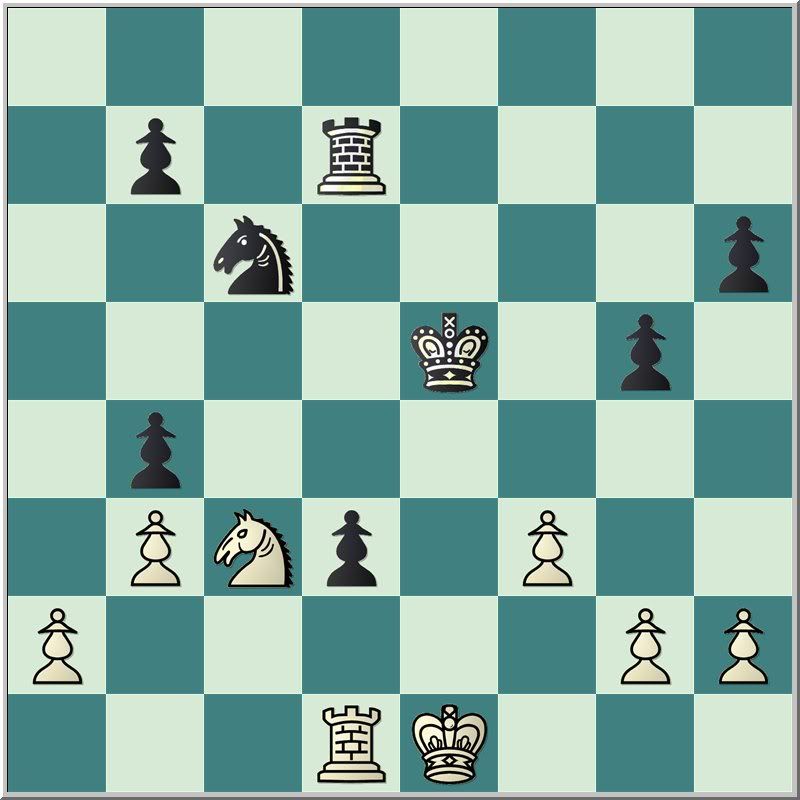
41... Kd4 42.Kd2 Ne5 43.Rc1 g4??


Black gives the game away

44.Nf6?

... and the "better player" fails to capitalize.

44.Nc5!+-

44... Rd6 45.Nxg4 b5?? 46.Ne3

46.Nxe5 gives White a theoretically won rook endgame.

46... Ra6 47.Ra1 Ra8!


48.Nd1??

The decisive error.

48.Nf5 and White has winning chances.

48... h5?

48...Nc4+! wins

49.Nf2 Rc8 50.Ke1

50.Rc1 seems more stubborn

50... Rc2 51.Kf1 d2 52.h3 Rc1+ 0–1

29 March 2009

Milestones

New highest ever USCF rating achieved: 1764. Achieved in March Madness G/45

Best Club Blitz performance: 9-0 achieved March 26.

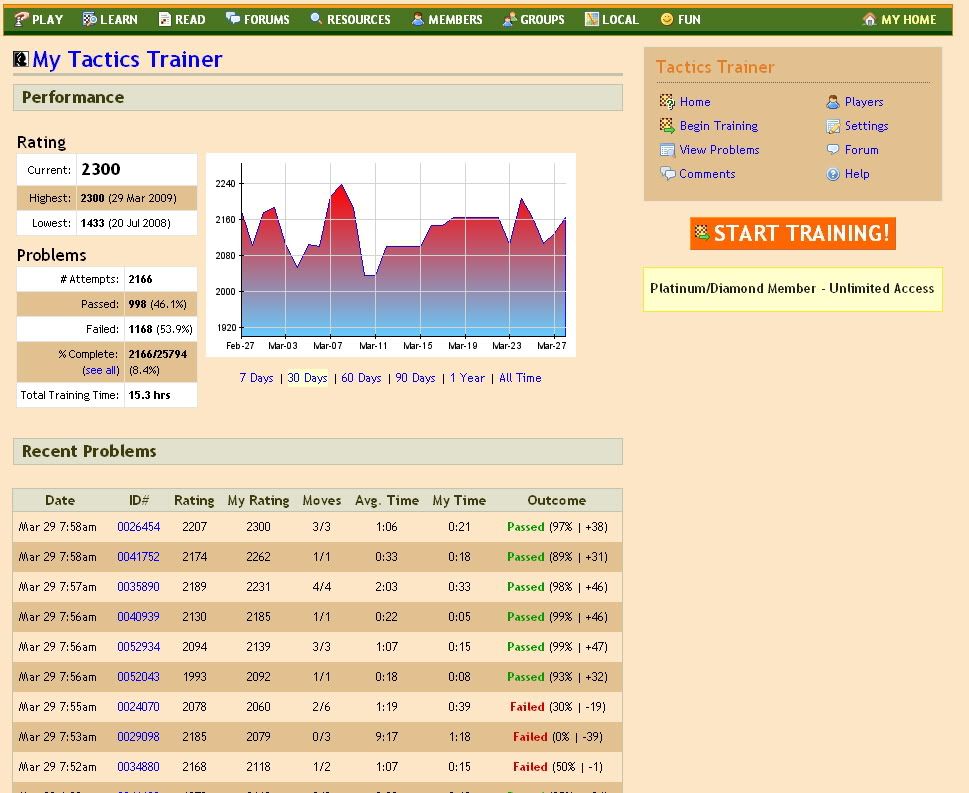
Highest rating on Chess.com Tactics Trainer: 2300. Achieved this morning.

26 March 2009

Clever

Consider this an advertisement.

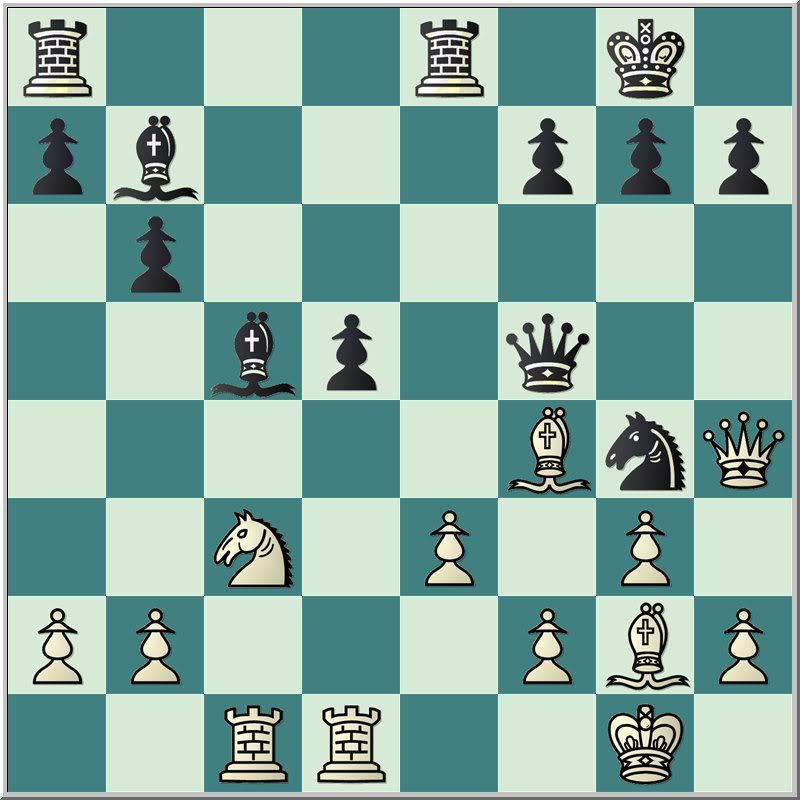
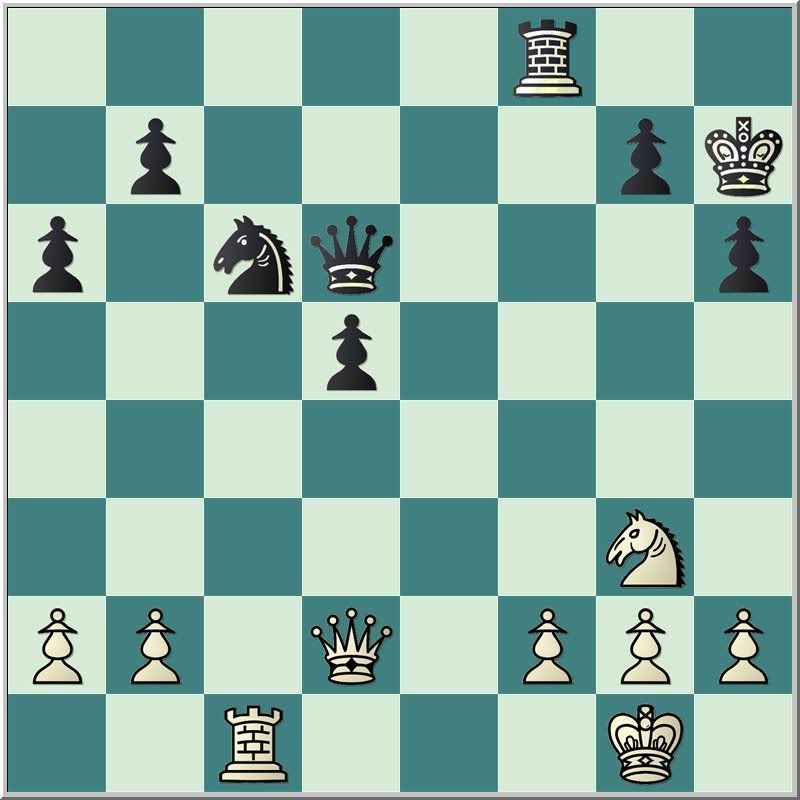
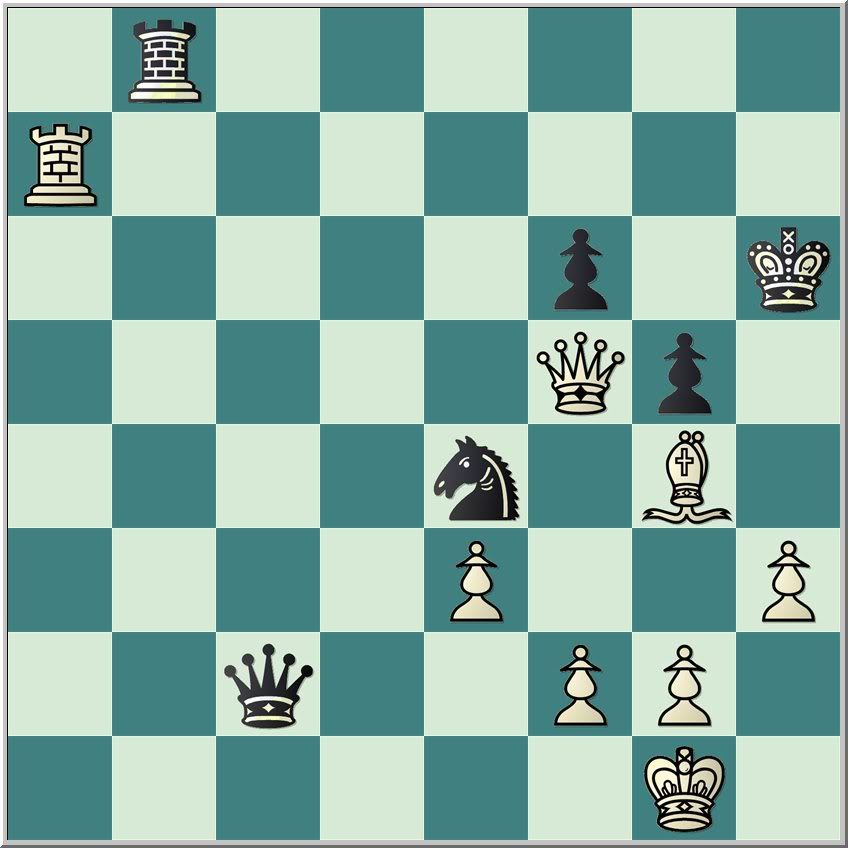
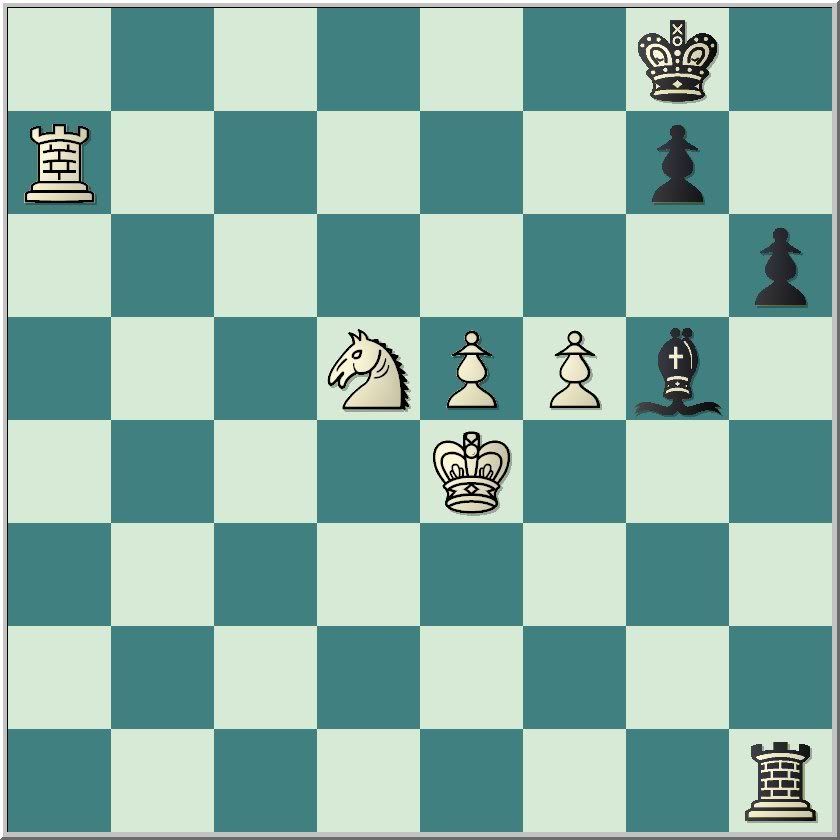
While working the Tactics Trainer on Chess.com, I came across this position with Black to move.


I failed on this problem, and so far I've failed on 1117 other problems. I've also succeeded at 959. My percentage is under 50% because I am sometimes unfocused, and because success always brings harder problems.

I've honed my skills through nearly fifteen hours on Chess.com's Tactics Trainer since late January. This effort has displaced my Tactics Training Plus as a priority. For those of you following my Resolutions, a kind of failure is in evidence. I have been consistent in spending ninety minutes per week with tactics training, but the form differs from the plan that I had resolved to follow. I will be returning to training against Hiarcs and other silicon beasts from the positions in Reinfeld, but I think it is good to vary the methods of training from time to time.

Chess.com is an excellent chess site. It is the newest member of a small group of top class turn-based sites, joining ChessWorld, Red Hot Pawn, and Game Knot. The other dozen or so sites at which I've played have their merits, but cannot compete as equals with these four. The quality of Chess.com's tactics trainer is matched by a similar feature at ChessWorld, but is missing or no where nearly as good at the other two. Of the four in the top class, two stand above. ChessWorld was created in 2001; Chess.com arrived in 2007.

Chess.com is also a Gold sponsor of the 2009 Washington State Elementary Chess Championship just over four weeks away.

03 February 2009

Washington State Elementary Chess Championship

Spokane Chess 2009

As luck would have it, I worked my way into a mammoth volunteer project. The seeds of the project were sown when a Spokane bid for the 2005 state elementary tournament lost by one vote. During the same meeting, the level of state organization took a jump in the creation of the WSECC Policy Board and detailed policies governing the state tournament.

In the wake of that meeting, I suggested to those responsible for the failed bid that we should bring the event to Spokane in 2009.

Two important related aspects of the expanded policies were that the site would follow a pattern of regional rotation among three vastly different areas of the state, and that bids from the hosting region must be presented two years out. Formerly, the next's year's tournament date, location, and organizers were selected at the event. That is, the 2005 event host was selected at the 2004 coaches meeting. Organizers had as little as eleven months to put together all aspects of the event.

This scholastic tournament has been growing rapidly in recent years. What once took place in a high school gym, now requires a larger facility. When I first attended in 2001, there were two sections, K-3 and 4-6. In 2003, there were seven sections--each grade level was a separate section. In 2007, two side events were added: Friday night Bughouse and I Love Chess 2. In 2008, a few adults participated in I Love Chess 2.


Two years out is a minimal time to start the process of reserving a facility that can accommodate 1200-1500 players and an even larger number of support personnel--parents, coaches, siblings. The bids for 2006 and 2007 were accepted at the 2005 coaches meeting in Lynden, Washington. The 2008 bid was accepted at the 2006 tournament. At that meeting I was elected as one of two eastern Washington representatives on the Policy Board. My term expired at the 2008 tournament.

In January 2007, I started working with the Spokane Regional Sports Commission and the Spokane Chess Club's Gary Younker Foundation to put together a bid for the 2009 Washington State Elementary Chess Championship. A key aspect of creating a bid was finding a venue that was available on a Saturday in late March to late April on a weekend that did not correspond with the dates of Nationals, Easter, and Passover. At the 2007 tournament in Vancouver, the coaches accepted the Spokane bid. The following week, I met with a sales representative at the Spokane Convention Center to get the rental contract drawn up.

In May 2007, the local organizing committee held its first formal meeting to begin planning the details. This committee was assembled through personal contacts and verbal commitments during the process of writing the bid, but the real work began after the bid was approved. I drafted and presented a preliminary budget at this meeting.

Through all of 2007, I might have put in twenty hours of labor preparing the bid and assembling a group of core volunteers. In March 2008, regular work began. Some weeks, I put in as little as a hour--talking with key personnel, making phone calls, reviewing priorities. In May 2008, the local organizing committee began meeting monthly, although we skipped one month in the summer. In October 2008, we secured a corporate sponsor. A second, Chess.com, came forward in December 2008 (and we still need more).

Yesterday, we officially opened registration. I am much relieved to have finally reached this critical stage of a long process. Now, I am putting in 10-20 hours per work each week. The Director of the Chess Enrichment Association, last year's organizer / host / tournament director, has told me that I can expect much longer days in April.

See our website at Spokane Chess 2009.

01 February 2009

Karjakin, Caruana Win Corus A and B

Karjakin Emerged from the Six

When the day began, six players were tied for first in the Corus Chess A Group. Three had decisive games today. Sergei Karjakin defeated co-leader Leinier Dominguez with the Black pieces to assure himself a share of first. The last game to finish was Wang Yue's victory over Magnus Carlsen, the Norwegian's only loss in this event. This conclusion left Karjakin alone in first place.

Sergei Karjakin won the 2009 Corus Chess Grandmaster A Group. Coming into this event, he was number 27 on the FIDE Rating list, making him the eleventh seed in a field of fourteen.

Final Standings A Group

1. Sergei Karjakin 8.0
2. Levon Aronian, Teymour Radjabov, Sergei Movsesian 7.5
5. Magnus Carlsen, Leinier Dominguez 7.0
7. Gata Kamsky 6.5
8. Wang Yue, Jan Smeets, Loek van Wely 6.0
11. Vassily Ivanchuk, Alexander Morozevich, Michael Adams, Daniel Stellwagen 5.5


Caruana Wins Corus B Group

Fabiano Caruana wins. He won his game today against Nigel Short, and won the tournament.

Final Standings B Group

1. Fabiano Caruana 8.5
2. Nigel Short, Rustam Kasimdzhanov, Alexander Motylev 8
5. Andrei Volokitin, Francisco Vallejo Pons 7.5
7. Zahar Efimenko 7.0
8. David Navara 6.5
9. Hou Yifan, Dimitri Reinderman 6
11. Erwin l'Ami 5.5
12. Henrique Mecking 4.5
13. Krishnan Sasikiran, Jan Werle 4

Wesley So Wins Corus C

Scroll down to "Historic Finale" for the live blog of today's games

Most of the games are still in progress at this moment. But Wesley So's short draw with David Howell gives So 9.5 and first place in the Corus C Group. Anish Giri and Tiger Hillarp Persson are battling other players to determine which of them will place second. Giri led Persson by half a point at the start of play today.

So - Howell [C96]
Corus Chess (13), Wijk aan Zee 2009

1.e4 e5 2.Nf3 Nc6 3.Bb5 a6 4.Ba4 Nf6 5.0–0 Be7 6.Re1 b5 7.Bb3 d6 8.c3 0–0 9.h3 Na5 10.Bc2 d5 11.d4 Nxe4 12.Nxe5 f6 13.Nd3 Bd6 14.Bf4 Nc4 15.b3 Nb6 16.Qc1 Re8 17.Bxd6 cxd6 18.Nf4 f5 19.a4 bxa4 ½–½

At 16, Wesley So is the second youngest player in this year's tournament. He became a Grandmaster at 14 years, 1 month, 28 days--the seventh youngest Grandmaster in history. The youngest person to achieve the Grandmaster title remains Sergei Karjakin, currently battling for first in the Corus A Group with Leinier Dominguez. Karjakin became a GM at 12 and just turned 19. As the winner of the C Group, So will be invited to participate in the B Group at Corus Chess 2010.

Corus Chess 2009: Historic Finale--Live!

3:24am PST; 12:24pm CET

Why am I awake at this hour? The Corus Chess tournament in Wijk aan Zee ends today. The last round, which could take six or seven hours, or even longer will be all but finished in the next four hours. Six players in the top group are vying for first place.

I am waiting for the games to begin.

Wang Yue played 1.d4

3:31am PST

I am logged into the Playchess server, where I am simultaneously watching seven games. All of theme will affect the final result in the Grandmaster A and B Groups.

Dominguez - Karjakin are playing a Sicilian Najdorf
Smeets - Aronian: Sicilian Kan
Kamsky - Movsesian: Sicilian Scheveningen
Wang - Carlsen: Semi-Slav
Radjabov - Stellwagen: Sicilian Scheveningen
Motylev - Kasimdzhanov: Pirc
Caruana - Short: Open Catalan

Some 55 moves on seven boards in eight minutes. There's no way that I will not miss some of the action. But, I won't miss it all.

Magnus Carlsen is eighteen years old. His father Henrik maintains a blog, Magnus Carlsen: Chess Grandmaster, where he wrote yesterday:
As parents we've always maintained that Magnus should focus on having fun, learning and on doing his best, and not on results, but by now we have of course realized that there is quite a lot of focus on results from the outside world. Maybe not surprising when you are a top5 chessplayer at 18 and one of the pre-tournament favourites, but anyhow a mixed blessing for a young player.
Corus 2009 Round 12
Young Carlsen is not the youngest potential winner today. The leaders in the Corus C Group are the youngest players in the three main tournaments, including the newest and youngest Grandmaster, Anish Giri. But, Carlsen is the highest rated player vying for first place today. The January 2009 FIDE Rating List has Magnus Carlsen at number 4; his opponent this afternoon is number 13, Wang Yue.

Wang Yue - Carlsen [D45]
Corus Chess (13), Wijk aan Zee 2009

1.d4 d5 2.c4 e6 3.Nf3 Nf6 4.Nc3 c6 5.e3 Nbd7 6.Qc2 b6 7.Bd3 Bb7 8.O-O dxc4 9.Bxc4 c5 10.Rd1
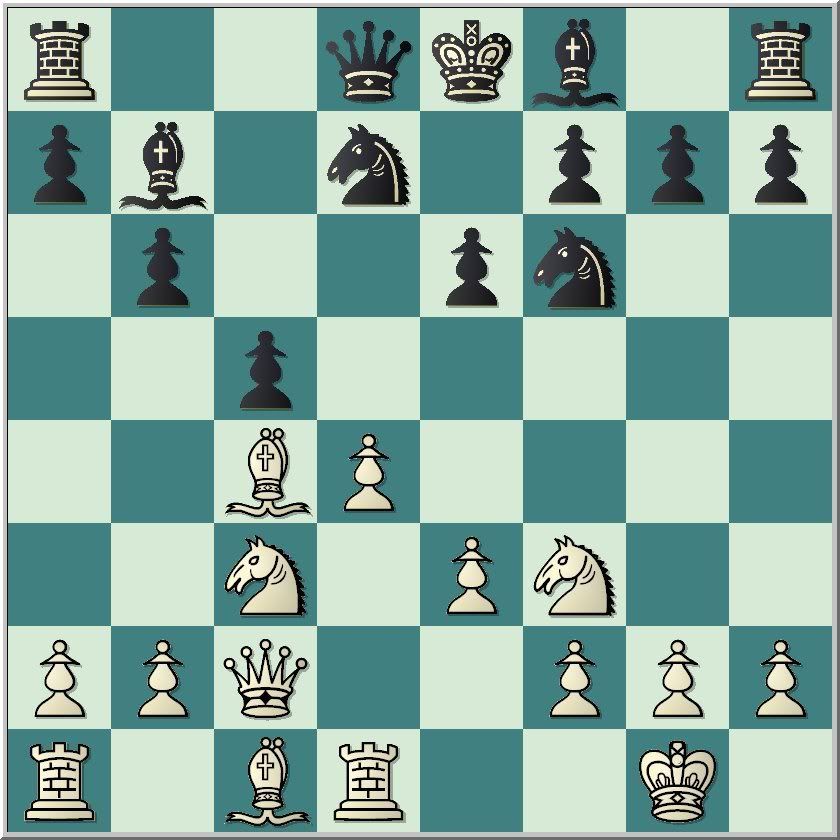


10...Qc8

4:05am Pacific Standard Time; 1:05pm Central European Time

Dominguez - Karjakin [B90]
Corun Chess (13), Wijk aan Zee 2009

1.e4 c5 2.Nf3 d6 3.d4 cxd4 4.Nxd4 Nf6 5.Nc3 a6 6.Be3 Ng4 7.Bc1 Nf6 8.Be3 Ng4 9.Bg5 h6 10.Bh4 g5 11.Bg3 Bg7 12.h3 Nf6 13.Qe2 Nc6 14.Nxc6 bxc6 15.e5 dxe5 16.Bxe5 O-O 17.g4


Both of these players are in first. One might win, but not both, unless there are five draws.


Dynamic Chess Strategy
Two felons must be charged with having jolted me out of the solid and healthy "classical" approach to strategy: 1. The Sicilian and its grandson, the Hedgehog. 2. My first GM norm.
Mihai Suba, Dynamic Chess Strategy (1991), 23
Dutchman Jan Smeets is tangling with a hedghog: Levon Aronian has five pawns on the sixth rank. The fifth rank is vacant.

Smeets - Aronian [B42]
Corus Chess (13), Wijk aan Zee 2009

1.e4 c5 2.Nf3 e6 3.d4 cxd4 4.Nxd4 a6 5.Bd3 Nf6 6.O-O Qc7 7.Qe2 d6 8.c4 g6 9.Nc3 Bg7 10.Rd1 O-O 11.Nf3 Nc6 12.h3 Nd7 13.Be3 b6 14.Rac1 Bb7
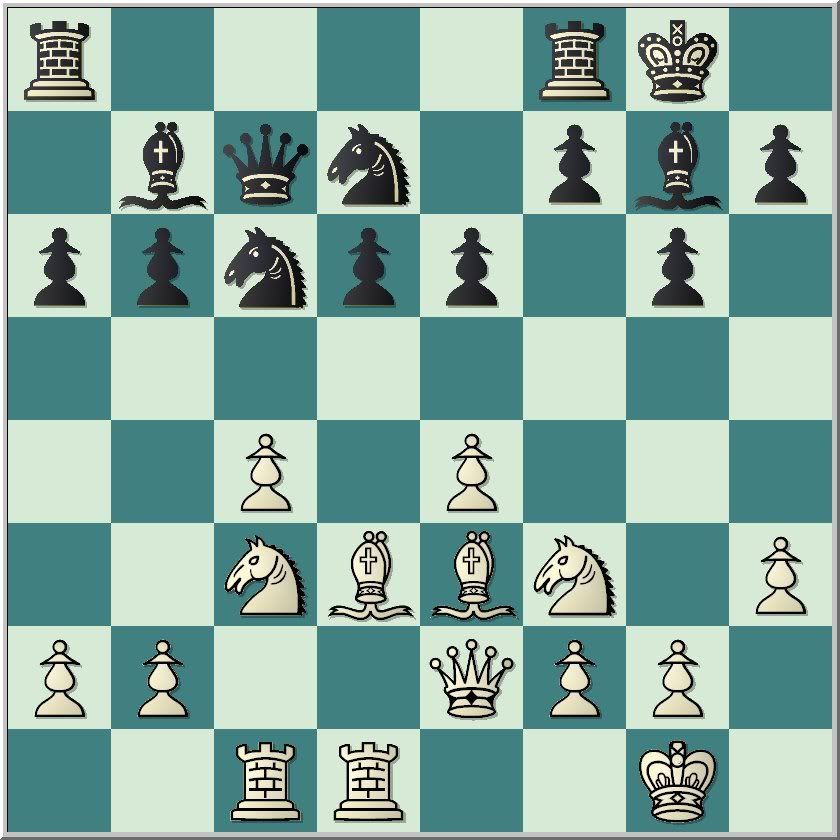


15.Bb1

In February 2004, my USCF Rating was 1506 and in round 4 of the Collyer Memorial Tournament I was playing an underrated fourth grader named Zach. I had recently taken up the French Defense as my new main line against 1.e4. But, facing a young aspirant whose rating was far below me and far below his playing strength, I needed an edge. I went with my experience and played the Sicilian, my weapon from the late 1970s. The kid is now in high school, he is now rated over 1800, and he has had White in five games of our six rated tournament games. He's played against my French five times. Black has three wins and two draws. My one White was an Open Catalan, also drawn.

I may now be a Frenchie, as someone called me recently, but a day full of Sicilians still can get me excited, particularly when there is a hedghog among them.

Back to Smeets - Aronian

15...Rfc8 16.Qd2

4:39am PST

Except for the humming of a CPU fan that bears replacing, my house is quiet. I could go out into the cold, dark morning to find that my newspaper is not here yet. I expect delivery is another hour. The newspaper will be filled with stories about a football (the American version) game that takes place later today, advertisements to stimulate our failing economy, and highlights from another forgettable WSU basketball game.

The news I want is on my computer screen.

16...Bf8 17.Nb5

Wang Yue - Carlsen Update

11.d5 exd5 12.Nxd5 Bxd5 13.Bxd5 Nxd5 14.Rxd5 Be7 15.e4 O-O 16.Bg5 Re8 17.Rad1 Nf8

4:47am PST

Radjabov- Stellwagen [B85]
Corus Chess (13), Wijk aan Zee 2009

1.e4 c5 2.Nf3 e6 3.d4 cxd4 4.Nxd4 Nc6 5.Nc3 d6 6.Be2 Nf6 7.O-O Be7 8.Be3 O-O 9.Nb3 a6 10.a4 b6 11.f4 Qc7 12.Bf3 Bb7 13.Qe2 Rfe8 14.Rad1 Bf8 15.Qf2 Nd7 16.Kh1 Rab8 17.Nc1 Ba8 18.Qe2 Qc8
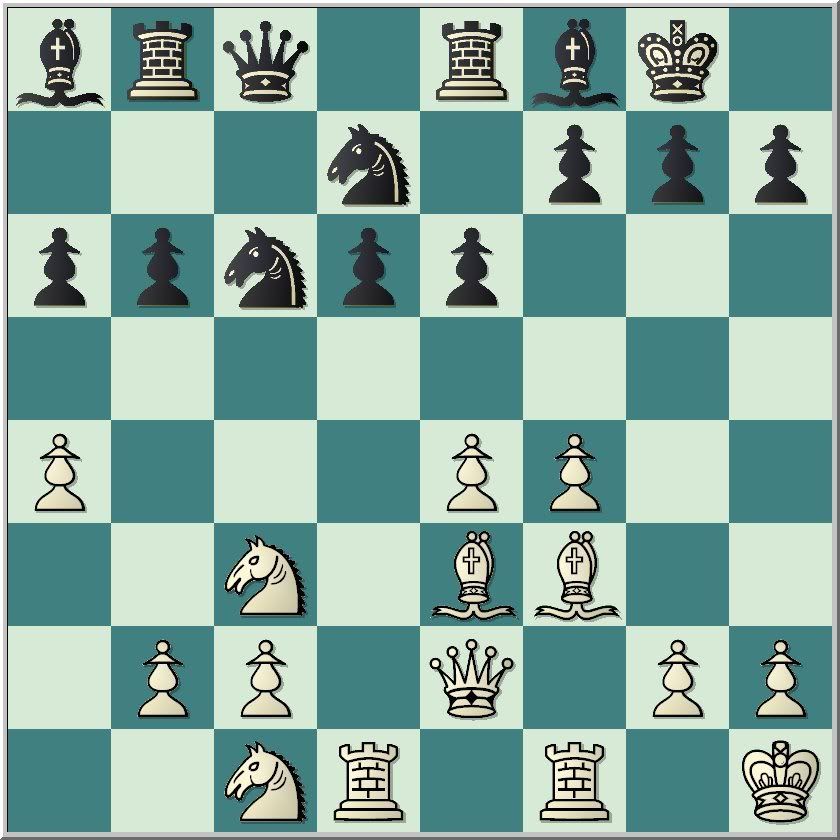


Kamsky - Movsesian [B83]
Corus Chess (13), Wijk aan Zee 2009

1.e4 c5 2.Nf3 e6 3.d4 cxd4 4.Nxd4 Nf6 5.Nc3 d6 6.Be2 Be7 7.O-O O-O 8.Be3 Nc6 9.Qd2 a6 10.a4 Bd7 11.Rfd1 Nxd4 12.Bxd4 Bc6 13.Qe3 Qc8 14.a5 e5 15.Bb6 Qe6 16.Qd3 Rac8 17.h3 g6 18.b3 Kg7
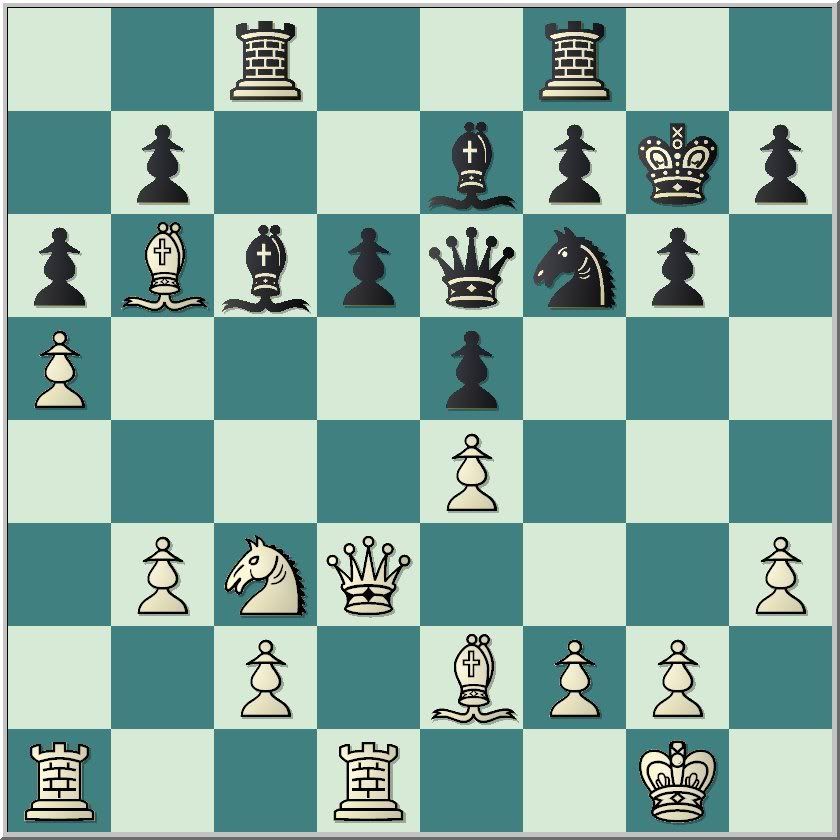


5:07am PST; 2:07pm CET

Smeets - Aronian Update

17...axb5 18.cxb5 e5 19.Bh6 Be7 20.Bg5


Clocks 0:37 1:35

5:17am PST

20...Bf8 21.Bh6

Hiarcs 12 thinks that Smeets has an advantage, but he is not among the leaders. Will Levon Aronian become the first of the current leaders to put his hope of a shared championship wholly in the hand of the others?

21...Be7

5:32am PST; 2:30pm CET

22.Bg5 Bf8 ½–½

Aronian finishes with 7 1/2. Will it be enough for a share of first for the third consecutive year? Smeets finishes with 6. I watched the game end at 5:33am. On weekdays, I'm usually just beginning to awake. Normally, on a Sunday morning I would be fast asleep still.

Dominguez - Karjakin Update

17...a5 18.h4 Bxg4 19.f3 Bf5 20.hxg5 hxg5 21.Qe3 a4


Wang Yue - Carlsen Update

18.Qc4 Qe6 19.b3 h6 20.Bf4 Ng6 21.Bg3 Bf8 22.Nd2 Ne7 23.Rd3 Nc6 24.Qxe6 Rxe6 25.a4 a6 26.f3 b5 27.Bf2 Rc8 28.axb5 axb5 29.Nf1


29...Nb4

Clocks 0:32 0:57

6:01am PST; 3:01pm CET

Dominguez - Karjakin Update

22.Qxg5 Bg6 23.Bd3 a3

You gotta love it when two tournament leaders slugging it out both have vulnerable kings.


Radjabov - Stellwagen Update

While I was typing "Wesley So Wins Corus C," Radjabov - Stellwagen reached a peaceful conclusion.

19.N1a2 Nf6 20.Nc1 e5 21.Qf2 b5 22.axb5 axb5 23.Nd3 b4 24.fxe5 ½–½

6:34am PST; 3:30pm CET

Okay, maybe it's a little bit fanatical to set the alarm for three in the morning on a Sunday when I'm not planning to go fishing. But, had I not done so, it would seem that half the games were over before I began to pay attention.

When I was in high school, I had what seemed then to be relatively up to date chess information because I bought in 1977 the 1976 RHM Press book, Wijk aan Zee: Grandmaster Chess Tournament 1975. That tournament was held before I knew that chess was a subject that had books. After discovering chess books and learning descriptive notation, my chess skills dramatically improved. In 1975 I became better at the game than my friends. But, I soon met others that could beat me (thankfully). I read a few chess books from the library, but one of the first that I bought was the Wijk aan Zee tournament book.

That book and thus tournament has always had a special place in my heart.

6:44am PST

Back to the games.

Wang Yue - Carlsen Update

30.Rc3 Ra6 31.Ne3 Ra3 32.Be1 Nc6 33.Rb1 Rca8 34.Kf1 Nd4 35.Rd3
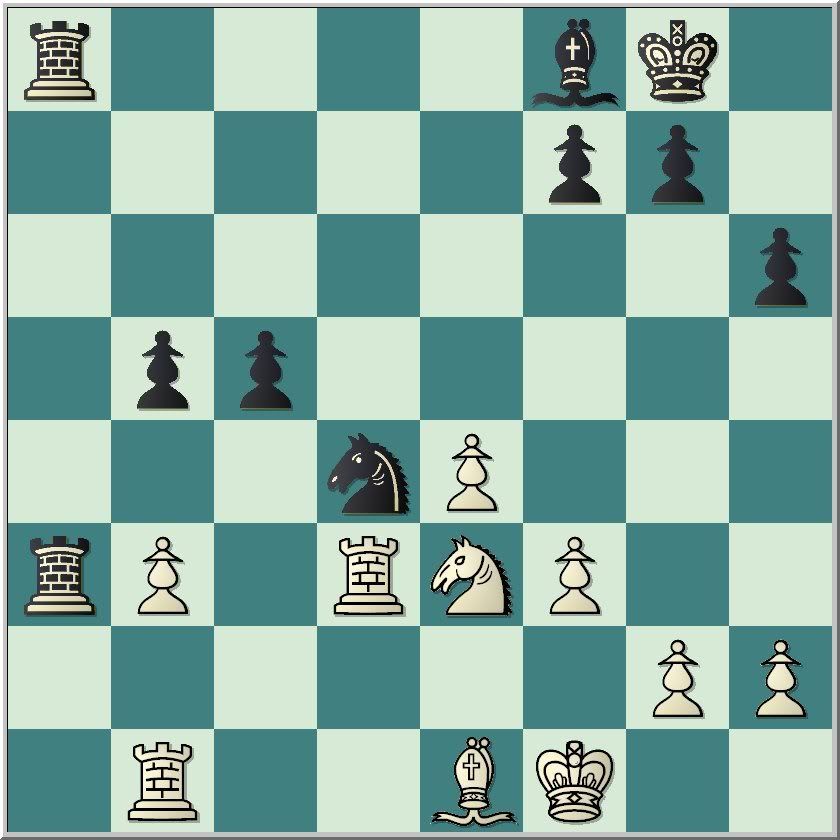


35...Ra2 36.b4

It's not a lot, yet, but the fact that silent kibitzer Hiracs 12 is now showing negative numbers when I am on this game suggests that Carlsen might have the beginnings of an advantage. Wang Yua also must make four more moves in five minutes.

We know what a win will do for Magnus, when it seemed that he could not win a game when the last week of the event began. He almost certainly will finish as the only player in A without a loss.

36...R8a3 37.Rbd1 Ne6 38.bxc5 Bxc5 39.Rxa3 Rxa3 40.Nd5 Rb3

They made the time control

A six way tie for first remains a real possibility, but not as a consequence of a bunch of easy GM draws. Most of the players have exhibited a fighting spirit today. It is simply that at this level of play, it is enormously difficult to win.

7:07am PST; 4:07pm CET

Dominguez - Karjakin Update

24.b4 Qb6 25.Rh4 Nh7 26.Rxh7 Kxh7 27.O-O-O Qxb4 28.Rh1+ Kg8 29.Bxg7 Kxg7 30.Qh6+ Kf6 31.Ne4+ Ke6 32.Rd1 Qb2+ 33.Kd2 Kd7 34.Qf4 Rfd8 35.Ke2 Ke8 36.Rh1
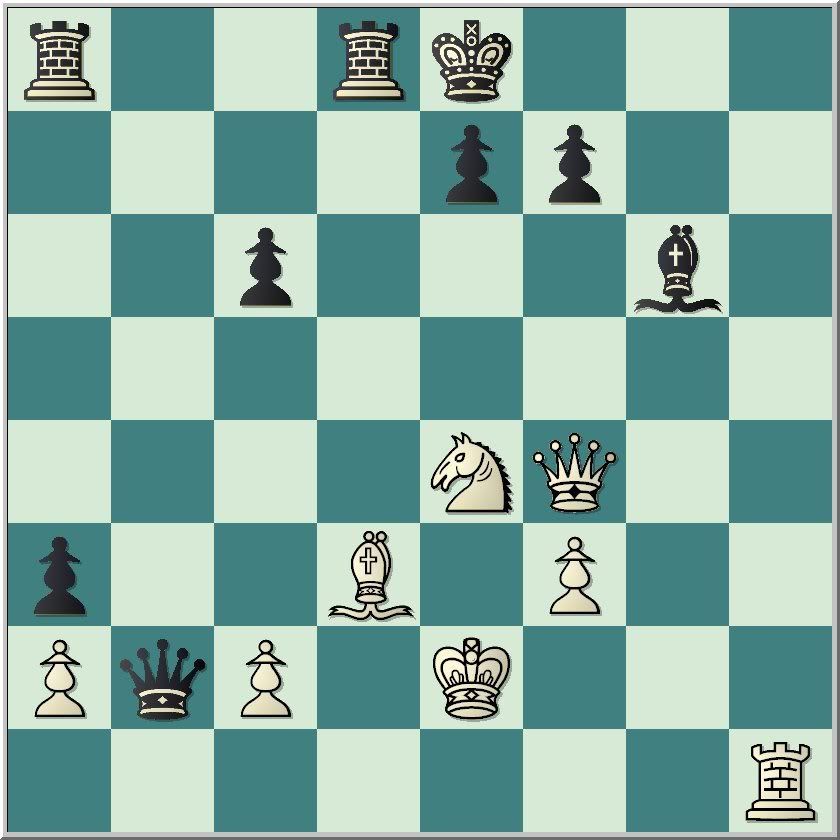


Black looks to have a decisive advantage. Sergei Karjakin may win Corus!

Still, after almost four hours of play, thirteen of the twenty-one games in the elite groups continue. Everything remains up for grabs in A (as many as six winners) and B (Short and Kasimzdhanov), while Wesley So has won C.

36...Ra5 37.Qc7 Rad5 38.Ke3 Kf8 39.c3 Rxd3+ 40.Kf4 f6 41.Rh8+ Kf7 0-1

Sergei Karjakin Wins Corus A! Carlsen might yet join him.

Kamsky - Movsesian Update

Game drawn

19.Qf3 Bd7 20.Ra2 h5 21.Qe3 Rfe8 22.Bf3 Bc6 23.Qd2 Nd7 24.Be3 f5 25.Bg5 Bxg5 26.Qxg5 Nf6 27.exf5 Qxf5 28.Qxf5 gxf5 29.Bxc6 Rxc6 30.Nd5 Nxd5 31.Rxd5 Kf6 32.c4 Ke6 33.Rad2 b6 34.axb6 Rxb6 35.b4 f4 36.c5 dxc5 37.bxc5 Rb1+ 38.Kh2 Rc8 39.f3 a5 40.h4 Rc6 41.Rd6+ Rxd6 42.Rxd6+ Ke7 43.Rh6 Rb5 44.Rxh5 Rxc5 45.Rh6 a4 46.Ra6 Rc4 47.Kh3 e4 ½–½

Wang Yue - Carlsen Update

41.h4 b4 42.f4 Rb2 43.f5 Nd4 44.Bxb4 Bxb4 45.Rxd4
The real goal of a chess game is to create an imbalance and try to build a situation in which it is favorable for you.
Jeremy Silman, How to Reassess Your Chess, 3rd ed. (1993), 27.
This exchange of minor pieces appears to create an imbalance that is favorable to White

Black to move
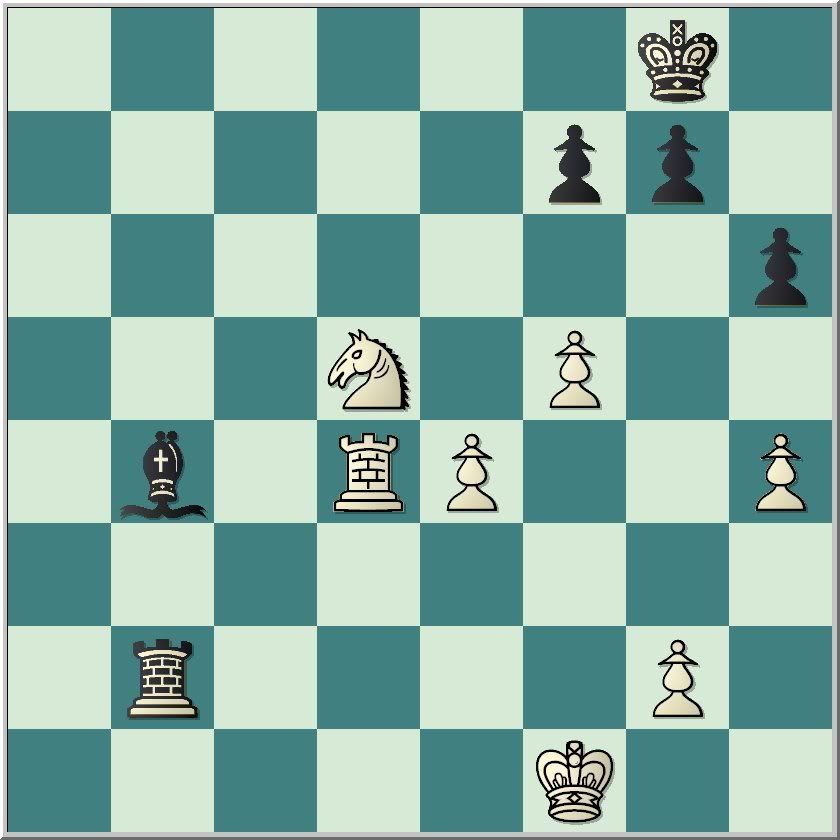

When all the pawns are on one side of the board, the knight is better than the bishop.

45... Rb1+ 46.Ke2 Rb2+ 47.Kf3 Be1 48.h5 Rf2+ 49.Ke3 Rxg2 50.Ra4 Bh4 51.Ra8+ Kh7 52.Rf8 Bg5+ 53.Kf3 Rh2

I think that Wang Yue is the one pushing for victory.

54.Rxf7 Kg8 55.Ra7 Rxh5 56.e5 Rh3+ 57.Ke4 Rh1


I think White is still better, and he appears ahead on the clock a bit. Magnus Carlsen struggles to hang on to his unbeaten status.

58.e6 Re1+ 59.Kd4 h5 60.Kc5 Re5

Meanwhile in the B Group

Motylev appears to have the edge against Kasimdzhanov, while Short is certainly no worse in his battle with Caruana. Both games might have a lot of play left.

8:29am PST; 5:29 CET

Back to Wang Yue - Carlsen

Things are becoming clear: Morozevich pulled himself out of last place, well into a tie for last place, by beating Ivanchuk today. Other games were drawn. If this game ends as a draw, Carlsen shares second, Wang shares last. Wang Yue now seems to have a substantive advantage. The win will put him in a tie for eighth with Jan Smeets and Loek van Wely.

61.f6
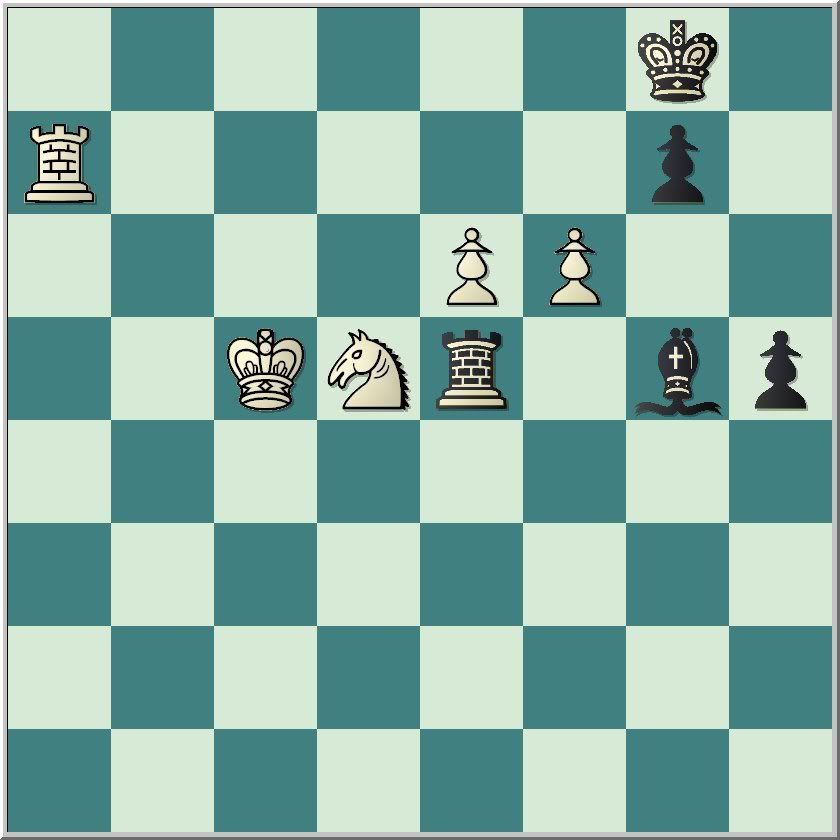


61...Bxf6 62.Kd2

I would resign in this position. The pawn cannot be stopped without giving up the rook. But, Carlsen is a lot better than me, and better than nearly everyone for that matter. Perhaps he sees something we overlook. Perhaps he is just stubborn because he really hates to lose.

Hiarcs 12 says checkmate in 32 moves.

9:19am PST; 6:19pm CET

Perhaps my engine was optimistic.

62...Rf5 63.Nxf6+ Rxf6 64.Kd7

I still think a rook sacrifice is the only way to stop that pawn.

64...h4 65.e7 Rf7 66.Kd8

9:37am PST

I've been watching and blogging over six hours this morning. I'm ready with my post showing the final standings, but am prepared for some quick edits if something unexpected occurs in two games--Wang - Carlsen or Caruana - Short. These are the only remaining games, and they will confirm the winners of the top two groups. The winner of Caruana - Short wins B, and White appears to have a substantial, if not decisive advantage (Hiarcs 12 says it is mate in five).

Wang Yue - Carlsen Update

66...Kh7 67.Ra6 1-0

Fabiano beat Nigel.

I got the scoop! I watched the first moves. I had "Karjakin, Caruana Win Corus A and B" posted within a minute of the players' resignations.