Showing posts with label Polerio. Show all posts

04 January 2025

Principle of Development

The first task of a chess player at the beginning of a game is rapid development. This means that a player should deploy the maximum number of pieces on squares where they are not vulnerable and work together with other pieces. They should be deployed with attention to the opponent's efforts to accomplish the same.

There are other ways to define the principle of development (see "What is Development"). The paragraph above is an effort to present the essence of the oldest definition of the principle that I have found in print. That definition is a translation of writing by Domenico Lorenzo Ponziani (although credited to Ercole del Rio by the translator). It was published in English 17 years before Paul Morphy was born (see "Principle of Development: Early History").

Morphy is usually credited as the "first player to understand the importance of swift development in open games", as Thomas Engqvist puts it in 300 Most Important Chess Positions (2018), 13. Engqvist offers 30 key positions from 24 games to articulate the concept of development in practical ways (13-32). There should be no question that Morphy's games illustrate well the principle of rapid development. They also show, as Engqvist elucidates well, how to sacrifice material to gain a decisive advantage against a player who neglects the principle.

I have spent that past ten days working through these 30 key positions as part of an effort to read the whole of Engqvist's book in 60 days (see "60 Days, 300 Positions: Day One"). This morning I reviewed all thirty positions after spending some time (too little) on numbers 26-30. I noted the key ideas that Engqvist offers through these positions, questioning how much was absent from Ponziani's articulation of the principle.

Engqvist includes center control, which I do not see in Ponziani's statement. He also shows Morphy's preference for avoiding "unproductive one-move threats" (14). Some of the most challenging positions in the first section of the book feature positions from modern grandmaster practice where the idea is to interfere with the opponent's harmonious development. The translation of Ponziani states, 
Whoever, at the beginning, has brought out his Pieces with greater symmetry, relatively to the adverse situation, may thence promise himself a fortunate issue in the prosecution of the battle.
J.S. Bingham, The Incomparable Game of Chess (1820), 32.
In the context, I suspect that harmony might make more sense than the word symmetry, but I have not examined Ponziani's Italian. Nonetheless, it is clear that the notion of attentiveness to the opponent's development exists in Ponziani's formulation.

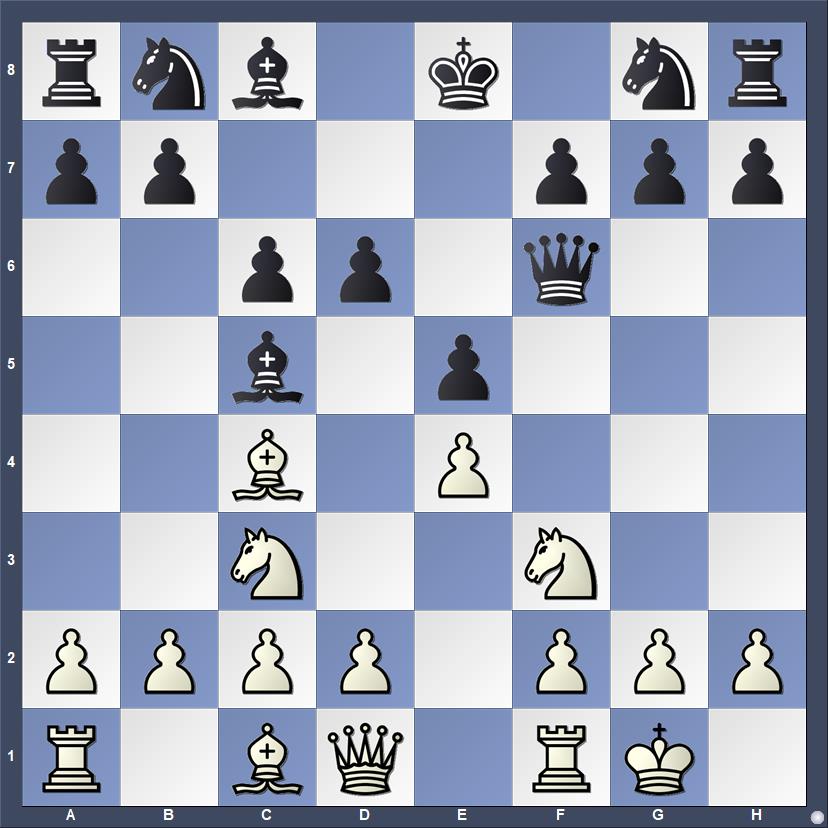
William Steinitz is often credited with articulating the principles underneath Morphy's play. But, clearly other chess writers before Steinitz mentioned the principle of development. As for Morphy being the first to understand rapid development, I offer this position, which would be in my collection of 300 most important positions.

White to move
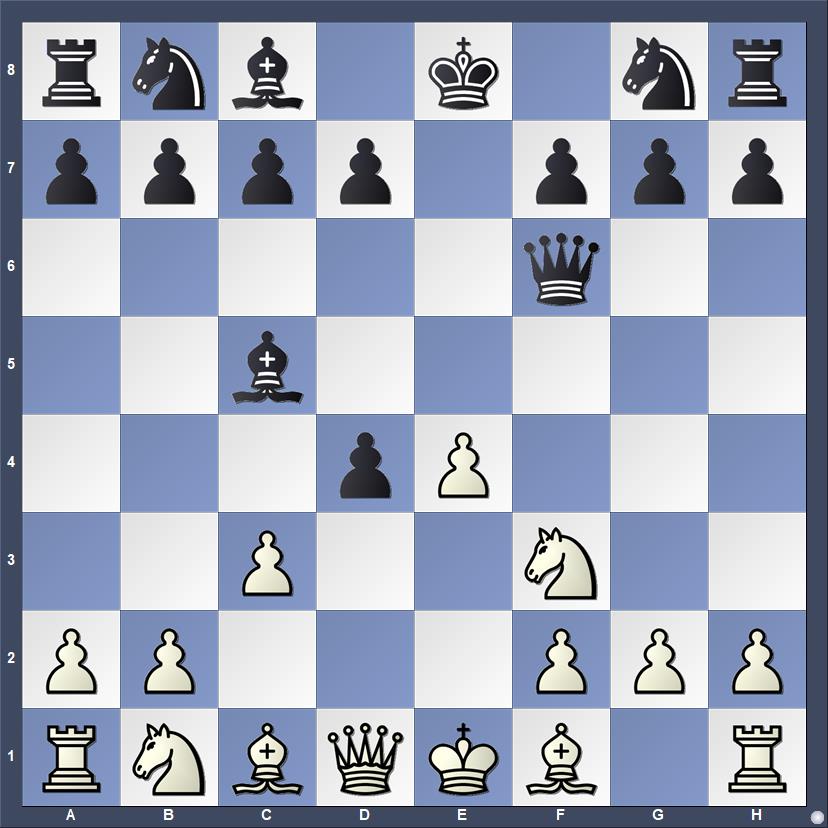
White has already sacrificed two pawns and here often plays 10.Qb3, sacrificing a rook for a winning attack. Black's best chance is 10...d5 11.Bxd5 O-O, as was played in Meyer,H. -- Ubbens,MH., 1926. Gioachino Greco is credited with the position and has both 10...Bxd4 and 10...Bxa1 for Black. In fact, Greco copied this position from the manuscripts of Giulio Cesare Polerio, or perhaps a book by Alessandro Salvio (see "Greco Attack Before Greco").

Searching ChessBase Mega 2024 for the position turns up nine games with 10.Qb3 prior to the first with 10.Ba3, which might be an improvement (see "Corte -- Bolbochan 1946").

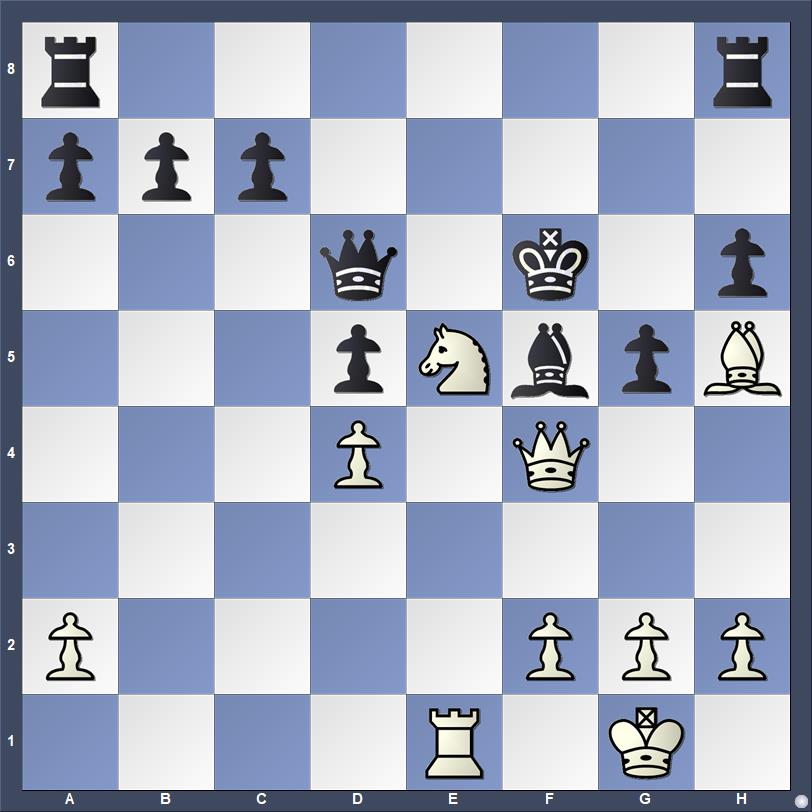
After 10...Bxa1 in Polerio's composition, we have a position that I like to show students in conjunction with this position from Morphy's Opera Game.

White to move
In both cases, White is behind a considerable amount of material but completely winning because Black's pieces lack mobility. It seems clear to me that Polerio and to an even greater extent Greco understood the pitfalls in neglecting the principle of development. It remained for the leading players of the so-called Italian school a century later to articulate the principle.

Nonetheless, Morphy's games remain the clearest early examples.


21 October 2024

Greco’s Study Method

This position appears in Checkmates and Tactics (2019), a book that consists of exercises that I have used with scholastic players since 2006. It is doubtful that my creation of this exercise from a game credited to Gioachino Greco is original. The small selection of games credited to Greco that are found in ChessBase, chessgames.com, and other aggregations are well-enough known that others undoubtedly have put this position before their students.

White to move

Digging deeper into Greco’s output through Professor Hoffman, The Games of Greco (1900) and William Lewis, Gioachino Greco and the Game of Chess (1819), shows that Greco had improved upon Black’s play in some variations on the game that led to this position.

Those improvements were the subject of my chess lesson with some students earlier this month. Greco’s variations in this and other games lead one to suspect that he methodically sought to improve the defense in the short miniatures by which he is principally remembered. But, as I have noted in prior posts, these variations—better games—are absent from databases, although present in the books by Lewis and Hoffman.

Further study since presenting the lesson to my students has revealed that the exercise in Checkmates and Tactics was presented to Giacomo Buoncompagno, the Duke of Sora, by “an exceptional player” (more than likely Giulio Cesare Polerio). A Spanish manuscript kept in the Biblioteca Riccardiana in Florence dated in the last quarter of the sixteenth century presents the position and a comment about its presentation to the duke. Two Italian manuscripts (Elegantia and Regole) from the same time period offer the game, but only Riccardiana has the story.

The sixteen move game, thus, should be considered the work of Polerio, not Greco. It would take much time and travel to examine these manuscripts, but others have done so. Their work has been compiled into a useful table: "Openings and Games of the Classical Era of Modern Chess," in Peter J. Monté, The Classical Era of Modern Chess (2014), 439-530; the game in question here appears on 503.

At some point in Rome, Greco had access to some manuscripts containing Polerio’s work and made copies. In his 1620 manuscript dedicated to an unnamed cardinal of Casa Orsini, Greco wrote that Black had an alternate defense in this game. Improvements to Black’s play appear in four manuscripts a few years later—Grenoble (1624), Paris (1625), Orleans (undated), and Godolphin (undated, but possibly 1623).

As I have repeatedly emphasized on Chess Skills, Greco's games are poorly known because his best work does not appear in databases. In this case, Greco is credited with a composition by Polerio that he criticized and improved in his own work.

Here, then, is Greco's main (best) game from this opening with Polerio's and Greco's other work as variations.

Greco, Gioachino
Analysis, London? c.1623

1.e4 e5 2.f4 exf4 3.Nf3 g5 4.Bc4

4.Nc3 c6 5.Bc4 h6 6.d4 d6 7.h4 Bg7 is the sequence in Polerio's mss--see move 15.

4...Bg7 5.d4 d6 6.Nc3 c6 7.h4 h6 8.hxg5 hxg5 9.Rxh8 Bxh8

The last move in Primo, an undated Greco manuscript (likely 1619). Greco notes that Black remains with a pawn up.

10.Ne5

Several posters on chessgames.com have noted that this move is an error, giving Black a clear advantage

10...dxe5 11.Qh5 Qf6 12.dxe5 Qg7

12...Qg6 offers Black chances, too, but the text is better.

13.e6 Nf6

13...Bxe6 is suggested on chessgames.com

14.exf7+

This position appears as a diagram in Lewis 1819

Black to move

Having inherited this miniature from Polerio's writings, Greco sought to improve Black's defensive efforts. He offers two better moves for Black--Ke7 and Kd8 and carries each forward with a plausible line.

a) 14...Ke7

14...Kf8?? leads to the diagram at the top of the article.

15.Bxf4 Nxh5
15...gxf4 16.Qc5# appears in Polerio's manuscripts.
15...Ke7 is still possible 16.Bxg5+-.

16.Bd6# Is the line in the databases and the main game in Hoffman and Lewis.

15.Qe2 Be6

Black has better moves, such as Bg4, but most of Greco's line offers the best moves for both sides.

16.Bxe6 Kxe6

So far, Black is slightly better, but White has active play against a vulnerable king.

17.Qc4+ Ke7 18.Qb4+ Kxf7 19.Qxb7+ Nbd7 20.Qxa8

Three of Greco's extant manuscripts end here, as do Lewis and Hoffman. David Levy & Kevin O'Connell, Oxford Encyclopedia of Chess Games, Vol. 1 1485-1866 (1981) makes the contents of Hoffman accessible in algebraic notation. Francis Beale, The Royall Art of Chesse-Play (1656) also ends here.

Perhaps Greco thought that the win of the rook was sufficient for the line. However, he extended analysis five moves longer in what became one of his more obscure manuscripts. According to Monté, the manuscript was believed to have been dedicated to Sir Francis Godolphin. Tassilo von der Lasa acquired it in 1856 and still had it in 1897, but after his death, its whereabouts became unknown until Alessandro Sanvito found it in a collection in Poland.

Black to move

20...Qh6 21.Qxa7 Qh1+ 22.Ke2 Qxg2+ 23.Qf2 Qxf2+

23...f3+ Black is slightly better.

24.Kxf2

Only now White is better, although what Greco thought is not clear. As the Godolphin manuscript would likely have been created in London, and is the most length analysis, a date of 1623 seems plausible.

With such a game, modern chess players armed with the latest Stockfish might still find faults in his analysis, but it should be clear that his strength exceeds the conclusions that are drawn when we associate him with Polerio's unacknowledged work.

Variation b is more clearly dated to 1624.
 
b) 14...Kd8

In this line, Greco's analysis is less precise. Although 14...Ke7 appears to give Black an advantage, with best play 14...Kd8 is equal.

White to move

15.Qxg5

A nice deflection!

15...Qxg5 16.f8Q+ Kd7?

An error.

16...Kc7=

17.Qxh8

17.Bxf4!! Stockfish 17...Qxf4 18.Rd1+ Nd5 19.Qxf4

17...Qxg2 18.Qxf6 f3

White to move
Black has threats, but White has a forced mate. Neither side plays the best moves in the conclusion of this variation.

19.Qf7+

19.Be6+!

19...Kd6

19...Kd8 is more stubborn.

20.Bf4+

20.e5+ Kc5 21.Be3+ Kb4 22.a3+ Ka5 23.b4# appears in Antonius van der Linde, De Kerkvaders der Schaakgemeente (1875).

20...Kc5 21.Na4+ Kb4

21...Kd4 22.c3+ Kxe4 23.Nc5# variation in Greco

22.Bd2+ Kxa4 23.b3+ Ka3 24.Qe7+ Kb2 25.Qe5+ Ka3

25...Kxc2 26.Rc1# variation in Greco

26.Bc1+ Kb4 27.c3#

This line and variations appears in two Paris manuscripts: Grenoble (1624) and Paris (1625), as well as the undated Orleans manuscript that appears to be copied from the Paris ms. While less precise, I could see extracting some checkmate exercises for my students from this variation.

14 November 2022

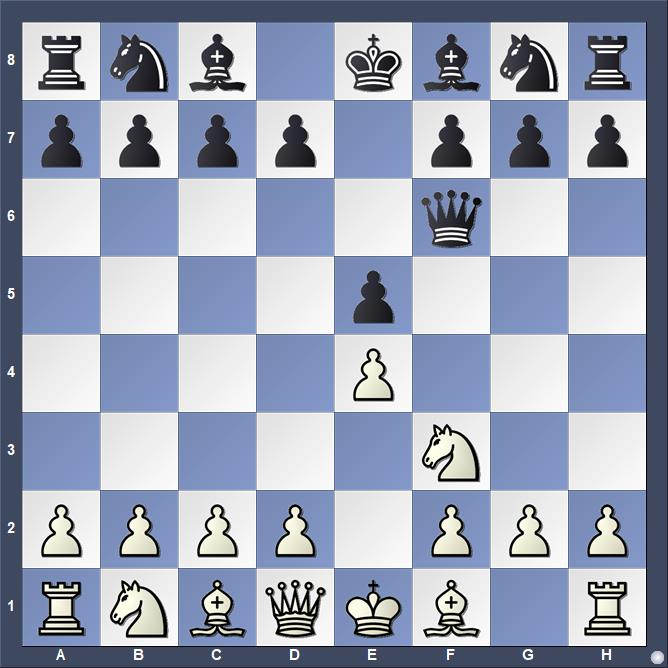
How bad is 2...Qf6?

Players relatively new to the game are often warned not to bring their queen out too early The move 2...Qf6 after 1.e4 e5 2.Nf3 was examined early in chess history. It appears in several manuscripts that reflect the work of Giulio Cesare Polerio and Gioachino Greco, and also in a sixteenth century manuscript reflecting the work of Pedro Damiano and Luis Ramirez de Lucena.

White to move
What should White do? I was surprised that my database of online games contains only 65 games with this position as it seems that I see it often lately. My score of 66% wins with White is unpleasant, too. I should have more success, especially as this queen foray is more often played by lower rated players. In fact, I underperform against it with a performance rating more than 100 lower that my average rating. My database also shows that I played this move once. I won with Black.

In the vast majority of the 304 games in ChessBase Mega 2020 that reached this position, White opts for one of two natural developing moves: 3.Nc3 is most popular (133 games), and second most often played is 3.Bc4 (93 games). Both score approximately 75%. I have played both of these moves and several others.

Monday morning, I opted for 3.c3, which I had played at least seven times prior. Although appearing in only five games in CB Mega, it may be the oldest response. It appears in the sixteenth century German MS produced by an unknown author sometime after 1512, purporting to present the work of Damiano and Lucena. Peter J. Monté has a chapter devoted to this MS in The Classical Era of Modern Chess (2014) and offers two lines after 3.c3 in Part II.

My game continued:

3...Bc5 4.d4 exd4

The German MS has 4...Bb6 and then 5.Be3 (5.h3 h6 6.Nxe5 d6 7.Nf3) 5...d6 6.dxe5 dxe5 7.Bg5 Qg6 8.Qd8#.

Three games on Lichess went as far as 6...dxe5 and then all had 7.Bxb6. After 7.Bg5, Black must play 7...Qd6, of course. 5.Be3 is not the strongest move in this old line. 5.a4, 5.Nxe5, and 5.dxe3 all give White a decisive advantage.

White to move
5.e5

If Black brings out the queen early, I should kick it around.

5.cxd4 is preferred by Stockfish. 5...Bb4+ 6.Nc3. White has a clear lead in development.

Perhaps White should favor normal development. What principles guide the punishment of Black's early queen foray?

5...Qg6

Although the engine favor removing the queen to its starting square, such a move is not in the spirit of 2...Qf6.

6.cxd4

Stockfish would give up prospects of castling kingside with 6.Bd3! Qxg2 7.Rg1 Qh3 8.Rg3 Qe6 9.cxd4 with a decisive advantage in the judgement of the software.

6...Bb4+ 7.Nc3

White has a comfortable position. A couple of moves later, my opponent gave up the dark-squared bishop for the gain of a pawn. I went on to win. My play was sloppy, failing to find the strongest moves. My reluctance to give up the g-pawn for an opportunity to chase Black's queen with developing moves is one lesson I take from this game.

The Doazan manuscript credited to Polerio offers two main lines that follow from 2...Qf6 (see "Classic Bishop Sacrifice: Early History" for a discussion of this MS). One of these lines leads to a clear advantage for White, but the other is less clear.

Polerio,Giulio Cesare [C40]
Doazan MS, c.1610

1.e4 e5 2.Nf3 Qf6 3.Nc3 Bc5

White to move
3...Bc5 is a terrible move that allows White to exploit the position of the Black queen. Polerio offers an instructive line that is worth learning.

4.Nd5 Qd6 or Qg6 5.d4 Bxd4 6.Nxd4 exd4 7.Bf4 1-0

Polerio,Giulio Cesare [C40]
Doazan MS, c. 1610

1.e4 e5 2.Nf3 Qf6 3.Nc3 c6

This move is much better that 3...Bc5.

4.Bc4 Bc5 5.0-0 d6

White to move
White is better, but Polerio's line does not demonstrate an advantage.

6.h3

6.d4 is suggested by Stockfish with a clear advantage for White.

6...Be6 7.Bb3 Nd7 8.d3 h6 9.Kh1 Ne7 10.Ng1 0-0 11.f4 

Polerio's line ends here. The position seems close to equal.

Gioachino Greco's explorations of this queen foray appear in the Paris (1625) and Orléans (n.d.) manuscripts. Monté notes that Orléans was likely copied from the Paris MS (339). ChessBase has three games from these explorations, although the lines given in that database are not entirely attested by Monté's compilation of lines found in sixteenth and seventeenth century manuscripts. I plan another post showing what we can know of Greco's work on 2...Qf6. (edit: now posted at "Greco on 2...Qf6")


02 October 2022

The Art of Analysis

How do you analyze a chess game?

I was thinking about this question this morning when I would have preferred to sleep another hour. Hence, I thought to open Irving Chernev, The 1000 Best Short Games of Chess (1955) to the next game and analyze it. Then, I would compare my annotations to those Chernev offers. I am working my way through this book.

While analyzing a game, I look at many possibilities that will vary depending on the game and why it has come to my attention. For miniatures, such as one finds in this classic Chernev text, I expect to find a game-losing blunder and sometimes a series of weak moves. I make an effort to identify these before seeking any assistance from the annotations of others or from engines.

Wills -- Sparks [C42]
USA, 1942
Stripes,James

1.e4 e5 2.Nf3 Nf6 3.Nxe5 Nxe4?

This move is the critical error and a common beginner's mistake. There are few chess coaches who have not shown this error and the subsequent refutation to their students. It also appears in some of the oldest chess books and manuscripts (see the section on history below).

4.Qe2 Qe7

4...Nf6?? worsens matters and should be shown to beginners 5.Nc6+ wins the queen.

5.Qxe4

Black to move

5...d6 6.d4 f6

6...dxe5 and Black is a pawn down. Surely, this should be preferred to a futile effort for equality that cannot succeed against attentive play.

7.f4 Nd7 8.Nc3 dxe5

White to move

9.Nd5!+-

The refutation of Black's idea is a good example of an intermezzo. Instead of continuing a sequence of exchanges, White attack's Black's queen.

9...Qd6 10.fxe5 fxe5 11.dxe5 Qc6

11...Nxe5 12.Bf4 Yes, Black ends up a piece down, but that piece is a knight. Alternatives leave Black down a rook or a knight.
11...Qxe5 12.Qxe5+ Nxe5 13.Nxc7+ Kd8 14.Nxa8 Black may be able to trap the knight, being down only an exchange.

12.Bb5 Qc5 13.Be3 1-0

Chernev does not highlight the critical error, but offers some analysis after the game is already lost. His headnote, however, offers a clue to Black's fatal decision: "Mimicry can be very amusing, but in chess it usually turns out to be expensive fun" (91).

Wills -- Sparks [C42]
USA, 1942
Chernev,Irving

1.e4 e5 2.Nf3 Nf6 3.Nxe5 Nxe4 4.Qe2 Qe7

The knight must not move, as the discovered check will cost Black his queen.

5.Qxe4 d6 6.d4 f6 7.f4 Nd7 8.Nc3 dxe5 9.Nd5 Qd6 10.fxe5 fxe5 11.dxe5 Qc6

11...Qxe5 12.Qxe5+ Nxe5 13.Nxc7+; or 11...Nxe5 12.Bf4 wins a piece

12.Bb5 Qc5 13.Be3 1-0

I must credit Chernev's sometimes cryptic annotations for driving me to think and analyze for myself when I first encountered this book 47 years ago.

History

Neither the players Wills and Sparks, nor this particular execution of these moves are well-known apart from Chernev's book, but the moves and ideas can be found in the texts of Pedro Damiano, Ruy Lopez. Giulio Cesare Polerio, Gioachino Greco, and others. In ChessBase Mega 2020, Greco's game is the oldest, but Chessgames.com has one attributed to Damiano.

The following game appeared in ChessBase News in Spanish and German versions on 21 May 2009. The only English versions I have found are Google Translate versions of these. The article is an interview with Mário Silva Araújo, an amateur historian who produced a biographical study of Damiano. Araújo suggests that Damiano fled Portugal to Rome because he was Jewish. In December 1496, King Manuel I of Portugal ordered the expulsion of Jews from the nation. According to Araújo, "It is the oldest known game played--and won--by a Portuguese."

Damiano [C42]
Rome 1497

1.e4 e5 2.Nf3 Nf6 3.Nxe5 Nxe4 4.Qe2 Qe7 5.Qxe4 d6 6.d4 f6 7.f4 Nd7 8.Nc3 dxe5 9.Nd5 Qd6 10.dxe5 fxe5 11.fxe5 Qc6 12.Bb5 Qc5 13.Be3 Qxe3+

The game presented on chessgames.com lists Araújo's study as its source and concludes 13...Qxb5 14.Nxc7

14.Nxe3 1-0

Early Petrov lines similar to those in these games span pages 449-452 in Peter J. Monté, The Classical Era of Modern Chess (2014), "Part II. Openings and Games of the Classical Era of Modern Chess". There the move order presented from Damiano's published text and its many reprints have 7...dxe5, but still reach a position after White's move 11 that is shared by all the games presented in this post.

Black to move
There are several continuations from this point in manuscripts from the late fifteenth century to Greco's seventeenth century work: 11...Qc6, 11...Qc5, and 11...Qg6. Monté also presents a fair number of alternatives to the main line that were explored in these manuscripts. Whoever Sparks may have been, he fell prey to one of the oldest known opening fiascos.

13 June 2022

Classic Bishop Sacrifice Before Greco

In Chess Gems: 1,000 Combinations You Should Know (2007), Igor Sukhin presents this position which he credits to an 1594 manuscript produced by Giulio Cesare Polerio.

White to move
Polerio's Ordini MS is dated 1594 in the dedication to an unnamed lord. In "Part II. Openings and Games of the Classical Era of Modern Chess" of The Classical Era of Modern Chess (2014), Peter J. Monté presents a game opening from this MS that concludes with the classic bishop sacrifice (519), which sometimes is called Greco's Sacrifice or the Greek Gift.

Polerio,G.C.
Ordini MS 1594

1.e4 e6 2.d4 Bb4+ 3.c3 Ba5 4.f4

Rapid advance of the c- and f-pawns was advised by Polerio against closed positions "gioco stretto" (see Monté, 236).

4...Nf6 5.Bd3 O-O 6.Nf3 d5 7.e5 Ne8

White to move
8.Bxh7+

9.Ng5 and Qh5 will follow.

This position differs in a few particulars from the one presented by Sukhin. The line that leads to Sukhin's position appears in the Doazan MS. I discussed this game and the Doazan MS at the end of March in "Classic Bishop Sacrifice: Early History". As noted there, the manuscript is of uncertain authorship and date. Monté includes it in the grouping he labels the Polerio-complex. Its contents have much in common with other MSS more clearly the work of Polerio.

Two earlier Polerio MSS offer another variation leading to the classic bishop sacrifice. The first was acquired by J.A. Leon, who presented its contents in British Chess Magazine (August 1894) and then later that year in a small book, Forty-Six Games of Chess by Giulio Cesare Polerio. Based on the handwriting, Monté believes, it is "the work of an anonymous writer who could copy Polerio's notes at leisure" (222). This Leon MS may have preceded one presented to Giacomo Buoncompagno, named Boncompagno MS No. 2 by Monté. The dedication addresses Giacomo as the Duke of Sora, a title he assumed 12 March 1580. In October 1583 acquired an additional title not in the dedication, suggesting the MS must have been presented sometime 1580-1583.

This version appears to be the earliest known example of the classic bishop sacrifice. It is the work of Polerio a full decade prior to the date given by Sukhin.

Polerio,G.C.
Leon MS 1583

1.e4 e6 2.d4 Nf6 3.Bd3 Bb4+ 4.c3 Ba5 5.Nf3 O-O 6.e5 Nd5

White to move
7.Bxh7+

Before Greco

As I mentioned in my article in March, there have been those who credited nineteenth century chess masters with what many today call Greco's Sacrifice. Greco certainly deserves credit for demonstrating the conduct of the game all the way to the end, but the sacrifice itself was known earlier. There are at least four versions that precede Greco.

1) Polerio's earliest, appearing in the Leon and Boncompagno-2 MSS from the early 1580s.
2) Polerio's second, appearing in the Ordini MS, 1594
3) The Doazan MS version, possibly connected to Polerio. Probably early seventeenth century.
4) Salvio's version, published in Trattato dell' Inventione et Arte Liberale del Gioco Degli Scacchi (1604).

Greco may have seen Polerio's early version, but Salvio's version is the one that he developed in his own manuscripts.


30 March 2022

Classic Bishop Sacrifice: Early History

Gioachino Greco (c.1600-c.1634) is usually credited with the discovery of the classic bishop sacrifice on h7, at least by those who bother to look into the matter historically. A few years ago some writers suggested the sacrifice was of more recent invention. These days, perhaps because Greco's games are better known, most writers have given up on such ideas.

Although the best known early example of the sacrifice comes from Greco, he appears to have learned the idea from Alessandro Salvio (c.1575-c.1640), who published some lines employing the sacrifice in Trattato dell' Inventione et Arte Liberale del Gioco Degli Scacchi (1604).

White to move

In 1996, Edward Winter posed the question in his column, "When was the Bxh7+/Ng5+ attack first played"?* He proceeds to demonstrate Irving Chernev's confusion on the matter, claiming Morphy -- Guibert, Paris, 1858 in Chess Review (April 1950) and in The Chess Companion (1968), while two pages later in this book Chernev suggests Paulsen -- Schwartz 1879. Winter asks, "what about Greco", noting that Chernev includes Greco's game in The 1000 Best Short Games of Chess (1955), where it is game 199 (90). 

The version of the game in Chernev's collection of miniatures is identical to the second variation of the twenty-third game in William Lewis, Gioachino Greco on the Game of Chess (1819) and game XXV, variation A in Professor Louis Hoffmann [Angelo Lewis], The Games of Greco (1900). Hoffmann's game and variations appear in David Levy and Kevin O'Connell, Oxford Encyclopedia of Chess Games, Vol. 1 1485-1866 (1981). This version, sans the variations in Lewis and Hoffmann, appears in  ChessBase Mega 2020. Chessgames.com has Lewis's twenty-third game, instead of his variation A.

A longer version appears in Francis Beale, The Royall Art of Cheese-Play (1656). In Beale's version, Black's bishop first checks from b4 and then retreats to e7 after White's c-pawn blocks the check.

None of these books or databases offer the whole of Greco's analysis evident in his manuscripts. Both the extent of Greco's analysis and that which preceded his work becomes clear in "Part II. Openings and Games of the Classical Era of Modern Chess" (439-530) in Peter J. Monté, The Classical Era of Modern Chess (2014). I first mentioned this definitive work on Chess Skills with "Monumental Scholarship" (June 2020). Monté offers an analysis tree that ends every line with the names of sixteenth and seventeenth century manuscripts where these lines appear. He also references a few later published books, such as Beale, that are grounded in manuscripts.

Jon Edwards, Sacking the Citadel: The History, Theory and Practice of the Classic Bishop Sacrifice (2011) came into my possession a few days ago and provoked my interest in creating this article. Edwards attempts to give Greco his due, while acknowledging that Giulio Cesare Polerio may have "discovered it first" (8). He offers an admirable effort to present a more detailed biography of Greco and some context to place Greco in his times. Edwards draws on a number of Renaissance histories to construct his narrative. Unfortunately, he seems a little too trusting of dubious accounts and does not source his claims well. Some information is clearly grounded to a text, but mostly the author presents only a general bibliography of sources at the back of the book.

As Edwards tells it, Greco read Salvio's Trattato and Ruy Lopez's text, showed promise, and began studying with Don Mariano Marano (13-14). The claim that Greco studied under Marano derives from Richard Twiss, Chess (1787) and was repeated by Lewis in his book on Greco's games mentioned above (vii). Monté notes a number of historians who have expressed doubts concerning Twiss's claim. Salvio states only that Greco met Marano twice. Monté states, "an early acquaintance with Marano is based only on a rather vague suggestion by Salvio" (319).

That Greco was in Rome in 1619-1620 is better attested. No less than four extant Greco manuscripts exist from this time and indicate Greco's presence in Rome. Two of these manuscripts are undated and two are clearly dated early 1620. "[A]ll approximately dated facts of Greco's life are exclusively provided by his manuscripts", according to Monté (321).

Turning now to Monté's 90 page opening tree and documentation, we find variations containing the classic bishop sacrifice absent from the standard texts containing Greco's games (Beale, Lewis, and Hoffmann).

1.e4 e6 2.d4 c6

This strange move is absent from all modern references to Greco's games, but appears in three manuscripts of unknown authorship classified by Monté as part of the Lopez-complex: Elegantia, Regole, and Riccardiana (146, 156ff, 518). The idea is to bring Black's queen out with check. The check only occurs after White plays c4, a move recommended by Lucena.

3.Bd3 Be7 4.Nf3 Nf6 5.h4 Kg8&Re8

Castling, as we know it today, is older than Greco, but was not universally adopted. There were local variations. Some places there was a range of choices a player could make as to the squares where the king and rook ended up during the move. The placement of the rook on e8 makes the bishop sacrifice to come less forcing as Black's king has an additional option after accepting the sacrifice, as well as a second square for refusing.

6.e5 Nd5 7.Bxh7+ Kxh7 8.Ng5+

Black to move
The three main options 8...Bxg5, 8...Kg6, and 8...Kg8 all appear in Salvio's Trattato (1604). Greco adds additional lines or extends them. Because 8...Bxg5 has more variations, I begin with the other two.

a) 8...Kg6 9.h5+

Salvio ends here. Greco adds:

9...Kh6 10.Nxf7+ K moves 11.Nxd8 with these moves appearing in the Orsini (1620) and Lorraine (1621) manuscripts.

b) 8...Kg8 9.Qh5 Bxg5 10.hxg5

This line is in Salvio, Orsini, and Lorraine.

c) 8...Bxg5 hxg5+

And now, Black has 9...Kg6, 9...Kg8 appearing in Salvio and two Greco manuscripts. I will not present all of this analysis. You can find it in Monté's book, and it reappears in the games of others in the twentieth century. Here Edwards' analysis shines.

Noteworthy is 9...Kg6 10.Qh5+ Kf5 11.Qh3+ Kg6 (11...Ke4 12.Qd3#) 12.Qh7# in Salvio, and two early Greco MSS. For 11.Qh3+, see below.

Lines with 3...Nc6 instead of 3...c6 do not appear in Salvio, but appear in a larger number of Greco manuscripts, beginning with Mountstephen (1623), one of the London MSS.

Game 1 in Edwards, Sacking the Citadel appears in ChessBase Mega 2020, Lewis, and Hoffmann.

1.e4 e6 2.d4 Nf6 3.Bd3 Nc6 4.Nf3 Be7 5.h4 0-0 6.e5 Nd5 7.Bxh7+ Kxh7 8.Ng5+ Bxg5 9.hxg5+ Kg6 10.Qh5+ Kf5

White to move
11.Qh7+

Edwards comments, "Chernev was the first to mention a quicker checkmate with 11.Qh3+" (96). He does not indicate where Chernev offers this analysis. Nonetheless, the sequence appears in Salvio, as noted above, albeit with the difference that Black played 3...c6 instead of 3...Nc6.

11...g6 12.Qh3+ Ke4 13.Qd3# 1-0

It appears that Greco's early manuscripts are almost completely lifted from Salvio with respect to the French Defense and the classic bishop sacrifice. By 1623, however, Greco was developing his own ideas and adding variations.

Did Salvio, rather than Greco, first discover the Bxh7+ sacrifice? Perhaps not. In the Doazan manuscript, there may be an earlier version. The MS was sold in 1827 and then offered for sale again in 1841, In 1843, its new owner, Gabriel Eloy Doazan introduced it in an article in Le Palamède. When Doazan died in 1864, it was sold again and lost. The bulk of its contents were transcribed by Tassilo von der Lasa in 1855. It is from these transcriptions that we know much of its content.

Doazan dated the manuscript to 1600, but not much credence is given by historians to his claims.

The manuscript is of unknown authorship and date, but may reflect the work of Polerio and his associates. Some of the games are credited to other players. A line credited to Giovanni Domenico contains the classic bishop sacrifice.

1.e4 e6 2.d4 Nc6 3.Nf3 Be7 4.c3 Nf6 5.Bd3 O-O 6.h4 d5 7.e5 Ne8

White to move
8.Bxh7+ Kxh7 9.Ng5+ Bxg5 10.hxg5+

It appears that is as far as the game goes, but we know the possible conclusions.

Greco's games, especially if more of them were made available in databases, remain the most detailed early analysis of the classic bishop sacrifice. He copied lines from Salvio, and may have been exposed to ideas from even earlier. Greco developed these lines further. 


*Winter's question appeared in Kingpin (August 1996), and then again in Chess Notes 7979 "Greek Gift", which references the republication of the Kingpin column in Kings. Commoners, and Knaves (1999).

01 November 2021

Cultivating Error

Fast chess rewards weakness. Playing for cheap traps and succeeding stifles progress. Having spent many hours studying the games of Gioachino Greco, I have succeeded numerous times in replicating his best known miniature. This morning against a player with a Lichess rating near 2200, I found my opponent unprepared to meet the transparent threats offered in the not quite sound Greco Attack.

After this victory, and my postgame analysis, I decided that I have had enough. If I am to continue playing the Greco Attack, I must shift to the Aitken variation. Below is the game.

Stripes,J (2096) -- Internet Opponent (2153) [C54]
Rated Rapid game lichess.org, 01.11.2021
[Stripes,James]

1.e4 e5 2.Nf3 Nc6 3.Bc4 Bc5 4.c3 Nf6 5.d4 exd4 6.cxd4

6.e5 is better, according to William Lewis, Gioachino Greco on the Game of Chess (1819), which Lewis presents as a translation of a French collection of Greco's games.

6...Bb4+ 7.Nc3?!

7.Bd2 Nxe4 8.Bxb4 Nxb4 9.Bxf7+ Kxf7 10.Qb3+ is in the Ordini manuscript (1594) from the Polerio-complex. See "Greco Attack Before Greco".

7...Nxe4=/+ 8.0-0

Black to move
8...Nxc3

8...Bxc3 9.d5 is in Greco's Mountstephen manuscript (1623). It is the better move.

9.bxc3 Bxc3

The equalizing 9...d5 does not seem to appear among late-sixteenth century or seventeenth century manuscripts. It was played by Moller in 1902, according to ChessBase Mega 2020.

10.cxb4 dxc4 11.Re1+ Ne7 with equal chances: 0-1 (48) Piotrowski,O-Moller,J Hannover 1902.

White to move
10.Qb3?

I play this move because I get away with it. I have even told students, erroneously, that White is now winning.

10.Ba3 is Aitken's suggestion 10...d5 11.Bb5 Bxa1 12.Re1+ Be6 13.Qc2 Qd7 14.Ne5+-. See also Corte -- Bolbochán 1946 (2016).

10...Bxa1??

Now Black is lost. Black is also lost after 10...Bxd4, which also appears in Greco.

10...d5 11.Bxd5 0-0+/= (11...Bxa1?? 12.Bxf7+ Kf8 13.Ba3+ Ne7 14.Re1+- is credited to Don Antonio in the Doazan manuscript, which precedes Greco. Greco may have seen this manuscript.)

11.Bxf7+ Kf8 12.Bg5 Ne7 13.Ne5!

Greco's innovation, building on the work of Polerio and his associates.

Black to move

Greco analyzes several variations from this point. This game follows one of them.

13...Bxd4 14.Bg6 d5 15.Qf3+ Bf5 16.Bxf5 Bxe5 17.Be6+ Bf6 18.Bxf6 Qe8N

Black's move is the first new one.

White to move
19.Be5+ 

My last move misses checkmate in three. Nonetheless, Black resigned.

19.Bg5+ (or Bh4+) 19... Nf5 20.Qxf5+ Qf7 21.Qxf7#

I won because my opponent missed several well-known opportunities. 10.Ba3 avoids some of these.

25 October 2021

Youth Chess in Spokane

Some schools have returned to in-person after school chess clubs. Saint George's School, where I coach, is one of these. The large number of new players is overwhelming. After school chess clubs are filled with students eager to play, but who need instruction. 

Under ideal conditions, I would work with a small number of beginners and teach them the rudiments of the game with an emphasis on contacts (see "Lesson One"), as Momir Radovic advocates. In practice, however, when a large influx of students who have never played chess, or have recently learned the moves of the game, accommodating student needs and interests requires flexibility. Experience has taught me that students familiar with the game usually teach the others. It falls on me to teach some principles of tactics and strategy.

Our first meeting the first week of October, I took students through the geography of the chessboard, emphasizing ranks, files, diagonals, and the center. This first lesson concluded with an elementary checkmate demonstration based on one in José Raúl Capablanca, Chess Fundamentals (1921).

White to move

White wins quickest by first confining the Black king to the eighth rank. 

1.Ra7

Then White's king moves up, staying on the same file as Black's king until time to move to the sixth rank.

1...Kg8 2.Kg2 Kf8 3.Kf3 Ke8 4.Ke4 Kd8 5.Kd5 Kc8

White to move
6.Kd6 Kb8

If 6...Kd8, 7.Ra8# is checkmate.

7.Rc7 Ka8 8.Kc6 Kb8 9.Kb6 Ka8 10.Rc8#.

The second week featured another elementary checkmate.

White to move

From this position, checkmate can be forced in as few as fifteen moves. I did not display such efficiency while teaching this. Rather, I modeled thinking through the moves to 1) confine the king to a small area with the bishops controlling two parallel diagonals, 2) move White's king close, and 3) calculate the last few moves.

This morning, playing against Stockfish, I aimed for efficiency.

1.Bg5 Kf7 2.Bh3 Kg6 3.Bd8 Kf7 4.Ke2 Kg6 5.Kf3 Kf7 6.Kf4 Kg6 7.Be6 Kg7 8.Kg5 Kh7 9.Be7 Kg7 10.Bd6 Kh7 11.Bf8 Kh8 12.Kf6 Kh7 13.Kf7 Kh8 14.Bg7+ Kh7 15.Bf5# 1-0

Some miniatures (very short games) were shown illustrating quick checkmates because a player had weakened the short diagonal leading to the king. This unusual game, which appears as the first in Irving Chernev, The 1000 Best Short Games of Chess (1955), was followed by one from an online blitz game I had played.

Gibauld -- Lazard [A45]
Paris, 1924

1.d4 Nf6 2.Nd2 e5 3.dxe5 Ng4 4.h3 Ne3

White to move

White resigned as saving the queen with 5.fxe3, leads to 5...Qh4+ 6.g3 Qxg3#.

Internet Opponent -- Stripes,J [A45]
Live Chess Chess.com, 07.10.2021

1.d4 Nf6 2.Nd2 e5 3.dxe5 Ng4 4.Ngf3 d6 5.exd6 Bxd6 6.h3

Black to move
6...Ne3 7.fxe3 Bg3#

Guiding theme of the lessons are few pieces, emphasizing the power of one of them, or short games with few moves. Efforts are made to explain the rules, including how each piece moves, checkmate, and stalemate. One of the short games provoked questions about castling.

A problem composed by Gioachino Greco about 1620 was shown to highlight two themes--forcing moves and a bishop on the wrong color squares.

Black to move

Black forces a draw via 1...Ra1+ 2.Rf1 Rxf1+ 3.Kxf1 Bh3

White to move
White can capture the bishop, and have two h-pawns or let the Black play 4...Bxg2. In either case, Black's king will find refuge on h8, moving between this square and either g8 or h7, depending on White's efforts. The h-pawn will never promote and White cannot win. Some time was expended demonstrating efforts White can make and how many lead to stalemate.

During another session, an older composition was employed to highlight forcing moves and the power of pawns. This problem comes from a manuscript connected to Giulio Cesare Polerio, whose works influenced Greco.

White to move
1.Ng6+ hxg6 2.hxg6+ Nh6 3.Rxh6+ gxh6 4.g7+ Kh7 5.g6#

All of Black's moves were forced.

The next lesson will feature another instructive exercise from manuscripts that are part of what historians call the Polerio-complex.

White to move

Themes include a partial stalemate (king cannot move, but there is a legal move). en passant, pawn promotion, and a checkmate pattern.


24 October 2021

Greco Attack Before Greco

The first game with the Greco Attack in David Levy and Kevin O'Connell, Oxford Encyclopedia of Chess Games, Volume 1 1485-1866 (1981) is the first game therein credited to Gioachino Greco (1). Levy and O'Connell annotate this game according to variations presented in their source: Professor Hoffmann, Games of Greco (1900). Nearly the same game, but deviating with Black's move 18, appears in ChessBase Mega 2020 as games 47 and 99, the latter offering variations and a different date.

Eight of the seventeen games that precede the first of Greco's in the Oxford Encyclopedia feature the Italian Opening.

Greco,G - G-1 OECG [C54]
Europe, 1600

1.e4 e5 2.Nf3 Nc6 3.Bc4 Bc5 4.c3 Nf6

4...Qe7 is credited to Lopez in OECG, and also played by Boi, Polerio (four games), Lorenzo (against Polerio), and an unnamed player against Busnardo.

5.d4 exd4 6.cxd4 Bb4+ 7.Nc3 Nxe4 8.0-0 Nxc3 9.bxc3 Bxc3 10.Qb3

ChessBase Mega 2020 offers: "Greco invented free play with the pieces. Free pieces will win: free diagonals for the bishops, free files for the rooks!!" But, in fact, as will be shown below, all of these moves precede Greco.

Black to move
10...Bxa1

10...Bxd4 is Greco no. 2 in OECG; Also Game 2 in Hoffmann; third and fourth variations to game 1 in William Lewis, Gioachino Greco on the Game of Chess (1819).

11.Bxf7+ Kf8 12.Bg5

Black to move
12...Ne7

12...Nxd4 13.Qa3+ Kxf7 14.Bxd8 Rxd8 15.Rxa1 Nc2 16.Qb3+ Kf8 17.Qxc2+- Game 1, var. B in Hoffmann. Also second variation in Lewis. Absent as a Greco game from ChessBase Mega 2020.

13.Ne5 Bxd4

13...d5 14.Qf3 Bf5 15.Be6 g6 16.Bh6+ Ke8 17.Bf7# Game 1, var. A in Hoffmann. Also first variation in Lewis. Absent as a Greco game from ChessBase Mega 2020.

14.Bg6 d5 15.Qf3+ Bf5 16.Bxf5 Bxe5 17.Be6+ Bf6 18.Bxf6

Black to move
18...gxf6

18...Ke8 19.Bxg7 Is given as the conclusion in two Greco games in ChessBase Mega (both identical but one analyzed).

19.Qxf6+ Ke8 20.Qf7#

This is Game 1 in Professor Hoffmann, ed. Games of Greco (1900). Also Game 1 in Lewis, Gioachino Greco on the Game of Chess (1819). 

Peter J. Monté, The Classical Era of Modern Chess (McFarland 2014) lists eight Greco manuscripts containing this entire game, and another ending with 17.Be6+. He also notes that it appears as Gambett VI in Francis Beale's 1656 compilation of Greco's games (463). Monté does not mention the conclusion given in ChessBase Mega 2020.

Reading Monté last night and this morning, I returned to a book he mentioned and that I had downloaded from GoogleBooks several years ago: J.A. Leon, Forty-Six Games of Chess: by Giulio Cesare Polerio, rpt. from British Chess Magazine (1894). The BCM article appeared in August 1894 and was reprinted in Leeds by Whitehead & Miller. Following 24 King's Gambits, Leon offers the game that Monté notes, "presents the first Greco Attack" (224).

Polerio,Giulio Cesare [C54]
Rome, c. 1581

1.e4 e5 2.Nf3 Nc6 3.Bc4 Bc5 4.c3 Nf6 5.d4 exd4 6.cxd4 Bb4+ 7.Nc3 Nxe4 8.0-0 Nxc3 9.bxc3 Bxc3 10.Qb3 Bxa1 11.Bxf7+ Kf8 12.Bg5 Ne7

White to move
13.Re1

Leon's Polerio manuscript ends here with the note that White wins the queen and thus the game.

Monté lists two other lines from the Doazan manuscript, which has not been definitively dated, but precedes Greco.

Three alternatives to 13.Re1 appear in seventeenth century manuscripts.

1) 13.Rc1 Credited to Don Antonio in the Doazan MS (463). It is the only game attributed to Don Antonio, whom Monté believes was Don Antonio Mancino (270).

2) 13.Rxa1 Last move in Greco's Lorraine MS (1621)

13...h6 14.Bh5 d5 15.Bxe7+ Kxe7

White to move

16.Re1+ Kf6 17.Qe3 Qd6 18.Ne5 Bf5 19.Qf4 g5

White to move
20.Qf3 1-0

Contrary to the claim in the ChessBase database, Polerio should be the one credited with inventing "free play with the pieces". He likely originated the Greco Attack.


3) Greco improved Polerio's line with 13.Ne5.

Black to move
Greco's Innovation: 13.Ne5!

Polerio, as Greco, is poorly known by today's chess players (see "The Unknown Greco"). Much of what players learn from Greco was derived by him from the work of Polerio.

22 October 2021

The Unknown Greco

ChessBase Mega 2020 contains 82 games credited to Gioacchino Greco, most dated 1620 (which seems an arbitrary date). At the time of this writing, Chessgames.com has 90 games credited to the famous Calabrese. In "Gioachino Greco on the Game of Chess" (2013), I wrote about the abundance of Greco's variations that can be found in William Lewis's 1819 text of that name. The better known and more accessible (the notation is standard English descriptive) 1900 text by Angelo Lewis, writing under the penname Professor Hoffmann, also has variations that are absent from databases.

Peter J. Monté, The Classical Era of Modern Chess (McFarland 2014), which I described in "Monumental Scholarship" (2020), offers far more detail from Greco's manuscripts, and also permits the diligent reader to separate Greco's contributions from lines he learned from others. In Part I of the book, Monté describes manuscripts and history from Lucena to Greco, concluding with a discussion of the development of castling and the pawn's leap. Part II. Openings and Games of the Classical Era of Modern Chess is a thoroughly documented move tree (439-530). The so-called Greco Attack is documented across four pages (462-465).

The Greco Attack begins with the moves 1.e4 e5 2.Nf3 Nc6 (In some of Greco's manuscripts 2.Bc4 Bc5 is played, and the knights deployed on the following move) 3.Bc4 Bc5 4.c3 Nf6 5.d4 exd4 6.cxd4 Bb4+ 7.Nc3.

Black to move

Play continues:

7...Nxe4 8.O-O Nxc3

8...Bxc3 is the mainline today, and offers a very good reason not to play the Greco Attack.

9.bxc3 Bxb3

9...d5 or 9...Be7 have been recommended.

10.Qb3

A fine miniature that I learned from Leonard Barden and Wolfgang Heidenfeld, Modern Chess Miniatures (1960) continued with 10.Ba3. See Corte -- Bolbochán 1946 (2016).

10...Bxa1

Greco also has games that continue with 10...Bxd4.

11.Bxf7+ Kf8  12.Bg5

Black to move

In the ChessBase database, Greco's games all continue with 12...Ne7. Chessgames.com, however, has one game that continues with the line I present below.

12...Nxd4

This move was played against me in a rapid game on Chess.com on Sunday, and I had faced it at least four times prior.

13.Qa3

13.Qb4+? is a blunder that appears in the ChessBase database in ten games played 1996-2016.

13...Kxf7 14.Bxd8

Black to move

In 1619, Greco had access to a manuscript known today as Boncampagno -3, which contains the following variations (Monté, 277, 463). This manuscript is among those classified as the Polerio Complex. Monté dates it between 1594 and 1619. Authorship is uncertain.

A.
14...Rxd8 15.Ng5+ Kf6 (or Kg6) 16.Rxa1 Kxg5 17.Qe7+

B.
14...Nxf3 15.Qxf3+ Bf6 16.Bxc7

Black to move

Greco's original contribution to this line begins from this position and appears in two manuscripts from his sojourn in England, the Mountstephen manuscript (1623) and the Grenoble manuscript, which is undated, but believed to precede Mountstephen.

16...Re8 Qh5+ Kf8 18.Bd6+

Mountstephen ends here.

Black to move

18...Be7 19.Re1 h6 20.Rxe7 Rxe7 21.Qe5 and Qxe7 follows.

Not everything credited to Greco was his own work, and yet much of his work remains unknown to most chess enthusiasts.