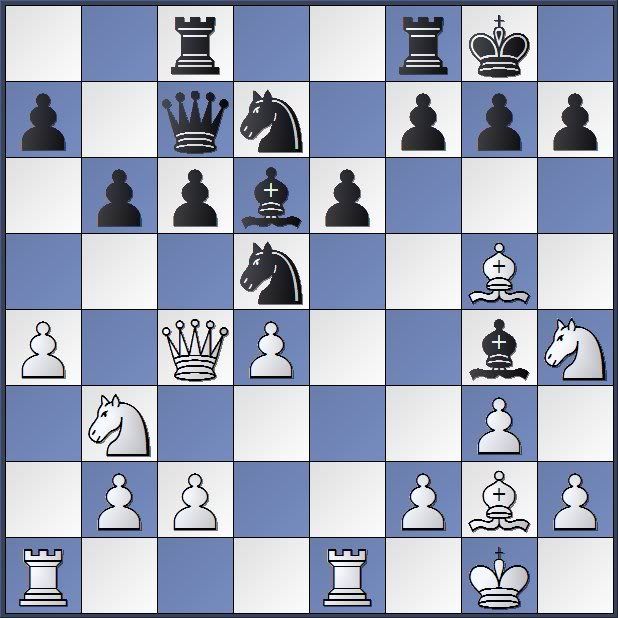
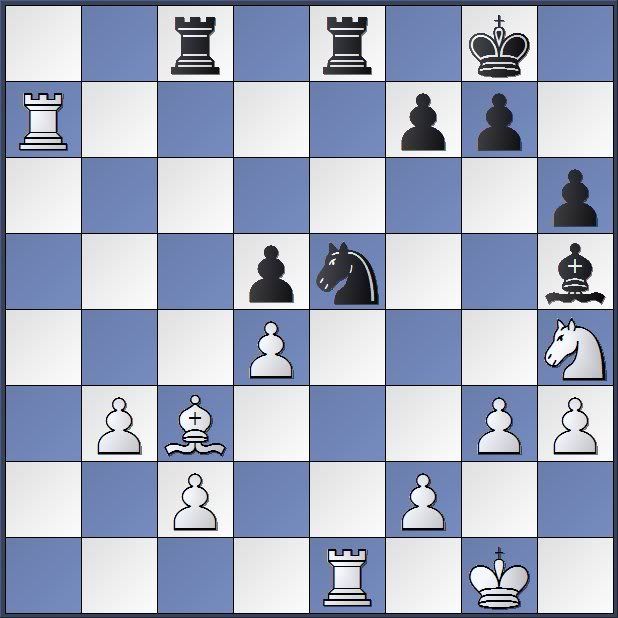
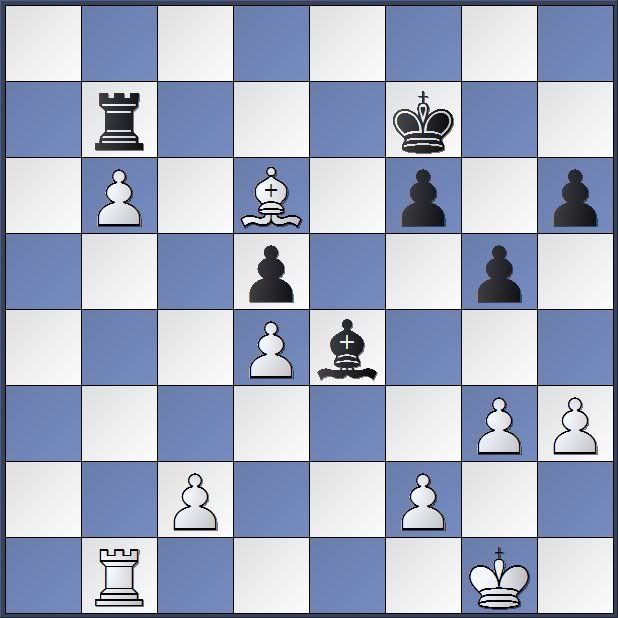
Showing posts with label Caro-Kann. Show all posts

17 January 2025

Building Pattern Understanding

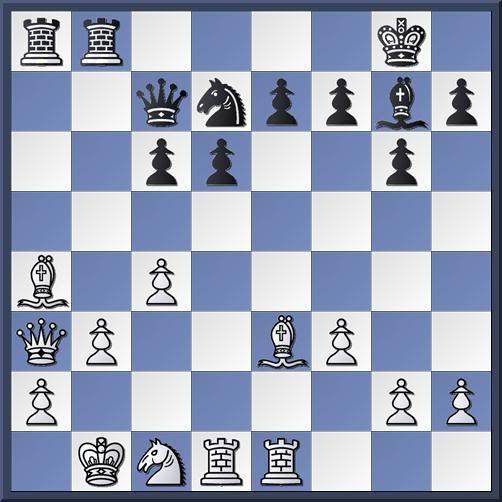
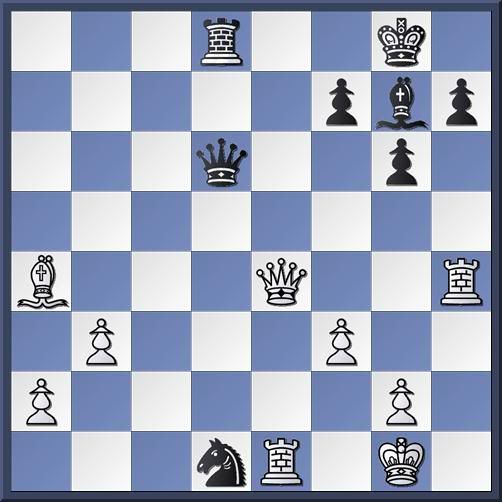
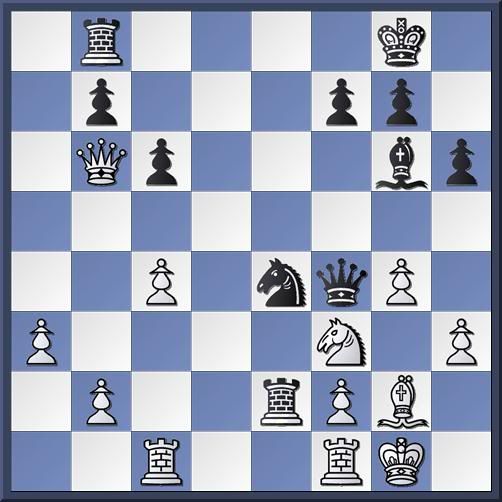
My intention with my after school club on Thursday was to reinforce some opening principles by showing the students some short games where king safety or piece mobility was horribly neglected by one player. Nonetheless, most of the miniatures that I shared from memory concerned a weakened e1-h4 diagonal--an important pattern.

The first two were exceptions, but both involved quick knockouts of the Caro-Kann Defense, which should be solid. The first game was played over-the-board in 2011 when I arrived twenty minutes late for round two. 

Stripes,J. -- Opponent
Eastern Washington Open, 1 October 2011

1.e4 c6 2.d4 d5 3.Nc3 dxe4 4.Nxe4 Bf5 5.Ng3 Bg6 6.Nf3 h6

6...e6 or 6...Nf6 would be normal.

7.Ne5 Bh7 8.Bc4 e6 9.Qh5 Qe7

This unfortunate blocking in of the bishop is the computer's top recommendation to my surprise.

10.O-O Nf6 11.Qe2 Nbd7 12.Bf4

I wanted to maintain a piece on e5.

12...O-O-O??

12...Nxe5 13.Bxe5 and White is slightly better.

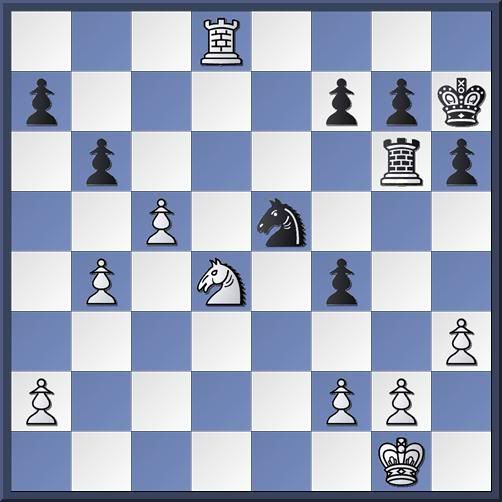
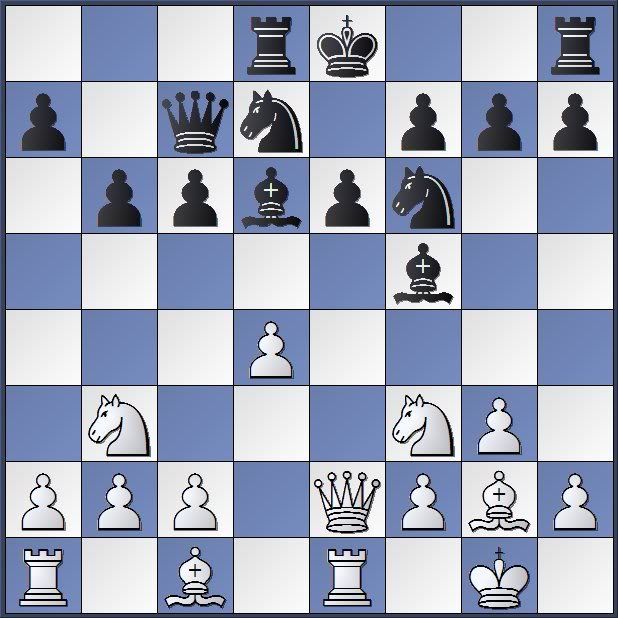
White to move
I asked the students to find my move.

13.Nxc6 and Black resigned facing checkmate or the loss of his queen.

The second game was played online. A catastrophic blunder spoiled a difficult but playable position that I have done well against.

Stripes,J. -- Internet Opponent
Chess.com 3 April 2024

1.e4 c6 2.d4 d5 3.e5 Bf5 4.h4 h6?!

4...h5 and 4...c5 both get played against me regularly.

5.g4!? Be4 6.f3 Bh7 7.e6! fxe6

7...Qd6 might be best here. I've seen it once.

8.Bd3 Bxd3 9.Qxd3

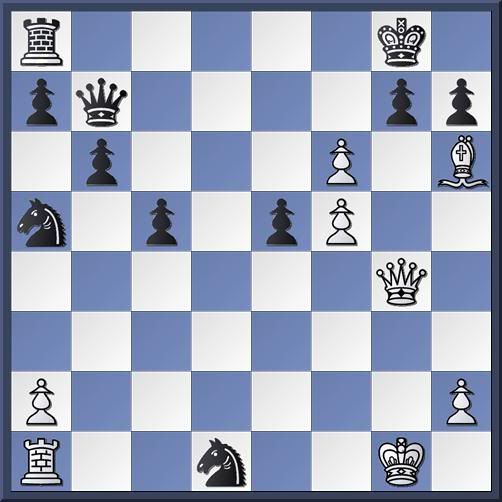
Black to move
9...Nd7??

9...e5 or 9...Qd6 are playable.

10.Qg6#

Then, I showed the students the first game in Irving Chernev, The 1000 Best Short Games of Chess (1955).

Gibauld -- Lazard
Paris 1924

1.d4 Nf6 2.Nd2 e5 3.dxe5 Ng4 4.h3??

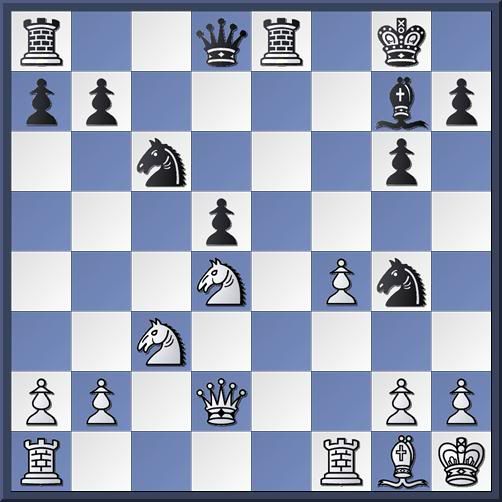
Black to move
4...Ne3 and White resigned.

After showing this game to some online students one morning in 2021, I played the following game that afternoon. Pulling the game from my database reminded me that I played an identical game again in 2023.

Stripes,J.--Internet Opponent
Chess.com 7 October 2021

1.d4 Nf6 2.Nd2 e5 3.dxe5 Ng4 4.Ngf3 d6

Watch what develops as it will appear in another game, too.

5.exd6 Bxd6 6.h3??

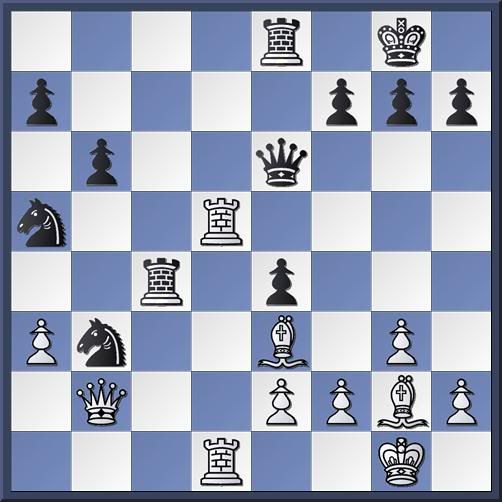
Black to move
6...Ne3 7.fxe3 Bg3#

The next game was presented to the students as one that I saw at the Mead High School Chess Club about 2006, but others have played it, too. It seems that I even played it on chess.com once in 2009.

A Visitor -- A Mead Team Member
Mead High School c.2006

1.f4 e5 2.fxe5 d6 3.exd6 Bxd6 

White to move
4.Nc3??

When I've had the diagram position against Michael Cambareri, he has played 4.Nf3 or 4.d5. I usually end up losing after a battle.

My students found the conclusion quickly.

4...Qh4+ 5.g3 Qxg3+

5...Bxg3+ 6.hxg3 Qxg3# is more common.

6.hxg3 Bxg3#

This next game is the source for the banner at the top of the page. It was played online in less than a minute during my lunch break while teaching chess in elementary school classrooms.

Internet Opponent -- Stripes,J.
Chess.com 18 January 2012

1.e4 e6 2.f4 c5 3.Nf3 Nc6 4.d4 cxd4 5.Nxd4 Nf6!? 6.e5 Ne4 7.Bd3 Qh4+ 8.g3 Nxg3 9.Nf3

Black to move
9...Qg4??

9...Qh3 was best.

10.hxg3

10.Rg1 was slightly better.

10...Qxg3+ 11.Ke2??

11.Kf1 and White is much better.

11...Qg2+

White to move
12.Ke3?

Moves into checkmate. 12.Ke1 loses the rook, but holds out longer.

12...Bc5+ 13.Ke4 f5+ 

With students, I always ask them to find the only move to get out of check. En passant is difficult for young chess players.

14.exf6 d5#

The last game appears in Emanuel Lasker, Common Sense in Chess (1917), has been played by Eric Rosen more than once, and appears in his video and Lichess Study on the Stafford Gambit. I have played the entire game nine times on chess.com.

Several Players -- Stripes,J.
chess.com November 2022 - October 2024

1.e4 e5 2.Nf3 Nf6 3.Nxe5 Nc6 4.Nxc6 dxc6 5.d3 Bc5 6.Bg5??

Black to move
6...Nxe4

I played 6...O-O the first time that I found myself in this position and won after a long battle.

7.Bxd8?

White still loses with 7.Be3, the best option. Eric Rosen's study offers the variations and I showed the main ones to my students.

7...Bxf2+ 8.Ke2 Bg4#

I hope my students will guard the diagonal leading to their king and also will exploit the vulnerability when their opponent fails to do so.


03 January 2025

Interesting Exercise

This pawn structure arises after the Spanish Exchange and a similar one, but with Black’s doubled pawns on the f-file, can arise from the Caro-Kann. Opening theory states that Black cannot allow liquidation of all the pieces because the pawn ending would be lost. Max Euwe offers analysis of how to play the pawn ending in an obscure book. Thomas Engqvist presents the analysis in 300 Most Important Chess Positions (2018).

White to move
Naturally, after reading through Engqvist’s analysis, I played the game against Stockfish. My best result after several efforts has been a draw. I lost, used the takeback feature, and tried again. In repeated efforts, I’ve blundered and lost more than I have tracked, but completed two games with draws.

The win is elusive and worth pursuing for what I can learn about pawn endings.

Today is the ninth day of my 60 day quest to go through all of Engqvist’s book at the rate of five positions per day. Yesterday, I spent a fair amount of time looking at games from which positions 21-25 were or could have been derived. For instance, one position featured a novelty played by Hikaru Nakamura in 2011. Several other players have followed his lead and I played through some of those games.

Today’s position is the 16th in the section on pawn endings. I have been alternating between openings and endings. I will finish the development section tomorrow.

Edit: after multiple efforts, I dove back into the analysis in 300 Most Important Chess Positions. I have been struggling against the engine from the wrong position. Black's a-pawn should be on a6. How much difference does this make?

29 February 2024

Break the Rules!

Neil McDonald writes in Break the Rules! A Modern Look at Chess Strategy (2012), "experienced players ... tread a fine line between the moves they want to play and the moves they are compelled to play." He continues, "Rules and precepts are useful starting points, but we have to use our judgement, creativity and knowledge to find the best move and plan in the specific position in front of us." A game he employs to illustrate has White beginning the game with eight consecutive pawn moves. The game is Navara -- Shimanov, Vilnius 2010.

When I read this book last year, I was already familiar with both the concept and a different Caro-Kann game from having seen them yoked in John Watson, Secrets of Modern Chess: Advances since Nimzowitsch (1998). Watson cites as an example of rule independence a game that Andy Soltis presents in The Art of Defence where Black's first ten moves included seven pawn moves. Yet, somehow I remember it as the same line presented by McDonald (maybe it, too, is in Watson's book).

After McDonald's explication, however, I began playing this line against the Caro-Kann in my online games. I've trapped several bishops when my opponent strayed from the best course. In other games, I've also sacrificed a pawn on e6 to lock in Black's dark-square bishop. These games turned out to be good preparation for a tournament game when my opponent attempted to play the Nimzo-Larsen Attack. But there was more: inspiration from a game I looked at nine years ago.

A game in Chess Informant 124 (2015) inspired me such that I have been meeting 1.b3 with 1...a5 ever since with good results. That game is Rapport -- Adly, Tsaghkadzor 2015. Sometimes I enjoy creating chaos at the board, but I always find it useful to remove my opponents from their comfort zone.

Both these games inspired and guided me during my round four game against David Griffin in the Inland Classic last weekend.

Griffin,David (1522) -- Stripes,James (1873) [A04]
Inland Classic Rathdrum (4), 25.02.2024

1.Nf3 Nc6 2.b3 a5N

A novelty inspired by Rapport -- Adly. Rapport is a devotee of 1...b3. I call this move a novelty because the position does not appear in my usual databases. However, further research shows that the move in the present position has been played 902 times on Lichess.

I did have an OTB game against Griffin Herr in 2019 that began 1.Nf3 Nf6 2.b3 a5. Before the game, Griffin had asked me how I responded to 1.b3. I told him the truth, not knowing that we would be paired.

3.Bb2 e6 4.e3 a4
White to move
5.Be2

5.a3 seems important, as I suggested to David after the game.

5...a3

5...Nf6 6.0-0 Be7 7.d4 0-0 8.c4 d5 9.bxa4 b6 10.Nc3 Na5 0-1 (34) Shytaj,L (2459)--Ponkratov,P (2613) Riadh 2017.

6.Bc3 Nf6 7.0-0 d5=

White to move
8.Nd4

8.d4 has been popular on Lichess, where this position has occurred in 114 games. David wanted to avoid this move because his bishop's scope on the long diagonal was his intended manner of play.

8...Nxd4 9.Bxd4

9.exd4 Bd6 and I would have continued with somewhat more normal development, perhaps seeking to take advantage of the absence of White's king's knight.

9...c5 10.Be5

10.Bb5+ Bd7 11.Bxf6 gxf6=
10.Bxf6 gxf6= (10...Qxf6 would be a mistake).

10...h5

I am aiming to trap the bishop. After my a-pawn push, I suspect Griffin did not assess the concrete analysis behind this move.

11.Nc3

11.h3 was David's suggestion after the game.
11.d4 is also good.

11...Nd7

We have reached the game's critical position. Both sides still have chances. After White's next move, Black gets the upper hand and carries it to the end.

White to move

12.Bg3??

12.f4! Qb6 (12...f6? 13.Bxh5+ Ke7 14.Qg4 Qa5 15.Qg6 fxe5 16.Qe8+ Kd6 and White is better) 13.Na4 Qc6 and White is slightly better.
I anticipated 12.Bb5 f6 13.Bg3 h4 with a slight edge for Black.

12...h4-+

I'm winning the bishop.

13.Bf4 g5

Here, I wrote 9/13 in the margins of my scoresheet and then went and asked the tournament director whether I had broken the rules by doing so.

14.Re1!

Perhaps David's strongest move of the game. The bishop cannot be saved, but Black might yet be punished for an inordinate number of pawn moves and a king that likely will remain in the center.

14...gxf4 15.exf4 d4 16.Nb5 Nf6

White to move

17.Bc4

17.f5 seems best and principled. Black's material advantage remains, but White has good chances to create some play in the center.

17...Qb6

Finally! After eleven pawn moves and five knight moves, I develop another piece. Already, I am looking towards some checkmate ideas.

18.Qc1

David's focus on removing my a-pawn did not help his game.

18...h3 19.g3 Qc6 20.Bf1

Forced. There cannot be very many positions in the database where Black has pawns on h3 and a3 on move 20.

Black to move

20...Bd7

I wanted to avoid White's bishop pinning my queen against my king with the knight on a3. Also, I might get an opportunity to create a bishop and queen battery along the long diagonal.

21.Nxa3 Bd6

Targeting the unprotected pawn on f4

Stronger was 21...Qf3 22.Qd1 Qxd1 23.Raxd1 Rxa3-+

22.Nc4

22.f5 Qf3

22...Bxf4 23.Ne5

23.gxf4 Rg8+ and checkmate follows.

23...Bxe5 24.Rxe5 Ng4

White to move

25.Re1

25.Qe1 is best, then 25...Qf3 26.Rxc5 Rh5! a deflection that I might have missed 27.Qe2 (27.Rxh5 Bc6 and White can only delay checkmate) 27...Qxe2 28.Bxe2 Rxc5.

25...Qf3

Bc6 will be decisive

26.Qd1? Qxf2+ 0-1

Although my play was unorthodox, it worked because David did not adapt his plans to the needs of the position. The early a5 thrust by Black is not dangerous, but it is disruptive if White does not meet it appropriately.

28 December 2018

One from Chernev

More than six years ago, I wrote about the importance to me of Irving Chernev's The 1000 Best Short Games of Chess (1955) (see "My First Chess Book"). I still go through the games in this book in small batches from time to time. This one caught my eyes this morning. The entire game has been played at least three times, according to ChessBase's database.

Schuster -- Carls [B15]
Bremen, 1914

1.e4 c6 2.d4 d5 3.Nc3 dxe4 4.Nxe4 Nf6 5.Ng3

5.Nxf6+ is the main line

5...h5

White has a problem. Harry the h-pawn is coming for his knight.

White to move

6.Bg5?

6.h4
6.Bc4

6...h4

Black is winning

7.Bxf6 hxg3 8.Be5 Rxh2 9.Rxh2

Black to move

9...Qa5+

The star move!

10.c3 Qxe5+ 11.dxe5 gxh2 0–1

12 April 2015

Drawing a National Master

A day or two after I posted "Building Upon Morphy," I sacrificed a bishop on h6. As a consequence, I was able to force a draw against a young National Master (It is possible to play through the game at the link). NM Praveen Balakrishnan may become very strong in the next few years. His current world ranking for players under 14 is 129. Although my Chess.com correspondence rating is high, I have played very few games against titled players.

Stripes,J (2193) -- Balakrishnan,P (2238) [B11]
TMCL 2014 Playoffs Division C - Board 3 Chess.com, 06.03.2015

1.e4 c6 2.Nc3 d5 3.Nf3

This was my first correspondence game with the Two Knights variation against the Caro-Kann. I've been playing with it a bit after looking at a few games in Chess Informant 113.

3...Bg4 4.h3 Bxf3 5.Qxf3 e6 6.d4 dxe4

White to move

Decision time.

7.Qxe4

My move scores better than the alternative 7.Nxe4, although both have been played by Grandmasters.

7...Nf6 8.Qh4

8.Qd3 does not score as well.

8...Be7 9.Bd3 0–0N

9...Nbd7 has been played several times, although White has won most of these games.

I had been utilizing my database for the past five moves with hopes of getting a playable position for the middle game. One may copy others only so long in a correspondence game. Eventually, it is necessary to think.

10.Bg5 h6

White to move

This position was reached the week that I posted "Building Upon Morphy."

11.Bxh6!

Naturally! Blame Morphy if my move is unsound.

11...gxh6 12.Qxh6=

According to Stockfish 6, I might have tried for an advantage with  12.g4! However, I did not look at this move, or at least not with any serious intent. Rather, I saw that I could force a draw and reduce my game load.

12...Re8 13.Qg5+ Kh8 14.Qh6+ Kg8 15.Qg5+ Kf8 16.Qh6+ Kg8 17.Qg5+ ½–½

01 March 2015

The Critical Position

This position comes from my round two game against Bob Rajala in the 23rd annual Collyer Memorial. He played a Caro-Kann, and I struggled to find an advantage. We reached a position where I thought that I could be in trouble with a single inaccuracy.

Black to move

Bob played 28...Qg6, much to my relief. I exchanged my rook for his bishop and knight, and ten moves later he resigned.

I expected, and he had planned, 28...Qg5!

Should I play 29.g3 or 29.g4?

10 November 2013

Anand -- Carlsen 2013, Game 2

Draws in Pursuit of Truth

Chessplayers love to complain about short draws. They expect top level matches to be a fight. Spectators want two gladiators to slug it out until one of them surrenders or until only kings remain on the board.

There were expectations that this World Championship would not become characterized by the short draws that have been the norm so often before. First, there is the style of Magnus Carlsen. No other chess player in history has proven as adept at squeezing blood from a turnip. Carlsen frequently takes an even position that almost seems stale, makes his opponent play chess for four hours, and eventually gains a small endgame advantage that can be nursed to victory. Second, a rule for this match prohibits draw offers by the contestants prior to Black's move 30.

The players have yet to make it to move 30 and the score stands at one each due to two draws. Both games have been drawn by repetition.

I do not share with the majority of chess enthusiasts their antipathy to short draws. I agree with Boris Gelfand that commentators have the responsibility to explain why the players chose not to play it out. World Championship contestants are not afraid of a fight. Rather, they know that winning a match requires finding the appropriate moment to land a blow that will have some effect. Before that moment, the players must probe one another's preparation.

World Championship matches are characterized by deep exploration of a small repertoire of openings. Small truths often are revealed. Most possibilities never appear on the chessboard. Moves that are not played are central to the story. As the players seek victory by finding the correct moves, commentators explain to the rest of us why the roads not taken are less sound.

In the first game, Anand's ninth move had been played only a few times prior, and never by top players. White won the previous encounters due to unsound moves by Black. Anand's move was correct for the position, and it turns out that Black has a slight edge. The game soon ended in a draw.

In today's game, Anand had to stare down the devil himself. The diabolical Caro-Kann transforms White's initiative into an opportunity to make the first weakening moves. Black maintains a superior pawn structure. So long as Black can avoid sacrificial attacks that expose his king to danger, he will have the opportunity to start squeezing that turnip.

At the critical point in the game, Carlsen pulled out an uncommon move that appeared to offer Anand the chance for tactical complications. Anand admitted after the game that he was unprepared for these complications. It was equally clear that Carlsen had studied the position before the match. To step into an adversary's preparation without having done equivalent homework would be akin to walking on hot coals. Anand chose safety. Perhaps this position will appear again before the match is over.

[T]he Caro-Kann comes from the deepest pits of Hell.
Alex Shternshain, "In the Beginning was the Board..."
Anand,Viswanathan (2775) -- Carlsen,Magnus (2870) [B19]
FWCM 2013 Chennai (2), 10.11.2013

1.e4 c6

For many years, I have heard some chess players refer to the Caro-Kann Defense as the Devil's Opening. I would like to know when this term originated. The idea was certainly well-established before Alex Shternshain wrote his clever piece for ChessBase News: "In the Beginning was the Board..." (31 December 2005).

2.d4 d5 3.Nc3 dxe4 4.Nxe4 Bf5 5.Ng3 Bg6

The moves so far are common ones and characterize the Classical or Capablanca variation of the Caro-Kann Defense.

6.h4

This move is most common. 6.Nf3 is often played as well. I once caught an opponent unprepared playing 6.Nf3. Subsequent errors led to a quick knockout. I have also lost the Black side of a Caro-Kann in a mere twenty moves when I failed to anticipate a minor piece sacrifice after my opponent sacrificed a rook. This often quiet opening has tremendous possibilities for fireworks when players lack the tactical acumen of Grandmasters.

6...h6 7.Nf3
The Mark of the Beast in my Reference Database
7...e6

White to move

8.Ne5

Anand accepts Carlsen's invitation to post this knight. Anand had this position earlier this year in a game against Ding Liren, China's number two player.

8...Bh7 9.Bd3 Bxd3

No World Championship contender will fall for the beginner's trap and play 9...Qxd4 here. This position, however, will be part of this week's "lesson of the week" for the young players that I coach.

10.Qxd3 Nd7 11.f4 Bb4+ 12.c3 Be7 13.Bd2 Ngf6

If I had been playing a correspondence game using databases, looking at percentages, and making efforts to distinguish moves played by top players from the efforts of amateurs, I might have excellent chances of reaching this position. Both players appear to playing optimal moves.

White to move

14.0–0–0

Anand opts not to repeat his novelty from the game against Ding in the Alekhine Memorial. Is 14.Qe2 unsound? Does Anand fear Carlsen's preparation? Is he saving the move for later in the match?

Reference Game:

Anand,Viswanathan (2783) -- Ding,Liren (2707) [B19]
Alekhine Memorial Paris/St Petersburg (5), 25.04.2013

1.e4 c6 2.d4 d5 3.Nc3 dxe4 4.Nxe4 Bf5 5.Ng3 Bg6 6.h4 h6 7.Nf3 e6 8.Ne5 Bh7 9.Bd3 Bxd3 10.Qxd3 Nd7 11.f4 Bb4+ 12.c3 Be7 13.Bd2 Ngf6 14.Qe2 c5 15.dxc5 Qc7 16.b4 0–0 17.0–0 a5 18.a3 Nxe5 19.fxe5 Nd7 20.Ne4 axb4 21.cxb4 Qxe5 22.Bc3 Qc7 23.Rad1 Rad8 24.Qg4 g6 25.Nd6 e5 26.Qc4 Nb6 27.Qe4 Nd7 28.h5 gxh5 29.Qf5 Bf6 30.Qxh5 Qc6 31.Rxf6 Nxf6 32.Qxe5 1–0

14...0–0 15.Ne4 Nxe4 16.Qxe4 Nxe5 17.fxe5 Qd5

White to move

18.Qxd5

Anand chooses to steer clear of complications. He has learned that Carlsen prepared some lines in this opening. As White's prospects do not appear clear without more extensive analysis, preferably with his research team, it is wise to simplify.

18.Qg4 appears in three prior games available in my database, two of them drawn. The continuation 18...f5 19.Qg6 Qxa2 leads to interesting complications. Danny King's video offers some analysis of the possibilities.

18...cxd5 19.h5 b5 20.Rh3

20.Kc2 was another way to meet Black's minority attack. Anand's choice seems slightly better.

20...a5 21.Rf1 Rac8 22.Rg3 Kh7 23.Rgf3 Kg8 24.Rg3 Kh7 25.Rgf3 Kg8 ½–½

14 January 2013

Monday Morning Chess

It is Monday afternoon and the third day of the Tata Steel Grandmaster chess tournament in Wijk aan Zee. This event is one that I often try to follow live. When the games begin, it is 4:30 am in my time zone. Following them from the beginning requires willingness to forego sleep. This morning, I slept in until nearly 6:30 am.

Looking through the games to select the one to follow, I found some interest in the Spanish Opening struggle in the game Anand -- Caruana. Sokolov appeared to be missing from the board after Giri's 13...Bf6. His position did not seem bad, but he was quite despondent after failing to win yesterday, so his absence raises concerns. Carlsen's attack on van Wely's King's Indian Defense also caught my eye. Here, also, the game clocks suggested a played absence. Loek van Wely appears to have less than twenty minutes remaining, while Magnus Carlsen has nearly ninety.


While I was typing, van Wely resigned. A few more moves were played after my screenshot. Carlsen's king appears to rule the queenside, while the Dutch player's king had no prospects on the other side of the board.

Will I find a single game to follow to its conclusion?

There looks to be an interesting endgame brewing in Leko -- Nakamura.

Leko,Peter (2735) -- Nakamura,Hikaru (2769)
Tata Steel, Wijk aan Zee 2013

1.e4 e5 2.Nf3 Nc6 3.Bb5 a6 4.Ba4 Nf6 5.0–0 b5 6.Bb3 Bc5 7.c3 d6 8.a4 Rb8 9.d4 Bb6 10.Na3 0–0 11.axb5 axb5 12.Nxb5 Bg4 13.Bc2 exd4 14.Nbxd4 Nxd4 15.cxd4 Re8 16.Re1 Bxf3 17.gxf3 Nh5 18.f4 Qh4 19.Ra3 Nxf4 20.Rg3 Qf6 21.Qf3 Nd5 22.Ba4 Qxf3 23.Rxf3 Re7 24.Bd2 Nf6 25.e5 dxe5 26.dxe5 Nd7 27.Bc3 Nc5 28.Bc2 Rd7 29.Bf5

Black to move

As I was creating the diagram, the players agreed to a draw.

Their postgame analysis is interesting. I like that each player is looking harder for the resources of his opponent. (Video added at 1:00 pm PST)


In the Grandmaster B Group, Sergey Tiviakov has employed an offbeat line against Jan Timman's Caro-Kann. At least the line appears offbeat to me. When I first took an interest in this tournament, Jan Timman was one of the young players battling with more experienced players. Now, he is the one with decades of experience.

Tiviakov,Sergey (2655) -- Timman,Jan (2566)
Tata Steel, Wijk aan Zee 2013

1.e4 c6 2.d3 d5 3.Nd2 e5 4.Ngf3 Bd6 5.d4 exd4 6.exd5 Qe7+ 7.Qe2 cxd5 8.Qxe7+ Nxe7 9.Nxd4 Nbc6 10.N2f3 Nxd4 11.Nxd4 Nf5 12.Bb5+ Ke7 13.Ne2 Rd8 14.Bg5+ f6 15.Bd2 Bc5 16.Bd3 Kf7 17.0–0 g5 18.Rad1 Be6 19.Nc1 Bb6 20.Rfe1 Nd6 21.Nb3 Bg4 22.Rb1 Bf5 23.Bxf5 Nxf5 24.Ba5 Bxa5 25.Nxa5 Rac8 26.Rbc1 b6 27.Nb3 d4 28.Red1 h5 29.Rd3 Rd6 30.Kf1 g4 31.h3 ½–½

And that game, too, ended while I entered the moves in my database.

A quick glance at opening data reveals that 2.d4 is not the only move that one can play against the Caro-Kann. That may be the choice in more than 146,000 games, but 2.d3 has been played more than 6000 times. Tiviakov has been playing it since the early 1990s, but even Vladimir Kramnik has trotted it out. Perhaps it is worth exploring so that it might be employed against some unwary A Class player in one of my tournaments.

08 April 2012

Training Log: Day by Day

It was Spring Break this past week, which accorded me more time to work on a few things. I increased the time spent on my daily training. I solved over three hundred tactics problems, worked on pawn endings, practiced against Rybka 4, and cultivated my memory of whole games. I neglected my training with Lev Alburt, Chess Training Pocket Book II.

Sunday, 1 April 2012

Worked 34 puzzles in the Shredder iPad app over several sessions.

Using the solving feature in Chess Informant Expert, I attempted all nine combinations in Chess Informant 112. Six had been tried before, one of which managed to give me trouble yet again. I located the game in ChessBase Big Database 2011 and reviewed the whole. It was an instructive attack against the Caro-Kann Defense. The CI combination comes on the heels of two successive errors by Black (see "Conditions for Tactical Combinations"). One of the three new positions gave me difficulties. Then I moved on the the combinations in CI 111, where I struggled with the first three problems.

Monday, 2 April 2012

Monday morning began with a humbling session of tactics on Chess Tempo. My excuses are lined up: still suffering from a cold; too late to bed and up too early this morning; small, gray board and relatively unfamiliar environment. I had tried Chess Tactics Server several years ago, and opted to use other resources. The CTS board is too small for me, and the emphasis seemed to be on instant recognition of motifs. I prefer to seek accuracy first, then speed. The board at Chess Tempo looks to be twice as large as CTS, and training options vary. I used it for the first time last week. Even so, the board is less than half the size of the Tactics Trainer at Chess.com. Excuses, of course, are garbage. Once I began to concentrate, my results improved. At one point, I had nine correct and twelve incorrect. When I quit, I had thirty-five correct, and twenty incorrect. Even so, I continued to miss some easy problems.
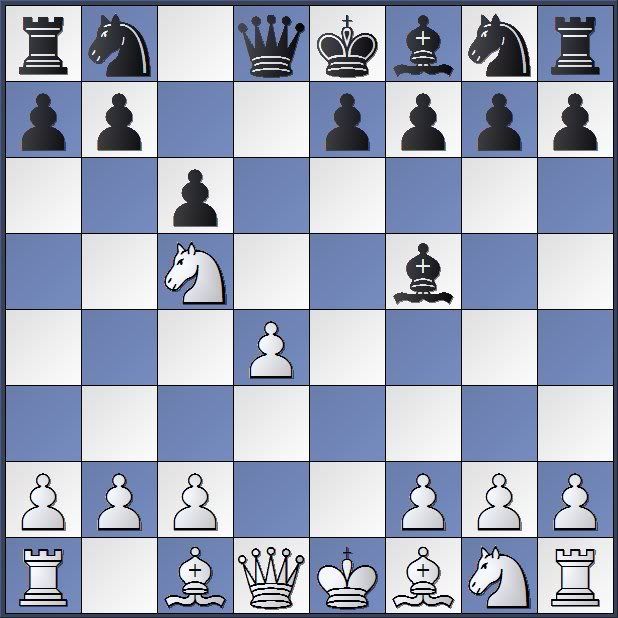
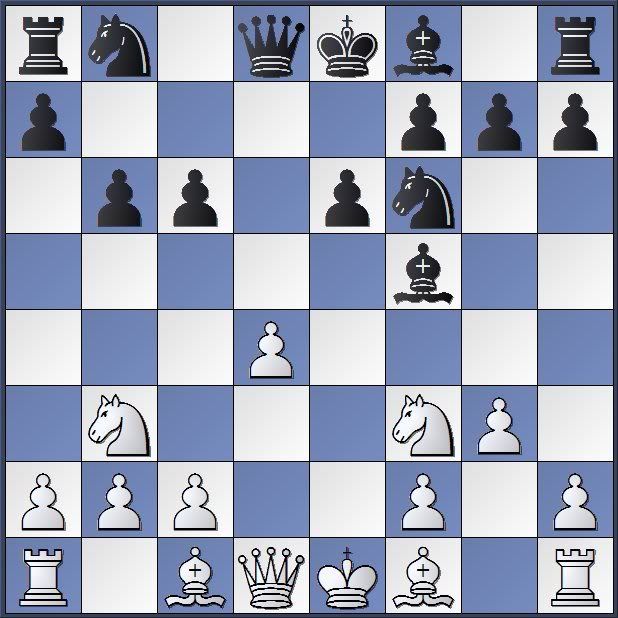
Tuesday, 3 April 2012

Several hours were spent playing against Rybka 4 from the position after 19.Bxh6 (a computer suggested improvement in Della Morte -- Mayorga, Villa Martelli 2011, featured in "Conditions for Tactical Combinations"). Repeated failures were addressed by backing the game up and playing Rybka's expected move. It is possible that such training develops my attacking and defensive skills. The sacrifice creates an attack, but Black is able to organize defensive resources. Rybka returned the sacrificed material to halt all mating threats, but White ended up a pawn ahead.

After breakfast, I worked half a dozen or so tactics exercises in the Shredder app, bringing the total up to 1522. Then, I sat down at the table for a solid hour and one-half of pawn endgame study. When mastery is the object, review has a place. I read through the first two sections of Dvoretsky's Endgame Manual (13-17) and correctly solved the first two exercises. There were a few bumps as I sought to play through the positions in advance of reading the text. In the first exercise, I missed a key resource for White, leaving my solution incomplete. I worked out the rest for myself before reading the rest of the solution.

Wednesday, 4 April 2012

There was not to be much time for chess today, but that changed. Then, I got pulled into playing blitz on the Internet Chess Club. I did work a few tactics problems using Chess Tempo, Chess Informant 111, and the Shredder iPad app. The CI combinations led me to spend some time with Carlsen -- Wang Hao, Wijk aan Zee 2011.

Chess Tempo frustrates me. My results suggest that I am missing half of the board.
Problems Done: 195 (Correct: 123 Failed: 72)
Percentage correct: 63.08%

Thursday, 5 April 2012

During my morning coffee, and between Slotomania spins on Facebook, I solved a handful of problems on the Shredder iPad app (total now at 1557). Then, with grim determination I set out to improve my Chess Tempo performance. I am solving in standard mode. CT's blitz mode is more akin to solving with Shredder, where every second counts in the score. In CT standard mode, accuracy is the key element.

Problems Done: 218 (Correct: 143 Failed: 75)
Percentage correct: 65.60%

Clear improvement! Twenty correct, and three wrong. The errors continue to reveal a tendency to miss obvious tactics. For instance, moving the wrong knight in this problem.

White to move

In order to move memorized games into long-term memory, review is needed. Frequently, I have been able to play through an entire game for a week or a month, or even longer. But, if a few weeks go by and I do not show the game to someone, the memory dissipates.

I created a list of games that I have memorized. The first page of the document lists just the players and ratings. After a page break, the entire game scores are reproduced. Page one appears thus:


Memory Games

(1) De Kemur,Sire de Legal - Saint Brie
(2) Zimmer - Hans Bruening
(3) Taylor,I.O. Howard - N,N
(4) Blake,Joseph Henry - Hook,William
(5) Spassky,Boris V - Evans,Larry Melvyn
(6) Mayet,Carl - Anderssen,Adolf
(7) Stripes,James (1879) - Moroney,Timothy (2076)
(8) Grabovetz,Vladimir (1850) - Stripes,James (1999)
(9) Carlsen,Magnus (2814) - Wang Hao (2731)
(10) Auberonk (1827) - Stripes,James (1784)

Mayet - Anderssen is one of my forgotten games. I knew it when I posted "Understanding Mayet's Thinking" two years ago, but have not reviewed it recently. This morning I played through it several times until I was able to do so without looking at the game score. I intend to continue working on Carlsen - Wang Hao today. Auberonk - Stripes ends in the position in my banner, and it took me ten minutes or so to locate the game in my game archive on Chess.com (I didn't want N.N. as the name of White).

Once these ten are secure in my mind, I plan to work on a Kasparov game that I knew for a week in February: Kasparov - Pribyl, Skara 1980. The game is discussed in Garry Kasparov on Garry Kasparov, Part I: 1973-1985 and in Kasparov, My Story, Part 5 and Part 6.

Friday, 6 April 2012

Started the day with three quick Shredder puzzles while taking care of business. I missed the first because I missed the queen's diagonal route out of self-danger to defend the rook, and thereby the back rank. One drawback to the Shredder iPad app: I cannot go back two problems to show you the one that I missed. It should come up again after I do 999 more. The other two were solved correctly in an instant.

Turning to the last three combinations in Chess Informant 111, I solved this problem easily.

Black to move (diagram upside down--Black on bottom)

Jeans in the wash, towels in the dryer. A few minutes working on the move sequence in Carlsen - Wang Hao, and then a short Chess Tempo session.

Problems Done: 231 (Correct: 154 Failed: 77)
Percentage correct: 66.67%

The logic underneath Wang Hao's play defies me, making the moves harder to remember, but I'm also struggling with some of the nuances of Carlsen's play. As it happens, the lecturer who was to speak at chess club last night had car problems and did not show. But, I had taken my memory list, so a friend was able to test my knowledge of the ten games. I knew all the moves in nine of them. We spent some time working out the Carlsen's finish if Wang Hao had not resigned. Checks that drive the king to the queenside leave Black's monarch secure and with a larger army. One key idea seems to be reversing the order of White's pieces on the h-file (rook to h7 and queen to h5 via g6).

Saturday, 7 April 2012

Due to a road trip to a Sandpoint, Idaho, where I run a small annual community tournament, my training today was limited to a few problems on the iPad, and one in Alburt, Chess Training Pocket Book II.

Shredder Totals

1569 puzzles: 12284/15690 points 78%
last 10 puzzles: 91/100 91%

01 November 2011

Something is Wrong

Game list view in CB Online for iPad
While I continue exploring the features of several iPad chess apps, I was looking through the games of Robin Edlund with the CB Online app. I know next to nothing of Edlund, except that his annotations to his loss in Chess Informant 90/245 provided the suggestion that led to a win for me.

His earliest loss in the database seems amiss. The game ends with his opponent in check and soon to lose his queen.

Edlund,Robin -- Tikkanen,Anders [B17]
Hallstahammar op Hallstahammar (5), 1995

1.e4 c6 2.d4 d5 3.Nc3 dxe4 4.Nxe4 Nd7 5.Nf3 Ndf6 6.Ng3 Bg4 7.Be2 e6 8.0–0 Bd6 9.h3 Bxf3 10.Bxf3 Qc7 11.Ne4 Nxe4 12.Bxe4 Nf6 13.Bf3 0–0–0 14.c3 Rdg8 15.Bg5 Nd7 16.c4 h6 17.Be3 g5 18.d5 c5 19.dxe6 fxe6 20.b4 h5 21.Bxh5 Be5 22.Rb1 Rxh5 23.Qxh5 g4 24.f4 gxf3 25.Qxf3 cxb4 26.Rxb4 Bd6 27.Rb3 Rg3 28.Qe2 b6 29.Kh1 Rg6 30.c5 Nxc5 31.Bxc5 Bxc5 32.Qh5 Qg7 33.Qf3 Kb8 34.Qf7 e5 35.Qe8+ 0–1

Black won?


08 April 2011

12th Soviet Championship: Smyslov

I am poring through the games of Vasily Smyslov from the beginning. My iPad has an old database of his games that I downloaded from Guenther Ossimitz's megasite several years ago. There are some available games missing from this database, and the game scores are not always reliable. ChessBase's newest database--I have Big Database 2011 (the full database without annotations)--is also missing some games. Some gaps can be filled by games from RUSBASE 1920-1994.

Smyslov emerged upon the chess scene on the eve of World War II when he won the national junior championship in 1938 and then tied for first in the Moscow Championship. In his first Soviet Championship, he placed third behind Andor Liliethal and Igor Bondarevsky. His games from that event concern me today. We start with his games as Black.

Isaak Boleslavsky missed an opportunity to maintain the advantage when he played 35.Kf1 from this position.

White to move


Smyslov's king appeared vulnerable after Peter Dubinin sacrificed material for an unsound attack. The attack failed, but Black's inaccurate 25...Rd8 let White escape with a draw.

Black to move


25...Qh1+ wins decisively.

Against Alexander Kotov, Smyslov invested a knight to remove a defender and win a pawn. Demonstrating fine technique, he systematically worked his isolated queen pawn towards promotion.

Black to move


18...Nxh2! 19.Bxh2 Nxd4

Vladimir Makogonov handed the young future World Champion his only loss in the event. Makogonov found the strong 24.Re5! from this position.

White to move


Smyslov's extra pawn was of no value against Vladas Mikenas after 51.Rg7 from this position.

White to move


Smyslov's Dragon prevailed over Vasily Panov's Yugoslav Attack. Of course, the name Yugoslav Attack, or Velimirovic variation, would not acquire that name until Dragoljub Velimirovic began playing it in the 1960s. After 22...Nd7, Panov's king strolled over to the kingside in search of security.

White to move


Later Smyslov sacrificed the exchange and a pawn to maintain pressure.

Black to move


The game ended 41...Qg3 42.Qe7 Rd2 43.Qe8+ Bf8.

White's defenses failed when Smyslov found 27...Nxf2! This victory came from one of his several efforts with the Nimzo-Indian Defense in this event. Iosif Rudakovsky defended well after this move, but when the smoke cleared, Black was two full pawns ahead. With three connected passed pawns on the kingside, pawns on both wings, and Black's bishop against a knight, there was no reason to make young Vasily grind it out.

Black to move


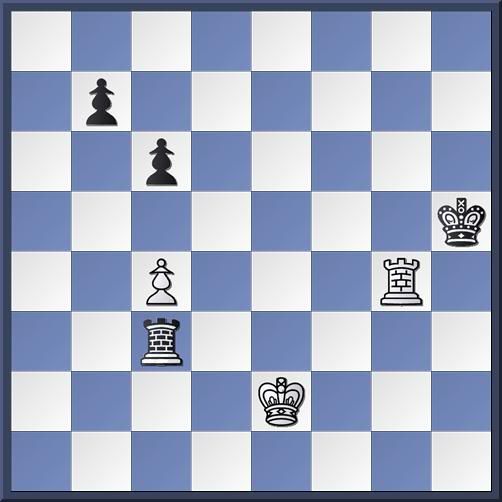
Smyslov gave endgame lessons to Mark Stolberg in this finish from a Caro-Kann.

Black to move


36... Kf5 37.Kc2 f6 38.Kd3 e5 39.Ra1 g4 40.fxg4+ hxg4 41.Ra2 Rc8 42.Nxa4 e4+ 43.Ke2 Rh8 44.Kf2 e3+ 45.Kg1 Rb8 46.Ra1 Nxa3 47.Nc5 Nb1 48.Na4 g3 49.hxg3 Kg4 50.Kf1 Kxg3 51.Ke2 f5 52.Ra2 f4 53.Kd3 Nd2 54.Nb2 Re8 55.Ra1 Kxg2 56.Re1 f3 0–1

This game is replayable on the Chess.com version of my blog.

11 October 2010

A Blow to the Back of the Head

In this weekend's Eastern Washington Open, I started well. I won two hard-fought games on Saturday, then took my traditional third round bye. Sunday morning I was paired against the top A Class player on board two. I labored to get an advantage, thought that I had achieved one, but overlooked the power of a check. As things started to turn my opponent's way, I offered a draw. He refused, but did not capture the free pawn, opting to first resolve a back-rank vulnerability. We played a lot of moves in a position that I thought was a dead draw before he returned the offer.

In the final round, I was part of a pack battling for second place and was paired against an ambitious young player with a provisional B Class rating. I chose the Devil's Opening:

Joshi,K (1648) - Stripes,J (1843) [B19]
Eastern Washington Open, Spokane 2010

1.e4 c6 2.d4 d5 3.Nc3 dxe4 4.Nxe4 Bf5 5.Ng3 Bg6 6.h4 h6 7.Nf3 Nd7 8.h5 Bh7 9.Bd3 Bxd3 10.Qxd3 e6 11.Bd2 Ngf6 12.0–0–0


We have reached a fairly typical Caro-Kann position in under one minute of play. I took a walk while my clock ticked to decide whether I had the fighting spirit for something novel, or should hunker down and make my upstart opponent prove that White can secure an advantage.

c5?!

Either 12...Qc7 or 12...Be7 is fine.

13.Bf4 Nd5 14.Bd2 Rc8 15.Rhe1 c4!?

Again either 15...Qc7 or 15...Be7 is quite reasonable.


Now Kairav went into a long think. There are only two moves worth looking at, I thought, both bad. The queen must move to e4 or e2.

16.Rxe6+!

The blow to the back of the head, which I thought was a desperate gamble. He is lost, so he plays for some cheap checks. I was wrong.

16... fxe6??+-

16...Be7 is the only move 17.Rxe7+ ( 17.Qf5 c3) 17...Nxe7 and White has an advantage.

17.Qg6+ Ke7 18.Nf5+ (I thought this move was impossible) exf5 19.Re1+

I resigned in view of 19... Ne3 20.Rxe3+ Ne5 21.Rxe5+ Kd7 22.Rd5+ Kc7 23.Rxd8 Rxd8+-

1–0

Kairav Joshi will be over 1800 soon. He's also a terrific chess organizer in Coeur d'Alene, Idaho.

17 May 2009

Beat the Devil

This position arose in Chess Informant 102/96, Haba - Gyimesi, Deutschland 2008. The game began as a Caro-Kann, hence my title. It placed fourth in the voting for best game of Informant 102.

White to move


Haba uncorked a terrific attack with 23.Bxh6!

23 January 2009

Corus 2009: Follow the Leaders

In the Corus Grandmaster A Group in Wijk aan Zee, Sergey Karjakin is half a point ahead of four others after five rounds. Round six in is progress, and he has Black against Magnus Carlsen. Former FIDE World Champion Rustam Kasimdzhanov leads GM Group B, also with 3.5 of 5. Today, he has White against Fabiano Caruana. Six players are half a point behind. Swedish Grandmaster Tiger Hillarp leads the C Group with 4.0 and is playing White against Abhijeet Gupta. Wesley So has 3.5 and is alone in second in the C Group.

Round six is not yet the mid-point, so much can still happen. Indeed, no player is theoretically unable to win his or her section. But some are playing better than others, and starting with two or three losses in five games leaves minimal hope.

Among those close behind Karjakin in the A Group, Jan Smeets and Leinier Dominguez took their game one move longer than the game they followed for twenty-one moves.

Smeets - Dominguez [B92]
Corus Chess (6), Wijk aan Zee 2009

1.e4 c5 2.Nf3 d6 3.d4 cxd4 4.Nxd4 Nf6 5.Nc3 a6 6.Be2 e5 7.Nb3 Be7 8.Bg5 Be6 9.Bxf6 Bxf6 10.Qd3 Nc6 11.0–0–0 Qb6 12.Qxd6 Be7 13.Nd5 Bxd5 14.Qxd5 Rd8 15.Qc4 Rxd1+ 16.Rxd1 Qxf2 17.Rf1 Qe3+ 18.Kb1 0–0 19.Bg4 g6 20.Bd7 Nd4 21.Nxd4

Black to move


21...exd4N

21...Qxd4 22.Qxd4 ½–½ Stellwagen,D-L'Ami,E, Hilversum 2008

22.Qd3 Kg7 23.a3 ½–½

Levon Aronian may have a slight edge in his game, not least because he is twenty minutes ahead on the clock against Vassily Ivanchuk. At least Ivanchuk now has the notoriously stupid drug testing fiasco behind him and can concentrate on the games.

Teymour Radjabov's 5.Nc5 against Gata Kamsky's Caro-Kann is a rare move, but my Master Trends opening book shows a 56% score and higher resulting Elo performance than the vastly more popular 5.Ng3. He appears to have built a slight edge from there, so I'll return to that game shortly.

Karjakin is struggling to hold on to his lead as Carlsen is pressing an advantage. Perhaps, today, he'll show us the winning ways that thrust him to the top five in 2008. He is a future world champion, IMHO. While flapping my jaws at chess club last night, I predicted by age 25 he'll reach that rare summit. A win today will add some confidence to such speculation.

Kasimdzhanov seems to be making some progress against Carauna's Slav.


Beat the Devil

Someone nicknamed the Caro-Kann "the Devil's Opening," perhaps because Garry Kasparov could get nowhere against it in his World Chess Championship matches against Anatoly Karpov. A few years ago, Chess Base News presented an annotated game allegedly played between God and the Devil. God opted for the Panov-Botvinnik Attack, but Radjabov today went for an obscure line in the classical.

Of course, for an American, Kamsky is not the Devil, even if he plays the Evil One's opening. Kamsky is America's hope for greatness in chess on the world stage, and the world's hope for taking down Veselin Topalov in their upcoming match to select a challenger to Anand for the next World Championship.


Radjabov - Kamsky [B18]
Corus Chess (6), Wijk aan Zee 2009

1.e4 c6 2.d4 d5 3.Nc3 dxe4 4.Nxe4 Bf5 5.Nc5

Black to move


5...b6 6.Nb3 e6 7.Nf3 Nf6 8.g3

Black to move


8...a5 led to quick victory for White in Kasimdzhanov - Al Modiahki, Doha 2006

8...Nbd7 9.Bg2 Qc7 10.0–0 Rd8 11.Qe2 Bd6 12.Re1 The novelty.

Black to move


12...0–0 13.Nh4 Bg4 14.Qc4 Nd5 15.Bg5 Rc8 16.a4

Black to move


16...b5 17.Qd3 N7b6 18.Nc5 h6 19.Bd2 Nc4 20.axb5 cxb5 21.h3 Bh5 22.Bxd5 exd5 23.Bc3 Rfe8 24.b3 Ne5 25.Qxb5 Bxc5 26.Qxc5 Qd7 27.Qxa7 Qxa7 28.Rxa7

The rook needs some lipstick!

Black to move


29...Nf3+ 29.Nxf3 Bxf3 30.Rxe8+ Rxe8 31.b4

... and the live feed appears to have failed.

When the feed is restored, the game is over.

31...Bd1 32.Ra2 Rc8 33.b5 Rb8 34.Rb2 f6 35.Ba5 Be2 36.b6 Rb7 37.Rb1 Kf7 38.Bd2 g5 39.Bc1 Bf3 40.Ba3 Be4 41.Bd6 1-0


The players have made the time control, and White's passed pawn is well protected by the bishop. Hence White's active rook will rule the board while Black's must try to hold back the b-pawn. Kamsky resigned.

Aronian - Ivanchuk drew in 56 moves.

Kasimdzhanov - Caruana drew in 62 moves.

Carlsen - Karjakin continues with two rooks each, and White's two pawns to Black's one. If Carlsen pulls off a win here, it will be one for the endgame books.

10:02am PST

I don't see that Carlsen has any advantage after 73 moves, but the kid is a lot better than me, and Karjakin is running out of time.

10:07am PST

Karjakin's clock on the Playchess server showed two minutes, then zero, and now fifteen, all to Carlsen's thirty or more. These are not the official clocks.

10:12am PST

A pair of pawns came off the board, and rooks soon will. The players agreed to a draw after 79 moves.