Showing posts with label Kramnik. Show all posts

23 December 2018

Smash Through

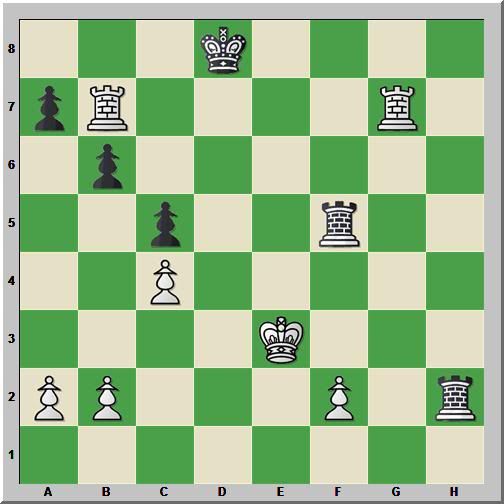
Black to move

From Gelfand,B. -- Kramnik,V., Berlin 1996. This game is featured in Neil McDonald, Chess: The Art of Logical Thinking (2004), which I am going through superficially this morning. My intention is to go through the games and then the book more slowly in the coming weeks.

07 February 2017

Studying with Kramnik

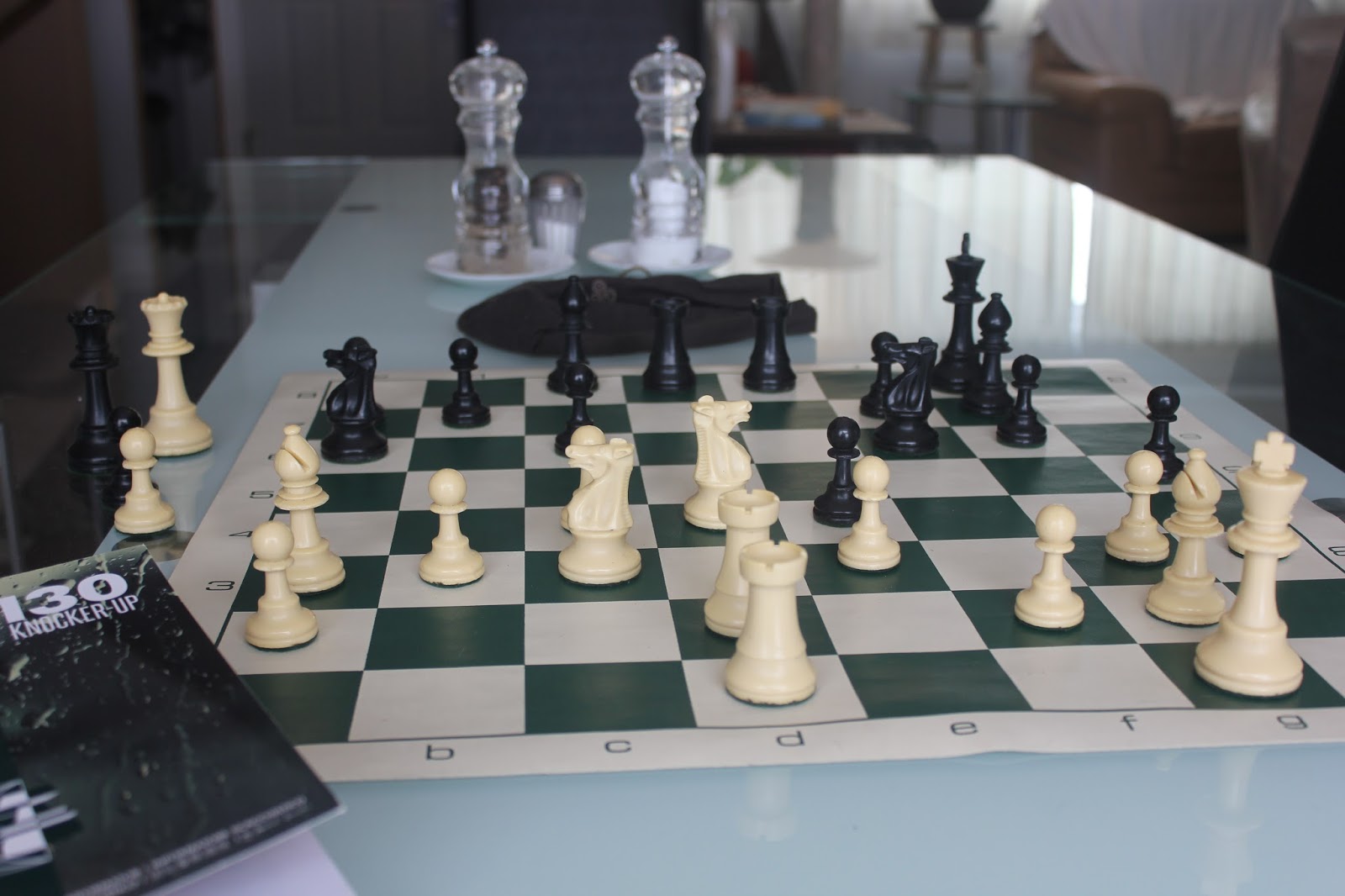
Over the course of three sessions, I blitzed through all of the games in Chess Informant 130 that contain an ECO Code beginning with E.* As I did so, I made light notes that would guide me back to games that I wanted to examine further. This morning I played through part of Kramnik -- Vocaturo, Baku 2016, Informant 130/189 at the dining room table. Once I reached the position of the first diagram, I set Informant aside and opened my notebook. I remembered Kramnik's 17.Be7! From the position before that move, I tried to work out Black's principal responses and how Kramnik might have pursued his attack after each one. After recording my ideas in my notebook, I checked them against the annotations by Goran Arsovic.

After 16...h5
My first line is omitted from the annotations, perhaps because it is relatively simple. White wins a pawn and maintains an active position.

Black to move
After 17.Be7!
a) 17...Rd7 18.Bxf6 Bxf6 19.Nxe4 Bg7

In my second line, Black accepts White's bishop sacrifice.

b) 17...Rxe7 18.Nxc6

Black to move
Analysis diagram after 18.Nxc6
I rejected 18...Rxd2 as a critical line for Black, but it is presented in the Informant annotations. Again, White wins a pawn after 19.Nxe7+ Kf8 20.Nxc8. The line ends here, but it is obvious that a7 is en prise and Black has other difficulties. Trading rooks seems obligatory, which leads to a clearly winning ending for White.

My notebook has 18...Red7, which is inferior to 18...Rdd7 given in the annotations. My assessment of Black's defensive resources needs improvement here.

The critical line that I found was the line played in the game, but I mixed up the move order a few moves into the sequence.

17...Rxd4 18.Rxd4 Rxe7 19.Rd8+

I was not certain of this move after 19...Ne8 20.Rxc8 Bxc3 21.Rdd8 Kf8, thinking that Black might be better. White's attack has stalled and Black has two minor pieces for a rook.

Hence, I tried 19.Nxe4 Nxe4 20.Rd8+ Kh7 21.Bxe4 Rxe4 22.Rxc8 and assessed the position as unclear.

Kramnik's play appears more precise.

19...Ne8 20.Nxe4 Be6 21.Ra8 and Kramnik went on to win.

I have a long way to go before I can calculate the consequences of a move like 17.Be7!


*ECO is a registered trademark of Chess Informant.

07 July 2015

The Spirit of Greco

Should aspiring chess players study the games of players who have been dead for more than a century? In an interview conducted while he was World Champion, Vladimir Kramnik answered in the affirmative.
I think that if a player wants to achieve much, he should live through the entire history of chess in his thoughts. I can't explain it from a purely logical standpoint, but in my opinion, you have to experience the entire history.
Vladimir Kramnik, 2004*
The interviewer probed further, asking whether it was useful to go back as far as Gioachino Greco. Kramnik did not think Greco was necessary because Greco's games are only the basics of chess, but he thought aspiring players should know the games of Philidor, Anderssen, and Morphy.

Max Euwe expressed a similar view of the importance of chess history. He asserted in The Development of Chess Style (1966) that an individual player's development and chess history follow parallel courses. The longest and most difficult is the first stage, which Euwe characterizes as "excursions with the pieces" (1). Players succeed when they take advantage of the opportunities presented by opponents, "such as winning a piece" (1). Greco embodies this first stage, he suggests.

Euwe annotates two of Greco's games. In another 300+ volumes in my library, I look in vain for annotations of Greco's games. Several books make passing reference to his collections, usually by noting that some tactical idea or opening move "has been known since Greco." Garry Kasparov, My Great Predecessors, Part I (2003) is a notable exception. On the first page of chapter 1, he presents a synopsis of Euwe's argument (without attribution) and four Greco games. In two of the games, he offers a small number of suggested improvements. But Kasparov offers no verbal annotations, no detailed analysis.

Euwe also offers one game by Andre Philidor. Philidor's games, too, are mostly absent from other books. In Philidor's case, however, many more writers mention his contribution towards understanding the centrality of pawns to chess strategy. Kasparov offers one game fragment from Philidor with annotations. His views align well with Kramnik's concerning the merits of Philidor.

Last week, however, DHL brought an exciting new book hot off the presses that offers fresh annotations of the second of the two Greco games featured in Euwe's classic. This new book is Chess Informant 124. In this volume is the tenth installment of Mihail Marin's column, "Old Wine in New Bottles."**

Marin sets out to contextualize the explosion of information that we observe in this era of computers. He challenges a common belief that this explosion is without precedent. He recalls similar claims in opening monographs of the 1970s and 1980s. Even the first systematic opening reference, Handbuch des Schachspiels (1843) describes an explosion of information in its day.

Marin does not stop at simply challenging perceptions that our age is unique due to a massive increase in the information available to us. He also traces the development of new ideas with the point of showing that they are not so new after all. Tracing the continuities between old and new offers an affirmation of the value of studying classic games.
In every game, there comes a moment when a novelty inevitably pops up, but one cannot be sure that the idea behind it has not been played before.
Mihail Marin, Informant 124, 82.
Marin's focus in Informant 124 is the Italian Opening, particularly the Giuoco Fortissimo. He begins with Nakamura -- Giri, Khanty-Mansiysk 2015.

1.e4 e5 2.Nf3 Nc6 3.Bc4 Bc5 4.c3 Nf6 5.d4 exd4 6.cxd4 Bb4+

White must either Block the check or move his king. Greco blocked with 7.Nc3 and these days 7.Bd2 is preferred. Nakamura, however, played a relatively rare move: 7.Nbd2, which sacrifices a pawn. I can find approximately one hundred instances of this move in my database.

Black to move

After 7...Nxe4, Nakamura shows that he is playing in the spirit of Greco with 8.d5, "fighting for space and an advance in development" (83).

After Nakamura -- Giri, Marin offers analysis of one of Greco's best games. Then, there is another game from Khanty-Mansiysk. Jobava -- Grischuk featured 6.e5 d5, which the author notes is reminiscent of several games played by Morphy and Anderssen. Jobava repeated his opening experiment in a later round of the same event, and Marin refers readers to the column by Sarunas Sulskis, where that game in analyzed in depth.

"Old Wine in New Bottles" continues with an instructive game when Marin lost on the Black side of the not so quiet Italian Game, and then a World Championship game where Karpov employed the quieter line with 5.d3 for the purpose of torturing Korchnoi. But this quieter line still permitted fortissimo in Bologan -- Marin, Bucharest 1990 (a friendly blitz game). Marin finishes the article with a third game of his own and then Dubois -- Steinitz, London 1862, which had been one of my study games a few months ago (see "Some Miniatures").

Marin's column offers a good mix of old and new, of famous games and those less well-known. His ongoing column builds the logical argument that Kramnik deferred in his 2004 interview.


*The interview in Russian in available at e3e5.com. There are several English translations online. Because the English is smoother, I have employed the one posted by Spektrowski on Chess.com.

**Marin's column first appeared in Informant 114 and has appeared in every issue except 121 since.

02 April 2014

Rescue

Lesson of the Week

Spring Break is next week and the 2014 Washington State Elementary Chess Championship is at the end of break. Most school chess clubs are coming to an end for the year.

This week's lesson is a position from the recent Candidates Tournament, which was won by Viswanathan Anand. Former World Champion Anand earned a rematch against Magnus Carlsen. Another former world champion, Vladimir Kramnik, had the strongest tie-breaks of the three who shared third place. He defeated his nemesis, Veselin Topalov, in round thirteen after losing to him in round six. Our problem position comes from Kramnik's win.

It appears that Kramnik's bishop is trapped.

White to move


24 November 2013

The Berlin Defense: History

The Berlin Defense (ECO C65-C67) in the Spanish Opening (or Ruy Lopez) is a major alternative to the more common Morphy Defense. It was popular in the nineteenth century, but passed out of favor in the early twentieth. Fifty years ago, the Berlin was described as "fundamentally too passive" (Leonard Barden, The Ruy Lopez [1963], 145). Even so, the opening had adherents, such as GM Arthur Bisguier.

Vladimir Kramnik's use of the Berlin Defense in his World Championship match with Garry Kasparov revived the opening. It has retaken its position as an important opening played regularly in top tournaments. It appeared in four of the ten games in the 2013 World Championship. Magnus Carlsen employed it three times, and Viswanathan Anand played it once. Although the opening has a reputation for being drawish, it often creates imbalances that allow either side to play for an advantage long into the endgame. Carlsen scored one of his victories in the match when Anand faltered in a long and difficult endgame that began with the Berlin Defense.

The opening's name stems from it having been recommended in Handbuch des Schachspiels (Berlin 1843), edited by Tassilo von Heydebrand und der Lasa and Paul Rudolph von Bilguer. Bilguer began the project, but died before bringing it to publication. Lasa completed the project and continued updating it through four more editions (1852, 1858, 1864, 1874). The so-called Morphy Defense (3...a6) does not appear in the first edition of the Handbuch, but is treated in the 1852 edition, where Lasa asserts the superiority of 3...Nf6.
Dieser Zug, welchen der Anonimo Modenese angiebt, kann sehr gut geschehen. Hätte Weiss aber die Absicht, sogleich Sc6 zu nehmen, so würde Schwarz durch 3.Sg8 nach f6 statt a7-a6 dann wegen des Angriffs auf e4 noch etwas besser entwickelt sein.
Tassilo von der Lasa, Handbuch (1852), 162.*
The Ruy Lopez opening received its name from the Handbuch des Schachspiels using the term, "The Knight's Game of Ruy Lopez," according to Howard Staunton (The Chess-Player's Handbook [1847], 147).

The Berlin Defense was considered a standard response to the Spanish in 1889 when Wilhelm Steinitz advocated the system (3...d6) that would come to bear his name (Steinitz, The Modern Chess Instructor [1889], 1). There, the Morphy Defense (3...a6) was considered an alternate main line. Johann Jacob Lowenthal, however, asserted two decades earlier that Morphy's move is "generally considered best" (The Chess Player's Magazine, vol. 1, New Series [1865], 45). According to Lowenthal, Domenico Ercole del Rio had first suggested the move that became associated with Morphy following his match with Adolf Anderssen.

Lowenthal's assessment differs from that of Max Lange a mere five years earlier. Lange wrote in Paul Morphy: A Sketch from the Chess World, trans. Ernest Falkbeer (1860) that 3...Nf6 "would be stronger" than Morphy's 3...a6, as played in games two and four of his match with Anderssen. White's bishop is "well placed" at a4 and "if Black, in order to dislodge him, should venture upon advancing the [b-pawn], the queen's side will be exposed" (256). Lange refers his readers to "elaborate analysis" in Sammlung neuer Schachpartien (1857).

There Lange offers the history that Ruy Lopez de Segura recommends 3.Bb5 against the knight's defense of the pawn on e5, which the clergyman considered better protected by the pawn move 2...d6. Lange explains that the opening is called the Spanish Game or Ruy Lopez due to this analysis offered by the priest in 1561. His reasoning does not match the Spanish master's, he notes. Rather, he asserts that Black's efforts to drive away the bishop allow it to take up residence on b3 with no loss of time, while also weakening Black's queenside. However, the recommendation of the Berlin School offers Black compensation (43-44).
Die allgemeine Theorie ist aber spater jenem Rathe des spanischen Meisters nicht vollkommen beigetreten; sie hat vielmehr nach Aufrechterhaltung der Vertheidigung 2. Sb8 — c6 nun bei 3. Lfl — b5 durch die von der Berliner Schule vorgeschlagene Entgegnung 3. Sg8 — f6 die Spiele schnell auszugleichen empfohlen.
Lange, Sammlung neuer Schachpartien (1857), 43
The importance of the Spanish Opening is revealed, Lange asserts, in the attention it receives from Tassilo von der Lasa, Carl Friedrich Jaenisch, and Howard Staunton.


Lasker's Advocacy
Truth derives its strength not so much from itself as from the brilliant contrast it makes with what is only apparently true.
Emanuel Lasker, Common Sense in Chess (1917), 25
The Morphy Defense first surpassed the Berlin system in popularity, according to the ChessBase database, in the 1870s.** However, they remained close to equal through the 1880s and 1890s, and then in the first decade of the twentieth century, the Morphy variation was played three times as often as the Berlin. In the next decade, 3...a6 appeared five times as often as 3...Nf6.

The Berlin Defense to the Spanish Opening had reached it peak of popularity, while the Morphy Defense dramatically increased its adherents at the same time that Emanuel Lasker presented his lectures that would be published as Common Sense in Chess. The lectures were presented in spring 1895 and the first edition of the book appeared in 1896. After several editions by several publishers, a corrected edition was published by David McKay in 1917. That edition was reprinted as a cheap Dover paperback in 1965 that remains widely available today.

Lasker's central purpose in the lectures and book were to lay out general principles for all phases of the game. His opening principles are put forth in "Lasker's Rules". These conclude the first lecture. In the second lecture, he offered two games and variations that illustrate these rules at work in the Spanish Opening. In the third lecture, he offered some discussion of the Morphy Defense, which he notes at the outset violates one of his opening principles. The Berlin Defense conforms to Lasker's rules.

In his first illustrative game in the second lecture, we have the moves 1.e4 e5 2.Nf3 Nc6 3.Bb5 Nf6 4.O-O Nxe4 5.Re1 Nd6

White to move

Lasker observes of 5.Re1, "[n]ot the best move, but one that most naturally suggests itself" (19). Nonetheless, Carlsen played this very move in game 8 of his match with Anand. That game followed a line that had been employed in the first official match for the World Championship in 1886, deviating only with 12...Ne8.

Lasker's continuation from the diagram has been rare (24 games in ChessBase Online).

6.Nc3

6.Nxe5 is the overwhelmingly most popular choice, followed by 6.Bxc6 in roughly one-quarter of the games.

6...Nxb5 7.Nxe5

"Cunning play." Lasker observes, "If Black now takes one of the knights he loses" (19).

Lasker presents some lines after 7...Nxc3 in which White either gains a piece or generates a mating attack against the king. These seem useful instruction for developing players. In his main line, after 7...Be7, Black ends up with a better game.
And Black's game is, if anything, preferable. You see how quickly White's attack has spent itself out. But then he did not make the best of his position at move 5.
Lasker, Common Sense, 21
Lasker returns to the main line after 4.O-O Nxe4, offering what remains today White's most popular move.

5.d4

Black to move

Here, 5...Nd6 has become Black's most popular response. Lasker continued with 5...Be7, the second most popular move today.

6.Qe2 Nd6 7.Bxc6 bxc6 8.dxe5 Nb7

After 5...Be7, the rest of Lasker's moves remain the top choices in this line.

White to move

Lasker's comments on the diagram ring true today:
We have no come to a critical stage. Black's pieces have retired into safety, ready, with one single move, to occupy points of importance. White, on the contrary, has the field to himself, but he can do nothing for the present, as there is no tangible object of attack. Various attempts have been made to show that White has here the superior position. I do not believe that White has any advantage, and am rather inclined to attribute the greater vitality to the party that has kept its forces a little back. (23)
The Berlin Defense offers several prospects for interesting and dynamic play. It can produce a tactical melee, a positional squeeze, or a cold and lifeless position that leads to an early draw. I was happy to see several variations of this old and new opening system deployed in the recently completed World Championship match.


*I received assistance translating this passage from a member of Chess.com, hauntedgarage2000. He offered: "This move, described by Anonimo Robenese, could possibly occur. But if White would take Nc6 immediately, Black then will be a bit better developed with 3. Ng8 to f6 instead a7 to a6 because of his threat towards e4." Another member of the site, Kevin Hermann, helped by translating a passage from the 1843 text.

Corrections to my transcription to this passage were made 27 November 2013. Thanks to additional help from McHeath on Chess.com for pointing out four spelling errors. In addition, Anonimo Robenese should be Anonimo Modenese, a name associated with Domenico Ercole del Rio (see also "Morphy Defense: Early History").

**The more time that I spend reading nineteenth century chess books and periodicals, the more I realize that ChessBase and other electronic databases are woefully incomplete as historical references. Aside from the most highly publicized matches and tournaments, and the records of the best known players, the games in nineteenth century publications are mostly absent from databases.

20 March 2012

Zurich Chess Challenge

Two of my favorite players will be slugging it out in a training match the last week of April. The official website is now launched: http://www.kramnikaronian.com/.


07 February 2012

Kramnik -- Lerner, Gausdal 1992

I am marveling at the calculations behind Vladimir Kramnik's move in this position.

White to move


The game is among the 100 Best Games on the CD Best of Chess Informant: Vladimir Kramnik. It was published as Informant 53/1.

19 October 2011

Two Pigs

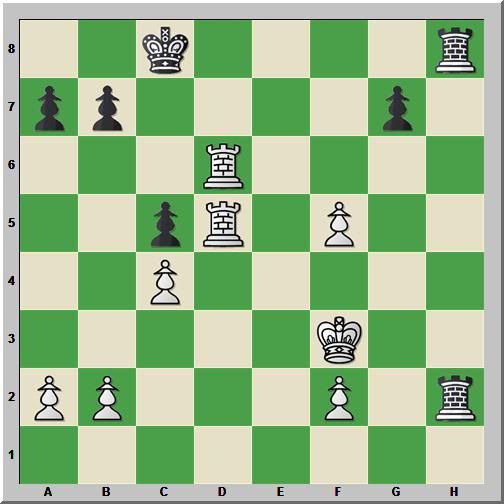
Judit Polgar's defeat of Garry Kasparov nine years ago offers a nice illustration of the power of pigs. As near as I can tell, this was Kasparov's only game on the Black side of the Berlin Wall. This defense was a key weapon for Vladimir Kramnik when he captured the World Championship title from Kasparov. In the WCC match, Kramnik employed the Berlin four times, earning four draws. There were three more Kasparov -- Kramnik battles in the opening in 2001, with White's single win coming in June at Astana. In September 2002, Kasparov played the Black side against the youngest and strongest of the Polgar sisters.

Polgar,Judit (2681) -- Kasparov,Garry (2838) [C67]
RUS-The World, Moscow 2002

1.e4 e5 2.Nf3 Nc6 3.Bb5 Nf6 4.0–0 Nxe4 5.d4 Nd6 6.Bxc6 dxc6 7.dxe5 Nf5 8.Qxd8+ Kxd8 9.Nc3 h6 10.Rd1+ Ke8 11.h3 Be7 12.Ne2 Nh4 13.Nxh4 Bxh4 14.Be3 Bf5 15.Nd4 Bh7 16.g4 Be7 17.Kg2 h5 18.Nf5 Bf8 19.Kf3 Bg6 20.Rd2 hxg4+ 21.hxg4 Rh3+ 22.Kg2 Rh7 23.Kg3 f6 24.Bf4 Bxf5 25.gxf5 fxe5 26.Re1 Bd6 27.Bxe5 Kd7 28.c4 c5 29.Bxd6 cxd6 30.Re6 Rah8 31.Rexd6+ Kc8 32.R2d5 Rh3+ 33.Kg2 Rh2+ 34.Kf3 

Black to move


Black attempts to harass White's king.

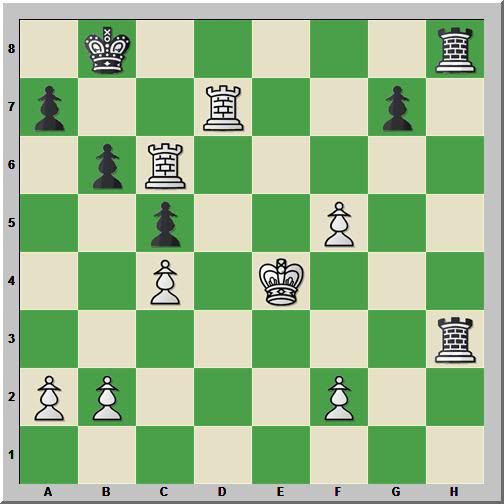
34...R2h3+ 35.Ke4 b6 36.Rc6+ Kb8 37.Rd7 

The first pig is born.

Black to move


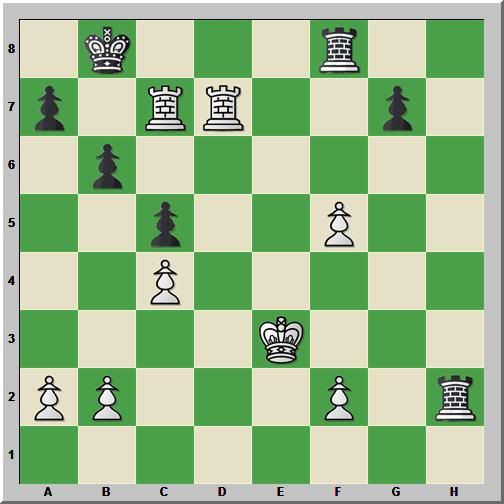
37...Rh2 38.Ke3 Rf8 39.Rcc7 

Two pigs!

Black to move


39...Rxf5 40.Rb7+ Kc8 41.Rdc7+ Kd8 42.Rxg7

Black to move


42...Kc8 1–0


There is no reason to play on. 43.Rxa7 Kb8 44.Rae7 Rf8 45.Rgf7 leaves Black in a hopeless position.

13 December 2008

Quest for the Best

Which epic chess battles stand above the others?

The World's Greatest Chess Games (1998) by Graham Burgess, John Nunn, and John Emms presents analysis of one hundred games from the sixteenth game of the 1834 match between Alexander McDonnell and Louis Charles de Labourdonnais to Viswanathan Anand's defeat of Joel Lautier at the Biel Chess Festival, 1997. The list of the best one hundred in Burgess, et al. needs to be updated to embrace games played since 1997, but it is a start.

Chess Informant's Best of the Best 1000 (2008) republishes games that appeared in Chess Informant from the inaugural issue in 1966 to CI 100, published in December 2007. Black's win in Nielsen-Ivanchuk was judged the best of that volume, edging out Sandipan-Tiviakov (Sandipan won) by one point.

The best game of each volume is chosen by a panel of judges, usually numbering nine, but volume 14 had seven, and three volumes have had ten. Through the past three years, eight judges have become the norm. Each judge rates the ten best games. Each judge's best gets ten points, number two gets nine, and so on. The tally determines the winner, which is republished in the next volume along with the scores. These one hundred Golden Games produce a list of the best games 1966-2007.

These two lists of one hundred differ, and not only because they cover different spans of time. In the Chess Informant series, Vladimir Kramnik's round six win with Black over Garry Kasparov at Dos Hermanas 1996 received the third highest vote total of all the Golden Games,* but it is Kramnik's eighth round win (again with Black) over Ivanchuk that appears in The World's Greatest Chess Games. That game finished second in the polling of judges, although it garnered first place votes from Bareev and Shirov. Kramnik earned 87 of 90 possible for the win over Kasparov, but 55/90 for the game against Ivanchuk. In the voting for CI 66, third place (Kasparov's loss to Topalov) and seventh (Ivanchuk's loss to Anand) were also from the Dos Hermanas event.

Concerning the win over Ivanchuk, Burgess and crew wrote:
This game embodies the best element's of today's younger generation: a carefully prepared opening novelty involving a positional sacrifice; dynamic and aggressive play; refusal to be content with a draw; finally, exact calculation in an ultra-sharp position. Ivanchuk's efforts at counterplay are no less ingenious than Kramnik's attacking manoeuvres, but it takes only a small slip for White's king to succumb.
Burgess, et al., World's Greatest Chess Games, 540
Against Kasparov, Kramnik's haste in time trouble did not produce the best move from this position, although his move was adequate for victory.

Black to move


What was Black's most convincing continuation?


Reader's Contest

I wrote about the Chess Informant text in "La crème de la crème," but did not emphasize the contest open to anyone that purchased the book. Readers are asked to pick the ten best Golden Games. Those participants whose selections are most consistent with the aggregate will win more Informant goods. As the end of December looms, the pressure mounts to complete my entry. It is not an easy matter to choose.

What criteria should I employ?

Brilliant innovation?
Triumph over stubborn opposition?
Instructive value?
Error free execution?
Historic significance?
Statistical analysis of voting patterns?
Political considerations?
Favorite players?
...

Among the candidates, there is certainly a lot to be said for Veselin Topalov's speculative sacrifice from Topalov-Anand, Sofia 2005.

White to move


14.Nxf7

In Anand's annotations to the game, it was the novelty 11.Neg5, preparing this move, that merited the good move symbol. It is a great game due to Anand's able defense through Topalov's persistent and ultimately successful attack from his opening novelty through the endgame.

White to move


After 52.Nf5, Anand resigned. Black can promote the pawn, but that leads to checkmate in four. The alternative--bringing the rook back for defense, then promoting the pawn--loses the newly made queen and the rook, and then White's a-pawn can promote unless White opts to mate with the two minor pieces.

This entire game is replayable at ChessBase News, and there are many places online to find analysis, including SimpleMind blog.


*Ivanchuk-Shirov, Wijk aan Zee 1996 (CI 65/417) also scored 87/90 in the vote tally. Alexei Shirov, who lost this game, was one of two judges that did not give it first place.

22 November 2008

Feasting at Dresden

Saturday morning, 8:35am Pacific Standard Time

It is late afternoon in Dresden, Germany where the Chess Olympiad is taking place. On the Playchess server there are more than three dozen games still in progress, and many others that have finished. While players in my time zone in the 1970s had to wait several days for the arrival of the New York Times and its chess column to see the results of such events, today we watch the games live thanks to the internet and DGT boards.

I'm trying to watch two games.


Kramnik-Ivanchuk started as a Nimzo-Indian, classical variation

Kramnik Vladimir (2772) - Ivanchuk Vassily (2786) [E32]
Chess Olympiad 2008 Dresden (9.3), 22.11.2008

1.d4 e6 2.c4 Nf6 3.Nc3 Bb4 4.Qc2 0–0 5.a3 Bxc3+ 6.Qxc3 d6 7.f3 c5 8.dxc5 dxc5 9.Bg5 h6 10.Bf4 Nc6 11.Rd1 Qa5 12.Bd2 Qa4 13.e3 e5 14.Ra1 Re8 15.Ne2 Bf5 16.b3 Qa6 17.Ng3 Bg6 18.Be2 Qb6 19.0–0 a5 20.Rfd1 Nh7 21.Be1 Ng5 22.Rd5 Ne6 23.Rad1 a4 24.b4 cxb4 25.axb4 Nf4 26.Rd6 Nxe2+ 27.Nxe2 Red8 28.b5 Rxd6 29.Rxd6 Qc7

Carlsen-Beliavsky began as a Closed Spanish

Carlsen Magnus (2786) - Beliavsky Alexander G (2619) [C84]
Chess Olympiad 2008 Dresden (9.12), 22.11.2008

1.e4 e5 2.Nf3 Nc6 3.Bb5 a6 4.Ba4 Nf6 5.0–0 Be7 6.d3 d6 7.c3 0–0 8.Re1 Bg4 9.h3 Bh5 10.Nbd2 Nd7 11.Nf1 Nc5 12.Bxc6 bxc6 13.g4 Bg6 14.Ng3 Ne6 15.Kg2 c5 16.Rh1 f6 17.h4 d5 18.c4 dxe4 19.dxe4 Qxd1 20.Rxd1 Rfd8 21.Be3 Nd4 22.Rd2 Bf7 23.Rc1 Rab8 24.Ne1 a5 25.Nd3 Be6 26.f3 a4 27.Nf5 Bf8 28.Bf2 Nc6 29.Rcc2 Bf7 30.Ne3 Nd4 31.Rc1 Ne6 32.Rcd1

Thinking with my Engine

I thought Carlsen was doing well, but Hiarcs 12 had a half-pawn advantage for Black.

Black to move


Black's doubled pawns immediately appear as a weakness, but so does White's cramped position.

32...Rd4 33.Kh2 Rbd8 34.Nd5 Rxc4 35.b3 axb3 36.axb3 Rd4 37.Bxd4 Nxd4 38.Kg2 Nxb3 39.Rb2 c6

Meanwhile, Kramnik is nursing a small advantage.

After 29...Qc7


30.c5 Na5 31.Qb4 Nb3 32.c6

... back to Carlsen-Beliavsky

40.Ne3 c4 41.Nf2 Nd4 42.Rb7 c3 43.Rd3


Beliavsky's doubled c-pawns are rolling, but probably won't get much further. Hiarcs 12 has the game as even now.

43...c2 44.Nxc2 c5

...back to Kramnik-Ivanchuk

32...bxc6 33.b6 Qb7 34.Nc3 Na1 35.Qc5 a3 36.Qxc6 Qxc6 37.Rxc6 Rb8 38.Nd5 Nb3 39.Bc3 a2


40.Bxe5 f6 41.Bc3

... back to Carlsen-Beliavsky

45.Rd2 Ra8 46.Ne3 c4 47.Nfd1 Ne6


Move by move, Carlsen's position gets better. That Wunderkind will be the World Champion in a few years.

48.Rdb2 h5 49.Rb8 Ra3

Hiarcs 12 has 0.50, slight advantage for White

50.Rc8 hxg4 51.fxg4 Kh7 52.Rb7 Bg6 53.Rxc4 Nc5 54.Rbb4 Ra2+ 55.Kg3 Rd2

and the game is looking even, albeit complicated

56.h5 Bf7 57.Rc2 Rd4 58.Rxd4 exd4 59.Nf5

...back to Kramnik-Ivanchuk

Both players managed to promote pawns, and Ivanchuk forced a draw by repetition.

41...Bf7 42.e4 Bxd5 43.exd5 Na5 44.Rc5 Nb3 45.Rc6 Na5 46.Rc5 Nb3 47.Rb5 Rc8 48.b7 Rxc3 49.b8Q+ Kh7 50.Rxb3 a1Q+ 51.Rb1 Rc1+ 52.Rxc1 Qxc1+ 53.Kf2 Qd2+ 54.Kf1 Qd1+ ½–½

... back to Carlsen-Beliavsky


59...d3 60.Rb2 Nxe4+ 61.Kf4 Nc5 62.Nf2 g6 63.hxg6 Kxg6 64.Ke3 Be6 65.Nh4+ Kg5 66.Nf3+ Kg6


67.Rb6 Kf7 68.Rc6 Bd7 69.Rc7 Ke8 70.Nd4 Bh6+ 71.Kf3 Ne6 72.Nxe6 Bxe6 73.Nxd3 f5 74.gxf5 Bxf5 75.Ne5 Bf8 76.Ra7 Bd6 77.Nc4 Bh2 78.Ne3 Bd7 79.Ke4 Bg1


80.Ra8+ Kf7 81.Ra7 ½–½

Who was it that said draws were bad?

11:21am PST

29 October 2008

Anand-Kramnik: Game 11

Will Anand win today? He deserves the title, but not if he cannot find the resources to draw with White. However, as they say, attepting to draw with White is a good way to lose a game. Anand must play actively to get what he needs and finally exorcise those demons that place footnotes next to his World Chess Championship title indicating that he did no earn it through a match. He might today. We''ll know soon.

Anand,V-Kramnik,V
World Chess Championship, Bonn 2008

1.e4!!

Anand returns to his own style, and what is going on?

1...c5 2.Nf3 d6 3.d4 cxd4 4.Nxd4 Nf6 5.Nc3 a6

Kramnik started his career with the Sicilian Defense, and he's playing it again. Anand plays both sides of the Sicilian in tournament after tournament, year after year.

6.Bg5 e6 7.f4 Qc7

7:07am PDT; 3:07pm in Bonn

8.bxf6 gxf6 9.f5

Fifty-eight games dating back to 1960. I choose to highlight one by a couple of less known players because I have faced the White player in OTB play:

Pitre,H - Hoeffler,D [B96]
Seattle op Seattle (3), 1994
1.e4 c5 2.Nf3 d6 3.d4 cxd4 4.Nxd4 Nf6 5.Nc3 a6 6.Bg5 e6 7.f4 Qc7 8.Bxf6 gxf6 9.f5 Nc6 10.Bc4 Qb6 11.Nde2 Ne5 12.Bb3 Bh6 13.Qd4 Qxd4 14.Nxd4 Ke7 15.Na4 Nc6 16.c3 Nxd4 17.cxd4 b5 18.Nb6 Rb8 19.Nxc8+ Rbxc8 20.Kf2 Rc7 21.Rhd1 Rhc8 22.Rab1 Rc1 23.Ke2 Rxb1 24.Rxb1 Rc1 25.Rxc1 Bxc1 26.a4 bxa4 27.Bxa4 Bxb2 28.d5 exd5 29.exd5 Kf8 30.Kd3 Kg7 31.Kc4 Kh6 32.Kb4 Kg5 33.Bd7 Kf4 34.Ka5 Ke5 35.Be6 Kf4 36.Kxa6 Ke3 37.Bxf7 Kf2 38.g4 Kf3 39.Bh5 Ke4 40.Bf7 h5 41.Bxh5 Kxd5 42.h4 Ke4 43.Kb6 d5 44.Kb5 Bd4 45.Bf7 Bf2 46.g5 fxg5 ½–½

9...Qc5

They are slowing down. Now we're down to nineteen games in the ChessBase online database. Across these games, White and Black have an even score, and there is a low drawing percentage. The data is thin, but my intuition tells me that both players are playing to win today.

7:21am PDT


Anand has used twenty minutes and is using more.

10.Qd3 Nc6

11.Nb3 is usual. Anand is thinking about it almost certainly. 11.O-O-O has been played, as has 11.Nxc6.

11.Nb3 Qe5

It looks as though the game is within Kramnik's preparation.

7:38am PDT

12.O-O-O

Three games in database, including one from the 1991 Russian Correspondence championship.

Zelinskis,J - Kopylov,I [B96]
URS-ch19 corr Russia, 1991
1.e4 c5 2.Nf3 d6 3.d4 cxd4 4.Nxd4 Nf6 5.Nc3 a6 6.Bg5 e6 7.f4 Qc7 8.Bxf6 gxf6 9.f5 Qc5 10.Qd3 Nc6 11.Nb3 Qe5 12.0–0–0 Bd7 13.Kb1 Be7 14.Na4 Nb4 15.Qd2 Bxa4 16.Qxb4 Bc6 17.fxe6 fxe6 18.Nd4 d5 19.Qb3 Bc5 20.exd5 Bxd5 21.Bc4 Bxd4 22.Bxd5 Qxd5 23.Qxd5 exd5 24.Rxd4 0–0–0 25.Rf1 Rhe8 26.Rd2 Kc7 27.Rdf2 Rd6 28.Kc1 Ree6 29.Kd2 Kd7 30.Rf5 Ke8 31.Rh5 Rd7 32.Re1 1–0

Is Kramnik forced to think here, or is he bluffing?


12...exf5 has not been played prior to this game, so far as I have found. Will Kramnik's fourth novelty in eleven games give him his much needed second victory?

13.Qe3

8:15am PDT

Hi-ho, hi-ho, it's off to work I go. I'm off to train some youth chess players without the aid of silicon and software, and most of all, my internet connection. When I'm able to check in again, this game almost certainly will be history.

If Kramnik pulls off a win, I'll be here for the blow by blow tomorrow. If not, I'll be forced to become content with blogging about things with less immediacy. Thank you to all that have joined me in this enterprise the past two weeks. Let's not be strangers.

Kramnik is ahead on the clock and has an interesting pawn formation.

11:37am PDT Update

Lunch is served at the Classic Cafe in Deer Park, Washington where the coffee is great and the service excellent. Moreover, they have a wireless connection available. The game in Bonn is over, and appears to have been an interesting but relatively short draw.

13...Bg7 14.Rd5 Qe7 15.Qg3 Rg8 16.Qf4 fxe4 17.Nxe4 f5 18.Nxd6+ Kf8


19.Nxc8 Rxc8

As pieces come off the board, Kramnik's chances vanish. Or, do they improve?

20.Kb1 Qe1+ 21.Nc1 Ne7 22.Qd2 Qxd2 23.Rxd2 Bh6 24.Rf2 Be3 ½–½


There's a bit more that White might play for in this position than for Black, as White has fewer weaknesses. Both players have their pieces in the game, and their coordination might improve, but when White is seeking a draw, there's precious little hope for Black to subvert his plan.

Excellent match for World Chess Champion Viswanathan Anand! Vladimir Kramnik showed signs of making a comeback in the past few days, but it was too little, too late. It appears that Anand's excellent preparation prior to the match gave him an early and decisive edge.

It was a WCC match that was good for the players, organizers, fans, and, in short, good for chess.

Kramnik’s Golden Games

The game in each issue of Chess Informant judged best through voting by a team of strong players is dubbed the golden game. Chess Informant’s book The Best of the Best 1000 (2008) tallies that forty-two players have won this honor through the first one hundred volumes. When this book was published Viswanathan Anand and Vassily Ivanchuk were tied for third behind Garry Kasparov and Anatoly Karpov. Anand moved ahead when the jury selected the best of Informant 101, Anand’s win with Black over Levon Aronian at the World Chess Championship tournament in Mexico City, 2007.

Vladimir Kramnik is in fifth place with five golden games, one more than Mikhail Tal. Bobby Fischer and Boris Spassky each have three.

Kramnik’s golden games:

Informant 66: Kasparov – Kramnik, Dos Hermanas, 1996
Informant 79: Kramnik – Hübner, Dortmund, 2000
Informant 80: Kramnik – Kasparov, London, 2000
Informant 82: Kramnik – Anand, Dortmund, 2001
Informant 97: Kramnik – Bruzón Batista, Turin, 2006

Kasparov – Kramnik

Black won thirty of the first one hundred golden games. Kramnik’s first “best game” in Chess Informant puts him in that rare company with a win against the then reigning World Chess Champion. My database shows a mere eight Garry Kasparov losses in 2006—two to Deep Blue, two to Anand, one each to Veselin Topalov and Alexey Dreev, and two to Kramnik. Both Kramnik wins were with Black. The other was a rapid game.

This game started as a Semi-Slav Meran that became a wild open game with both kings in apparent danger. After 19.exf7+, Kramnik’s king looks exposed.


But, after 19…Qxf7 20.f3 Qh5 21.g3 O-O 22.fxe4 Qh3 Kasparov’s monarch appears unsteady. Kramnik was down a knight, so he gave up more material to start his king hunt. On move 29, Kramnik missed a checkmate in four due to time pressure, but the White king still found no escape without losing most of his troops.

Kramnik – Hübner

Robert Hübner’s last place finish in the Dortmund SuperGM tournament might obscure that he once competed in World Chess Championship Candidates matches, but the winners of this event are battling in the championship itself. Kramnik beat Anand, but both finished with 6 of 9. Deep Junior also played in this event, finishing with an even score that included a draw with Anand. Only Kramnik and Jeroen Piket managed wins against the beast.

Kramnik’s 11.h4 had first been played in an email championship earlier in the year, and only nine times since. It’s the sort of move that appeals to me


The decisive point in the game, however, came when Kramnik found the tactics to set up a skewer and pin along the a2-g8 diagonal, followed by a discovery on the e-file that facilitated piling on the pinned rook.


25.Nf5! exf5 26.Bc4 Nf6 27.Bc7 1-0

Kramnik – Kasparov

Kramnik beat Kasparov’s Grünfeld Defense in game two of their World Chess Championship battle in London in October 2000, also known as the Brain Games WCC per an agreement with the corporate sponsor. Raymond Keene called it Kasparov’s “first serious competitive” loss in nearly two years (The Brain Games World Chess Championship, 52).

Those believing that opposite colored bishop endgames are drawn, even when there are rooks on the board, would do well to study the continuation of this game after 27.e6


Kramnik – Anand


Thie Queen’s Gambit accepted gave Kramnik an isolated queen pawn that he sacrificed to give Anand a one pawn advantage with his own IQP. The game started getting interesting after 19.g4!


Eight moves later, Kramnik has an extra pawn and an attack.


Kramnik – Bruzón Batista

Lazaro Bruzón adopted the Cambridge Springs Defense of the Queen’s Gambit Declined. This event, the 37th Chess Olympiad, marked Kramnik’s return to competitive chess after a break for treatment of ankylosing spondylitis. He won the individual medal for Best Rating Performance.

After Kramnik castled, we see a position where it appears that his pieces are confined to one-third of the board, but they are far better prepared for action than Bruzón’s pieces.


Indeed, White’s pieces quickly sprang to life while Black tried to create threats with his passed a-pawn. On move 26, Kramnik sacrificed a bishop to expose his opponent’s king. Three moves later he had a rook for two knights, but most of Black’s pieces had become immobile.

27 October 2008

Kramnik Scores!

In Game 10 of the World Chess Championship in Bonn, Vladimir Kramnik won his first game. He now trails Viswanathan Anand by two games with two games to play. A draw in either game will secure the championship for Anand. Two more Kramnik wins will force rapid game tiebreaks.

Play through today's game:


My post just before this one was written during the game.

Kramnik-Anand: Game 10

This could be the end. I have nothing against Viswanathan Anand. Indeed I've long enjoyed his chess. But I am a partisan in favor of Vladimir Kramnik. He must win today to keep the World Chess Championship match going. I'm looking forward to an exciting game.

I recall buying Kramnik: My Life and Games (2000) before he became the World Chess Champion, but the publication date renders that improbable. Chances are that my memory is playing tricks on me and that I became a fan of Kramnik because of his performance against a former idol, Garry Kasparov. In any case, when I bought that book, the Sveshnikov and Kalashnikov variations of the Sicialian Defense were a central component of my repertoire. There are many exciting examples of so-called high risk Sicilians in Kramnik's early career.

Then, following his lead I added the Russian Defense (AKA Petroff) and Berlin Defense in the Spanish to my efforts. As I was struggling to break away from the C-class plateau, Kramnik's play offered a model for extracting wins from seemingly even positions, as well as stubbornly defending slightly inferior positions.

6:56am PDT; 2:56pm in Bonn

The game clock on Playchess is counting down to two hours.

Kramnik,V-Anand,V
World Chess Championship, Bonn 2008

1.d4 Nf6 2.c4 e6 3.Nc3 Bb4 4.Nf3 c5 5.g3 cxd4 6.Nxd4 O-O 7.Bg2 d5 8.cxd5 Nxd5 9.Qb3 Qa5 10.Bd2 Nc6 11.Nxc6 bxc6 12.O-O Bxc3 13.bxc3 Ba6 14.Rfd1 Qc5 15.e4 Bc4 16.Qa4 Nb6 17.Qb4 Qh5


At least thirteen games have reached this position, including:

Kasparov,G (2851) - Anand,V (2769) [E20]
Corus Wijk aan Zee (7), 15.01.2000
1.d4 Nf6 2.c4 e6 3.Nc3 Bb4 4.Nf3 c5 5.g3 cxd4 6.Nxd4 0–0 7.Bg2 d5 8.cxd5 Nxd5 9.Qb3 Nc6 10.Nxc6 bxc6 11.0–0 Qa5 12.Bd2 Bxc3 13.bxc3 Ba6 14.Rfd1 Qc5 15.e4 Bc4 16.Qa4 Nb6 17.Qb4 Qh5 18.Be3 Be2 19.Rd2 Rab8 20.Bxb6 axb6 21.Qd6 Bf3 22.Qxc6 Bxg2 23.Kxg2 Qe5 24.Qc4 Rfc8 25.Qd4 Qa5 26.Rb1 h6 27.Rb4 Qc5 28.Rd3 Qc7 29.a4 Rd8 30.Qe3 Rxd3 31.Qxd3 Rc8 32.Qb1 Qxc3 33.Rxb6 Rc4 34.Rb8+ Kh7 35.Rb7 f6 36.Re7 Rb4 37.Qa2 Qc4 38.Qxc4 Rxc4 39.a5 Ra4 40.Rxe6 Rxa5 41.Rd6 Ra4 42.Kf3 Ra3+ 43.Ke2 h5 44.Rd3 Ra2+ 45.Ke3 Kg6 46.h3 Ra4 47.f4 Rb4 48.Ra3 Rc4 49.g4 hxg4 50.hxg4 Rb4 51.Ra6 Kf7 52.Ra7+ Kg6 53.f5+ Kh6 54.g5+ fxg5 55.e5 g4 56.e6 Kg5 ½–½

18.Re1

Kramnik finds his third novelty of the match. Anand goes into a think.

7:32am PDT

18...c5 19.Qa5 Rfc8 20.Be3 Be2

Anand has used approximately forty minutes.

7:57am PDT; 3:57pm in Bonn

21.Bf4


Kramnik has used approximately twenty-three minutes.

21...e5

Kramnik is thirty minutes ahead on the clock.

8:21am PDT

Opening Nomenclature

This game is a Nimzo-Indian Defense, but which variation? 4.g3 is given as the Steiner Variation (for Lajos Steiner, Hungarian champion in the 1930s) in David Hooper and Kenneth Whyld, The Oxford Companion to Chess (1992) and at Chess Archaeology. In the comments section of this blog, the Romanishin Variation has been mentioned. Barry Spiro has written Romanishin Variation ( 4 g3 ) of the Nimzo-Indian Defense (1981), which might have some bearing on this game with a slightly different move order.

22.Be3

Kramnik spent over ten minutes on that move. He does not appear to have an appreciable advantage, but there are imbalances in the position: bishop pair vs. bishop and knight, and one of the players might lose his isolated pawn. 22.Bxe5 might have led to 22...Nc4 23.Qa6 Qxe5 24.Rxe2 Qxc3 when Hiarcs 12 starts to like Kramnik's position, but my eye says that c-pawn could become a problem.

Susan Polgar is optimistic, at least from the point of view of Kramnik's partisans:

I just glanced at the evaluation of Fritz. It gives the position as equal. I disagree. I think White is slightly better and Anand has an uncomfortable position with White's Bishop pair pointing at his Rooks and his pieces are not very coordinated. In addition, it is not so simple for Black to come up with a sound strategic plan here.
22...Bg4 23.Qa6

Dennis Monokrousses called the move, as did Susan Polgar. It stands to reason that Anand was not surprised.

23...f6 24.a4

Hope Springs Forth

9:18am PDT; 5:18pm in Bonn

Hiarcs 12 now gives an evaluation of +0.60!

24...Qf7

The intent of 23...f6. Anand's queen need to be in the fight. Nc4 is again a possibility.

25.Bf1 and Hiarcs 12's evaluation goes up.


25...Be6

My engine preferred 25...Kh8. Now it likes 26.Reb1 +1.10.

26.Rab1

How does a player know which rook to move? I've often selected the wrong one. Did Kramnik?

9:39am PDT; 5:39pm in Bonn

Playchess clocks showKramnik just under an hour, and Anand just over twenty minutes. Anand must move every ninety seconds to get to the endgame--Kramnik's strength. Although, as Yasser Seiriwan pointed out when I brought this point up on Friday, Anand has been outplaying Kramnik in the endgame so far in Bonn.

26...c4 Anand used something close to four minutes.

27.a5 Na4 was played while I was discussing it in a comment (where I incorrectly wrote 27.a4).

28.Rb7 Qe8 29.Qd6

Anand is in trouble!! Go Kramnik, Go!!

Almost Three Hours into the Game

9:53am PDT; 5:53pm in Bonn

Hiarcs 12 has +1.75.

1-0

Anand leads 6-4, and they will play on Wednesday. Unfortunately I will not be able to follow that game live.

26 October 2008

Anand-Kramnik: Game 9

In Europe, the clocks changed back to Standard Time on the normal date this weekend, while the United States switched to a later change a few years ago. Because I forgot, this difference robbed me of a needed hour of sleep, and may have frustrated some of my readers, who, like me, were wondering why the game had not yet begun.

7:00am PDT; 3:00pm in Bonn

The game should start now.

Anand, V-Kramnik, V
World Chess Championship, Bonn 2008

1.d4 d5 2.c4 e6

It has begun.

7:03am PDT

I am following the game on the Playchess server on my Gateway notebook computer--an old and slow P-III, while performing the seemingly endless labor of restoring files after a system restore on my HP Pavilion desktop. It is made much easier due to first backing up everything possible on an external hard drive, but still the process is maddening, and will cost me in productivity for a week or more.

3.Nf3 Nf6 4.Nc3 c6 5.Bg5 h6 6.Bh4 dxc4 7.e4 g5 8.Bg3 b5 9.Be2 Bb7 10.Qc2 Nbd7 11.Rd1

7:16am PDT; 3:16pm in Bonn

11...Bb4

Nine games in ChessBase online database. The highest level game of these nine is:

Van Wely,L (2643) - Dao Thien Hai (2555) [D43]
Istanbul ol (Men) Istanbul (3), 28.10.2000
1.d4 d5 2.c4 c6 3.Nc3 e6 4.Nf3 Nf6 5.Bg5 h6 6.Bh4 dxc4 7.e4 g5 8.Bg3 b5 9.Be2 Bb4 10.Qc2 Bb7 11.Rd1 Nbd7 12.Ne5 Rg8 13.0–0 Qe7 14.a4 a6 15.Nxd7 Nxd7 16.d5 Nf6 17.d6 Qd7 18.f4 Bxc3 19.bxc3 c5 20.fxg5 Bxe4 21.Qd2 Nd5 22.Bh5 Bg6 23.Bf3 Bd3 24.Bxd5 exd5 25.Rde1+ Kd8 26.Re7 1–0

12.Ne5

Now 7:25am PDT

12...Qe7

Kramnik delivers the novelty!


13.O-O Nxe5 14.Bxe5 O-O 15.Bxf6 Qxf6 16.f4 Qg7

8:29am PDT

17.e5

They tell me chess players are patient, but that's because they haven't been in the room with me when my computer is set up with the defaults instead of the way I want them. Add Kramnik's abysmal performance in this match to my computer problems and I'm "fit to be tied," as they say.

Kramnik appears to be twenty minutes ahead on the clock.

8:50am PDT; 4:50pm in Bonn

As a consequence of computer problems on my main box, I'm not running Hiarcs 12 today. The problems that led to my desktop problems began with one of those notorious Microsoft script errors, and were compounded by human errors--mine.

Kramnik has been thinking awhile. Fritz 9 (running on a 1.2 GhZ P-III) likes Black's position, but many of those commenting on Playchess are far less optimistic.

9:00am PDT

17...c5 just played

18.Nxb5 cxd4 19.Qxc4 a5

Good News!

Hiarcs 12 now running on my box! That's good news, but even more so is that it likes Kramnik's position, giving -0.62.


20.Kh1

Anand played this move while I was away from the board. The clocks on Playchess show Anand under thirty minutes for the next twenty moves, and Kramnik just over fifty remaining. Kramnik uncorked the novelty, is quite a bit ahead on time, and has a better position. Is this a dream? Has my perspective become distorted beyond all relationship to reality due to computer woes? Certainly my struggles with software should not skew my perspective towards a rosy view of life, but that's how I'm seeing this game at the moment.

9:49am PDT; 5:49pm in Bonn

Hiarcs 12 now showing -1.04; Fritz 9 has -0.70

20...Rac8 21.Qxd4 gxf4 22.Bf3 Ba6 23.a4

It appears that Anand has improved his position. The position seems unclear with each move changing the evaluation of engines towards even, then back towards an advantage for Black. Anand's moves seem to be coming fast. The Playchess game clocks have both players under twenty-seven minutes.

23...Rc5 24.Qxf4 Rxe5 25.b3

10:17am PDT; 6:17pm in Bonn


25...Bxb5 26.axb5 Rxb5 27.Be4 Bc3 28.Bc2 Be5 29.Qf2 Bb8 30.Qf3 Rc5 31.Bd3

10:30am PDT; 6:30pm in Bonn


31...Rc3

Hiarcs 12 has -0.97

32.g3 Kh8

Hiarcs 12 has -1.20

10:35am PDT

Hiarcs 12 has -0.96

10:36am PDT

33.Qb7 f5

Hiarcs 12 has -0.65

10:40am PDT

34...Qe5


35.Qb7

Did Anand miss something?

35...Qc7 36.Qxc7 Bxc7 37.Bc4

Did Kramnik miss something?

10:50am PDT

37...Re8 38.Rd7 a4
White can probably hold with 39.Ra1 but he has to find it.
Susan Polgar
39.Rxc7 axb3 40.Rf2 Rb8

Both players gain an hour on their clocks, having made the time control.

11:01am PDT; 7:01pm in Bonn


Playchess pundits are declaring the game a dead draw, but Susan Polgar thinks Black has winning chances.

But, in her update to include Anand's move 41, she states that White holds the position.

41...h5

11:34am PDT

42.Kg2 h4 43.Rc6 hxg3

Hiarcs 12 has =0.00

44.hxg3 Rg8 45.Rxe6 Rxc4 ½–½

Viswanathan Anand leads 6-3. One more draw secures the World Chess Championship title to the current champion. The man reputed to be the best tournament player, but less strong in matches, has so far dominated this match against Vladimir Kramnik.

In Bonn, it is 8:00pm; in the American west, it is high noon.