Showing posts with label iOS/iPhone/iPad. Show all posts

16 December 2025

Difficult Breakthrough

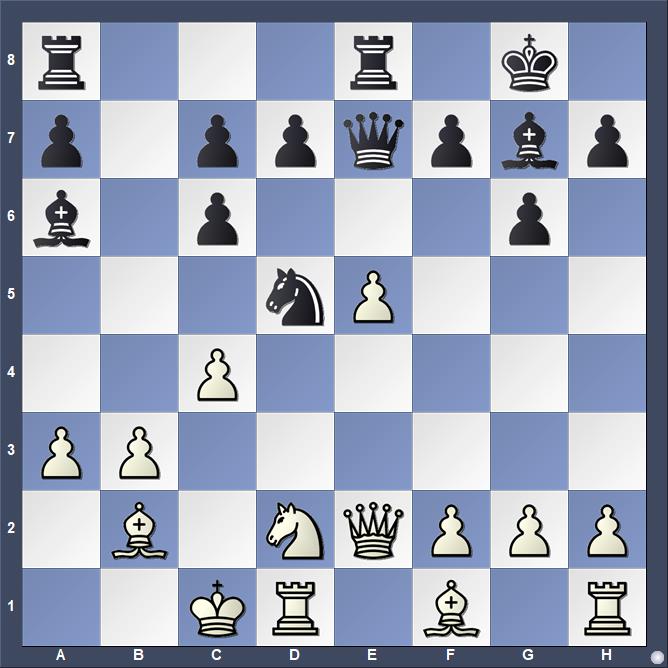
I had Black and the move in this position, found my way to a sacrificial breakthrough that led to a win, and ended feeling good about my skill. Stockfish was critical and brought me back down. My breakthrough idea was flawed and only my opponent's defensive errors gave me the win.

Black to move
30...Kf8 31.Kh2 Ke8 32.Kh3 Rc1 33.Kg3

My moves so far have been fine, although lots of deep computer analysis and dozens of games played against Stockfish on my iPad have convinced me that it would have been more accurate to place my rook on the first rank before moving my king towards the queenside.

Black to move
33...Rd1

This move does not yet squander the advantage, but would have been an appropriate moment for the correct sacrifice.

34.Rf4 Rd3+ 35.Rf3

Black to move
35...Rdxd4??

This sacrifice, which I was proud of during the game, was a blunder that should have led to a draw.

36.Bxd4 Rxd4 37.Rb3

Black to move
My thinking may have been that my centralized king's ability to help my center pawns made them more powerful than White's queenside pawns.

37...Rg4+ 38.Kh3??

This unfortunate error restored my advantage. Had White's king stayed near my central pawns, soon to advance, they would have been stopped.

39...Re4?

39...d4 retains the advantage

39.Rxb5 Rxe5 40.Rb8+ Ke7 41.a4 d4 42.Rb3 Rd5

Placing my rook behind a passed pawn.

White to move

43.Rd3 e5 44.Kg3 e4 45.Rd1 Ke6

White to move
46.Kf4??

The final error.

46.b4 Ke5 47.Kf2 e3+ 48.Kf3=

46...e3-+ 47.Ke4 e2 48.Re1 d3 49.Kf3 Re5 White resigned 0-1

Computer Training

After running quick analysis using the website's analysis feature, I realized my play was not as brilliant as it had felt while playing. But, it was not clear to me what I should have played to convert the clear advantage Stockfish found in the position.

Running the engine and playing its favored moves seemed to involve a great deal of shuffling and often unforced weakening moves by White.

I was intrigued.

The key idea that I missed was a pawn sacrifice to open the a-file with the idea of getting both Black rooks on the first rank. Black then aims to force the exchange of rooks.

Having learning the correct idea from computer analysis, I began playing and replaying the position against the machine. I spent one evening playing more than a dozen games against Stockfish on my iPad. White's resources were revealed in games ending in a draw and even one loss. I won a few, too.

Over the course of several weeks, I analyzed these games on my computer. Then, while writing this article, I played Stockfish 17 on my computer from the position the top of this post.

30...Rc1 31.Kg3 Kf8 32.Kf2

The beginning of a maneuver that the iPad version of Stockfish never found.

32...Ke8 33.Ke3 b4

The correct idea, but here, perhaps, timing is off. Possibly better is 33...Rg1 34.Rf2 Rh1 35.g3 Rg1 36.Rf3 b4

34.axb4

Black to move
34...Rh1

My first effort continued 34...Rc7 35.Kd2 Rg1 36.Kc2 Rxg2+ 37.Kb3 and I did not find the only move that holds an advantage: 37...Rg1

35.g3 Rc7 

Better than 35...Rc8 due to White's attack on the f-pawn.

36.Kd2 Ra7

36...Rh2+ is better 37.Kc1 Ra7

37.Kc2 Raa1 38.b5 Rhf1

The f-pawn must be protected so that the king can get in front of White's passed pawn.

White to move
39.Re3

Perhaps 39.Rf6 was a better choice.

39...Kd7 40.Bb4 Rf2+ 41.Kb3 Kc7 42.Bc5 Rb1 43.Ba3 Kb6 44.Rc3 Kxb5 45.Rc5+ Kb6 46.Kb4

Another slight inaccuracy, according to Stockfish when it has more time to analyze this position than it did to play it.

46.Ka4 is more stubborn.

Black to move
46...Rbxb2+

In this position, my original exchange sacrifice is now correct.

47.Bxb2 Rxb2 48.Ka4

48.Kc3 drops the g3 pawn, but it seems to me that the d-pawn is more important and it soon falls.

49.Rb5+ Kc6 50.Rc5+ Kd7 51.Ra5 Rxd4+ 52.Kb5 Rc4

White to move
53.Ra7+ Rc7 54.Ra3 Rc2 55.Ra7+ Ke8 56.Ra8+ Ke7 57.Ra7+ Kf8 58.Ra8+ Kg7 59.Ra3

Black to move
I stopped playing against Stockfish here because I had places that I needed to go, but I was confident that after 59...Re2 I would have the sort of rook ending that I can win against the engine. Maybe I will continue at a later datew.


27 February 2024

Ways of Reading

After finishing the process of going through every game in Irving Chernev, The 1000 Best Short Games of Chess (1955), I was motivated to tackle another classic. Now, I am following the same process with P. H. Clarke, 100 Soviet Chess Miniatures (1963). I downloaded the PGN file from Bill Wall’s Chess Page and opened it in tChess Pro on my iPad. During my morning coffee a day or two per week, I go through a game on the iPad, sometimes several times, then I go through the game while reading Clark’s annotations. Sometimes, I then find the game on chessgames.com and drop a note there.

Clarke’s book had some competition for my attention. Bobby Fischer, My 60 Memorable Games (1969) also beckoned. Wall has a PGN for that book as well. It, too, resides on my iPad. But as I was going through Fischer — Sherwin 1957, I had a strong impulse to set a chess board on the table for the purpose of studying Fischer’s annotations in a manner that is more difficult with tChess Pro.

Working through My 60 Memorable Games will be more work, but I also think it is worth doing. Perhaps I will do a quick orientation to each game in tChess Pro, then switch to a chessboard on the table and the book for further study.

04 August 2023

A Glass of Scotch

Isn't this a forced draw?
Ryan Ackerman

Computer moves.
Cam Leslie

Black to move
After 10.Ba3

After a game at the Spokane Chess Club where this position arose, there was some discussion among the top players, experts Ryan Ackerman and Cam Leslie. I looked up the position in ChessBase's iPhone app, finding quite a few games that followed Ackerman's recommendation.

10...Nb4! 11.Bb2

11.g3 has been played. The computer says Black is better, but White has managed to draw at the top levels.

11...Bg7 12.a3

12.f4 is another try the engine finds dubious where White managed to draw among players rated over 2400.

12...Nd5 13.Nd2 O-O 14.O-O-O Rfe8

White to move

15.Qf3 Nb6 16.Ne4 Bxe5

16...d5 would be a novelty, but also leads to a draw if players can find the engine's moves.

17.Bxe5 Qxe5 18.Nf6 Kf8 19.Nxe8 Qa1+

White to move

Checking The Week in Chess finds fifteen games that have followed this line, all drawn. This line may be a forced draw at the top levels, but a few inaccurate options for White could serve to complicate matters at the club level.

In my game from the diagram at the top of the post, my opponent played 10...Qe6. He resigned after 11.cxd5 cxd5 12.Qxa6

After returning home, I drank a glass of Scotch.


18 February 2021

Rereading Chess Fundamentals

Readers of Chess Skills will have noticed that lately I am writing (and posting on this site's Facebook page) quite a bit about Jose R. Capablanca. In particular, I have written about Chess Fundamentals in several ways. Nearly two years ago, I pointed out a small error (see "A Capablanca Error"). More recently, I noted a proliferation of Kindle editions that mostly were identical to free versions on Internet Archive and Project Gutenberg (see "Ebook Scam"). Following that was "Advice for Beginners", where Chess Fundamentals was featured as my recommendation for players new to the game.

I bought my clothbound copy of the 1934 edition of Chess Fundamentals sometime in the mid-1990s, and I have read and reread some portions of it several times. Nonetheless, as with most chess books, I have never systematically worked through the entire book, studying every position, game fragment, and game. I am doing that now.

In the process of rereading, or rather wholly reading this classic text, I am taking the time both to compare several versions, and also to read the book in context with other related texts. Recently, I purchased both World Chess Championships 1921 and 1927 (I have the 1977 Dover edition) and A Chess Primer (1935). I am working through these books in parallel with Chess Fundamentals.

For Chess Fundamentals itself, I am primarily working through the 1994 paperback edition and the ebook version of the same, which I view within ChessBase. This same edition is also viewable on my iPad through Everyman's Chess Viewer app. Also, when I downloaded the e+Chess Books app several years ago, Chess Fundamentals was part of the package. Its algebraic edition differs slightly from the Everyman edition. That is, it does not correct Capablanca's error in Example 8; Everyman does.

I offer screenshots of these ebook editions for comparison.

Chess Fundamentals in ChessBase


Chess Fundamentals in the Everyman Reader


Chess Fundamentals in the E+books Reader

Breadth and Depth

While I have long praised Capablanca's classic text for its treatment of all phases of the game in a sequence that seems particularly well-thought out,  perhaps starting with A Chess Primer, and then advancing to Chess Fundamentals would be better. A Chess Primer has some instruction that is a little more elementary for beginners. But, I prefer the sequencing in Chess Fundamentals. Capablanca himself described these two books as companions volumes. I concur.

Chess Fundamentals also offers some study material that is more advanced than I had noticed through my superficial reading of some sections. It does a better job than any other book to lay a solid foundation for beginning students, but also offers both a refresher and some challenging material for intermediate students.

In the section Queen against Rook, Example 40 is a position that I have included in several lessons for my students, but Example 42 proves more challenging. With Capablanca's guidance, I was able to subdue Stockfish while drinking my morning coffee one morning last week.

White to move

Stockfish on the iPad did not follow Capablanca's main line, but his analysis served as a guide for my play nonetheless.

Moving on to middlegame positions, Example 50 gave me enough of a challenge that I expect to return to it again for further work.

Stripes,James -- Fritz 13 SE
From Capablanca, 15.02.2021

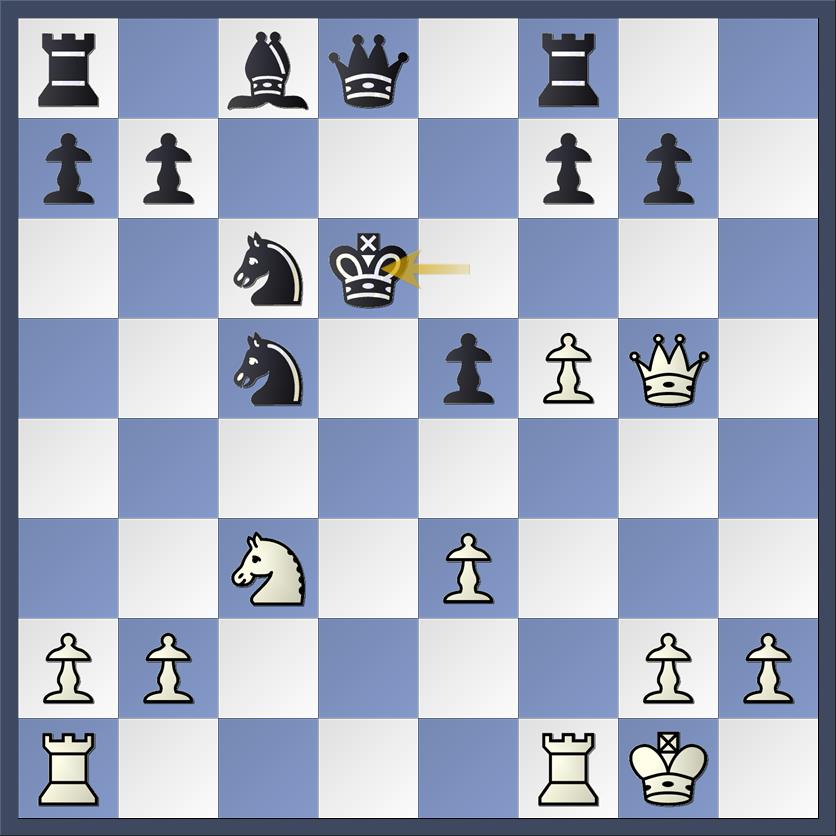
White to move
 After 14...e5 Example 50, Chess Fundamentals


15.Ne6+ Kf6  6.f4 Nc6

Capablanca gives 16...e4 17.Qg5+ Kxe6 18.Qe5+ Kd7 19.Rfd1+ Nd3 20.Nxe4 Kc6 21.Rxd3 Qxd3 22.Rc1+ Kb6 23.Qc7+ and checkmate in five.

White to move

a) 17.Qg5+ was my first choice 17...Kxe6 18.f5+ Kd6

White to move

19.Nb5+

19.Rad1+ is better 19...Kc7 (19...Nd4 20.Qg3 was the move I overlooked) 20.Rxd8

19...Kd5 20.Rfd1+ Nd4 21.Rxd4+

21.Qxd8+?? did not go well for me; 
21.Qg3 is again useful

21...exd4 22.f6+ Kc6 23.Nxd4+ Kd6 24.Qf4+ Kd7

White to move

25.fxg7 took a long time for me to find 25...f6 26.gxf8N+ Qxf8 27.Rc1 and I could sense that my advantage was slipping away, so I started anew at move 17.

b) 17.fxe5+? throws away the advantage, but I tried it second 17...Ke7 18.Nxd8?? Bxg4 19.Nxc6+ bxc6 and Black is winning; 

c) 17.f5 was my third effort 17...Bxe6 18.fxe6+ Ke7 19.Rad1 (19.exf7 was better) 19...Nxe6 20.Rxd8 Raxd8 and I am satisfied that White has a clear advantage, but was tired of playing against the machine; 

d) 17.Rad1 is best, but I did not play this line.


17 December 2018

Disappointing

This morning after feeding the dogs and making our coffee, I sat down on the couch and began following a game in the Ukranian Championship. I know nothing about either of the players, but they are playing the Italian Opening, and it interests me.

I considered "live blogging" the game, recording it as it transpired along with my thoughts and efforts to guess the move. I decided against that plan and simply watched. The game had some interest, but the players agreed to a draw before move 20. I was disappointed.

Baklan,Vladimir (2655) -- Kravtsin,Martyn (2608) [C54]
Ukranian Championship Kiev (5), 17.12.2018

1.e4 e5 2.Nf3 Nc6 3.Bc4 Nf6 4.d3 Bc5 5.0–0 0–0 6.h3

Philip Sergeant has been justifiably criticized for the comment, "In nothing was Morphy so fortunate as in the frequency with which his opponents played P-R3" (Morphy's Games of Chess [1957], 44). That comment, however, appeared in a Scotch Gambit game where Black fatally weakened his kingside with such a move. In some lines of the Italian, the move is required to prevent decisive attacks on a pinned knight.

6...h6 7.Re1 d6 8.c3

I spend a lot of time working to get my students to understand how this move can be far more useful than a knight on this square, especially after the prophylactic P-R3.

8...a5

My database tells me that this move has been played only once before. Of course, my database is not 100% up-to-date. Even so, that confirms why I was not expecting this move. After the move, however, there are five reference games, so the idea has been played via other move orders. Notably, Kravtsin was Black in the highest rated of these games. Baklan might have expected it.

9.Nbd2 Be6

White to move

10.Bb5

Keeping the light-squared bishop! This move was played in six of the nine games that reached this position. Clearly, the apparent novelty of 8...a5 was merely a move order nuance.

10...Qb8

Wow! This strikes me as a new idea. I'll need to check the database.

Kravtsin played 10...Bd7 in 2015 and went on to win the game.

In my database, I found over one thousand games in the Italian with Black's queen on b8. Most of these featured the move late in the game. There are a few with Black's heavy pieces arrayed on a8, b8, and c8 before move twenty. Even so, in the few dozen that I glanced at, I did not find any that compared substantively to this game.

11.Bxc6 bxc6 12.d4

Black seemed to go into a long think here, and I spent time looking at other games. However, Black used less than a minute on this move and nine on the subsequent move. Sometimes the boards and clocks in the Follow Chess app are not up-to-date.

12...exd4 13.cxd4 Bb6

These were the moves that I expected without a long think. Even so, I'm curious what else Black was looking at. Is Black considering moving the queen up, or lifting a rook and putting the queen on a8 with ideas of swinging the other rook over to the queenside? Years ago, I played a lot of games with my heavy pieces deployed in this manner in the Benko Gambit. Does the idea have merit in the Italian? The half open b-file could offer prospects of attack for Black. On the other hand, White might get a strong kingside attack if Black pursues this plan.

14.Nf1

Black to move

Now, Black thought for 41 minutes.

14...d5 15.e5 Ne4 16.Be3 a4

White to move

17.Qc1

The first move that I considered, played after sixteen minutes. My fantasy position puts the rook on d3 and drops the f3 knight back with ideas of a bishop sacrifice on h6.

This game has everything that I need of instructive value for my students: classic opening, provocative novelty, and a minor piece imbalance.

17...Qe8

Both defends the attacked c-pawn and brings the queen closer to the king.

18.Ng3

Maybe my idea of Rd1–d3 and N3h2 is too slow.

18...Nxg3 19.fxg3 ½–½

A draw? I'll grant the position is probably equal, but there is plenty of play left in the position.

There was a lot of talk--mostly complaining--about the twelve straight draws in the recent World Championship, but with one exception those were hard-fought draws from start to finish. Even the one was drawn after slightly inaccurate play by the World Champion. He may have had more dynamic chances a few moves earlier.

I did not embrace these complaints. The string of fighting draws was very satisfying high-level chess of terrific instructive value.

But, this game, it seems to me should not have been drawn so early.

14 December 2018

Recent Games

During my morning coffee today, I passively watched several Grandmaster games that had been played in the past few days, and one of the AlphaZero -- Stockfish battles. The Follow Chess iOS app has a useful autoplay feature that allows me to back the game up to the beginning and then sit back and watch the game take place while sipping my black nectar.

I started with two rapid games from the London Chess Classic. Maxime Vachier-Lagrave outplayed Levon Aronian in the Berlin Endgame and Hikaru Nakamura defeated Fabiano Caruana.

I had not been following the tournament closely, so I was surprised to learn that this position was part of Caruana's preparation and that he was not already worse. Being forced to move the king strikes me as unpleasant.

White to move

Later, I looked at a classic time control game between these players with the same opening. Then, I watched the live commentary, still available on ChessBase's website.

28 May 2017

Bishop and Knight Checkmate

Forcing checkmate with a bishop and knight requires piece coordination and foresight. It is the most difficult of the elementary checkmates. I remember being on the weaker side in a game on the Internet Chess Club in the late 1990s. I told my opponent, "I think this is a draw." He was convinced that it was a win, but he tried to checkmate me in the wrong corner. The game was drawn by the fifty-move rule. After the game, I looked it up. He was right and I was wrong.

Shortly after that game, I learned the checkmate through study of several key positions in Bruce Pandolfini, Pandolfini's Endgame Course (1988). Occasionally, in blitz games or against Chessmaster, I would underpromote a pawn so that I could execute this checkmate. Those instances were usually simple, as only a few moves were needed for checkmate.

I required students to demonstrate it for the Rook Award when I first created my youth chess awards. When I was teaching it regularly, I could perform it reasonably fast, but not easily. Ten years ago, however, I was persuaded by Jeremy Silman to drop it from my awards. It is excluded from Silman's Complete Endgame Course (2007) because it almost never occurs in actual play. In its place in my awards are the Philidor and Lucena rook endgame positions. There should be no question that rook endgames occur frequently and are of immense practical value. The Philidor and Lucena positions also are easier to teach.

Last year in a blitz game at the Spokane Chess Club, I underpromoted and then struggled to execute the checkmate. It had been several years since I practiced this checkmate regularly and my skills had atrophied. Success came well after the fifty-move mark. Last week, I tried the checkmate using Chess.com's "Drills" feature. Again, I struggled. To repair my deficiency, I went to YouTube and watched a video by NM Elliott Neff and another by IM Daniel Rensch. Both of these videos are excellent. After watching these videos, I succeeded with the drill quickly and easily. But, the next morning, I struggled again. Something about the knight's W pattern eluded me. Had I been more attentive during the last two minutes of Neff's video, I might have understood it better.

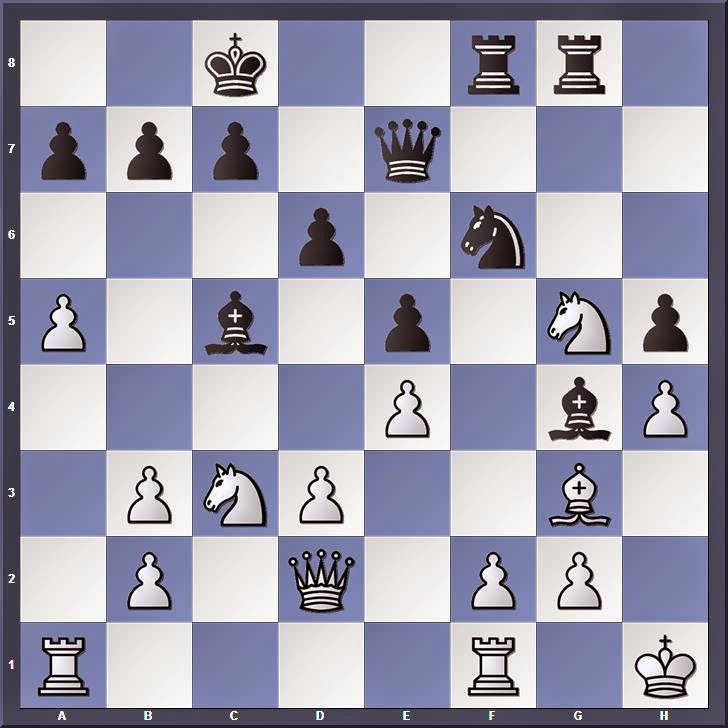
White to move
The W

Through the past few days, I have watched eight or ten videos, reread the relevant portions of Pandolfini's Endgame Course, and read the bishop and knight section of Karsten Muller and Frank Lamprecht, Fundamental Chess Endings (2001). I also have played out dozens of positions against Stockfish on my iPad. I have been in the diagram position above in game after game. I have played this position so often that my hand is learning the moves.


Transition to the Lock

For many years, I have had a vague memory of Pandolfini's Endgame 22, "Transition to the Lock".

White to move

1.Bg5 Ke8 2.Ng6

2.Ke6 is an easier system to remember.

2...Kf7 3.Ne5+ Ke8 4.Kc7

Black to move

When I was failing, I was always aiming at this position, but the bishop and knight swapped places in my memory. As a consequence, Black was able to shuffle the king between e7 and e8 and White failed to make progress. With these two minor pieces in their correct positions, the finish is easy.

4...Kf8 5.Kd7 Kg8 6.Ke8?!

6.Bh6 was the correct move.

6...Kg7 7.Ke7 Kg8

White to move

8.Bh6 Kh7 9.Bf8 Kh8 10.Kf7 Kh7

White to move

11.Nd7 Kh8 12.Bg7+ Kh7 13.Nf6#.


The Drill

Chess.com's drill employs the position that tablebases have identified as the one requiring the most moves to checkmate. This position is among those listed in the appendix in Fundamental Chess Endings. The engine Chess.com uses is less accurate than Stockfish on my iPad, or so it seems. With optimal play on both sides, this position leads to checkmate in 33 moves. Neither I nor the computer played the best moves.

There are three steps in the process:

1) centralize and drive the king to the edge,
2) drive the king from wrong corner to right corner,
3) checkmate.

White to move

Among the videos that I watched this week, some were better than others. One that is okay, but not to be recommended, is Kevin's from thechesswebsite.com. Through the first phase, he keeps repeating, "it doesn't matter," or similar phrases. I disagree. While slight inaccuracies in the first phase will not be the determining factor in success or failure, they can add up. When you have 50 moves to execute a checkmate that requires 33, an inaccuracy that requires four or five moves to correct can be repeated twice. The third time could be fatal. The inaccuracies through the first eleven moves here, however, add only one or two moves each to the final solution. Had the computer been more stubborn, however, checkmate might have occurred on move 40.

Stripes,J -- Computer
Chess.com, 26.05.2017

1.Ka7 Kd8 2.Bg6 Kc7 3.Nf3 Kc6 4.Bd3

Better is either 4.Be4+ or 4.Ka6.

4...Kc5 5.Kb7 Kd6 6.Kb6 Ke7

6...Kd5 resists longer.

7.Kc6 Kf6

7...Ke6 resists longer.

8.Kd5

8.Kd6 is better. Centralization is a good general concept, but should not supplant concrete analysis.

8...Kf7

8...Ke7 is more stubborn.

9.Ke5 Ke7

9...Kg7

10.Bf5

10.Bc4 is more accurate.

10...Kf8

10...Kf7

11.Kf6 Kg8

White to move

Black's king is on the edge and seeking refuge in the corner where checkmate is impossible without a dark-squared bishop. White's king is optimally placed, as is White's bishop. The knight must go to f7 to evict the king. In Neff's video, the knight gets to f7 via g5. Objectively, there is no difference between g5 and d5, but as a practical matter, it is worth remembering that the knight wants to be on the center square that is two spaces diagonally from the wrong corner. In some cases, the knight might take up this position before the bishop is posted on its ideal diagonal.

12.Ne5 Kh8 13.Nf7+ Kg8 14.Bg6

Here, in his video, Kevin states that the bishop "improves its position" ("Chess Endgames -- Bishop and Knight, Part 1"). Nonsense. The point of the bishop's move is to lose a tempo without altering the position.

14...Kf8 15.Bh7 Ke8

We have reached the position with the colored W near the top of this post. The letter W highlights the route the knight will take through the course of the second phase. Rensch offers a useful principle, "lead with the knight, follow with the king."

16.Ne5 Kd8 17.Ke6 Kc7

White to move

This was the point where I failed on the second day, earlier this week. As panic set in, I struggled to find a route to Pandolfini's position (after move 4 in "Transition to the Lock"). But, there is another lock available.

18.Nd7 Kb7

White to move

19.Bd3

This move completes the lock by covering the squares highlighted in yellow.

19...Kc6 20.Bc4 Kc7 21.Bd5

21.Bb5 pursues Pandolfini's "transition to the lock", which also works.

21...Kd8 22.Kd6

Black to move

We have a sitiuation identical in all its particulars to one that existed two squares to the right after evicting Black's king from the wrong corner. Here, the same maneuver as before drives the king back in the direction we wish.

22...Ke8 23.Be6

Losing a tempo.

23...Kd8 24.Bf7

Denying Black's return to the e-file.

24...Kc8 25.Nc5

The knight reaches the third point of the W. White repeats the process--knight moves, king follows, bishop either loses a tempo or cuts off the escape.

25...Kd8 26.Nb7+ Kc8 27.Kc6 Kb8 28.Kb6 Kc8 29.Be6+ Kb8

White to move

Now, the third and final phase. It is checkmate in four. White's only difficulty is easily solved. The knight must check the king on g8 without blocking the bishop's control of the long diagonal. Two squares are available: d7 and a6. However, d7 would allow the king to return to c8. If we had this position with Black to move, then the bishop could check first and the knight deliver checkmate from d7.

30.Nc5 Ka8 31.Bd7 Kb8 32.Na6+ Ka8 33.Bc6# 1–0

01 May 2017

The Polgar Brick: eBook Edition

A Review

Chess: 5334 Problems, Combinations, and Games by László Polgár contains 306 checkmate in one, 3412 checkmate in two, 744 checkmate in three, and then 600 miniature studies. These miniatures (game of 25 moves or less) are sorted into six groups. Each group contains 100 games that featured a sacrifice on one of a pair of squares--f3.f6, g3/g6, h3/h6, f2/f7, g2/g7, and h2/h7. I described one of the ways that I found this section useful in "Building Upon Morphy". Following the miniatures section are 144 simple endgames and then 128 combinations from the Polgár sisters, Susan, Sophia, and Judit. Susan and Judit are Grand Masters, and Judit was in the FIDE top ten a few years ago. Sophia, who was more interested in art than chess, is an International Master.

The book was first published by Könemann in 1994 under the title Chess in 5333+1 Positions. The "+1" in the original title reflects the distinctiveness of the final position, an artistic checkmate in two composition by Sophia. In 2006, Black Dog & Leventhal brought out a new edition that is approximately half the size--same thickness, but 6 x 9 inches instead of the large 8 x 12 format. I have the Könemann paperback edition, which I bought for $25 in 1998. The smaller edition is still a large book, although considerably lighter than the original. At some point, this book acquired the nickname "Polgár Brick" in several social media forums. Both editions are 1104 pages.

The Black Dog & Leventhal edition added an introduction by Bruce Pandolfini, while eliminating front matter in languages other than English. The Könemann edition has the table of contents, Polgár's forward, and other material in ten languages.

It is a useful book for self-study and useful to chess teachers, but it is awkward to carry in a backpack. Last week, I bought the Kindle eBook edition for $2.99 and now have the book on my iPhone and iPad. Hence, I always have it with me unless I am swimming.

Fifteen years ago, I spent 20-30 minutes per day with this large book during my morning coffee. I would solve each exercise looking at the diagram and write down my answer on a piece of paper. Then, I would check the answers in the back of the book and record the percentage that I got correct. When this percentage was below 90, I would rework the problems a few days later. Over the course of a few months, I solved the first 1596 problems. Since then, the book has mostly sat on a bookshelf alongside other neglected books. Occasionally, I would pull it off the shelf when looking for some instructive checkmate exercises for students or to work through some of the book's miniatures.

Even strong players capable of solving difficult tactics problems could benefit from working through the checkmate in one exercises. The first 156 contain a minimum number of pieces. Beginning with number 157, the board is crowded with pieces. How many can you solve as fast as you turn the page? I found that I could solve the first 156 instantly, but then slowed down. Some took a few seconds; others were as easy as those with few pieces. Solving these exercises quickly and repeatedly should improve board vision and pattern recognition.

Some of the ckeckmate in two exercises are challenging, depending on your skill level. But, they are intended by Polgár to require only a few minutes and to build the reader's confidence. Naturally, the checkmate in three are more challenging, but still not horrendously difficult.

In the print edition, there are six problems per page. The eBook presents one per page. In the solutions, the composer is indicated if is was not Polgár. For the checkmate in one (naturally) and the checkmate in two, only one move is given. The solutions to the checkmate in three are carried out to checkmate. In the eBook, the problem number is a hyperlink to the solution and the number above the solution links back to the problem.

Only a few of the first 4462 positions are from real games. The 600 miniatures, of course, are all real games, as are 127 of the 128 from the Polgár sisters.

The eBook edition extends the usefulness of this book. It is certainly much easier to carry, as noted above. There are a few formatting issues, but these serve only as distractions and do not mar the book's usefulness. Some of the solutions seem to be in a larger font, for example. In the bibliography at the end of the book, the Russian language sources listed are in a smaller font than the other texts.

Now that I have the eBook, I expect to make much more extensive use of the miniatures section. Last fall, I carried the mammoth book to a chess lesson with a student so that we could look at a few of the miniatures together. Then, it sat on the floor of my car for most of the winter. No longer. The book need not leave my house, and I will always have it during chess lessons. I rarely do not have my iPad and never leave my home without my phone.

Print Edition First Miniature
In the book, the miniatures contain the early moved of the game, then a diagram with the critical position. Underneath the diagram is the conclusion of the game. This is the same structure that one finds in the Encyclopedia of Chess Miniatures (2015). Ideally, the student would look at the diagram and solve the position without looking at the continuation below. This exercise is most easily accomplished by covering the moves below with a scrap of paper.


eBook Edition First Miniature
In the eBook edition, the initial moves and diagram are on one page, and the game's conclusion is on the next page. That structure makes it more useful as a training tool than the print edition and the cost is slightly more than 10% of the publisher's list price.

If you do not have this book, it might be time to download the free Kindle app and enter the world of chess eBooks. There are many exceptional chess books in this format. Few are as good of a bargain as the Polgár brick. Do be careful, however, there are chess eBooks that are complete rubbish. Some are even written by people who do not know how to play chess (see "Kindle Chess Books").


31 March 2017

Kindle Chess Books

"The Good, the Bad, the Ugly"

I do not have a Kindle. While at Best Buy, I looked at them, even playing a game of chess with one in the store. It was an easy win. That was in 2010. My wife and I had gone to Best Buy with thoughts of maybe buying Kindles, but went home with two iPads instead. The iPad screen is much larger and Apple offers a Kindle Reader on the App Store.

A couple of weeks later, on a flight to London, I finished reading Zero History (2010) by William Gibson. It was my first Kindle Book. After returning home, I added several more, including the second edition of Mark Dvoretsky, Dvoretsky's Endgame Manual (2008). Adding a copy of this book to my iPad considerably lightened the weight of my chess bag. For most of the previous year, the print version of the first edition of Dvoretsky's Endgame Manual was nearly always with me. In both my chess coaching and personal study away from home, I made frequent use of my pawn ending flashcards (see "Pawn Endings Flash Cards"). It was often helpful to refer to Dvoretsky's analysis.

some light reading
With a lightened chess bag, I increased the number of books that I carried. I added PDF copies of my own self-published pamphlets--"A Checklist of Checkmates" and a couple of camp workbooks. For a few dollars more, the print edition of Gibson's novel would have been easier to read and never face the prospects of a dead battery. But having a growing collection of chess books always in my bag added useful tools to chess study and teaching. I began to see chess e-books as the bee's knees!

Kindle Books are not the only e-books. Google has been creating digitized copies of many old and often rare books. These are available in several formats, including one that can be read in Google Play (Google's answer to the Kindle). The works of William Lewis (1787-1870) have become accessible. Over the course of several months, I translated Lewis's long English descriptive notation in Gioachino Greco on the Game of Chess (1819) into algebraic (see "Gioachino Greco on the Game of Chess"). That expanded my database of Greco's games from the 77 generally available to 168. This expanded database became a core resource for that summer's chess camp and workbook, "Learning from the First Chess Masters."

Unfortunately, the hard drive on my notebook crashed that summer and I had failed to back-up my Greco database. I still have Lewis's book in Google Play, of course. I also have the smaller database created for camp, but most of my work on Greco those two months must begin anew. I have been working with Francis Beale, The Royal Game of Chesse-Play (1656) to rebuild this work. The notation is more difficult than Lewis's. My long-term plan is to have a compendium of the Beale, Lewis, and "Hoffman" (1900) editions of Greco's games. Professor Hoffman (a pseudonym for Angelo Lewis) is the author of the work that forms the basis of the database, but even this work has variations that were left out when the database was created (see "A Greco Miniature").

My collection of seventeenth, eighteenth, and nineteenth century chess books and magazines would fill a bookcase, but they are always with me on my iPad and iPhone. Moreover, they were free. Kindle Books are not free, but they usually cost less than the print edition.

Dan Heisman, Elements of Positional Evaluation, 3rd. ed. (1999) transformed my thinking. In place of Larry Evans' "four elements"--pawn structure, force, space, and time--I have Heisman's seven. Heisman argues against what he calls pseudo-elements--material, space, king-safety, and development. Instead, in a book that reads well alongside John Watson, Secrets of Modern Chess Strategy (1998), he offers mobility, flexibility, vulnerability, center control, piece coordination, time, and speed. It is hard to stop using the word development, but it is much easier to explain what is meant by this vague notion with terms like mobility, flexibility, and vulnerability. Get your pieces to squares where they have maximum mobility and flexibility. Reduce your own vulnerabilities, while looking for ways to exploit those your opponent fails to reduce. Reading the old masters in the light of Heisman's book, it becomes clear that they employed the word mobility to define what they meant by development. They also determined material value by examining how many squares a piece could reach and noting the colors of these squares. See "Principle of Development: Early History" for extended musings on this topic.

The third edition of Heisman's Elements of Position Evaluation contains a minimum of diagrams and few illustrative example. The fourth edition greatly expands the work with many well-illustrated examples. I have the fourth edition in my Kindle library. Other Kindle editions that are always with me and frequently prove useful in my work with youth players include: Bruce Alberston, Chess Mazes (2004); Alexander Alekhine, Alexander Alekhine's Best Games (1996)--a reduced selection from his three volumes with additional notes by John Nunn;  Ray Cheng, Practical Chess Exercises (2007); and now my own Essential Tactics: Building a Foundation for Chess Skill (2017). There are also many books that I use for self-study, especially Alex Yermolinsky, The Road to Chess Improvement (2012), and Garry Kasparov on Garry Kasparov, Part I: 1973-1985 (2011).

Horrors of Self-Publishing

Converting my worksheets with 150 elementary tactics problems into Kindle book format with diagrams featuring colored arrows to highlight the solutions was a year's work. I started in spring 2016, working a few hours per week. The first step was restoring the database used to create the worksheets, because that, too, was lost in the hard-drive crash a few years ago. Then, I started creating colored diagrams as exercises and another set with arrows as solutions. While creating these diagrams, I also wrote the text. After two months of steady work, I set it aside. My body can handle only so much meticulous work in front of a screen. In late winter 2017, I resumed the project with the determination to finish.

Once the manuscript was completed and I had proofread it a few times, publishing was a snap (see "Writing and Publishing"). Only when it was "live" in the Kindle store was I able to see errors that I had missed while proofreading. Over the course of 48 hours, I uploaded five or six corrected editions. I found that it was almost too easy to self-publish a Kindle book.

The first two days that it was available, Essential Tactics sold six copies. That lifted it to #7 among the Kindle chess best-sellers. I started paying more attention to the other top selling Kindle chess books. These lists are updated hourly. Some very good books by strong Grandmasters with a penchant for explaining things clearly are usually on the list. John Nunn, Understanding Chess Move by Move (2013), for example, is in the top ten at this hour. Books about Bobby Fischer, such as Brady's biography, are often near the top. So is Bobby Fischer Teaches Chess, which Fischer did not write.

Also among the top selling chess e-books are instructive manuals by writers no one has ever seen at a chess tournament. A book titled, Chess: Become a Master (2017) aims to lift beginners to the next level. It explains the rules and offers some basic strategy and tactics instruction. The author is not a chess player. The explanations of the rules are full of errors, repeating some of the misconceptions your uncle may have taught you fifty years ago. The strategy and tactics suggestions will make you a worse chess player if you are already over 1000 Elo.

There are similar horrors as bad or worse.

Earlier this week, five of the top ten were a book, The Chess Strategy, by five different authors. All five were the same text: Edward Lasker, Chess Strategy (1915), which is available free from Project Gutenberg. Someone had uploaded this book several times with different covers and fake author names. I wrote a review of one copy identifying the work as plagiarism. Once I received notice that the review posted, I looked at the top selling books again. Ten of the top twenty were Chess Fundamentals, but Jose R. Capablanca was not identified as the author of any of these. Prices ranged from $3.00 to $4.00. This time, however, there was no free Kindle sample, no preview. However, the book description started in mid-sentence and was instantly recognizable to anyone who has spent as much time reading Capablanca's original as I have.

Is it any wonder that I have difficulty attracting potential readers to my self-published books? I, too, am an unknown author without a chess title. My students may call me "Sensei", but I am not a master. I have been teaching beginners and novices, and a few strong local players who have become state champions. My skill at bringing young players up to C Class, and with a foundation that facilitates growing beyond me, is well-established. I have thousands of pages of instructional chess materials ready for conversion into e-book format. No one cares.

The Kindle store is full of rubbish. Even some of the books by established tournament players seem overpriced at $4.99. Some are incompetent. I titled one review of a book by a strong, young expert or master with that word. The author, who should know better, repeats an error that I have seen in several books, "the king cannot fork."*

In Essential Tactics, I have this exercise.

White to move

A king fork wins a piece and likely the game.


*That author currently has seven books in the Kindle store, several of which are always among the top sellers. One is no more than a ChessBase export file that any skilled ChessBase user could create in five minutes. In fifteen minutes, I could produce a cleaner copy.


11 February 2016

Lesson of the Week

My advanced students were presented with an elegant endgame scenario that proved difficult. I found it in the Chess Quest iPad app.

White to move

Some of my students this week also have been presented with an instructive position that arose in a youth tournament game.

Black to move

Chess players who have invested time to learn fundamental checkmate patterns often find that they can solve this checkmate in six moves within a few seconds. There are several excellent books designed to develop this skill. The Art of the Checkmate (1953) by Georges Renaud and Victor Kahn remains my favorite, but there are others that are useful. Murray Chandler, How to Beat Your Dad at Chess (1998) is popular. Chapter four of The Art of Attack in Chess (1965) by Vladimir Vukovic offers a succinct pattern list. In addition, there is a well constructed lesson presenting 26 key patterns in the first chapter of Practical Middlegame Techniques (1997) by Danny Kopec.

All of these texts have their merits, but I am partial to a privately published pamphlet that is currently available as a PDF file: my own "A Checklist of Checkmates," available via a link in the sidebar to the right. My "Checklist" presents 37 key patterns in a manner similar to Kopec's but with an organizational scheme not found in any other publication. The heuristic that I developed for this pamphlet facilitates learning and memory. I sought to build some of the instructional value of Renaud and Kahn. Most beneficial are the 139 exercises in seven sets. When students are working on my Bishop Award, they complete the first two sets of problems from this pamphlet: Corridors and Diagonals.

In the position above, the checkmate pattern that I call Two Pigs suggests itself, but that pesky knight on f3 gets in the way.

Greco's Academy

My beginning students worked through a worksheet that I created as part of my camp workbook for my 2013 chess camp. It is the first of three pages in a section that I call Greco's Academy--fifteen of Greco's model games with simple questions. Their worksheet contained six games.

Many of Greco's games are short illustrations of a single tactical motif. Imagine yourself as one of Greco's students. He composed these games for you. Play through the games, answering the question: What is the threat at the end of the game?

(1) 1.e4 e5 2.Nf3 d6 3.h3 Nf6 4.c3 Nxe4 5.Qa4+ 1–0

Threat: _____________

(2) 1.d4 d5 2.c4 dxc4 3.e3 b5 4.a4 c6 5.axb5 cxb5 6.Qf3 1–0

Threat: _____________

(3) 1.e4 e5 2.Bc4 Nf6 3.Nc3 c6 4.Qf3 b5 5.Bb3 b4 6.Na4 d5 7.d3 h6 8.Ne2 d4 9.Ng3 Bg4 0–1

Threat: _____________

(4) 1.e4 e5 2.f4 Nf6 3.Nc3 exf4 4.d4 Bb4 5.Bd3 Qe7 6.Qe2 Nc6 7.e5 Nxd4 8.exf6 Nxe2 9.fxe7 Nxc3
10.a3 Ba5 11.Bd2 1–0

Threat: _____________

(5) 1.e4 e5 2.Nf3 Nc6 3.Bc4 Bc5 4.c3 Nf6 5.Ng5 0–0 6.d3 h6 7.h4 hxg5 8.hxg5 Nh7 9.Qh5 1–0

Threat: _____________

(6) 1.e4 e5 2.f4 exf4 3.Nf3 g5 4.Bc4 g4 5.Ne5 Qh4+ 6.Kf1 Nh6 7.d4 d6 8.Nd3 f3 9.g3 Qh3+ 10.Ke1
Qg2 11.Nf2 1-0

Threat: _____________

06 April 2015

Some Miniatures

Playing Against Steinitz

Wilhelm Steinitz offered a pawn to Serafino Dubois in their game during the London International Chess Congress,  1862. Johann Lowenthal comments in the tournament book that Dubois "was not to be tempted" (The Chess Congress of 1862 [1864], 102). I was less keen to the dangers while I was reviewing Dubois -- Steinitz in the early morning last week and proceeded to play this move against Hiarcs on the iPad. I lost, but not in a manner that confirms the general consensus concerning the dangers.

Dubois -- Steinitz begins:

1.e4 e5 2.Nf3 Nc6 3.Bc4 Bc4 4.O-O d6 5.d3 Nf6 6.Bg5?! h6 7.Bh4 g5 8.Bg3

At this point, we have Middle Game Position 168 in GM-RAM: Essential Grandmaster Knowledge (2000) by Rashid Ziyatdinov, which I have been working through since December (see "Game of the Week").

Black to move
GM-RAM Position 168

8...h5!

Steinitz offered a pawn here.

Nineteenth century commentators and Stockfish 6 agree that 9.h4 is best, and that is what Dubois played. ChessBase database has eleven games with 9.Nxg5--all Black wins. The statistics certainly seem grim for snatching the pawn.

The earliest game is Knorre -- Chigorin, St. Petersburg 1874.*

Knorre,Victor -- Chigorin,Mikhail [C50]
St Petersburg, 1874

1.e4 e5 2.Nf3 Nc6 3.Bc4 Bc5 4.0–0 Nf6 5.d3 d6 6.Bg5 h6 7.Bh4 g5 8.Bg3

Diagram above.

8...h5 9.Nxg5 h4 10.Nxf7 hxg3 11.Nxd8 Bg4 12.Qd2 Nd4

White to move

13.Nc3

There are two games in the ChessBase database with 13.h3. Another game referenced in T.D. Harding and G.S. Botterill, The Italian Game (1977) is absent from this database.

13...Nf3+ 14.gxf3 Bxf3 0–1


Ashley -- Tollit, Birmingham 1923 continues from the diagram with 13.h3

13.h3 Ne2+ 14.Kh1 Rxh3+ 15.gxh3 Bf3# 0-1

This is the game played more recently on at least two occasions (1996 and 2005).

Perhaps, 14.Kh1 is the critical error, however, in this last example. White could have played

14.Qxe2!.

Black to move

After 14...Bxe2 15.Ne6, Black still appears to have an edge, but checkmate no longer seems imminent.

Although the database offers only losses for White after 9.Nxg5, engine analysis of these miniatures and of my play against the iOS version of Hiarcs leaves me wondering whether capturing the offered pawn is a mistake, as asserted by Lowenthal.

James Stripes -- HIARCS [C50]
Spokane, 31.03.2015

1.e4 e5 2.Nf3 Nc6 3.Bc4 Bc5 4.0–0 d6 5.d3 Nf6 6.Bg5 h6 7.Bh4 g5 8.Bg3 h5 

Position from Dubois -- Steinitz, 1862

9.Nxg5

Black to move

9...Bg4

9...h4 is the critical line in most commentaries. 10.Nxf7 Qe7 11.Nxh8 hxg3 12.Kh1 with an advantage for Black

10.Qd2 Qe7

10...h4

11.Bxf7+ Kd7 12.h4

12.Bh4 might be better.

12...Raf8 13.Bb3

13.Bc4

13...Kc8 14.Nc3 Bb6 15.a4 Bc5

White to move

16.a5

16.Nd5 with a two pawn advantage, I should seek to exchange pieces.

16...Nd4 17.Kh1 Nxb3 18.cxb3 Rhg8

White to move

19.f4

19.a6 may be better, as is 19.f3.

19...Bd7 20.fxe5 dxe5 21.Bf2 Kb8 22.Na4 Bxf2 23.Rxf2 Ng4 24.Rxf8+ Qxf8

White to move

25.Qe2?? Qf4 0–1

Difficult positions provoke errors. On the other hand, a move cannot be deemed an error merely because it invites difficulties. It may be possible to learn to defend such a position. Having an advantage of two pawns often is worth something.


*See Edward Winter, "Confusion," Chess Notes (updated 14 March 2014) for another early instance of this game, and for discussion of problems regarding the game score of Dubois -- Steinitz 1862.