Showing posts with label Seirawan. Show all posts

30 August 2020

Howard Staunton

On the Origin of Good Moves Reading Log*

In The Chess-Player's Handbook (1847), Howard Staunton asserts, "in chess, as in modern warfare, one of the most important strategems is the art of gaining time upon the enemy" (48-49). This assertion could well be considered central to the foundation of the articulation of positional chess, but Staunton does not get such credit.

Time served as a "factor" in Siegbert Tarrasch's articulation of what many have taken to be a continuation of William Steinitz's modern theory. He stated, "Force, Space and Time work together at every move" (The Game of Chess [1935], 231). Later, pawn structure was added to Tarrasch's formulation, and these became the essence of "development" (see "Principle of Development: Early History"). These were the factors that I learned in my youth, and then found anew as I was returning to chess after about a decade of minimal play, and read some of Yasser Seirawan's exceptional "Winning" series published by Microsoft Press in the 1990s. I recall Wesley So telling Seirawan during one of the Wijk aan Zee broadcasts that these texts gave him his foundation.

Time remains vital to Dan Heisman's nearly iconoclastic Elements of Positional Evaluation, rev. ed. (1999), where he lists mobility, flexibility, vulnerability, center control, piece coordination, time, and speed. Heisman considers notions of space, pawn structure, and development as "pseudo-elements". In Heisman's brief synopsis of the history of positional theory, he claims that after Andre Danican Philidor, the next contribution to theory was the play of Paul Morphy, skipping over Staunton.

Who mentions time prior to Staunton? Research might reveal that it was Giaochino Greco, although I cannot point to a passage in his manuscripts where this is the case. I do vaguely recall the concept articulated in some annotations by William Lewis, and Staunton was certainly familiar with the works of Lewis. Following this assertion concerning time, Staunton suggests the relevance of the art of warfare for chess with reference to Traité de Grand Tactique (1805) by Antoine-Henri Jomini, who served under Napoleon as well as other leadership capacities elsewhere in Europe. Staunton's lessons from Jomini, the art of war:

...consisted in the proper application of three combinations--first, the art of disposing the lines of operation in the most advantageous manner; secondly, in a skillful concentration of the forces with the greatest possible rapidity upon the most important point of the enemy's line of operations; and thirdly, that of combining the simultaneous employment of this accumulated force upon the position in which it is directed. (49)
Staunton implies that the application of these principles of war to the game of chess ought to be self-explanatory. Perhaps this failure of elaboration is what excludes him from narratives of the development of chess theory. But, if so, why does Steinitz get so much credit? The Modern Chess Instructor (1889) is even more paltry in its elaboration of principles of positional play.

Willy Hendriks, On the Origin of Good Moves (2020) does not elevate Staunton's reputation as a theorist in his short chapter, which concentrates on the second match between Staunton and Pierre de Saint-Amant (76-88). He does, however, claim that Staunton's contribution to the development of chess skill among those who followed him were manifested in three ways. The first is the role of newspaper columns.

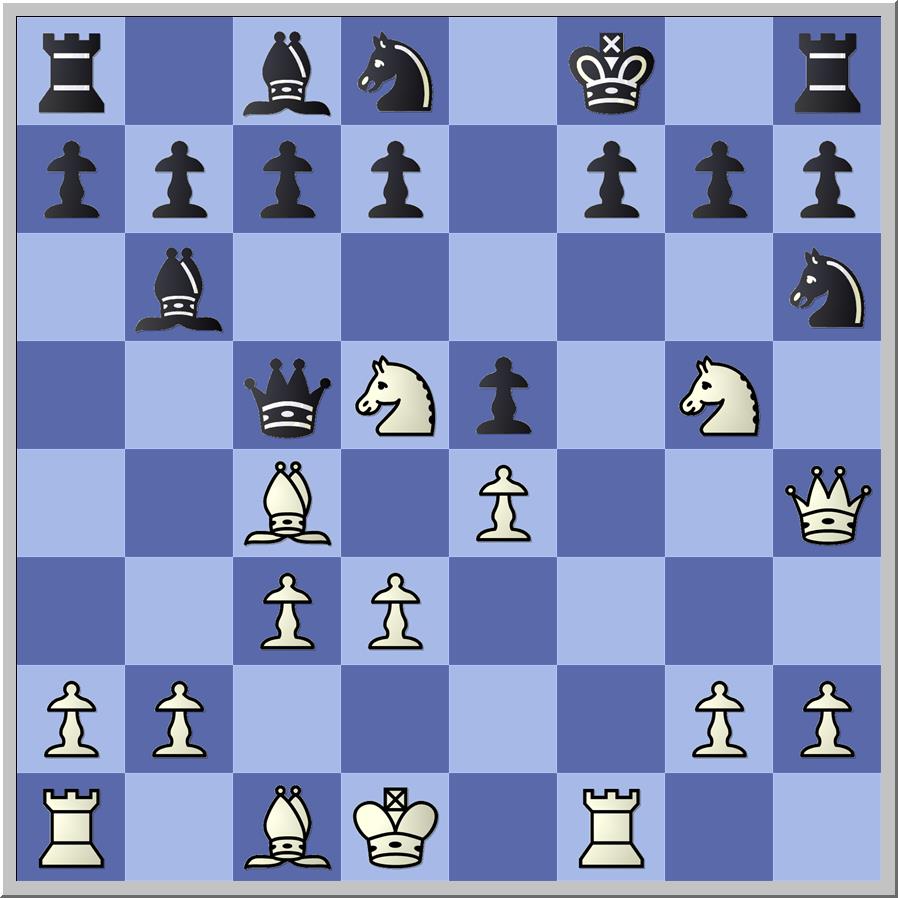
In the quiz that begins the chapter, Hendriks presents this position and an intriguing question.

White to move

His question is derived from a challenge that Staunton offered to his opponent in a battle of analysis in chess periodicals, Le Palamède edited by Saint-Amant and Chess Player’s Chronicle by Staunton. Would you be willing to take the Black side in a series of six games? How much would you be willing to bet on the outcome?

Saint-Amant asserted that Black has an attack and a clearly superior position. Staunton disagreed. Staunton did lose the game, but Hendriks suggests that his loss was due to a subsequent tactical adventure that led no where.

Edward Winter wrote about the controversy in "Staunton v. Saint-Amant", Chess Notes 5709 (10 August 2008). This article forms the source for annotations to this game in ChessBase Mega2020. Hendriks develops his narrative of the word wars through the work of Nick Pope at Chess Archaeology. The emergence of chess columns in newspapers, and then specialized chess magazines, in the first half of the nineteenth century, Hendriks asserts, began to improve the level of chess skill. Staunton's Chess Player's Chronicle is prominent among them, as was Le Palamède. Staunton's second contribution is found in his books. Then, in 1851, Staunton organized the first international chess tournament.

Hendriks core argument in the chapter disputes an assertion of Harry Golombek that the quality of play in the Staunton -- Saint-Amant matches was "much superior" to the McDonnell -- De Labourdonnais matches (77). Hendriks shows that there was an abundance of errors in the latter, as there had been the previous decade when the top French player met the top British player.

Hendriks' exercises at the start of the chapter and his analysis of the games from which they were derived sent me into the databases to play through with some rapidity all 27 games from the two matches. To be honest, I found that exercise to be a chore. Aside from a few interesting endgames, the play of neither gentleman inspired me. On the Origin of Good Moves extracts the most interesting moments. My criticism of the chapter is that Hendriks only vaguely references the fact that the match he focused on was the second between the two men. His assertions that Staunton was clearly the superior player should not overlook Saint-Amant's victory in the much shorter first match.

22 December 2018

Pawnstoppers

I lost a Classical French yesterday (Black side), so I'm reviewing some Grandmaster games from old Chess Informants. This ending caught my eye.

Black to move

This position is from Hjartarson,J -- Seirawan,Y, Reykjavik 1991, Informant 52/282.

Seirawan played 62...d3 and a draw was agreed. How would play proceed if he had played 62...a2 instead?

02 August 2017

Alekhine -- Lugowski 1931

An unusual smother checkmate piqued my interest. It is presented in Mikhail Tal and Victor Khenkin, Tal's Winning Chess Combinations (1979), where it is credited as Alekhin -- Lugovsky 1931 (58). Due to spelling variances, my initial efforts to turn up the game score fell short. However, the game is in ChessBase database with the spelling Lugowski, and also on Chessgames.com. The game appears in John Donaldson, Nikolay Minev, and Yasser Seirawan, Alekhine in Europe and Asia (1993), spelled Lugovski.

The game was played as part of a simul during Alekhine's tour of Yugoslavia between two blitz tournaments in Ljubljana (12 December 1930) and Zagreb (25 January 1931). Alekhine in Europe and Asia contains 47 games from this tour and a table compiling his score through 555 games in 17 events (70-76).

Alekhine,Alexander -- Lugowski,S [C25]
Belgrade 1931

1.e4 e5 2.Nc3 Nc6 3.Bc4 Bc5 4.Qg4

Already, Black must make an unpleasant choice.

Black to move

4...Qf6

I do not agree with the Chessgames.com user who identifies this move as the losing one.

4...g6 is the most popular try, and was played in Larsen -- Portisch, Santa Monica 1966, which continued 5.Qf3 Nf6 6.Nge2 d6 (here ECO recommends 6...Bf8) 7.d3 Bg4 8.Qg3 h6 9.f4 Qe7 10.Nd5 Nxd5 11.Qxg4 Nf6 12.Qh3 Larsen went on to win in 53 moves.

4...Kf8 has been tried fairly often. Of note is a game won by Viswanathan Anand when he was a teenager 5.Qg3 d6 6.Nge2 Nd4 (6...h5 might be better) 7.Nxd4 exd4 8.Na4 Be6 9.Bxe6 fxe6 10.Nxc5 dxc5 11.Qb3 Qc8 12.Qf3+ Ke7 13.Qg3 Kf7 14.Qf4+ Kg6 15.Qg4+ Kf6 16.d3 Anand,V (2405) --Ravisekhar,R (2390), New Delhi 1986 (57 moves).

4...Nd4 5.Qxg7 Qf6 6.Qxf6 Nxf6 7.Bd3 has occurred in a few games.

4...Bf8 led to a miniature worthy of analysis. 5.Qg3 d6 6.Nge2 Nf6 7.f4 exf4 8.Nxf4 Nd4 9.Qd3 Nc6 10.Qg3 Nd4 11.0–0 g6 12.Qf2 Nxc2 13.d4 Nxa1 14.Nfd5 Bg7 15.Bg5 0–0 16.Nxf6+ Bxf6 17.Bxf6 Qd7 18.Qf4 1–0 Genzling,A (2408) -- Migot,T (2257), Belfort 2012.

5.Nd5 Qxf2+

There is no better option. Here also, the comments on Chessgames.com are less than helpful.

5...Qg6 is no good. 6.Qxg6 hxg6 7.Nxc7+ Kd8 8.Nxa8+-.
5...Bxf2+ is just as bad 6.Kf1 Qg6 7.Qxg6 hxg6 8.Nxc7+ Kd8 9.Nxa8 Bxg1+-.

6.Kd1 Kf8

6...Bf8 was played in Lengyl -- Ruck in the 1995 championship of Hungary and Black won. Lengyl played 7.Nh3, but a better line seems 7.Nxc7+ Kd8 8.Nxa8 d5 9.Qe2 Qxe2+ 10.Bxe2 when White has the upper hand.

7.Nh3 Qd4?

7...h5! 8.Qg5 Qd4 9.d3 and White's threats are not yet decisive.

8.d3

Black to move

8...Bb6?

Black defends c7, but the knight on d5 also targets e7.

8...d6 was played by none other than Mikhail Chigorin, who also lost quickly. 9.Qh4 Bxh3 10.Qxh3 Na5 11.Rf1 Nxc4 12.Qd7 f6 13.Nxf6 Qf2 14.Rxf2 Bxf2 15.Nh5 1–0 Mieses,J (2467) -- Chigorin,M (2546), Ostend 1906.

8...h5 still seems worthwhile. 9.Qf3 d6

8...Nf6 9.Nxf6 d5 10.c3 Bxg4+ 11.Nxg4 dxc4 12.cxd4 is better than was played against Alekhine.

9.Rf1 Nd8

A sad looking move, but Black is already lost.

10.c3 Qc5 11.Ng5

White has five pieces attacking Black's king.

11...Nh6

A defensive fork

11...f6 seems reasonable, but also loses.

12.Qh4

Threatening a discovered attack against the knight with a fork of king and queen.

Black to move

12...d6 1–0

12...Ke8 would have held out longer.

According to Donaldson, et al., Alekhine announced a checkmate in four (74). This checkmate is what caught my interest in Tal and Khenkin's book.

Do you see it?

08 February 2017

Inspired by Morphy

Lesson of the Week

This week's lesson for advanced students features part of a complex struggle that reveals how Yasser Seirawan was inspired by Paul Morphy's Opera game (see "Chess at the Opera"). This game was played as part of a match between Jan Timman and Seirawan billed as "Best of the West." Timman and Seirawan were the top chess players outside of the Soviet Union.

Seirawan,Yasser (2635) -- Timman,Jan H (2660) [E21]
Hilversum (m/5) 50/564, 1990

1.d4 Nf6 2.c4 e6 3.Nf3 b6 4.Nc3 Bb4 5.Qb3 c5 6.a3 Ba5 7.Bg5 Nc6 8.0–0–0 Bxc3 9.d5 exd5 10.cxd5 Be5 11.dxc6 Qe7

White to move

12.cxd7+

Seirawan explains why he rejected both 12.Nxe4 and 12.e4 in a lecture at the Chess Club and Scholastic Center of Saint Louis (24 April 2013), available on YouTube.

12...Bxd7 13.e3 Rd8

Seirawan's extensive annotations in Chess Informant 50/564 are quite instructive. Here he gives five alternatives for Black that all lead to a decisive advantage for White. The longest line begins 13...Bd6. Seirawan gives as best for White 14.Bc4 Be6 15.Qa4+ Bd7 16.Bb5 O-O-O 17.Qa6+ with the idea of Rxd6, attempting to decoy the queen to the same diagonal as the king to set up Bf4.

14.Rxd7!

As in the Opera game, sacrificing the exchange sets up a pin that wins back the material and keep the enemy king in danger.

14...Rxd7 15.Bb5 Bd6 16.Rd1 0–0

Timman's position is a little better than the Duke and Count because the dark-squared bishop came out early. It is possible to castle out of the pin on the rook.

17.Bxd7 Qxd7

Now, however, the bishop is pinned against the queen.

White to move

18.Bf4

Piling on the pin.

18...c4

Black's only chance is to set up some tactics of his own. Seirawan must be careful with an open c-file.

19.Qc2 Ne8 20.Ng5

White threatens checkmate, so Black must move a pawn in front of the king.

20...f5 

20...g6 is met by 21.Ne4

21.Qxc4+ Kh8 22.Bxd6 Nxd6 23.Qd5 Rd8 

White to move

24.Ne6! 

All the forks on f7 are well defended against, in part because Black has a zwischenzug with a check along the c-file. For example 24.Qxd6?? does not decoy the queen to d6 for a deadly fork. Instead, Black plays 24...Qc8+ and wins White's queen.

24...Qc8+ 25.Kb1 Rd7 26.Qxd6 1–0

Black will be forced to give up the queen for the rook to avoid checkmate. White has an elementary endgame after this exchange.

My beginning students this week worked of learning basic checkmates using the cards described in "Lesson of the Week" (26 March 2014).

16 January 2017

Lessons with Yasser

Yasser Seirawan is giving me free chess lessons, but they are not exclusive. Once again, he is the host in the broadcast booth for the Tata Steel Chess Tournament in Wijk aan Zee. I have been enjoying Seirawan's commentary during Grand Master tournaments since the early '00s. Many event were broadcast on the Playchess server before the introduction of broadcast technologies that offer live video of the playing room combined with the analysis board.

This morning (it is afternoon in the Netherlands), while drinking my morning coffee, Seirawan spent a few minutes on a position that arose in Wei -- Nepomniachtchi. He said that he would need several hours looking at the position, followed by analysis with a strong computer in order to understand what is going on.


Wei, Yi -- Nepomniachtchi, Ian B96
Tata Steel Masters, Wijk aan Zee 2017

1.e4 c5 2.Nf3 d6 3.d4 cxd4 4.Nxd4 Nf6 5.Nc3 a6 6.Bg5 e6 7.f4 h6 8.Bh4 Qb6 9.a3 Nbd7 10.Be2 e5 11.Nf5 g6 12.Bf2 Nc5 13.b4 gxf5

White to move

White obviously must capture the knight on c5, but as it is pinned, the capture can be deferred a few moves. What should White do in the meantime.

Seirawan showed a few quick variations, some very bad for White.

His advice:

Spend time with this position analyzing without a computer. Only check your analysis with the computer after a lot of time exploring the position without assistance,

Several moves were played while I created this post. The game is going on. It behooves the serious chess student to black out the game in progress and study this position. There are many other games in progress. Can I ignore this one?

25 November 2016

Karjakin -- Carlsen 2016: Critical Positions

The World Chess Championship is tied 5-5 after ten games. Today is a rest day. Before the match, many were predicting a victory for the reigning champion, Magnus Carlsen. Some even thought that Carlsen would retain his title in fewer than twelve games, regarding Sergey Karjakin as clearly the inferior player. Karjakin had not been a favorite to win the Candidates tournament either. Nonetheless, Karjakin defended well in difficult positions early in the match. Perhaps Carlsen had a stronger move in a few cases. Karjakin also missed a few better moves. Some of those positions are presented below.

The first game was not particularly eventful. Although Carlsen managed to create weaknesses in Karjakin's pawn structure, the challenger managed to hold the position without too much pain. Looking at the final moves from my position as a class player, however, I did not know at a glance whether swapping the last pair of minor pieces could give either player an advantage in the pawn ending.

Black to move
After 40.Nd4+
The game concluded 40...Kd6 41.Nb5+ Kd7 42.Nd4 Kd6 and a draw was agreed due to repetition assured.

Had Karjakin played 40...Bxd4, would the game be drawn as well? Grandmasters probably understand the resulting pawn position at a glance, but many other chess players could do well to play it out against a friend or computer.

Carlsen's play with Black in game two deprived Karjakin of any real chance for an advantage.

Ruslan Ponomariov, who wrote the annotations to the first two games for ChessBase, thought that Carlsen could have presented Karjakin with a tactical problem to solve with a different move 26, but Karjakin probably would have seen the trick clearly.

Black to move
After 26.b4
Carlsen played 26...Re6 and the game was drawn on move 33. Ponomariov thought that 26...c5 27.Nxb5 cxb4 28.Nd6 Re6 29.Nxc8 Rxa6 might lead to complexities.

In the third game, Carlsen secured an advantage and then pressed hard for a win. The ending generated a lot of interest around the world. Yasser Seirawan was at a dinner in Saint Louis, where he joined Viswanathan Anand, Hikaru Nakamura, Veselin Topalov, and Fabiano Caruana following the game on Caruana's smartphone. Seirawan's annotations for ChessBase presented a drawing opportunity missed by Karjakin from this position.

Black to move
After 70.Nc6
The game was drawn after 70...Kxf5 71.Na5 Rh1 72.Rb7? (72.Rf7+ seems to be winning) 72...Ra1! 73.Rb5+ Kf4! 74.Rxb4+ Kg3 75.Rg4+ Kf2 76.Nc4 h3 77.Rh4 Kg3 78.Rg4+ Kf2.

Seirawan's analysis, presenting the ideas of four other Grandmasters who "out-rated" him, after 70...Rc3!! is worth checking out at the link. Credit Anand for convincing the others that Karjakin could hold.

Chess fans following the game with the aid of engine analysis quickly spotted Carlsen's decisive error as he was pressing for a win in game four. However, Carlsen thought the line he played was winning. It took many more moves before Carlsen's winning ideas had been proven illusions.

Black to move
After 45.Nd1
How many humans could have found 45...Be6 and then had the ability to convert against Karjakin's defensive efforts? Carlsen played 45...f4, gaining a secure passed pawn on the kingside that left him plenty of time to penetrate with his king on the queenside. Many times during the next fifty moves, Karjakin had only one piece that could move without his position collapsing. Sometimes his king had to move. Other times his knight could move, and often only the bishop could. He was very close to zugzwang, but not quite.

Karjakin was slightly better in game five and spent a lot of time in this position, which my advanced students were watching on the demo board at chess club while it was taking place.

Black to move
After 42.hxg4
Karjakin's pawn sacrifice, 42...d4!, brought pressure against the White king. Carlsen returned the sacrifice two moves later and managed a draw.

Gmae six was the least interesting game, except to those who seek to understand the Marshall Gambit and its variants when Black needs a draw against the Spanish. In the annotations for ChessBase, Tiger Hillarp Persson points out Karjakin's method and the computer's method of securing a clear draw from this position as White.

White to move
After 20...Rfe8
For game seven, Karjakin switched to 1.d4 but made no progress. Already at move 15, he needed to secure equality.

White to move
After 15...O-O
16.Ba3 forces material off the board. Karjakin ended up with an ending in which he was a pawn up, but had no chance to fight for a win.

After failing to get an advantage in the two shortest games of the match, and his two consecutive Whites, Karjakin explained, "it is better to play well than to play with White." In game eight, he broke the historic run of draws (the longest in a world championship match sine 1995), winning with the Black pieces.

Both players made errors in the time scramble just before move 40. Carlsen made a bad move in a bad position and then Karjakin missed the strongest continuation. Play went on into another hour.

White to move
After 48.Nd3
It is easy for a computer, and for a human looking at computer evaluations, to understand where White needs to place his queen in such a position. Perhaps the queen is where she belongs and something else should move. For human players, however, it is very difficult to find the right move. World Champion Magnus Carlsen played 49.Qa5? and Karjakin found a way to bring home the full point.

In the ninth game, Sergey Karjakin might have had a chance to put Carlsen away and gain the upper hand in the match.

White to move
After 38...Ne7
Karjakin thought for a long time, finally choosing 39.Bxf7+. Commentators favor 39.Qb3. Neither move has consequences that are clear to human players.

In the tenth game, Karjakin missed a forced draw early in the game and then suffered a long time.

Black to move
After 20.Nd2
How many players can find a draw here without engine assistance?

Karjakin finally cracked after defending a difficult endgame for many hours, allowing Carlsen to even the score.

19 January 2016

Giri -- Caruana, Tata Steel 2016

Fabiano Caruana currently leads the Masters Group at the Tata Steel Chess tournament in Wijk aan Zee. Today, he is playing Anish Giri, the current number three on the FIDE rating list. Caruana is number five. Giri has White in today's game.

My database, ChessBase Big 2012 updated with every issue of The Week in Chess through 1104 (4 January 2016), contains 22 games between these two players with an even score. Each has four wins; most games have been draws. With Giri playing White, the Queen's Gambit and the English have been the norm. In rapid play, they have played a Four Knights, and Caruana played a Sicilian Kan in a blitz game.

Today's game is important because Caruana is the current leader and these two are the second and third seeds behind Magnus Carlsen. In addition, Giri lost to Wesley So in the first round and was worse for most of his game against David Navara yesterday (see "Wei Yi").

Watching the Tata Steel Chess tournament live while blogging always proves challenging. There are seven games in the Master's Group and seven more in the Challengers. It is easy to get a superficial look at all the openings when I first wake up as the first hour of play is finishing, but then some of the games become quite complex and I must make choices. As the players near the time control, watching even one game can be a challenge.

I could just sit back and listen to Yasser Seirawan, but I prefer the active engagement of challenging blogging. Most satisfying is when I chose a single game to follow and it becomes one of the more interesting games of the day.

Giri,Anish (2798) -- Caruana,Fabiano (2787) [C83]
Tata Steel Chess Wijk aan Zee (4), 19.01.2016

1.e4 e5 2.Nf3 Nc6 3.Bb5 a6 4.Ba4 Nf6 5.0–0 Nxe4 6.d4 b5 7.Bb3 d5 8.dxe5 Be6 9.Be3 

These two players contested this position from opposite sides last summer.

9.Nbd2 Nc5 10.c3 Be7 11.Bc2 d4 12.Nb3 d3 13.Bb1 Nxb3 14.axb3 Bf5 15.Re1 0–0 16.b4 Qd7 17.h3 Rfd8 18.g4 Bg6 19.Bf4 a5 20.bxa5 Rxa5 21.Ba2 Rf8 22.b4 Ra4 23.Qd2 Nd8 24.Bg5 c5 25.Bxe7 Qxe7 26.bxc5 Qxc5 27.Nh4 Ne6 28.Bb3 Rxa1 29.Rxa1 Qxe5 30.Nxg6 hxg6 31.Bxe6 fxe6 32.Qxd3 b4 33.Rc1 Qf4 34.Rf1 b3 35.Qxg6 Qc4 36.Re1 Rf6 37.Qe8+ Kh7 38.Qh5+ Rh6 39.Qe5 Rxh3 40.Qxe6 Qxe6 41.Rxe6 Rxc3 42.Rb6 Rc4 43.Rxb3 Rxg4+ ½–½ Caruana,F (2805) -- Giri,A (2773), Stavanger NOR 2015, The Week in Chess 1077.

9...Be7 10.c3 Qd7 11.Nbd2

Black to move

11...Nxd2

Last played in 2001 by Victor Kortschnoj

11...Rd8 has been played in a handful of games, including against Giri.

a) 12.Qe1 1–0 Giri,A (2686) -- Van Wessel,R (2383), Netherlands 2010 (80 moves)
b) 12.Re1 1–0 Kasparov,G (2813) -- Shirov,A (2726), Izmir 2004 (40 moves)

12.Qxd2 Na5 13.Bg5 c5

Kortschnoj played 13...Nc4 ½–½ Ponomariov,R (2677) -- Kortschnoj,V (2639), Donetsk 2001 (91 moves).

14.Bxe7 Qxe7

Perhaps this position was one that Giri looked at in home preparation.

White to move

15.Bxd5N 

15.Ng5 0–1  was played by Andrei Sokolov against Artur Jussupow, who went on to win after a long struggle that included a queen and pawn ending. Jussupow annotated the game for Chess Informant 40/414 (Sokolov,A (2555) -- Jussupow,A (2600), Montpellier 1985, Candidates [85 moves]).

15...Rd8 16.c4 Nxc4 17.Bc6+ Kf8!?

17...Bd7 18.Bxd7+ Rxd7 "Black is okay." Yasser Seirawan.

What is going on here?
Part of how this tournament always appeals to me is the exceptional coverage. English language coverage is hosted by GM Yasser Seirawan with a rotating cast of co-hosts. Yesterday and today, IM Jan Van de Mortel joined Seirawan. In the image above, they are trying to get a handle on Giri -- Caruana after Caruana's surprising 17...Kf8, and the subsequent two moves by each player.

18.Qc3 b4 19.Qc1 h6 20.a3 bxa3 21.bxa3 g5

Black threatens g4 to kick White's knight to an awkward square.

22.Rb1

Now, Black's queen is threatened.

Black to move

22..Qc7 23.Be4 Qa5 24.Rb7 Rg8 25.Rb3 Nd6!

White to move

26.exd6

26.Re3 Nxe4 Rxe4 and Black seems a little better.

26...Bxb3

Giri goes for the exchange sacrifice as a practical decision.

27.Qb2 Be6 28.Rd1 Qb5 29.Qf6 Qa4

White is down material, but Black's rook on g8 is not really in the game yet. Moreover, White's king seems a bit more comfortable.

White to move

30.Rb1

30.Qxd8+?? Kg8

Oops! Both queen and rook are hanging and White's king is in trouble.

30...Qxe4 31.Qxd8+ 

"Box." Seirawan

31...Kg7 32.Qb6 g4 33.Nd2 Qd3

White has won back the sacrificed exchange. All three results are possible. Seirawan feels that he would prefer to be playing Black's position because the bishop on e6 seems a better piece than White's knight. Caruana, however, is a little short of time, under six minutes plus the increment.

34.Qb2+ Kg6 35.f3

Seirawan and Mortel had been looking at this position when Hou Yifan arrived in the broadcasting booth after her terrific win against David Navara. If I find the time, I may post something about that game tomorrow.

White's 35.f3 seems like an effort to improve the knight.

Black to move

While Hou discussed her game with Seirawan, matters were clarified a bit in Giri -- Caruana and both players made the time control.

35...c4 36.Ne4 c3 37.Nxc3 gxf3 38.Nd1 Qxd6 39.Ne3 Qd3 40.Qc2 Qxc2 41.Nxc2 Kf6

White to move

42.Ne1 fxg2

The tournament leader appears to me to be in full control today.

43.Rb6

Pinning the bishop with a fork on the a-pawn may be the only way to eliminate the pesky pawn on g2 without capitulation.

43...a5

I would have played this move, but Seirawan and Mortel were willing to shed the a-pawn in favor of securing the g-pawn. 43...h5!?

44.Ra6 Rg5 45.Nxg2 Rf5 46.h3 Rc5 47.Nf4 Kf5 48.Nxe6 fxe6

White to move

With the minor pieces gone, has White improved his chances of holding a draw?

49.Kf2 h5 50.a4 e5

Watching Seirawan and Mortel analyze this rook ending is great pleasure and very instructive. Rook endings are critical to chess strength.

51.Ra8 e4 52.Ke3 Rc3+ 53.Kd4 Rd3+ 54.Kc4 Kf4 55.Rxa5

Black to move

55...Rxh3=

55...Ra3 was the winning move. Seirawan received word that a fellow in Norway with a super computer put the position up on a website. My computer (an i7 desktop with 16 GB of RAM) finds the truth in under a minute. Reportedly, Black's score on the super computer is -40. Stockfish 6 on my box has -8.

56.Ra8 Rh1 57.a5 h4 58.a6 Ra1 59.a7 Ke3

Avoiding checks.

60.Kb5 h3 61.Kb6 Rb1 62.Kc6 Ra1 63.Kb6 1/2-1/2

Giri dodged another bullet. Caruana remains the leader with 3.0. Five players are one-half point behind: Wesley So, Hou Yifan, Sergey Karjakin, Ding Liren, and Pavel Eljanov.

20 December 2014

An Unplayed Brilliancy

This was a betrayal of myself.
Mikhail Tal
There is a line of the Alekhine Defense in which the Black king strolls towards the center after White's knight sacrifice. The line resembles the Fried Liver Attack, but is more often played by Grandmasters.

In one game, Bent Larsen defended the Black side well and won a nice miniature against Mikahil Tal. In another game, Tal worked out the variations all the way to checkmate before sacrificing the knight. The Black king was driven to a1 where it was checkmated with White's few remaining pieces.

These games are fantasy variations that stem from a war of nerves in which Larsen scored an important victory against the master of attack, but still lost the Candidate's Match against the former World Champion. Tal spent fifty minutes contemplating the knight sacrifice, trusted his opponent's preparation, and opted for a safer route. He ended up in a worse position, but managed to salvage a draw in the endgame.

My interest in this line was provoked by Yasser Seirawan's excellent recent lecture at the Chess Club of Saint Louis, "A History of Chess Openings". Near the end of the lecture, Seirawan indicates that he may have mixed up the moves of Tal -- Larsen, but goes on to make some astute comments concerning opening preparation. He had spent several days been looking at "the conservative and the super sharp lines" of this opening. Tal's trapped queen and another quieter game he showed first illustrate the possible varieties. Seirawan predicts that the Alekhine Defense, like the early queen exchange in the Berlin Defense, could become a new hot trend in Grandmaster play.

Here is the game that Seirawan remembered.

Tal,Mikhail -- Larsen,Bent [B04]
Candidates Semi-Final Bled (4), 1965

1.e4 Nf6 2.e5 Nd5 3.d4 d6 4.Nf3 dxe5 5.Nxe5 Nd7

Larsen offered Tal an opportunity to drive his king to the center with a knight sacrifice.

6.Nxf7 Kxf7 7.Qh5+ Ke6 8.c4 N5f6 9.d5+ Kd6 10.Qf7 Ne5 11.Bf4 c5

White to move

12.Nc3

12.b4 is the main line in my edition of Encyclopedia of Chess Openings.

12...a6 13.0–0–0

See the next game for 13.Rd1

13...g5 14.Bg3 Bh6 15.Re1

Seirawan does not offer 15.d6, which has been played in similar positions (after 13...g6 and no 14.Bg3).

15...g4+ 16.Kb1 Bf5+ 17.Ka1 Rf8 18.Bxe5+ Kd7

White to move

Unable to rescue his queen, it is time for White to resign.

0–1

In Attack with Mikhail Tal, trans. Ken Neat (1994), Tal explains his thinking after Larsen's shocking 5...Nd7.
My intuition insistently kept telling me that the sacrifice had to be correct, but I decided to calculate everything "as far as mate", spent some 50 minutes, but then in one of the innumerable variations I found something resembling a defense, and ... rejected the sacrifice. This was a betrayal of myself, I saved the game only by a miracle after the adjournment.

Here is the variation that Tal presents in the opening section of his book.

Tal,Mikhail -- Larsen,Bent [B04]
Candidates Semi-Final Bled (4), 1965

1.e4 Nf6 2.e5 Nd5 3.d4 d6 4.Nf3 dxe5 5.Nxe5 Nd7 6.Nxf7 Kxf7 7.Qh5+ Ke6 8.c4 N5f6 9.d5+ Kd6 10.Qf7 Ne5 11.Bf4 c5 12.Nc3 a6 13.Rd1 g6 14.Bxe5+ Kxe5 15.d6 g5 16.Rd2 Bf5 17.Re2+

Black to move

17...Kd4 18.Re4+ Bxe4 19.Qe6

Black to move

Perhaps the defense that he found in his calculations was 19...Qd7, covering h3 or 19...Qb6, covering b3.

White's threat, according to Tal is 20.Ne2+ Kd3 21.Qh3+ Kc2 22.Qb3+ Kb1 23.Nc3+ Ka1 24.Bd3 Bxd3 25.Kd2+ Bb1 26.Rxb1# 0–1

Here is the game that was actually played.

Tal,Mikhail -- Larsen,Bent [B04]
Candidates Semi-Final Bled (4), 1965

1.e4 Nf6 2.e5 Nd5 3.d4 d6 4.Nf3 dxe5 5.Nxe5 Nd7 6.Bc4

Black to move

6...e6 7.Qg4 h5 8.Qe2 Nxe5 9.dxe5 Bd7 10.0–0 Bc6 11.Rd1 Qe7 12.Nc3 Nxc3 13.bxc3 g6 14.a4 a6 15.Rb1 Qc5 16.Be3 Qxe5 17.f4 Qf5 18.Bd3 Qg4 19.Qf2 Be7 20.Bd4 0–0 21.Be2 Qf5 22.Bd3 Qg4 23.Be2 Qh4 24.g3 Qh3 25.Bf3 Rad8 26.Bxc6 bxc6 27.Be5 Qf5 28.Qe2 Bd6 29.Rd3 Bxe5 30.fxe5 Rxd3 31.cxd3 Rd8 32.Rd1 c5 33.c4 Qg4
White to move

34.Qxg4 hxg4 35.Kf2 Rb8 36.Rd2 Kg7 37.Ke3 g5 38.d4 Rb3+ 39.Kf2 cxd4 40.Rxd4 Kg6 41.Rxg4 Rb2+ 42.Kg1 Kf5 43.Rd4 Kxe5 44.Rd7 f5

White to move

Black must be better here with an active king and a pawn majority on the kingside.

45.Rxc7 Ke4 46.Rd7 Rc2 47.Rd6 e5 48.h4 gxh4 49.gxh4 Rxc4 50.h5 Kf3 51.Rd3+ Kg4 52.h6 Rc7 53.Rd6 e4 54.Kf2 a5 55.Rg6+ Kh5 56.Ra6 f4 57.Re6 Rc2+ 58.Ke1 Rc1+ 59.Kd2 Rh1 60.Rxe4 Kg4 61.Re6 Kg3 62.Rf6 f3 63.Ke3 Re1+ 64.Kd3 Re7 65.Rg6+ Kf4 66.Rf6+ Kg3 67.Rg6+ Kf4 68.Rf6+ Kg4 69.Kd4 Kg3 70.Rg6+ Kh3 71.Rg7

Black to move

71...Rxg7 72.hxg7 f2 73.g8Q f1Q 74.Qe6+ Kh4 75.Kc5 Qb1 76.Qc4+ Kg3 77.Qc3+ Kf2 ½–½

All three games are instructive. This is as true of the game played as of the two unplayed fantasies.

27 June 2014

The Camp Workbook


This morning concluded my seventh summer chess camp for elementary age chess players. The first camp was in June 2008 and drew only youth from Deer Park School District, where the camp was part of a very active summer enrichment program. With permission of the summer coordinators, I began recruiting students from outside the district in 2009. The second year, the three hour block was split: 1:45 for the advanced camp and 1:15 for the beginning camp. This time seemed too short for strong youth players, but about right for beginners.

In 2012, I moved the camp to a private school where I was now coaching.* At the new school, I restored the three hour block and extended the camp from four days to five. Although I do not run a beginners camp, a few beginning players join each year. I make accommodations for them with some separate activities. Sometimes I produce a separate workbook for the beginners.

A distinctive element of my camp is the camp workbook. I do not know how common this element is among others who run camps for young players. I am certain that I am not unique. Even so, my changing themes year after year put me outside the norm.

My workbooks generally include annotated games, other related games presented without comments, tactics problems and a short glossary of tactical motifs, essential pawn positions. Some workbooks have more endgame positions, some less. Some elements of the workbooks are carried over from previous years.

My first two camps used the same workbook, except for the date on the cover. In 2010, my camp theme was "Attacking with Anderssen." The 56 page workbook contained several Anderssen games that I annotated for young players (see the link for an example). Also, the tactics problems stemmed from Anderssen's games. I reworked some of these annotations for this year's camp.

In all my camps, awards at the end of the week are based on accumulated camp points. Youth earn camp points for good behavior, solving chess problems, recording their games in the camp tournament, answering questions during presentations, and so on. The winner of the camp tournament does not always accumulate the most points, although that win is also worth some points.

In 2011, I produced my shortest camp workbook (41 pages), but edited it carefully. The focus was Vasily Smyslov's search for truth. I also found tactics puzzles from Smyslov's play. A section from that workbook on rook endings was imported into this summer's workbook, too, but was not included in the camp curriculum. The workbooks always contain more materials than we have time for in camp. Ambitious students go home with study material that will carry them through the summer.

The 2012 camp and workbook profiled a different chess player each day: Jozsef Szen, Paul Morphy, Mikhail Tal, Alexander Chernin, and Yasser Seirawan. This year's workbook recycled some of my materials on Morphy, which are built on the solid work of Valeri Beim, Paul Morphy: A Modern Perspective (2005).

In 2013, I omitted the endings from the workbook, although pawn wars remained part of the week's activities. This ambitious workbook of 59 pages was almost all new material. It had a long section on Gioachino Greco that was built on my work converting all the games and fragments from William Lewis, Gioachino and the Game of Chess (1819) into ChessBase format. Unfortunately, I failed to back-up this database and my hard drive crashed a month after camp. The material included in the workbook is all that remains. There was a shorter section on François-André Danican Philidor, which was also based on work with an old English text.

Most of the materials in this year's workbook were revisions of materials from previous years. However, I added a wholly new section: teacher vs. student. For many years, I have notated games played with young chess players during their chess club practice. I annotated two of these games for the workbook to highlight common errors made by young novice players. A camp theme was learning from errors.
Mistakes are part of chess. It is often said that the winner of a game was not the player who made no mistakes. Rather, the winner made the second to the last mistake. 
Good chess players learn from their own errors. After the game, they analyze with their opponent and often with a stronger player or coach. They seek to understand where they might have improved their play. Even wins are subjected to critical analysis. 
Better chess players learn from mistakes made by other players. The best chess players invest a lot of time studying other players’ games. They look for patterns that will be useful in their own games. They practice finding the critical errors and seeking better moves. They look for new ideas.
Stripes, "Dragon Chess Camp 2014: Basic Training for Chess Success" (7).
After presentation of one of these games, students worked together to identify the errors in a batch of other student vs. teacher games. Among their tasks was to try to discern which player was the teacher.

I also added checkmate in one problems to the start of the tactics problems at the back of the workbook. These proved helpful to the beginning students while also building confidence for the stronger players. At 87 pages. it was my longest workbook so far.


*I continue to coach the teams in Deer Park, as well. I started coaching chess in Deer Park as a parent volunteer, becoming a paid coach when we moved out of the district.

24 March 2014

Hidden Threats

Taking issue with Emanuel Lasker's assertion that combinations are rare, Yasser Seirawan asserts:
Combinations of some sort can be found in the majority of master games, sometimes in the moves actually played and often in the variations hidden behind those moves.
Yasser Seirawan, with Jeremy Silman, Winning Chess Tactics (2003), 5.
Seirawan's assertion may be illustrated in a position from last year's European Individual Championship. Erwin L'Ami, playing the Black side of a French Tarrasch where queens were exchanged early, stepped his king towards the middle. This move seems to have left a pawn undefended, but it is well protected by a threatened combination.

White to move
After 21...Kf7

Had White taken the h-pawn, Black would have responded with 22...g6. The effort to rescue the trapped bishop with 23.Nf4 leads to a double attack. 23...Kg7 attacks the knight with a discovery while the king threatens the bishop directly. After 24.Nxg6 Rfe8, Black gains the bishop for two pawns and there remains the additional latent threat of Nxd4 followed by Ne2+ forking king and rook.

Hence, White's best choice after 23...Kg7 seems to be 24.Rxc6 Rxc6, and then 25.Nxg6 Rfc8 26.Ne7 Kxh7.

White to move

After the White knight captures one of the rooks, Black will have a bishop and pawn for three pawns--a clear advantage. Wisely, Pawel Jaracz played 22.Rfd1 and the game was eventually drawn after many moves.


18 January 2014

Aronian -- So, Tata Steel 2014

The Tata Steel Grandmaster tournament in Wijk aan Zee has a history that goes back to the 1930s when it was first organized as a small, local chess tournament for workers at the Hoogoven Steelworks. Players from outside the Netherlands first joined the event in 1946. Alberic O'Kelly de Galway (1911-1980) from Belgium won the main tournament in that year. From 1952, players from eastern European countries have participated, and Vasja Pirc (1907-1980) from Yugoslavia shared first in 1954.

In the 1970s, I bought a book that has all of the games from the 1975 Grandmaster Tournament, won by Lajos Portisch (1937- ). I learned a lot about chess openings, tactics, and strategy from this book. It also made me familiar with the names of some Grandmasters, including Jan Timman, playing again this year in the B group. Playing through the games in the tournament book led me to buy a copy of Svetozar Gligoric's (1923-2012) selected games and play through some of the games in it as well. By the time that I started college in 1979, I had amassed a library of perhaps a dozen chess books, some of which I still have today.

In 2000, I followed the games live on the Internet Chess Club. Since then, I have often devoted a fair portion of my early mornings in January to watching live games on my computer screen. I have used ICC, the Playchess server, and in recent years the official tournament site. Some years I have tried to watch as many as nine games at once, and sometimes switching which nine through the course of the day. The past couple of years, I have tried to focus on one key game each day, trying to understand it as if I were there in the players' seats.

Some years I have followed closely the commentary, even giving Yasser Seirawan (1960- ) advice concerning cough drops as his voice grows weary through the broadcast. For the most part this year, I am ignoring the commentary and avoiding the engine evaluations. I want to assess the games for myself before I look to these other terrific resources.

I usually follow the A group, although I recall looking at the games of a young player who won the C group in 2004--Magnus Carlsen.

This year I am following Levon Aronian's games. He has White against Wesley So today. Aronian is the tournament leader after five rounds. So is one of two players 1/2 point behind. Today's game will prove important for the final standings.

Aronian,Levon (2812) -- So ,Wesley (2719) [A16]
Tata Steel Wijk aan Zee (6), 18.01.2014

1.c4 Nf6 2.Nf3 g6 3.Nc3 d5 4.cxd5 Nxd5 5.e4 Nxc3 6.bxc3 Bg7 7.Be2 c5 8.0–0 Nc6 9.Qa4 Bd7 10.Qa3 Qa5

White to move

11.Rd1 0–0 12.Rb1

This game started from an English Opening, but it resembles a Grunfeld Defense in certain respects. Maybe certain variations of the English often resemble the Grunfeld. I do not know. I have not thought about it before. Learning such patterns may become an important element in my training if I am to rise above my present level. Players below 1800 do not need to study openings beyond elementary opening principles. However, I have been over 1800 for nearly five years. I should know more about openings.

12...b6 13.d4 Qxa3 14.Bxa3 Bg4 15.dxc5 Bxc3 16.Ba6

I awoke at 5:00 am turned on my iPad and opened the website for this tournament, but then decided to close my eyes for more sleep. When I awoke the second time, this was the position on the board.

Black to move

16...Rab8 17.Rdc1 Bxf3 18.gxf3 Bd2 19.Rd1 Bc3 20.Kg2 bxc5 21.Bxc5 Bb4 22.Be3 Bd6

White to move

With my blog post begun, the game more or less up-to-date, and coffee in my cup, I can begin the task of thinking alongside Aronian.

Are doubled f-pawns a weakness? How valuable is the bishop pair against a bishop and a knight with rooks on the board?

Aronian is close to 40 minutes ahead on the clock, which seems to a pattern in his play in this tournament. It is nice to have an opponent in time pressure, as it helps him to make errors. So has just over one minute plus the thirty second increment for each move until the game reaches move 40.

23.Rbc1 Nb4 24.Bc4 Rfc8

I glanced at Black's unprotected a-pawn and quickly realized that 25.Bxa7 Ra8 26.Bd6 allows Black to capture the pawn on a2. If White has prospects of an advantage in this game, there will need to be pawns on both sides of the board.

Aronian appears to be thinking for a long time. I am certain that he has a much better notion than I do concerning how to proceed to apply pressure. He wants to give So a chance to err in a position that is probably equal, although there are imbalances.

Sometimes when it seems that a player goes into an exceptionally long think, there are problems with the broadcast. Later, I discover that many moves have been played. Even so, this position does seem to be one that merits deep analysis.

White to move

Trying to swap one set of rooks is one idea that occurs to this patzer. Pushing the forward f-pawn is another.

It was a problem with the broadcast, or with my home internet. Aronian used less than four minutes to play one of my candidate moves. He used more than five minutes on the next move, and then sixteen on the move after that.

25.f4 Kf8 26.a3 Nc6 27.Ba6 Bxa3

So. perhaps I was wrong about the importance of keeping this pawn.

28.Rc4 Rd8 29.Ra1 Bb2 30.Raa4 Rd6 31.e5 Re6 32.Rc2

Black to move

32...Nd8 33.Bxa7 Ra8 34.Bb5 Bxe5 35.fxe5 Rxe5 36.Be3 1-0

I did not find Aronian's ideas today. His play in this event is impressive. Studying these games may well prove useful in learning how to maneuver bishops for advantage.

Aronian extended his lead today unless Anish Giri manages to keep pace 1/2 point behind. Giri is playing Boris Gelfand, who so far is having a horrible event.

13 June 2012

Play as Yasser

It is exciting to see Yasser Seirawan returning to active competitive chess. He is from my home state, although living in the Netherlands these days. On the USCF rating list for active players in Washington state, he remains No. 1, where he has been many years.* With him playing again, and with me looking for players to profile for my chess camp next week, I've been looking over some Seirawan's games old and new.

This position comes from the US Open 1975. Seirawan was fourteen years old and had been playing chess roughly two years. It was published as Chess Informant 20/45.

White to move

Seirawan played 35.Re5! Annotators Robert Byrne and Edmar Mednis gave the position after his move as decisive advantage for White. The rook move is perhaps not so difficult to find, as Black must lose the queen to prevent checkmate. Rather, the previous 34.Bf4! demonstrates Seirawan's understanding of the tactics in the position. From these tactical shots, he achieved a clear positional advantage.

Later in the game, he gave up his queen for the Black bishop in order to promote the c-pawn to another queen.


*I have found myself as high as No. 69, but at the time of this writing stand at 71. The change was not due to my rating changing, but that of others.

24 October 2008

Kramnik-Anand: Game 8

FoidosChess Friday

As last Friday, I bought a ticket to watch today's game via FoidosChess. The game should begin in fifteen minutes, so I'm watching Tea Lancheva interview Stephan Andreae, one of the tournament organizers. He is director of the venue, the Art and Exhibition Hall of the Federal Republic of Germany in Bonn. He describes himself as "a very bad chess player," but he sees the art in chess and is proud to host the event in an art museum.

Kramnik,V-Anand,V
World Chess Championship, Bonn 2008

1.d4 Nf6 2.c4 e6

My clock says they started a minute early!

3.Nf3 d5 4.Nc3 dxc4 5.e4 Bb4 6.Bg5 c5 7.Bxc4 cxd4 8.Nxd4 Qa5 9.Bb5+ Bd7 10.Bxf6 Bxb5!


Yasser Seiriwan calls this move "off the beaten track." It appears to be the novelty. I found twenty-eight games with 10.Bxf6 in the ChessBase database, but none with Anand's move.

11.Ndxb5 gxf6

6:19am PDT in Spokane; 3:19pm in Bonn

12.O-O Nc6


FoidosChess allows the viewer to look at either player full screen, or the board, or many of several other camera angles.

13.a3

6:35am PDT

13...Bxc3

Thirt-four minutes consumed by Kramnik; five by Vishy.

14.Nxc3

Anand is thinking

6:46am PDT

Another FoidosChess viewer has provoked Grandmaster Seiriwan to consider 14...O-O in his analysis.

6:49am PDT

14...Rg8 again!

But, here Anand has no light-squared bishop helping the rook bear down on Kramnik's monarch.

15.f4

We are one hour into the game.


7:11am PDT

I just took a moment to check the US Chess Federation's Member Services page to see whether the Spokane Chess Club's Fall Championship had been rated yet, as it concluded last night. It has. I was the third seed and finished in a six-way tie for third. However, I drew the second seed. My rating went up to a new personal high--over 1750 for the first time.

15...Rd1 16.Qe1

Kramnik played his move instantly.

7:13am PDT; 4:13pm in Bonn

Both clocks show 1:13 remaining. Viswanathan Anand is thinking.

16...Qb6 17.Rf2

Kramnik is three minutes ahead on the clocks.

17...Rd3

Had to take a short drive. What did I miss?

18.Qe2 Qd4 19.Re1 a6

Hiracs 12 believes that White is slowly improving his position, which is good news for Kramnik fans.

On October 1, this blog had fifty hits. Since this game began today, I've had fifty hits per hour. It's still small time, but tremendous growth!


20.Kh1

Grandmaster Yasser Seiriwan presents excellent commentary, and engages in conversation with his listeners, who type their comments. When he started discussing the endgame that might result in this game, I sent him a comment that he read on the air:
An ending against Kramnik is almost never equal. The man is a god of the endgame.
Yasser pointed out that Anand outplayed Kramnik in the endgame yesterday. He also added that he thinks Anatoli Karpov is a one of the greatest endgame players in all types of endgames. In rook endgames, Seiriwan likes Vasily Smyslov and Victor Korchnoi.

8:22am PDT; 5:22pm in Bonn

20...Kf8

Hiarcs 12 likes 21.Na2 with the idea of Na2-c1 trapping the rook. It then gives 21...Qb6 22.f5

21.Ref1 Rg6 22.g3

8:44am PDT

Game clocks show
Kramnik 00:31 Anand 00:38

22...Kg7 23.Rd1!? Rxd1 24.Nxd1


24...Kh8

The game has been going for three hours.

25.Nc3 Rg8 26.Kg2 Rd8 27.Qh5

Kramnik 00:23 Anand 00:25

27...Kg7 28.Qg4+ Kh8 29.Qh5 Kg7

A repetition to get closer to the time control?

30.Qg4+ Kh8 31.Qh4 Kg7 32.e5 f5


33.Qf6+ Kg8 34.Qg5+ Kh8 35.Qf6+ Kg8

Kramnik came up with a brilliant combination to add an hour to his clock.

36.Re2 Qc4 37.Qg5+ Rh8 38.Qf6+ Kg8 39.Qg5+ Kh8 ½–½

Yasser Seiriwan is still looking at variations. The players are sitting at the board talking about the game.

9:38am PDT; 6:38pm in Bonn

9:41am PDT

The players just signed their scoresheets and left the board. Yasser is getting requests to ask in the press conference.

Anand leads 5½-2½

10:03am PDT

The press conference is over. Kramnik was happy to have the advantage for a change, but Anand found the position defensible.