Showing posts with label Scotch. Show all posts

01 February 2024

Maczuski -- Kolisch 1863

On Tuesday, I showed a short game to my young students that is the source for exercise 19 in Checkmates and Tactics (2019), a book that presents 150 exercises that I developed in 2006 for scholastic chess players. While doing so, my ignorance grated. I knew nothing about the players, although the name of the losing player was familiar enough that I thought I should know more.

While printing the game score before club, it surprised me that only two games played by Ladislav Maczuski appeared in ChessBase Mega (online was no different). This paltry selection was surprising particularly because the game data indicated it was part of a four game match between the players. ChessBase has 151 games played by Ignatz Kolisch, plus two consultation games. Maczuski's performance in the game against a strong master suggests that he should be better known. Kolisch was "one of the world's leading players from 1859 to 1867", according to David Hooper and Kenneth Whyld, The Oxford Companion to Chess (205).

It is not surprising that chessgames.com has more information than almost any where else that I searched. Edward Winter's Chess Notes is also useful. Note 2335 has an 1876 game played by Maczuski as part of a blindfold simul that does not appear in databases. Note 11728 recommends Fabrizio Zavatarelli, Ignaz Kolisch The Life and Chess Career (2015) for "a detailed discussion". Chessgames.com led me to the first publication of the game and a second the next month. ChessBase referenced David Levy and Kevin O'Connell, The Oxford Encyclopedia of Chess Games, Vol. 1 1485-1866 (1981), which also references Schachzeitung (1864). Levy and O'Connell get the date wrong, an error carried forward in ChessBase.

I know more than I did on Tuesday and know how to learn a bit more should I manage to acquire a copy of Zavatarelli's book.

Here is the game.

Maczuski,Ladislav -- Kolisch,Ignaz [C45]
Match Kolisch--Maczuski +2-2=0 Paris (1), 03.1863

1.e4 e5 2.Nf3 Nc6 3.d4 exd4 4.Nxd4 Qh4

The fifth most popular reply wins a pawn, but often a great cost

5.Nc3

5.Nb5 is an alternative 5...Bb4+ 6.N1c3 Ba5 7.Be2 a6 (7...Qxe4? 8.Nxc7+ Kd8 9.Nxa8 Qxg2 10.Bf3+-) 

5...Bb4 6.Qd3!?

6.Be2 and 6.Ndb5 are more frequently played

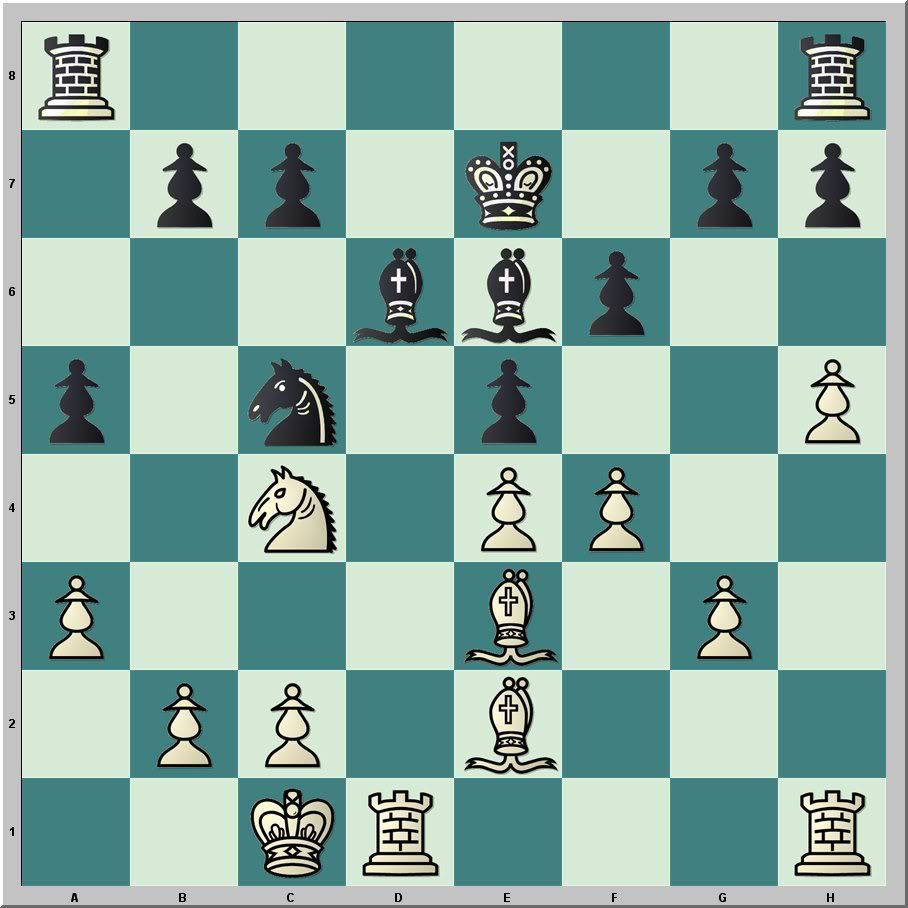
Black to move

6...Nf6 7.Nxc6

Also possible: 7.Nf5 Qxe4+ 8.Qxe4+ Nxe4 9.Nxg7+ Kf8 (9...Kd8) 10.Nh5 (10.Bh6 Nxc3 11.Nf5+ Ke8 12.a3 Ba5 13.b4 Bb6) 10...Nxc3 11.Bh6+ Ke7 12.Bg7 Ne4+ 13.c3 with equal chances.

7...dxc6 8.Bd2 Bxc3 9.Bxc3 Nxe4

9...0-0 seems prudent, but White does not yet have full compensation for the pawn with the line played.

10.Qd4

Black to move
10...Qe7

10...Bf5 has also been played here 11.Qe5+ Qe7 12.Qxe7+ Kxe7 13.Bxg7 Rhg8 14.Bd4 (14.Bh6 may be better) 14...Rad8 15.c3 c5 16.Be3 b6  and Black won in 60 moves Trabert,B (2285)--Tomescu,V (2436) Montecatini Terme 1999.

11.0-0-0 Qg5+??

A terrible blunder.

11...Nxc3 12.Qxg7 Nxa2+ 13.Kb1 Rf8 with a slight edge for Black, who went on to win in 65 moves Rizovic,S--Minic,M Vrnjacka Banja 2006.

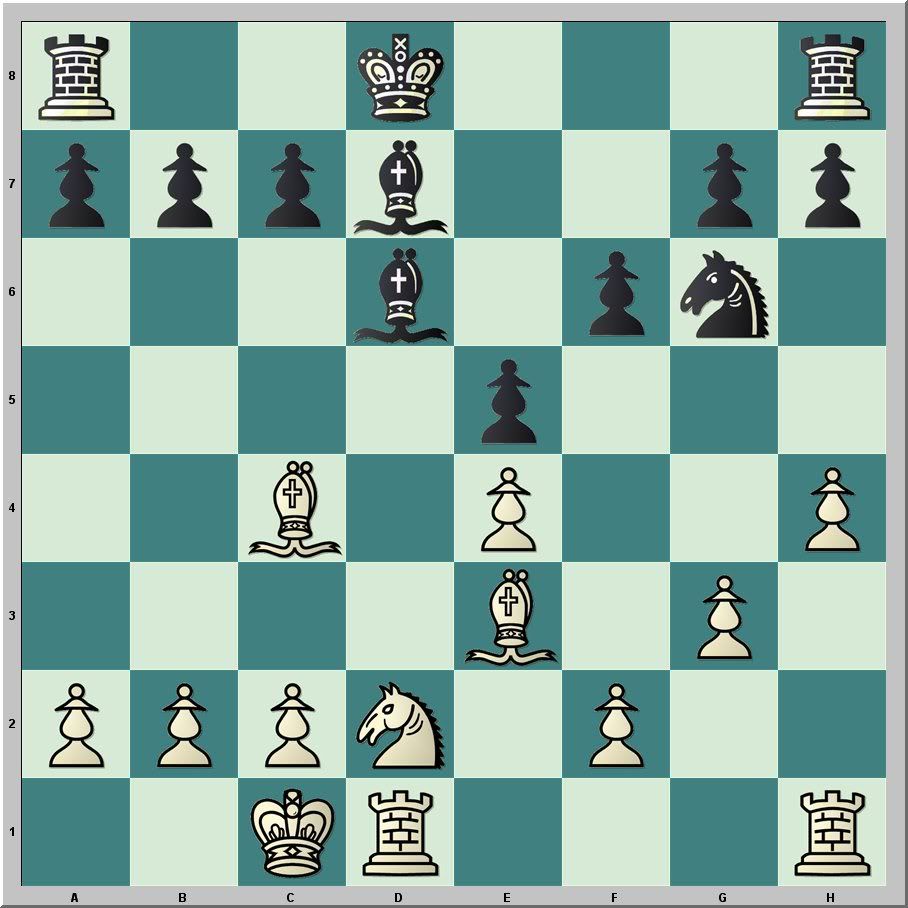
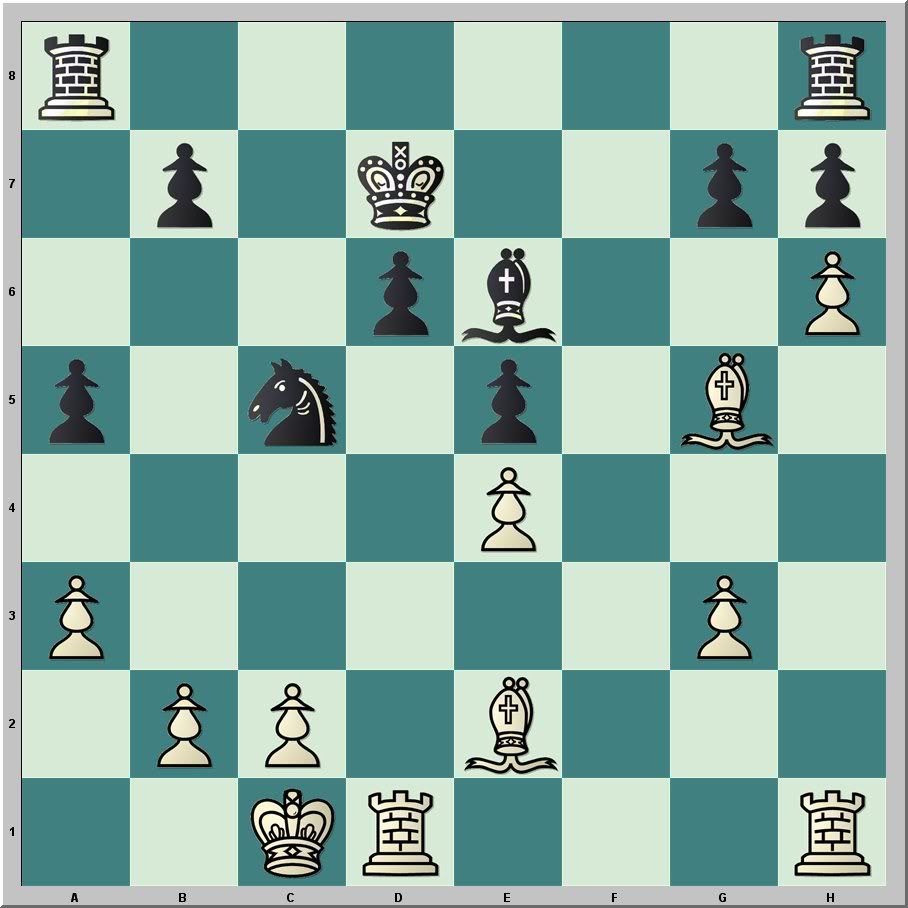
White to move
This position could make a good exercise.

12.f4! Qxf4+

Black could also play 12...Qe7, but the game is lost in any case.

13.Bd2 Qg4

13...Qh4 14.Re1 0-0 15.Rxe4+-
13...Qf6 also prevents checkmate.

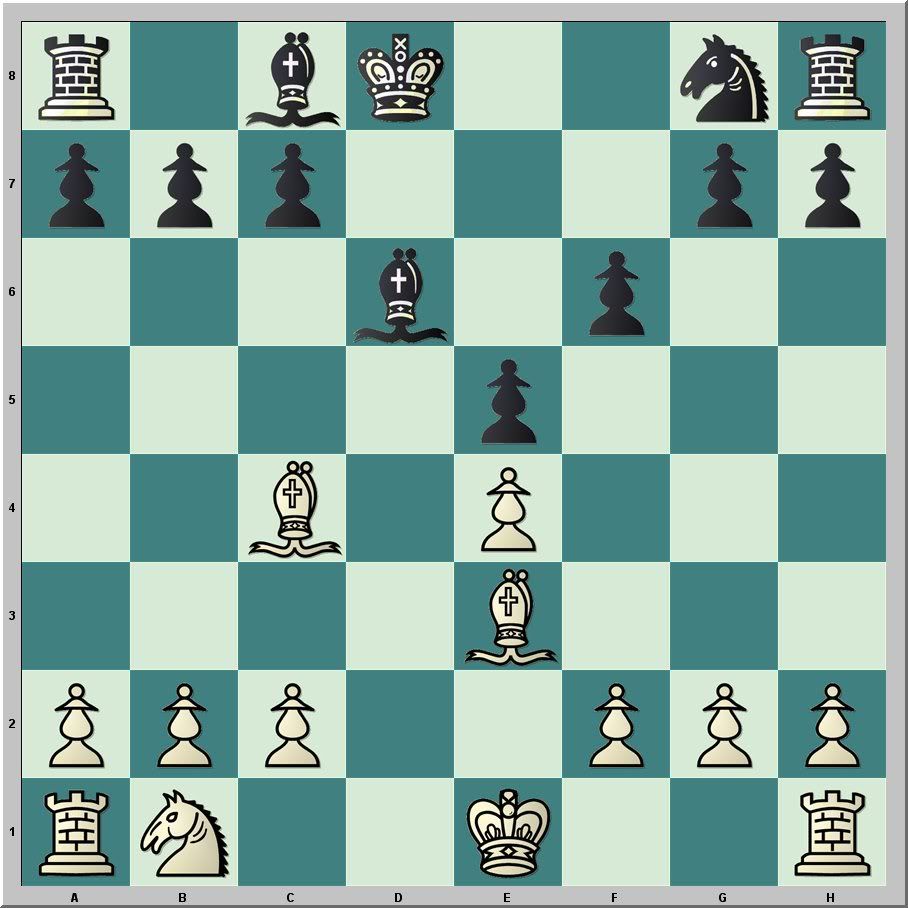
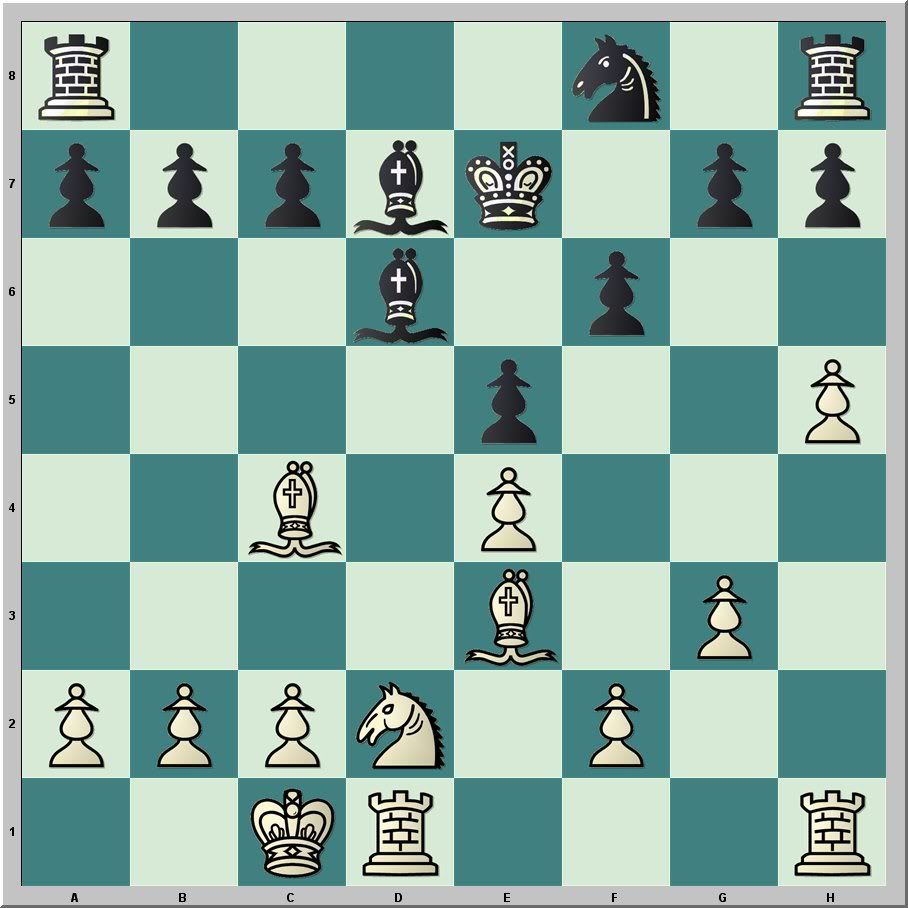
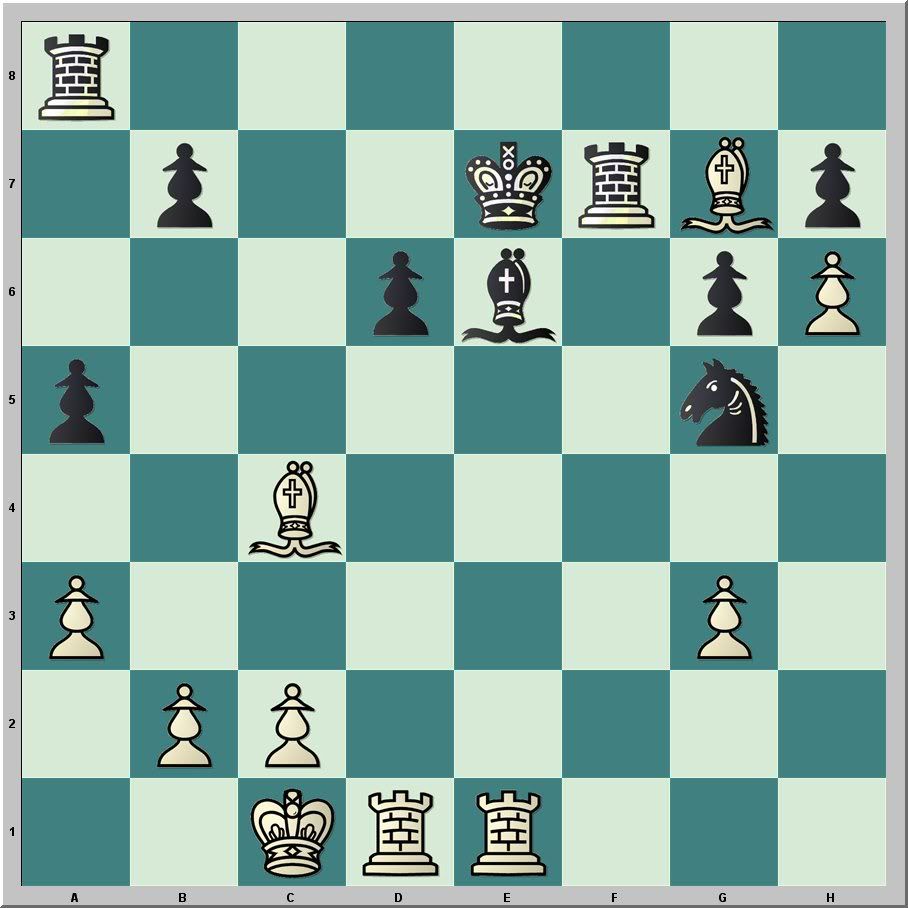
White to move
This position appears in my Checkmates and Tactics book. My students have been solving it, or failing to solve it nearly twenty years.

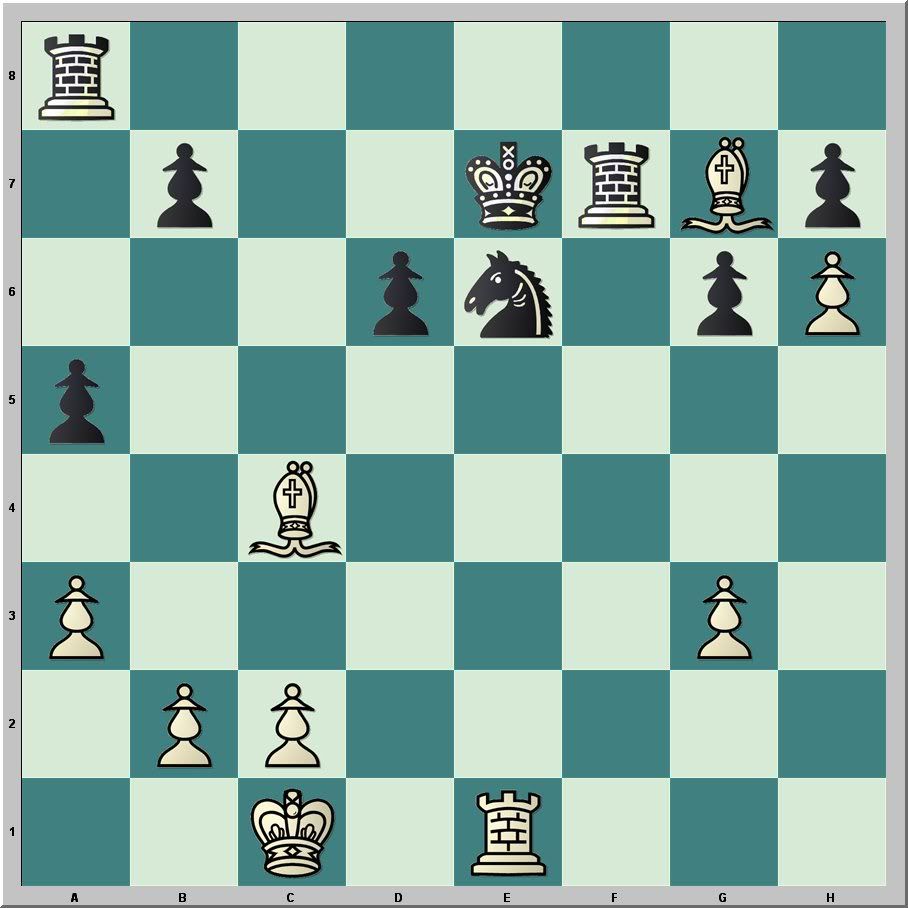
14.Qd8+ Kxd8 15.Bg5+

The game as it appears in La Nouvelle Régence (image above) would seem to indicate that the last move was not played.

15...Ke8 16.Rd8# 1-0


04 August 2023

A Glass of Scotch

Isn't this a forced draw?
Ryan Ackerman

Computer moves.
Cam Leslie

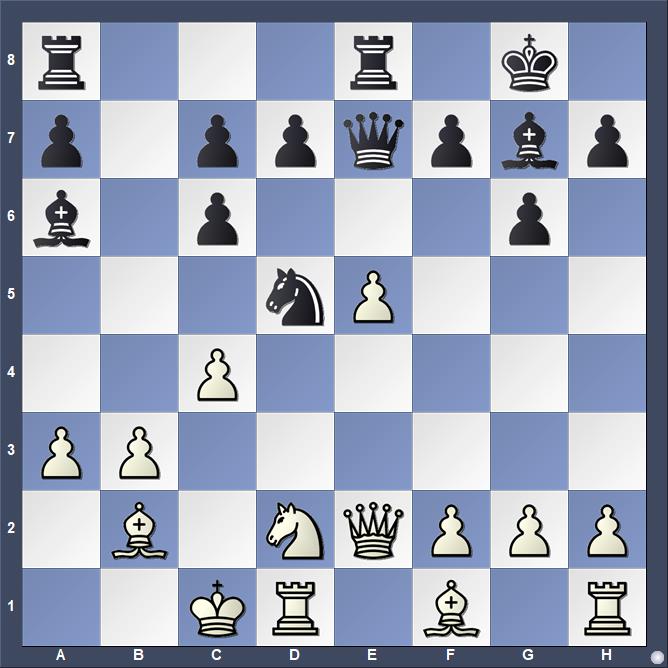
Black to move
After 10.Ba3

After a game at the Spokane Chess Club where this position arose, there was some discussion among the top players, experts Ryan Ackerman and Cam Leslie. I looked up the position in ChessBase's iPhone app, finding quite a few games that followed Ackerman's recommendation.

10...Nb4! 11.Bb2

11.g3 has been played. The computer says Black is better, but White has managed to draw at the top levels.

11...Bg7 12.a3

12.f4 is another try the engine finds dubious where White managed to draw among players rated over 2400.

12...Nd5 13.Nd2 O-O 14.O-O-O Rfe8

White to move

15.Qf3 Nb6 16.Ne4 Bxe5

16...d5 would be a novelty, but also leads to a draw if players can find the engine's moves.

17.Bxe5 Qxe5 18.Nf6 Kf8 19.Nxe8 Qa1+

White to move

Checking The Week in Chess finds fifteen games that have followed this line, all drawn. This line may be a forced draw at the top levels, but a few inaccurate options for White could serve to complicate matters at the club level.

In my game from the diagram at the top of the post, my opponent played 10...Qe6. He resigned after 11.cxd5 cxd5 12.Qxa6

After returning home, I drank a glass of Scotch.


14 August 2009

Last Night

In round one of the August Ajeeb Quads, I played an opponent that I have not faced before. Although his rating is two hundred below mine, I know very little about his skills. After his rather unorthodox response to 1.d4 we transposed into an opening that I have not played OTB before, and I feared that perhaps he knew well enough to exploit my ignorance. Somehow I managed to find good moves.

Stripes,J (1824) - Pitre,W (1615) [C44]
Ajeeb Quads, Spokane 2009

1.d4 Nc6 2.e4 e5 3.Nf3

I wrote Scotch on my score sheet in the box labeled Opening. Unfortunately, it has been five years since I paid much attention to the Scotch.

3 ... d6 4.dxe5 Nxe5 5.Nxe5 dxe5 6.Qxd8+ Kxd8 7.Bc4 f6 8.Be3 Bd6


9.Nd2

I considered 9.Nc3, and after the game found 9... c6 10.0–0–0 Kc7 11.Rd3 Ne7 12.Rhd1 Bb4 13.a3 Bxc3 14.Rxc3 b6 15.Rcd3 Ng6 16.a4 Re8 17.f3 Re7 18.a5 Nf4 19.Bxf4 exf4 20.g3 fxg3 21.hxg3 f5 22.exf5 Bxf5 23.Rc3 Rf8 ½–½ Moser-Marin, Barcelona 2007

9...Ne7

9...Ke7 10.0–0 Be6 11.c3 g5 12.a4 Nh6 13.f3 Nf7 14.a5 a6 15.b4 Rhg8 16.g4 h5 17.h3 hxg4 18.hxg4 Nh8 19.Kg2 Ng6 20.Rh1 Rh8 21.Rxh8 Rxh8 22.Rd1 Nf4+ 23.Bxf4 exf4 24.Bxe6 Kxe6 25.Nb3 Ke7 ½–½ Brod-Nickl, 1994

10.0–0–0 Bd7 11.g3N

11.Bb3 was played in a game between two class players with an average rating lower than in our present game. I spent some time considering this move as I wanted to deploy my knight to c4, but g3 prepares a pawn push, and also serves as a waiting move to give my opponent opportunity to present a weakness.

11...Ng6 12.h4


The knight is a target.

12... Ke7 13.h5 Nf8


Black's rooks remain unconnected, and his king might become vulnerable if the position opens up.

14.f4 Be6 15.Be2

My engine likes 15.f5, but I rejected this move because the closed position did not seem to offer strong prospects for winning. My plan was to keep material on the board, and try to provoke an exchange of knight for bishop (a plan I formulated after 8...Bd6).

15...Nd7 16.a3?! a5

16...Bc5 thwarts White's plan.

17.Nc4 Nc5


18.Nxd6? right idea, wrong sequence

18.fxe5 fxe5 19.Bg5+ Kd7 20.Rh4±

18...cxd6 19.fxe5 fxe5 20.Bg5+ Kd7 21.h6!?


21...g6

21...Nxe4! 22.Bb5+ Kc7 23.Be7 is hard to assess

22.Bf6 Nxe4 23.Bxe5 Rhf8 24.Rhe1 Ke7

24...Kc6 is better

25.Bg7 Rf7 26.Bc4! Ng5


26...Bxc4 27.Rxe4+ Be6 28.Rde1+-

27.Rxe6+?±

27.Bd5+-

27...Nxe6 28.Re1


28...Rf6??

The last chance to keep up a fight was 28...d5 29.Bxd5 Ra6 30.Bxb7 Rb6 31.Bd5±

29.Bxf6+ Kxf6 30.Rxe6+ Kg5 31.Rxd6 Rf8 32.Rd7 Kxh6 33.Rxb7 Rf5 34.g4 Rf4 35.Be2 Re4 36.Kd2 Re5 37.Rb5 Rxb5 38.Bxb5 1–0