Showing posts with label correspondence. Show all posts

20 August 2023

The Appeal of Informant

A question was raised in social media: does anyone still use Informant? As the question was in response to me, having claimed that Informant is the chess periodical that I read more than any other, I took the question as a personal challenge. I like the books, but now am more likely to read them on my computer screen while jotting notes in the print edition.

In the early days of Chess Informant, it was a vital source of games for readers. It no longer serves that purpose. We can watch them as they are played and have several ways to access them after they finish. What, then, is the appeal of Informant today?


My first Informant was number 64. I acquired it as I was getting into correspondence chess after a brief effort two decades earlier. One of the games in that issue gave substance to the concept of flexibility.* That game helped my planning and positional judgement in a correspondence game that I won (see the game at "Playing by the Book"). Of course, there are many ways to get access to games that will help one play correspondence chess. That Informant did this for me may have been no more than coincidence. It was what I was using for study. Is there anything inherent in the publication that makes it more useful than other resources for such a purpose?

More recently in another correspondence game I had Black in the French Defense and was facing a frightening appearing pawn storm. We were still in book, so I did a search of my database containing all games published in Informant for the position before me. There were more than one hundred games. Over the course of the weekend, I played through all of these games on my computer screen. Our game diverged from the databases a couple of moves later, and yet ten moves later I was developing plans based on a game I had seen that weekend. My memory of the game had errors—I incorrectly remembered had been played by Viktor Kortschnoj. Even so, I went on to win. Of course, a search of ChessBase Mega that controlled by rating would have given me most of these games and more, along with the same benefits.

Less is More


Chess Informant's
system of signs and language-less annotations contribute both to its appeal and limit its usefulness to many players. Chess players looking to improve often crave annotations expressed in words more than variations. These are vital for explaining concepts that must be absorbed in order to play well. However, words can distract as well.

When I was trying to improve as a C-Class player in the late-1990s and early 2000s, I became aware that my interior dialogue while playing tournament chess reflected a great deal of confusion. I did not lack ideas. Rather, I spent much of my thinking time on ideas that were unproductive. I examined lines that a master would immediately reject, but that seemed good to me. Learning the Informant system of signs and investing time reading through annotated games in that periodical helped me to quiet this internal dialogue. Chess analysis in Informant offers less, not more. Only critical lines at important moments are offered. The ideas that can be expressed through the system of signs are few, but they are important. If an idea cannot be expressed through these symbols, perhaps it should be discarded. Through the first decade of this century, my rating rose over 400 points. I was in my 40s. Informant was not the only tool that facilitated my rise, of course, but it was important. Several memorable successes are tied to Informant.

Informant today offers less in another way that maintains its appeal to me. It contains only quality games and analysis. Each Monday, Mark Crowther releases another issue of The Week in Chess with recent games from important tournaments. The last issue of 2022, number 1468, contained 7201 games. Number 1469, the first of 2023, set a record for quantity with 10,627 games. TWIC is a terrific resource and I keep my database of all TWIC more or less up-to-date. I don't know who, if anyone, succeeds in going through all of these games. Some selection is necessary. 

Informant culls a small sample from this mass of data, but every game merits attention. Usually the annotations are light, but some of the lines go deep. For a substantial number of games in each issue, several other recent games or game fragments are embedded in the annotations.

Aesthetics


Chess Informants are attractive books. Through something more than the first 100 issues, little changed on the cover except the colors. The design was spare, economical, and highlighted the global nature of chess culture. The "new Informants", however, each have a unique cover design. Sometimes these are colorful and whimsical. Sometimes the connection to chess is not explicit, such as the Spaghetti Western influenced cover of Informant 128 (see "Determination"). Sometimes, there is a puzzle quality to the cover. I won a copy of Chess Informant Paramount (a software package with Informants 1-123 and indices) by correctly identifying the image and context of the cover of Informant 125--the issue title was "Enigma" and the image was of part of the hardware used by the Bletchley Park codebreakers who cracked Nazi Germany's Enigma code. The most recent, CI 156 Mesmerized, has an image of the sky and clouds with shades of blue, orange, and white. It provokes the imagination.


*The notion of flexibility as an important strategic principle entered my thinking more soundly when I read Dan Heisman, Elements of Positional Evaluation, rev. ed. (1999) several years later, but the foundation was built by productive study of Informant 64.


16 November 2022

Decisive Advantage

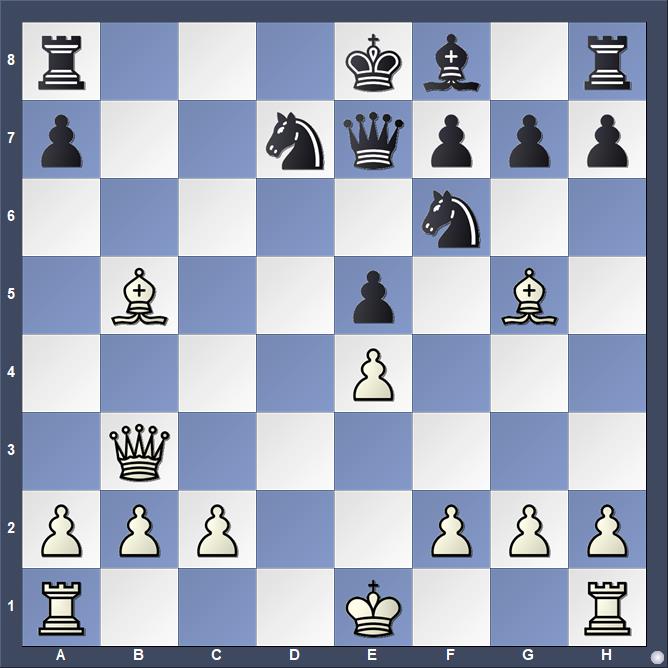
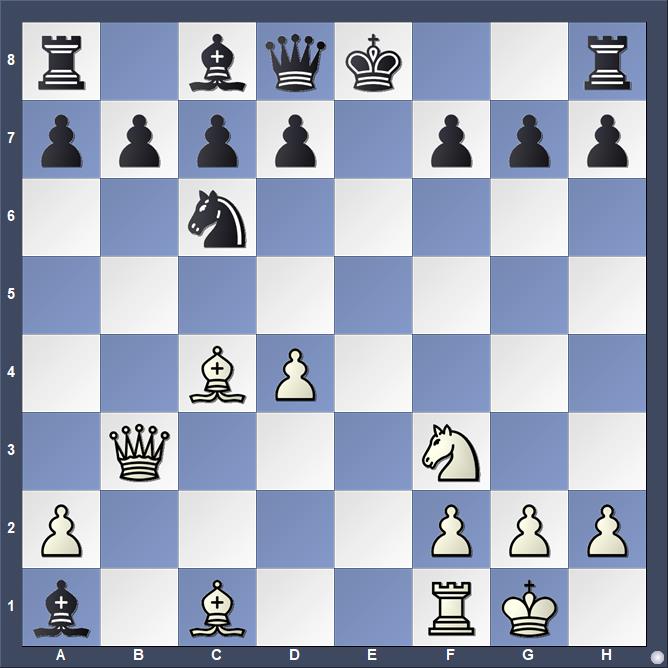
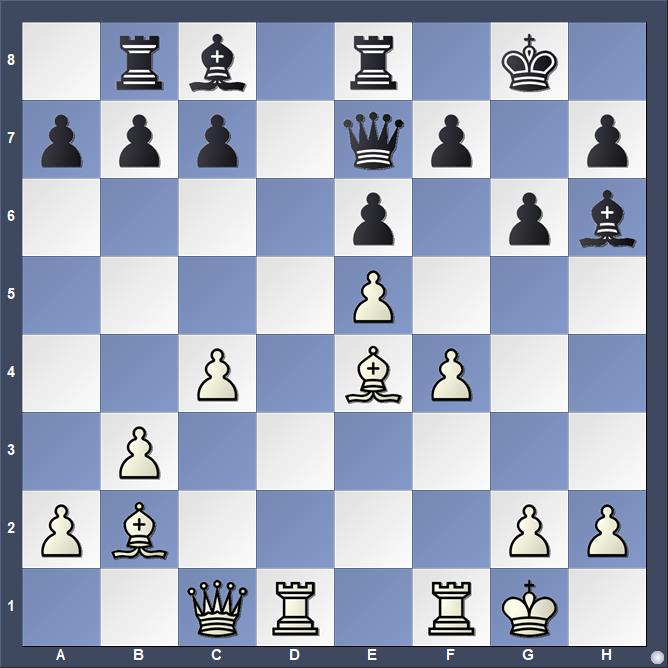
My students this week are seeing a series of positions in which White has a decisive advantage. Before suggesting moves, or seeing those that were played, I ask them to assess the position. What features account for White's substantial advantage?

The intent is for them to grow in their understanding that a player must use all their pieces in coordination. They should notice that in each position, White's pieces are more mobile, offer concrete threats, and work together. Students are also asked to understand the difference between the pieces on the board and the pieces in the battle. This dynamic imbalance is temporary unless the player wit the advantage acts with vigor.

I spent about an hour gathering 16 positions for these lessons, but no student so far has seen more than eight. The first two are from famous games that many of the students have seen before.

The first is from Paul Morphy's Opera Game.

White to move
The second is from Gioachino Greco's best known use of the Greco Attack (see "Cultivating Error"). I have had this position myself in at least 17 games, winning 16. The one loss was a bullet game where I inexplicably put a horse on a square earmarked for an elephant.

White to move
The third position highlights the relationship between space and mobility. It comes from a game that I played on Chess.com a few days ago.

White to move
Number four was presented at "Desperation". It highlights concrete checkmate threats. Number five is a textbook endgame exercise.

White to move
The sixth proves difficult for students to assess. It comes from a cyborg game played in a match organized by the International Correspondence Chess Association (ICCF). In this game, White used his intuition and a great deal of time on moves 13-15 to acquire mobile center pawns that confer a dynamic advantage.

White to move
Thomas Engqvist's analysis of Morphy,P. -- Morphy,A., New Orleans 1849 in 300 Most Important Chess Positions (2018) guided my selection of the seventh position (14-15).

White to move


20 November 2019

Playing Well

This game began at the end of July and finished two weeks ago. I spent a considerable amount of time playing it and am happy with my performance.

Stripes,J. (2242) -- Internet Opponent (2189) [D11]
Chess.com, 28.07.2019

1.d4 Nf6 2.Nf3 d5 3.c4 c6 4.e3

Why choose the second most popular move? In this case, my intention was to gain experience. I seem to recall also that my opponent's game history showed that he sometimes faltered against this line in the past.

4.Nc3 has been my normal move OTB, but I have played others.

4...Bg4 5.h3 Bxf3 6.Qxf3

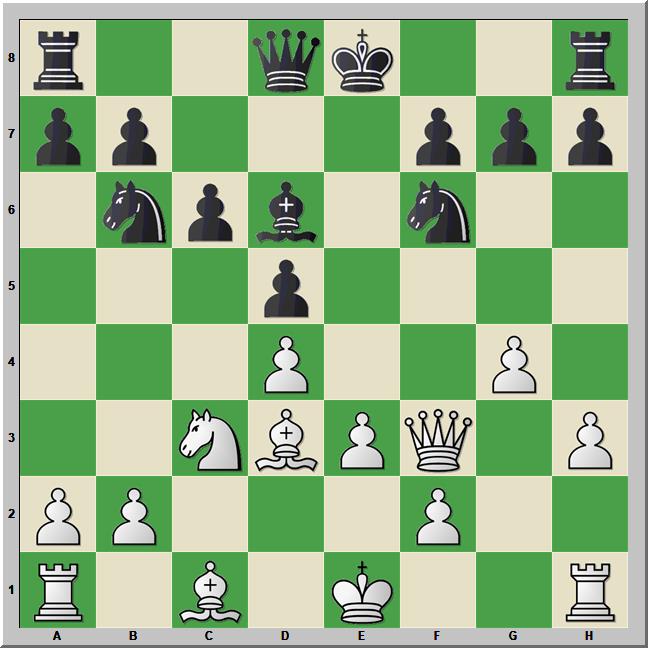
I had the Black side of this position in two blitz games nearly twenty years ago, but this game was was my first experience from the White side.

Black to move

6...e6 7.Bd3

PowerBook shows a 62% scoring percentage for White.

7...Nbd7 8.Nc3 Bd6 9.cxd5 exd5 10.g4

Still playing the percentages. 66.7% for White.

10...Nb6

My opponent chooses an obscure move that has produced a handful of draws. The percentages no longer have any significance: too few games.

White to move

11.g5

11.Bd2 was the alternative and I examined four games where this move had been played.

11...Nfd7

Two previous games games have reached this position.

12.e4

12.h4 led to a win for White. 12.e4 led to a draw. However, 12.e4 looked more promising to me because the imbalance in the reference game seemed to offer better prospects for seeking a win.

12.h4 Qe7 13.Bd2 Nc4 14.Bxc4 dxc4 15.Ne4 Bb4 16.a3 Bxd2+ 17.Nxd2 Qe6 and White went on to win a long game. Dvirnyy,D (2543) -- Gomez,J (2492) Baku AZE 2016.

12...dxe4

12...c5 13.dxc5 Bxc5

13.Qxe4+

13.Bxe4 might be better, according to postgame engine analysis. I probably looked at it, but opted to follow my reference game. More often than not in my correspondence experience, my opponent deviates from a single reference game before I do. Sometimes the novelty is an error.;
My notes show that I considered  13.Nxe4 Bb4+ 14.Nc3.

13...Qe7

White to move

14.Qxe7+

I chose to continue following the reference game.

14.Be3 Qxe4 15.Bxe4 0-0-0;
14.0-0 0-0-0 would have led to an interesting battle, but I thought Black was better.;
14.a4 was also a move that I considered.

14...Bxe7 15.Be3 0-0-0N

Now we are on our own.

15...Rd8 16.0-0-0 Nf8 17.h4 Ne6 18.Be2 Nc7 White's isolani may become weak and it is hard to see how the bishop pair will prove advantageous. These moves were played in a game that was drawn after 69 moves, Likavsky,T (2494) -- Antoniewski,R (2510), Austria 2008.

16.0-0-0

16.0-0 strikes me as a candidate move, as does 16.a4 with the same idea: storm the opponent's castled king while withstanding the same from him.

16...g6 17.h4 Nf8

Even though we have departed from theory, this knight maneuver has been played before. It makes sense to bring pressure upon White's queen pawn.

White to move

18.Kb1

I was not sure how to proceed, so I made a waiting move.

18...Ne6 19.Be4

Is d4-d5 a threat? I'm not certain.

19...Nd5?!

I do not think that opening the c-file is in Black's interest. However, after this move my d-pawn becomes slightly less vulnerable, I may be able to use the c-file for my rooks, and Black also gets an isolated pawn.

20.Nxd5 cxd5 21.Bf3 Kb8 22.Bg4

I want to push my f-pawn

22...Bd6 23.Rd3 Nf4?

White to move

24.Bxf4

I happily give up the bishop pair for gain of a pawn.

24...Bxf4 25.Rf3 Bc7

White to move

26.Re1!

Black's f-pawn is going nowhere. I will get a pig.

26.Rxf7 Rdf8 27.Rxf8+ Rxf8 28.f3 looked drawish to me.

26...Bb6

26...Rhe8 27.Rxe8 Rxe8 28.Rxf7 Rh8 29.Be6

27.Rxf7 Bxd4

27...Rdf8 28.Ree7 Rxf7 29.Rxf7 Bxd4 30.Be6

White to move

28.Ree7 1-0

I like my position, but I don't think my opponent should have resigned so soon. I was rather looking forward to the endgame.

11 July 2016

Determination

Reading Chess Informant

Last Thursday, Chess Informant 128 arrived via courier. With each new issue, I resolve to read all the articles or play through all of the games in the traditional section (see "Discovery"). With each new issue, I fall short of my goals.

I am determined to establish a new pattern, reading all of Informant 128.

Since Thursday, I have read all of the narrative text in Ernesto Inarkiev, "Moscow Candidates Tournament 2016"; Aleksandar Colovic, "Moscow Opening Report"; and Sarunas Sulskis, "European Championship 2016". I also solved rather quickly the first ending and was working on the second when I was interrupted by a text message that required action. Using the CD version that comes with the printed book, I have been working through the games and analysis in Inarkiev's article.

Black to move

Sergey Karjakin played 17...cxb4.

Inarkiev's comment brought my reading to a halt. He writes, "This is a tempting decision. Black sacrifices his queen for a rook, minor piece and a pawn, a balance of material that is usually sufficient" (18). My eye did not perceive the danger to the queen until I saw 18.axb4 Bxc3 19.Nc6 on the board, and only then could I begin to calculate the resulting imbalance.

Karjakin's determination at the Candidates shines in Inarkiev's narrative and analysis. The depth of the analysis and the complexity of the games reveals to me that my determination to read all of the issue clear through will require a significant investment of time.

My reading of Informant goes back two decades. The quality of my play has benefited. On this blog, I wrote about the first tangible benefit--a correspondence win in the 1990s--in "Playing by the Book" (March 2011). In a more recent correspondence game, I had this position with White.

White to move

Our game had been following Botsari -- Polgar,J, Eretria 2011, which Polgar won. Botsari played 28.Re7 and Polgar's pieces put an end to White's initiative. Apparently unbeknownst to my opponent, however, was the analysis of this game in Informant 112/51 by Dejan Antic who recommended 28.f7. I played that move and our game followed Antic's line 28...Rg7 29.Re8+ Nf8 30.Qd6 and then instead of the necessary 30...Qh4, my opponent played 30...Qh5+ and I won a few moves later.


Improving

If I continue to read Informant in bits and pieces and utilize my complete collection in electronic format as a reference in correspondence games, I will continue to see benefits. But I want more. I remain determined to improve my performance in USCF tournaments, reverse the slow downward slide that has been occurring since summer 2012, and renew efforts to push to a new peak rating (see "Eleven Consecutive Wins!" [July 2012]). I believe that Informant is among the most useful tools that I have for improving.

In the wake of my tournament success in 2012, I purchased Informant 113 as book and CD combination. Prior to that point, I acquired most of my Informant books after they went on sale because they were a year or more out of date, and acquired even more electronically via the CDs that had a year's worth. Gaps in my collection were filled when I placed fifth in the Reader's Contest for those who purchased Best of the Best 1000 (2008). When I bought Informant 113, I had a complete collection through the current issue. Several months later, when my collection was no longer current, I began systematically working through the games section (see "Training Log: August 2013"). That enterprise lasted several months, but eventually gave way other training priorities and my recurring obsession with blitz.

I bought a few more multi-issue CDs in 2014. Then, with download editions of Informants 119, 120, and 121, I was up-to-date with the latest issues. These were followed with timely downloads of Informants 122 and 123, keeping me current. Beginning with Informant 124, I became a subscriber. Each issue becomes the center of my chess focus for a few weeks after its arrival, but I never get through more than a fraction of the issue. I skim several articles and play through the games that interest me. Several printed issues contain brief notes that I make as I go through the games on the screen of my computer.

I am determined that with Informant 128 I will maintain the focus and self-discipline to work through every article, the games section, and the endings and combinations sections. There will be distractions. Since Thursday, I have played dozens of blitz games online. I also remain committed to study of Greco's and Morphy's games. I use these with my students. Time spent reading Informant must balance with study of classics.

The time and effort spent on Informant will improve the quality of my play.


27 September 2015

A Nice Win

Simple Chess

I have been playing correspondence chess on ChessWorld.net for eleven years, longer than any other site where I play at present. It was the third website that I joined for this sort of chess. First was Net-Chess.com in early 2003. Then GameKnot. Ironically, someone in the forums at GameKnot alerted me to the existence of ChessWorld.net. Someone alleged that ChessWorld.net was created by a disaffected former GameKnot member and that CW was inferior to GK. I decided to take a look for myself.

ChessWorld.net is vastly superior to GameKnot in my opinion. The site design is more robust and users have far more options for tweaking the interface. A nice feature of CW that I have not found on other sites is pie charts showing a player's performance.

My Performance
Although I have an overall positive record, my score is 50% in my usual rating group (2000-2200). I have recently risen above 2200, and had done so in the past as well. Staying there may prove difficult. My peak rating on the site is 2262 (280 above my peak USCF). Against opponents above 2280, I have only seven wins in 56 games. Four of these have been on time. Three times I have outplayed my opponent in the top several rating groups.

Pie charts for various rating groups shows how I have performed against those rated higher than me.

Performance Against 1800+

My third earned victory over a player above 2280 ended last night. The game began at the end of July 2014. My opponent played the Budapest Gambit, an opening that has given me trouble over the years.

I only checked two positions in my annotations with Stockfish.

Stripes,J (2202) -- Internet Opponent (2355) [A51]
www.ChessWorld.net, 31.07.2014

1.d4 Nf6 2.c4 e5 3.dxe5 Ne4 

3...Ng4 has given me trouble in a few games.

4.Nf3 d6 5.Nbd2 Bf5 6.Nxe4 Bxe4

White to move

7.Qb3N

7.Ng5 has been played in a couple of games, and is the engine's choice. I had the notion to play this move next. 7...Bg6 8.e6 fxe6 9.Nxe6 Qd7 10.Nf4 led to a win by White in 42 moves in Veingold,A (2465) -- Carpintero,J (2265), Linares 1994.

7...Bxf3 8.exf3

8.Qxf3 Nc6 9.exd6 Bxd6 struck me as offering Black good compensation for the pawn. Instead, I wanted to get my pieces into play. I was spending a lot of time on Paul Morphy's games during this phase of the game. That probably influenced my decision.

8...b6 9.exd6 Bxd6 10.Be2 0–0 11.0–0 Re8 12.Be3 c5 13.Rad1 Qc7 14.g3 Nc6 15.Rd5 Rad8 16.Rfd1

Both players have completed their development, as the classicists say.

Black to move

16...Ne7 17.R5d2 Nf5 18.Bf1

Removing the bishop as a potential target so my rooks would be free to roam on the d-file.

18.f4 was an alternative.

18...Nxe3 19.fxe3 Be7 20.Rd5 Bf6 21.Kg2 Qe7 22.Qd3

Black to move 

Offering the b-pawn. I was willing to trade rooks if I also could swap queens and keep an extra pawn.

22...Rxd5

22...Bxb2?? 23.Rxd8 Qxe3 (23...Rxd8 24.Qxd8+ Qxd8 25.Rxd8#) 24.Qxe3+-.

23.cxd5

I like having a passed pawn backed by heavy pieces.

23...Bxb2?

I am not certain that this move was Black's most significant error, but my road to victory seemed relatively uncomplicated afterwards. I had to attend to simple tactics and a lot of queen maneuvers.

23...Rd8 24.d6 Qe6 25.b3 Be5 26.d7 and White's advantage seems less significant.

24.d6 Qd7

24...Qf6 25.d7 Rd8 26.Qe4 Kf8 27.Bb5 Qe7 28.Qxh7 g6 29.Qh6+ Bg7 30.Qf4±.

25.Qb3

Black to move

A fork of piece and square.

25...Re6

25...Bf6 26.Bb5+-.

26.Qxb2+- Rxd6 27.Rxd6 Qxd6

I would like to trade queens, but my opponent understands this goal and refuses to cooperate. As long as his queen remains, he has the chance, however remote, to force a draw by repetition or even to sneak in a checkmate.

28.Qc2 Qe7 29.Qd2 g6 30.Kf2 Kg7 31.e4 h5 32.h4 Qe6 33.Qd5 Qe7 34.f4 f6 35.Bc4 Qe8 36.Ke3 a6

White to move

37.Qb7+! 

Another fork. This move eliminates Black's chances for counterplay with his queenside pawns.

37...Kh6 38.Qxb6 f5

Decision time.

White to move

39.Qxc5

I was willing to suffer some checks, secure in the knowledge that my queen and bishop were well positioned to weave a mating net once Black had driven my king to h3. Of course, I had to verify that my opponent would not have a free move to play Qh1#!

39...Qxe4+ 40.Kf2 Qc2+ 41.Kg1 Qc1+

I expected 41...Qb1+ 42.Kh2 Qb2+ 43.Kh3 Qb8.

42.Kg2 Qc2+

Still expecting 42...Qb2+ 43.Kh3 Qb8.

43.Kh3 Qc3

43...Qe4 44.Qf8+ Kh7 45.Bg8+ Kh8 46.Bf7+ Kh7 47.Qg8+ Kh6 48.Qh8#.

44.Qf8+

Black to move

44...Kh7

44...Qg7 45.Qxg7+ Kxg7 46.Bxa6+-.

45.Bg8+ Black resigned 1–0

I had played relatively slowly through the first 25-30 moves and had lost the other game with this opponent on time because I failed to log in one weekend. The game was seven days per move. My opponent had slowed down and played each move this summer when he was under twenty hours remaining.

After playing 45.Bg8+, I left him a note with the moves to checkmate. With one day remaining on the clock, he resigned.

16 June 2015

Applied Study

Correspondence Chess

Research is a central pleasure of correspondence chess. Using opening books, databases, and both print and electronic versions of Chess Informant elevates my play in the short run and expands my over the board repertoire in the long run.

As I was finishing high school and starting college, I played in a US Chess Federation Correspondence tournament in which moves were sent via postcard. My only opening book in those days was I. A. Horowitz, Chess Openings: Theory and Practice (1964). After finishing graduate school, I entered a few more USCF postal events. I bought the A volume of Encyclopedia of Chess Openings (ECO) and tried to steer my games to lines that were found therein. I also bought Informant 64. One of the games in that issue was especially helpful in a game against Faneuil Adams, Jr. (see "Playing by the Book").

In the early 2000s, I made the switch from postcard to email for correspondence chess. Then, in 2003, I started playing on websites where move transmission was a matter of clicking and dragging a chess piece on a computer screen. Record keeping is handled by the website. Move transmission in this new form of correspondence chess differs enough from postcards and email, that many players no longer think of it as correspondence chess.

I learned a lot playing in a Spanish Opening thematic on the first of these websites that I joined. I scored a nice victory on the Black side of the Chigorin variation and also made my first efforts with the Marshall Attack.

By the time I was playing turn-based chess, as some call this online correspondence chess, I had all five volumes of ECO and a library near 200 volumes, including many specialized texts on my favorite openings. Now I have ECO in both print and electronic editions, and I have all 123 Chess Informants in electronic versions (Informant 124 comes out next week--I've ordered book and CD).


The Study Regimen

Sitting at the table with a chess board and opening monograph and systematically working through the lines may be a worthwhile study technique. I am certain that is how many players learn their openings. That is also what I did in the late 1970s with Horowitz when I was supposed to be working on my high school homework. But, for me, such study is a rare activity.

My book study more often consists of working through entire games, such as those by Paul Morphy, or middle game books, or Dvoretsky's Endgame Manual, a book that I have as both print and Kindle (see Pawn Endings Flash Cards).

On the other hand, all of my opening resources come out during some of my correspondence games. Last week when I logged into ChessWorld.net, I discovered that a new team match had begun, adding eight new games to my load. It is time to hit the books.

Against one opponent, I am trying a new line against the Tarrasch French that is recommended in both The Flexible French (2008) by Viktor Moskalenko, and The Modern French (2012) by Dejan Antic and Branimir Maksimovic. Using my ChessBase database, I located games in this line played by Moskalenko and by Antic. I am studying these games.


Against another opponent, I opted to play the King's Gambit. I have been deploying the King's Gambit in many of my blitz and bullet games the past few weeks. I also played in in one of my worst tournament games ever (see "Knowing Better"). The King's Gambit has been an occasional weapon for me off and on since the 1970s. Because one of my top students plays it, I am studying it again. I watched Simon Williams' King's Gambit video series on Chess.com. John Shaw, The King's Gambit (2013) arrives tomorrow.

As I play through my correspondence games, I study the relevant portions of the opening lines in these books and others. I look up the positions in Chess Informant and examine some of the games. During one recent correspondence game, I went through every one of the more than one hundred games ever published in Informant that had reached the position I had at that moment. That work took the better part of a weekend. The game might have ended as a draw, but my opponent was banned for cheating and I won on time.

Sometimes I use Chess.com's Game Explorer or ChessBase to play the percentages, choosing lines that have scored well in the past for my side of the board. When I have the time, I look for lines that score well for my opponent, but that have a recent refutation in Informant or some other collection of annotated games. Knowing that many of my opponents use the same databases that I do, I try to beat them with better research.

31 January 2014

Square of the Pawn

A correspondence game that finished yesterday offered a few positions that illustrate well the square of the pawn, an important elementary pawn ending concept. I have previously discussed this concept in "Simple to Complex" (June 2012).

Yesterday's finish ended a game full of gross errors. In the beginning I overestimated my attack and let my opponent gain a rook. My attack ran aground and I was hopelessly lost. My faint hope of some counterplay was underestimated by my opponent and suddenly I seemed to have compensation for the rook. After mostly finding a series of strong moves, I exchanged into a queen and pawn ending where I had more pawns.

I captured the wrong enemy pawn and gave up a few of my own. We reached the position in the first diagram.

White to move
After 63...Kg7
With four pawns to three, I would like the queens off the board. However, forcing the exchange would be an error here as my king is too far away to stop Black's h-pawn.

Chess By Post, the app on which this game was played, offers an analysis board that lets players work out whether the king could stop the pawn. Of course, counting is easy enough even without such assistance. But even counting is unnecessary.

Rather, I imagined the exchange of queens on b2, thrust the h-pawn forward, and in my mind drew a diagonal arrow forward from the pawn to the first rank. From that arrow, two more arrows complete a triangle.

White to move
Hypothetical Position
My king is not able to step into any square of the triangle. This triangle comprises half of the square of the pawn--the space that the defending king must be able to occupy in order to stop the pawn. The diagonal arrow, resulting triangle, and derived square (two triangles) allow a player to quickly perceive by geometric observation, rather than calculation, whether a pawn may be stopped.

I played 64.Qc2 and the game continued.

64...Qb6

Black could have played 64...h5 with a likely continuation 65.Qe2 h4 66.Qg2 h3! 67.Qxh3 Qd3+ and Black forces a draw by repetition.

65.Qd3 Qc7??

White to move
After 65...Qc7??
Now I am able to force an exchange of queens with my king one square closer to the h-file.

66.Qc3+ Qxc3 67.Kxc3 Kf6

Black could try 67...h5, but my king will enter the square.

White to move
Hypothetical Position
White's king is able to step into the triangle. The pawn may still promote on h1, but the White king will stand on g2 when it does. At that point, White's queenside majority assures the win (see "Fox in the Chicken Coop" [July 2013]).

My opponent opted for a different course.

67...Kf6 68.Kd4 h5

My king is already in the square.

69.b5 h4

White to move
After 69...h4
70.Ke3

My king was forced to step into the square.

70...g5 71.a4 Ke6 72.a5 Kd6


Breakthrough

White to move
After 72...Kd6
White has several ways to win, but I like the manner than I chose.

73.e5! Kxe5

Black might have tried 73...Kc7, leading to 74.e6 Kd6 75.b6 axb6 76.axb6

Black to move
Hypothetical Position
In this hypothetical position, Black's king is in the square of both pawns until each advances another square. Capturing the e-pawn removes the defending king from the square of the b-pawn. This floating square is a win for White.

74.b6 axb6

White to move

75.a6! 1-0

75.axb6?? loses because the Black king stops all White's threats. He enters the square of White's passed pawn with 75...Kd6.

Black resigned.

27 January 2014

Breaking Through

Playing on the Phone

After some inaccuracies late in the opening that left me slightly worse, my opponent grabbed a pawn with the consequence that he lost an exchange. The resulting position was almost locked up, but not entirely. I found ways to maneuver for a threatened breakthrough. Eventually my rooks penetrated and my opponent resigned.

This game was played on ChessTime, an iPhone/iPad app. The entire game lasted just over two weeks.

Stripes,J -- Opponent [D78]
Playing on Chess Time (1), 13.01.2014

Black to move

28... Nxf4?

28...Rd7 29.Ngf6+ Nxf6 30.Nxf6+ Bxf6 31.exf6 with approximate equality.

29.Nef6+?!

It was better to capture with the other knight: 29.Ngf6+ Kf8 30.Nxe8 Kxe8 and White has a slight advantage.

29...Bxf6?! 

Erasing White's inaccuracy.

30.Nxf6+ Kg7 31.Nxe8+ Rxe8 32.Kh2 Nd5

White to move

33.Bxd5?!

The dubious evaluation is a reflection of post-game engine evaluations. However, this evaluation must be treated skeptically. As a practical matter, it makes sense to eliminate Black's most active piece. On the other hand, Black's kingside pawn majority may get rolling. Then, the bishop could serve a defensive role while the rooks work to exploit weaknesses elsewhere.

33...exd5 34.Re2 Bf5

Preventing f7-f5

34...f5?? 35.exf6+ Kf7 36.Rxe8 Kxe8 37.Re1+ Kf7 38.Re7+ Kxf6 39.Rxh7+-

35.Kg3 Be6 36.b4 a6 37.Rd3 Bf5 38.Rb3 Be6 39.a4 Bd7

The time control was three days per move, but most moves by both players were made within hours of the adversary's last. I seem to recall spending a couple of days contemplating this position, however.

White to move

40.Kf4 Re6 41.Reb2 h6

41...f6 42.Re2

42.h4 Re8 43.Rg3 Re6 44.h5 g5+ 45.Ke3

Black to move

45...Re8

Black had a moment here to get the pawns rolling.

45...f5 46.f4 g4 47.Kf2 Be8 48.Rc3 Bxh5 49.b5

46.f4 f6 

White to move

47.Kd3

47.fxg5 was better 47...fxg5.

47...Bf5+ 48.Kc3 fxe5 49.fxe5 b5?? 

Black is helping create weaknesses that White may exploit. 49...Kf7 was better.

White to move

50.axb5

Perhaps hasty.

50.Rf2 Be6 51.Rgf3 bxa4 52.Rf6 Re7 53.Rg6+ Kh7 54.Rff6 Bf7 55.Rxh6+ Kg7 56.Rxc6+-.

50...axb5 51.Rf2

51.Ra2 might be slightly more accurate.

51...Be6

51...Bd7

52.Rf6

One rook breaks through. A rook on the seventh is called a pig. What do we call one on the sixth?

Black to move

52...Re7

52...Bf7 53.Rxc6 Ra8 54.Rg1

53.Rg6+ Kh7 54.Rf3 Bg4

54...Bf7 55.Rxc6

55.Rff6 1–0

Final position (Black to move)

The White rooks will eat all the vital pawns.


07 December 2013

An Exchange versus the Bishop Pair

In a recent game on ChessByPost, my opponent committed an all-too frequent error* in the King's Indian Defense that left me ahead an exchange. However, I failed to convert my advantage and had to settle for a draw.

White to move

I could not find a clear way to make progress here. My plan was to improve my king's position, sacrifice the rook for Black's light-squared bishop, and pick up the resulting weak c-pawn. I overlooked a simple tactic that dropped the b-pawn, still sacrificed the exchange, and had a king no more active than my opponent's.

Perhaps it is time to invest effort studying Michael Stean, Simple Chess, or some other book concerned with patiently nursing a clear advantage.


*My highest rated win on Chess.com was against an opponent who made this error. I was able to convert the advantage to an easily won pawn ending. In the 2009 Washington Open, my first round opponent committed the same opening error, and there also I had to settle for a draw.

07 September 2013

A Blackmar-Diemer Gambit Miniature

My first serious game (i.e. not online blitz) against the Blackmar-Diemer Gambit netted me a nice miniature. I employed the O'Kelly Defense without knowing its name, and quickly gained a superior position.

Internet Opponent (2143) -- Stripes,J (2155) [D00]
www.ChessWorld.net, 10.07.2013

1.d4 Nf6 2.Nc3 d5 3.e4 dxe4 4.f3 c6

The third most popular move offers White an abyssmal 47.1% through 468 games. This move was suggested to Emil Joseph Diemer by Albéric O’Kelly, hence the name. There is a bit of interesting history and analysis in a Chess Cafe article: Stefan Bücker, "How to Detect a Novelty" (2009).

I have previously always played 4...exf3, and have more losses than wins. A principal appeal of correspondence chess is the research aspect, and for this game I sought help through database research.

White to move

5.Nxe4

I spent a bit of time preparing for 5.Bc4, White's most popular move in the position.

5...Nxe4

The choice of the strongest players. 5...Bf5 is slightly more common among club players.

6.fxe4 e5

An essential strike that disrupts White's center and prepares to bring the queen to h4.

7.Nf3 exd4

White to move

8.Nxd4

We are now following a single game in the database.

8.Bc4 is usually played, and appears to be best. Diemer gave it two exclamation marks in his analysis in response to O'Kelly's suggestion.

Two reference games:

8...Qa5+ 9.Bd2 Qc5 10.Qe2 Nd7 11.b4 Qb6 12.Qf2 Nf6 13.Ng5 Bxb4 14.0–0 Bxd2 15.Qxd2 Qc5 16.Nxf7 0–0 17.Ne5+ Kh8 18.Qg5 b6 19.Nf7+ Rxf7 20.Qxc5 bxc5 21.Bxf7 Ba6 22.Rf4 Rf8 23.Bb3 Re8 24.Rb1 Re7 25.Ba4 h6 26.Bxc6 Re6 27.Bd5 Re7 28.c3 d3 29.c4 Nd7 30.Kf2 Kh7 31.Ke3 Ne5 32.Rc1 Re8 33.Kd2 g6 34.Rf6 Bc8 35.Rcf1 Re7 36.Rd6 Kg7 37.Rd8 1–0 Trumpf,W (2444) -- Mukherjee,A (2495) Switzerland 2003.

8...Bb4+ 9.c3 dxc3 10.Bxf7+ Kxf7 11.Qb3+ Ke8 (11...Be6!?N 12.Ng5+ Qxg5 13.0–0+) 12.Qxb4 Qe7 13.Qxe7+ Kxe7 14.bxc3 c5 15.0–0 Rf8 16.Bg5+ Ke8 17.Ne5 Rxf1+ 18.Rxf1 Be6 19.a3 Nd7 20.Nd3 Bc4 21.Rd1 Bxd3 22.Rxd3 Nb6 23.e5 Nc4 24.e6 h6 25.Bh4 g5 26.Bf2 b6 27.Rd7 Rd8 28.Rxd8+ Kxd8 29.a4 Ke7 30.Kf1 Kxe6 31.Ke2 Kf5 32.Bg3 Ne5 33.Ke3 a6 34.Kd2 Nc4+ 35.Kc2 Ke6 36.Bf2 Kd5 37.Kb3 Nd2+ 38.Kc2 Ne4 39.Be1 Kc4 40.g4 Nf6 41.h3 Ne4 0–1 Anastasiev,V (2046) -- Konyshev,A (2379) Kemerovo 2011.

8...Qh4+ 9.Kd2

Stockfish 4 prefers 9.g3 Qxe4+ 10.Qe2 Qxe2+ 11.Bxe2 when for the pawn, White has a huge lead in development. But, with neither targets nor weaknesses in Black's position, White lacks compensation.

Black to move

9...Bc5

9...Qf2+ 10.Kc3 Nd7 was suggested by Stockfish.

10.c3

Stockfish prefers 10.Nf3 Qxe4.

10...Bxd4

The engine likes 10...0–0.

11.cxd4 Qxe4

I had been following the single reference game because the win of this pawn seemed to offer me sufficient chances for clear advantage. My engine suggests improvements on the previous two moves, as noted above.

White to move

12.Bd3N

Now, I'm on my own, but with a nice position. My reference game continued 12.Qe1 Qxe1+ 13.Kxe1 Be6 14.b3 0–0 15.Bc4 Nd7 16.Ba3 Rfe8 17.Kf2 Nf6 18.Rhe1 Bd5 19.Rac1 Rad8 20.Be7 Rd7 21.Bxf6 Rxe1 22.Rxe1 gxf6 23.a4 Bxc4 24.bxc4 Rxd4 25.a5 Rxc4 26.Re7 Rc5 27.a6 bxa6 0–1 Krueger,W -- Rasmussen,J ICCF corr 1990.

12...Qxd4 13.Re1+ Be6 14.Re4

Black to move

14...Qf2+

This direct attack is not best. Better was 14...Qd6 I need to learn to consolidate, just as I need to learn to build pressure.

15.Re2

If 15.Qe2, I would have responded Qxe2+. (15...Qc5 is probably better).

15...Qc5

Black has a clear advantage.

16.Qa4 Nd7 17.b3 0–0–0

I like it when castling is an attacking move!

17...0–0 did not look as good 18.Qh4 Bf5, even though Black still has a clear advantage.

White to move

18.Bb2

18.Ba3 Qd5-+

18...Qd5 19.Qxa7 Nc5 20.Re3

20.Qa8+ Kd7 21.Qa7-+

20...Nxd3 0–1

White resigned.

This game pushed me to my highest ever rating on ChessWorld.net.