Showing posts with label Smith-Morra Gambit. Show all posts

22 August 2020

Blunderful

I might prefer to forget this game, but Chris Bird gave a shout out for my blog at the end of the Twitch broadcast of the event. He mentioned that I won't like the broadcast of this game when I watch it, and that he looks forward to reading about it here.

Naturally, after the broadcast ended, I immediately went to the recording and advanced to round two. I did not need to see the oversights that Chris pointed out to know that I missed some opportunities, but the number was shocking. My opponent also missed several opportunities. This was my fifth game against Edwin Matos in these Morning Membership events. I won the first three, but we had two draws this week.

Maybe you will find our errors instructive and this game will serve a purpose other than polluting the web with examples of substandard play.

Stripes,J (1798) -- Matos,E (1426) [B21]
Morning Membership Event (Friday) Chess.com (2), 21.08.2020

1.e4 c5 2.d4 cxd4 3.c3 dxc3 4.Nxc3

4.Bc4 cxb2 5.Bxb2 is a line that I have dubbed the Danish Morra. It is unsound, of course, but I win my share of blitz games with it.

4...e6 5.Bc4 a6 6.Nf3 d6 7.0–0 Nd7 8.Qe2 Qc7

8...Ngf6 9.Rd1 b5 10.Bb3 Bb7 11.Bf4 Qb8 12.Nd5 Ne5 (12...Nxd5 13.exd5 e5) 13.Nxe5 dxe5 14.Nxf6+ gxf6 15.Bxe6 Bc8 16.Bd5 and White won in 54 moves, Jussupow,N (2152)--Kalinitschew,S (2472) Schwaebisch Gmuend 2013.

9.Rd1 Be7

We have reached a unique position, according to my databases, but it still has a familiar feel.

10.Bf4 Ne5

White to move

11.Nxe5

11.Bxe5 dxe5 was better according to Stockfish on chess.com. I like my bishop and might get to place it on b6.

11...dxe5 12.Be3 Nf6 13.Rac1 0–0 14.Bb3 Bd7 15.Nd5! 

Black to move

This is the sort of tactical problem that I like to set for my opponent when I play the Smith-Morra. However, it turns out that I was ill-prepared to follow through.

15...Bb5

15...Qd8 16.Bb6 Qe8 17.Nc7 Bb5 18.Qc2+–

16.Qf3

Why did I reject 16.Qxb5 Qxc1 (16...axb5 17.Nxf6+ Bxf6 18.Rxc7+–) 17.Nxe7+ Kh8 18.Qxe5+–?

16...Qd8

16...Nxd5 17.exd5 (17.Rxc7 Nxc7) 17...Qa5 18.dxe6 fxe6 19.Qxb7+–

17.Nxe7+?

Again, there is a a simple route to a decisive advantage: 17.Nxf6+ Bxf6 18.Rxd8 Raxd8 19.Bc5+–

17...Qxe7 18.Bc5 Qe8 19.Bxf8

While I was thinking about my move, Chris was wondering whether I thought the bishop was better than the rook. No. The rook cannot move, so I might delay the capture if I can do something else that is useful. Not finding a useful alternative, I spent nearly a minute contemplating what to do after taking the rook. How best should I coordinate my pieces after winning the exchange? Finally, I came up with a plan--a terribly flawed plan.

19.Qe3 Nd7 20.Bxf8 Nxf8 might have been what I sought.

19...Qxf8 20.Rc7??

The plan was to get a pig. 20.Qe3 was better.

20...Bc6

The pig is destined for the butcher. I played the opening well, created problems for my opponent, and should have had a won game. Now, the position is equal, difficult, and we both have about two minutes on the clock. The time control was 5+2.

White to move

21.Qe3 Ne8 22.Rxc6 bxc6 23.Qb6 Nd6 24.f3 Nb5 25.Ba4

Black to move

25...Rb8

25...Nd4 and Black has a clear advantage.

26.Qxa6 Qc5+ 27.Kh1 h6

27...Nd4

28.Bxb5 cxb5 29.Qd6

Black to move

29...Qc2?? 30.Qd2??

This blunder was likely what Chris had in mind when he stated that I wouldn't like it. I had 36 seconds on my Clock, and spent three on my move. Edwin had 59 seconds after 29...Qc2. The failure of my thought process here reminds me of a difficult game at the Spokane Chess Club a week ago. We have continued to meet on Lichess, instead of in person, at the usual time on Thursday nights. Kenny wins most of his games and usually finishes at the top of our events. I played well in my game against him, finding a combination that gave me a queen against a rook, knight, and pawn. We each had five other pawns. I could clearly see a line that I had to avoid that could have walked into checkmate, and found a forced draw that ended the complications. But, my queen was completely dominant and I should have won. Replaying two positions from that game gave me two easy wins against Komodo.

I saw Edwin's threat to checkmate me and missed that I could take his rook with check and then bring my queen back to defend my rook.

30.Qxb8+ Kh7 31.Qd6+–

30...Qc4 31.b3 Qc5 32.h3 Rc8 33.Qd6 Qf2 34.Rd2 Qe1+ 35.Kh2 Qe3

White to move
36.Qb4??

I was at 23 seconds after this blunder. Edwin had 44. Speed kills, as they say.

36...Qf4+ 37.Kg1 Qe3+–+

Another upset is in the works. Had I been in my opponent's position, I might have played 37...Rc1+ 38.Kf2 Qh4+ 39.Ke2 Qe1+ 40.Kd3 Qf1+ 41.Re2 Rd1+ 42.Ke3 Qg1+ 43.Rf2 Re1+ 44.Qxe1 Qxe1+–+. Of course, such things are easier to see after the game is over and the clock is not a critical factor.

38.Kh2 Qf4+ 39.g3 Qxf3 40.Qxb5

40.Qa3 was a defense that I overlooked.

40...Rc1 41.Rg2 Qd1 42.g4 Qh1+ 43.Kg3 Qe1+

43...Rc3+ ends matters in favor of Black 44.Kf2 Rc2+ 45.Qe2 Rxe2+ 46.Kxe2 Qxg2+

44.Kh2 Qxe4 45.Qe8+ Kh7 46.Qxf7

Black to move
46...Qf4+??

And suddenly, the game is equal again.

47.Qxf4 exf4 48.a4 f3?

48...Rb1+ is equal.

White to move
49.Rf2!

"Not what I would play." Chris Bird

I was playing by intuition, but had there been time, I might have thought that Black's pawns are coming faster than White's. I do not have time to work two pawns up the board.

49.Rb2 e5 50.Kg3 e4 51.Kf2 Kg6=

49...Rc3 50.a5=

50.Kg3 keeps an advantage.

50...Rxb3 51.Ra2 e5 52.a6

Black to move
52...e4??


52...f2 53.Kg2 Rxh3 54.a7 Rh1 55.Rxf2 (55.a8Q f1Q+ 56.Kg3 Rh3#) 55...Ra1 and Black is better, but perhaps the advantage is not decisive. With Black's error, White again has a decisive advantage. Chess.com's computer assessment tabulated that each player had three missed wins as well as blunders numbering in double digits.

53.a7+– f2 54.Kg2

I lacked the time to calculate this "simple" win: 54.a8Q f1Q 55.Qxe4+ Kg8 56.Ra8+ Kf7 57.Qe8+ Kf6 58.Qf8+ Ke6 59.Qxf1

54...Rf3 55.Kf1

Forced.

55...e3 56.a8Q e2+

White to move
57.Kxe2??

The website shows that I had 19 seconds, but it felt like less.

57.Rxe2 wins.

57...f1Q+

"White is getting mated." Chris Bird

58.Kd2 Rf2+

Chris pointed out 58...Rd3+ 59.Kc2 Qd1+ 60.Kb2 Rb3#. This elementary checkmate pattern is the second one in Pandolfini's Endgame Course, and should be second nature to all chess players. Of course, blindness under time pressure is also common.

59.Kc3 Qxh3+ 60.Kb4 Rf4+ 61.Kc5 Qc3+ 62.Kd6

Black to move
62...Qe5+??

Black gives away the queen.

62...Qd4+

63.Kd7??

And White leaves it on the board. 63.Kxe5 wins.

63...Rf6

The first checkmate in Pandolfini's Endgame Course: 63...Rd4+ 64.Kc6 Rd6+ 65.Kc7 Qe7+ and mate in one.

64.Qa3 Qb5+ 65.Ke7 Qb7+ 66.Ke8 Qf7+

66...Qc8+ 67.Ke7 Re6+ 68.Kf7 Qe8#

67.Kd8

Black to move
67...Rd6+?? 68.Qxd6 Qg8+


68...Qxa2

69.Kc7 Qf7+ 70.Qd7 Qf4+

My clock is down to eight seconds.

71.Qd6

71.Kb6

71...Qc4+ 72.Qc6 Qxa2 73.Qe4+ Kh8 74.Qe8+

Black to move

74...Kh7

"Black can block." Chris Bird

74...Qg8 with an advantage.

75.Qe4+ Kh8 76.Qe8+

76.Kd6

76...Kh7 77.Qe7 Qa7+ 78.Kd8 Qxe7+ 79.Kxe7

Black to move
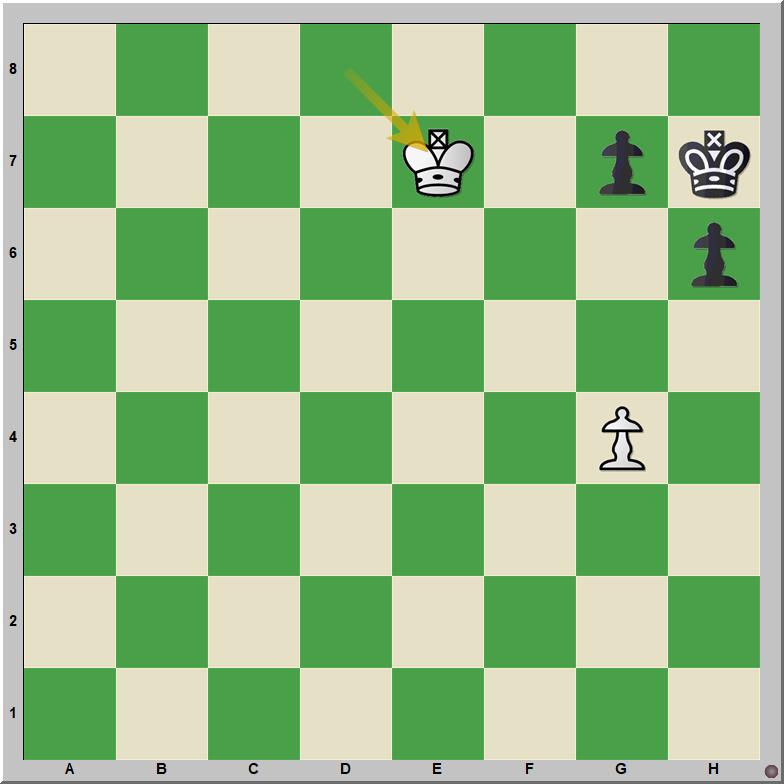
79...g6??

79...Kg6–+

80.Ke6 h5 81.gxh5 Kh6

81...g5 82.Kf5 Kh6 83.Kg4 Kg7 84.Kxg5 Kh7=

82.hxg6 Kxg6 ½–½

This game was a battle.

14 April 2019

Smith-Morra Sideline

In my online blitz junk, I often play an extreme version of the Smith-Morra Gambit that takes an idea from the Danish Gambit, offering a second pawn for rapid mobilization. It is unsound. The opening is for blitz only. The regular Smith-Morra, however, can be useful in standard rated over-the-board play and even in correspondence.

Black can decline White's sacrifice in the Smith-Morra Gambit. In a blitz game last night, my opponent did that. The game proved testing for a line that had been mostly successful for me.

Stripes,J. (1997) -- Internet Opponent (2042) [B21]
Live Chess Chess.com, 13.04.2019

1.e4 c5 2.d4 cxd4 3.c3 d3!?

Black's idea seems to point out that the pawn is not well-placed on c3.

White to move

4.f4!?

My innovation, played 18 times with 14 wins and 4 losses. Although I cannot claim to be the first who has played it.

4.Bxd3 is the normal move.

4...d5!

I have not seen this move often, but in retrospect, it seems the best way to make the argument that White's line of play may be poorly thought out.

5.exd5

5.e5!?

5...Qxd5 6.Qxd3 Nf6 7.Nf3 Nc6

White to move

8.Nbd2

8.Qxd5 Nxd5 9.Bc4 Nb6 10.Bb3 Bf5 11.Be3 e6 12.Nbd2 Bd6 13.0–0–0 0–0 was drawn in 45 moves, Papp,C (2128) -- Tamas,G (2164), Hungary 1999.

8...Bf5 9.Qxd5 Nxd5 10.Nc4 e6 11.Ne3 Bc5

White to move

The engine has the game as equal and both players are making top choices. Nonetheless, White seems to lag in the mobilization of his pieces, which also lack coordination. White's king is also more vulnerable.

White's position is much more difficult to play than Black's. In blitz, that alone can be decisive.

12.Nxd5?!

12.Nxf5 is still roughly equal.

12...exd5

Black has a better game.

13.Bd2

13.b4

13...0–0 14.0–0–0 d4 15.c4 d3

Black has the upper hand.

White to move

16.b3 Ba3+ 17.Kb1 Rfd8 18.h3 h5 19.Nh4

19.g3 Be4 20.Bg2 Nd4 21.Rhf1

19...Be4 20.Rg1?

20.Nf3

Black to move

20...Bc5–+ 21.Rh1 Nb4

21...a5

22.Re1

22.Nf3

22...f5?

Black lets White back into the game.

White to move

23.Nf3

23.Nxf5 Re8 (23...Bxf5 24.Re5 and White has an edge) 24.Rxe4 Rxe4 25.a3 Nc2 26.Bxd3=

23...Nc2 24.Rd1

24.Rc1

24...Na3+ 25.Kb2 b5 26.cxb5

26.Ne5

26...Nxb5

White to move

27.Ne5? White collapses.

27.a4

27...Bd4+ 28.Kb1 Na3+ 29.Kc1 Rac8+ 0–1

White struggled the whole game to mobilize his pieces without success. Black, meanwhile, was able to consistency apply pressure. White eventually collapsed from the pressure. Despite my nearly 75% scoring percentage with 4.f4, the line cannot be recommended.

03 March 2019

My Worst Game

I had a date Friday night. My son and I met a woman and her son at a pizza place, had dinner together, and then went ice skating. The next morning, I was not well focused and found myself on board one against the top rated player.

Rodriguez,Luis (2211) -- Stripes,James (1472) [B21]
Collyer Memorial Spokane (1), 21.02.1998

1.e4 c5 2.d4 cxd4 3.c3 dxc3 4.Nxc3 d6

I was playing by rote, barely conscious of White's moves.

4...e6 is what I would play today.
4...Nc6 is also good.

5.Bc4 a6

Although not yet disastrous, it seems to me that this move accomplishes very little.

5...e6;
5...Nc6

6.Nf3

Black to move

6...Bg4??

6...Nc6;
6...e6

7.Ne5

7.Bxf7+ Kd7 (7...Kxf7 8.Ng5+ Ke8 9.Qxg4) 8.Ne5+ Kc8 9.Qxg4+ Kc7 10.Nd5# 1–0 Ferreira,V (2198)--Tokarchuk,Y Dos Hermanas 2004.

Black to move

7...dxe5

I must have seen 7...Bxd1 8.Bxf7#
7...Be6 is Black's only chance.

8.Bxf7+ 1–0

There was no reason to play without my queen.

Rodriguez went on to win the tournament. I lost every game in the event and placed dead last. In 2012, I won every game that I played in this annual event, took a third round bye, and finished in second place.


21 August 2018

Morra Miniatures

This morning I won a short game employing the Smith-Morra Gambit. The Morra fascinates me because I lost to it in eight moves in a chess tournament twenty years ago. I also have faint recollection of struggling against it in an email game several years later. In junk chess, that is, the online blitz that I play most days, I often employ a variation of the Morra Gambit that mimics the Danish Gambit. However, in the Danish Gambit, Black cannot play e7-e6. Against the Morra, that move is quite normal.

After winning this short game this morning, I spent some time looking at other Morra games, but between masters, using the ChessBase iOS app on my iPad. That program tends to crash, but it does give me access to the ChessBase online database. The game that caught my interest is not available at 365.com, chessgames.com, or other free game collections online. However, via the winning player's name, I was able to download a PGN file of all the games from the event from FIDE's website.

Stripes,J (1968) -- Internet Opponent (1995) [B21]
Live Chess Chess.com, 21.08.2018

1.e4 c5 2.d4 cxd4 3.Bc4 Nc6 4.c3 dxc3

This move order confuses the database. It shows eight games with 5.Nxc3 and a horrid score for White, but entering 5.Nxc3 brings up nearly one thousand games. The two most popular Black replies--5...e6 and 5...d6–-both increase the number of reference games. White's score remains such that the line might be considered a poor choice in serious competition.

5.Nf3

My intention was to play an obscure Morra variant akin to the Danish Gambit.

White normally plays 5.Nxc3 e6 (5...d6)

5...e6 6.0–0 a6

I think that Black wastes time driving the bishop to a square where it will not need the queen's protection.

7.Qe2

7.Nxc3 transposes to somewhat normal Morra.

7...b5 8.Bb3 d6 9.Rd1 Qc7 10.Nxc3

Now that White has played this move, there are reference games in the database.

10...Bb7 11.Bf4 Nf6

Black is finally beginning to get the kingside developed. White is ready to attack with all of his forces and the Black king remains in the center. Already, Stockfish sees White as having the edge.

White to move

12.Rac1 Qb8 13.e5

13.Nd5! As in the King's Gambit, players of the Morra Gambit should be prepared to sacrifice a piece or find another opening.

13...dxe5?

Does not help Black's defense.

Necessary was 13...Nh5 14.Nd5 Nxf4 15.Nxf4 d5 (15...dxe5 16.Rxc6 Bxc6 17.Nxe5 Bd6 18.Nxc6 Qc7 19.Nxe6 Qxc6 20.Nd4+) 16.Nxd5 exd5 17.e6 White's attack is strong and should prevail, but Black has faint hopes.

14.Nxe5+– Nxe5

14...Bb4 is the engine's top choice

15.Bxe5

Black to move

15...Qa7

15...Be7 Stockfish would give up the queen.

16.Bxf6

16.Nxb5 is stronger, but White's move is good enough 16...Be7 (16...axb5 leads to a forced checkmate 17.Qxb5+ Bc6 18.Qxc6+ Nd7 19.Rxd7 Qa6 20.Rd8+ Kxd8 21.Rd1+ Bd6 22.Rxd6+ Ke7 23.Qd7+ Kf8 24.Rxa6 Rb8 25.Ra7 and checkmate in one) 17.Nxa7

16...gxf6 17.Bxe6

17.Nxb5 remains best

17...Rg8 

Moves into checkmate in five.

17...fxe6 18.Qxe6+ and checkmate in nine 18...Be7 19.Rd7 Qc5 20.Re1 etc.

White to move

18.Bd7+ Kd8 19.Qe8+ Kc7 20.Nd5+ Kd6 21.Nxf6+

21.Nb6+ prevents a delaying move

21...Bd5

21...Qd4 22.Rxd4+ Bd5 23.Rxd5#

22.Rxd5# 1–0

Georgy Pilavov was not known to me before this game, although he is in FIDE's list of the top 200 active players.

Pilavov,Georgy (2611) -- Poliakov,Vladimir (2401) [B21]
Crimean Dridge Golubitskaya (3), 26.05.2018

1.e4 c5 2.d4 cxd4 3.c3 dxc3 4.Nxc3

The normal moves in the Smith-Morra Gambit.

4...Nc6 5.Nf3 d6 6.Bc4 e6 7.Qe2

Until this move, both players have played the most common move order.

7.0–0 is the normal move order.

Black to move

7...a6

Two moves that occur more often also seem more in keeping with Black's need to get the king out of the center: 7...Nf6 and 7...Be7.

8.0–0 Qc7 9.Rd1 Nf6 10.Bf4 Ne5

Black's second most popular move in the position.

10...Be7 is the most popular.

11.Bxe5 dxe5 12.Rac1 Qb8

White to move

13.Nb5!

This move appears in two prior games in the database, one between juniors in 1997 and a more recent game between class players. White lost both games. According to my chess engine, Black can draw with best play. However, an International Master failed to find the necessary defense. Those who play the Smith-Morra in serious games might find benefits from studying this game.

13...Bd7

13...axb5 14.Bxb5+ Bd7 Both ways to capture the bishop lead to equality, according to Stockfish.  Nanni,S (1709) -- Bozzao,F (1883) Arco ITA 2015 was won by Black in 28 moves.

14.Rxd7!

Although Morphy's Opera game differed in substantial ways with Rxd7 keeping most of Black's pieces pinned, there is a way this game is similar. All White's pieces are participating in the attack, while Black's forces are spectators. In this game and Morphy's Opera game, Black's king is stuck in the middle.

14.Qd3 Eissing,C -- Philipowski,R Hiddenhausen 1997 was won by Black in 30 moves.

14...Nxd7 15.Bxe6!

Black to move

15...fxe6?

15...Nc5 16.Bxf7+ Kxf7 17.Ng5+ Kg6 18.Qf3 Kxg5 19.Qf5+ White can force a draw by repetition.

16.Nc7+ Ke7 17.Qc4 Kd8 18.Ng5

18.Nxe6+ Ke7 19.Neg5

Black to move

18...Nc5

18...Bc5 19.Ncxe6+ Ke7 20.Nxc5 Qg8 21.Qb4+–

19.Ncxe6+ Nxe6 20.Qxe6 1–0

I really enjoyed playing through GM Pilavov's game.

11 April 2014

One Strong Move

But, is it the strongest?

In the game of chess, players seek to create problems for their opponents to solve. When the opponent falters, and advantage is gained. Often this advantage may be converted into victory.

This position arose from a line in the Smith-Morra Gambit in which White offers an additional pawn in the manner of the Danish Gambit. The first time that I remember playing it was during some chess in the bowling alley. We were bowling and making our moves on the chessboard while the other was knocking down pins. This gambit line never worked against Kevin Baker a second time and it has failed against many internet opponents. Sometimes it succeeds, though.

White to move
After 19...Rfd8
I played 20.Bxg7!

Clearly, my opponent's 20...Kxg7 represents a failure to solve the problem that I set. 20...f5 is the obvious effort to refute White's plans. Then, one of the minor pieces is lost. After 20...f5, does White have compensation for the minor piece and two pawns?

Was 20.Nxh6 the correct move for White? Did White have some other way of applying pressure to Black's position?

There is no time to waste.