Showing posts with label Soviet School. Show all posts

19 June 2024

One Month of Puzzles

My training has rarely been consistent. Much of the time, it is not even training. I enjoy playing chess and enjoy studying it, too. Sometimes I set goals. Most of the time I achieve these goals.

Ten years ago, I began to abandon one of the few that I failed to achieve: a USCF rating above 2000. I had peaked at 1982 in 2012. In 2013, I recorded a series of training logs here on Chess Skills. In February 2014 and again in August, I fell below 1900. I rose back above that mark once more in August 2015 when I won a weekend Swiss for the first time (see “Winning an Open”). My most recent first place finish in a weekend Swiss was in 2023 (see “Misevaluation”). In that event, I was playing for the enjoyment of the game. Over the previous months, regular puzzles had been a habit and contributed to my enjoyment of the game during the tournament.

My USCF rating graph
Although my ambitions to cross 2000 USCF have dissipated, improving my knowledge and skills has continued. The goals are small and training related. I seek small achievements, such as getting my online rapid rating above 1800, playing through every game in a single issue of Chess Informant, memorizing a batch of classic games, or reaching the next century mark in puzzles.

I enjoy learning. The process of gaining knowledge or microskills* is often its own reward.

Nearly a month ago, I publicized a rating goal with chessdotcom puzzles. Dean Arond questioned the benefits: “but does it translate to your USCF rating?” The next four days saw my puzzles rating fall 200 points, but then some consistency brought it back up and I crossed 3100 on 9 June. Posting a link to Chess Skills, where I marked the achievement, provoked more skepticism and an informative discussion with Jon Jacobs. He offered a link to a 2008 blog post where his critical comment led to considerable discussion concerning the merits of following the tactics training regimen advocated by Michael de la Maza. There is a lot to process at that link and I appreciate the perspective that Jacobs offers.

The past month, since 18 May, I have attempted a minimum of ten rated puzzles every morning. During the solving, I have addressed a specific weakness that affects my playing performance, as well as my habits while solving tactics. I often see an idea and play it instantly or after superficial calculation. During my puzzle solving the past month, I have focused on accuracy. If I suspect a checkmate is present, I work it out to the end, laboring to find all manner of resistance.


Progress has been up and down. My tactics rating today (3027) is lower than it was on 18 May (3038). Nonetheless, I reached new highest ever ratings half a dozen times or more with a current peak four days ago at 3143. More important than rating level is the increase in my percentage of success. My puzzle accuracy (percentage solved correctly) over the life of the site (more than 15,000 puzzles) increased from 53% to 54%. In the past month, I have exceeded 70% accuracy during 16 sessions.

There have been three sessions where accuracy was below 50% and these were the longest sessions. Often I enjoy the process of solving puzzles, but experienced frustration on those days. Plans to solve daily seemed more of a burden on those days.

More than likely, I will not continue a daily regimen ten or more puzzles on chessdotcom much longer. There are other avenues for tactics, and other forms of productive learning. For instance, a book, 100 Soviet Chess Miniatures (1963) by P. H. Clarke, has been on the side table in my living room since January. I've gone through the first 23 games.


*I use this term for specific skills that are part of my teaching curriculum, such as specific pawn endings that I want my students to master, the Lucena and Philidor rook endings, or the not yet achieved queen vs. rook ending I plan to work on more in the near future. I expect to play against the computer every rook endgame in Jesus de la Villa, 100 Endgames You Must Know, new edition (2015). This practical book study is an example of microskill development.

27 February 2024

Ways of Reading

After finishing the process of going through every game in Irving Chernev, The 1000 Best Short Games of Chess (1955), I was motivated to tackle another classic. Now, I am following the same process with P. H. Clarke, 100 Soviet Chess Miniatures (1963). I downloaded the PGN file from Bill Wall’s Chess Page and opened it in tChess Pro on my iPad. During my morning coffee a day or two per week, I go through a game on the iPad, sometimes several times, then I go through the game while reading Clark’s annotations. Sometimes, I then find the game on chessgames.com and drop a note there.

Clarke’s book had some competition for my attention. Bobby Fischer, My 60 Memorable Games (1969) also beckoned. Wall has a PGN for that book as well. It, too, resides on my iPad. But as I was going through Fischer — Sherwin 1957, I had a strong impulse to set a chess board on the table for the purpose of studying Fischer’s annotations in a manner that is more difficult with tChess Pro.

Working through My 60 Memorable Games will be more work, but I also think it is worth doing. Perhaps I will do a quick orientation to each game in tChess Pro, then switch to a chessboard on the table and the book for further study.

11 February 2023

The Manual of Chess Combinations

Relics of the Soviet School

Since February 2022, I have been working my way through volume 1 of The Manual of Chess Combinations, which is aimed at young beginners. Naturally, I am able to burn through a substantial number in a short session. Nonetheless, I have answered incorrectly on a small number (25-30 wrong through the first 720). Currently I’m at 1045. I do one page and then check my answers. Usually I get all six correct in only a few minutes. Sometimes a problem takes longer, and I fail a few. Last night I solved 1003-1032 over the course of half an hour. I failed one. This morning, I failed three of 12 in 1033-1044. One of my wrong answers leads to forced checkmate, but in more moves than the correct solution.

My principal interest is in the structure and sequencing of the exercises.

I acquired volume 2 of this series in 2015 (see "Manual of Chess Combinations"). In late February 2022, I added volumes 1 and 3 because IM John Donaldson had them for sale at a low price. Then I ordered volume 4 from an online book seller.

My copy of the first book was brought into print by a publishing venture connected to the corrupt then president of FIDE and of the Russian Republic of Kalmykia, Kirsan Ilyumzhinov. A letter from Ilyumzhinov in the front of the book identifies The Manual of Chess Combinations (1997) by Sergey Ivashchenko as "the first book from the new publishing house named 'Kirsan-Chess'" (4). My copy of volume 2, also by Ivashchenko was published in 2002 by Russian Chess House. The currently available edition of volume 1 is broken into 1a and 1b.

Ivashchenko's  statement in the beginning offers a clue about his background: "This book concludes the author's 25-year-long work on the creation of a manual of chess tactics" (4). In volume 1, Ivashchenko states: "the set was tested during my 25-year practice of teaching beginners" (6).

Earlier editions of these books exist, according to the US Chess Federation store, claiming Ivashchenko's books were best sellers in the Soviet Union in the 1980s, selling more than 200,000 copies. I was having difficulty learning anything about the author so inquired in Chess Book Collectors on Facebook. Some links to articles in Russian were provided (thanks Andrew Waldie!), including the very useful "Sergei Danilovich Ivashchenko", which discusses some of the publishing history and sales. There were two earlier editions published in Russia. Also these articles make clear that Ivashchenko is Ukrainian and teaches (or taught) at the Nizhyn Children's and Youth Sports Chess School. His teaching is emphasized in "Nizhyn chess player Serhiy Danylovich Ivashchenko celebrates his anniversary."*

Volume 3 is the work of Alexander Mazja and was published in 2003. Sarhan Guliev. The Manual of Chess Endings (2021) is volume 4. I have seen volume 5 advertised on the back cover of volume 4, but have not found the books readily available in the United States yet. A volume 6 appears to exist as well. Are these newer editions of Soviet classics?

The Soviet Union dominated chess more than four decades in the last half of the twentieth century. Russia, as well as Ukraine, Armenia, and other former Soviet Republics continued predominance well into this century. It could be argued that Russian success in our day and Soviet success in the twentieth century has roots in Czarist Russia with the work of Alexander Petroff, Karl Jaenisch, Mikhail Tchigorin, and others. R.G. Wade, Soviet Chess (1968) begins with such predecessors, for instance.

The Curriculum

The quality of instruction evident in the series of books Chess School 1-4 is undeniable. Ivashchenko's sequencing is well-constructed, spanning two books with 2,508 exercises in 11 "stages of studies". The book claims these exercises will carry a beginner to a rating of 2000. Of course, other instruction must form the core, while the exercises offer practice. Such rating estimates give a good idea of the difficulty level of the exercises by the time one reaches stage 11, but offer no guarantee. Chess School 1 has stages one to five.

Checkmate in one move is the whole of the first stage and part of stage two. The first sixty exercises are arranged by the piece delivering the final check: rook (1-12), queen (13-30), bishop (31-42), knight 43-54), and pawn (55-60). Then 60 checkmates where the piece delivering mate is not specified. 

Early exercises teach basic patterns and in many cases are grouped, such as a swallow's tail checkmate in no. 19 and dovetail checkmates in nos. 20, 23, and 30.

Clear triangles indicate White to move. Black triangles indicate Black to move.

Stage two continues with thirty mate in one, then a series of tactical exercises for material gain organized by the identity of the target. First, a rook is gained (151-174), then a knight (175-186), bishop (187-198), and queen (199-240).

Some important endgame positions appear in stage four and again near the end of stage five (the last problems in the first volume). Through the first three stages and most of four, the reader is told whether playing for checkmate or trying to win a particular piece. There are also sets where one must find a draw. Near the the end of stage four and through all of stage five, the direction is “how to proceed”. The student must discern the possibilities, whether mating, forcing a winning advantage through pawn promotion, forcing a draw, or winning material.

A substantial number of the exercises in volume 1 and quite a few in volume 2 are familiar to me from seeing them in other books or in classic games. A small number are compositions, especially in the selection of endgames.

Any student—child or adult—who invests time working through these exercises will improve their game.

The print books are on the expensive side, roughly $40 each through Amazon, but you might luck into a bargain, as I did, buying previously owned copies. Chess King also offers software and app versions of the first two volumes. On my iPad and iPhone, the app was free with the early exercises. For $7.99 each, I was able to purchase the entire contents. They are sequenced differently in the app. For instance, you go through all of the rook checkmates (through several stages) before moving on to the bishop. These apps make the contents accessible and interactive. Tactics for Beginners is volume 1. Manual of Combinations is volume 2. The Mate in 1 shown is another Chess King product with nearly 2500 exercises. 

I recommend these books and apps. 

*Machine translations of these articles clearly were less than perfect, but they gave me enough to get some of the information I was seeking.

27 April 2011

The Active Rook

In 1941, Vasily Smyslov was no longer a teenager and was gaining lessons from many of the top players in the world. The second world war put an end to international chess competition for several years. For players in the Soviet Union, however, opportunities remained. The USSR had far more than its share of future grandmasters (a title FIDE created in 1949). Young Smyslov took some lumps in the Absolute Championship of the Soviet Union, played in March and April in Leningrad and Moscow.

Smyslov earned a reputation as an extraordinary endgame player. Perhaps this lesson from Paul Keres helped him develop such skills.

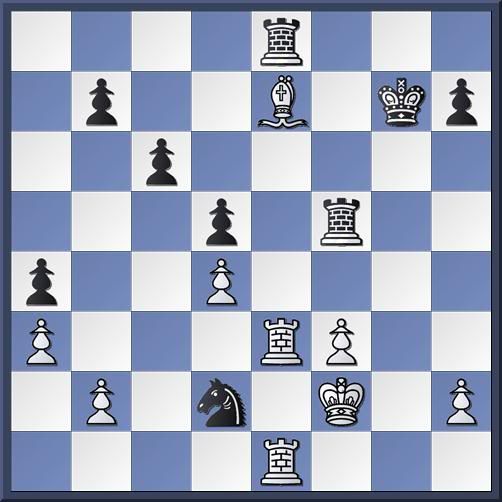
Black to move


Keres played 30...Ne4+.

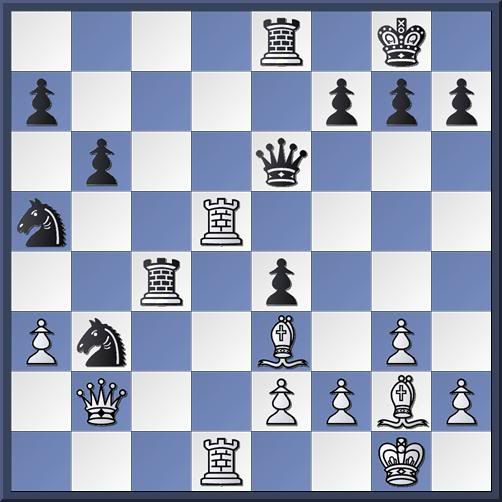
After a sequence of exchanges, Smyslov found himself in a rook endgame where he was forced into passive defense. In time, Black broke through.

31.Kg2 Rxe7 32.fxe4 Rxe4 33.Rxe4 dxe4 34.Rxe4 Rb5 35.Re2 (White's rook takes a passive defensive position) ...Rb3 (Black's rook restrains the White king).

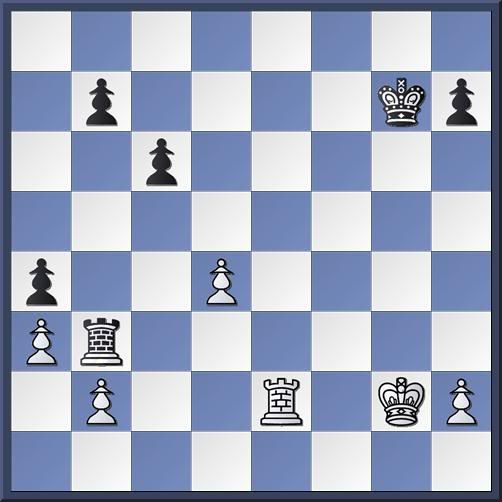
White to move


Black has slightly better pawn structure, an aggressively placed rook, and a mobile king. Does Black have a decisive advantage?

The entire game is replayable at http://blog.chess.com/view/the-active-rook.

25 April 2011

Mate in Ten

In the Absolute Championship of the Soviet Union, 1941, Vasily Smyslov has just played 40.hxg6. Mikhail Botvinnik found the mate in ten. Can you?

Black to move

08 April 2011

12th Soviet Championship: Smyslov

I am poring through the games of Vasily Smyslov from the beginning. My iPad has an old database of his games that I downloaded from Guenther Ossimitz's megasite several years ago. There are some available games missing from this database, and the game scores are not always reliable. ChessBase's newest database--I have Big Database 2011 (the full database without annotations)--is also missing some games. Some gaps can be filled by games from RUSBASE 1920-1994.

Smyslov emerged upon the chess scene on the eve of World War II when he won the national junior championship in 1938 and then tied for first in the Moscow Championship. In his first Soviet Championship, he placed third behind Andor Liliethal and Igor Bondarevsky. His games from that event concern me today. We start with his games as Black.

Isaak Boleslavsky missed an opportunity to maintain the advantage when he played 35.Kf1 from this position.

White to move


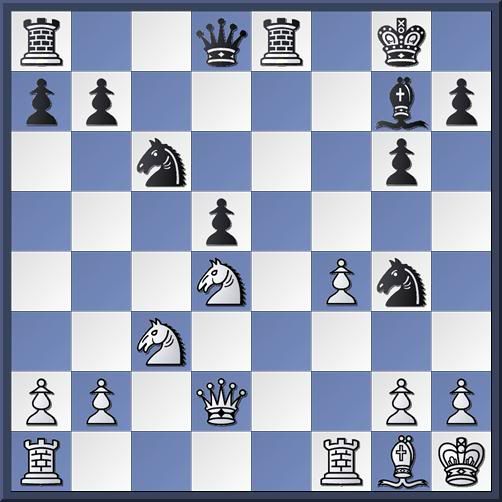
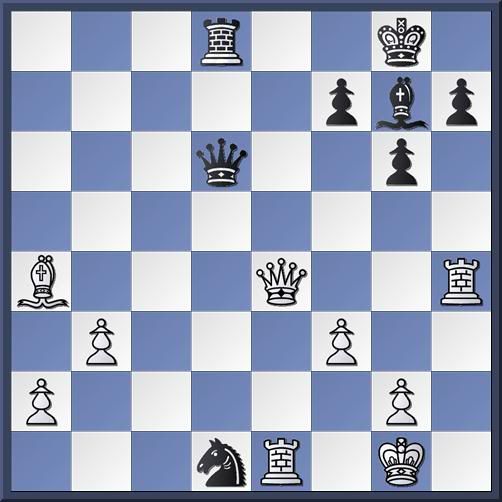
Smyslov's king appeared vulnerable after Peter Dubinin sacrificed material for an unsound attack. The attack failed, but Black's inaccurate 25...Rd8 let White escape with a draw.

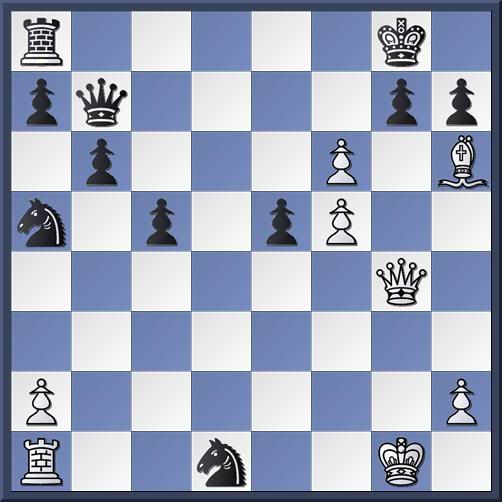
Black to move


25...Qh1+ wins decisively.

Against Alexander Kotov, Smyslov invested a knight to remove a defender and win a pawn. Demonstrating fine technique, he systematically worked his isolated queen pawn towards promotion.

Black to move


18...Nxh2! 19.Bxh2 Nxd4

Vladimir Makogonov handed the young future World Champion his only loss in the event. Makogonov found the strong 24.Re5! from this position.

White to move


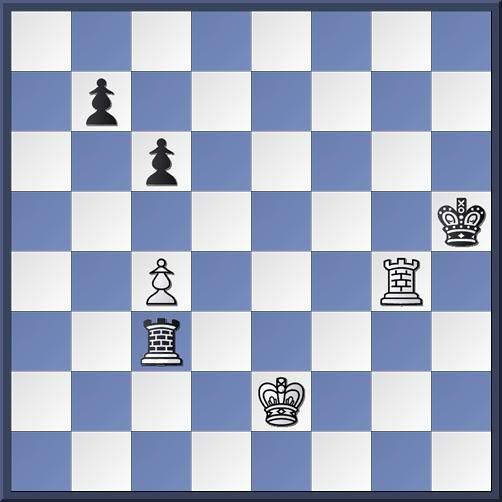
Smyslov's extra pawn was of no value against Vladas Mikenas after 51.Rg7 from this position.

White to move


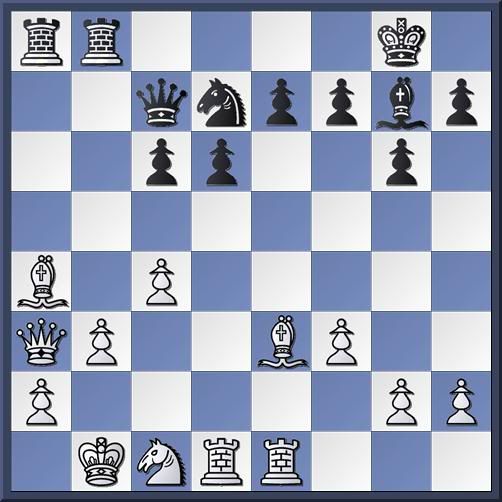
Smyslov's Dragon prevailed over Vasily Panov's Yugoslav Attack. Of course, the name Yugoslav Attack, or Velimirovic variation, would not acquire that name until Dragoljub Velimirovic began playing it in the 1960s. After 22...Nd7, Panov's king strolled over to the kingside in search of security.

White to move


Later Smyslov sacrificed the exchange and a pawn to maintain pressure.

Black to move


The game ended 41...Qg3 42.Qe7 Rd2 43.Qe8+ Bf8.

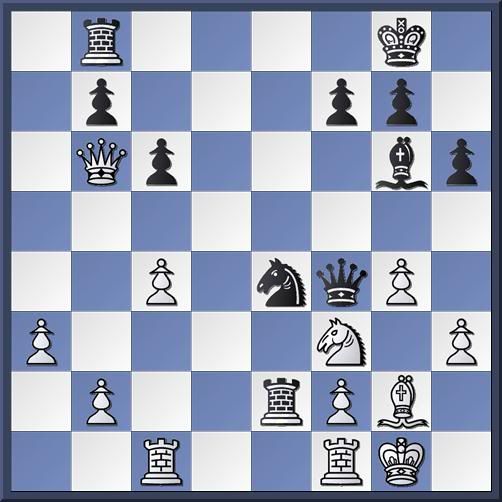
White's defenses failed when Smyslov found 27...Nxf2! This victory came from one of his several efforts with the Nimzo-Indian Defense in this event. Iosif Rudakovsky defended well after this move, but when the smoke cleared, Black was two full pawns ahead. With three connected passed pawns on the kingside, pawns on both wings, and Black's bishop against a knight, there was no reason to make young Vasily grind it out.

Black to move


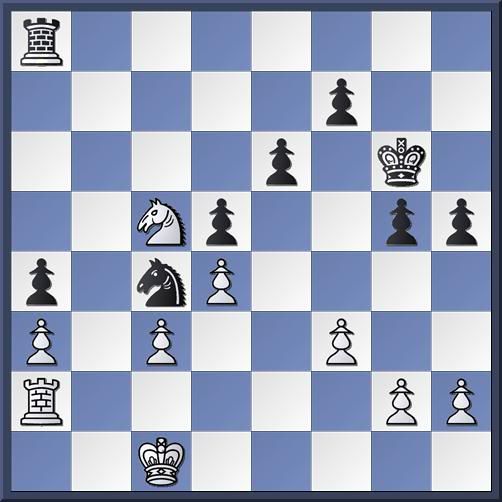
Smyslov gave endgame lessons to Mark Stolberg in this finish from a Caro-Kann.

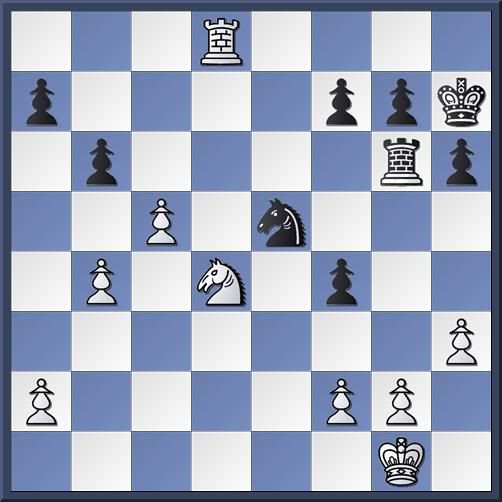
Black to move


36... Kf5 37.Kc2 f6 38.Kd3 e5 39.Ra1 g4 40.fxg4+ hxg4 41.Ra2 Rc8 42.Nxa4 e4+ 43.Ke2 Rh8 44.Kf2 e3+ 45.Kg1 Rb8 46.Ra1 Nxa3 47.Nc5 Nb1 48.Na4 g3 49.hxg3 Kg4 50.Kf1 Kxg3 51.Ke2 f5 52.Ra2 f4 53.Kd3 Nd2 54.Nb2 Re8 55.Ra1 Kxg2 56.Re1 f3 0–1

This game is replayable on the Chess.com version of my blog.

06 March 2011

An Elusive Game: Smyslov's Loss

Among my study projects are going through games of Vasily Smyslov (1921-2010). He is one of a small number to reach the pinnacle of world champion, but his brief reign there obscures his longevity in competitive chess. At the age of 62 he reached the Candidates Final, losing to the up-and-coming Garry Kasparov. I have a collection of Smyslov's games that I downloaded several years ago from Guenther Ossimitz's megasite. The earliest Smyslov loss in this collection does not appear in my largest database--the 4.8 million game collection Big Database 2011 that I acquired a few days ago as part of the ChessBase 11 package. Nor is the game in ChessBase's online database.

Is the game score authentic? What is the source employed by whoever submitted the database to Ossimitz?

The game appears to have been part of the Moscow Championship 1939. Big Database 2011 contains seventeen games from this event. RUSBASE 1920-1994 offers more: a crosstable, and a database containing twenty-one games. Perhaps this site is trustworthy for an accurate score. The notation matches that in the Ossimitz database.

I have a hunch that the small number of games available from this event were published, and perhaps annotated, in Soviet newspapers or magazines. Perhaps Panov's own annotations exist somewhere.

Smyslov,V - Panov,V [C90]
Moscow 1939

1.e4 e5 2.Nf3 Nc6 3.Bb5 a6 4.Ba4 Nf6 5.0–0 Be7 6.Re1 b5 7.Bb3 d6 8.c3 Na5 9.Bc2 c5 10.d4 Qc7 11.Nbd2 0–0 12.Nf1 Nc4 13.Qe2 Nb6 14.Ng3 g6 15.h3 Re8 16.Bg5 Kg7 17.Rad1 Ng8 18.Bc1 Bf6 19.d5 Bd8 20.Kh2 Ra7 21.Nf1 h5 22.Ng1 Nf6 23.g3 Rh8 24.Kg2 h4 25.f4 hxg3 26.fxe5 dxe5 27.Nxg3 Nh5 28.Nxh5+ Rxh5 29.b3 c4 30.Qf3 Qd6 31.Be3 Re7 32.b4 Nd7 33.Qf2 Re8 34.Bc5 Qf6 35.Qxf6+ Nxf6 36.Re3 Reh8 37.Rg3 Rh4 38.Bd6 Nh5 39.Bxe5+ f6 40.Bd6 Nxg3 41.Bxg3 Bxh3+ 42.Nxh3 Rxh3 43.a4 R8h5 0–1

This game features an instructive assault upon the white king that begins with an h-pawn thrust, but my quest for Smyslov's errors this morning have kept me exploring the opening. The game opened as a closed Spanish.

Smyslov,V - Panov,V [C90]
Moscow 1939

1.e4 e5 2.Nf3 Nc6 3.Bb5 a6 4.Ba4 Nf6 5.0–0 Be7 6.Re1 b5 7.Bb3 d6 8.c3


8...Na5

The usual move from this position these days is 8...O-O. Garry Kasparov calls Panov's move dubious in his annotations to the third game in the 1908 World Championship, Lasker - Tarrasch. Through White's move 11, this game followed two games from that event: Lasker's defeat in game 3, and Lasker's victory in game 5. Lasker was an important early influence upon Smyslov.

Kasparov recommends the move order 8...O-O 9.h3 Na5 10.Bc2 c5 11.d4 Qc7 as "more accurate", noting that Tarrasch's generation feared 9.d4 after 8...O-O because they failed to understand Black's counterplay after 9...Bg4 (My Great Predecessors, Part 1, 161). Lasker corroborates Kasparov's assessment in his note to move 11.Nbd2 in Lasker's Manual of Chess that 11.h3 strikes him as a waste of time. Perhaps the position is different one move later when Lasker played 12.h3 in his two games against Tarrasch. Kasparov calls 12.h3 "non-essential" and refers readers to Capablanca - Duz-Khotimirsky, St. Petersburg 1913 where he mentions Capablanca's recommendation of 12.d5 (Capablanca played 12.Nf1 in the game). According to the crosstable at Rusbase, Duz-Khotimirsky handed Smyslov his only other loss in this event won by Lilienthal with Panov and Smyslov one point behind.

12.h3 transposes to my game against Alex Chow in the 2005 Eastern Washington Open where Alex played this move much earlier (and thereby avoided the Marshall Attack I had planned). I won this game only when Alex missed a key tactic in the middle game.

9.Bc2 c5 10.d4 Qc7 11.Nbd2


Here the Lasker - Tarrasch games continued 11...Nc6 12.h3 reaching a position with four instances in the past half-dozen years among the selection in Big Database 2011.

11...O-O

Vasily Panov's choice is far more common, appearing in Kamsky - Eljanov, Jermuk 2009 among nearly twelve thousand other games. Now Smyslov selects an unusual move.

12.Nf1

The "non-essential" 12.h3 is vastly more common: ChessBase Online contains 11,861 games with 12.h3, 79 games with 12.Nf1, and 43 games with Capablanca's recommended 12.d5. Smyslov's move has the highest scoring percentage.

Such percentages easily mislead. The highest rated Black player to lose after 12.Nf1 was 2351 in the game Pon - Mohota, Chennai 2009 from the Women's championship of India. That game came down to a bishop vs knight endgame in which White's king became more active on the queenside. 12.d5 appears in encounters among stronger players, but the "non-essential" 12.h3 has been played by the likes of Ivanchuk, Leko, Karjakin, Svidler. It appears no less than eight times since 2009 by players rated over 2700. Perhaps the world elite have not read Kasparov's book.

12...Nc4


ChessBase Online offers eight games that reach this position, which includes one correspondence game absent from Big Database 2011. The only Black win in this set is Petera - Cekan, Klatovy 2003 which gives no ratings for the players. The earliest game to reach this position was Reti - Van Nuess, Dortmund 1928 (Reti won) and the most recent was a draw between two experts in 2009. That draw and two White wins continued with 13.b3, the first move I considered and the choice Hiarcs 12 prefers. Rybka 4 concurs.

The knight is not particularly dangerous on c4, and when driven back to b6 is one move from d7, while also keeping an eye on a4.

13.Qe2

No other game contains this move.

28 March 2010

Vasily Vasilievich Smyslov, 1921-2010

In the art of chess there are no unalterable laws governing the struggle, which are appropriate to every position, otherwise chess would lose its attractiveness and eternal character.
Vasily Smyslov
Grandmaster Vasily Vasilievich Smyslov died Saturday. He was World Chess Champion 1957-1958. For several years after the end of World War II he was considered the second strongest player in the world behind Mikhail Botvinnik. Garry Kasparov states, he "was the strongest player in the world in the mid-1950s" (Kasparov, My Great Predecessors, vol. II, 263); in his three championship matches against Botvinnik, he scored +1. He placed second behind Botvinnik in the 1948 World Chess Championship tournament to choose a successor to Alexander Alekhine.

Smyslov was among the first group of players awarded the Grandmaster title by FIDE in 1950. He won the 1953 Candidates Tournament in Zurich, two points ahead of David Bronstein, Paul Keres, and Sammy Reshevsky. The next year he scored 12-12 (7 wins each) against Botvinnik in the World Championship match, so Botvinnik retained the title. In 1957 he defeated Botvinnik 12.5-9.5 (Smyslov won 6, lost 3) becoming World Champion. Botvinnik regained the title the following year with a score of 12.5-10.5 (Botvinnik won 7, lost 5).

Although his reign as world champion was brief, he continued to qualify for the Candidates' matches into his sixth decade. In 1983 at the age of 62 he lost the Candidates Final to Garry Kasparov, who went on to wrest the World Championship from Anatoly Karpov through two epic matches.

Smyslov became a professional chess player after he failed in his audition as an opera singer at the renowned Bolschoi Theatre. He often sang at international chess tournaments, accompanied by Mark Taimanov on piano, earning accolades for his voice from his fellow competitors. Fifty years after his audition at the Bolschoi Theatre, he performed there in celebration of Anatoly Karpov's birthday.


Search for Truth

Smyslov's chess style was worthy of emulation. Kasparov quotes Smyslov's own expression of his philosophy:
I am a staunch supporter of classical clarity of thought. The content of a game should be a search for truth, and victory a demonstration of its rightness. No imagination, however rich, no technique, however masterly, no penetration into the psychology of the opponent, however deep, can make a chess game a work of art, if these qualities do not lead to the main goal -- the search for truth.
Smyslov, as quoted in My Great Predecessors, 283
In the introduction to the English edition of Smyslov, My Best Games of Chess, 1935-1957, Peter Romanovsky emphasizes his skepticism towards dogma. Romanovsky draws attention to Smyslov's comments on the power of the bishop pair. The following position was reached in the game Euwe-Smyslov from the World Championship tournament.

Black to move


Smyslov played 19...Bxb2. He wrote in My Best Games of Chess (1958):
Outwardly simple, but in actual fact a major decision. Euwe undoubtedly considered this reply, but hoped with the help of his two Bishops to win back the pawn on b3 and obtain the better ending. So great is the conviction nowadays in the advantage of the two Bishops! Here it is interesting to recall that M.I. Tchigorin readily carried on the struggle with two Knights and obtained repeated successes. In the art of chess there are no unalterable laws governing the struggle, which are appropriate to every position, otherwise chess would lose its attractiveness and eternal character.
Smyslov, My Best Games of Chess, 78
Romanovsky observes Smyslov's penchant for unusual moves, but notes:
In the course of his daring denial of the routine and commonplace Smyslov does not in the least depart from classical principles and testaments; quite the reverse, he creates a deepening understanding of these principles, widens their effect and opens new avenues for their development.
Romanovsky, "Vassily Vassilievitch Smyslov," Introduction to My Best Games of Chess, xviii
In his fidelity to classical principles combined with resistance to dogma, Smyslov conscientiously followed the ideas of Tchigorin under whom his father, Vassily Osipovitch Smyslov, had studied. The Russian Chess School of Tchigorin trained the first Soviet masters, and they produced the innovations in training and theory that would dominate chess in the latter half of the twentieth century. Indeed, the upcoming World Championship Match between the challenger Veselin Topalov and the current champion Viswanathan Anand is the first WCC match since World War II that does not feature at least one protagonist that gained his early training in the Soviet School. As the Soviet School was gaining dominance, Smyslov was one of its leading proponents.