Showing posts with label King's Indian Defense. Show all posts

16 October 2016

Find the Only Move

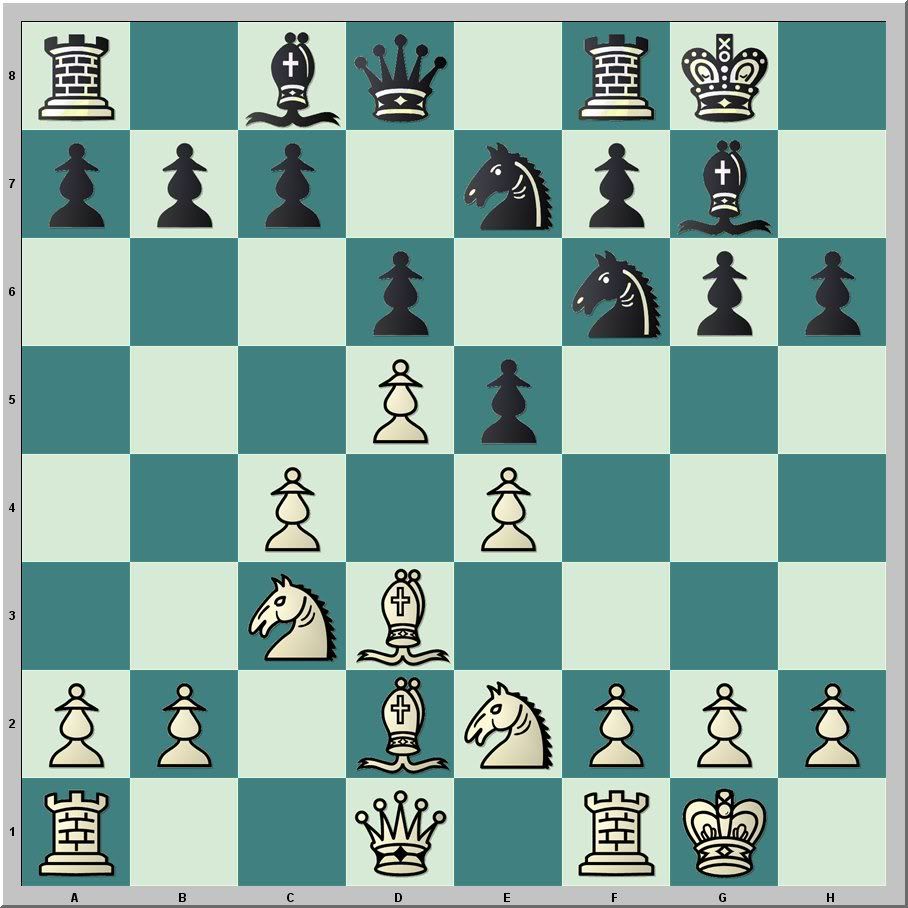
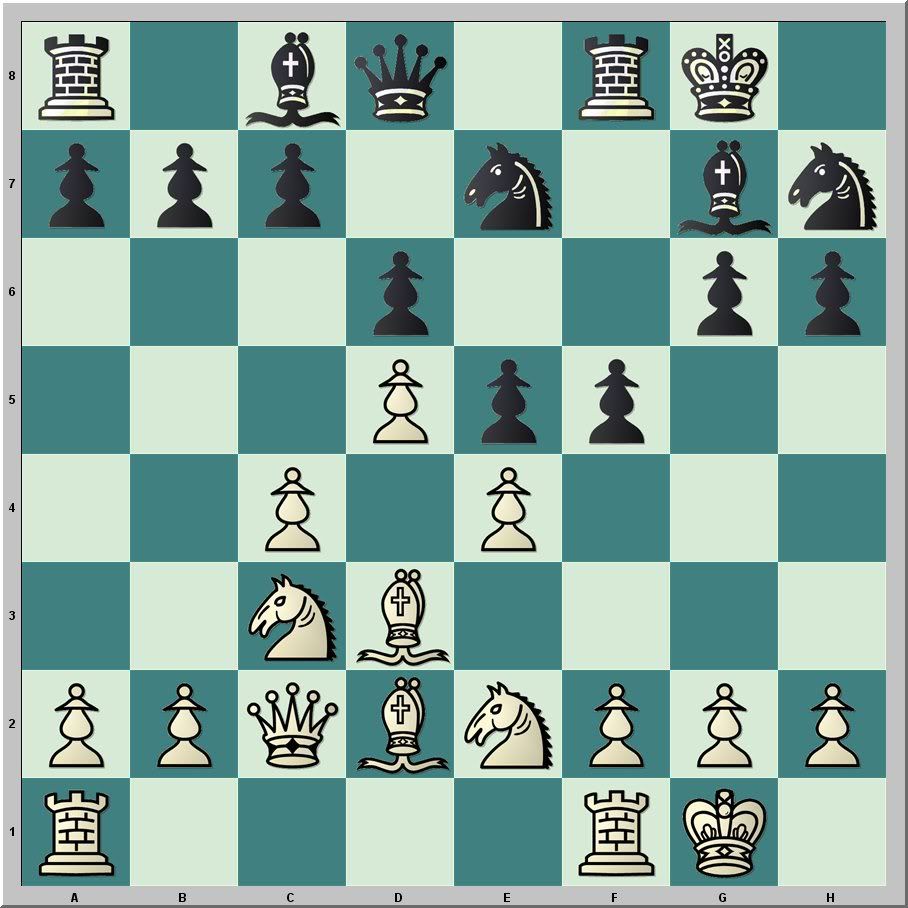
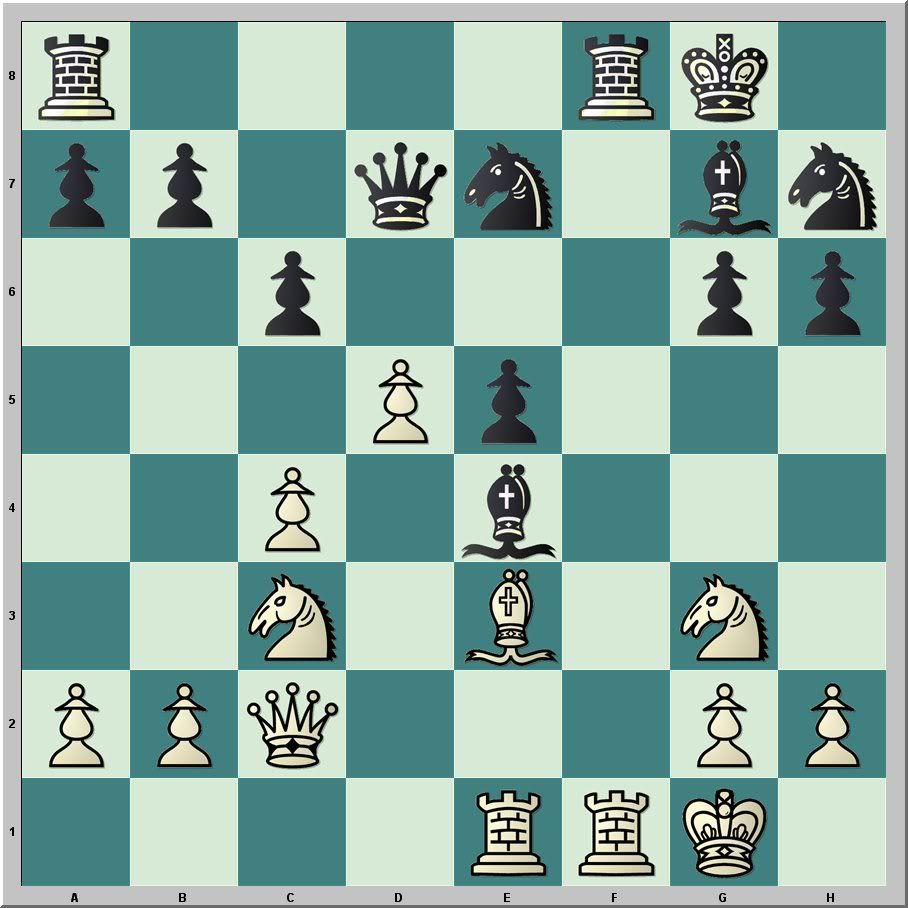
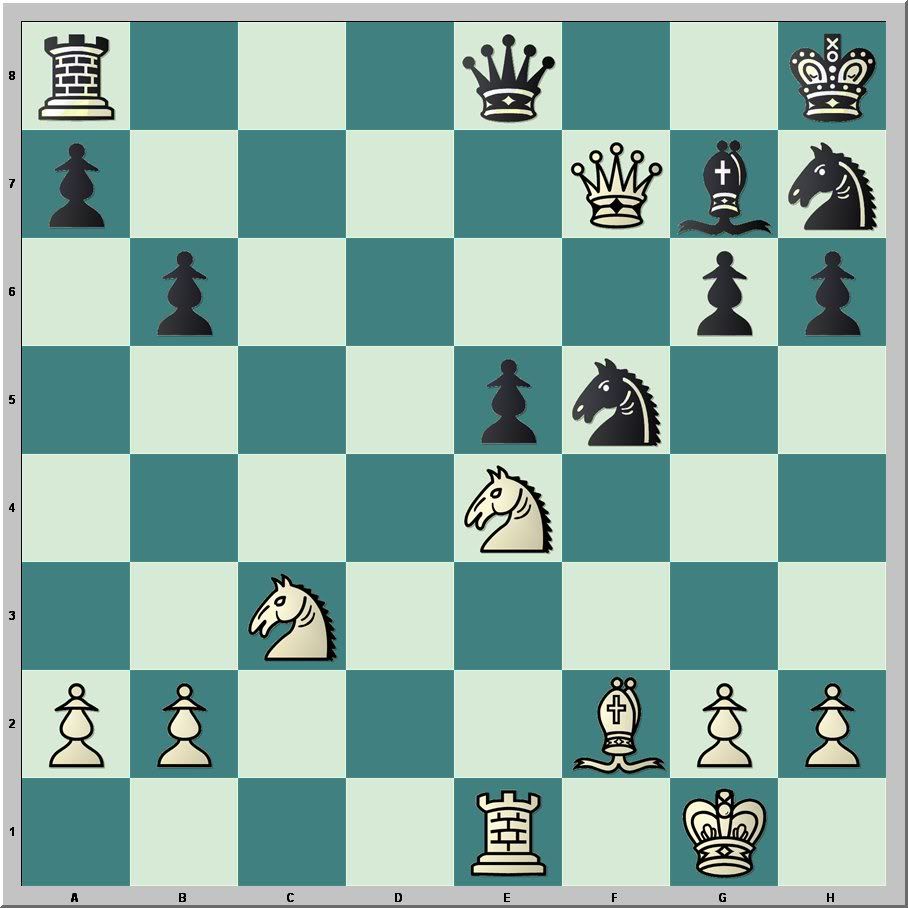
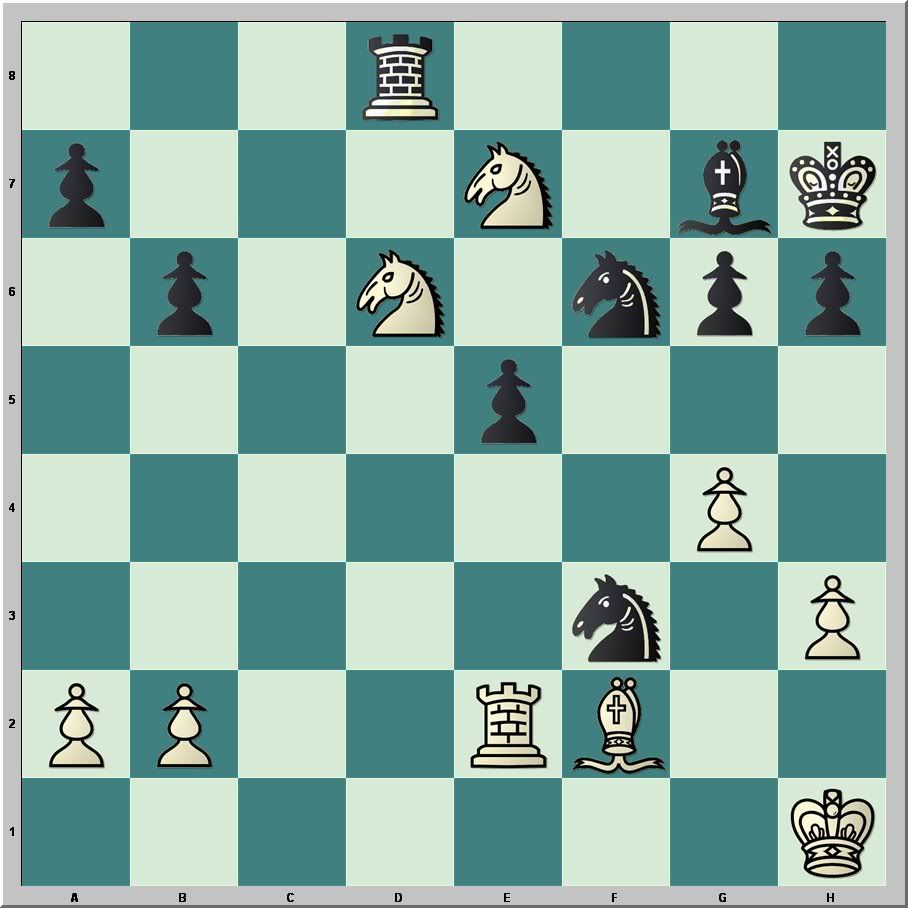
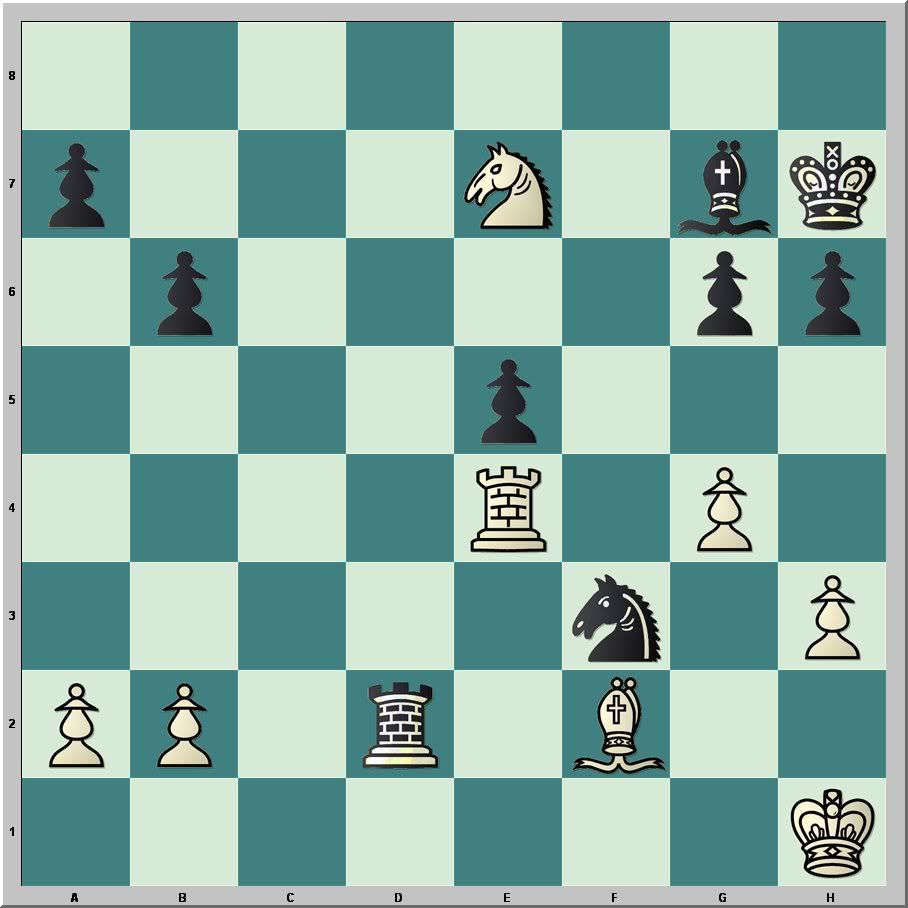
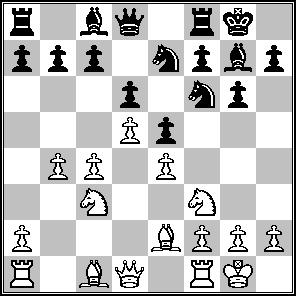
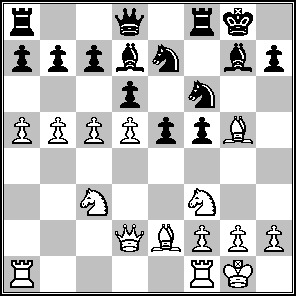
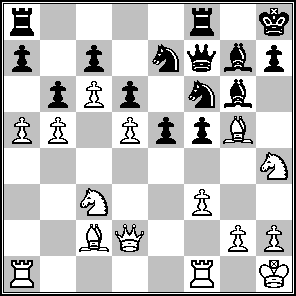
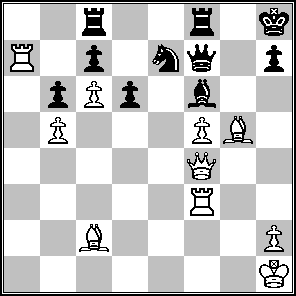
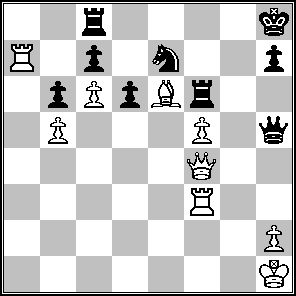
These positions arose in Simon Williams' commentary on Gelfand -- Nakamura 2010 in his video "Hikaru Nakamura Teaches the KID" on Chess.com.

The first position arose in three games. Once, White found the correct move. FM Delisle Warner was White in that game, scoring an upset win against IM Kevin Denny.

White to move

The second position comes about a couple moves after 22...h4 instead of Nakamura's 22...Nh4.

White to move

Finally, Gelfand could have stayed in the game with the right move in this third position.

White to move

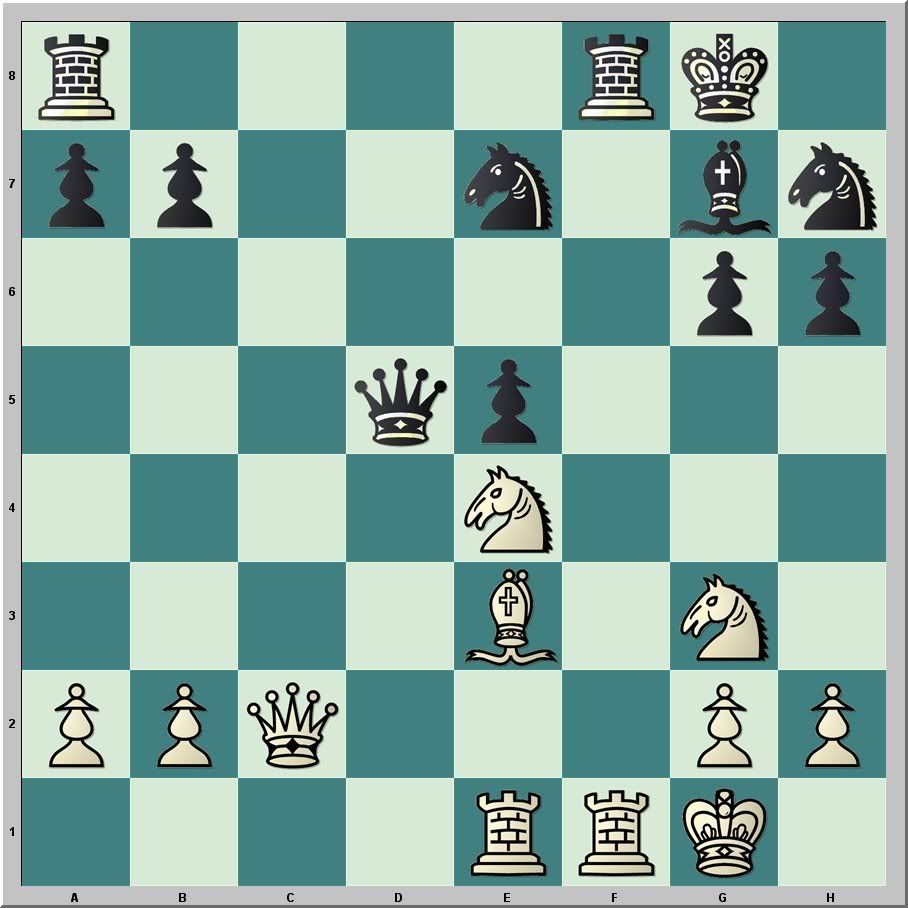
Can you find the only move in each position?

05 October 2015

Tunnel Vision

It seemed to me that playing a thematic attack against the King's Indian Defense gave me a straightforward victory. However, post-game analysis reveals several errors in my game. My tunnel vision in pursuit of one idea led to missing a checkmate in one, another checkmate in two, and several better moves throughout. Had my opponent been more alert in defense, he could have recovered from the early error that gave me an attack. Even when I had the victory thoroughly in hand, I missed several opportunities to close the deal.

The battle was a three minute blitz game at 3:00 am. I was awake due to eating an excess of refried beans and rice at dinner.

Stripes, J (1846) -- Internet Opponent (1855) [E90]
Live Chess Chess.com, 05.10.2015

1.d4 Nf6 2.c4 g6 3.Nf3 Bg7 4.Nc3 d6 5.e4 0–0 6.Be3

I prefer 6.Be2 when I'm awake.

6...e5

6...Ng4 points out the flaw in 6.Be3.

7.d5

7.dxe5 is better.

7...Nbd7 8.Bg5

It is interesting that the only master games that have reached this position, and a majority of the amateur games, have done so with White to move. The difference is due to White's poorly timed Be3 followed by the subsequent 8.Bg5. White has already squandered his opening advantage.

8...b6N

Black might have played 8...h6, provoking the wayward bishop to move again.

9.Be2 h6 10.Be3 a6 11.Qc1

Black to move

11...Kh7

11...Nc5! The h-pawn is less vital than White's e-pawn. 12.Bxh6 Ncxe4.

12.h4 Ng4?

This error gave me a lasting initiative, almost. It should have done so. I maintained the initiative, however, because my opponent missed every opportunity to capitalize on the errors in my myopic attack.

13.Ng5+! hxg5 14.Bxg4?

14.hxg5+ Kg8 15.Bxg4 with clear advantage.

14...gxh4 15.Bg5

Black to move

15...f6

15...Bf6 refutes White's move order error.

16.Rxh4+ Kg8 17.Bh6

17.Be6+ Rf7 18.Bh6.

17...Rf7 18.Be6

18.Bxg7 Rxg7 19.Be6+ Kf8 (19...Rf7 20.Qh6) 20.Qh6.

18...Nc5

White to move

19.Bxf7+

19.Bxg7! Nxe6 20.Rh8+ Kxg7 21.Qh6#.

19...Kxf7 20.Bxg7 Kxg7 21.Qh6+ Kf7 22.Qh7+ Ke8

White to move

23.Qh8+

23.Qxg6+ Kd7 24.Qf5+ Ke7 25.Rh7+ Ke8 26.Qh5+ Kf8 27.Qf7#.

23...Kd7 24.Qg7+ Qe7 25.Qxg6 Nd3+ 26.Ke2 Nf4+

White to move

27.Rxf4

Box, as they say. Only move.

27...exf4 28.Rh1 Qe5 29.Rh7+ Kd8 30.Qg8+ Qe8 31.Qg7 Bf5

White to move

32.Rh8

I have been trying to pin my opponent's queen with my rook for seven moves. Now, finally, I get to do that. I might have chosen a better target: 32.Qxc7#.

32...Bxe4 33.Rxe8+ Kxe8 34.Nxe4 Rd8

34...f3+ 35.Kxf3 Kd8 36.Qf8+ Kd7 37.Nxf6#.

35.Nxf6# 1–0

It could have been a satisfying win if I had not taken the time to examine it. Instead, it is an instructive win that shed light on a mental error that sometimes plagues me in over the board play. Myopia produces an inflexible approach to the game. Instead of orchestrating an attack by always seeking the best moves, I charge in like a bull in a china shop. Sometimes that still gets the job done, but sometimes that gives the opponent counterplay.

10 April 2014

Is this Tactic Common?

An easy blitz win this morning reminded me of several other games: my highest rated correspondence win on Chess.com, the first round of the 2009 Washington Open, and dozens of other blitz games. Although some elements of the position differ in each, the basic elements are there over and over again.

White to move

The key elements of the position: Black's knight is pinned, the d-file is open and both queens stand there, a knight is poised to jump to d5, which Black's c-pawn does not prevent.

This game continued 10.Qxd8 Rxd8 11.Nd5 Rd6 12.Nxc7 winning a pawn. This morning, my opponent opted not to save the rook with 12...Rb8.

A similar position appeared in the first round of the 2009 Washington Open.

White to move

I was disappointed that I managed only a draw in that game, but the event itself is notable because I finished with no losses and the event lifted my USCF rating into A Class.

In a memorable correspondence game on Chess.com, the key elements of the position appeared again.

White to move

In this game I played 10.Nd5 which may be more accurate than 10.Qxd8. I usually see this sort of position in blitz.


15 January 2014

Aronian -- Nakamura, Tata Steel 2014

For the time being I am following Levon Aronian day by day in the Tata Steel Grandmaster tournament in Wijk aan Zee. I have considered following Hikaru Nakamura, rather than Aronian. I could follow both, of course, but I find more personal benefit as training when I follow a single game and try to understand it in real time. Today's battle is between the top two seeds: world number two has White against world number three.

Two rounds in  this year's tournament are played on the road for the first time in the long history of this event. Today, they are playing in the Rijks Museum in Amsterdam.

Aronian,Levon (2812) -- Nakamura,Hikaru (2789) [E92]
Tata Steel Wijk aan Zee, 15.01.2014

1.d4 Nf6 2.Nf3 g6 3.c4 Bg7 4.Nc3 d6 5.e4 0–0 6.Be2 e5 7.Be3 Ng4 8.Bg5 f6 9.Bh4

Black to move

Although this position is commonly reached, and Nakamura has found himself here before, he spent more than five minutes thinking at this point.

9...g5 10.Bg3 Nh6 11.c5 g4

Nakamura used eleven minutes for this move. Today, the website looks different. I found that it is possible to turn off the appearance of Houdini's evaluation within the game score, facilitating my desire to do my own thinking. The move times appear in the game score, which I think is a nice feature.

12.Nh4 Nc6 13.cxd6 cxd6 14.dxe5

Black to move

ChessBase Online contains 27 games with this position, but none played by either of these two players. Nakamura spent eight minutes on the position.

14...dxe5 15.Bc4+

Aronian spent more than eleven minutes fr this move, his first long think of the game.

15...Kh8 16.Qxd8 Rxd8 17.O-O

Aronian spent another nine minutes thinking before exchanging queens, and six minutes before castling.

17...Nd4

White to move

White's knight and bishop on the kingside seem locked up, so the f-pawn will need to advance at some point.

18.Rad1 Be6 19.Bxe6 Nxe6 20.f3 gxf3 21.gxf3

I was thinking that 21.Nxf3 was automatic.

21...Rxd1 22.Rxd1 Rd8 23.Rxd8+ Nxd8

White to move

24.Bf2 a6 25.Kf1 Kg8 26.Ke2 Kf7 27.Be3 Ke6 28.Na4 Bf8

White to move

29.Bxh6

I had thought about giving up the bishop for the knight. Of course, this moment is the best time, right after the bishop sought to redeploy elsewhere, because it gains a tempo. I am reminded of the White side of a Catalan that went bad. My opponent, a very strong high school student, had a knight against my bishop. All the the other pieces were gone and all of his pawns were on the squares my bishop could not reach. They could not advance without becoming vulnerable, of course. But he was able to patiently work his knight and king forward until my pawns started to fall.

29...Bxh6 30.Nc5+ Kf7 31.Kd3

Black to move

31...Bf4

Nakamura used nearly fifty minutes for this move. Probably the game is theoretically equal, but there are complications in the imbalance and concrete variations that must be calculated.

32.h3

Obvious and forced.

32...Bg5 33.Nf5

Also seems forced.

33...Ne6 34.Nxe6

It is hard to imagine an alternative.

34...Kxe6 35.Kc4 b6

This position may be the start of Nakumura's deep analysis during the long think.

36.a4 Bd2 37.b3 h5

White to move

I want to play 38.Ng7+. What is wrong with this move? The knight gets trapped if he snatches the pawn. 38...Kf7 39.Nxh5 Be1, followed by 40...Kg6.

38.b4

I cannot find any targets for the knight, and the pawn ending should be drawn. Some calculation is necessary, of course, but I have a hunch that the players will make a couple of moves to be certain that Hikaru does not lose on time and then agree to a draw.

I could be wrong, of course.

38...a5 39.bxa5 bxa5 40.Kb5 Kd7

They have reached the time control. With the exchange of pawns, I'm no longer convinced that the pawn ending is drawn. Moreover, Black's bishop seems a little passive defending the pawn on a5. Perhaps Aronian has some reasons to play on. He beat Caruana on Sunday. If he scores a win against Nakamura, he could be sitting well to win the event, although the tournament is only 1/3 complete after today.

41.Ng7 h4 42.Nf5 Be1 43.Ne3

Black to move

43...Ke6 44.Nc4

Aronian can win a pawn. It that enough?

It was. Nakamura resigned.

1-0

Often, I have a tendency to be overly optimistic on Aronian's behalf (see "Harikrishna -- Aronian, Tata Steel 2014"). Today, I lacked confidence that he could gain an advantage, and yet he won. As in his win against Caruana, Aronian gave a nice demonstration today illustrating how one can improve his pieces. However, I wonder if Nakamura might have erred. If so, where? 38...a5 changed my evaluation of the pawn ending. Was that an error?

I will study the game a bit more before checking with an engine.

07 December 2013

An Exchange versus the Bishop Pair

In a recent game on ChessByPost, my opponent committed an all-too frequent error* in the King's Indian Defense that left me ahead an exchange. However, I failed to convert my advantage and had to settle for a draw.

White to move

I could not find a clear way to make progress here. My plan was to improve my king's position, sacrifice the rook for Black's light-squared bishop, and pick up the resulting weak c-pawn. I overlooked a simple tactic that dropped the b-pawn, still sacrificed the exchange, and had a king no more active than my opponent's.

Perhaps it is time to invest effort studying Michael Stean, Simple Chess, or some other book concerned with patiently nursing a clear advantage.


*My highest rated win on Chess.com was against an opponent who made this error. I was able to convert the advantage to an easily won pawn ending. In the 2009 Washington Open, my first round opponent committed the same opening error, and there also I had to settle for a draw.

23 January 2013

Tata Steel Chess 2013, Round 10

Is it possible to catch Magnus Carlsen? Levon Aronian is 1 1/2 points behind and has the White pieces against a player in the bottom half, Wang Hao. Hikaru Nakamura is tied with Aronian has Black against Fabiano Caruana, struggling in the lower half. Viswanathan Anand trails by one point and has a tough battle with Sergey Karjakin, who is in the middle of the pack. Carlsen has White against Erwin L'Ami, who is half a point above last place.

My game of the day for watching today is Nakamura's King's Indian Defense. I will look in on the other games from time to time. It is an unusual KID, and the novelty came early. This KID started as a Benoni.

Caruana,Fabiano (2781) - Nakamura,Hikaru (2769) [E70]
75th Tata Steel Chess Group A Wijk aan Zee, 23.01.2013

1.d4 Nf6 2.c4 c5 3.d5 g6 4.Nc3 Bg7 5.e4 d6 6.Bd3 0–0 7.Nge2 Nbd7 8.Bc2 Ne8N

White to move

9.0–0 Nc7 10.a4 Na6 11.f4 Nb4 12.Bd3 e6 13.dxe6 fxe6 14.Qd2 Nf6 15.Rad1

Black to move

15...Ng4 16.Bb1 Nc6

Update 6:47 am PST; 14:47 CET

While beginning to take stock of the position, I am taking a few minutes to go back through the first few moves to examine the transpositions. Classification shifted from Benoni to King's Indian Defense, it seems, with White's 7.Nge2. But that is a superficial point. Both players appear to be attempting move order tricks.

After White's seventh move, the position reached is one that Caruana has played prior.

Caruana,Fabiano (2709) - Grischuk,Alexander (2771) [E70]
Wch Blitz 5th Moscow (32), 18.11.2010

1.d4 Nf6 2.c4 g6 3.Nc3 Bg7 4.e4 d6 5.Bd3 0–0 6.Nge2 c5 7.d5 e6 8.Bg5 h6 9.Bh4 g5 10.Bg3 Nh5 11.0–0 Na6 12.Qd2 Nc7 13.Bc2 exd5 14.exd5 f5 15.f4 Nxg3 16.Nxg3 g4 17.Rae1 Bd7 18.Kh1 Rf7 19.Re2 Bh8 20.Rfe1 Qf6 21.Re3 Re8 22.Rxe8+ Nxe8 23.Bxf5 Bxf5 24.Rxe8+ Rf8 25.Nce4 Bxe4 26.Nxe4 Qf5 27.Nxd6 Qb1+ 28.Re1 Qxa2 29.Nxb7 Qxc4 30.d6 Rxf4 31.Qd1 Rd4 32.Qb1 Qf7 33.Nd8 Qf6 34.Re8+ Kg7 35.Ne6+ Kf7 36.Rf8+ Kxe6 37.Rxf6+ Bxf6 38.h3 g3 39.d7 Kxd7 40.Qf5+ Ke7 41.Qxc5+ Ke6 42.Qc6+ Kf5 43.Qf3+ Rf4 44.Qd3+ Ke6 45.Qe3+ Be5 46.Qe2 Rf2 47.Qc4+ Kf6 48.b4 Rb2 49.Qc6+ Kg5 50.Qc1+ Kf5 51.Qf1+ Ke6 52.b5 Kd6 53.Qd3+ Ke7 54.Kg1 Ra2 55.Kf1 Rf2+ 56.Ke1 Rxg2 57.Qe3 Ke6 58.Qxa7 Rb2 59.Qa6+ Kf5 60.Qc8+ Kf4 61.Qc4+ Kf5 62.Qf7+ Ke4 63.Qg6+ Kd5 64.Qd3+ Ke6 65.Qg6+ Kd5 66.Qc6+ Kd4 67.Qd7+ Ke3 68.Qf5 Bc3+ 69.Kd1 g2 70.Qe6+ Kd3 71.Qd5+ Bd4 72.Qf3+ Kc4 73.Qc6+ Kb4 74.Qd6+ Bc5 75.Qf4+ Ka3 76.Qf3+ Ka2 77.Qd5+ Ka1 78.Qa8+ Ra2 79.Qh8+ Rb2 80.Qa8+ Kb1 81.Qe4+ Ka2 82.Qd5+ Ka1 83.Qa8+ Kb1 84.Qe4+ Ka2 85.Qd5+ Ka1 86.Qa8+ Ra2 ½–½

Nakamura's reply took the position into rare territory. While more than 1000 games exist in the ChessBase Online database after White's seventh move, a mere 88 are there after Black's seventh move. Then, Caruana's eighth move is the fifth most popular choice among these games. Nakamura's reply makes the game unique.

Both players have spent a lot of time up to this point in the game. The pace must pick up, or time could become a significant factor. Perhaps, time is already applying pressure.

17.Kh1 Nxe3 18.Qxe3 Nd4

White to move

Update 7:15 am PST

Levon Aronian is temporarily a pawn ahead and seems to have a nice position. Carlsen is making L'Ami play chess, and seems to be applying pressure. Anand -- Karjakin has an imbalance in the pawn structure, but looks even.

19.e5 dxe5 20.fxe5

Update 7:37 am PST

The pace of play has increased.

20...Rxf1+ 21.Rxf1 Bd7 22.Nxd4 cxd4 23.Qxd4 Bc6 24.Qg4 Qe7

White to move

White is a pawn ahead, but Black has the bishop pair, and e5 is weak.

25.b3 Bxe5 26.Ne2

The pawn on e6 may prove to be weak as well, although it is well-defended at present. It is not yet mobile.

Levon Aronian defeated Wang Hao. Will he make up 1/2 point on the leader, or will Carlsen log another victory as well?

Peter Leko also won with Black against Ivan Sokolov.

Update 8:05 am PST; 17:05 CET

26...Rd8 27.Be4 Be8 28.Qf3 b6 29.Nf4 Bf7 30.Nd3 Bd6 31.Qe3 Qh4 32.h3 Qg3 33.Qxg3 Bxg3 34.Rf3 Bc7

For a few moves, White seemed to have some initiative as Caruana attacked Nakamura's bishops. Then, Nakamura's queen penetrated and was exchanged off.

White to move

35.Kg1 Rd4 36.Re3 g5 37.Kf2 h5

Update 8:15 am PST

A few more moves have been played, and the time control was reached.

38.Re2 a5 39.Ke3 Rd8 40.Bf3 Kg7

White to move

Update 8:45 am PST 

41.Rb2 Bd6 42.Rb1 Kf6 43.Rf1 Ke7 44.Be4 Rg8 45.Rh1

Nakamura's advantage, if any, is slight. His isolated and passed pawn is double-edged. White's position seems passive, unless he tries b3-b4. But, it is hard to find weaknesses against which Black can play.

Carlsen has a slight advantage, and as in his game against Karjakin on Monday, there are opposite colored bishops with other pieces on the board.

Anand -- Karjakin drew after 46 moves. So, Aronian catches Anand, but are they one or one and one-half behind Carlsen? Will Nakamura join them in second place?

Update 9:15 am PST

Carlsen retains a slight advantage. Nakamura continues to seek an opportunity. Hou Yifan has a nice position with Black against Pentala Harikrishna, and may have some winning chances.

45...h4 46.Bf3 Rf8 47.Rd1 Rd8 48.Rf1 Bg6 49.Be4 Bh5 50.Bf3 Rf8

White to move

Is Nakamura looking to swap pieces and play a bishop vs. knight ending?

Update 9:40 am PST

Not yet.

51.Nf2 Bg6 52.Ne4 Bc5+ 53.Kd3

It is time for me to take one of my puppies for a walk in the park.

Update 11:59 am PST

Upon my return from walking each puppy in turn, I discover that the games have ended.

Rd8+ 54.Kc2 g4 55.hxg4

Black to move

55... h3 56.Rd1 Rf8 57.Kd3 h2 58.Rh1 Bg1 59.Ke2 Bxe4 60.Bxe4 Kf6 61.Bf3 Rd8 0–1

I expect to see Nakamura's winning combination in the back of Chess Informant.

Magnus Carlsen won again. Hou Yifan scored her second of the tournament win with fine play in a rook ending.

Carlsen leads with 8/10, while second place is shared by Anand, Aronian, and Nakamura. None of them expect to catch Carlsen.


13 January 2013

Aronian -- Carlsen, Tata Steel 2013

When two players rated over 2800 clash, even a short draw holds some interest. Of course, we hope that they slug it out until all hope of victory is gone. Today, in round two of the Tata Steel Chess Tournament in Wijk aan Zee, last year's winner Levon Aronian has White against the highest rated player in history, Magnus Carlsen.

The game began with the 6.h3 line against the King's Indian Defense that Aronian employed yesterday. Carlsen's sixth move differed from Loek Van Wely's choice, however. Van Wely played the most popular line, while Carlsen opted for one less frequently explored.

Aronian,Levon (2802) -- Carlsen,Magnus (2861)
Tata Steel, Wijk aan Zee 2013

1.d4 Nf6 2.c4 g6 3.Nc3 Bg7 4.e4 d6 5.Nf3 O-O 6.h3 Nc6

6...e5 is most frequent, and was Van Wely's move yesterday.

7.d5 Nb4 8.Be2 e6 9.Be3 Re8 10.Nd2 a5 11.O-O Bd7 12.Re1 b6

White to move

9.Be3 had not been played before, but after 11.O-O, the game is back into dimly charted territory. Carlsen's 12...b6 is the novelty, and now Aronian is thinking.

Doroshkievich,Vladimir K (2375) - Odeev,A [E91]
Voroshilovgrad op Voroshilovgrad, 1989

1.d4 Nf6 2.c4 g6 3.Nc3 Bg7 4.e4 d6 5.Nf3 0–0 6.Be2 Nc6 7.d5 Nb4 8.0–0 a5 9.Be3 e6 10.Nd2 Re8 11.h3 Bd7 12.Re1 c6 13.a3 Na6 14.Na4 exd5 15.exd5 cxd5 16.Bf3 d4 17.Bxd4 Rxe1+ 18.Qxe1 Bxa4 19.Bxb7 Nc7 20.Bxa8 Qxa8 21.Qe7 Nce8 22.Re1 Bc6 23.f3 Bf8 24.Qa7 Qxa7 25.Bxa7 a4 26.b4 d5 27.Bd4 Bh6 28.Be3 Bxe3+ 29.Rxe3 dxc4 30.Nxc4 Nd5 31.Re1 Nec7 32.Rc1 Bb5 33.Nd6 Kf8 34.Rc5 Bd7 35.Ra5 Ke7 36.Nb7 Bc6 37.Nc5 Nb6 38.Kf2 Kd8 39.Ke2 Kc8 40.Kd3 Bb5+ 41.Kd4 Kb8 42.h4 Bf1 43.Ne4 Ne6+ 44.Kc3 Bxg2 45.Nd6 Nd8 46.Rb5 Kc7 47.Ne8+ Kc6 48.Rc5+ Kd7 49.Nf6+ Ke7 50.Rb5 Kxf6 51.Rxb6+ Ne6 52.Ra6 Bxf3 53.Rxa4 h6 54.b5 Ke5 55.Ra7 f5 56.b6 Nd8 57.Rg7 Kf6 58.Rg8 Nb7 59.a4 g5 60.hxg5+ hxg5 61.Kd2 f4 62.Ke1 Bd5 63.Ra8 Nd6 64.Rf8+ Ke7 65.Rh8 f3 66.a5 g4 67.Rh7+ Ke6 68.Rg7 Ne4 0–1

I am following the game live, and am thinking along with Aronian.

13.Rc1

As we wait for Carlsen's move, I continue to assess with Aronian. I have my favorites.

13...Kh8

Carlsen prepares Ng8, one step towards the thematic f7-f5 pawn break.

Houdini 2.0, running on the tournament site, wants to kick away Carlsen's knight from b4. It is a logical move, but perhaps there is something better.

Update 5:59 am PST

I should not be up this early. Yet, somehow studying Grandmaster games as they are unfolding holds enough appeal to warrant sleep deprivation.

Aronian kicked the knight, and Carlsen retreated it instantly.

14.a3 Na6 15.Qc2

Aronian's queen finds its natural square.

15...e5 16.Rb1 Ng8

We expected this. White is playing for a pawn break on the queenside, while Black will seek counterplay on the kingside.

White to move

17.b4 f5

It is 6:12 am PST and I have a hot cup of coffee to aid my planning and support of Aronian's efforts.

Update 6:20 am PST

Just as I was taking my first sip of coffee, Aronian offered his dark-squared bishop for two pawns.

18.Nb5!?

Carlsen had been moving quickly, but now he is thinking.

Update 6:34 am PST

While I was watching an interview with Ulf Andersson, Carlsen played his move, offering to trade dark-squared bishops. It is hard to see an alternative for Aronian even though the trade brings Carlsen's knight to a more active square.

18...Bh6 19.Bxh6 Nxh6 20.exf5

Black to move

20...gxf5 21.f4

Our opponent made the move we would have played, capturing with the pawn, and we immediately seek to disrupt his mobile kingside pawns. Aronian has moved ahead on the clock. The board, however, seems to offer equal prospects for both sides. Time pressure might become a factor.

I have been watching this game nearly two hours.

Update 7:05 am PST

21...exf4 22.Qc3+ Kg8

We might have played 19.Qc3 instead of capturing the bishop on h6, but somehow it seems better now.

23.Bh5

This move was not possible when only one piece guarded b4.

Black to move

Update 7:15 am PST

The official website's game clocks do not seem trustworthy. Aronian was ahead by more than ten minutes not more than a quarter hour ago, and now he is behind by twenty minutes. That is a mathematical impossibility.

23...Nf7

In any case, some thought is necessary as we explore the best manner of exploiting the pinned knight.

Update 7:42 am PST

The puppies awoke and needed fresh water. Once in the kitchen, I decided to make my oatmeal. Returning to the board, I find several moves have been played. As I was contemplating the changes, Aronian played the move that I favored: keeping the queens on the board.

24.Rxe8+ Qxe8 25.Qf6 Qf8 26.Bxf7+ Qxf7 27.Qg5+ Qg7 28.Qxf4 axb4

White to move

Of course, we plan to recapture with 29.axb4, but perhaps we should examine 29.Rb3 as well.

29.axb4 Re8 30.Nd4 Qe5 31.Qg5+ Qg7 32.N2f3 Qxg5 33.Nxg5

Black to move

33...Kg7

It is 8:00 am in my time zone. The cooks in Wijk aan Zee should be preparing dinner while I finish my breakfast. In a couple of hours, it will be necessary to forget about chess in order to watch American football. Our Seahawks are in Atlanta with the intent of ending the season for the Falcons.

34.Nge6+ Kf6 35.Rf1 Bxe6 36.Nxe6 h5 37.g4

As the players rush to make the time control, my efforts to keep this post up to date falls behind.

37...hxg4 38.hxg4 Nxb4 39.Rxf5+ Kg6 40.Nf4+ Kg7 41.g5

Black to move

Aronian's last move caught me by surprise, as did the speed at which it was played.

Update 8:25 am PST

41...c6

I fear that Carlsen cannot lose this position, although his hopes of winning have been gone almost from the beginning.

42.Kf2 cxd5 43.cxd5 Re5 44.Ne6+ Kg6

White to move

The engines say the position is a dead draw. Even so, the danger to the Black king is instructive. It turns out that White may force his g-pawn forward, but this action permits the Black king to play an aggressive role in a forced draw by repetition. 45.Rf6+ Kh5 46.Rh6+ Kg4 47.g6 Nd3+ and the White king cannot escape rook checks.

45.Rf6+ Kh5

45...Kh7 loses on the spot.

46.Kf3 1/2-1/2

A well-fought draw. I might take up this 6.h3 approach against the King's Indian Defense. Imitating Aronian cannot hurt my play.

Tomorrow, we may sit in the chair beside Anand as he takes on Fabiano Caruana. But, then, we might choose the Black side of that board to see if we can get something from a world champion who does not appear to be in top form.


01 July 2009

Opening Preparation

It has been said that most tournament players play the openings like Grandmasters, the middle game like experts, and the endings like children. This holds true, to a large extent, at any level below Master. Memory, study, a familiarity with opening principles means that most games are decided in the middle game or later with only a small percentage of games actually being decided in the opening.
Alex Dunne, How to Become a Candidate Master (1986), 1
The opening is not the strongest part of my game. Although I am sufficiently familiar with general principles to play a wide range of opening systems with some comfort, when I sit across the board from a player that has invested considerable time in opening preparation, I have a sense of inadequacy. The level at which I am beginning to play, and that I hope to begin playing--regularly scoring wins against class A players, and beginning to score against experts--requires specific opening preparation.

Last summer, while preparing for the City Championship match, I developed some specific lines against the Dutch Defense. The level of my preparation was such that I scored my first ever draw against Hiarcs 12 playing at full strength (but forced to meet 1.d4 with 1...f5). In a game/15 I drew the beast; that was one of nearly a dozen such training games. This opening work was largely responsible for my performance in the City Championship itself, assisting my success in earning a single draw against a FIDE Master, and very nearly two draws.

That was specific preparation for play against one opponent, but I need to have a battery of prepared lines available for other opponents. I'm not thinking necessarily of lines tailored to the playing styles of particular adversaries, although useful, but specific lines for openings that I'm likely to find myself playing. I need some lines, for example, against the King's Indian Defense. It will come up since 1.d4 is my principal standard, and it would be nice to occasionally uncork a well-prepared novelty or the latest theory against a worthy opponent.

In my game against John Julian Saturday night, I wanted to play the English, partly because I'd beat him in a casual game a few months ago that we played on Facebook.

James Stripes - John Julian [A25]
Facebook, Chess.com Application, 2009

1.c4 e5 2.g3 g6 3.Bg2 Bg7 4.Nc3 Nc6 5.Rb1 d6 6.b4 f5 7.d3 Nf6 8.e3 0–0 9.Nge2 Ne7 10.0–0 c6 11.b5 Be6 12.bxc6 bxc6 13.Qa4 Qd7 14.Ba3 Rf7 15.Qa6 Ne8 16.Qb7 Nc7 17.Qb4 Rd8 18.Qa5 Nc8 19.Rb7 f4 20.exf4 exf4 21.Ne4 f3 22.Bxf3 Rxf3 23.Rxc7 Qe8 24.Nf4 d5 25.Nxe6 Qxe6 26.Ng5 1–0

Although John claimed he was not taking that game as seriously as I did, it appeared from his first move on Saturday that he intended to avoid a repeat of this reversed Sicilian. We quickly transposed into a line of the King's Indian that I had glanced at superficially in mid-April when I read a single chapter--the last--in Joe Gallagher, Starting Out: The King's Indian (2002).


Stripes,J (1819) - Julian,J (1998) [E70]
City Championship Contenders, Spokane Valley, 2009

1.c4 g6 2.Nc3 Bg7 3.d4 Nf6 4.e4 d6 5.Bd3


Some strong grandmasters play this system quite regularly and its main supporter over the years has been the former American Champion Yasser Seiriwan.
Gallagher, 164
If Yasser plays the system, it is good enough for me!

5... 0–0 6.Nge2 e5 7.Bg5?

My recollection of the line has failed. 7.d5 is the correct move.

7... h6 8.Bd2?!

This move appears to be the novelty. 8.Bh4 is more in the spirit of the previous move and seems to have been played in a few games, but not by any strong players because they do not play 7.Bg5.

8... Nc6 9.d5 Ne7 10.0–0


Despite the lack of adequate preparation, I've reached a reasonable position. Black has some difficulties to solve, and I have my plan for meeting the KID's dangerous f7-f5 thrust. On the other hand, I've used nearly half an hour to my opponent's four minutes.

10... Nh7

prepares f7-f5, and it's time to decide where my queen should go

11.Qc2 f5 12.f4


I failed to remember accurately Gallagher's statement that White plans "to meet any subsequent ...f7-f5 by Black with exf5 and f2-f4" (164). I did not forget these two moves, but the sequence in which Gallagher listed them. Does it make a difference? Should White first play exf5, then advance the f-pawn? As it turns out, Hiarcs 12 assesses my 12.f4 as correct. I have a slight advantage, equivalent to nearly a pawn according to my engine.

12... fxe4 13.Bxe4 Bf5 14.Rae1

14.fxe5 was probably better

14...c6 15.fxe5 dxe5 16.Ng3 Qd7 17.Be3 Bxe4


18.Ncxe4?

I removed the bishop from the board, hovered my hand over one knight, then over the other. After a pause, I picked up the wrong knight and moved it where the bishop had been. Just before this move, I had received a text from my wife telling me she had found the spare rings for our Magic Bullet! I responded to my wife before returning my attention to the board.
The horror! The horror!
Joseph Conrad, Heart of Darkness
I realize that cell phones are not permitted in most tournaments, and that sending and receiving texts arouses suspicions of cheating. But small local affairs where everyone knows each other fairly well differs from large events full of strangers. Many of my opponents have been in my home. John has been here several times to play make-up games for club events, and for us to work together on match preparation. He was essentially my trainer for last year's City Championship, and we spent the better part of one day pouring through Informants, the Encyclopedia of Chess Openings, and running engine analysis of key lines we thought worthy of consideration.

In these local affairs, we tolerate marginal breaches of these emergent rules against cell phone use, although I am getting close to forfeiting one player whose ringer never seems to be turned off, and his phone inevitably rings during play. I always set my phone to vibrate, except when I set it to silent, as I did for the Washington Open.

After the game, John told me to pass on his thanks to my wife for the distraction that provoked my selection of the wrong knight.

18.Ngxe4
18.Qxe4 is also better

18...cxd5 19.cxd5 Qxd5


I'm down a pawn, yet Hiarcs 12 still sees me as having an advantage of 1/2 pawn. I thought that I had some play for the material, but at this point I'm looking to struggle for a draw.

20.Nc3

Hiarcs likes 20.Rxf8 Rxf8 21.Qc5, which I recall examining briefly during the six minutes I thought about this move.

20...Qc6 21.Qb3+ Kh8 22.Nge4 b6 23.Rf7 Rxf7 24.Qxf7 Nf5 25.Bf2 Qe8


Should I trade queens? I choose to do so, and bit by bit, my position worsens.

26.Qxe8+ Rxe8 27.g4 Nd4 28.Nd6?

This aggressive move makes things worse. 28.Kg2 is better.

28... Nf3+ 29.Kh1 Rf8 30.Re2 Kg8 31.Nd5 Nf6 32.Ne7+ Kh7 33.h3 Rd8


34.Ne4?

34.Nc4 keeps the knight on the board and makes my opponent show more technique to secure the win.

34...Nxe4 35.Rxe4 Rd2-+


I could resign, but given that John will win the event and thus need to start serious preparation for the City Championship, making him work for every little bit is an effort to assist his preparation. I know he will win, but as his friend, I fight on as the stubborn old man that I am. Let him cuss.

36.Kg2 Ng5 37.Ra4 Nxh3 38.Kxh3 Rxf2 39.Nd5 Rf7 40.Kg3 Bf8 41.Nc3 Bc5 42.Ne4 Bd4 43.b3 a5 44.Rc4 Kg7 45.Rc6 Re7 46.Kf3 Rf7+ 47.Kg3 Rf1 48.Rc7+ Rf7 49.Rc6


49... Rf4

This move has been waiting for him to find it, and he does after several other tries.

50.Rc7+ Kf8 51.Nd2 Bf2+ 52.Kg2 Be1 53.Nf3 Rxg4+ 54.Kf1 Rf4 55.Ke2 Bb4 56.Rb7 Bc5 57.Ne1 e4 58.a4 Rf7 59.Rb8+ Kg7 60.Nc2 Re7 61.Ne3 Bxe3 0–1

Earlier in the day, I had White against Adam Attwood. He plays the Pirc, and I'm not presently happy with my repertoire against that system. On my walk that morning, I decided I would play 1.f4 to make things interesting. Adam replied 1...g5 to my surprise. As the game developed, I sacrificed a knight to bring his king into the center. Adam defends well, and survived the onslaught. To my relief, he offered a draw in a position that he could have won. On Sunday morning, Adam drew John, finishing the event without a loss and capturing second. Ryan failed to show up and everyone got one freebie as a consequence. I won my games against Ron Weyland and Sattar Sattarov and finished third.

In this event, I advanced towards one intermediate goal: staying in class A. Indeed, I went up from 1819 to 1824. John went back over 2000, but Adam was the big winner rating-wise, finding a new peak rating at 1759. His second place earns him free entry into the Spokane Falls Open. I need to prepare my line against the Pirc in case we play then.

19 January 2009

Pawn Storms: Ivanchuk - Radjabov

Wijk aan Zee: Corus Chess 2009, Round 3

Vassily Ivanchuk is storming Teymour Radjabov's King's Indian Defense with every available pawn.

Ivanchuk,V-Radjabov,T
Corus Chess (3), Wijk aan Zee 2009

1.d4 Nf6 2.c4 g6 3.Nc3 Bg7 4.e4 d6 5.Be2 O-O 6.Nf3 e5 7.O-O Nc6 8.d5 Ne7 9.b4

Black to move


This position is common enough to lead chapter four in Joe Gallagher, Starting Out: The King's Indian (2002), where he writes:
Over the last six or seven years the Bayonet Attack has been one of White's main success stories in the King's Indian.
Gallagher, Starting Out: KID, 61
I'm not certain that in the six years since Gallagher made that statement it has continued as White's most successful line, but we see that the top rated competitor at Wijk aan Zee thinks it is good enough. It appears as the most popular move in my database of master level games since 2003.

9...Ne8 10.a4 f5 11.a5 Nf6 12.Bg5

Black to move


This move appears to be the novelty. 12.Nd2, a6, and exf5 appear in the ChessBase online database. 12.Nd2 was played in the only high level game among these four: Miroshnichenko-Nataf, Kapuskasing 2004. White won.

12...Nh5 13.exf5 gxf5 14.Qd2 Nf6 15.c5 Bd7 16.b5

Black to move


16...Be8 17.c6 b6 18.Nh4 Bf7 19.Bd3 Bg6 20.f3 Qe8 21.Kh1 Kh8 22.Bc2

I started following three other games, but this one has absorbed my interest (and my weak typing skills creates certain limitations for multi-tasking). Two of the other games were drawn, and Kamsky defeated Morozevich.

Carlsen - Movsesian [D11]
Corus Chess (3), Wijk aan Zee 2009

1.d4 d5 2.c4 c6 3.Nf3 Nf6 4.e3 Bg4 5.Qb3 Qb6 6.Nc3 e6 7.Nh4 Bh5 8.h3 Nbd7 9.g4 Bg6 10.g5 Ng8 11.Nxg6 hxg6 12.Qc2 Ne7 13.Bd2 Nf5 14.cxd5 cxd5 15.Nb5 Bd6 16.Qa4 a6 17.Rc1 Ke7 18.Nxd6 Nxd6 19.Bd3 Rhc8 20.Ke2 e5 21.Qb4 e4 22.Bc2 Qxb4 23.Bxb4 a5 24.Bxd6+ Kxd6 25.f3 exf3+ 26.Kxf3 Nf8 27.Bd3 Ne6 28.h4 Rxc1 29.Rxc1 Rh8 30.Kg4 Re8 31.Bb5 Rg8 32.Rc3 f5+ 33.Kg3 Rf8 34.Bd3 f4+ 35.exf4 Nxf4 36.Kg4 Nxd3 37.Rxd3 Rf2 38.Rb3 Kc6 39.Rc3+ Kd6 ½–½

Aronian - Stellwagen [B13]
Corus Chess (3), Wijk aan Zee 2009

1.c4 c6 2.e4 d5 3.exd5 cxd5 4.d4 Nf6 5.Nc3 Nc6 6.Bg5 dxc4 7.Bxc4 h6 8.Bh4 Qxd4 9.Qxd4 Nxd4 10.0–0–0 e5 11.Nf3 Nxf3 12.Bxf6 gxf6 13.Bb5+ Ke7 14.Nd5+ Kd8 15.gxf3 Bd6 16.Rd2 Be6 17.Rhd1 Bc5 18.Nb6+ Ke7 19.Nxa8 Rxa8 20.Bd7 Bxa2 21.Bg4 Bd4 22.f4 ½–½

Kamsky - Morozevich [C78]
Corus Chess (3), Wijk aan Zee 2009

1.e4 e5 2.Nf3 Nc6 3.Bb5 a6 4.Ba4 Nf6 5.0–0 b5 6.Bb3 Bc5 7.c3 d6 8.a4 Rb8 9.axb5 axb5 10.d3 0–0 11.h3 Ne7 12.Na3 Ng6 13.Nc2 h6 14.Re1 Bb6 15.Ne3 c6 16.Nh2 Kh8 17.Nhg4 Nxg4 18.hxg4 Qh4 19.d4 exd4 20.cxd4 Qf6 21.Nf5 Kg8 22.Be3 Bxf5 23.gxf5 Ne7 24.Bc2 Rfd8 25.b4 c5 26.bxc5 dxc5 27.Qg4 Rxd4 28.Bxd4 Qxd4 29.Qg3 Nc6 30.e5 c4 31.Rad1 Qb2 32.f6 g5 33.Re2 Qb4 34.Qh3 1–0


7:42am PST

Back to Ivanchuk - Radjabov

22...Qf7

White to move


23.g4 Nfg8 24.Ra4

In the other games in the Corus A group, the two Dutchmen, Van Wely - Smeets, drew in thirty moves. Adams - Dominguez, and Karjakin - Wang Yue are still in progress. My kibitzer, Fritz 9, thinks Karjakin might be gaining a slight edge, but is more confident that Adams has winning chances. It also likes Ivanchuk's position in our main game.

24...Rae8 25.axb6 axb6 26.Ra7 Rc8 27.Nxg6+ Qxg6 28.Rg1

Black to move


It is 8:04am PST, and I really should get some breakfast. I also need to decide whether I'll blog to the end of the game, or go downtown and join the Martin Luther King, Jr. Day parade. My son is meeting a bunch of his school friends for the parade, and asked me yesterday if I was going, too.

28...Qf7 29.Rg3 e4 30.Ne2 Nf6 31.Nf4

8:21am PST. Breakfast is ready.

31...exf3 32.gxf3 Nfxd5 33.Rxf3 Nxf4 24.Qxf4 Bf6

White to move


35.Bb3 Qh5 36.Bxf6+ Rxf6 37.Be6

Black to move

37...Rcf8 38.Rxc7??

Ivanchuk's game from the early moves has been leading to this point, but 38.Rg3 must be played first. Time pressure provoked an error again, as it did in round 1. Bad day for Chucky.

Black to move


38... Rxe6 39.fxe6 Rxf4 40.Rxf4 Qd5+ 41.Kg1 Qg5+ 0-1

Time for me to go to a parade.