Showing posts with label discovered check. Show all posts

27 January 2025

Windmill!

Black threatens checkmate, but it is White's turn and both of Black's pieces threatening mate will soon be gone.


10 November 2023

The Week's Lessons

My own failures often become lessons for my students. Tuesday morning I had a winning position in what should have been a drawn ending, misplayed it, and managed to win on the clock after my opponent recovered from his error. I had briefly studied rook and bishop vs. rook ten years ago after watching Levon Aronian and Fabiano Caruana play out a drawn ending for 37 moves in the Tata Steel tournament in Wijk aan Zee (see "Tata Steel Chess, Final Round" and "Rook and Bishop versus Rook").

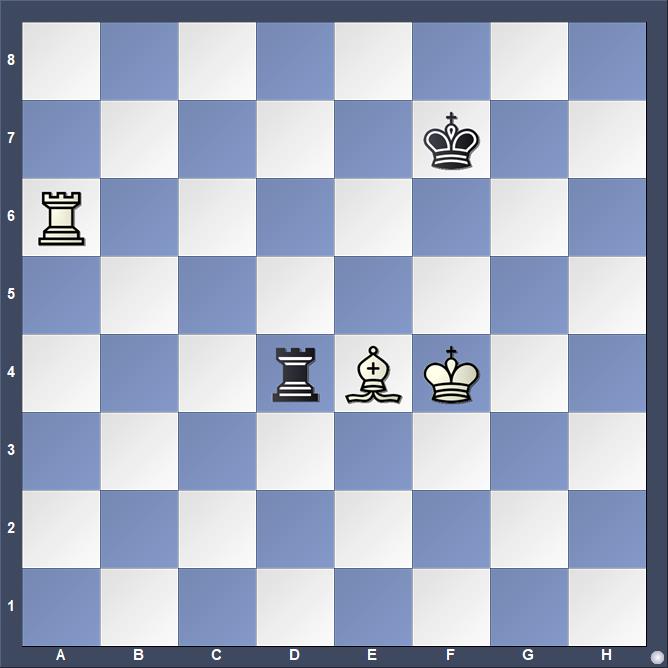
I had this position from which I created a problem for my opponent.

White to move
70.Ke5 Rd2 71.Ra7+

Driving the king to the back rank is White's only chance to create a winning advantage.

71...Kf8

Black finds the only square for the king.

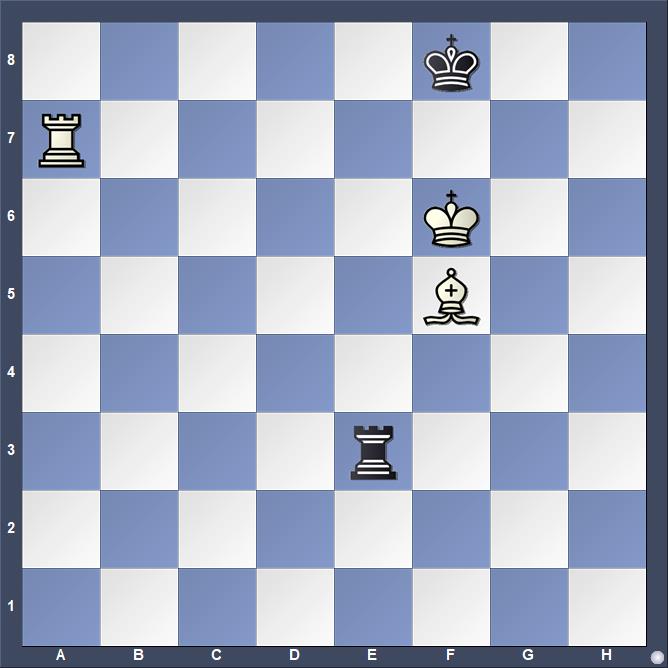
72.Bf5

Black to move
72...Re2+??

Black must play 72...Ke8

73.Kf6 Re3

White to move
Several of my students saw this position and were given a chance to win from the White side. I failed to find the winning plan and my students mostly played it the way I did with the same result. Then, I showed them how I and they could have played.

74.Rf7+

This move does not spoil the win, but nor is it the correct idea.

White wins quickly with 74.Rh7 Kg8 75.Rh1

Black to move
Analysis diagram
Black is in zugzwang.

a) 75...Rf3 76.Rd1 renews the mate threat and Black can delay longest by exchanging rook for bishop.
b) 75...Re2 allows Be6+ and exchanging rook for bishop is the only move to prevent immediate checkmate.

74...Ke8

74...Kg8 is no better.

Now, White forces a return to a position with a second opportunity to play it correctly.

75.Rh7

75.Ra7 is slower. 75.Rc7 is best, as it threatens checkmate.

75...Kd8

Black plays the most stubborn defense.

White to move
76.Rh8+??

Of course I knew, or should have known that driving the king off the back rank returns the game to a technical draw. I spent 13 seconds on this error.

76.Rd7+ was best, driving the king back towards mine. 76...Ke8 (76...Kc8 allows a discovery that picks up a rook) 77.Rc7 Kf8 and White can win with 78.Rh7 as above.

Lessons are tailored to the student's skill level.

Other advanced students were presented with a sequence of tactical positions to solve from classic games that every chess player should know. Working from a series of books that present 300 critical positions (Rashid Ziyatdinov, GM-RAM: Essential Grandmaster Knowledge [2000], and a trilogy by Thomas Engqvist, 300 Most Important Chess Positions [2018], 300 Most Important Tactical Chess Positions [2020], and 300 Most Important Chess Exercises [2022]), I am assembling study positions for my students. The link to a Lichess study is public.

Beginning students worked on checkmates in one and saw two short games: my worst OTB tournament loss and a recent online win with the same idea.

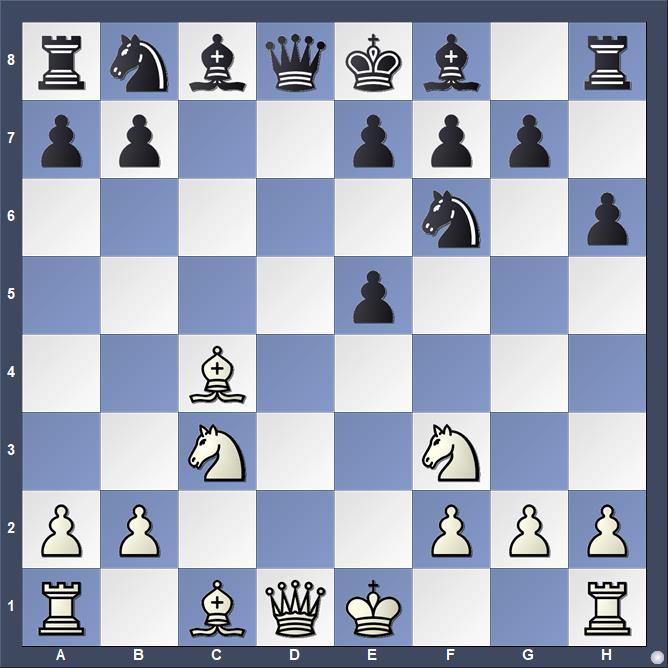
White to move
8.Bxf7+ deflects the king from defense of the queen (also see "Attraction").


22 May 2023

Misevaluation

After fortune shined on me in the earlier rounds, I was paired against Michael Cambareri on board one in the final round of the Inland Empire Open. We led the field with 3.5 each, followed by several players with 3.0.

I reached a comfortable position out of the opening and early middle game, but then failed to understand the demands of the position.

Stripes,James (1821) -- Cambareri,Michael (2005) [A80]
Inland Empire Open Spokane (5), 21.05.2023

White to move

18.Qf7?!

18.Qh6 now, would have been wise.
18.Qxg6 did not feel safe. Anticipating 18...Rg8, I missed 19.Rxf6 Rxg6 20.Rxg6 when White is better.

18...Qd6 19.Qg7

19.Bxg6 Rh8 20.h3 Kc7 21.Bf5 would have kept the advantage, but I was reluctant to snatch a pawn on the file where my king stood.

19...Kc7 20.Qh6 Rh8

White to move

21.Qf4

Planned and forced. Most of White's advantage has slipped away.

21...g5! 22.Qxd6+ Kxd6 23.Rae1

I believed that I was still better, but Michael's rooks were coming to life with threats that I feared more than necessary.

Black to move
23...Rh4!

Michael's defense against my intended e4 break picks up a tempo for doubling on the h-file.

24.g3 Rh6 25.e4

Long-planned and finally played. It is the best move, although I no longer believed so as the game developed over the next few moves. I had the sense that I had thrown away an advantage against Michael, as I have done in so many games.

Black to move

25...dxe4 26.Bxe4 Rah8

26...Nxe4 simplifies the ending in White's favor. 27.Rxe4

White to move

27.Bf5?

Thinking, wrongly, that I was clearly worse, I desperately sought counterplay in a series of harassing checks.

I rejected 27.Rf2! because I did not know how to meet 27...Ng4. Analysis with an engine shows that 28.Rf5! would have satisfied the demands of the position and left White with the better game.

Here also 28.Rfe2 would have been adequate against 28...Rxh2? (but Black has the better choice of 28...e6) 29.Bg2+-) 28...Rxh2 29.Rxg5 Nf6 30.Bg2+-.

27...Rxh2 28.Re6+

Although I was desperately trying to complicate a lost game, the engine says the position is equal.

28...Kd5

White to move

29.c4+??

A game losing blunder. Michael can take either pawn with a winning position. Michael expected 29.Rxe7 and his assessment that it was a better choice for me is correct. 29...Kxd4 30.Rxb7 Nd5 31.c3+ with equality.

29...Kxc4 30.Rxe7 Nd5?

A lucky break from my point of view.
30...Rh1+ 31.Kf2 R8h2+ 32.Ke1 Rxf1+ 33.Kxf1 Rxb2-+
30...Rxb2-/+

White to move

31.Rc1+ Kb3

31...Kxd4 walks into a little combination with a discovery and interference that picks up a rook. 32.Re4+ Kd3 33.Rh4+ Ke2 34.Rxh2++- 

32.Rxb7+ Ka2?

The rest is easy, except that my focus on winning the rook blinded me to checkmate.

32...Nb4 was the only defense that keeps the game very much alive for Black with difficult play for both sides.

White to move
Analysis after 32...Nb4

33.Rxc6 a5 34.Rc5 Rd2 35.Re7! would have been hard for me to find (35.Rd7 Rhh2=) 35...Rxd4 (35...Ka2! These engine lines are not clear to me at all.) 36.Rxa5.

Back to the position that did occur.

White to move

33.Bb1+ Ka1 34.Bh7+ 

I missed 34.Bd3+! Ka2 35.Bc4#, but the interference with the bishop was sufficient to provoke Michael's resignation.

1-0

Michael understood the game much better than I, but his errors came later and determined the final result. This game gave me first place in the event.

06 February 2019

Beating Your Dad at Chess

Game of the Week

My exercise set for the Knight Award has this position.

White to move

It is the exercise that my students find most difficult among the dozen in that set. The position arose in a game Paul Morphy played against his father when he was twelve years old.

An earlier position from this game appears as the third position in Thomas Engqvist, 300 Most Important Chess Positions (2018).

White to move

In the game, Paul Morphy's father, Alonzo, made several errors. Maybe he was not a very strong chess player. Maybe he sought to help build his son's confidence. Young Paul's moves are not in every case the first choice of today's engines, but his overall play demonstrates that already at the age of twelve, he understood the importance of rapid mobilization of his pieces and was not afraid to sacrifice material to exploit a vulnerable king.

Morphy,Paul C -- Morphy,Alonzo [C51]
New Orleans, 1849

1.e4 e5 2.Nf3 Nc6 3.Bc4 Bc5 4.b4 Bxb4 5.c3 Bc5 6.d4 exd4 7.cxd4

7.0–0 became a common reply in the 1860s. Both moves score well for White.

7...Bb6

7...Bb4+ is possible

8.0–0

Black to move

8...Na5

The elder Morphy neglects development, but as his son is usually credited with discovering the importance of development, our judgement should not be too harsh.

8...d6 would have been better.

9.Bd3 d5

Opening the e-file cannot be good for Black. The king's vulnerability will create the conditions for young Paul to show the skills that would become his signature.

9...Ne7;
9...d6

10.exd5 Qxd5

Father seems determined to help his son.

10...Ne7 11.Ba3 0–0 12.Qc2

11.Ba3 Be6 12.Nc3 Qd7

See Engqvist's position above.

13.d5!

Morphy understood that material does not matter when Black's king is vulnerable.

13... Bxd5

13...0–0–0 14.Qc2 (14.dxe6 Qxd3 15.exf7 Nf6 16.Be7)

14.Nxd5

My main line while looking at the position in Engqvist's book was 14.Bb5 c6 15.Re1+ Be6. I had not yet recognized the game as the source for my exercise.

14...Qxd5

White to move

15.Bb5+

Engines like 15.Re1+ Kd8 16.Be4 Qd7 (16...Nf6 avoids checkmate) 17.Qxd7+ Kxd7 18.Rad1+ Kc8 19.Bf5+ Kb8 20.Re8#

15...Qxb5 16.Re1+ Ne7 17.Rb1

Much better is 17.Rxe7+ Kf8 18.Ne5.

17...Qa6

This move offers White a forced checkmate.

17...Qd7 18.Rxe7+ Qxe7 19.Bxe7 Kxe7 White still has a decisive edge, but has much work remaining after his relatively weak move 17.

White to move

18.Rxe7+ Kf8 19.Qd5

There is a faster checkmate, but it is hard to fault Morphy for pursuing a checkmate in two that can be delayed through spite checks.

19.Rxf7+ Kxf7 20.Qd7+ Kf6 21.Be7+ Kg6 22.Qe6+ Kh5 23.g4#

19...Qc4

See my position for the Knight Award at the top of this post.

19...Bxf2+ delays the end with spite checks.

20.Rxf7+ Kg8 21.Rf8# 1–0

I beat my dad when I played him at age fifteen, but my play lacked the sort of combinations that Morphy displayed. No record was made of the game (see "My First Chess Book").

22 January 2018

Checkmate Data

It is commonplace to speak and write about checkmate patterns. Certain recurring checkmates happen over and over again in games no matter the skill level of the players. Of course, once players rise above a certain level, checkmates become rare due to resignation either due to a checkmate threat or one player gaining an overwhelming material advantage.

Do claims about checkmate patterns stand up to data from played games? It is a simple, albeit time consuming matter to examine every game in the database that ended in checkmate. It may be possible to name every pattern in these checkmates and then list them in order of frequency.

Running on my desktop, ChessBase was able to find every game in my largest database ending in checkmate in about one minute. As I prefer quality over quantity, my largest database is smaller than many others, containing a mere 5.9 million games.

In this database, 148,127 games end in checkmate.

The last piece to move was most often the queen, and presumably this piece was always giving the check that is checkmate in all of them. Queen moves account for 59% (87,894) of the games in this selection.

The rook is the last piece to move in 24% (35,473) of the games. Most often, the rook is likely giving check and mate. However, a rook move can produce a discovered check by bishop or queen.

A little more than 7% (10,990) of the games ending in checkmate involve a knight making the last move of the game. Some of these, no doubt will be discoveries, but it's a reasonable prediction that the knight is checking the enemy king in most of them.

A bishop moves to checkmate the opponent in 6% (8,898) of the games.

Pawn moves account for slightly more than 3% (4,847) of the games. It will be interesting to study how often the pawn itself delivers the decisive check.

King moves account for a mere 25 games. More than half of these are by castling, so a rook is giving checkmate. The king cannot deliver check, but it can cut off the escape of an enemy king.

For example, in this game between two youth players from 2005, White's king moved so as to check by the rook and cover one of the escape squares.

White to move

One of the games that ended with O-O# could have gone on two moves longer with better defense. The combination strikes me as instructive. It is from Suess -- Hurme 1969, a game played as part of team world championship qualifier.

White to move

21 March 2017

A Greco Miniature

Lesson of the Week

Most of the games of Gioachino Greco (1600-1634) are miniatures (games lasting few moves, 20-25 moves being the longest that might be so labeled). What can a young chess player learn from such games? Are they of any value to players who are no longer beginners?

Greco has been called the first chess master. In his day, players did not record their games while playing. However, Greco undoubtedly could remember his games after they finished. The games that he recorded in his notebooks, and periodically listed in small books that he game as gifts to his patrons may resemble games that he played. They certainly offered instruction in basic tactics to those players who sought instruction from him.

Greco,Gioachino -- Greco's Pupil [C36]
Model Game, 1620

1.e4 e5 2.f4 d5

This game is the oldest one in the ChessBase database with this move. Of course, there are very few games before Greco's, so that is no surprise. Nonetheless, there are two games in said database with White's second move, showing that the King's Gambit is indeed a very old opening. The next two with 2...d5 were played in 1837 by Baron Heydebrand Tassilo von der Lasa, once as White and once as Black. Those two games deviate from this one on White's fifth move.

3.exd5 Qxd5

The first important lesson that a novice chess player might gain from study of this Greco game is the danger of bringing the queen out too early. White gains time kicking the queen around. In ChessBase's PowerBook, which cuts out old games and games between weak players, there is only one instance of 3...Qxd5. White won in 17 moves. See comments at move 5.

3...e4 is better.

Angelo Lewis (Professor Hoffman) classes this Greco game as King's Gambit declined, offering 3...e4 as an improvement, which he calls the Falkbeer Counter-Gambit.* The Oxford Companion to Chess gives 2...d5 as the Falkbeer, and 3...e4 4. Bb5+ as the Nimzowitsch variation. There are other named variations proceeding after 3...e4. Falkbeer's loss to Anderssen in 1851 is the oldest in the database with this move. Howard Staunton also played the move in 1851, winning with Black.

3...exf4 is more popular among masters today.

White to move

4.Nc3 Qe6

Black threatens a discovered check that wins a pawn.

5.Nf3

Greco is willing to sacrifice the pawn for rapid mobilization. Who said that Paul Morphy was the first chess player to understand this idea? See "Principle of Development: Early History".

5.fxe5 was played both by and against the Baron 5...Qxe5+ 6.Be2 Bd6 and the Baron won with Black in 52 moves.

6...Bg4 and the Baron won with White in eighteen moves. The only game in PowerBook with 3...Qxd5 continued from this point 7.d4 Qe6 8.Qd3 c6 9.Bf4 Nf6 10.0–0–0 Bxe2 11.Ngxe2 Bd6 12.d5 Nxd5 13.Nxd5 cxd5 14.Qg3 Bxf4+ 15.Nxf4 Qh6 16.Rhe1+ Kf8 17.Qa3+ 1–0 Tolush,A (2496) -- Alatortsev,V (2482), Moscow 1948. The game was played in the Soviet Championship.

5...exf4+ 6.Kf2

6.Be2 would allow White to castle, but Greco has another idea in mind.

Black to move

Whose king is more vulnerable?

6...Bc5+

The temptation to check the opponent whenever possible is the cause of a great many positional errors that are routine in the games of beginning players. Perhaps this tendency could serve as the definition of a beginner: no matter how long you have played chess, if you play a move that checks the opponent without also having a second purpose, then you are a beginner.

6...Nf6 threatens Ng4+
6...Be7 might be best.

7.d4

White blocks the check, attacks Black's pawn on f4, and drives the bishop back.

7...Bd6

Black moves the bishop to safety and defends the attacked pawn.

8.Bb5+

This check has a second purpose: now the rook can move to e1, pinning the queen.

8...Kd8

Moving the king to get out of check is not required. Often, as in this instance, it is possible to block the check. Sometimes the checking piece can be captured.

8...Kf8 is presented as the move in this game in the ChessBase database. Francis Beale's collection of Greco games offers both Kd8 and Kf8 with the same concluding moves. Angelo Lewis (Hoffman's real name) also offers both.

8...c6 is better, but already Black's position is horrid.  9.Re1 Qxe1+ (9...Be5 10.Rxe5) 10.Qxe1+ Ne7 11.Bd3.

White to move

9.Re1 Qf5

9...Qxe1+ fights on longer. 10.Qxe1 c6 11.Bd3 and White has an overwhelming material advantage.

10.Re8# 1–0

This is the same checkmate pattern that we saw in Morphy's Opera Game.


*The standard print edition of Greco's games remains Professor Hoffman [Angelo Lewis], The Games of Greco (London 1900). This book is the source for the games in David Levy, and Kevin O'Connell, Oxford Encyclopedia of Chess Games, vol. 1 1485-1866 (Oxford 1981). Hoffman's main lines, but not his variations, are the games of Greco that can be found in databases and online. An older text offers many games and variations not found in Hoffman: Francis Beale, The Royall Game of Chesse-Play (London 1656).

20 February 2017

Black to Move

I failed this problem on Chess.com tactics trainer, but found the first two moves.

Black to move

27 January 2017

Solve This

Round two of the Spokane Chess Club Winter Championship brought me another victory, but only because my opponent miscalculated at the critical moment. I was objectively lost, but when he misplayed the attack, my fortunes turned in a hurry. A few moves later, I was up a piece and he graciously resigned.

White to move

He saw the correct move here, but missed the second move of the combination. As a consequence, he did not play the correct move. I showed him the solution during postgame analysis, although I, too, missed the shot during the game.

03 February 2015

Perceiving Threats

Lesson of the Week

Youth chess students in the after school clubs that I coach will be looking at a position from a game played by a young player who would go on to become World Champion. Many chess scholars regard Alexander Alexhine (1892-1946) as the best to ever play the game of chess. This position comes from a correspondence game against Konstantin Alekseyev Vygodchikov, who was Alekhine's age. Alekhine had Black. In 1928, Vygodchikov would share first place with two others in the Belarusian Championship. Alekhine had become World Champion one year earlier.

This game was played 1909-1910.

Black to move

What did Alekhine play? Why?

Some students may see a second position from this game.

Black to move
After 29.Rxg6
Who stands better? Why?

22 November 2014

Problems with Knights

These six chess problems all feature knights in a critical role. They were assembled as a problem solving contest for the Black Knight's Joust, a youth chess tournament that I am directing today. All entries with six correct answers submitted before the start of the last round become eligible to win a prize.

At the King's Clash two weeks ago, the solution to all six problems was the move of a king. One entry had six correct answers. The young player won a book.

The knight's move may not be the first in the winning combination. It is often the last.

The first two are from Gioachino Greco, c.1623. Number three is based on one in several problem books. Number four come from a game won by Lionel Kieseritzky in 1842. The fifth, from Horwitz--Bledow (1837), contains a common idea that can arise in the opening. Problem number six is from the 21st match game between Louis-Charles de la Bourdonnais and Alexander McDonnell (1834).


Black moves first

1.

2.

3.

4.

5.

6.

19 November 2014

Lesson of the Week

The lessons this week focus on elementary tactics that build a foundation for more complex tactics. They stem from a major blunder by the current World Champion. Magnus Carlsen is the highest rated player in history and regarded by growing numbers as the strongest player ever. Even he makes mistakes, however.

In the sixth game of the current World Championship match with Viswanathan Anand, Carlsen played 26.Kd2 to reach this position.

Black to move

Anand was in some time pressure and missed the correct response. He could have gained an advantage that would have made a win in this game likely. He went on to lose and remains one point behind.

My advanced students are asked to find the combination that Anand could have played.

Some of them are presented with other positions inspired by this game, which was a Sicilian Kan.

Black to move


This position arose in Ricardi -- Polgar,J 2001. It is one of the reference games for the Kan in the Encyclopedia of Chess Openings (ECO)

Black played 25...Kg8 and the game was drawn by repetition a few moves later. Pablo Ricardi sacrificed a rook to expose Black's king. How would he have continued the attack if she had played 25...Ke7?

Beginning students are shown the solution that Anand missed in the first diagram and are given a worksheet with six elementary discovery problems created after a pattern found in Bruce Pandolfini, Beginning Chess (1993). Each problem in Pandolfini's book has ten pieces or fewer. I have found a lot of value creating worksheets for my students with similar problems.

Beginning Tactics: Discovery

White has a winning move in each of these positions.


12 December 2013

Checkmate Threats

Mikhail Tal faced the threat of checkmate in one against Johann Hjartarson in Reykjavik in 1987. The game as a whole shines as an example of Tal's attacking skill late in his career.

White to move


How did Tal defend?

A student with whom I am playing an unrated training game on Chess.com brought this game to my attention. We are exploring the main line of the Spanish Opening.

13 September 2013

Winning, Losing, and Neither

Lately, I have been controlling my obsession with online blitz. Nonetheless, today when the feed for the Sinquefield Cup appeared to be malfunctioning, I gave up on watching Grandmasters play. Instead, a sequence of opponents helped me add half a dozen illustrations of subpar play to my database. The time control was game 15.

In my first game, I seized the opportunity to double my opponent's pawns, only to discover that my plan left me down a pawn. After further errors, I was behind two pawns. My opponent gave one back and he eagerly exchanged rooks into an opposite colored bishop ending with an extra pawn.

Black to move

I happily played 34...Rxe3+. We continued 35.Kxe3 f6 36.h3 Kg5 37.Kf3 Kh4 38.Kg2 f5 39.Be6 f4 40.Kf3 Bc5 41.Kxf4 Bxf2

White to move

I was confident that I could hold this position by trading my bishop and a-pawn for his two queenside pawns. Nonetheless, we played another 25 moves before my opponent stalemated me.

My second opponent also ended up with doubled f-pawns, and for awhile I thought that I had good chances to score.

White to move

24.Be4 Qc5 25.Rh4 Rg7 26.Re1??

Evidently, I am blind to discovered attacks.

Black to move

My opponent strung me along for a few moves. 26...Rag8 27.g3 Bxe4 28.Rhxe4 d3+-+. I played another twelve moves before resigning.

The third game was strange, and I had some problems that should have given my opponent a clear edge. He missed the right plan. When he won a pawn, I saw my opportunity.

Black to move

23...Rf7!-+.