Showing posts with label deflection. Show all posts

22 June 2024

Shifting Focus

For 34 consecutive days, I spent the first part of my day solving puzzles on chessdotcom. At some point during this time, it became a daily commitment. That commitment ended yesterday when I solved a single exercise from the book Improve Your Chess Tactics (2012) by Yakov Neishtadt. This book has sat idly on my bookcase for a year or more, but recently I started reading it. A few days ago, I solved the first five exercises after my chessdotcom session. Yesterday morning, I opted to start with the book.

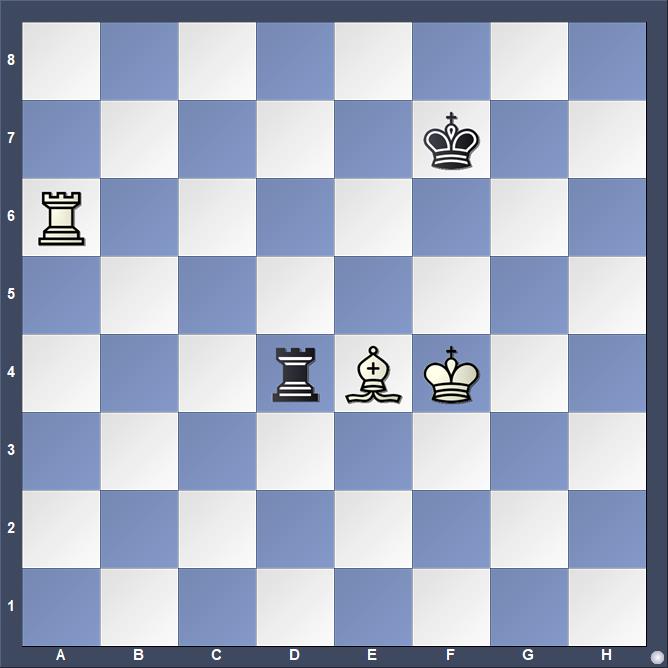
Black to move
The position arose in Panno -- Bravo Sedamanos, Fortaleza (1975). It took me a few minutes, but I found the correct moves. The idea was known before solving because Nieshtadt organizes the book by themes. Hence, solving primarily involved calculation to verify the implementation of the deflection idea and the correct sequence. Most of my effort was expended finding the best reply by White.

After writing my answer, I checked my answers to the first six exercises in the back of the book. I failed one.

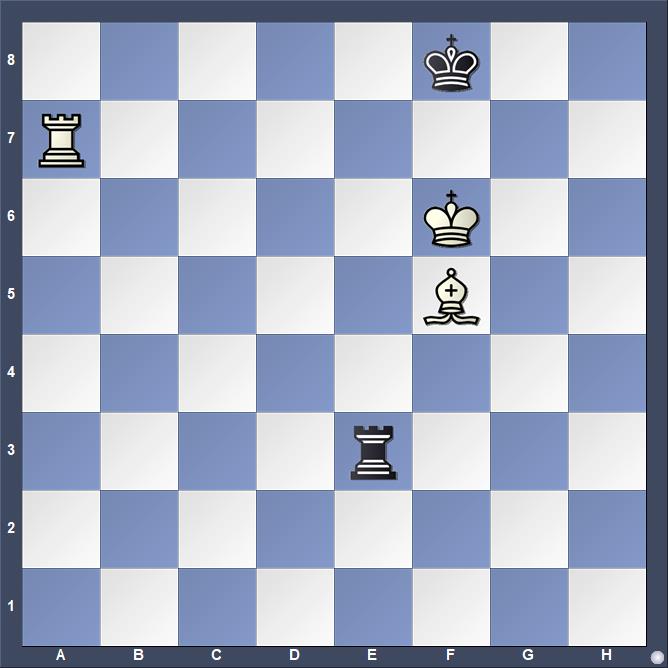
White to move
The position is presented by Nieshtadt as from Belov -- Ongemakh, Narva 1984. After seeing that I failed, I instantly saw the refutation of the move I had written.

Solving from books differs from solving for rating with online puzzles. Both methods have their benefits. I remain committed to doing both, but a daily commitment to one gets in the way of the other.

During my 34 day run from 18 May to 20 June, I attempted 599 puzzles, correctly solving 356. My rating started at 2993 and ended at 3051. It peaked at 3143 on 15 June and was as low as 2849 on 30 May.

I will return to the website and make a push to get the rating back above 3100 now that I've crossed that mark a couple of times. Also, I like to show my students that I solved more puzzles in the past year than the number of games I've played, although that number is considerable.

My focus has shifted towards books. Neishtadt, Improve Your Chess Tactics is one of the better tactics books available. Someone recommended it to me in a comment on this blog several years ago. It was a good recommendation for which I am grateful.

10 November 2023

The Week's Lessons

My own failures often become lessons for my students. Tuesday morning I had a winning position in what should have been a drawn ending, misplayed it, and managed to win on the clock after my opponent recovered from his error. I had briefly studied rook and bishop vs. rook ten years ago after watching Levon Aronian and Fabiano Caruana play out a drawn ending for 37 moves in the Tata Steel tournament in Wijk aan Zee (see "Tata Steel Chess, Final Round" and "Rook and Bishop versus Rook").

I had this position from which I created a problem for my opponent.

White to move
70.Ke5 Rd2 71.Ra7+

Driving the king to the back rank is White's only chance to create a winning advantage.

71...Kf8

Black finds the only square for the king.

72.Bf5

Black to move
72...Re2+??

Black must play 72...Ke8

73.Kf6 Re3

White to move
Several of my students saw this position and were given a chance to win from the White side. I failed to find the winning plan and my students mostly played it the way I did with the same result. Then, I showed them how I and they could have played.

74.Rf7+

This move does not spoil the win, but nor is it the correct idea.

White wins quickly with 74.Rh7 Kg8 75.Rh1

Black to move
Analysis diagram
Black is in zugzwang.

a) 75...Rf3 76.Rd1 renews the mate threat and Black can delay longest by exchanging rook for bishop.
b) 75...Re2 allows Be6+ and exchanging rook for bishop is the only move to prevent immediate checkmate.

74...Ke8

74...Kg8 is no better.

Now, White forces a return to a position with a second opportunity to play it correctly.

75.Rh7

75.Ra7 is slower. 75.Rc7 is best, as it threatens checkmate.

75...Kd8

Black plays the most stubborn defense.

White to move
76.Rh8+??

Of course I knew, or should have known that driving the king off the back rank returns the game to a technical draw. I spent 13 seconds on this error.

76.Rd7+ was best, driving the king back towards mine. 76...Ke8 (76...Kc8 allows a discovery that picks up a rook) 77.Rc7 Kf8 and White can win with 78.Rh7 as above.

Lessons are tailored to the student's skill level.

Other advanced students were presented with a sequence of tactical positions to solve from classic games that every chess player should know. Working from a series of books that present 300 critical positions (Rashid Ziyatdinov, GM-RAM: Essential Grandmaster Knowledge [2000], and a trilogy by Thomas Engqvist, 300 Most Important Chess Positions [2018], 300 Most Important Tactical Chess Positions [2020], and 300 Most Important Chess Exercises [2022]), I am assembling study positions for my students. The link to a Lichess study is public.

Beginning students worked on checkmates in one and saw two short games: my worst OTB tournament loss and a recent online win with the same idea.

White to move
8.Bxf7+ deflects the king from defense of the queen (also see "Attraction").


22 August 2018

Calculation

Some annotations in Chess Informant 129 brought home to me the level of calculation that is necessary in Grandmaster play. While running a local chess tournament last weekend, I spent some idle time reviewing an issue of Informant that I happened to have on the computer that I was using for pairings. I took this position into the skittles room for some participants to work on between rounds.

White to move

It is White's move 24, and SP Sethuraman, who won this game enroute to the Asian Championship, said that his opponent missed this tactic when playing a7-a5 three moves earlier.

Black to move

Sethuraman suggests 21...a6 22.e5 Nd5 23.Nxd5 cxd5 Qh5 "is given by the computer as equal, but I would prefer White here" (SP Sethuraman, "Through the Fire," Informant 129, 71).

After 21...a5 22.e5 Nd5 (22...Nd7 was played in the game) 23.Nxd5 cxd5, the b5 pawn is weak.

The game continued:

21...a5 22.e5 Nd7 23.Bf5 Nxe5 and we have the diagram at the top of this post, where Sethuraman played what he called a "cute little tactic" (71).

29 March 2018

Deflection

Checkmate is forced from the first position on the worksheet called Bishop Award: Checkmate and Tactics that I give to my students. The position comes from Maczuski -- Kolisch, Paris 1864. That exercise asks students to find White's fourteenth move and the idea that girds it.

The position below is before White's move 12 in the same game. The forced checkmate is not yet on the board, but White has a winning idea.

White to move

Leave your answer in the comments.

23 May 2017

Seeing Patterns

Tal's Winning Chess Combinations (1979) has influenced my perception. Last week, I read the first chapter of this book by Mikhail Tal and Victor Khenkin, which exists under several titles with and without Tal's authorship. This chapter concerns the rook and corridor checkmates and checkmate threats. These corridor vulnerabilities are most often back-rank weaknesses, but there are other corridors, including a position where a rook must be given up to avoid checkmate between two walls of pawns alongside the f-file.

The large number of deflection combinations to threaten checkmate has made me more alert to these possibilities when going through other games. Of course, these ideas are not new to me. I was familiar with the idea even before Lev Alburt's Chess Training Pocket Book (1997), which I read fifteen years ago, stimulated my imagination for the maneuvers with this exercise.

White to move

Alburt gives the exercise the title, "Defection Detection". It is number 93 in the book.

This morning, I was reading Baskaran Adhiban's annotations to his draw against Wesley So at the Tata Steel Chess Tournament in January when the deflection motif jumped into my perception. After 25.Bxa7, So could have played 25...Rxa7. He did not, playing 25...Bxc3 instead.

What if he had grabbed the bishop?

White to move

Immediately, I saw 26.Qd5+ Kh8 27.Qxe5. However, nothing compels the suicidal 27...Rxe5. So would have had choices: 27...Raa8, 27...Qb6+, and others. In Adhiban's case, his offer of a bishop wins So's bishop, but no more. The game, as he points out, was, "[a]n exciting draw with lots of interesting twists!" (Chess Informant 131, 49).

03 May 2017

Breaking Down Tactics

Some tactics training sessions are long; others short. Yesterday morning, I attempted three problems on Tactic Trainer on my iPad. This app, which sells for $2.99, is one that I have used off and on for several years. As the database of problems are stored on my device, it is useful when I go off the grid--away from internet service. Using this app a few years ago on a fishing trip, I was able to spend three hours solving exercises while making coffee and breakfast for everyone. I reviewed this app in "Chess Tactics Training on the iPad" (February 2013).

I cut yesterday's training session short because it seemed necessary to review. I solved the first problem quickly and correctly. What did I do right? How did I see the combinations? It is worth breaking the problem down to understand what I saw and understood in a matter of seconds. I failed the second problem by choosing the wrong second move. My move was clearly winning, but there was a better move. Was I hasty or shallow in my thinking? The third problem was another success, but I thought that the twenty to thirty seconds I used was unreasonably long for such an easy problem. Why did I require so much time?

One drawback of this app, in contrast to ChessTempo, Chess.com's tactics, and similar training tools on several other websites, is that it does not record my solving time.

Black to move

1...Qxd3!

Instantly I saw that Black attacks the knight twice and White defends it twice. That alerted me to a possible tactic if the king could be driven away after an exchange on d3. It took a few seconds to see Black's control of d2 and e1 with the bishop, and also to see the possibilities of thrusting the f-pawn forward. Is the rook on f8 necessary to the combination? It is.

2.Qxd3 f3+ 3.Kf1

3.Qxf3 is also possible, and that reveals the importance of the rook on f8. 3...Rbxf3. I recall calculating also 3...Rfxf3 and observed that both the bishop and rook cover f8 to meet 4.Rc8+.

3...Rxd3

Black has won a bishop.

It seems that quickly recognizing the deflection tactic was the key to solving this exercise. Some calculation was necessary as well.

White to move

1.Nxf6+

The first move was obvious, as the exchange either decoys Black's queen into a pin or removes the defender of the knight.

1...Qxf6 2.gxf4

I chose 2.Nf3 and failed. I overlooked 2...h6, although then White is still winning and still has 3.gxf4, although 3.Rg1 is better. I saw one pin, but missed possible pins on the g-file.

Acoording to my computer, the best line continues 2...Qxf4 3.Bxg5 Qe4+ 4.f3. I do not know how far the exercise would have extended had I played 2.gxf4.

What causes me to see one pin and miss another? What causes me to overlook 2...h6? Distraction and haste could be factors. I solved this exercise quickly. Also, in the morning during coffee time, my wife and one or more dogs are with me in the living room. But, I think there is something else. Something curable through training.

Black to move

1...Rg1+ 2.Kxg1 Qh1#.

This problem was easy, and I solved it correctly. However, I first started calculating lines that begin 1...Qh3+ and also glanced at 1...Bh3+. It became clear that these lines did not produce checkmate quickly. Only when these lines appeared futile, did I see the correct solution. That may have been after twenty seconds, or it may have been as long as a minute.

As in the previous exercise, I saw a move that looked good and began to pursue it. In both cases, there was a better move. In the third exercise, I found the better move before making my move. In the second exercise, I played a good, but not the best move.

It is good to remember the adage frequently attributed to Emanual Lasker, and pushed back a few years by a reference on Wikipedia, "When you see a good move, look out for a better." As an historian, I must point out that Domenico Ponziani should be credited with the saying.
[I]t is necessary always to bear in mind these prudential rules, viz.: having a good move, to seek for a better; having a small but certain advantage, not to risk it for a greater but uncertain one. Dominico Ercole del Rio, The Incomparable Game of Chess, trans. J.S. Bingham (London 1820), 35-36.
Bingham incorrectly attributes this work by Ponziani to Ercole del Rio, as is pointed out in "Domenico Lorenzo Ponziani," The Chess World, vol 2 (1867), 327-336, an article reprinted from American Chess Monthly.

As a chess student, these historical forays chasing footnotes are less critical than the advice itself. Through three exercises yesterday, I have identified an area to work on: flexibility in calculation. Seeing one pattern, I need to remain alert to others. When I do my tactics exercises, I must slow down. Parts 3 and 4 of David Pruess's video series, "4 Exercises to Become a Tactical Genius," offer suggestions for exercises that specifically address these calculation errors.

21 April 2017

Tactics: Basic and Advanced

Lesson of the Week

Bobby Fischer has been my theme this week. Most of my students have seen various positions derived from his brilliant win against Donald Byrne at the Rosenwald Trophy Tournament in New York, 1956. The whole game is posted at "Byrne -- Fischer, New York 1956". The students in my advanced club did not have difficulty finding the smother checkmate that might have occurred, but struggled to work out the game's finish without moving the pieces.

Black to move
After 18.Bxe6 (not played)
 Black to move
After 36.Kf1
Fischer found a checkmate in six, but there was one in five. Either would be acceptable if my young students could describe the sequence in chess notation without moving the pieces.

Students in my clubs were also presented with the worksheets Essential Tactics 7-10. There was no expectation that they would complete all four, but only the suggestion that they spend fifteen minutes solving exercises before playing chess.

These exercises are extracted from my eBook, Essential Tactics: Building a Foundation for Chess Skill (2017). Originally created four years ago as the worksheets Beginning Tactics 1-18, I have revised them as Essential Tactics 1-25. The same 150 exercises are on the worksheet sets and in the book. However, the first set of worksheets used chess pieces in some of the diagrams that the students found confusing. I switched all to the pieces ChessBase calls Fritz (used in the diagrams in the post). The number of worksheets increased in the revised set because each sheet contains six exercises. In the original series, worksheets 5-18 had nine exercises each.

To my surprise, my top second grader struggled with this exercise.

White to move

A few of the exercises on Essential Tactics 10 get to the core of finding two move combinations.

White to move

White to move

19 April 2017

Byrne -- Fischer, New York 1956

"Game of the Century"
It was quite an experience to watch [Bobby Fischer] during the critical stage of the game. There he sat like a little Buddha, showing his moves with the calm regularity of an automaton.
Hans Kmoch, "Game of the Century," Chess Review (December 1956)
Hans Kmoch, as manager for the Manhattan Chess Club, directed tournaments there. The Third Lessing J. Rosenwald Trophy Tournament took place 7-24 October 1956 at the Manhattan Chess Club and the Marshall Chess Club. Fischer was invited because he had won the U.S. Junior Championship in July, the youngest player ever to do so. The Rosenwald tournament was the first time that he played against the top masters in the United States. His round 8 win against Donald Byrne won the tournament's brilliancy prize and was dubbed the "game of the century" by Kmoch.*

Kmoch wrote that the game, "matches the finest on record in the history of chess prodigies" (Kmoch, Chess Review, rpt. in Bruce Pandolfini, The Best of Chess Life and Review, vol. 1, 1933-1960 [1988], 525).

This game has been annotated many times. For my annotations, I went through the game several times. At several critical positions, I wrote my anticipated variations without moving the pieces. After recording these lines, I checked mine against Garry Kasparov, My Great Predecessors, part IV Fischer (2004). I then checked some of my lines with Stockfish 7.

This game strikes me as a good one for honing a player's calculation skills. It is among my candidates for "best game ever played."


Byrne,Donald -- Fischer,Robert James [D97]
New York Rosenwald New York, 1956

1.Nf3 Nf6 2.c4 g6 3.Nc3 Bg7 4.d4 0–0 5.Bf4 d5 6.Qb3 dxc4 7.Qxc4 c6 8.e4 Nbd7 9.Rd1 Nb6 10.Qc5?! 

10.Qb3 seems better.

10...Bg4 11.Bg5?

11.Be2 seems necessary.

11...Na4!

This move stunned me when I was playing through the game on a chess board last week. On the one hand, it is a simple deflection combined with a threat to remove the guard of the e4 pawn. On the other hand, Black cannot win a pawn, but rather offers an exchange sacrifice. Fischer had to calculate several lines. In all of these, the vulnerability of White's king proved decisive.

White to move

This position was on my board at the dining room table for most of the weekend. I returned to it several times to study and record possible variations.

12.Qa3

Alternatives begin with 12.Nxa4 Nxe4 and then:

a) 13.Bxe7 was the first line I recorded in my notes. 13...Re8 is the computer's second choice (The engine prefers 13...Qc7 14.Bd6 Nxd6) 14.Bxd8 Nxc5+ (Kmoch has this line, but revereses the order of the previous two moves) 15.Be2 Nxa4 16.Bh4 Nxb2 and Black is clearly better.

b) 13.Qxe7 was my second line. 13...Qxe7

My analysis falls short here. The engine prefers 13...Qa5+ 14.b4 Qxa4 15.Qxe4 Rfe8 16.Be7 Bxf3 17.gxf3 Bf8 Garry Kasparov credits Sergei Shipov with this line. Clearly Black is winning.

Continuing my line: 14.Bxe7 Rfe8 15.Be2 (The engine prefers 15.Bd3 ) 15...Rxe7 16.0–0 (The engine prefers 16.h3 ) 16...b5 17.Nc3 Nxc3 18.bxc3 Rxe2 Black is ahead a piece.

c) 13.Qc1 Qa5+ 14.Nc3 Bxf3 15.gxf3 Nxg5 is offered by Kasparov. I did not look at this line.

d) 13.Qb4 Nxg5 14.Nxg5 Bxd1 15.Kxd1 Bxd4–+ Kasparov. Another line that I failed to examine.

My third line continued:

e) 13.Qa3 Nxg5 14.Be2 Nxf3+ (Stockfish prefers 14...Bxf3 15.Bxf3 Qa5+ 16.Nc3 Qxa3 17.bxa3 Nxf3+ 18.gxf3) 15.Bxf3 Bxf3 16.Qxf3 and Black is winning.

12...Nxc3 13.bxc3 Nxe4 14.Bxe7 Qb6

White to move

15.Bc4

What if White accepts the exchange sacrifice?

15.Bxf8 Bxf8 16.Qc1

I also considered 16.Qb3 Qxb3 (Kasparov gives 16...Nxc3, attributing the suggestion to Yuri Averbakh) 17.axb3 Nxc3 18.Rd2 Re8+ 19.Be2 Bb4-+

16...Re8 17.Be2 Nxc3

Analysis diagram after 17...Nxc3
I spent a lot of time trying to find a defense for White here. Instead, I found only lines leading to checkmate or to an overwhelming material advantage for Black.

18.Rd2

(Stockfish prefers 18.Qxc3 Bb4 and there was no doubt in my mind that Black was winning here)

18...Rxe2+ 19.Rxe2 Nxe2 20.Kxe2 Qb5+ 21.Ke1

(21.Kd1 seems best 21...Qd3+ 22.Qd2 Bxf3+ 23.gxf3 Qxf3+ 24.Kc2 Qxh1-+)

21...Bb4+ 22.Kd1

(22.Qd2 Bxd2+ 23.Kxd2 [23.Nxd2 Qe2#])

22...Qd3+ 23.Qd2 Qxd2#

15...Nxc3 16.Bc5

I considered 16.Qxc3 Rfe8 17.0–0 is Stockfish's choice, as it was mine (I did not look at Kasparov's line 17.Bxf7+ Kxf7 18.Ng5+ Kxe7 19.0–0 Bxd1 20.Rxd1) 17...Rxe7 and Black has a clear edge.

16...Rfe8+ 17.Kf1 Be6!!

White to move

18.Bxb6

After the possible 18.Bxe6, I spent a lot of time looking at complex and unclear lines before I saw Fischer's plan: 18...Qb5+ 19.Bc4 Qxc4+ 20.Kg1 Ne2+ 21.Kf1 Ng3+ 22.Kg1 Qf1+ 23.Rxf1 Ne2#.

I also saw 18.Qxc3 Qxc5 19.dxc5 Bxc3 20.Bxe6 Rxe6.

After Fischer's queen sacrifice, the moves seemed rather forcing and I did not look at variations again for many moves.

18...Bxc4+ 19.Kg1 Ne2+ 20.Kf1 Nxd4+ 21.Kg1

I did not examine 21.Rd3 axb6.

21...Ne2+ 22.Kf1 Nc3+ 23.Kg1 axb6 24.Qb4 Ra4 25.Qxb6 Nxd1

White to move

26.h3

I did not examine 26.Qxb7 Bd5 27.Qd7 Re2.

26...Rxa2 27.Kh2 Nxf2 28.Re1 Rxe1 29.Qd8+ Bf8 30.Nxe1 Bd5 31.Nf3 Ne4

Here it seems to me that White is running out of moves. He has not been in the game since capturing Fischer's queen. In fact, he was lost before that. His role is to make the moves that permit the young Fischer to demonstrate his skill.

32.Qb8 b5

Kasparov mentions 32...Kg7.

33.h4 h5 34.Ne5 Kg7 35.Kg1 Bc5+

White to move

36.Kf1

I knew that 36.Kh2 would lose quickly, but my Ra1 is inferior to 36...Nd2!

I saw 37.Qc7 (37.Nf3 Bd6+) 37...Bg1+ 38.Kh1 Nf2#.

36...Ng3+

36...Bc4+? 37.Nxc4.

I found another checkmate as fast as Fischer's: 36...Rf2+ 37.Ke1

37.Kg1 loses faster 37...Rf4+ 38.Kh2 Rxh4#.

37...Bb4+ 38.Kd1 Bb3+ 39.Kc1 Rc2+ 40.Kd1 (40.Kb1 Nc3+ 41.Ka1 Ra2#) 40...Nf2#.

37.Ke1 Bb4+

Kasparov points out a faster checkmate: 37...Re2+ 38.Kd1 Bb3+ 39.Kc1 Ba3+ 40.Kb1 Re1#.

38.Kd1 Bb3+ 39.Kc1 Ne2+ 40.Kb1 Nc3+ 41.Kc1 Rc2# 0–1

After this game, the world noticed Bobby Fischer. Within a few years, he became a leading candidate for a future World Championship match. When he finally reached the summit, he gave up on chess. Of course, there were reasons. He set conditions that were not met wholly.


*For some of the historical details concerning this tournament, I am indebted to John Donaldson, and Eric Tangborn, Bobby Fischer: The Early Years: 1943-1962 (Amazon Digital Services, 2017).


15 April 2017

Lesson of the Week

All of my students this week saw this position with an opportunity to suggest the best move. Many succeeded. Some of my students saw the whole game, which is posted at "Botvinnik -- Capablanca, AVRO 1938".

White to move

02 March 2017

Learn from Others' Errors

My students this week are seeing a series of positions from my games in the 25th Collyer Memorial Chess Tournament. From the same positions, the lessons vary due to skill levels of my students. These students can learn from my error in one game, and the errors of my opponents in others.

In the first position, I erred and lost the game. My error is an instructive tactic that might work in other circumstances.

White to move

I played 52.e6+ with the intent of deflecting Black's king from defense of g6. After 52...Kxe6 53.Kxg6, the game would have been drawn. However, my opponent played 52...Kg7! As it turns out, his move wins. It is also the only winning move after my attempted deflection.

Some of my students are learning this deflection tactic for the first time. For them, understanding how it might have worked is more important than comprehending why it failed.

Most of this game is presented with some detailed discussion at "Stronger King".

The second position comes from my first round game. My opponent had a tactical shot that she missed. After her move, I immediately eliminated the vulnerabilities that made this tactical knockout possible.

White to move

My opponent played 25.Bd2 and then I removed my rook from the e-file.

She could have played 25.Bxb6, capturing a pawn with a discovered attack on my rook. If I capture the bishop, I lose quickly. 25...cxb6 26.Rxe8 wins a rook for bishop and pins the queen against the king, winning it for a rook. Hence, I would have been forced to play 25...Rxe1 and after 26.Rxe1 the problem of the pin remains, so 26...Re7 27.Bxa5 when White has gained two pawns on the queenside for no cost and the bishop now guards White's vulnerable rook on e1.

I often say there is no luck in chess, but I was lucky that my opponent missed this tactic.

From the third position, my opponent executed a fork combinations that forced the exchange of his two knights for one of my rooks and a pawn. He failed to anticipate, however, my in-between move. In chess, there are two names for an in-between move. There is a German word, zwischenzug, and an Italian, intermezzo. These words mean the same thing. Chess students will find both words used interchangeably by different writers and speakers.

Black to move

21...Ngxe3 22.fxe3 Nxe3 23.Qe2 Nxf1

I need to capture this knight on f1, but before I do, I have my in-between move. Because my move gives check, the knight does not get time to escape. The importance of my in-between move is not the check, but that it gains a pawn and protects my pawn on d6.

24.Qxe6+ Kh8 25.Rxf1

My d6 pawn was vulnerable and is now secure. Because it is so far advanced, it is also extremely dangerous. After my opponent offered the exchange of queens, I was left with an overwhelming advantage due to the the queening threat of my advanced pawn.

My opponent could have played 21...Qxe6. Then, both players have chances as the game continues.

24 January 2017

Blitz is Hard

My Chess.com blitz rating has risen to dangerous heights, making a fall inevitable. When that fall comes, my self-discipline will be tested. Will I continue to limit myself to a small number of games each day and analyze them afterwards? Will I resume poor habits that reveal my blitz addiction?

Last Tuesday, I finally surpassed my own personal best blitz rating of 2005 from February 2016, rising to 2015. The next day. I lost my first game, then won two and quit. My rating lifted to 2015. Thursday, I achieved the third new peak in three days--2041--again with one loss, followed by two wins. I played two games on Friday, none Saturday, and two on Sunday and my rating remained at 2041. Yesterday, I lost two, but then played two more and won both, achieving a fourth peak in seven days--2043.

The crash occurred today with four straight losses. The fourth game was difficult. I was certain that I was winning during the messy finish. After my opponent's blunder, 39.Rdd2??, I had this position.

Black to move

39...Qb3+ was obvious enough. 40.Kb5 and now what. I have 25 seconds and my opponent 21. There is no increment.

I went on to lose this game. When I analyzed it later, I started with this position (engines off) and immediately thought that 40...Kh2 might have been better. 41.c6 seems a viable try when 41...Rd5+ is met with 42.Rc5 and Black does not have a checkmate in sight.

Turning on the engine revealed that the best move was 40...Rd5, but also that my move was good enough to maintain a decisive advantage.

41...c6+ Kb6

Black to move

The game concluded 41...Rxd4?? 42.Qe8+ Bd8+ 43.Qxd8+ Rxd8 and I resigned before my opponent could play 44.Rxd8#.

Bringing the bishop to d8 was the correct idea, but there was no reason to open the d-file for my opponent's rook. With enough time to calculate, I might have found 41...Rd3!! This move frees the d8 square for the bishop, while also protecting the bishop on its current square.

However, if White snatches the rook, it also seems to offer his king escape.

42.cxd6 Bd8+ 43.Kc5 and now Ka7

White to move
Analysis after 43...Ka7
44.Qxc6 is White's only way to avoid checkmate.

44...Bb6# was threatened. If White tries to provide an escape route for the king with 44.d7, then 44.Be7+ deflects the queen 45.Qxe7 Qd5#.

I had nineteen seconds remaining when I played 41...Rxd4. That was not enough for me to work out the correct plan.

I played one more game after this loss, which I won. Then, I quit for the day. At least my current rating of 2021 is higher than it was last Tuesday.

01 March 2014

Tactical Success

When I play blitz or rapid chess, I miss a lot. Even slower time controls do not prevent missing things. However, under time pressure, tactical mistakes are the norm. In the positions below, however, I found the correct move.* All come from one day's rapid play online.

Black to move

White to move

Black to move

I was hopelessly lost in the next game, but my opponent made a few errors to give me this nice position.

White to move

Black to move


*"Correct" is defined as playing the move that Stockfish prefers.

28 February 2014

Simple Deflection

Black to move

Black's pawn will promote. Alas, White managed to win this pawn and the game.

27 February 2014

Two Exercises

Lesson of the Week

Knowledge of tactical motifs open a chess player's imagination to the possibilities. Accurate calculation verifies whether such possibilities should be played. These two exercises may prove difficult for scholastic players, but they are almost routine for strong class players. They both stem from play on the Free Internet Chess Server (FICS).

White to move

Black to move

06 December 2013

Lesson of the Week

This week, young players were presented a position from a game played by Jacob Henry Sarratt in 1818. Few of Sarratt's games are recorded, and in most cases his opponent is not named. Sarratt wrote chess books and frequented a coffee house in London where he played and taught chess for pay. He has been called England's first chess professional. He called himself the chess professor.

White to move

Here is the whole game with a few comments. Bold type is the game; normal type are comments and possible variations.

Sarratt,Jacob Henry -- NN [C38]
London, 1818

1.e4 e5 2.f4 exf4 3.Nf3 g5 4.Bc4 Bg7

4...g4 5.0–0 d5 (5...gxf3 6.Qxf3 was played in several Anderssen -- Zuckertort battles) 6.Bxd5 gxf3 7.Qxf3 Qg5 8.d4 Bh6 9.Nc3 Ne7 10.e5 c6 11.Ne4 Bg4 12.Qf2 Qg7 13.Nd6+ Kd7 14.Bxf7 Be6 15.Bxf4 Bxf4 16.Qxf4 Na6 17.Bxe6+ Kxe6 18.Nxb7 Raf8 19.Qe4 Rhg8 20.Rf6+ Kd7 21.Rd6+ Kc7 22.Na5 Nb4 23.a3 Rf4 24.Qe2 Rg4 25.g3 Rxg3+ 0–1 Zukertort,J - Richter Berlin 1871

5.h4

5.d4 was played in a pair of McDonnell -- Labourdonnais games.

5...h6 6.d4 d6 7.c3?! 

7.Qd3 Nc6 8.c3 Qe7 9.hxg5 hxg5 10.Rxh8 Bxh8 11.e5 f5 12.Bxg8 dxe5 13.dxe5 g4 14.Nd4 Nxe5 15.Qe2 Bd7 16.Kd1 0–0–0 17.Bb3 Qg5 18.Bd2 c5 19.Ne6 Bxe6 20.Bxe6+ Kb8 21.Kc2 a6 22.Na3 b5 23.Nxb5 axb5 24.Qxb5+ Kc7 25.Qxc5+ Nc6 26.Qxf5 1–0 Marshall,F -- Gunsberg,I Vienna 1903

7...c6

7...Qe7 8.0–0 0–1 Medunova,V (2115) -- Stanek,S (2101) Czechia 2009 (57 moves).

8.Qb3 Qe7 9.0–0 b5? 

9...Nd7

10.Bd3 Bb7

10...a5

11.a4 a6 12.axb5 axb5?

 12...cxb5

13.Rxa8 Bxa8 14.Qa3 Bb7 15.Qa7 Na6 16.hxg5 hxg5 17.Nxg5 Qxg5??

17...Qd7 would have been better 18.Rxf4 Bf6 19.Rf2 Bc8 20.Qxd7+ Bxd7±

18.Qxb7+- Qh4

18...Nb4 19.Bxf4 Qe7 20.Qa8+ Qd8 21.Qxd8+ Kxd8

19.Qxc6+ Ke7

19...Kf8

20.Bxf4 Qh1+ 21.Kf2 Qh4+ 22.g3 Qh2+ 

22...Bxd4+ 23.cxd4 Qf6

23.Ke1 Qxb2 24.Bxd6+ Kd8 25.Qb6+

25.Qa8+ Kd7 26.Rxf7+ Ne7 27.Qb7+ Kxd6 28.Qxe7+ Kc6 29.Qe6#

25...Kd7 26.Bxb5+ Ke6 

26...Qxb5 27.Qxb5+ Kd8 (27...Kxd6 28.Qd5+ Kc7 29.Rxf7+)

27.d5# 1–0

18 September 2013

Deflection

Black to move

This position comes from Danielsen -- Djukic, Porto Carras 2011, which was published as Chess Informant 113/47.

02 November 2011

Lesson of the Week

Deflection and Decoy

A short game offers illustration of some basic tactics.

Stripes -- Yaelg
SocialChess Internet, 2011

1.d4 c5 2.d5 e6 3.c4 Qa5+ 4.Bd2 Qa6 5.e4 exd5 6.cxd5 c4 7.Qc2 Bb4 8.Bxc4 Bxd2+ 9.Nxd2 b5

White to move

White's move was an effort to deflect the Black queen from defense of Black's vulnerable back-rank. Deflection is a special case of removing the guard that draws an enemy piece away from a key square.

10.Bxb5 Qxb5 

10...Qb7 is better. The deflection is not forced.

11.Qxc8+ Ke7 12.Ngf3 Qxb2 
White to move

13.d6+ Kxd6 

White's pawn sacrifice decoys the king onto a square where it is vulnerable to a fork that wins the queen. Decoy draws an enemy piece onto a vulnerable square.

13...Ke6 only delays the coming fork. 14.Qe8+ Kf6 15.Qd8+ Ke6 16.Ng5+ Ke5 17.Nc4+

14.Nc4+ Ke7 15.Nxb2 g6 16.0–0 f5 17.exf5 gxf5 18.Rfe1+ Kf7 19.Qe8+ Kg7 20.Rad1 h5 21.Rd6 Rh6 

White to move

White has a choice of two ways to force checkmate in five moves.

22.Re7+

The other possibility is 22.Rxh6 Kxh6 23.Ne5 Ne7 24.Qh8+ Kg5 25.h4+ Kxh4 26.Qf6#

22...Nxe7 23.Qxe7+ Kg8 24.Rxh6 Nc6 25.Rg6+ Kh8 26.Qg7# 1–0