09 November 2022

The Difference

Young players who wish to participate in the Washington State Elementary Chess Championships must qualify. They need to score 3.0 out of 5.0 possible in a qualifying event. I ran one of these qualifying events last Saturday. It was small so elementary students were playing in the same section as middle school and high school, making qualifying for elementary state more difficult. Nonetheless, two students succeeded!

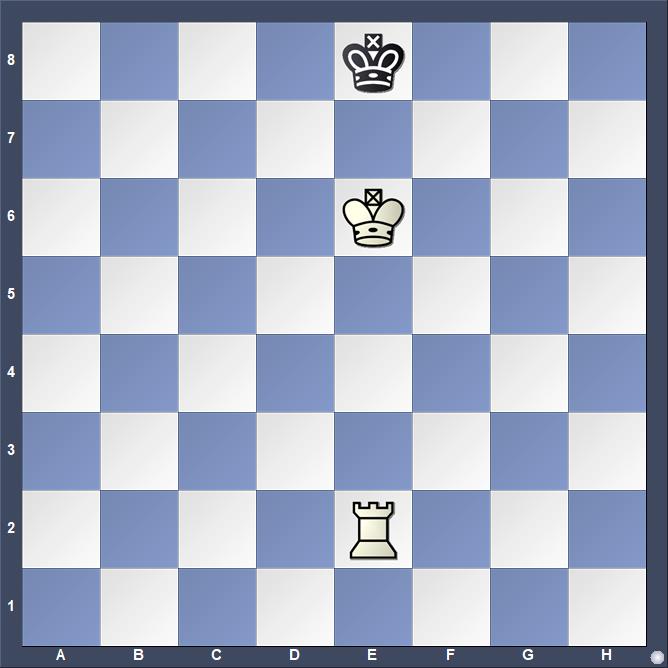
Both of those elementary students who finished with 3.0 checkmated an opponent while I was watching their game. A young girl under immense pressure as the clock neared zero showed her mastery of the elementary checkmate with king and rook against king, although there were several other pieces on the board. When she slid her rook over to the a-file for checkmate, she had four second left.

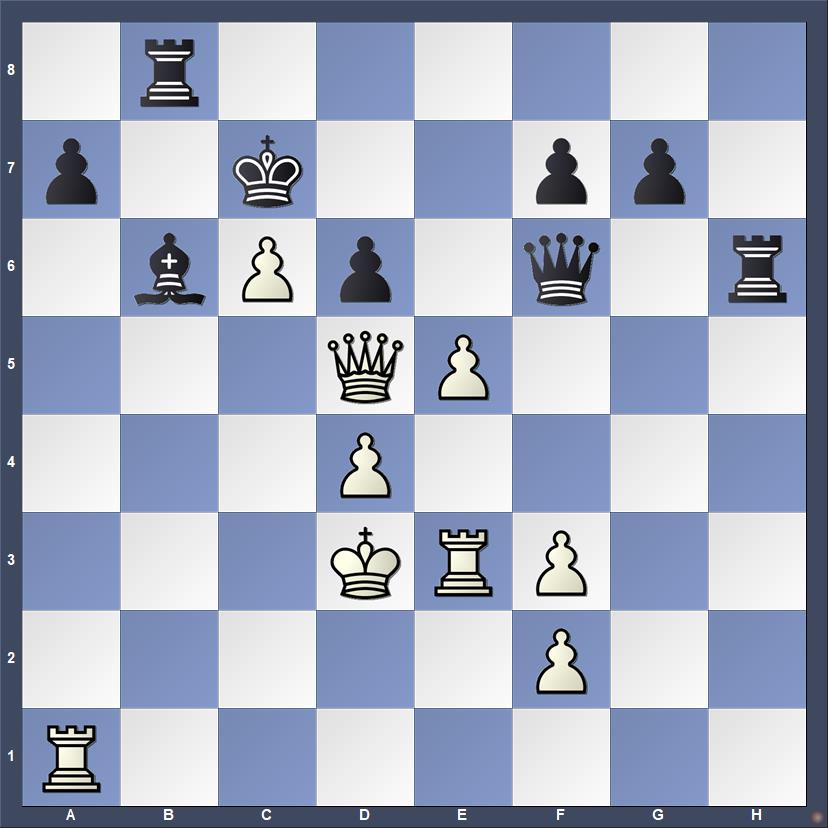
A sixth grade boy provoked a confused look from his opponent as he appeared to have blundered his queen.

Black to move
After looking at him in confusion and looking at the queen, his opponent shrugged her shoulders and took the bait, 19...Qxf7. He answered quickly with 20.Rd8#.

In contrast, some of the players who finished with 2.5 points had a game where overwhelming force led only to a draw. In at least two cases, a player with two queens managed to leave their opponent no legal moves when not in check.

Black to move
White also had two bishops and a knight, but I do not recall the placement of all of them. Watching this particular game, I noticed that White systematically drove the lone king to the edge without checks, a vital skill when a single queen and king battle a lone king. With two queens, however, and other pieces on the board, the safest course is to deliver check every move.

My after school students this week see the checkmate trap set by one of their own, and they complete worksheets with mate in two. Last week, they did the mates in one.

This problem proves difficult for young players. From Bledow--Schorn, Berlin 1839.

White to move
This exercise is part of Rook Checkmates 4. RC 1 and 2 are mates in one. RC 3 and 4 are mates in two. 


06 November 2022

Knowing and Doing

My opponent's draw offer leads me to believe that he understood that a queen vs. a c-pawn one square from promotion is a draw. Nonetheless, I demanded proof and the opportunity to present it was missed. Alas, my own errors allowed the draw to remain after my opponent's first error, and the queen vs. pawn occurred only because I exchanged rooks when they should have remained on the board.

My individual students saw this endgame last week and then most of them solved some exercises from Georges Renaud and Victor Kahn, The Art of the Checkmate (1953). My afterschool club solved worksheets with checkmate in one. This week, they will see mates in two from some of the same games.

Black to move
56...Rxf6??

Simple counting shows that the next diagram will be reached. I should have played 56...Rc4.

57.Kxf6= Kf4 58.Ke7 g3 59.Kxd7 g2 60.c6 g1Q 61.c7 Qa7

White to move
62.Kd8??

Now, we have reached a position that I know from endgame books. 62.Kc6 was the only move to hold the draw.

62...Qb6??

I know, but did not do. After 62...Ke5-+ 63.c8Q Kd6, White is in zugzwang with a worthless king. In fact, Black has a mate in three.

63.Kd7= Qb5+ 64.Kd8 Qd5+ 65.Kc8 Ke5 66.Kb8 Qb5+ 67.Ka7 Qc6 67.Ka7 Qc6 68.Kb8 Qb6+

White to move
69.Kc8??

69.Ka8=. Knowing this stalemate resource is essential to understanding why a c- or f-pawn against the queen is a draw when the pawn is one square from promotion.

69...Kd6-+

White resigned.


30 October 2022

A Few Strong Moves

Playing ten minute Arena on Chess.com, I often play terrible chess. But, sometimes I play okay, too. This weekend, I won a couple of games with some strong moves. I also drew one with a nice combination.

This position arose from a Stafford Gambit. It often surprises me when a player rated over 1700 thinks they can castle.

Black to move
Nxf2!

Best move.

8...Bxf2+ 9.Rxf2 Qxf2+ 10.Kh1 h5 is also winning.

9.Qf3 moves into forced mate.

9.Rxf2 Qxf2+ 10.Kh1 Be6-+

9...Nxh3+ 10.Kh2 Ng5+

10...Nf2+ was better. 11.Qh3 Bd6+ 12.e5 Bxe5+ 13.Kg1 Nxh3+ 14.gxh3 Qg3+ 15.Kh1 Qh2#

11.Qh3 Bd6+ 12.Kg1

12.Kh1 resists longer. 12...Nxh3 13.Rf3 Ng5+ 14.Kg1 Nxf3+ 15.gxf3 Bc5+ 16.d4 Bxd4+ 17.Be3 Bxe3+ 18.Kf1 Qf2#

12...Nxh3+ 13.gxh3 Qg3+ 14.Kh1 Qh2# 0-1

This game went back and forth and the engine thinks I should have taken White's c-pawn at one point.

Black to move
36...Qf5+! 37.Ke2

White moves into a mate in four, which I found.
37.Kd2 was necessary, and I probably would not have found the best move: 37...Kc8!

37.Qc2+ 38.Kf1 Rh1+ 39.Kg2 Qg6+ 40.Kxh1 Rh8#

My best move today was one of several that led to equality, but was the only forcing move. White could have gone astray and lost.

Black to move
32...Nf4! 33.gxf4 Rg6+ 34.Kf1

After 34.Kh1 Qh3, White must force a draw by repetition.

34...Qh3+ 35.Ke1 Qc3+ 36.Rd2 Rg1+ 37.Bf1 Qc1+ 38.Rd1 Rxf1+ 39.Kxf1 Qxd1+ 40.Kg2 Qg4+ 41.Kf1 Qd1+ 42.Kg2 Game drawn by agreement ½-½


28 October 2022

Problem of the Week

Elementary checkmates

Several years ago, I developed the habit of posting a portion of each week's chess lessons for youth players on Chess Skills. These were labeled with "Problem of the Week". After a few years, I stopped doing these posts weekly, but would post one from time to time. I seem to be slipping back towards the regular habit.

My students this week in the after school club were presented with some checkmate positions.

On Tuesday I presented the first ten moves of a game that I played online the day prior, then asked students to work out the forced checkmate in five. Although the position differs slightly, the five move sequence is identical to one found in Vladimir Vukovic, The Art of Attack in Chess (1965).

Stripes,J. -- Internet Opponent [C10]
Live Chess Chess.com, 17.10.2022

1.e4 e6 2.d4 d5 3.Nc3 dxe4 4.Nxe4 Nf6 5.Bd3 Nxe4

5...Nbd7 has been my choice with Black.

6.Bxe4 Bd6

Both 6...c5 and 6...Nd7 are better.

7.Nf3 0-0 8.Bxh7+?

In this instance, the classic bishop sacrifice leads only to equality with best play.

8...Kxh7 9.Ng5+
Black to move
9...Kg8??

9...Kg6 was necessary 10.h4 Kf6 is best 11.Nh7+ Ke7 12.Nxf8 Kxf8 is best with equality.

10.Qh5+- Re8

Moves into forced checkmate

Black's woes are illustrated by the computer's suggested alternatives:
10...Bb4+ 11.c3; or
10...Qxg5 11.Bxg5

White to move

On Thursday, I first presented a situation that led to a draw in the previous Saturday's youth tournament. After more than a dozen moves, a young player with rook and knight against a lone king admitted inability to force checkmate. I asked a few students to show how they would find checkmate from this position.

White to move
After students showed their methods, I reviewed the process of keeping the Black king in an ever shrinking box. Then I presented a common exercise that Bruce Pandolfini has in his Pandolfini's Endgame Course (1988), 27.

White to move
Any rook move begins the process of delivering checkmate by force in three moves.

White has a mate in three with the rook on any square marked in yellow.

The real challenge was in solving a puzzle that dates from the mid-fifteenth century (before the bishop and queen gained the power they have now). 
White to move
Checkmate must be delivered in 12 moves or less. The rook can only move once was a stipulation of the problem. This problem shows that chess players know how to use opposition and outflanking more than 570 ago.


25 October 2022

Unfinished Business

Chess Informant 153 arrived last night, a day earlier than expected. I am trying to ignore it until I complete some business with Informant 152. As noted in "Try, Try, Again", I intend to go through every game in the Games Section of the issue. This morning I finished those classified ECO D.

If I manage to get through all of ECO E in the next few days, I will be less rushed going through the games in Informant 153. There are many things to learn in the 201 games that occupy the second half of the journal, as well as from the articles in the front half. My long-term habit has been to read a few of the articles, play through most of the games in one or two, and occasionally look at the combinations or endgames. When I have intended to play through the games section, I have failed to prioritize the task.

In the ECO D section, there are several positions that I will use with my students, even with beginners.

The instructive pin that ended this game (and the checkmate pattern noted in the annotation) pairs well with a classic that I use in my diagnostic exercises. From Dreev,A. -- Deac,B., chess.com 2022 152/159.

White to move

While playing through this game, I started to think about a sacrifice that was played by Bogdan Deac. It and the subsequent play offers a good example of destroying the pawn shield and keeping pressure on the exposed king. From Deac,B. -- Bok,B., chess.com 2022 152/150.

White to move

The checkmate threat at the end of this game is one for beginners. From Krysa,L. -- Salina Herrera,P., San Salvador 2022 152/152.

White to move

The drawing combination played here works because of a checkmate threat that all chess players need to know. From Mamedyarov,S. -- Vachier Lagrave, M., Beograd 2022 152/145.

Black to move

Take a crack at solving these. I respond to comments, so you can post your solutions if you like.

23 October 2022

Chess Club Lessons

The after school chess club that I run in an elementary school began the second week of October after a week's delay because I had COVID. We meet twice per week with some students coming both days and some coming once each week. Each session is devoted to children playing chess with other and sometimes with me. There is always a short lesson. As the year goes along, sometimes these lessons will be built around a worksheet. For example, the students will see as many worksheets from my Essential Tactics* as time allows.

Chess Skills has a record of a great many of my lessons in years past. The tag, "Problem of the Week" links to these.

Here is a synopsis of the lessons so far this fall for further review by students and parents, as well as for anyone interested.

11 October

We began with an endgame position that occurred in a game that I played online and that I believe highlights the importance of calculation and a single tempo in a pawn race. "Time and Speed" shows this position with analysis of the game's conclusion and how White should have played.

13 October

Young students often express frustration when their opponent "copies" their moves. The lesson featured a game played by Jose R. Capablanca a few years before he became World Champion. In symmetrical positions, the first player often has an advantage. Check puts an end to the copying. 

Capablanca,Jose Raul -- NN [C49]
New York casual New York, 1918

1.e4 e5 2.Nf3 Nc6 3.Nc3 Nf6 4.Bb5 Bb4

The copying begins.

5.0-0 0-0 6.d3 d6 7.Bg5 Bg4 8.Nd5 Nd4

White to move
9.Nxb4 Nxb5 10.Nd5 Nd4 11.Qd2

Black to move
11...Qd7??

Now, Black is lost. After 11...Nxf3+, White is only slightly better.

12.Bxf6 Bxf3 13.Ne7+

Black to move
13...Kh8

13...Qxe7 is best. Black loses the queen. The move played gives White a forced checkmate in three. Students were asked to find the conclusion.

14.Bxg7+ Kxg7 15.Qg5+ Kh8 16.Qf6# 1-0

18 October

Students were presented with a difficult endgame position that was part of Hikaru Nakamura's analysis of Niemann,H. -- Lenderman,A., Saint Louis 2022, a game played the previous day in the US Championship.

White to move
I had no expectation that young players would find the correct move. However, the wrong answers are quite instructive for showing the difficulties a bishop has stopping three connected passed pawns. It is an impossible task in this case.

45.Bb5!! is the only winning move.

If Black captures the bishop, then White queens first and the queen controls Black's promotion square. 45...axb5 46.a6 h3 47.a7 h2 48.a8Q.

If Black opts to leave the bishop alone and advance pawns, play might continue 45...h3 46.Bxa6 g5 47.Bf1 g4 48.a6 h2 49.Bg2 f4 50.a7 f3 51.a8Q fxg2 52.Qxg2 and White wins.

Following this lesson, I showed the students the game's continuation beginning with White's move 30.

White to move
30.Kb4!

Nakamura praised this move.

30...Nf4 31.Rh2 Kc7 32.a5 cxb5 33.Bxb5 a6 34.Ba4

Nakamura stated that 34.Bc4 seems more natural, but also pointed out how Niemann's move keeps Black from occupying the open e-file with his rook.

34...Ne6 35.d5 Nxg5 36.d6+

Black to move
It was here that Alex Lenderman made the error that cost him the game. This position was where we began Thursday's lesson.

20 October

The lesson was to understand the threats that Lenderman overlooked.

36...Kd8?

Students suggested 36...Kb8, which is better than 36...Kd8. According to Nakamura and Stockfish, 36...Kc8 would have given Black excellent chances to hold a draw.

37.c6

Niemann played the only winning move.

37...bxc6 38.Kc5

Again, the only winning move.

38...f4

Nakamura analyzed 38...Ne4+ and some of this analysis was shared with my students. One of these lines leads to the endgame position that was Tuesday's focus.

39.Rb2 Ne6+ 40.Kxc6

Black to move
If Black's king were on c8, White would not have a checkmate threat. This threat forces concessions that lead to a position where Black must give up the rook for White's queen.

40...Nd6+ 41.Kd5 Nb5 42.Bxb5 axb5 43.Kc6 Ke8 44.Kc7

Black to move
I pointed out to the students that if we removed all the pieces except the two kings and White's d-pawn, we would have an elementary pawn ending position that they all need to know.

44...Kf7 45.d7 1-0

Lenderman resigned here. Young students, however, benefit from seeing the reason on the board.

45.d7 Ke7 46.Re2+ Kf7 47.d8Q Rxd8 48.Kxd8 and White's rook will be able to stop Black's two passed pawns. A student needed to see even this demonstrated, so I showed him a couple more moves until he said, "Okay, now I get it."

Next week, the demo board and/or worksheets will be used to teach some checkmate patterns or techniques.


*The worksheets are available in reproducible format (no solutions) as Essential Tactics: The Worksheets (2017). The same exercises with solutions and instructional content is available only in Kindle format as Essential Tactics: Building a Foundation for Chess Skill (2017). These worksheets were created after an inspiring experience using Bruce Pandolfini, Beginning Chess (1993).

11 October 2022

Time and Speed

I posted this position on Chess Skills' Facebook page yesterday and it has elicited some discussion. One poster offered the drawing line five moves deep, a few offered the key move that must be played in the position, and several recommended the move played in the game, which loses.

White to move
Let's back up a few moves to see how this position came about. It was a three minute blitz game, so inaccuracy should be expected. Even so, my opponent and I both found a series of only moves and moves where two moves had to be played, but the sequence was not critical.

White to move
White had been better since my error on move 12. Here, 41.h5! secures the win as Black's king cannot step into the square. After 41.h5, Black could try 41...Rc1 42.Kxg4 Rg1+ 43.Kf5 Rf1+ 44.Kg5 Rg1+ 45.Kh6 and White's rook will eliminate Black's b-pawn then work its way to the g-file. There may be other ways to win as well after 41.h5! White still had 54 seconds at this point in the game.

41.Re4??

White converts the win to a draw.

41...Rc4!= 42.h5

Now this move, winning a move earlier, is the only way to maintain equality.

42...Kf8

Black could exchange rooks first, then play this move.

43.h6 Kg8 44.e6

White also can opt to exchange rooks before playing this move.

44...fxe6

White to move
45.Rxc4

Other moves lose. For instance, 45.Ke3 Rxe4 46.Kxe4 g3 47.Kf3 b4  and the White king is outside of the square of the b-pawn. Black's king cannot move, but it does not need to.

45...bxc4

We now reach the position at the top of this post.

46.Kg5??

This move loses because Black's g-pawn is faster than White's seemingly powerful f- and h-pawns.

46.Ke5 is the critical move. Black must play 46...g3 47.Kxe6 g2 (47...Kh7 also holds) 48.f7+

Black to move
Analysis Diagram

48...Kh7 is the only move to avert checkmate. 49.f8Q g1Q= Black's c-pawn remains a threat and White cannot hold the h-pawn. 

Back to the game as played.

Black to move
After 46.Kg5??
46...g3-+ 47.Kg6

White's move is best, as it is the longest sequence to checkmate.

47.f7+ Kxf7 48.h7 Kg7-+

47...g2 48.f7+

Black to move
48...Kf8

The only move to avoid checkmate.

49.h7

White threatens checkmate, but a move too late.

49...g1Q+

White resigned.


08 October 2022

If Only...

Chess engines deflate our egos. I thought I had played a reasonably strong attack, but chessdotcom's "coach" wryly remarked about my star move, "Curious move. Maybe not exactly what the position demands--but an interesting idea." The engine has my move at +6.4: clearly winning! What did the position require?

White to move
Theoretical Position
In this diagram position, White has a forced checkmate in seven moves. I had rejected the move that might have led to this position because I wrongly believed that Black's king was relatively safe from further abuse on f7.

After 20...d5, the game reached this position.

White to move
The time control was ten minutes and I spent nearly three minutes considering 21.Nd6+ and 21.Nf5+, which I ultimately played. I quickly rejected 21.Qh6, as noted above. Both 21.Qh6+ and 21.Nd6+ are superior to 21.Nf5+.

After 21.Qh6+, the computer's best line continues 21...Kg8 22.Nf6+ Kh7 23.Kf2. Instructive, but humans do not see these things. After 21.Qh6+ Kf7, the position in the diagram at the top of the post would have been reached.

After 21.Ne6+, 21...Bxe6 loses quickly and I should have been able to calculate that line. Maybe I did. I recall only that I saw something that seemed unclear. For instance, the bishop is not required to capture the knight.

The game continued:
21.Nf5+ gxf5

I was prepared for 21...Bxf5 22.Rb7+ Kf8 23.Qh6+ and probably considered a move or two deeper. I was certain that good moves would be available.

22.Qh6+ Kf7 23.Qxf6+ Kg8

Here I began to struggle to find the best moves, but reliably kept up pressure until my opponent resigned seven moves later.