07 January 2011

Keep it Simple

"This is a very simple game. You throw the ball, you catch the ball, you hit the ball. Sometimes you win, sometimes you lose, sometimes it rains."
Bull Durham
Chess is a lot like baseball. You win a pawn through some tactic in the middlegame, then convert this pawn in the endgame.

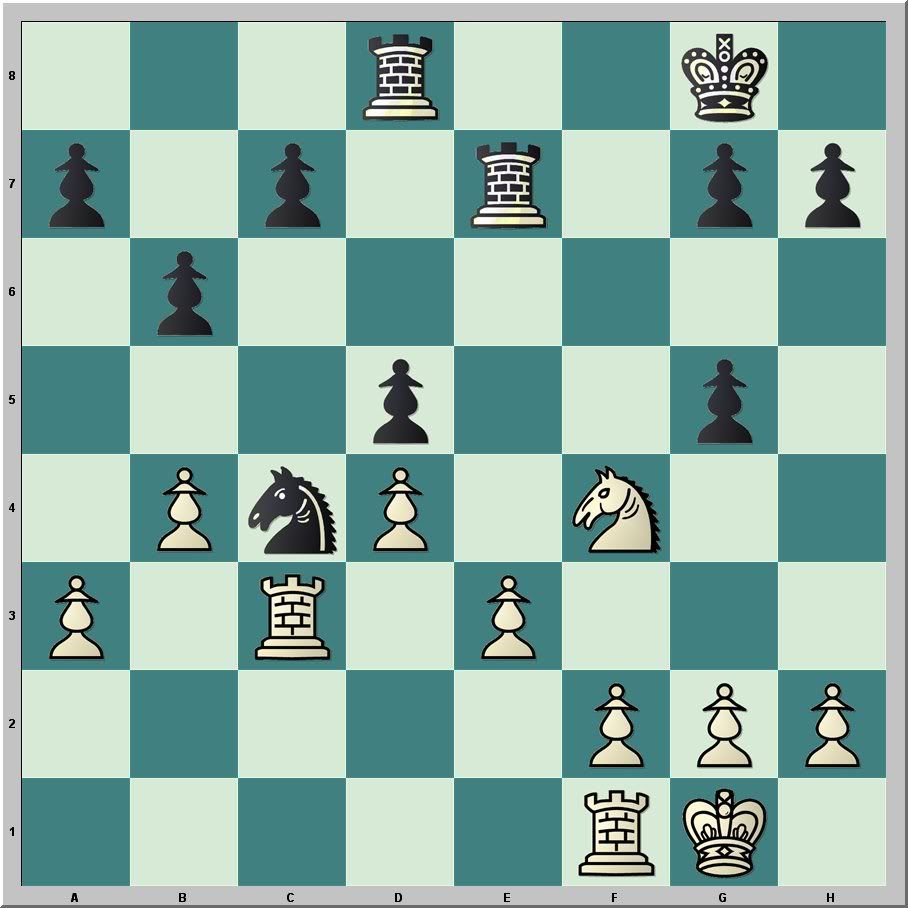
This morning's blitz game illustrates simple chess.

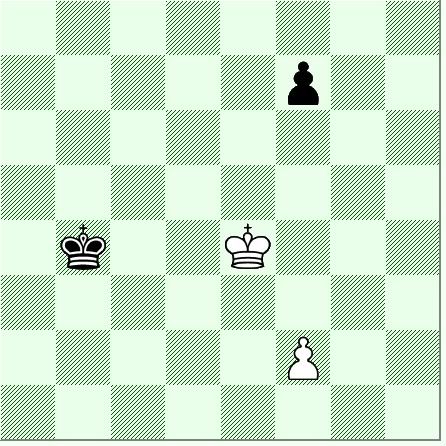
My opponent has just attacked my knight, forcing me to see the tactic that wins a pawn.


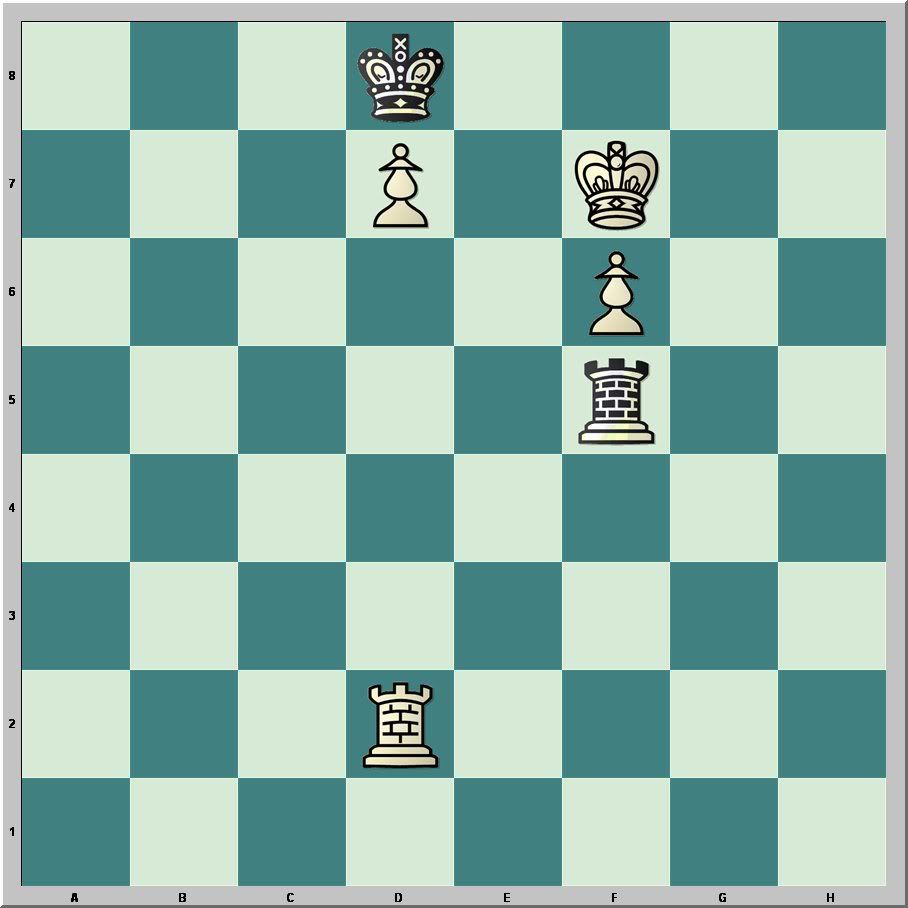
Thirty moves later, I have a two pawn advantage. Converting one of the pawns is a simple matter of giving up one to create a Lucena position with the other.

06 January 2011

French Perfume

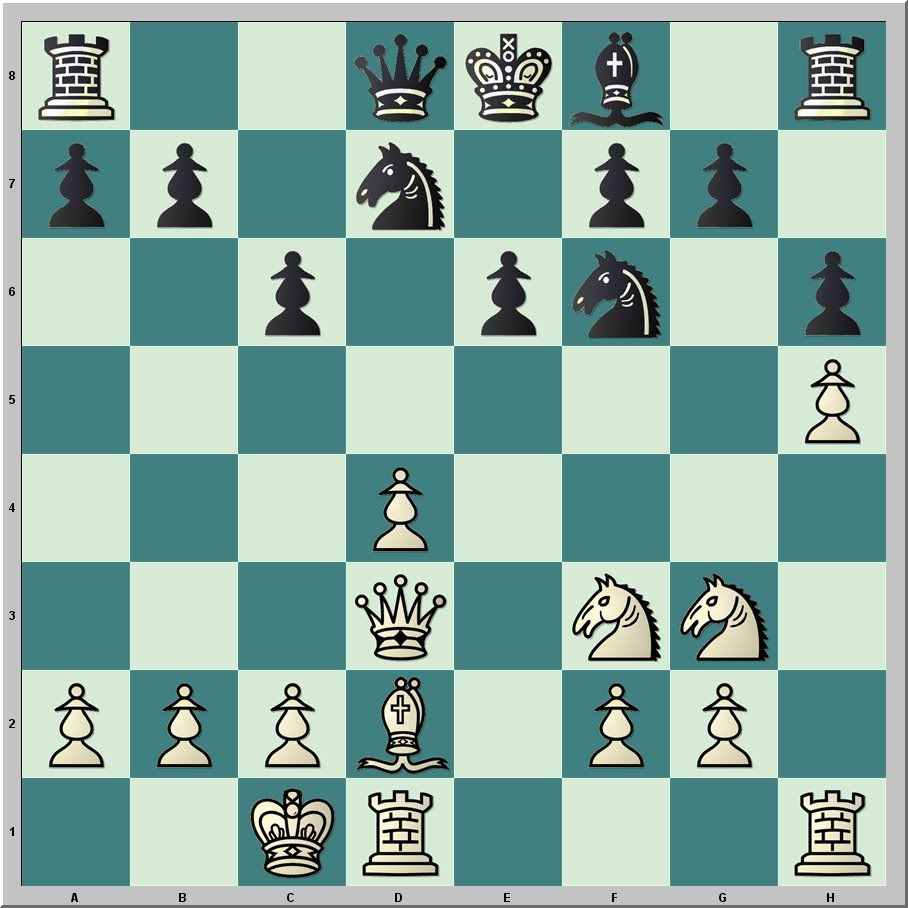
There are principled ways to meet the dangerous French Defense, but the cowardly Exchange variation is not among them. This little gem was a three minute blitz game that lasted about a minute between sips of morning coffee.

mellan (1944) - Ziryab (1906)
Live Chess Chess.com, 06.01.2011

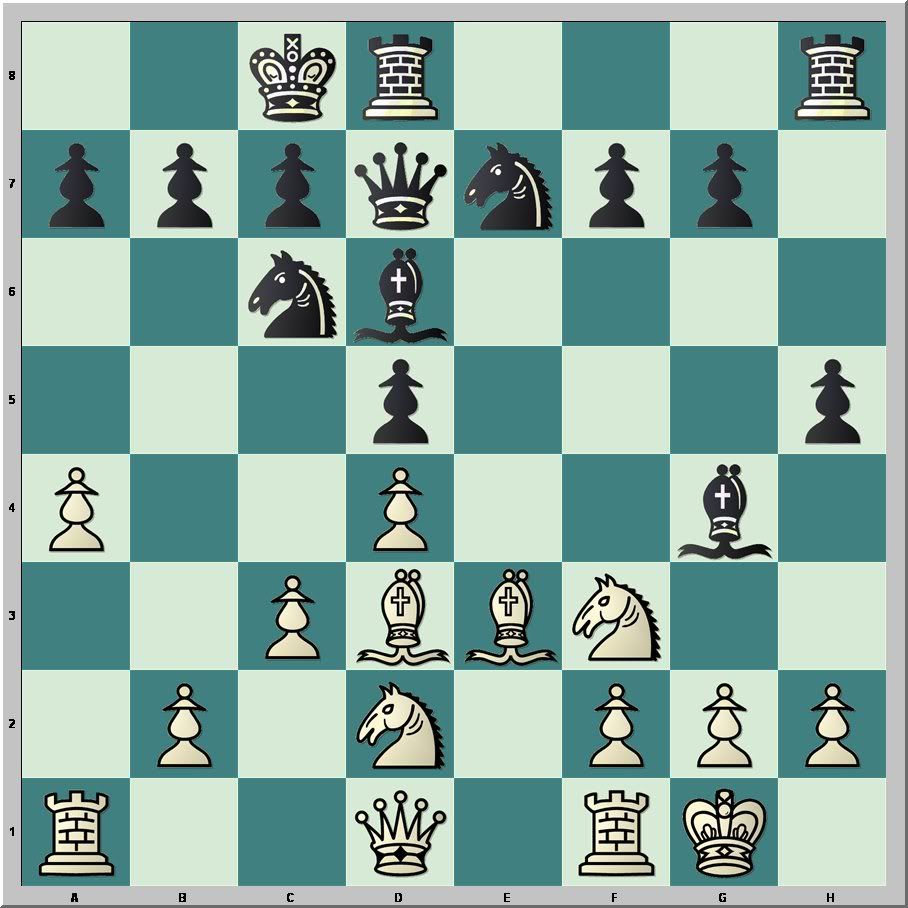
1.e4 e6 2.Nf3 d5 3.exd5 exd5 4.d4 Bd6 5.Bd3 Ne7 6.0–0 Nbc6 7.c3 Bg4 8.Be3 Qd7 9.Nbd2 0–0–0 10.a4

10.b4 Ng6 11.b5 Nce7 12.Qa4 Kb8 13.c4 dxc4 14.Bxc4 Nf5 15.Ng5 Qe7 16.Nde4 h6 17.Nxd6 Nxd6 18.Nf3 Bxf3 19.gxf3 Qf6 20.Be2 Nf4 21.Bxf4 Qxf4 22.Rac1 Nf5 23.Rc4 Rd5 24.Rfc1 Rxd4 Nyland,T (2156)-Roos,J (2250), Budapest HUN 2009 0–1

10...h5!N


10...Rde8 was played on the Free Internet Chess Server (FICS) in 2000 in a game that found its way into my database via means unknown.

11.h3?!

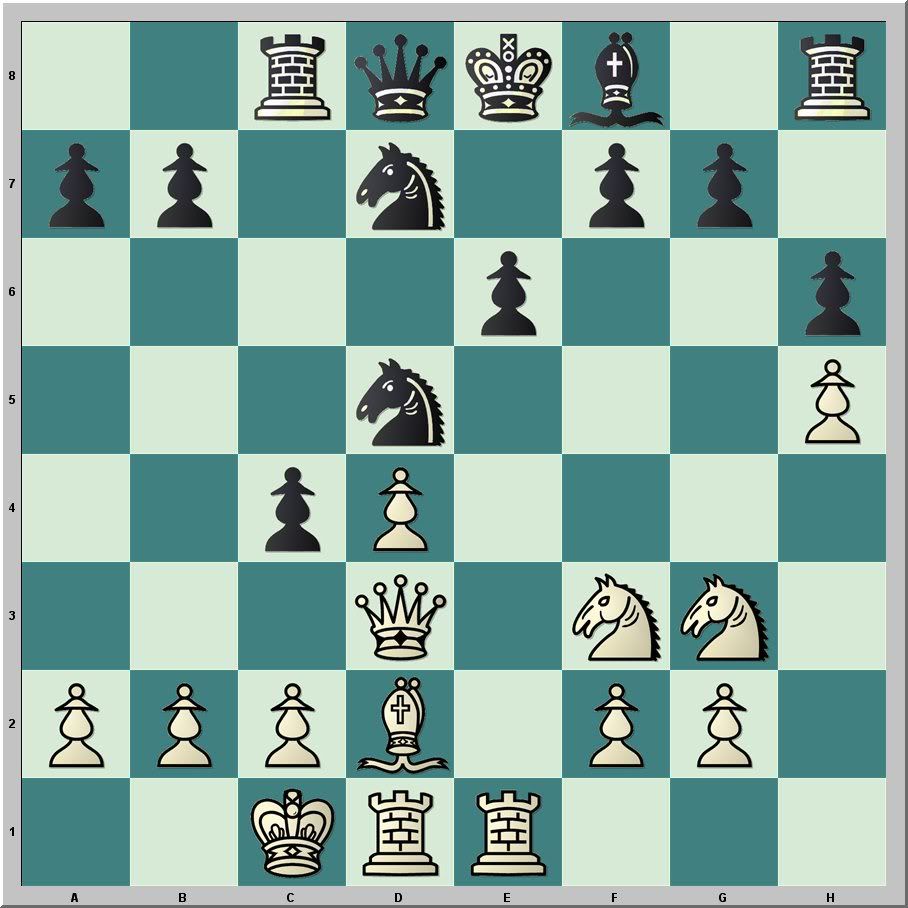
11.Re1=

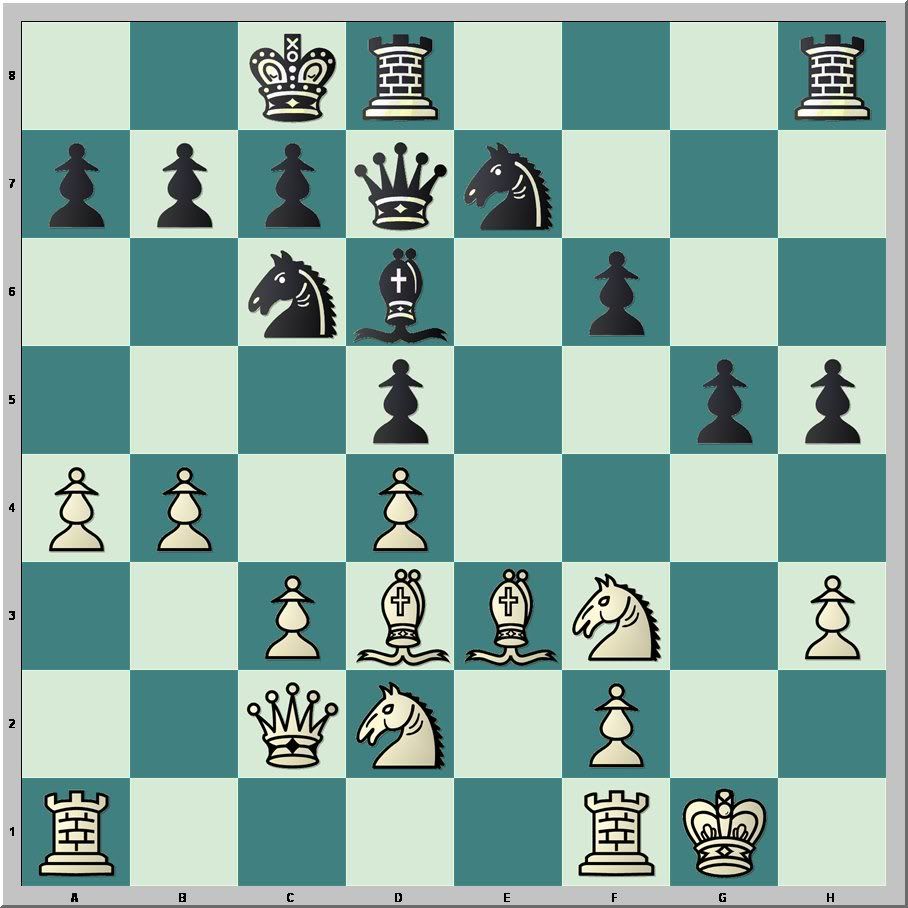
11...f6 12.Qc2

12.c4!?

12...g5 13.b4 Bxh3

I should have played 13...Bxf3 14.Nxf3 g4 15.Nh4

14.gxh3


14...g4??

and just like that, overdue for the next sip of coffee, I blundered away an easy game

15.b5??

White returns the gift

15...gxf3–+ 16.Nxf3 Rdg8+

16...Qxh3 17.Bf5+ Nxf5 18.Qxf5+ Qxf5 19.Rfd1 Rhg8+ 20.Kf1 Qxf3 21.b6 Rg1+ 22.Kxg1 Qh3 23.Bf4 Bxf4 24.Rd3 Rg8+ 25.Rg3 Rxg3+ 26.fxg3 Be3#

17.Bg5 Qxh3 18.bxc6 Rxg5+ 19.Nxg5 Qh2# 0–1

22 October 2010

Simple Opposition

White to move


Skilled players need no more thought to play this position correctly than to speak the basic phonemes in their native language. That's the contention of Rashid Ziyatdinov, whose book I discussed last February in "GM-RAM: Essential Knowledge."

The position arose in Malakhov-Najer, Moscow 2007 and came to my attention via the CD Chess Informant 5-99 Endings Section. Endgames have been part of every issue of Chess Informant since issue 5 in the late 1960s. Most problems are more difficult than this one.

11 October 2010

A Blow to the Back of the Head

In this weekend's Eastern Washington Open, I started well. I won two hard-fought games on Saturday, then took my traditional third round bye. Sunday morning I was paired against the top A Class player on board two. I labored to get an advantage, thought that I had achieved one, but overlooked the power of a check. As things started to turn my opponent's way, I offered a draw. He refused, but did not capture the free pawn, opting to first resolve a back-rank vulnerability. We played a lot of moves in a position that I thought was a dead draw before he returned the offer.

In the final round, I was part of a pack battling for second place and was paired against an ambitious young player with a provisional B Class rating. I chose the Devil's Opening:

Joshi,K (1648) - Stripes,J (1843) [B19]
Eastern Washington Open, Spokane 2010

1.e4 c6 2.d4 d5 3.Nc3 dxe4 4.Nxe4 Bf5 5.Ng3 Bg6 6.h4 h6 7.Nf3 Nd7 8.h5 Bh7 9.Bd3 Bxd3 10.Qxd3 e6 11.Bd2 Ngf6 12.0–0–0


We have reached a fairly typical Caro-Kann position in under one minute of play. I took a walk while my clock ticked to decide whether I had the fighting spirit for something novel, or should hunker down and make my upstart opponent prove that White can secure an advantage.

c5?!

Either 12...Qc7 or 12...Be7 is fine.

13.Bf4 Nd5 14.Bd2 Rc8 15.Rhe1 c4!?

Again either 15...Qc7 or 15...Be7 is quite reasonable.


Now Kairav went into a long think. There are only two moves worth looking at, I thought, both bad. The queen must move to e4 or e2.

16.Rxe6+!

The blow to the back of the head, which I thought was a desperate gamble. He is lost, so he plays for some cheap checks. I was wrong.

16... fxe6??+-

16...Be7 is the only move 17.Rxe7+ ( 17.Qf5 c3) 17...Nxe7 and White has an advantage.

17.Qg6+ Ke7 18.Nf5+ (I thought this move was impossible) exf5 19.Re1+

I resigned in view of 19... Ne3 20.Rxe3+ Ne5 21.Rxe5+ Kd7 22.Rd5+ Kc7 23.Rxd8 Rxd8+-

1–0

Kairav Joshi will be over 1800 soon. He's also a terrific chess organizer in Coeur d'Alene, Idaho.

11 August 2010

Blindness and Insight

Chess Training Pocket Book II by Lev Alburt and Al Lawrence arrived in the mail yesterday. I've been going through the problems in the first edition off and on for close to ten years and wanted to see how the new edition changed. The second edition is easier to recommend to mothers of the children that I coach because the cover art is not skanky as the first: what does a woman wearing a short dress and standing over a chess master twice her age as he studies an endgame position say to potential readers? Chess skill will get you amorous opportunities!

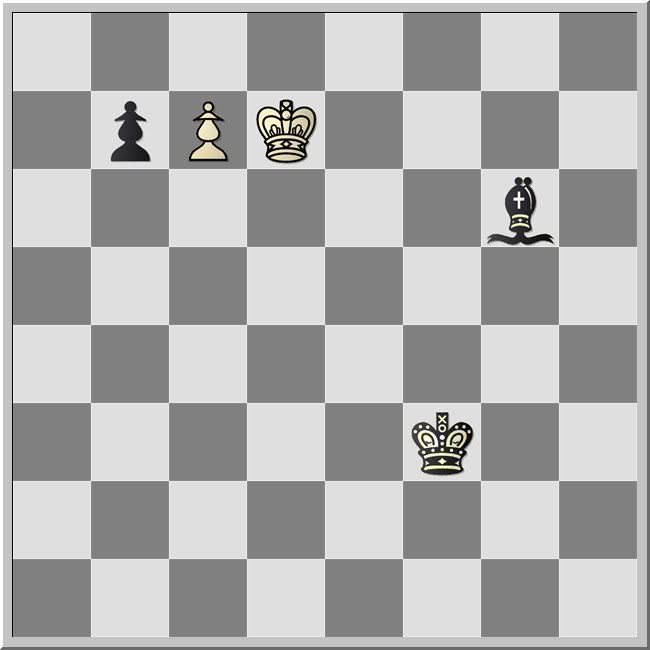
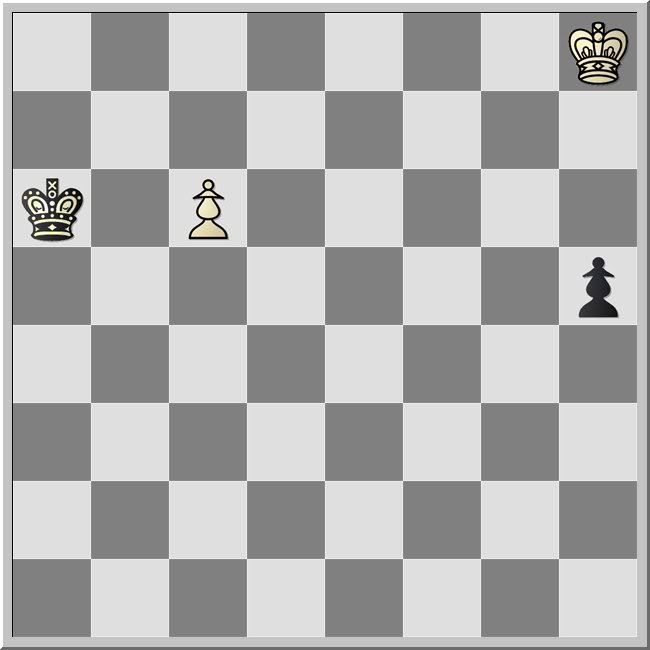
Just before sleep I started through the problems in the book. The first two were easy for me. The third was familiar because IM John Donaldson has shown it as part of one of his lectures the evening prior to the annual Dave Collyer Memorial Chess Tournament a few years ago.

White to move


My familiarity connected it to this classic by Reti:

White to move


White draws by simultaneously chasing the pawn and threatening to assist his own. Either both pawns come off the board or both queen and the game is theoretically drawn. Donaldson presented these two together and talked about a book that he was then reading (I bought it a month later): Andy Soltis, Rethinking the Chess Pieces.

Despite knowing the idea and immediately recognizing the pitfalls, I went to sleep without solving my battle against White's bishop and pawn.

I tried again this morning. After ten minutes, I thought I had figured out the maneuver. I set up the position in my trusty engine and played it out. I failed. I tried again. After the third failure, I cheated and looked at the solution on the facing page.

19 May 2010

Cosmopolites

While doing some work on Adolf Anderssen, I came across this statement by Howard Staunton from his tournament book for the London 1851 international chess tournament.
Chess is certainly the most widely spread scientific amusement even known among civilized nations. The Chess-amateur must travel far indeed in these days to find himself debarred from the indulgence of that pleasant recreation, the knowledge of which will often prove to be a surer passport in foreign lands than all the mysterious symbolism of Freemasonry. Among the most remote regions of the golden East, or the fabled West, in the torrid South, or on the frozen shores of the North, amongst the great military nations and amidst men devoted to commercial enterprise, the Chess-player, who is essentially a cosmopolite, will speedily find a circle of friends through the more than Masonic influence of this ancient and absorbing game.
Howard Staunton, The Chess Tournament (1873)
He then explains problems stemming from variations in the rules from country to country. The London tournament was, among other things, a substantially successful step towards unifying the rules by which we now play.

13 May 2010

Sofia Rule

In the recently finished World Chess Championship, the challenger adhered to the so-called Sofia Rule even though it was not among the rules for the match.

12 May 2010

Sour Grapes

A group of chess fans from Bulgaria took issue with ChessBase's one-sided coverage of the World Championship in which Viswanathan Anand dispatched challenger Veselin Topalov. It was a great match; both players can be proud of their performance and the quality of games. Of course, errors were made, and Topalov's final error was fatal.

It does seem that the world was rooting for Anand. This impression does not stem solely from the coverage by ChessBase, but from a potpourri of websites and chess discussion forums. Even so, Topalov has his admirers, including many in his own country. It's too bad that some of them are so partisan that they offer this nonsense:
Kramnik has not played even one nice game in his whole life and does not deserve anything except to be pitied.
Chess Fans from Bulgaria, Darmstadt, Germany
Kramnik has played many fine games.